Off-Grid Solar Cost vs Diesel Generator
Okay, let's talk about one of the biggest dilemmas when you're dreaming of going off-grid or even just setting up a robust backup system: how in the world do you power it all without breaking the bank? Many of us immediately think of the familiar roar of a diesel generator or the quiet promise of solar panels. It's a tough choice, and the financial implications—both upfront and long-term—can be really daunting. This guide is here to untangle the true costs of off-grid solar versus relying on a diesel generator, helping you make an informed decision for your unique situation.
The Upfront Investment: Solar Versus Diesel Generators
When you first start thinking about powering your off-grid cabin, RV, or even just having a reliable backup for your home, the initial price tag is usually the first thing that hits you. It's easy to look at a small, inexpensive generator and think it's the clear winner, but that's just one piece of a much larger puzzle. Let's break down what you'll really be spending right out of the gate for both options.
Initial Purchase Price of Solar Components
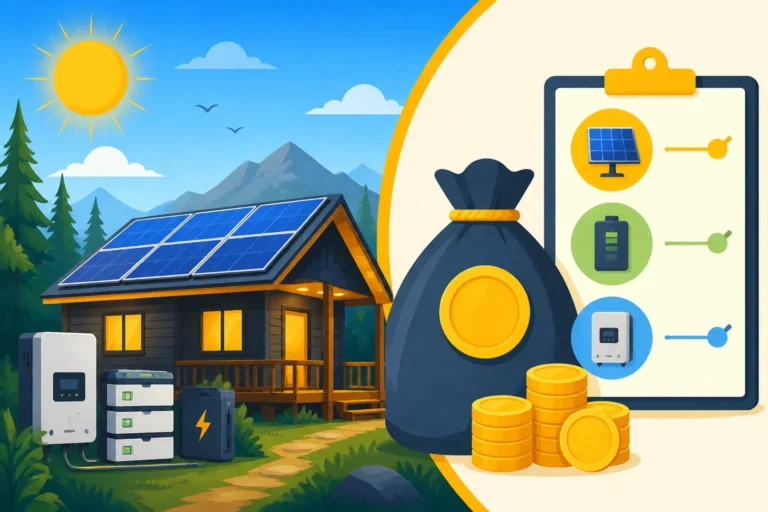
Building an off-grid solar system involves several key components, and their cost can vary wildly depending on your energy needs and chosen quality. You'll need solar panels to capture sunlight, batteries to store that energy for when the sun isn't shining, an inverter to convert the battery's DC power into usable AC power for your appliances, and a charge controller to manage the flow of electricity from the panels to the batteries.
For a basic setup, perhaps for a small shed or an RV, you might find starter kits on platforms like Amazon or from specialized retailers. These can range from a few hundred dollars for a very small 100-watt system to a couple of thousand for something capable of running essential RV appliances. For a more substantial off-grid home, the costs climb. High-quality monocrystalline solar panels might run you $1 to $2 per watt, while a robust battery bank using modern LiFePO4 (lithium iron phosphate) technology could easily be several thousand dollars. Think about 10-20 kWh of battery storage for a small home, which might cost anywhere from $5,000 to $15,000 or more, depending on brand and capacity. Inverters can add another $1,000 to $5,000, and charge controllers typically fall in the $200-$1,000 range. All told, a comprehensive off-grid solar system for a small to medium-sized home can easily be in the $15,000 to $40,000 range for equipment alone, and much more for larger, more robust systems. To get a better handle on these figures, it's helpful to understand Off-Grid Solar Cost: Complete Breakdown.
Initial Purchase Price of Diesel Generators
On the other side of the fence, diesel generators have a reputation for being a more affordable entry point. You can pick up a small, portable diesel generator, say a 3,000-watt unit, for anywhere from $1,000 to $3,000. These are fantastic for occasional backup power, running power tools at a remote job site, or keeping a few essentials going during a short outage.
However, if you're looking at a generator to power an entire off-grid home consistently, you'll need something much larger and more robust—a standby generator. These units are designed for continuous operation and typically range from 8 kW to 20 kW or even higher. Brands like Generac or Cummins Onan offer reliable diesel options. The price for such a generator can start at $5,000 and easily climb to $15,000 or more for larger, industrial-grade models that are built to withstand heavy, continuous use. So, while the cheapest generator is indeed cheaper than the cheapest solar setup, the comparison becomes much closer when you're looking for comparable, reliable, continuous power for an off-grid lifestyle.
Installation Costs and Complexity
The initial purchase price is just the equipment; getting it all set up and running is another story. For solar, especially a DIY off-grid solar build, you can save a significant amount on installation costs if you're handy and comfortable with electrical work. However, proper installation involves mounting panels securely, running wiring through conduit, connecting batteries safely, and configuring the inverter and charge controller. If you hire a professional, installation can add 10-20% (or more) to the equipment cost, depending on the complexity of your system and location. Permitting and code adherence also need to be considered, and these can vary greatly depending on your municipality. Some remote locations might have fewer stringent requirements, but it's always wise to check local regulations.
For diesel generators, installation can also range from simple to complex. A portable generator simply needs to be wheeled out, filled with fuel, and started. For a standby generator designed to power a home, installation is more involved. It typically requires a concrete pad, a fuel tank (often buried underground), an automatic transfer switch to safely integrate with your home's electrical system, and professional electrical hookup. This kind of professional installation can easily add $2,000 to $5,000+ to the generator's cost, not including the trenching and piping for a buried fuel tank if that's your chosen route.
The Ongoing Financial Reality: Fuel, Maintenance, and Lifespan
Okay, so you've swallowed the initial pill and invested in your power source. But what about day-to-day, month-to-month, year-to-year? This is where the true cost of ownership really starts to diverge between solar and diesel generators. What seems cheaper upfront often reveals its true expense over time.
Fuel Costs: The Diesel Drain
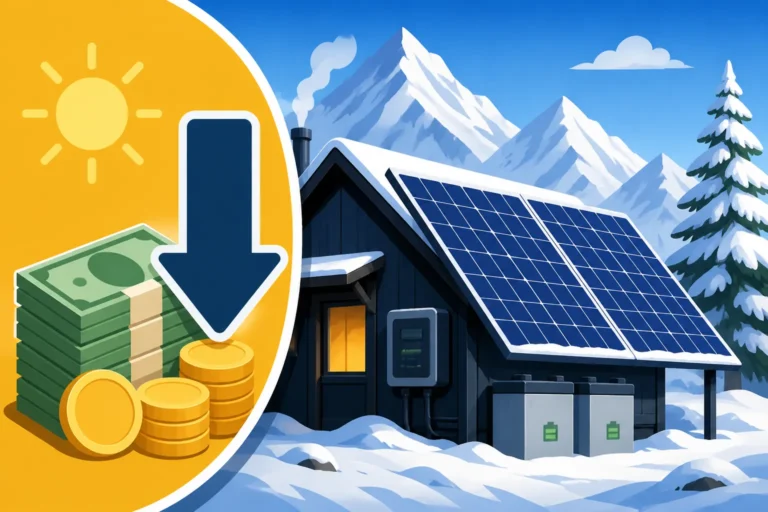
This is arguably the most significant long-term financial difference. Once your solar panels are installed, the "fuel" (sunlight) is absolutely free. You don't have to worry about fluctuating diesel prices, trucking it in, or storing it safely. Solar offers predictable, long-term energy costs because there aren't any.
Diesel generators, on the other hand, are hungry beasts. The cost of diesel fuel can fluctuate wildly with global markets, and if you live in a remote off-grid location, you also have to factor in the cost and time of transporting that fuel. A typical 10 kW diesel generator running at about 75% load might consume around 0.75 to 1 gallon of diesel per hour. If you're running it for 8 hours a day, that's 6-8 gallons daily. At even $4.00 per gallon (which is often a conservative estimate, especially for delivery to remote areas), you're looking at $24 to $32 per day just for fuel. Over a month, that's $720 to $960, and annually, it's roughly $8,640 to $11,520. That's a significant, recurring expense that never goes away as long as you need power. This is where Off-Grid Solar vs Generator Fuel Cost truly highlights the long-term savings of solar.
Maintenance and Consumables
Every piece of machinery needs care, and your off-grid power system is no different. However, the intensity and frequency of that care differ dramatically.
Diesel generators require frequent and routine maintenance. This includes oil changes, fuel filter replacements, air filter cleanings/replacements, and spark plug checks. Most manufacturers recommend oil changes every 100-200 hours of operation. If you're running it 8 hours a day, that's roughly once a month or every two weeks. These consumables add up, and if you don't keep up with maintenance, you risk costly repairs or premature failure. You also need to consider things like coolant levels and battery health for the generator's starter. You can read more about comprehensive care in our guide on Off-Grid Solar Maintenance Costs, but the generator's routine is far more demanding.
Off-grid solar systems, by contrast, are remarkably low maintenance. Solar panels typically only need occasional cleaning, especially if they get dusty or have bird droppings. Beyond that, there are no moving parts to wear out. The main maintenance for a solar system revolves around its battery bank. Batteries, especially lead-acid types, require periodic checks of water levels and terminal cleaning. While LiFePO4 batteries are largely maintenance-free, all batteries have a finite lifespan and will eventually need replacement, which is a significant cost to plan for down the line.
Equipment Lifespan and Replacement Cycles
When you invest in a power system, you want it to last. Here's where solar really shines in the long run.
Modern solar panels are incredibly durable and come with warranties guaranteeing performance for 20-25 years, often performing well beyond that timeframe. They are built to withstand harsh weather and degradation is slow and predictable. Inverters and charge controllers typically have lifespans of 10-15 years, though some high-quality units can last longer. The biggest variable in a solar system's lifespan is the batteries. Lead-acid batteries might last 3-7 years, while advanced LiFePO4 batteries can easily last 10-15 years, sometimes even more, depending on use and depth of discharge. While replacing a battery bank is a significant expense (see Cost to Replace Off-Grid Solar Batteries), it’s a planned, infrequent one.
Diesel generators, by their very nature, have moving parts that wear out. Their lifespan is typically measured in operating hours, not decades. A good quality diesel generator, with diligent maintenance, might last 10,000 to 30,000 hours. If you're running it 8 hours a day, every day, that's roughly 2,920 hours per year. So, a generator rated for 10,000 hours might only last 3-4 years before needing major overhaul or replacement. This means you could be looking at replacing your entire generator unit every few years, which, as we discussed, can be a $5,000 to $15,000 proposition each time. The frequent replacement cycle is a major hidden cost.
Beyond the Dollars: Environmental and Lifestyle Considerations
While the financial aspect is crucial, living off-grid or having reliable backup power isn't just about money. There are significant quality-of-life and environmental factors that play a huge role in which system is right for you. These can often tip the scales in favor of one option, even if the pure dollar cost is comparable.
Noise and Emissions
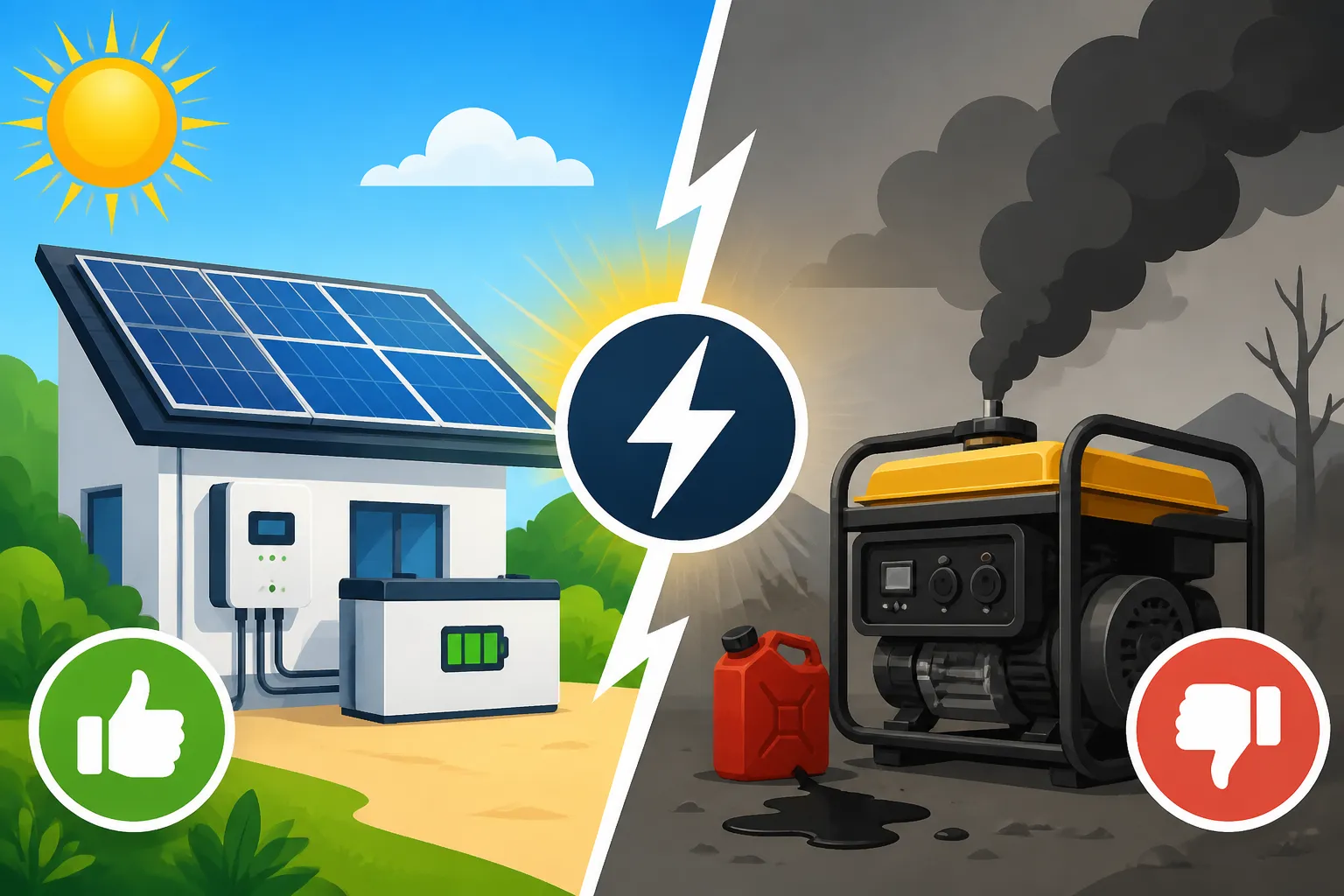
Imagine sitting on your porch at your remote cabin, enjoying the peace and quiet of nature. Now imagine that serenity constantly interrupted by the loud drone of a diesel generator. It's a reality many off-gridders face. Even "quiet" diesel generators produce a significant amount of noise, typically ranging from 60 to 80 decibels at 20 feet. This can be a constant annoyance, not just for you but for any nearby neighbors or wildlife. Beyond the noise, diesel generators produce exhaust fumes—carbon monoxide, nitrogen oxides, and particulate matter—which are harmful to both human health and the environment. Proper ventilation is critical, and you'll always have a smell of diesel lingering in the air.
Solar power, on the other hand, is blissfully silent. Your panels quietly convert sunlight into electricity, and your batteries store it without a whisper. There are no fumes, no exhaust, and no noise pollution. This alone is a huge draw for many people seeking the tranquility of an off-grid lifestyle. The only sounds you might hear are the gentle hum of an inverter or the quiet whir of a fan if it gets too hot, but these are negligible compared to a running engine.
Reliability and Energy Security
Energy security is a core reason many people choose to go off-grid. With solar, your energy source is literally the sun, which, for most regions, is a consistent and reliable resource, even on cloudy days (though with reduced output). Once your system is properly sized and installed with sufficient battery backup, you have a truly independent power supply. You're not relying on external supply chains for fuel delivery, which can be disrupted by weather events, road closures, or economic instability. You harness what's freely available.
Diesel generators, while providing immediate power on demand, are only as reliable as your fuel supply. If you run out of diesel, you run out of power. This can be a significant logistical challenge for remote properties, especially during winter months or bad weather. Imagine needing to haul gallons of fuel down a snowy dirt road just to keep your lights on. While a generator provides immediate power, that dependency on an external, non-renewable resource means your energy security is tied to factors beyond your control.
Scalability and System Expansion
Life changes, and your energy needs might too. What if you decide to add a new appliance, build an extension to your cabin, or increase your family's daily power consumption?
A well-designed off-grid solar system is inherently scalable. If you find yourself needing more power, you can often add more solar panels to your array, increasing your generation capacity. You can also expand your battery bank to store more energy, providing longer autonomy. This modularity means you can start with a smaller system and grow it over time as your needs and budget allow. We've talked about the Cost of Expanding an Off-Grid System before, and it's generally a straightforward process to add more components.
With a diesel generator, scaling up is much more difficult and costly. If your existing generator can't meet new demands, your only real option is to buy a larger generator, which means another significant upfront investment and the expense of installing it. You can't just "add" capacity to an existing engine in the same way you can add panels to a solar array.
Real-World Scenarios and Total Cost of Ownership
It’s clear by now that the choice between off-grid solar and a diesel generator is rarely black and white. To truly understand the financial implications, we need to consider different scenarios and the total cost of ownership over many years.
Short-Term Versus Long-Term Value
In the short term, especially for infrequent use or very minimal power needs, a diesel generator often appears more attractive due to its lower initial purchase price. For example, if you just need power for occasional weekend camping trips or a few hours a month to run specific tools, a portable generator could be the more economical choice. You might even consider a portable power station, like a Jackery, which can be charged via solar and still provides quiet power, though for much smaller loads than a full off-grid system.
However, as soon as you move into consistent, daily power consumption—even for something like a remote cabin or a tiny home—the long-term financial benefits of solar quickly outweigh the initial investment. After the initial setup, solar's "fuel" is free, eliminating the recurring, substantial cost of diesel. This difference in ongoing costs means that solar systems have a payback period, after which they essentially provide free electricity. Understanding the Off-Grid Solar Payback Period Explained is critical for any long-term off-grid planning. While a generator's cost accrues daily with fuel and maintenance, solar's primary costs are upfront, with minor ongoing maintenance.
Calculating Your Own Off-Grid Needs
The best way to determine which option is truly cost-effective for your situation is to accurately calculate your energy needs. This involves doing a load analysis, identifying every appliance you plan to run, its wattage, and how many hours per day it will operate. This calculation will tell you how many watt-hours (Wh) or kilowatt-hours (kWh) you consume daily.
For example, if you're powering a small cabin for two people with a refrigerator, some lights, and charging devices, your daily usage might be around 5 kWh. For a full-time RV, it could be 3-7 kWh. A larger, more modern off-grid home with air conditioning, a well pump, and all the usual amenities could easily consume 20-30 kWh or more per day. Our guide on How to Calculate Off-Grid Solar Needs can walk you through this process. Once you have this figure, you can size a solar system to meet those demands, factoring in days of autonomy (how long your batteries can last without sun) and local peak sun hours. Similarly, you'd calculate how many hours a generator would need to run daily to meet that demand, and then calculate its fuel consumption.
Consider specific scenarios:
- Cost to Power a Cabin with Solar: Often, solar proves far more economical over 5+ years.
- Off-Grid Solar Cost for an RV: For continuous travel, solar saves immensely on generator run time.
- Cost to Run A Refrigerator on Off-Grid Solar: A refrigerator is a constant load that quickly adds up fuel costs for a generator, while a solar system can run it silently and freely.
Hybrid Approaches and Backup Power
It's also worth noting that it's not always an either/or choice. Many savvy off-gridders employ a hybrid approach, combining the best aspects of both systems. A primary off-grid solar system provides the bulk of daily power, quietly and without fuel costs. However, for those cloudy, low-sun periods in winter, or for running very heavy loads occasionally (like a large well pump or power tools), a smaller diesel generator can serve as a valuable backup.
This approach significantly reduces the generator's run time, extending its lifespan, drastically cutting fuel costs, and minimizing noise and emissions. The generator only kicks on when the solar system needs a boost, often automatically if paired with an inverter charger that can manage both sources. This balances the high upfront cost of a robust solar system with the reliability of fossil fuel backup, without the constant drain of running a generator full-time. Integrating a generator into your solar setup can be optimized, and you can learn more about the Cost of Adding a Generator to Off-Grid Solar to plan for this. Some off-grid power stations, like those from Jackery, even include both solar input and AC charging, allowing them to act as flexible, portable backup for smaller loads within a larger solar system, or as a standalone solution for minimal needs.
| Feature | Off-Grid Solar System | Diesel Generator (Standby) |
|---|---|---|
| Upfront Cost | Higher ($15,000 – $40,000+ for home) | Lower to Moderate ($5,000 – $15,000+ for home) |
| Ongoing Cost | Very Low (battery replacement, minor maintenance) | High (constant fuel, frequent maintenance) |
| Fuel Cost | Free (sunlight) | High, variable (diesel fuel, transportation) |
| Maintenance | Low (panel cleaning, battery checks, infrequent) | High (oil changes, filters, spark plugs, frequent) |
| Lifespan | Long (panels 25+ years, batteries 10-15+ years) | Shorter (10,000-30,000 hours, 3-10 years daily use) |
| Noise | Silent | Loud (60-80 dB) |
| Emissions | None | Harmful exhaust fumes (CO, NOx, particulates) |
| Reliability | High (dependent on sun & battery capacity) | High (dependent on fuel availability & maintenance) |
| Scalability | Modular, easily expandable | Difficult, requires replacing entire unit |
| Environmental | Clean, renewable | Fossil fuel, polluting |
Disclaimer
The information provided in this guide is for general informational purposes only and does not constitute professional advice. Off-grid solar system design and installation, as well as generator usage, involve electrical and safety considerations that should be handled by qualified professionals. Always consult with experts and adhere to local codes and regulations.