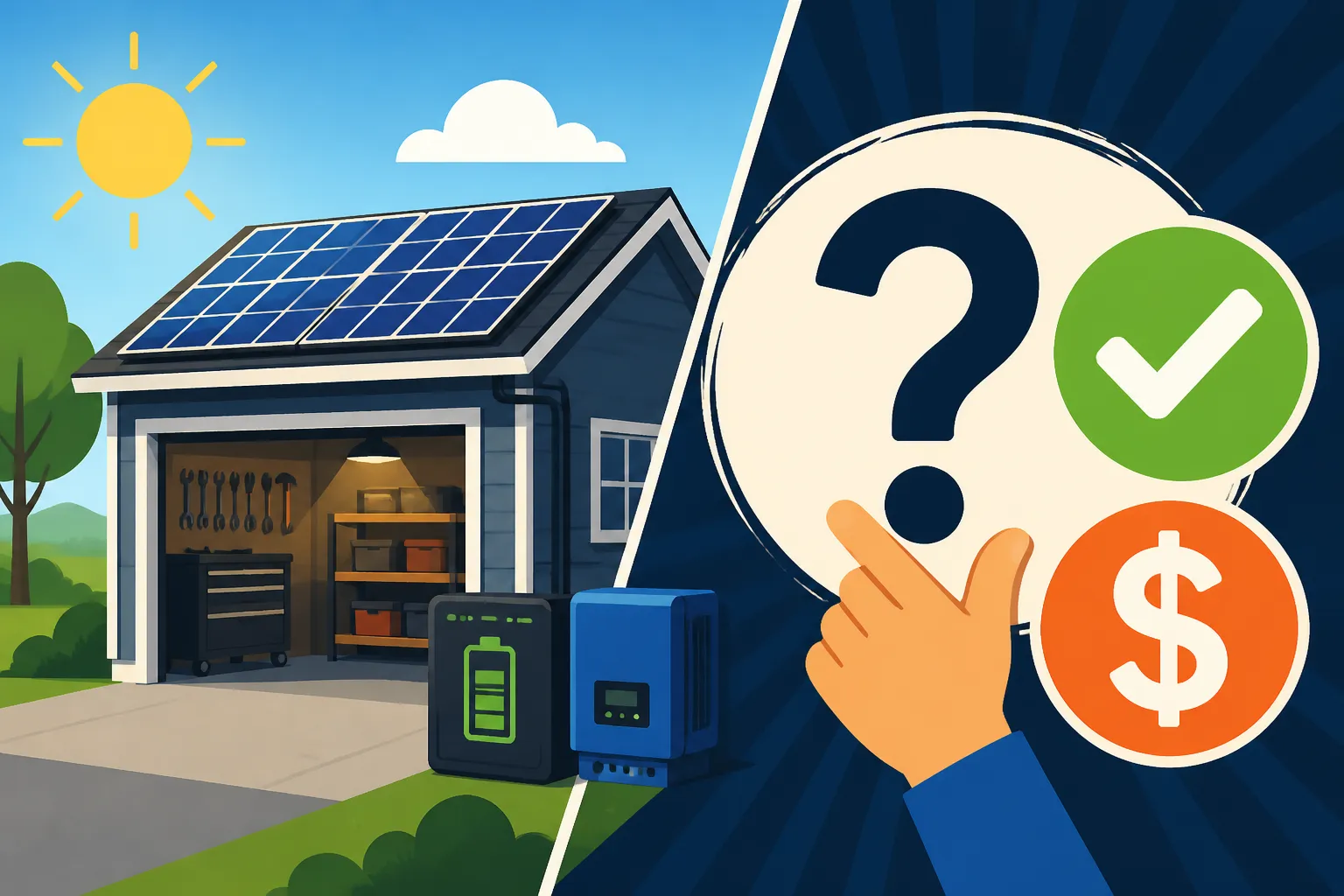
Is Off-Grid Solar Cost-Effective for a Garage
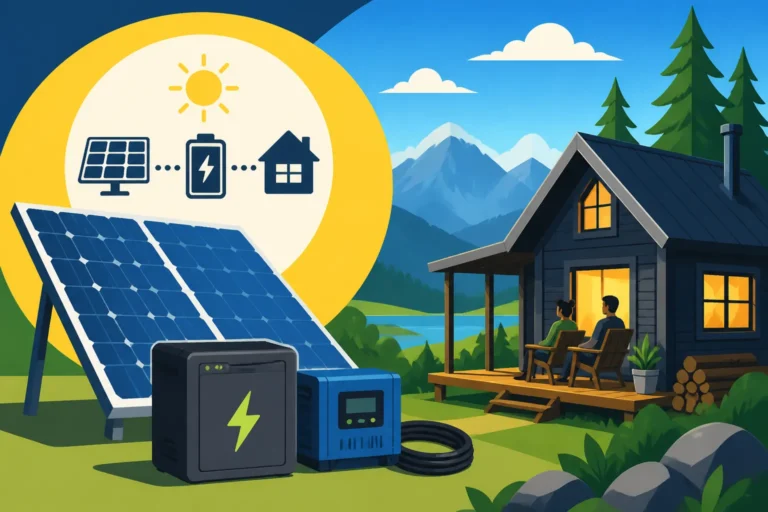
You've got that detached garage or workshop, right? A place for tinkering, working on hobbies, storing your tools, or maybe just having a quiet retreat. But the thought of digging trenches, running utility lines, and dealing with all the permits and costs for connecting it to the main grid can feel like a monumental, expensive headache. It's a common dilemma, and for many, the question boils down to this: is going off-grid with solar power a truly cost-effective solution for that humble garage? This guide is here to break down the real numbers, the practical considerations, and help you decide if solar independence is the right path for your workspace.
Understanding Your Garage's Power Needs
Before you even think about costs or equipment, the absolute first step in determining if off-grid solar is cost-effective for your garage is to get a crystal-clear picture of what you actually need to power. It’s not just about flipping on a light; it’s about understanding the cumulative draw of your devices. Many folks jump straight to looking at panels, but without this foundational step, you're essentially shooting in the dark and risking an undersized, or worse, an oversized and overpriced system.
What Appliances Will You Run?
Let's get specific. Will your garage be a simple storage shed needing only a few lights for occasional visits, or a full-blown woodworking shop humming with power tools all weekend? The difference in power draw is immense. For instance, a couple of LED lights might only sip a few watts, while a heavy-duty table saw can demand thousands of watts for short bursts. Consider everything:
- Lighting: Are you talking about a single bare bulb or a full array of bright shop lights? LED options are incredibly efficient, which is a huge win for off-grid systems.
- Small Electronics: Battery chargers for power tools, a radio, a fan in the summer, or perhaps a small mini-fridge for cold drinks. These typically have lower, continuous draws.
- Power Tools: This is where things get serious. A cordless drill charger is one thing, but running a miter saw, a router, a grinder, or especially a welder, will require a much more robust inverter and battery bank to handle their significant surge demands.
- Heating and Cooling: If you plan on making your garage a year-round workspace, a space heater or an air conditioner will be by far your biggest power consumers. These appliances can make an off-grid solar system exponentially more expensive to build, so be realistic about their necessity and runtime.
- Other Appliances: Maybe a small air compressor, a vacuum cleaner, or even a small TV. Each item adds to your overall energy budget.
Don't forget to consider both the running wattage and the surge (starting) wattage for motorized tools, which can be 2-7 times higher than their running wattage. This surge capacity is critical for choosing the right inverter, and often, an overlooked detail. You can learn more about how to do an off-grid load analysis to calculate your daily energy usage.
How Often Will You Use Them?
The frequency and duration of your usage play an equally significant role in determining cost-effectiveness. A system designed for weekend warrior projects is vastly different from one meant for daily, full-time operation.
- Occasional Use: If you only use your garage lights and a drill for an hour or two once a week, a relatively small, budget-friendly solar setup might suffice. You might even find that a powerful portable solar generator, perhaps from a brand like Jackery, combined with a folding solar panel, could meet your needs without a permanent installation. This simplicity can drastically reduce initial costs.
- Regular, Moderate Use: If you're out there several times a week, running lights, charging tools, and perhaps a small saw for a few hours at a time, you'll need a more substantial system with a larger battery bank to store enough energy. This allows you to power through evenings or cloudy days without running out of juice.
- Heavy, Daily Use: For those who treat their garage as a full-time workshop, complete with large power tools, continuous lighting, and possibly climate control, you're looking at a serious investment. This scenario often requires a large solar array, a significant battery bank, and a high-capacity inverter. The costs can quickly escalate to rival that of powering a small home.
Think about your "days of autonomy" – how long your system can run without sun. For a garage, you might only need a day or two, but for year-round reliability, you might want more buffer. Understanding these usage patterns is paramount for sizing your system accurately and avoiding unnecessary expenses. Getting your sizing right from the start can truly impact the Off-Grid Solar Cost Per Watt.
Breaking Down the Costs of Off-Grid Solar for a Garage
Now that you have a clear picture of your power needs, let's talk about the cold, hard cash. The initial sticker shock of an off-grid solar system can deter many, but it's important to look beyond that first outlay and consider the long-term benefits and savings, especially when compared to extending grid power.
Initial Investment: Components and Installation
The cost of going off-grid for your garage is highly variable, influenced by your power demands, component quality, and whether you DIY or hire professionals. However, we can break it down into the core components that make up any off-grid system. You'll find many of these components, and even complete kits, readily available on platforms like Amazon, offering a broad spectrum of prices and quality.
- Solar Panels: These are the workhorses, converting sunlight into electricity. Prices vary based on wattage, efficiency, and brand. For a basic garage setup, you might need anywhere from 200W to 1000W or more. Panels typically range from $1 to $2 per watt.
- Batteries: This is often the most expensive single component in an off-grid system, and for good reason—they store the energy. You'll need enough capacity to power your garage through evenings, cloudy days, and periods of heavy use. Lithium iron phosphate (LiFePO4) batteries are gaining popularity for their longevity and depth of discharge, but lead-acid batteries (like AGM) can be a more budget-friendly entry point. Expect to pay anywhere from a few hundred dollars for a small 12V system to several thousand for a robust 48V bank. Understanding the Cost of an Off-Grid Solar Battery Bank is crucial.
- Charge Controller: This device regulates the power flowing from your solar panels to your batteries, protecting them from overcharging. MPPT (Maximum Power Point Tracking) controllers are more efficient than PWM (Pulse Width Modulation) controllers but also cost more. Depending on your system size, a charge controller can range from $50 to $500+.
- Inverter: If you plan to run any standard household AC appliances (like most power tools, lights, or chargers), you'll need an inverter to convert the DC power from your batteries into AC power. The size (wattage) of the inverter must match or exceed the surge demand of your largest appliance. A good pure sine wave inverter can cost from $200 for smaller systems to over $1,500 for high-wattage units.
- Mounting Hardware, Wiring, and Safety Gear: Don't forget these essential, often overlooked costs. You'll need racks for your panels, proper gauge wiring, fuses, breakers, and disconnects. These "miscellaneous" items can easily add several hundred dollars to your budget.
- Installation Costs (if professional): If you're not comfortable with electrical work, hiring a professional for installation can add a significant chunk to your total. This can range from a few hundred to several thousand dollars, depending on the complexity. However, for many smaller garage setups, a DIY approach is entirely feasible and can significantly reduce the Off-Grid Solar Installation Cost.
A small, basic off-grid solar system for a garage (lights, phone charging, small tools) might cost anywhere from $800 to $2,500 for components if you DIY. A more capable system (powering larger tools, moderate use) could easily range from $3,000 to $8,000. For a full-fledged, climate-controlled workshop, you could be looking at $10,000 or more, especially if you opt for high-end components and professional installation.
Long-Term Savings and Payback
While the upfront cost might seem daunting, the real question of cost-effectiveness lies in the long-term savings. When considering a detached garage, the primary alternative is almost always extending grid power.
- Avoiding Utility Extension Fees: This is where off-grid solar often shines. Running new electrical lines from your main house to a detached garage, especially if it's a significant distance, can be incredibly expensive. Trenching, conduit, wiring, and labor can easily cost thousands, sometimes even tens of thousands of dollars, depending on the distance and terrain. In many cases, the cost of an off-grid solar system is directly competitive with, or even significantly cheaper than, a utility line extension. This is a critical comparison when asking if Off-Grid Solar vs Utility Extension Cost makes sense.
- Eliminating Monthly Utility Bills: Once your solar system is installed, your energy is essentially free. You're no longer paying for electricity consumption in your garage, which can add up over time, especially if you use it regularly. Think of it as prepaying for decades of power.
- Reduced Maintenance: Modern solar panels are incredibly durable and require minimal maintenance, usually just occasional cleaning. Lithium batteries, while expensive upfront, offer thousands of cycles and can last 10-15 years or more, drastically reducing long-term battery replacement costs compared to lead-acid.
- Energy Independence: Beyond the financial aspect, there's the invaluable benefit of energy independence. Your garage won't be affected by grid outages, and you have complete control over your power source. This resilience can be a significant motivator for many off-gridders.
The "payback period" for an off-grid garage system will vary wildly. If extending grid power would cost you $5,000, and you can build a comparable off-grid solar system for $4,000, your payback is immediate—you've already saved money upfront. If grid extension is cheap, the payback might be longer, depending on how much electricity you would have consumed. This concept is thoroughly explained in Off-Grid Solar Payback Period Explained.
Here's a simplified comparison of costs:
| Aspect | Extending Grid Power (Approx. Cost) | Off-Grid Solar System (Approx. Cost) |
|---|---|---|
| Initial Setup | $2,000 – $20,000+ (Trenching, wiring, permits, labor) | $800 – $10,000+ (Components, mounting, wiring, optional installation) |
| Ongoing Costs | Monthly utility bills for consumption | Minimal (Occasional battery replacement, cleaning) |
| Resilience | Subject to grid outages | Independent, immune to grid outages |
| Complexity | Often involves utility company, contractors, permits | Can be DIY, but proper sizing/installation is key; permits sometimes needed |
| Scalability | Limited, difficult to expand without further utility work | Highly scalable, can add more panels/batteries as needed |
| Environmental Impact | Standard grid mix (fossil fuels often dominant) | Clean, renewable energy |
Factors Influencing Cost-Effectiveness
The decision to go off-grid with solar for your garage isn't a one-size-fits-all answer. Several key factors will tip the scales towards or away from cost-effectiveness for your specific situation. Ignoring these can lead to expensive mistakes down the road.
Location and Sun Exposure
Sunshine isn't just a mood enhancer; it's the literal fuel for your solar system. Your geographical location and the specific conditions around your garage significantly impact how much power your panels can generate.
- Peak Sun Hours: This is the equivalent number of hours per day when solar irradiance averages 1,000 watts per square meter. A garage in sunny Arizona, averaging 6 peak sun hours, will generate much more power from the same size array than a garage in overcast Seattle, which might only see 3-4 peak sun hours. More peak sun hours mean you can use fewer panels or generate more power with the same array, reducing costs.
- Shading: Trees, nearby buildings, or even seasonal shadows can drastically reduce your panels' output. A partially shaded panel can reduce the output of an entire string of panels. Before committing to solar, observe your garage's location throughout the day and across different seasons to identify any potential shading issues. Finding a spot with optimal, unobstructed southern exposure (in the Northern Hemisphere) is critical. If your garage is constantly shaded, you'll need a much larger (and more expensive) array to compensate, or solar might not be feasible at all.
- Climate: Extreme temperatures can affect panel efficiency and battery performance. While panels generally perform better in cooler temperatures (up to a point), very cold conditions can reduce battery capacity and require specific battery heating solutions for optimal performance. Conversely, extreme heat can slightly decrease panel output. Factor these environmental conditions into your design. You can learn more about Off-Grid Solar Cost in Cold Climates for specific challenges.
DIY vs Professional Installation
This is perhaps one of the biggest determinants of your initial investment. The choice between doing it yourself and hiring a professional can swing costs by thousands of dollars.
- DIY Installation: For many standard garage setups, especially those with simpler power needs, DIY installation is a very popular and cost-effective route. Basic electrical knowledge, a willingness to learn, and careful attention to safety can save you significantly on labor costs. Many people start with pre-packaged solar kits available online, which simplify the process considerably. Companies like Renogy and EcoFlow offer comprehensive kits that make it easier for beginners to get started. You still need to buy quality components, but you cut out the hourly rate of electricians and installers. A great resource for those looking to build themselves is a guide on DIY Off-Grid Solar Installation Step by Step.
- Professional Installation: If your garage system is complex, involves high-voltage components, or you're simply uncomfortable with electrical work, hiring a licensed electrician or solar installer is money well spent. They ensure safety, compliance with local codes (which may be a factor even for off-grid in some areas), and optimal system performance. While more expensive upfront, professional installation provides peace of mind and often comes with warranties on labor. However, for a simple garage, this added cost might make off-grid solar less cost-effective compared to other options. It's a trade-off between upfront savings and expert assurance. Consider reading about DIY vs Professional Off-Grid Solar Cost to weigh your options.
System Scalability and Future Needs
One of the great advantages of off-grid solar is its inherent modularity. You don't have to build the "perfect" system on day one.
- Phased Approach: You can start small, with just enough power for lights and a few chargers, and then expand as your needs grow or your budget allows. This phased approach can make the initial investment more manageable and ultimately more cost-effective. Perhaps you start with a modest setup to power your lights and a few small tools, then later add more panels and batteries to run a larger compressor or even a small heater.
- Future Expansion: When designing your initial system, consider future expansion. For example, choose an inverter that has some headroom or a charge controller that can handle more solar input than you're currently installing. Laying slightly larger conduit or leaving space for additional batteries can save you headaches and costs down the line. If you think you might eventually need to run a small welder or a more powerful air compressor, plan for an inverter with a higher surge capacity now, rather than having to replace it entirely later. Learn how to Design an Expandable System from the outset.
- Avoiding Over-Sizing: Conversely, resist the urge to drastically oversize your system "just in case." While some buffer is good, a significantly oversized system leads to wasted money on components you don't truly need or use, reducing its overall cost-effectiveness. A comprehensive guide on How to Right-Size vs Oversize a System can help you strike the perfect balance.
Making the Decision: Is It Right for Your Garage?
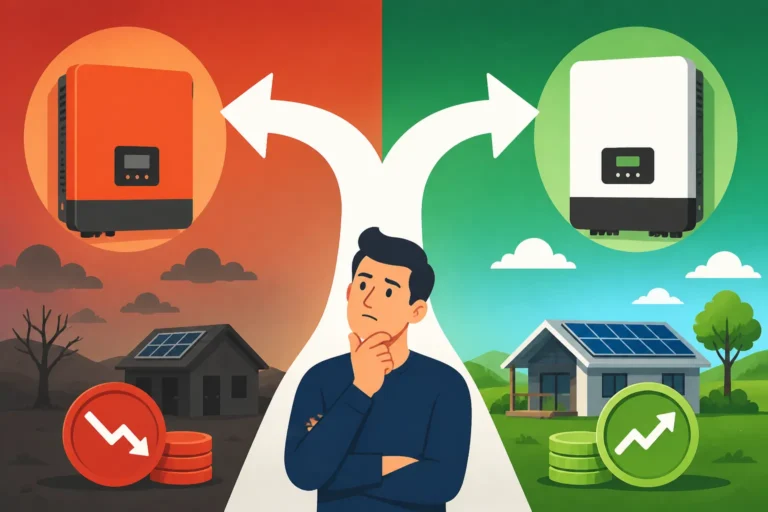
So, after all this deliberation, how do you make the final call? Is off-grid solar truly the most cost-effective power solution for your garage? It’s about weighing the specific advantages and disadvantages against your unique situation and priorities.
Pros and Cons of Off-Grid Solar for Garages
Let's lay it all out, clearly showing the good and the not-so-good, so you can see if the benefits outweigh the challenges for your specific garage needs. This isn't just about money; it's about lifestyle, convenience, and independence.
Pros:
- Cost-Effective Alternative to Grid Extension: For remote garages or those far from the main service panel, the cost of trenching, wiring, and permits for grid extension often far exceeds the cost of a comparable off-grid solar setup. This is frequently the biggest financial driver for choosing solar. Imagine avoiding thousands of dollars in electrician fees just to get a power line a hundred feet away.
- Energy Independence and Reliability: Once installed, your garage is immune to grid outages. If the power goes out at your house, your garage (and your tools) can keep running. This is a huge benefit for those who rely on their garage as a workspace or for critical storage. For emergency preparedness, an off-grid garage can be a vital resource.
- No Monthly Utility Bills for Garage Usage: Say goodbye to that creeping addition to your electricity bill each month. After the initial investment, the sunshine provides free power for decades, assuming proper maintenance and battery care. This predictable cost model can be very appealing.
- Environmental Benefits: You'll be powering your space with clean, renewable energy, reducing your carbon footprint. This is a significant draw for many environmentally conscious homeowners.
- Scalability: Start small and grow your system as your power needs evolve or your budget allows. This flexibility means you don't have to commit to a massive investment all at once. For example, you could start with a simple setup from a brand like Renogy to power basic lights and expand later with more panels and batteries.
- Increased Property Value (Potentially): A well-designed and installed off-grid solar system can be an attractive feature for future buyers, showcasing resilience and lower operating costs.
Cons:
- High Initial Investment: While often cheaper than grid extension, the upfront cost for panels, batteries, inverter, and charge controller can still be substantial, especially for systems powering high-demand tools or climate control. This can be a barrier for those on a tight budget.
- Dependence on Sunlight: Cloudy days, heavy snow, or even dense fog will reduce power generation. You must size your battery bank appropriately to store enough energy for these periods, which adds to the cost. If you're in an area with consistently poor sun exposure, solar might not be practical.
- Battery Maintenance and Replacement: Batteries are the weakest link in any off-grid system. While lithium batteries last a long time, they are expensive to replace (every 10-15+ years for LiFePO4, or 3-7 years for lead-acid). Regular monitoring and proper charging are essential to maximize their lifespan. You should also consider the Off-Grid Solar Battery Replacement Cost Over Time.
- Sizing Complexity: Accurately calculating your power needs, especially for surge loads from power tools, can be tricky. An undersized system will leave you frustrated, while an oversized one wastes money. This requires careful planning and perhaps some expert consultation.
- Space Requirements: Solar panels need adequate, unshaded roof or ground space. A large system for a high-demand garage might require more space than you have available or are willing to dedicate.
- Potential for DIY Mistakes: While DIY can save money, incorrect wiring or improper component matching can be dangerous and costly. Safety precautions and adherence to electrical standards are crucial.
Alternative and Hybrid Power Solutions
Sometimes, off-grid solar isn't a perfect fit, or it needs a little help. There are other options or ways to combine technologies to make your garage power solution more robust or cost-effective.
- Portable Solar Generators: For minimal power needs—a few lights, charging power tools, a radio—a portable solar generator can be surprisingly effective and incredibly cost-effective. Brands like Jackery or Bluetti offer powerful units that can be charged by solar panels and then provide AC and DC power on demand. You simply bring it out when needed, charge it up, and stow it away. This avoids the complexities and permanent installation costs of a full off-grid system, and it's easily portable for other uses, like camping. This can be a good starting point for off-grid solar for beginners.
- Hybrid Systems with a Generator: For those with higher power demands, or in areas with inconsistent sun, combining off-grid solar with a fossil fuel generator (gasoline, propane, or diesel) can offer the best of both worlds. The solar handles daily loads, and the generator kicks in during extended cloudy periods, high demand, or when batteries are low. This reduces reliance on the generator (and its fuel costs) while ensuring reliable power. Many modern off-grid inverters have generator integration capabilities, even automatic start features. Consider the Cost of Adding a Generator to Off-Grid Solar to your setup.
- Micro-Hydro or Wind (less common for garages): While not typically practical for a standalone garage, in very specific geographical locations with consistent wind or flowing water, micro-hydro or small wind turbines could theoretically augment or replace solar. However, for most garage scenarios, these options are far more complex and expensive to implement.
- Simply Reducing Power Needs: Sometimes, the most cost-effective solution is to simply reduce your power consumption. Can you use more hand tools? Rely on natural light more often? Choose highly efficient LED lighting and energy-star rated appliances? By cutting down your overall energy footprint, you can dramatically reduce the size and cost of the solar system you need, making off-grid solar more feasible.
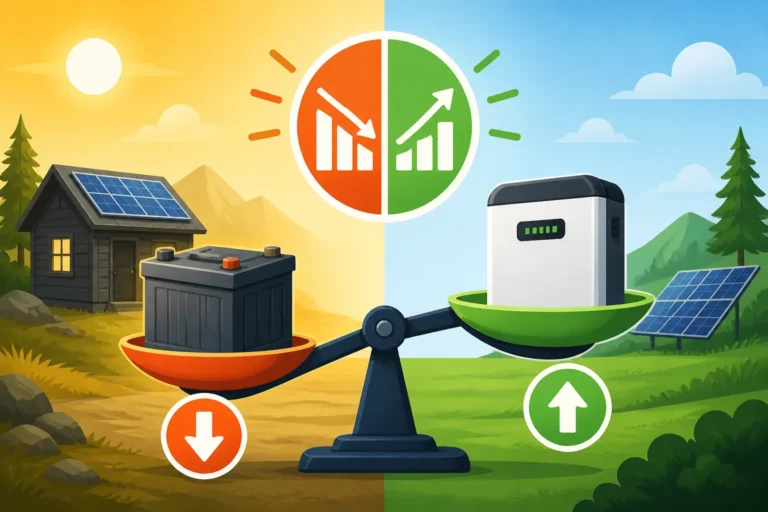
Ultimately, determining if off-grid solar is cost-effective for your garage comes down to a personalized assessment. Measure your needs, weigh the upfront investment against long-term savings (especially compared to grid extension), and consider the intangible benefits of independence. For many, particularly those with remote garages or a desire for true autonomy, the answer is a resounding yes. For others, a hybrid approach or even a simple portable solar generator might be the more sensible route.
Disclaimer
The information provided in this guide is for general informational purposes only and does not constitute professional advice. Off-grid solar system design and installation can be complex and involve electrical hazards. Always consult with qualified professionals and adhere to all local electrical codes and permitting requirements. Costs and savings estimates are approximate and can vary widely based on location, component choices, and individual circumstances.