Off-Grid Solar Cost Broken Down by Component
Getting started with off-grid solar can feel a bit like staring at a complex puzzle with a hefty price tag, and you're not quite sure which piece costs what. It's a common frustration to see a big number quoted for a solar system and wonder, "Where is all that money actually going?" This guide is designed to pull back the curtain, breaking down the cost of an off-grid solar system component by component so you can understand every penny and budget with confidence.
The Core Components Driving Off-Grid Solar Costs
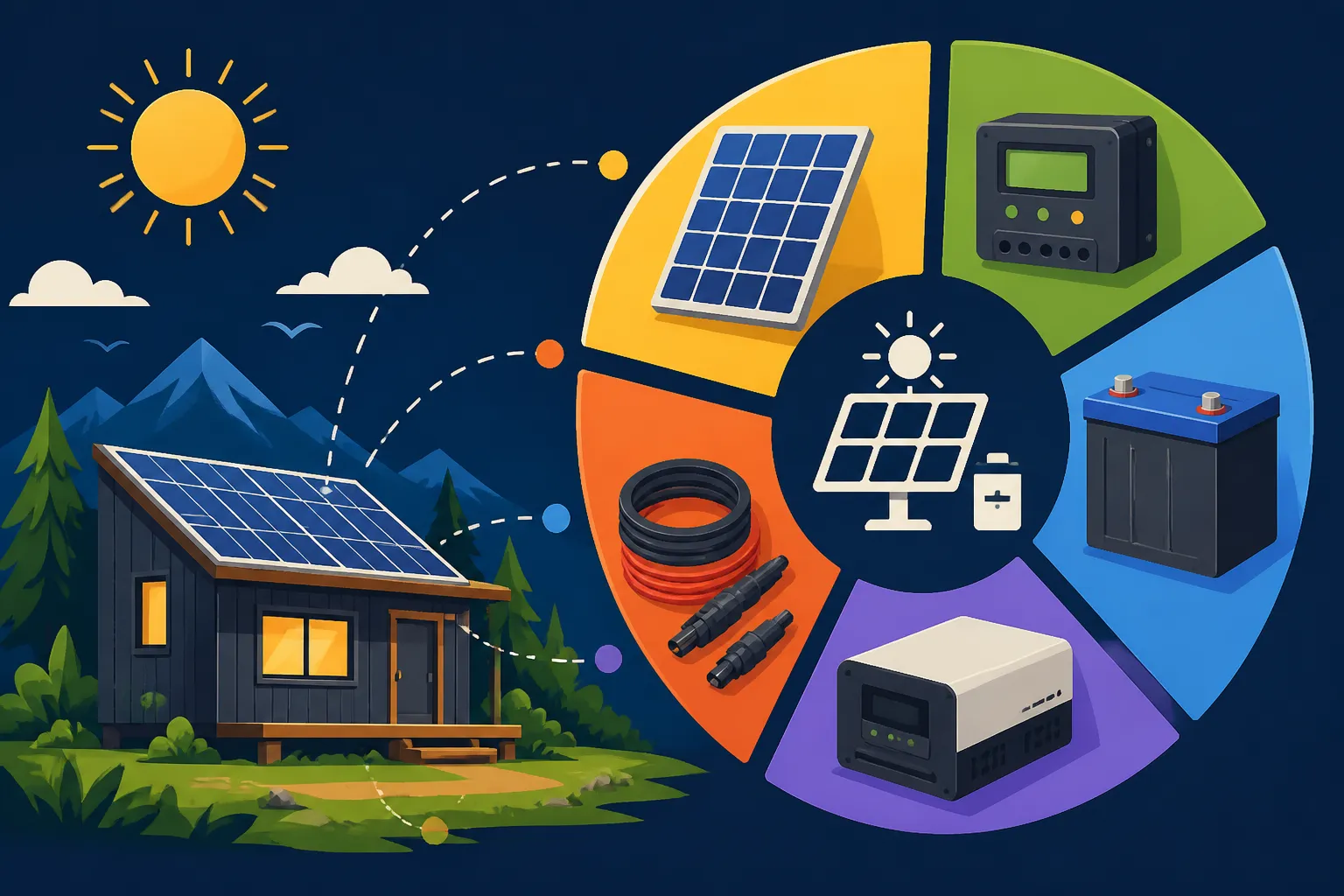
When you envision an off-grid solar system, certain key pieces immediately come to mind: the panels soaking up the sun, the batteries storing that precious energy, and the electronics that make it all work. These are the heavy hitters in terms of cost, and understanding their individual contributions is crucial.
Solar Panels The Power Harvesters
The solar panels themselves are often the most visible part of your system, perched on a roof or a ground mount, diligently converting sunlight into electricity. Their cost is determined by several factors, including the type of panel, its wattage, and the manufacturer's reputation.
Types of Panels and Their Price Tags
When you're looking at solar panels, you'll primarily encounter monocrystalline and polycrystalline options, with monocrystalline being the more common choice for off-grid setups due to its efficiency. Monocrystalline panels are typically made from a single crystal of silicon, giving them a uniform dark appearance and higher efficiency rates, often ranging from 17% to over 22%. This efficiency means they can generate more power in a smaller footprint, which is a huge advantage if you have limited roof space on a cabin or an RV. However, this higher performance usually comes with a slightly higher price per watt. Polycrystalline panels, made from multiple silicon fragments, are a bit less efficient, usually in the 15-17% range, but they are often more budget-friendly. They have a distinctive blue, speckled appearance. For specialized applications, you might consider flexible solar panels, which are great for curved surfaces on vans or boats, but they generally cost significantly more per watt and tend to have a shorter lifespan and lower efficiency than rigid panels.
Wattage and Quantity Impact on Cost
Naturally, the more power you need, the more watts of solar panels you'll require, and thus, the higher the cost. Panels are sold by their wattage, typically ranging from small 100-watt panels for minor applications up to large 400-watt or 500-watt panels for substantial systems. For example, a single 400-watt monocrystalline panel might cost anywhere from $200 to $500, depending on the brand and quality. If your energy audit reveals you need, say, 2,000 watts of solar generation capacity, you could achieve that with five 400-watt panels or twenty 100-watt panels. While buying in bulk can sometimes lead to slight discounts, the overall cost scales directly with the total wattage. This is a critical step in determining how many solar panels for off-grid living are necessary. It's also worth noting that higher wattage panels can sometimes simplify wiring, as you have fewer individual units to connect.
The Critical Role of Solar Batteries
Batteries are arguably the most expensive single component in an off-grid solar system, and for good reason—they are your energy reservoir, ensuring you have power when the sun isn't shining. Their cost is heavily influenced by their chemistry, capacity, and expected lifespan.
Battery Chemistry and Lifetime Value
The choice of battery chemistry has a monumental impact on your budget and your system's long-term performance. The two main contenders for off-grid living are lead-acid and lithium iron phosphate (LiFePO4) batteries. Lead-acid batteries, including flooded lead-acid (FLA) and sealed absorbed glass mat (AGM) batteries, are generally cheaper upfront. A 100Ah 12V AGM battery might cost $200-$300. However, they have a shorter lifespan (typically 3-7 years or 500-1500 cycles), require more maintenance (especially FLA), and can only be discharged to about 50% of their capacity without significantly shortening their life. This means you need more lead-acid battery capacity to achieve the same usable energy as a lithium bank.
On the other hand, LiFePO4 batteries are a significant upfront investment, with a 100Ah 12V LiFePO4 battery often ranging from $300 to $800, depending on the brand. Brands like Battle Born and EG4 are popular for their robust performance. However, they boast an impressive lifespan (10-15 years or 3,000-7,000 cycles), can be discharged much deeper (up to 80-100%), and are virtually maintenance-free. When you factor in their longer lifespan and higher usable capacity, the LiFePO4 vs Lead-Acid Battery Cost often makes lithium batteries more cost-effective over the entire life of your system.
Capacity and Days of Autonomy
Battery capacity is measured in amp-hours (Ah) or kilowatt-hours (kWh), and it dictates how much energy your system can store. The more power you need to store, and the more "days of autonomy" you desire (i.e., how many cloudy days your system can last without sun), the larger and more expensive your battery bank will be. For a small cabin running essential lights and charging electronics, a 200-400Ah 12V system might suffice, whereas a full-time off-grid home with a well pump, refrigerator, and other appliances could easily need a 48V system with 400Ah or more of lithium capacity, equating to many thousands of dollars. Understanding How Many Batteries for an Off-Grid System is paramount to a well-designed and cost-effective setup.
Inverters and Charge Controllers The Brains of the Operation
These electronic components are the unsung heroes, managing the flow of electricity and converting it into a usable form for your appliances. They can be purchased as separate units or integrated into an "inverter charger" combination.
Inverter Types and Power Output
The inverter is responsible for converting the DC (direct current) electricity from your batteries into AC (alternating current) electricity, which is what most household appliances use. The cost depends on its power output (measured in watts or kilowatts) and its waveform. For anything beyond basic charging, you'll need a pure sine wave inverter, which provides clean, stable power suitable for sensitive electronics like laptops and refrigerators. Modified sine wave inverters are cheaper but can damage certain appliances and are generally not recommended for primary off-grid use.
A small 1000-watt pure sine wave inverter might cost a few hundred dollars, while a large 5,000-watt or 8,000-watt inverter for a whole-house system could run into the thousands. Reputable brands like Victron, Sol-Ark, and Growatt offer high-quality inverters that are often combined with charge controllers for a streamlined setup. The power output you need directly correlates with your highest simultaneous load – for example, running a microwave and a well pump at the same time requires a larger inverter than just running a few lights.
Charge Controller Efficiency and Sizing
The charge controller regulates the voltage and current coming from your solar panels to charge your batteries efficiently and prevent overcharging. There are two main types: PWM (Pulse Width Modulation) and MPPT (Maximum Power Point Tracking). PWM controllers are simpler and less expensive, typically suitable for smaller systems where the panel voltage closely matches the battery bank voltage.
MPPT charge controllers are more advanced and significantly more efficient, especially in larger systems or when the panel voltage is much higher than the battery voltage. They can extract up to 30% more power from your panels compared to PWM controllers, making them a worthwhile investment for most off-grid setups. An MPPT charge controller can range from $100 for a small unit to over $1,000 for a high-amperage unit capable of handling a large solar array. Choosing the right How to Size a Charge Controller is essential to ensure your batteries charge properly and efficiently.
Beyond the Big Three Balance of System Costs
While panels, batteries, and inverters get most of the attention, a complete off-grid system requires a host of supporting components, often referred to as "Balance of System" (BOS) elements. These items ensure safety, proper installation, and efficient operation, and they can add a surprising amount to your total Off-Grid Solar Cost: Complete Breakdown.
Mounting and Racking Your Panels
Getting your solar panels securely installed and oriented correctly is crucial for their performance and longevity. The cost here varies based on your chosen mounting method and any advanced features.
Roof Mounts versus Ground Mounts
If you're putting panels on a roof, you'll need a racking system designed for that purpose. These typically involve rails, clamps, and L-feet or standoffs that attach to your roof structure. Roof mounts are generally less expensive than ground mounts, often costing a few hundred to over a thousand dollars depending on the size of your array and roof type. However, they require careful sealing to prevent leaks and often involve working at heights.
Ground mounts, while more expensive for the hardware itself, offer flexibility in panel placement and tilt angles, allowing for optimal sun exposure throughout the seasons. They require a sturdy foundation, whether concrete piers or earth anchors, and a robust frame. A basic ground mount might start at $500-$1,000 for a small array, scaling up significantly for larger systems or more complex designs. Building a How to Build and Install a Ground Mount yourself can save on labor costs, but the materials can still add up.
Tracking Systems and Their Expense
For those seeking maximum energy harvest, particularly in regions with less consistent sunlight or for critical loads, a solar tracking system can be considered. These systems automatically adjust the angle of your panels to follow the sun throughout the day, significantly increasing energy production. However, they are a considerable investment, often adding thousands of dollars to the cost due to their mechanical complexity and specialized controls. While they boost efficiency, the added upfront cost and potential for maintenance usually make them impractical for most residential off-grid systems, especially when simply adding a few more stationary panels can achieve similar results more affordably.
Wiring Fuses and Disconnects
Electrical safety and proper power flow are paramount in an off-grid system. This means investing in appropriate wiring, fuses, breakers, and disconnect switches. Skimping here is not an option, as it compromises safety and system reliability.
Cable Gauges and Lengths
You'll need various types of wiring: thick battery cables to connect your battery bank to your inverter, smaller gauge DC solar cables (PV wire) to connect your panels to the charge controller, and standard AC wiring to distribute power from your inverter to your appliances. The cost of wire depends on its gauge (thickness), length, and material (copper is standard). Larger gauges are needed for higher currents and longer runs to prevent voltage drop and overheating, which means more expensive wire. For a system installed in a remote shed far from the home, the cost of long, thick copper cables can be surprisingly high. You can often find decent deals on bulk wire on platforms like Amazon.
Safety Devices and Combiner Boxes
Every off-grid solar system needs proper overcurrent protection and disconnects. This includes DC-rated fuses or circuit breakers for your solar array and battery bank, and AC circuit breakers for your inverter's output. A PV combiner box is often used to bring multiple strings of solar panels together before going to the charge controller, housing string fuses and a DC disconnect switch. These safety components, while individually inexpensive (a fuse holder might be $10-$20, a DC breaker $50-$100), add up quickly. A well-equipped combiner box can range from $150 to $500. Ignoring these is a critical Off-Grid Solar Safety and Grounding mistake that can lead to catastrophic failures or even fires.
System Monitoring and Protection
Knowing what your system is doing and protecting it from unforeseen events can prevent costly repairs and provide peace of mind.
Battery Monitors and Smart Features
A good battery monitor is invaluable for understanding the state of charge, current draw, and overall health of your battery bank. Basic voltage meters are cheap, but a proper shunt-based battery monitor from a brand like Victron Energy can provide highly accurate readings of amp-hours consumed and remaining capacity, giving you true insight into your power reserves. These range from $150 to $400. Many modern inverters and charge controllers also come with smart features and Wi-Fi connectivity, allowing you to monitor your system remotely via a smartphone app. While these features add to the initial cost, they can save you headaches and optimize system performance in the long run.
Surge Protectors and Grounding Equipment
Protecting your valuable electronics from lightning strikes or power surges is essential. Surge protective devices (SPDs) should be installed on both the DC and AC sides of your system. Additionally, proper grounding of all metallic components—panels, racking, inverter chassis, etc.—is critical for safety and code compliance. This involves grounding rods, appropriate grounding wire, and bonding straps. These components are generally not very expensive, perhaps a few hundred dollars for a complete setup, but they are non-negotiable for a safe and reliable system. Understanding Off-Grid Solar Grounding and Bonding Explained is crucial for preventing electrical hazards.
Here's a quick overview of typical component cost ranges (these are estimates and can vary widely):
| Component Category | Typical Cost Range (USD) | Notes |
|---|---|---|
| Solar Panels | $0.50 – $1.50 per watt | Monocrystalline often higher, flexible panels most expensive. |
| Batteries | $200 – $800 per 100Ah 12V | Lead-acid cheaper upfront, LiFePO4 higher initial but longer life. |
| Inverter | $300 – $3,000+ | Based on wattage (1kW to 8kW+) and pure sine wave quality. |
| Charge Controller | $100 – $1,000 | MPPT controllers are more expensive but more efficient. |
| Mounting Hardware | $0.20 – $0.50 per watt | Roof mounts generally cheaper than ground mounts. |
| Wiring & Cables | $100 – $500+ | Depends on system size, distance, and wire gauge. |
| Safety Devices | $100 – $400 | Fuses, breakers, disconnects, combiner box. |
| Monitoring | $0 – $400 | Built-in features or dedicated battery monitors. |
| Conduit & Misc. | $50 – $200 | For cable protection, small hardware. |
Labor and Miscellaneous Expenses
Beyond the hardware itself, there are other significant cost factors that often get overlooked but are crucial for a functional and compliant off-grid system. These include installation labor (or your own time if DIY) and the often-unpredictable world of permits and inspections.
DIY Versus Professional Installation
This is one of the biggest cost differentiators for any off-grid solar project. Deciding between doing it yourself and hiring professionals fundamentally impacts your budget.
Tools and Time for DIYers
If you're handy and have a good understanding of electrical systems, going the DIY route can save you thousands of dollars in labor costs. However, "saving money" here often means investing your own time and potentially purchasing specialized tools. You'll need basic hand tools, crimpers for various connectors, a multimeter for testing, possibly a torque wrench for panel mounts, and safety gear. The learning curve can be steep, and the time commitment for designing, sourcing, and installing a system can be substantial, especially for a whole-home setup. While you can find great resources online and purchase components from places like Amazon, it’s a commitment. Many people start with a small off-grid solar kit for beginners to get a feel for the process. Remember, your time has value, and a DIY build also means you're responsible for troubleshooting and future maintenance. For a deeper dive, consider looking into How Much Cheaper Is DIY Off-Grid Solar.
Hiring an Electrician or Installer
Opting for professional installation significantly increases the upfront cost but offers peace of mind. Experienced solar installers or licensed electricians are familiar with codes, best practices, and efficient installation techniques. They can ensure your system is properly sized, safely wired, and meets all local regulations, which is especially important if you plan to get your system inspected or insured. Labor costs for a professional installation can range from $2.00 to $4.00 per watt, sometimes even more for complex projects. For a 5kW system, that could easily add $10,000 to $20,000 to your total bill. While pricey, this can be invaluable for larger, more complex systems or for those who lack the time or expertise for a DIY build.
Permitting Inspections and Unexpected Costs
Navigating the bureaucratic side of off-grid solar can be frustrating, but it's often a necessary evil, and ignoring it can lead to bigger problems down the line.
Navigating Local Regulations
Even if you're fully off-grid, many jurisdictions still have rules and regulations regarding electrical installations, especially for permanent structures. You might need to secure a building permit or an electrical permit from your county or municipality. Permit fees vary widely, from a few dozen dollars to several hundred, or even over a thousand for larger projects. The process can involve submitting detailed system designs and wiring diagrams for approval. While permits are sometimes viewed as a hassle, they ensure your system is installed safely and to a certain standard, protecting you and your property. It's always best to check with your local authority about Off-Grid Solar Permit Requirements before you start any major installation.
Future Expansion and Upgrades
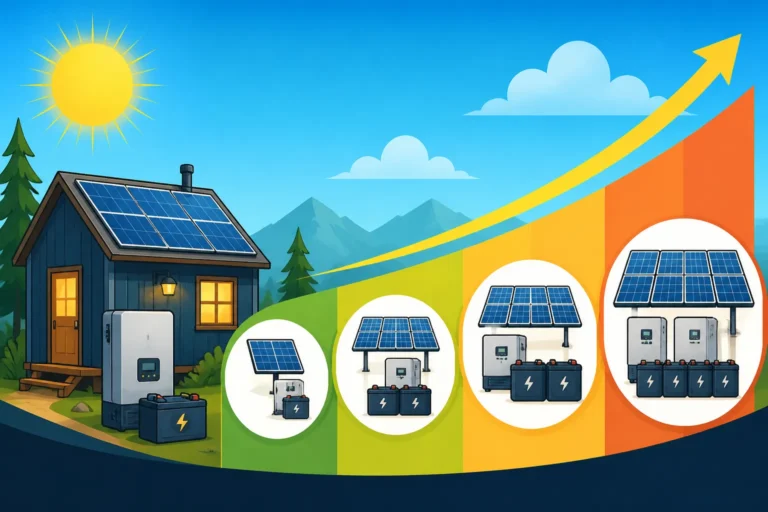
It’s tempting to build a system for your current needs, but thinking about future expansion can save money in the long run. Many off-grid homeowners find their energy needs increase over time, whether it's adding a new appliance, a workshop, or simply wanting more comfort. Designing an How to Design an Expandable System from the start, perhaps by oversizing your charge controller or inverter slightly, or making sure your battery bank is easily expandable, can prevent costly overhauls later. These "hidden costs of going off-grid" can sometimes catch people by surprise. Furthermore, technology evolves, and components might need replacement. For example, understanding Off-Grid Solar Battery Replacement Cost Over Time is a crucial long-term consideration. It's wise to budget a small contingency fund for unexpected issues or desired upgrades.
Disclaimer
Please note that the information provided in this article is for general guidance and informational purposes only. Off-grid solar system costs can vary significantly based on location, specific energy needs, equipment choices, and installation methods. It is highly recommended to consult with qualified solar professionals and local authorities before making any purchasing or installation decisions.