Long-Term Savings of Off-Grid Solar
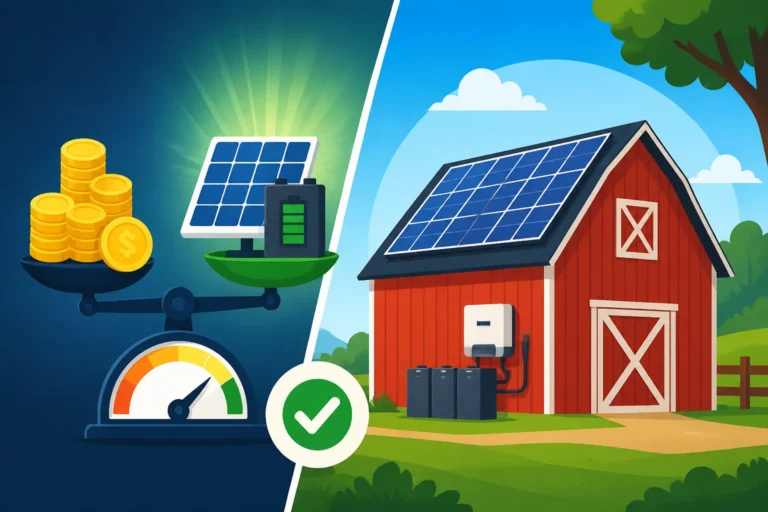
Stepping off the grid can feel like a daunting financial leap, especially when you look at the initial investment in solar panels, batteries, and inverters. Many folks get caught up in the sticker shock, worrying if they're truly making a wise decision for their future. This comprehensive guide is here to shed light on the often-overlooked long-term savings and financial benefits that off-grid solar living can bring, helping you understand how your investment pays off over years and even decades.
Beyond the Upfront Sticker Shock: Understanding True Cost Savings
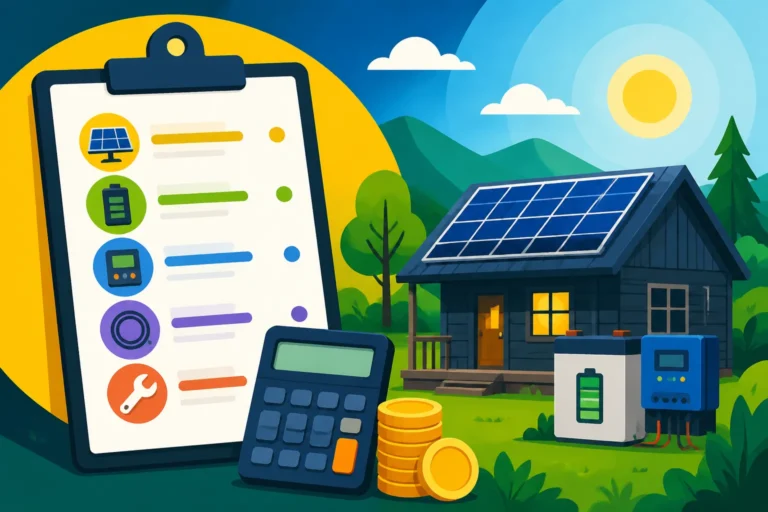
When you first start researching off-grid solar, it’s easy to get bogged down in the immediate expenses. You’re looking at solar panels, batteries, inverters, charge controllers, wiring, and mounting hardware, and the numbers can feel overwhelming. It’s natural to wonder, "Is this really going to save me money in the long run, or am I just trading one utility bill for a massive capital expense?" The truth is, while the initial outlay for an off-grid solar system can be significant, the real magic, and the real savings, unfold over its operational lifetime. It's less about avoiding a monthly payment and more about investing in a depreciating asset that produces a free commodity: electricity.
Think about it like buying a reliable, fuel-efficient car versus constantly renting one or relying on public transport that might not go where you need it to. There's an upfront cost, but the independence, convenience, and eventual savings on ongoing fares or rentals make the investment worthwhile. Similarly, an off-grid system offers a pathway to energy independence, shielding you from ever-increasing utility rates and providing predictable energy costs for years to come. Understanding this foundational shift in how you acquire and consume power is the first step toward appreciating the substantial long-term financial advantages. For a deeper dive into what you might expect to pay, explore our detailed guide on How Much Does an Off-Grid Solar System Cost.
Eliminating Utility Bills Permanently
The most obvious and often the largest long-term saving for off-grid solar users is the complete elimination of monthly utility bills. For most grid-tied homeowners, electricity is a significant recurring expense, subject to fluctuating rates, fuel surcharges, and often baffling fees. Imagine never again receiving a bill from your local power company – no more connection fees, transmission costs, or peak usage penalties. This isn't just about the current cost of electricity, but about future-proofing your finances against inevitable price hikes. Over the past decade, electricity rates have consistently risen across the U.S., and there's little to suggest this trend will reverse. By generating your own power, you lock in your energy costs, essentially paying in advance for decades of electricity.
Consider a family in central Texas, where summer AC usage can send bills soaring over $300-$400 a month. Over a year, that's $3,600-$4,800. Multiply that by 20-25 years, the typical lifespan of solar panels, and you're looking at a staggering $72,000-$120,000 in avoided utility costs – and that's without accounting for future rate increases. The peace of mind alone, knowing your lights will stay on regardless of what the energy market does, is invaluable. This direct saving frees up a substantial portion of your monthly budget, which can then be allocated to other needs, investments, or simply enjoying your newfound financial freedom. If you're pondering whether the initial investment is worth it, our article Is Off-Grid Solar Worth the Cost offers a comprehensive perspective.
Reduced Dependence on Fossil Fuels
Another major area of long-term savings comes from drastically reducing or even eliminating your reliance on fossil fuels, particularly if you're currently using a generator for power. For many remote properties or off-grid enthusiasts, a noisy, fuel-guzzling generator has been the go-to solution for reliable power. But anyone who's owned one knows the constant drain on the wallet: buying gasoline or propane, dealing with storage, and the inevitable maintenance costs.
Switching to off-grid solar significantly slashes these expenses. While a backup generator might still be part of a robust off-grid system, its runtime will be dramatically reduced, often only kicking in during extended periods of low sunlight or exceptionally high demand. This means fewer trips to the gas station, less money spent on fuel, and less wear and tear on the generator itself. Over the course of a year, the savings on fuel alone can be substantial. For example, a generator running 4-6 hours a day could consume several gallons of fuel, adding up to hundreds, if not thousands, of dollars annually. When you factor in the rising cost of fuel, these savings only become more pronounced over time. Our guide on Off-Grid Solar vs Generator Fuel Cost provides an in-depth comparison to help you visualize these savings.
Where the Savings Really Stack Up: Tangible Financial Benefits
The immediate absence of a utility bill and reduced fuel consumption are just the beginning. The long-term financial benefits of off-grid solar extend into several other critical areas, often overlooked in initial calculations. These tangible benefits contribute significantly to the overall return on your investment and underscore the wisdom of choosing energy independence.
Lower Maintenance and Operational Costs
While no system is entirely maintenance-free, a well-designed off-grid solar setup generally has surprisingly low operational costs compared to other power alternatives. Solar panels themselves are robust and designed to last 25-30 years with minimal degradation, often requiring just occasional cleaning to remove dust or snow. Beyond the panels, the major components like inverters and charge controllers are solid-state electronics with no moving parts, meaning less to break down.
The primary maintenance consideration often revolves around your battery bank. If you opt for traditional lead-acid batteries, you'll need to periodically check water levels and ensure good ventilation. However, with the increasing popularity and affordability of LiFePO4 (lithium iron phosphate) batteries, maintenance becomes even simpler. These batteries require virtually no maintenance and boast significantly longer lifespans (10-15+ years) compared to lead-acid (3-7 years). While the upfront cost of lithium batteries is higher, their longevity and lack of maintenance directly translate into long-term savings. Brands like Battle Born and EG4 offer excellent LiFePO4 options known for their durability. Understanding Off-Grid Solar Maintenance Costs is crucial for long-term planning, and our article on Cost to Replace Off-Grid Solar Batteries can help you budget for those infrequent replacements.
| Component | Typical Lifespan (Years) | Key Maintenance | Common Replacement Costs (Estimated) | Annual Savings Impact |
|---|---|---|---|---|
| Solar Panels | 25-30+ | Occasional cleaning | Rare (unless damaged) | Low (negligible) |
| Inverter | 10-15 | Dust removal, firmware updates | $500 – $3,000+ | Low |
| Charge Controller | 10-15 | Dust removal, firmware updates | $100 – $500+ | Low |
| LiFePO4 Batteries | 10-15+ (3,000-8,000 cycles) | None | $1,000 – $8,000+ (per bank) | High (due to longevity) |
| Lead-Acid Batteries | 3-7 (500-1,500 cycles) | Water checks, terminal cleaning | $500 – $4,000+ (per bank) | Medium (more frequent replacement) |
| Wiring & Fuses | 30+ | Visual inspection | Low (unless damaged) | Low |
Note: Replacement costs are highly variable based on system size and component quality.
Protection Against Rising Energy Costs and Inflation
One of the most powerful, yet often intangible, long-term savings of off-grid solar is its ability to act as a hedge against energy inflation. Utility rates are influenced by a myriad of factors, including global fossil fuel prices, infrastructure maintenance, regulatory changes, and environmental policies. These factors are largely outside of your control, making your monthly energy budget vulnerable to significant fluctuations.
When you go off-grid, you essentially pre-pay for a substantial portion of your electricity for the next two to three decades. Your primary costs become the initial equipment purchase, and any future costs are typically limited to eventual battery replacements or occasional component upgrades. This means that as utility rates continue their upward trajectory, your cost of electricity remains largely stable. Over a 20-year period, this compounding effect of avoided price increases can lead to truly massive savings. Imagine being immune to a 5% rate hike year after year – that's a huge financial advantage that only grows with time. It's a fundamental shift from renting power to owning your power source, securing your financial future against the volatile energy market.
Potential for Increased Property Value
While off-grid living is often associated with remote cabins or RVs, a professionally installed and well-maintained off-grid solar system can significantly enhance the value of your property, particularly in areas where energy independence is highly desirable or grid connections are expensive. Many prospective homebuyers are increasingly looking for homes with sustainable features and lower operating costs. A home that doesn't rely on the grid for electricity, or offers significantly reduced utility expenses, stands out in the market.
This increased property value isn't just theoretical. In regions with frequent power outages or high electricity rates, the appeal of a self-sufficient home is even stronger. Furthermore, the investment in a robust solar system is seen as a tangible asset, much like a renovated kitchen or an added bathroom. While it might be challenging to quantify the exact increase in value, real estate trends indicate a growing appreciation for homes equipped with renewable energy systems. This adds another layer to the long-term financial benefits, as your initial investment isn't just saving you money, it's building equity. For those considering the overall financial picture, understanding the Off-Grid Solar Return on Investment can provide valuable insights.
Untold Value: Non-Monetary Benefits of Off-Grid Living
While the monetary savings are a huge draw, the long-term value of off-grid solar extends far beyond dollars and cents. These non-monetary benefits contribute significantly to quality of life, peace of mind, and even broader community resilience, indirectly supporting your long-term financial and personal well-being.
Unparalleled Energy Independence and Security
The feeling of true energy independence is something you can’t put a price on. It’s knowing that come rain, shine, or grid outage, your power supply is secure and within your control. For many off-gridders, this means freedom from anxieties about natural disasters disrupting power, grid failures, or even cyberattacks on critical infrastructure. When a major hurricane takes out power lines for weeks, or an ice storm leaves entire towns in the dark, off-grid homeowners often remain fully powered, carrying on with their lives unaffected.
This security translates into immense peace of mind. Imagine being able to run your well pump, keep your food refrigerated, and maintain essential communication, even when the rest of the neighborhood is scrambling for generators and ice chests. This level of self-reliance fosters a deeper connection to your energy consumption habits and empowers you with a sense of control over a fundamental aspect of modern life. It's a freedom that few grid-tied individuals truly experience, and its value only becomes clearer when the grid inevitably falters. You can find more information about securing your power in our article on How to Design for 100% Off-Grid Reliability.
Environmental Stewardship and Reduced Carbon Footprint
For many, the environmental benefits of off-grid solar are as compelling, if not more so, than the financial ones. Choosing solar means dramatically reducing your carbon footprint and actively participating in the transition to a cleaner, more sustainable energy future. Traditional electricity generation, even with increasingly diverse mixes, often relies heavily on fossil fuels, which contribute to greenhouse gas emissions and climate change. By generating your own power from the sun, you are directly offsetting these emissions.
This commitment to environmental stewardship isn't just a feel-good factor; it's a legacy. Knowing that your daily energy needs are met without contributing to air and water pollution, without consuming finite resources, and without leaving a negative impact on the planet for future generations, is profoundly rewarding. It aligns your lifestyle with your values and makes a tangible difference. This personal satisfaction and pride in living more harmoniously with nature are invaluable aspects of the off-grid experience.
Enhanced Self-Sufficiency and Resilience
Beyond direct energy independence, going off-grid often sparks a broader journey into self-sufficiency and resilience. When you manage your own power, you become more aware of your energy consumption, leading to more mindful choices and often, a more minimalist, efficient lifestyle. This newfound appreciation for resources often extends to other areas, like water management, food production, and waste reduction.
For example, an off-grid homeowner might become more adept at troubleshooting electrical issues, understanding battery health, or even performing minor repairs, reducing reliance on external services. This development of practical skills and a problem-solving mindset contributes to an overall enhanced personal resilience. It empowers you to handle unforeseen challenges with greater confidence and capability, not just with your power system, but across various aspects of your life. This journey of growth and skill acquisition, fostered by the off-grid lifestyle, adds a layer of richness and self-empowerment that money simply can't buy. Portable solutions, like a Jackery solar generator, can be a great starting point for enhancing self-sufficiency on a smaller scale, providing backup power for crucial items even before a full off-grid system is in place.
Maximizing Your Off-Grid Investment for Future Returns
To truly reap the long-term savings and benefits of off-grid solar, it's not enough to just install a system and forget about it. Proactive management, smart design choices, and a commitment to efficiency will amplify your returns over time. Every decision, from the initial sizing to ongoing maintenance, impacts how much value you extract from your independent power system.
Strategic System Sizing and Component Selection
The foundation of long-term savings begins with proper system design. Oversizing your system can lead to unnecessary upfront costs, while undersizing can result in frustrating power shortages and reliance on costly backups like generators. A detailed How to Size an Off-Grid Solar System analysis of your daily energy usage, peak loads, and desired days of autonomy is paramount. This involves carefully calculating the wattage of your appliances and how long you use them daily.
Furthermore, selecting high-quality components designed for longevity and efficiency is a wise investment. Spending a little more upfront for reliable, durable solar panels, a robust inverter like those from Sol-Ark or Victron, and long-lasting LiFePO4 batteries will pay dividends by reducing replacement frequencies and improving overall system performance. Many off-grid components can be found on marketplaces like Amazon, but always prioritize reputable brands with good warranties. Our guide on Best Off-Grid Solar Batteries can help you choose components that will stand the test of time.
Energy Efficiency Upgrades and Habits
Once your off-grid system is installed, your biggest tool for maximizing long-term savings is energy efficiency. Every watt-hour you save is a watt-hour you don't need to generate, store, or pay for. This means getting smart about your energy consumption.
Start by upgrading inefficient appliances. Swapping out an old, energy-hungry refrigerator for an Energy Star-rated model designed for off-grid use can dramatically reduce your baseline power consumption. Similarly, replacing incandescent bulbs with LEDs is a no-brainer for immediate and significant savings. Beyond appliances, cultivate energy-saving habits: unplugging phantom loads, turning off lights when leaving a room, optimizing cooking methods, and using passive heating and cooling strategies. Even small changes, like boiling water on a propane stove instead of an electric kettle for certain meals, can add up to substantial daily savings, reducing the strain on your battery bank and extending its lifespan. Think of it as a continuous feedback loop: the more efficient you are, the less power you need, the less stress on your system, and the longer everything lasts. It's a beautiful synergy that directly impacts your wallet over the long haul. You can also learn How to Save Money on an Off-Grid Solar Build by focusing on efficiency from the start.
Proactive Maintenance and Monitoring
To truly achieve decades of reliable, cost-saving power, proactive maintenance and diligent monitoring are non-negotiable. While solar panels are often lauded as "set it and forget it," that's not entirely true for a complete off-grid system. Regularly checking your battery voltage, state of charge, and temperature, especially if you have lead-acid batteries, can prevent premature failure. Keeping your solar panels clean from dust, leaves, or snow ensures they're always operating at peak efficiency.
Beyond physical maintenance, monitoring your system's performance is crucial. Many modern charge controllers and inverters, including popular units from Victron Energy, come with monitoring apps that allow you to track power production, consumption, and battery health in real-time. This data empowers you to identify inefficiencies, troubleshoot potential issues before they become major problems, and make informed decisions about your energy usage. Catching a declining battery or an underperforming panel early can save you thousands in replacement costs down the line. Treat your off-grid system like the vital utility it is, and it will continue to provide you with substantial long-term savings and independence. If you're planning your budget, don't forget to factor in ongoing care as outlined in our guide on Off-Grid Solar Maintenance Costs.
Disclaimer
The information provided in this article is for general informational purposes only and does not constitute professional advice. Off-grid solar system costs, savings, and performance can vary widely based on location, specific energy needs, equipment choices, installation complexity, and market fluctuations. Always consult with qualified solar professionals and electricians when designing and installing an off-grid solar system to ensure safety, compliance with local codes, and optimal performance for your unique situation.