Cost of a 10kW Off-Grid Solar System
Thinking about going off-grid with a powerful solar system can feel overwhelming, especially when you start looking at the numbers. Many folks dream of energy independence, but the sheer thought of budgeting for a substantial setup, like a 10kW off-grid solar system, often leaves them wondering if it's even remotely within reach. This guide is here to demystify the costs, break down what you're paying for, and help you understand the true investment involved in powering your life off the grid at this scale.
Understanding What a 10kW Off-Grid Solar System Entails
When we talk about a 10kW off-grid solar system, it's not just a fancy number; it represents a significant commitment to energy independence that can power a substantial household or a very power-hungry remote property. This isn't your weekend RV setup; this is stepping into serious self-sufficiency.
What "10kW" Really Means for Your Home
The "10kW" refers to the peak power output capacity of your solar panel array at any given moment under ideal conditions. Think of it like the horsepower of an engine – it tells you its potential. However, what truly matters for your day-to-day living is the amount of energy (kilowatt-hours, or kWh) this system can produce and store over time. A 10kW system, depending on your location's sunlight hours, could generate anywhere from 40 kWh to 60 kWh or more of electricity per day.
For context, the average American home uses roughly 28-30 kWh per day. So, a 10kW system is typically designed to not only meet but often exceed the daily energy needs of a typical family home, allowing for comfortable living with appliances like refrigerators, washing machines, well pumps, and even moderate air conditioning. It offers a robust foundation for off-grid living, providing ample power even on less-than-sunny days, assuming you have an appropriately sized battery bank. For those looking to dive deeper into how much power you truly need, check out our guide on How to Size an Off-Grid Solar System
Typical Energy Needs a 10kW System Can Meet
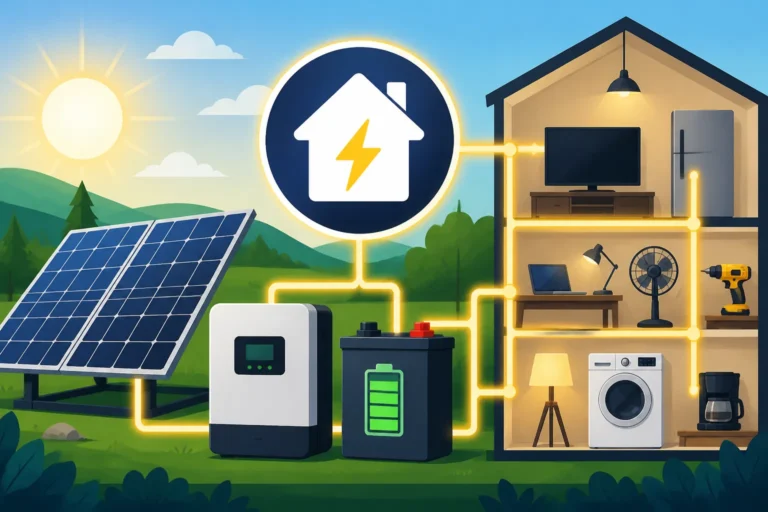
A 10kW system is robust enough to handle most modern conveniences. Imagine running a full-sized refrigerator, operating a well pump for your water supply, doing laundry with an electric washing machine, keeping your lights on, charging laptops and phones, and still having enough juice left for entertainment like a TV or a home office. It’s also often sufficient to power a mini-split air conditioning unit for several hours a day during warmer months, which is a game-changer for off-grid comfort.
For a family of four living year-round in an off-grid home in, say, central Oregon, a 10kW system provides a comfortable margin. It allows for the use of most standard household appliances without constantly worrying about draining your batteries. This level of power means you’re not just surviving; you’re truly thriving off the grid, enjoying many of the same comforts as grid-tied living without the monthly utility bill. It's about freedom and resilience, knowing you have a reliable power source for almost everything you need.
Breaking Down the Components and Their Costs for a 10kW System
Understanding the overall cost of a 10kW off-grid solar system requires a close look at its individual components. Each part plays a crucial role, and its quality and capacity will significantly impact your final budget. We often discuss the Off-Grid Solar Cost: Complete Breakdown but let's hone in on a 10kW setup.
Solar Panels: The Power Harvesters
For a 10kW system, you’ll typically need between 25 to 40 solar panels, depending on the wattage of each individual panel. Most modern panels are in the range of 300 to 400 watts each. So, if you choose 400W panels, you'd need 25 of them (25 x 400W = 10,000W or 10kW). The cost for these panels can range from $0.70 to $1.20 per watt, sometimes a bit more for premium brands or specific features.
Therefore, for 10,000 watts of panels, you could be looking at an investment of $7,000 to $12,000 just for the panels themselves. Factors like efficiency, brand reputation (think companies like LG, Canadian Solar, or Jinko Solar), and warranty play into these price variations. You can often find great deals on panels on platforms like Amazon, especially during sales, but always check reviews and seller ratings carefully.
Battery Bank: Your Energy Reservoir
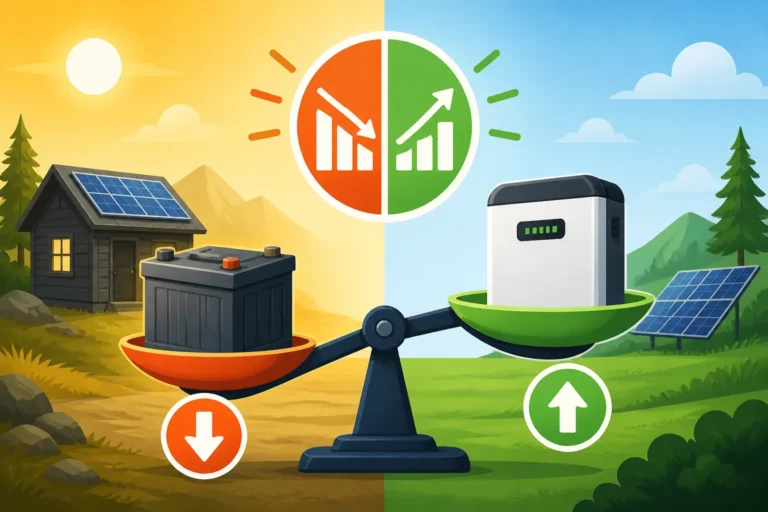
This is often the most expensive single component in an off-grid system, and for good reason—it's what stores the energy for when the sun isn't shining. For a 10kW system designed to power a home comfortably for a few days of autonomy (meaning it can run for several days without sun), you're looking at a substantial battery bank. Lithium Iron Phosphate (LiFePO4) batteries are increasingly popular for their longevity, efficiency, and deeper discharge capabilities compared to traditional lead-acid options.
A typical 10kW off-grid home might aim for a battery bank capacity of 30-60 kWh (kilowatt-hours) or more, depending on load analysis and desired days of autonomy. If we consider LiFePO4 batteries, which often cost around $300-$500 per kWh, the cost for a 30 kWh battery bank could be $9,000 to $15,000. If you opt for a larger 60 kWh bank for maximum peace of mind, that jumps to $18,000 to $30,000. Lead-acid batteries are cheaper upfront, but have a shorter lifespan and require more maintenance, so their total Off-Grid Solar Battery Replacement Cost Over Time can often be higher. For a deep dive into battery costs, explore How Much to Budget for Off-Grid Batteries
Inverters and Charge Controllers: The Brains of the Operation
These vital components manage the power flow from your panels to your batteries and then convert stored DC power into usable AC power for your home.
- Inverter: For a 10kW system, you’ll need a robust inverter capable of handling at least 10,000 watts (or typically a bit more for surge capacity). High-quality, pure sine wave inverters with integrated chargers, especially those from reputable brands like Victron Energy or Sol-Ark, can run anywhere from $3,000 to $8,000. These units are critical for ensuring your appliances run smoothly and efficiently. Check out our detailed guide on the Cost of an Off-Grid Solar Inverter for more insights.
- Charge Controller: This device regulates the voltage and current coming from your solar panels to charge your battery bank safely and efficiently. For a 10kW array, you'll likely need multiple high-amperage MPPT (Maximum Power Point Tracking) charge controllers. Expect to pay anywhere from $800 to $2,500 for the necessary charge controllers. Our article on the Cost of a Charge Controller explains this further.
Balance of System Components: Everything Else You Need
While panels, batteries, inverters, and charge controllers are the big-ticket items, a successful off-grid system requires a host of other components often referred to as "Balance of System" (BoS). These are essential for safety, efficiency, and proper installation.
- Mounting Hardware: Racks and mounts for your solar panels, whether for a roof-mount or ground-mount system. This can cost $1,000 to $3,000, depending on the complexity and material.
- Wiring and Cabling: Heavy-gauge copper wiring, MC4 connectors, and conduit to safely connect all your components. Budget $500 to $1,500.
- Fuses and Circuit Breakers: Essential safety devices to protect your system from overcurrents and short circuits. This includes combiner boxes. Plan on $300 to $1,000.
- Disconnect Switches: Required to safely isolate components during maintenance or emergencies. Add $200 to $500.
- Monitoring System: A good battery monitor and system monitoring solution helps you keep tabs on your power production and consumption. Brands like Victron offer excellent options, which can add $200 to $1,000.
- Generator Backup (Optional but Recommended): Many off-grid systems include a backup generator for prolonged cloudy periods or unexpected high energy demands. A quality generator can range from $1,000 to $5,000 or more, depending on its size and features.
Here's a simplified breakdown of estimated component costs for a 10kW off-grid solar system:
| Component | Estimated Cost Range (USD) | Notes |
|---|---|---|
| Solar Panels (10kW) | $7,000 – $12,000 | Based on $0.70-$1.20/watt for 25-40 panels |
| LiFePO4 Battery Bank (30-60 kWh) | $9,000 – $30,000 | Most significant cost; varies by capacity and brand |
| Inverter (10kW+) | $3,000 – $8,000 | High-quality pure sine wave inverter charger |
| Charge Controller(s) | $800 – $2,500 | MPPT controllers for efficiency |
| Mounting Hardware | $1,000 – $3,000 | Roof mount, ground mount, or pole mount |
| Wiring & Cabling | $500 – $1,500 | Heavy gauge, UV-resistant cables, conduit |
| Fuses, Breakers, Disconnects | $500 – $1,500 | For safety and code compliance |
| Monitoring System | $200 – $1,000 | Battery monitor, system data logging |
| Total Components (DIY) | $22,000 – $61,500 | This range excludes labor and potentially a backup generator |
Factors Dramatically Influencing the Total 10kW System Cost
The component breakdown gives you a solid starting point, but the final cost of your 10kW off-grid solar system isn't just about the parts. Several other crucial factors can swing the total investment significantly.
DIY vs. Professional Installation: Weighing the Labor Costs
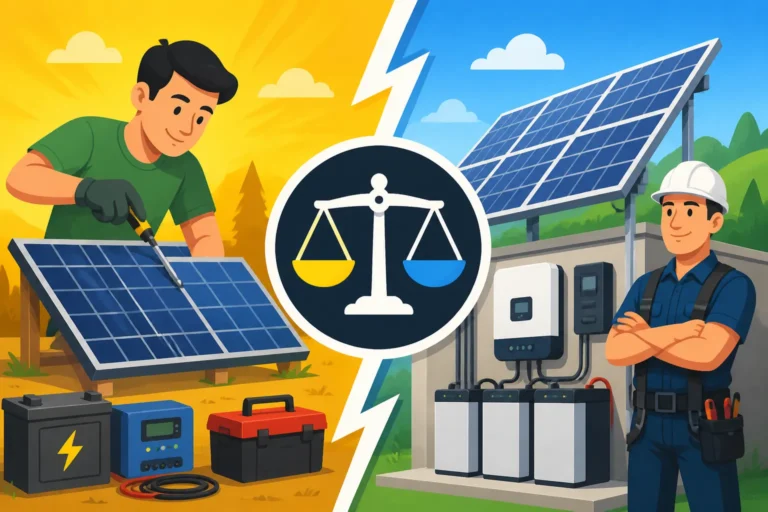
This is arguably the single biggest cost differentiator. If you're handy, have electrical knowledge, and are willing to invest your time, a DIY installation can save you tens of thousands of dollars. The labor cost for a professional installation of a 10kW off-grid system can easily add $10,000 to $25,000 or more to the overall project, depending on the complexity of your site, local labor rates, and whether you require extensive trenching or custom fabrication.
However, going the DIY route isn't without its challenges. You'll need to source all your components, understand complex wiring diagrams, adhere to electrical codes, and ensure safety. Mistakes can be costly, both in terms of equipment damage and potential hazards. Many DIYers will still hire an electrician for the final connections or for specific tasks like wiring to a main breaker panel, which is a smart compromise. To get a clearer picture of this trade-off, take a look at our comparison: DIY vs Professional Off-Grid Solar Cost If you're tackling a DIY project, you'll spend a fair amount of time on places like Amazon or specialty solar retailers to find everything you need, from panels to fuses.
Equipment Quality and Brand Choices
Just like with cars or appliances, there's a spectrum of quality and price points in off-grid solar equipment.
- Premium Brands: Opting for top-tier brands like Victron Energy for inverters and charge controllers, or high-efficiency solar panels from companies like LG or SunPower, will undoubtedly push your costs higher. These brands often come with longer warranties, better performance, and superior customer support, which can be invaluable in a critical off-grid setup.
- Mid-Range Options: Brands like Renogy, Growatt, or Outback Power offer excellent performance and reliability at a more accessible price point. Many off-grid homeowners find a great balance here. For instance, Renogy often has kits and components that offer good value for a DIY build.
- Budget-Friendly Choices: You can find cheaper panels or lesser-known inverter brands, especially from online marketplaces. While these might save you money upfront, it's essential to research their reliability, warranty, and available support. Sometimes, the initial savings are negated by premature failures or poor performance down the line. Remember, in an off-grid system, reliability is paramount—you don't have a grid to fall back on.
Your choice of battery chemistry also fits here. As mentioned, LiFePO4 batteries are a higher upfront cost but often prove more economical in the long run due to their lifespan and performance compared to lead-acid batteries. Our guide on Best Off-Grid Solar Batteries goes into much more detail here.
Geographic Location and Permitting
Where you live can have a surprising impact on your total cost.
- Sunlight Availability: While it doesn't directly affect component cost, if you live in a region with fewer peak sun hours (e.g., the Pacific Northwest versus the Southwest), you might need to oversize your panel array or battery bank to compensate, indirectly increasing costs. Our article on Off-Grid Solar Cost in Cold Climates discusses some of these regional challenges.
- Accessibility: If your property is very remote or difficult to access, delivery costs for heavy equipment like batteries and panels can be significantly higher. Crane rentals or specialized transport might be necessary for larger components, adding to your budget.
- Permitting and Inspections: Depending on your county or state, you might need electrical permits and inspections for an off-grid system, even if it's not connected to the grid. These can involve fees, engineering drawings, and compliance with specific codes, all of which add to the overall expense and complexity. Always check with your local authority having jurisdiction before starting any major electrical work.
Realistic Budgeting and Long-Term Considerations for a 10kW Off-Grid System
Embarking on the journey to energy independence with a 10kW off-grid solar system isn't just about the initial purchase price; it's a long-term investment. Understanding the complete financial picture, including ongoing costs and potential savings, is key to making an informed decision.
Initial Outlay vs. Long-Term Savings
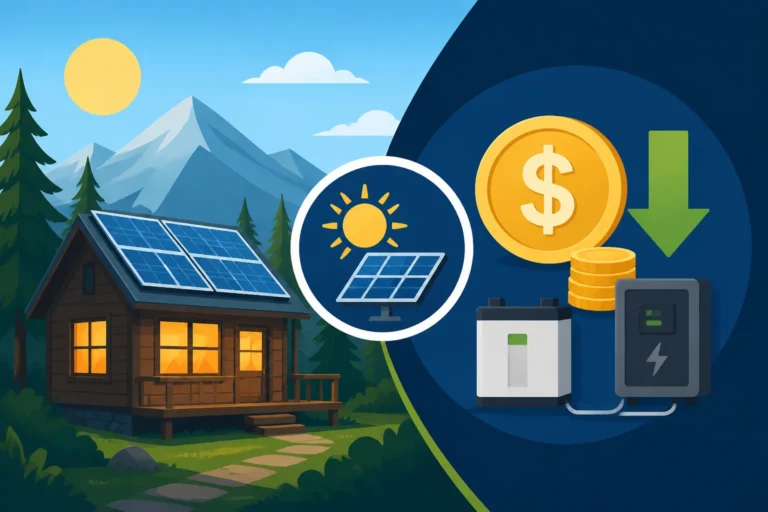
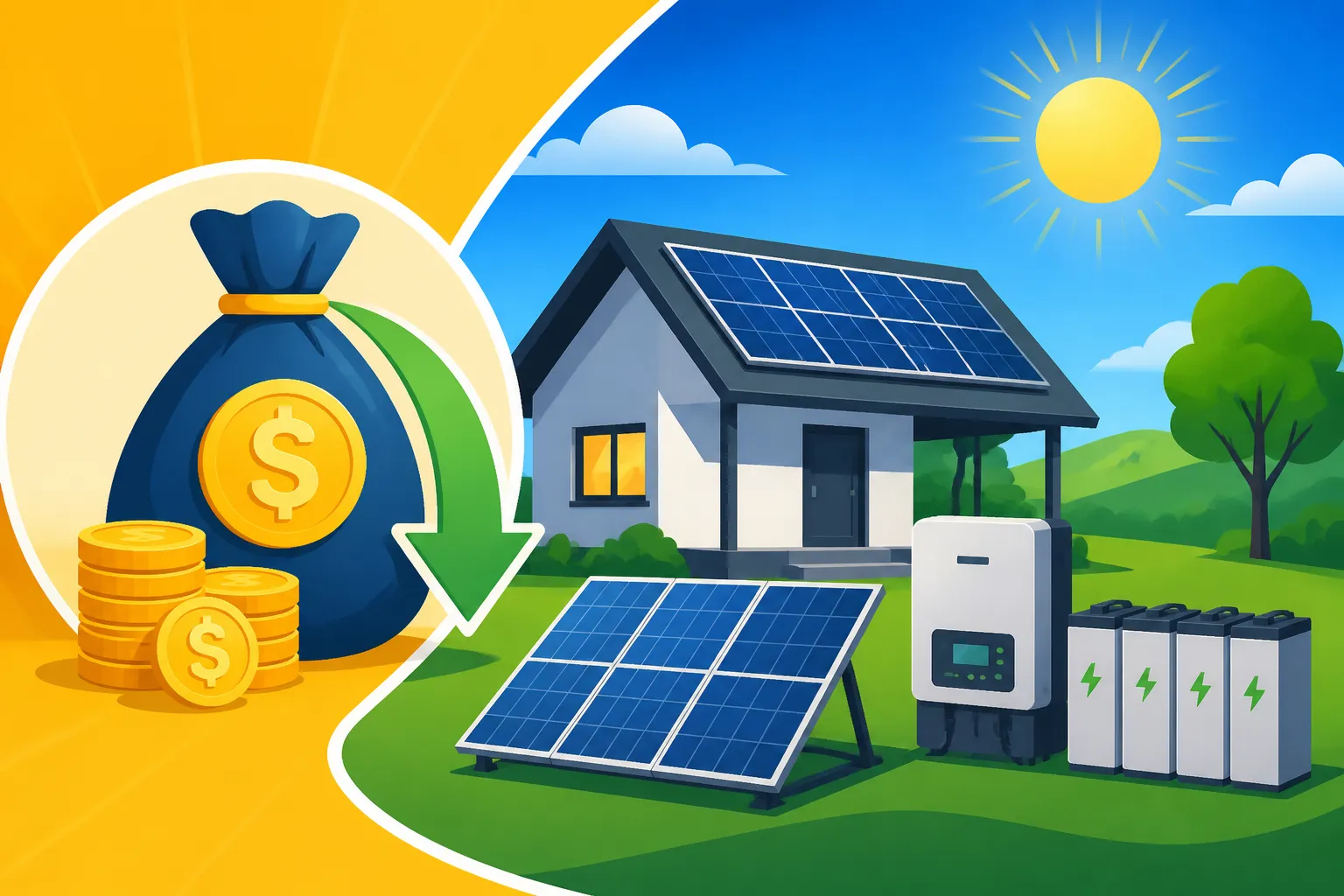
The upfront cost of a 10kW off-grid solar system, especially a professionally installed one with high-quality components, can range anywhere from $32,000 to $85,000 or even higher. This is a significant investment, no doubt about it. However, it's crucial to compare this against the long-term costs of alternative power solutions.
If you're building in a remote area, extending grid power could cost you tens of thousands of dollars per mile, easily matching or exceeding the cost of a 10kW solar system. In such scenarios, off-grid solar becomes incredibly competitive. Furthermore, once your system is installed, you eliminate monthly utility bills, offering substantial savings over decades. The lifespan of solar panels can be 25-30 years or more, and quality LiFePO4 batteries can last 10-15 years, meaning your primary energy source is essentially free after the initial investment. This makes the Is Off-Grid Solar Worth the Cost question much easier to answer for many homeowners. Consider that you're essentially pre-paying for 20-30 years of electricity.
Maintenance and Future Expansion Costs
While off-grid solar systems are generally low maintenance, they aren't entirely set-and-forget.
- Routine Maintenance: You'll need to occasionally clean your solar panels, especially if you live in a dusty area, to ensure optimal production. Checking wiring connections and ensuring your battery bank is properly ventilated (for lead-acid) or operating within temperature parameters (for lithium) are also important. These are mostly DIY tasks, but if you hire someone, it's an added cost.
- Battery Replacement: As mentioned, batteries are consumables with a finite lifespan. While LiFePO4 batteries offer excellent longevity, they will eventually need to be replaced. Depending on your battery chemistry, capacity, and market prices, replacing a 30-60 kWh battery bank could cost you $9,000 to $30,000 or more down the line. This is a significant future expense to budget for, typically every 10-15 years for lithium, or every 5-7 years for lead-acid. Our article on the Cost to Replace Off-Grid Solar Batteries delves into this more deeply.
- Component Upgrades or Replacements: Inverters or charge controllers might need replacement after 10-20 years. Technology also evolves, and you might choose to upgrade components for better efficiency or capacity.
- System Expansion: As your energy needs change (e.g., adding a new outbuilding, more appliances, or an electric vehicle), you might want to expand your system. The Cost of Expanding an Off-Grid System can be less per watt than the initial build, but it's still an investment in additional panels, batteries, and potentially larger inverters or charge controllers. Many off-grid setups are designed to be modular from the start, allowing for easier additions. For example, some homeowners might start with a smaller Jackery solar generator for basic needs and then scale up to a full 10kW system over time, integrating additional panels and batteries as their budget and power demands grow.
By carefully considering both the initial investment and these ongoing long-term costs and savings, you can develop a robust budget for your 10kW off-grid solar system and truly embrace energy independence.
Disclaimer
The information provided in this article is for general informational purposes only and does not constitute professional advice. Off-grid solar system costs can vary widely based on specific equipment choices, location, installation complexity, and market conditions. It is highly recommended to consult with qualified solar professionals and local authorities to obtain accurate quotes and ensure compliance with all applicable codes and regulations for your specific project.