Should You Buy the EcoFlow Delta 2 for Off-Grid
Navigating the world of off-grid power can feel overwhelming, especially when you're trying to figure out if a popular, all-in-one solution like the EcoFlow Delta 2 can truly meet your needs without breaking the bank or leaving you in the dark. Many folks struggle with balancing convenience and capability, wondering if these portable power stations are just for weekend camping or if they can reliably power aspects of their off-grid life. This guide dives deep into the EcoFlow Delta 2, helping you understand its strengths, limitations, and whether it’s the right fit for your unique off-grid aspirations.
Understanding the EcoFlow Delta 2's Core Capabilities for Off-Grid Living
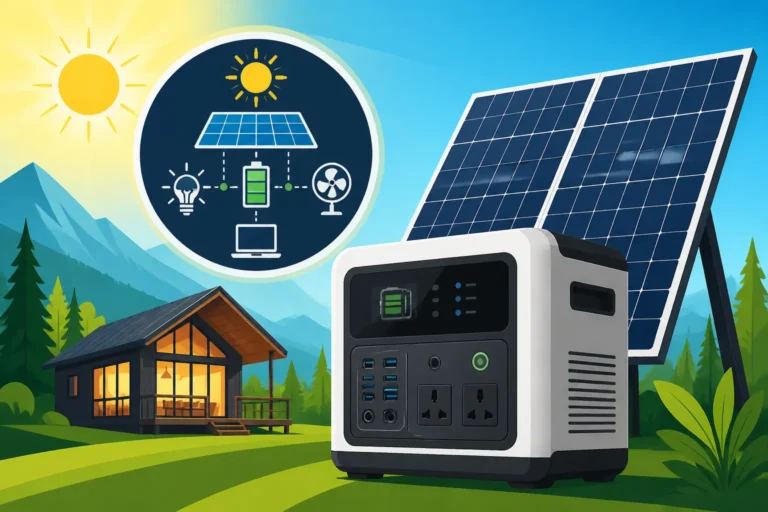
When you're considering going off-grid, or even just supplementing your power, you quickly realize that the devil is in the details of the equipment. The EcoFlow Delta 2 isn't just a battery; it's a complete portable power station designed to offer a significant amount of functionality in a relatively compact package. Understanding its core capabilities is crucial to determining if it can truly support your off-grid lifestyle, whether that’s for a remote cabin, an RV, or just reliable emergency backup.
Power Output and Appliance Compatibility
One of the first things people look at in an off-grid power solution is its ability to actually run their appliances. The EcoFlow Delta 2 boasts a robust 1800W AC output, with a surge capability of up to 2700W. What does this mean in practical terms? It means you can confidently run most household appliances, not just your phone charger. Think about your kitchen: a regular coffee maker (around 800-1200W), a microwave (600-1500W), or even a blender (300-1000W) can operate without much fuss. For those with medical needs, it can handle something like a CPAP machine effortlessly.
Beyond the AC outlets, it also features a variety of DC outputs, including USB-A, USB-C, and a 12V car outlet, making it incredibly versatile for charging smaller electronics. You won't need a separate inverter for many of your devices, which simplifies your setup considerably. However, it's important to remember that while it can handle many appliances, running multiple high-wattage items simultaneously might push its limits. For example, trying to run a heavy-duty air conditioner and a powerful water heater at the same time is probably out of its league. For serious off-grid setups, you might want to learn more about What Size Inverter to Run An Air Conditioner.
Battery Capacity and Runtime Expectations
At its heart, the EcoFlow Delta 2 comes with a 1024Wh (watt-hour) LiFePO4 battery. For those unfamiliar, LiFePO4 (Lithium Iron Phosphate) is a fantastic chemistry for off-grid use because it offers a much longer cycle life and better depth of discharge compared to traditional lead-acid batteries. This means you can use more of its stored energy more often without degrading the battery quickly.
While 1024Wh is a good starting point, especially for smaller applications, one of the Delta 2's standout features is its expandability. You can connect up to two additional Delta 2 extra batteries or a Delta Max extra battery, pushing the total capacity up to 3040Wh. This flexibility is a huge win for those whose needs might grow over time or who need more power for extended periods. To give you a sense of runtime, a modern energy-efficient refrigerator (averaging about 100-200W when running) might get 5-10 hours from the base unit, depending on its cycling. For more detailed calculations, our guide on How Much Battery Capacity You Need can be really helpful. Knowing your daily energy usage is paramount.
Input Options and Charging Speed
An off-grid power solution is only as good as its ability to recharge. The EcoFlow Delta 2 shines here with multiple input options and impressive charging speeds. You can charge it directly from a standard AC wall outlet, taking it from 0% to 80% in about 50 minutes and to 100% in 80 minutes – that’s incredibly fast for a battery of this size. This rapid charging capability can be a lifesaver if you have intermittent access to grid power or a robust generator.
For true off-grid scenarios, solar charging is key. The Delta 2 supports up to 500W of solar input. With optimal sunlight and efficient solar panels, you could theoretically fully recharge the unit in about 3-6 hours. This makes it a very viable option for pairing with Best Portable Solar Panels or a small fixed array. It also supports car charging, allowing you to top it up from your vehicle's 12V cigarette lighter port, albeit at a slower rate, which is handy when you're on the move. This versatility in charging methods ensures you can always find a way to replenish its energy, no matter your off-grid location.
Real-World Scenarios and Practical Use Cases for the EcoFlow Delta 2
It’s one thing to talk about specs, but it’s another to see how a portable power station like the EcoFlow Delta 2 actually fits into various off-grid lifestyles. Its versatility is truly its strong suit, allowing it to adapt to different demands, from minimalist living to providing critical backup during emergencies.
Powering a Small Cabin or Tiny Home
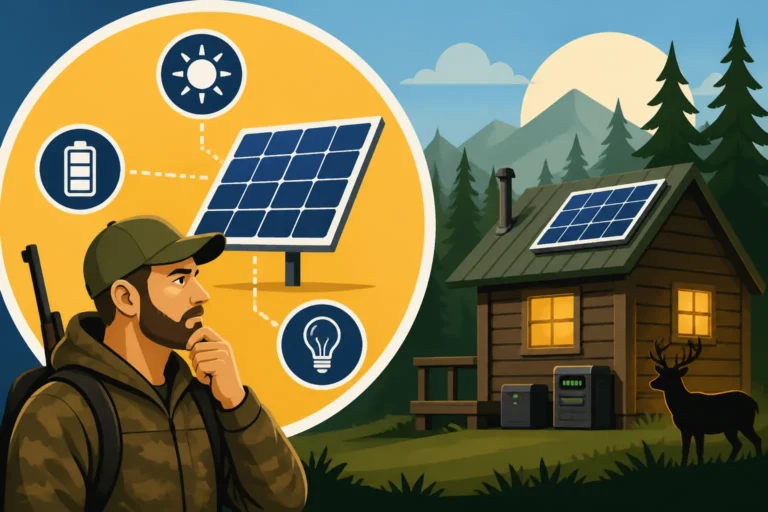
For many, the dream of a small cabin or a tiny home often comes with the challenge of power. The EcoFlow Delta 2 can be an excellent primary power source for very minimal setups or a reliable supplementary system for larger ones. Imagine a remote hunting cabin where you only need power for LED lights, charging phones and laptops, and maybe a small portable fridge. The Delta 2, especially with an extra battery, can easily handle these essential loads for a weekend or even longer with consistent solar input.
For a tiny home with a slightly higher demand, it could power your communication hub, a small TV, and kitchen basics. It's particularly useful for those who want to avoid the complexity and higher initial Off-Grid Solar Cost for a Cabin associated with a full-blown custom solar system right away. You could start with the Delta 2, learn your actual consumption patterns, and then decide if you need to expand or upgrade. It allows for a gradual transition into off-grid living, reducing the upfront commitment and learning curve.
RV, Van Life, and Portable Adventures
The mobile off-grid lifestyle, whether in an RV, van, or during extended camping trips, practically screams for a solution like the EcoFlow Delta 2. Its portability is a massive advantage. You can easily move it around, take it outside to connect to solar panels, or store it securely when driving. For Off-Grid Solar Cost for an RV, a Delta 2 offers a compelling, often more affordable alternative to a fully integrated RV electrical system.
Consider a week-long boondocking trip: the Delta 2 can run your fridge, charge all your devices, power a fan on a hot night, and even run a small CPAP machine or a portable heater. Its fast solar charging means that if you have even a few hours of good sun each day, you can keep your essential appliances humming along. While other brands, like Jackery, offer similar portable solutions, the Delta 2 stands out with its expandable battery option and faster AC charging, giving you more flexibility for longer stays or higher demands. For adventurers who want dependable power without permanent modifications, this unit is a game-changer.
Emergency Backup and Home Essentials
Beyond the full-time off-grid dream, many people seek a reliable solution for power outages, especially when grid instability is a concern. The EcoFlow Delta 2 functions wonderfully as an emergency backup power source. When the grid goes down, the ability to keep your refrigerator running, lights on, and communication devices charged is invaluable.
It features an EPS (Emergency Power Supply) mode, meaning it can switch over to battery power in milliseconds when it detects a grid failure. This isn't quite a UPS (Uninterruptible Power Supply) for sensitive electronics like high-end servers, but it's fast enough for most home appliances. Having the Delta 2 means you won't lose all the food in your fridge during a multi-day outage, and you can still brew coffee in the morning. This peace of mind is often worth the off-grid solar generator backup cost alone. It's a pragmatic investment for anyone looking to bolster their home's resilience against unexpected power disruptions, keeping those essential services operational when it matters most.
Pros and Cons of Choosing the EcoFlow Delta 2 for Off-Grid Use
Like any significant purchase for your off-grid setup, the EcoFlow Delta 2 comes with its own set of advantages and potential drawbacks. It's about weighing these factors against your specific needs, budget, and long-term vision for energy independence. There’s no perfect one-size-fits-all solution, and understanding these points will help you make an informed decision.
Advantages for Off-Grid Enthusiasts
The EcoFlow Delta 2 offers a compelling package for off-grid enthusiasts, especially those starting out or with modest power requirements. Its primary advantages revolve around ease of use, integrated design, and flexibility.
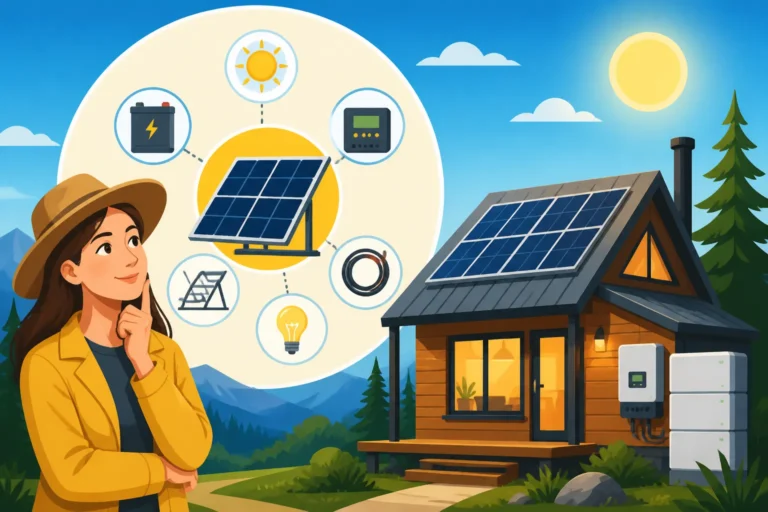
Firstly, simplicity and plug-and-play functionality are huge. Unlike a traditional DIY off-grid system where you're sourcing individual components like solar panels, charge controllers, inverters, and batteries, and then wiring them all together, the Delta 2 is largely ready to go right out of the box. You connect your solar panels, plug in your devices, and you're good. This significantly lowers the barrier to entry for many who might feel intimidated by complex electrical wiring. For beginners, this ease makes exploring Off-Grid Solar Kits for Beginners a much less daunting task.
Secondly, its portability and compact design make it ideal for varied off-grid applications. Whether you're moving it from your truck to a tent, from a cabin to a workshop, or simply adjusting its position for optimal solar charging, its relatively lightweight and sturdy build is a major plus. This contrasts with fixed, heavy battery banks and inverters that are part of a permanent installation.
Finally, the expandable battery capacity is a significant advantage. The ability to easily add extra batteries as your needs grow, without having to overhaul your entire system, provides excellent scalability. This modular approach allows you to start small and incrementally increase your power reserves. Furthermore, the use of LiFePO4 batteries provides a long lifespan (often 3,000+ cycles to 80% capacity), meaning you won't be looking at Cost to Replace Off-Grid Solar Batteries nearly as often as you would with lead-acid options. This advanced battery chemistry offers greater longevity and safety, which is paramount in off-grid environments.
Potential Limitations and Considerations
While the EcoFlow Delta 2 is a fantastic piece of equipment, it does have limitations that might make it less suitable for certain off-grid aspirations. Being realistic about these can prevent future frustration.
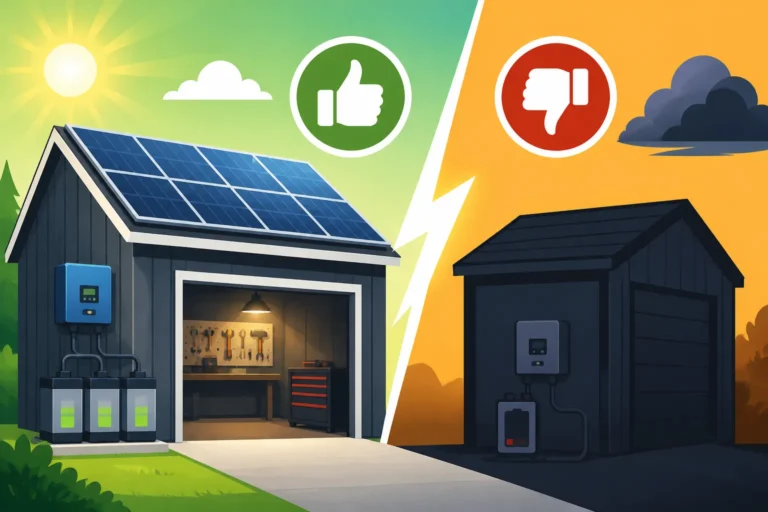
The most significant limitation is its finite power capacity for larger, continuous loads. While 1800W is impressive for many appliances, it's not designed to power an entire modern home with heavy electricity consumption, especially if you're thinking about things like electric water heaters, central air conditioning, or multiple high-draw appliances running simultaneously. For whole-home off-grid living, you'd likely need a much larger, more robust system, potentially with a 5000W or 10kW inverter and substantial battery banks. Running An Air Conditioner on Off-Grid Solar requires significant planning and a much larger system than the Delta 2 typically supports.
Secondly, the cost per watt-hour can be higher compared to a custom-built, component-based system, especially as you scale up. While the convenience of an all-in-one unit is undeniable, assembling individual high-quality components might offer better value in the long run for very large systems. This is an important factor when you're looking at the broader Off-Grid Solar Cost: Complete Breakdown.
Finally, durability and repairability are considerations. While EcoFlow products are generally well-built, these all-in-one units are complex. If a single component (like the inverter or charge controller) fails, you might have to send the entire unit in for repair or replacement, which could leave you without power for an extended period. In contrast, a custom-built system often allows for individual component replacement, making troubleshooting and repairs potentially simpler for those with electrical know-how. This trade-off between convenience and long-term serviceability is something to ponder when planning your off-grid setup.
Comparative Look: How the EcoFlow Delta 2 Stacks Up
When you're trying to decide if the EcoFlow Delta 2 is right for your off-grid setup, it's incredibly helpful to see how it compares to other common power solutions. This isn't just about raw numbers, but about evaluating its position in the broader landscape of off-grid energy, from DIY projects to other portable power stations.
Against Traditional DIY Off-Grid Systems
Comparing the EcoFlow Delta 2 to a traditional, component-based DIY off-grid system is like comparing a ready-to-assemble furniture kit to building custom cabinetry from scratch. Both have their merits, but they cater to very different needs and skill sets.
A traditional DIY system, where you select and integrate individual solar panels, a dedicated charge controller, an inverter, and a standalone battery bank, offers unparalleled customization and scalability. You can precisely size each component to your exact needs, from optimizing for specific weather conditions to choosing specialized batteries like a large 48V LiFePO4 bank for high-demand homes. This approach often leads to a lower Off-Grid Solar Cost Per Watt in larger installations and can be significantly more robust and fault-tolerant, as individual components can often be serviced or replaced independently. The ability to select Best Off-Grid Solar Batteries or Best Off-Grid Solar Inverters specifically tailored to your demands means you can build a system for maximum longevity and efficiency.
However, the downsides are evident: complexity, installation time, and the need for electrical knowledge. Designing and installing a DIY system requires a good understanding of electrical principles, safety protocols, and often necessitates permits and inspections. The initial setup cost can also be daunting, and it's certainly not a "plug-and-play" solution.
The EcoFlow Delta 2, on the other hand, excels in simplicity and speed of deployment. It's an all-in-one unit, meaning the inverter, charge controller, and battery are integrated. This makes it incredibly easy to set up and use – ideal for those who aren't electricians or don't want to dedicate significant time to system design. It offers excellent portability, which is a huge advantage for temporary setups, RVs, or emergency backup. While its maximum power output and storage are less than a large, custom-built home system, its expandability makes it surprisingly versatile for medium-sized needs. Ultimately, the Delta 2 is a fantastic solution for those prioritizing convenience and mobility, whereas a DIY system is for those seeking ultimate customization, long-term permanence, and potentially greater overall power.
Against Other Portable Power Stations
The portable power station market is booming, with many excellent options available. How does the EcoFlow Delta 2 stack up against its closest rivals, such as popular models from Jackery, Bluetti, or Anker?
One of EcoFlow Delta 2's strongest selling points is its fast charging capability, particularly from AC outlets. Being able to go from 0% to 80% in under an hour is a significant advantage if you have limited access to grid power or a generator. While other units, like certain Jackery Explorer models, offer good charging speeds, EcoFlow often leads the pack in this regard for its segment.
Battery technology and expandability are also key differentiators. The Delta 2 uses LiFePO4 batteries, offering a superior cycle life compared to some competitors that might still use NMC (Nickel Manganese Cobalt) chemistry in their base models. While NMC can offer higher energy density for a lighter unit, LiFePO4 generally provides greater longevity and safety, which is crucial for repeated off-grid use. The ability to easily connect additional battery packs to increase capacity is also a major win, providing modularity that some other brands might not offer as seamlessly. For instance, while Jackery offers various sizes, expanding a specific model's capacity by adding an external battery isn't as universal across their product line as it is with EcoFlow's Delta series. When considering options, you might look into Best All-in-One Off-Grid Power Stations to compare features beyond just capacity.
When it comes to power output, the Delta 2's 1800W continuous output (2700W surge) is competitive for its size class. It’s sufficient for most common household and RV appliances, putting it squarely in the sweet spot for many users. Some competitors might offer slightly higher or lower outputs at similar price points, so it's vital to match the continuous wattage and surge capability to your specific highest-draw appliances.
The user interface and app integration for EcoFlow products are also generally considered intuitive and robust, providing detailed monitoring and control. While brands like Jackery also offer excellent user experiences, EcoFlow's companion app often provides a bit more granular control and data, enhancing the overall off-grid management experience. Ultimately, while many brands offer reliable portable power, the EcoFlow Delta 2 often distinguishes itself with its combination of fast charging, LiFePO4 battery chemistry, and expandable design, making it a very strong contender in the portable off-grid market.
Making the Decision: Is the EcoFlow Delta 2 Right for Your Off-Grid Journey?
Deciding on a major power investment for your off-grid life isn't something to take lightly. It's about more than just the price tag; it's about reliability, convenience, and matching the solution to your actual needs. The EcoFlow Delta 2 offers a fantastic blend of features, but it's crucial to honestly assess if those features align with your specific off-grid journey.
Assessing Your Specific Power Needs
Before you even think about hitting the "buy" button, you need to conduct a thorough energy audit. This means listing every appliance you intend to power, noting its running wattage and how many hours per day you plan to use it. Don't forget those high-surge items like well pumps or power tools that might only run for a few minutes but draw immense power when starting up. Our guide on Off-Grid Solar Load Calculation Explained can walk you through this process.
For example, if your off-grid setup is a tiny cabin where you only need to run some LED lights, charge your laptop and phone, and occasionally power a small electric kettle, the base EcoFlow Delta 2 might be more than enough. However, if you're dreaming of a fully electric RV with an induction cooktop, a robust refrigerator, and even a small space heater, you'll quickly realize that the base unit's 1024Wh capacity might be too limiting. In such cases, the Delta 2 with one or two extra batteries, pushing the capacity up to 2-3 kWh, becomes a much more viable option. Understanding exactly How Much Solar to Run A Refrigerator or other key appliances is a non-negotiable step. Without a clear picture of your total daily watt-hour consumption and peak wattage requirements, any power solution you choose will be a shot in the dark.
Budget, Expandability, and Future-Proofing
Your budget is, of course, a huge factor. The EcoFlow Delta 2 sits in a mid-range price point for portable power stations, offering significant value for its features. For those who are just starting out or have a limited budget, it can be a more accessible entry point into off-grid power compared to the higher off-grid solar system cost of a custom-built system. It also allows you to scale up gradually. Instead of a massive upfront investment, you can purchase the base unit and then add extra batteries or more solar panels later as your budget allows and your needs expand. This "phase-in" approach can make going off-grid feel much more manageable. Our guide on How to Budget for an Off-Grid Solar System has more practical advice for planning your expenses.
Thinking about expandability is key to future-proofing your investment. The Delta 2's modular design, allowing for additional battery packs, means you're not locked into its initial 1024Wh capacity. This flexibility is a powerful advantage if you anticipate your power needs growing, perhaps moving from weekend cabin visits to more extended stays, or adding new appliances down the line. It offers a kind of built-in upgrade path that many fixed systems don't provide without significant modification.
In conclusion, the EcoFlow Delta 2 is an exceptional portable power station, perfectly suited for a wide range of off-grid applications from emergency backup to powering modest cabins and RVs. It provides an excellent balance of convenience, performance, and expandability. However, for large, permanent off-grid homes with high energy demands, a larger, custom-designed system might still be the more cost-effective and robust solution in the long run. Carefully consider your daily power consumption, peak loads, budget, and future needs before making your final choice.
| Feature | EcoFlow Delta 2 | Jackery Explorer 1000 Pro | Typical Entry-Level DIY System (e.g., for a shed) |
|---|---|---|---|
| AC Output | 1800W (2700W surge) | 1000W (2000W surge) | 1000-2000W (depends on inverter choice) |
| Battery Capacity | 1024Wh (Expandable to 3040Wh with extra batteries) | 1002Wh | 100-200Ah (approx. 1200-2400Wh at 12V) |
| Battery Chemistry | LiFePO4 | Li-ion (NMC) | LiFePO4 or Lead-Acid (AGM/Gel) |
| Charge Cycles | 3000+ to 80% capacity | 1000 to 80% capacity | 2000-6000 (LiFePO4); 500-1000 (AGM) |
| AC Fast Charge | 0-80% in ~50 min | 0-80% in ~1.8 hours | Not applicable (individual components) |
| Solar Input | Up to 500W | Up to 800W (with 2x 200W panels) | Varies widely (e.g., 200W-1000W+) |
| Expandability | Yes (up to 2 extra batteries) | No (not directly expandable with external batteries) | Yes (add more batteries/panels) |
| Portability | High (approx. 27 lbs) | High (approx. 25 lbs) | Low (fixed components, heavy batteries) |
| Ease of Use | Very High (plug-and-play) | Very High (plug-and-play) | Low-Medium (requires wiring/knowledge) |
| Target Use | RV, Van Life, small cabin, emergency backup | RV, Camping, small electronics, emergency backup | Permanent small installations, sheds, workshops |
Disclaimer
The information provided in this article is for general informational purposes only and does not constitute professional advice. Off-grid solar systems involve electricity and can be dangerous if not installed correctly. Always consult with a qualified electrician or solar professional before installing or modifying any electrical system. Prices, specifications, and availability of products mentioned are subject to change.