Best Off-Grid Solar for a Houseboat
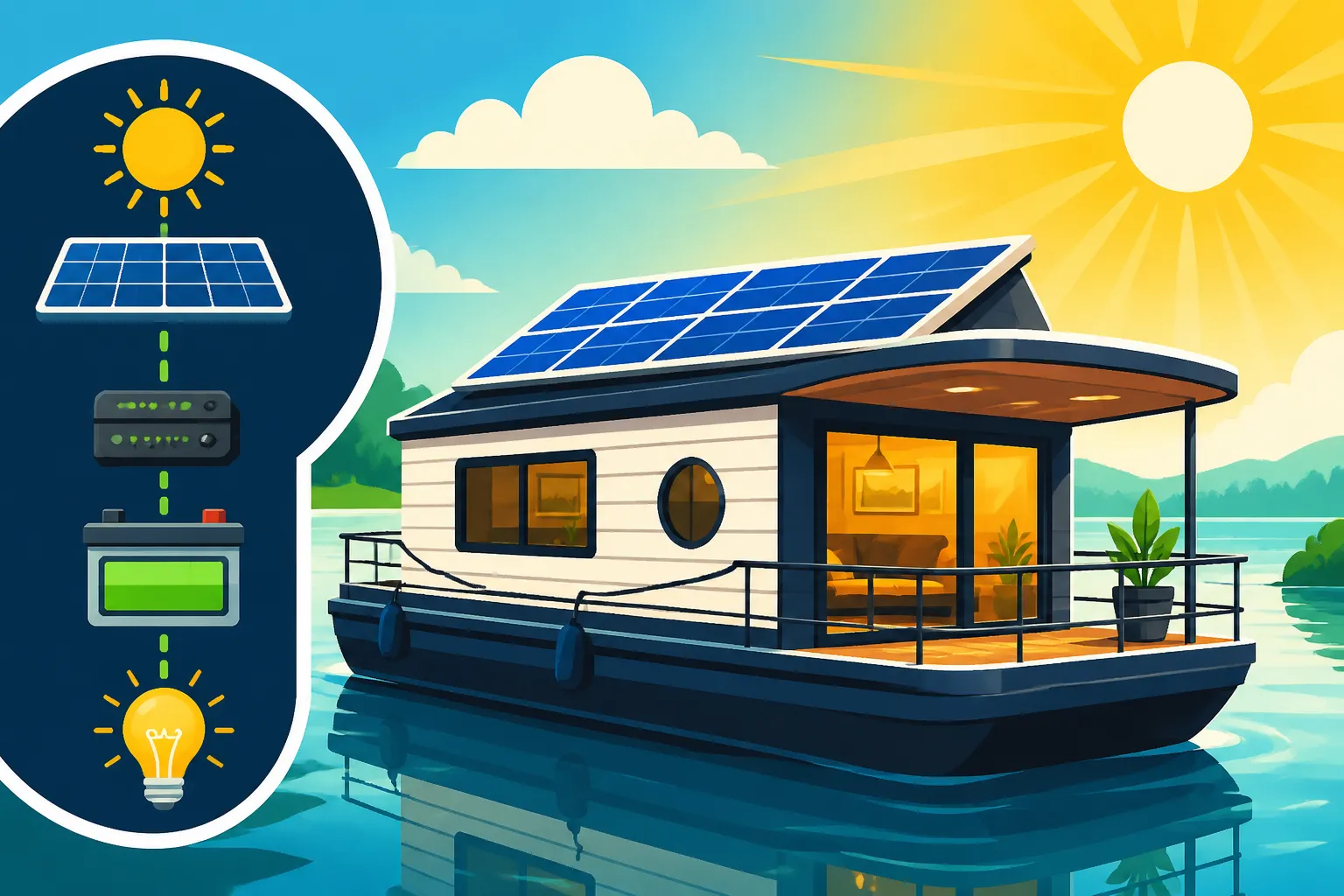
Living on a houseboat offers an unparalleled sense of freedom and connection to nature, but one of the biggest headaches can be figuring out how to reliably power all your comforts and necessities out on the water. From keeping your fridge cold to running navigation electronics and simply having lights at night, finding the right off-grid solar setup for a houseboat comes with unique challenges. This guide is dedicated to helping you navigate those choppy waters, ensuring you can enjoy truly independent and serene living without constantly worrying about your power supply.
Understanding the Unique Demands of Houseboat Solar
Taking your power needs off-grid when you live on the water is a whole different ballgame compared to a cabin in the woods or even an RV. You're dealing with a dynamic environment that presents specific hurdles, from limited physical space to the relentless forces of nature. Ignoring these unique demands can lead to frustration, premature equipment failure, and, frankly, a less enjoyable experience out on the waves.
Space Constraints and Mounting Challenges
One of the first things houseboat owners grapple with is the sheer lack of available surface area for solar panels. Unlike a sprawling rooftop or a wide-open field for a ground mount, your houseboat roof likely has a limited footprint, possibly already taken up by an upper deck, a bimini top, antennas, or ventilation systems. This means every square inch of potential panel space needs to be carefully considered. You're often looking at maximizing efficiency in a small area, which can influence your choice between rigid, high-efficiency panels or flexible, low-profile options that conform to slightly curved surfaces.
Beyond just finding the space, mounting panels securely in a marine environment is critical. You're not just fighting gravity; you're battling wind lift from cruising speeds, constant vibrations, and the rocking motion of the water. Standard residential mounting hardware simply won't cut it. You need robust, corrosion-resistant brackets and fasteners that can withstand these forces, ensuring your investment stays put and generates power safely. Aesthetics also play a role; nobody wants a clumsy, obstructive solar array detracting from the beauty and functionality of their boat.
Another subtle but significant challenge is shading. Even a small mast, an antenna, or a passing cloud can cast a shadow across part of your array. On a houseboat, you might find shading from your own upper deck, a neighboring boat at anchor, or even trees along a shoreline. This partial shading can drastically reduce the output of an entire string of panels if not properly mitigated with bypass diodes or specialized micro-inverters. It’s a constant battle to optimize sun exposure in a continuously changing environment.
The Marine Environment and Corrosion
Living on the water is beautiful, but it's incredibly harsh on electronics and metals. Saltwater, even if it's just mist in the air, is highly corrosive. Humidity levels are generally higher, and components are exposed to constant moisture, whether it's rain, spray, or condensation. This means every part of your off-grid solar system, from the panels themselves to the wiring, connectors, and mounting hardware, needs to be marine-grade or at least rated for extreme outdoor conditions. You can't just pick up any old solar panel from a big box store and expect it to last more than a season or two when constantly exposed to these elements.
The constant vibration and motion of a boat also take a toll. Connections can loosen, wires can chafe, and components can fatigue. This requires more robust wiring, secure terminations, and often a bit more diligence in your installation to ensure everything is tucked away, protected, and secured against these forces. You'll want to look for sealed enclosures for electrical components and consider marine-rated heat shrink for all exposed connections. It’s an extra layer of protection, but absolutely necessary to prevent costly failures and ensure the longevity of your system.
Beyond corrosion and vibration, temperature fluctuations can be more extreme on the water. While panels love direct sunlight, excessive heat can reduce their efficiency, and the internal components of inverters and charge controllers need good ventilation. Conversely, cold snaps, especially in freshwater environments, can stress batteries and other components. Designing a system for a houseboat means considering not just the sunny days, but the storms, the freezing nights, and the sweltering afternoons, ensuring all parts can cope with these environmental swings without compromising performance or safety.
Critical Loads and Power Reliability
Powering a home on land is one thing, but on a houseboat, many of your electrical loads aren't just for comfort; they're critical for safety and essential living. Imagine being anchored in a remote cove, and your freshwater pump stops working, or your bilge pump fails during a rainstorm. These aren't just inconveniences; they can quickly become serious issues. Your off-grid solar system needs to be incredibly reliable, designed with enough capacity and redundancy to handle these critical loads without fail.
Key systems like navigation electronics (GPS, chartplotter, VHF radio), lighting for safety and visibility, and perhaps even a small refrigerator or freezer are non-negotiable. Many houseboats also rely on 12V DC power for a good portion of their systems, which influences how you design your electrical distribution. The need for continuous, stable power means your battery bank isn't just a storage unit; it's a lifeline. This pushes you towards higher quality components and careful sizing to ensure you have enough "days of autonomy" – that's how long your batteries can power your essentials without any sun recharge.
The demand for reliability extends to your inverter as well. Sensitive marine electronics, especially communication and navigation gear, require clean, stable power, meaning a pure sine wave inverter is often a must-have. Unlike a modified sine wave inverter, which can damage delicate electronics over time, a pure sine wave inverter delivers power identical to what you get from the grid. For many houseboat owners, the peace of mind knowing their critical systems are robustly powered is worth the investment in a top-tier off-grid solar setup.
Key Components for Houseboat Off-Grid Solar Systems
When you're piecing together an off-grid solar system for a houseboat, every component plays a vital role. Choosing the right parts isn't just about getting enough power; it's about ensuring durability, efficiency, and safety in a challenging marine environment. Let's dive into the specifics of what makes each part suitable for life on the water.
Solar Panels: Efficiency and Durability on Water
When it comes to solar panels for a houseboat, you're looking for a combination of high efficiency and rugged durability. Monocrystalline panels are generally the go-to choice because they offer the best power output per square foot, which is crucial when roof space is at a premium. These panels are recognizable by their uniform dark color and rounded corners. While they might have a slightly higher upfront cost, their superior performance in limited spaces often makes them the most cost-effective long-term solution for houseboats.
However, rigid panels aren't always ideal. For houseboats with curved roofs or those who need an ultra-low-profile solution that's less susceptible to windage or accidental damage, flexible solar panels can be a game-changer. These panels can be adhered directly to the roof, eliminating bulky mounting hardware. They're lighter and less conspicuous, but typically offer slightly lower efficiency than their rigid counterparts and can be more susceptible to heat build-up if not properly installed with an air gap for cooling. It's a trade-off between discretion and raw power output, and the best choice depends heavily on your specific boat's design and your power needs.
Regardless of type, look for marine-grade panels or panels specifically designed for harsh outdoor environments. This means robust aluminum frames (for rigid panels), strong tempered glass, and junction boxes that are fully sealed to prevent water ingress. UV resistance is also key, as constant sun exposure can degrade inferior materials over time. Remember, the panels are the first line of defense against the elements, and their quality directly impacts the lifespan and reliability of your entire system. Many boaters will also choose to slightly oversize their solar array to account for those days of partial shading from masts, nearby trees, or even other boats.
Batteries: The Heart of Your Houseboat Power
The battery bank is arguably the most critical component of any off-grid solar system, and for a houseboat, the choice of battery chemistry is paramount. For years, lead-acid batteries (like AGM or Gel) were the standard. They are generally cheaper upfront and robust, but they come with significant drawbacks in a marine application: they are heavy, have a lower usable depth of discharge (meaning you can only safely use about 50% of their rated capacity), charge slower, and have a shorter overall lifespan. Imagine hauling several hundred pounds of lead batteries into the hull of your boat – it impacts stability and cargo capacity.
This is why LiFePO4 (Lithium Iron Phosphate) batteries have become the preferred, almost essential, choice for modern houseboat solar setups. While they have a higher initial cost, their benefits are undeniable: they are significantly lighter, offer a much higher usable capacity (often 80-100% depth of discharge), charge rapidly, and boast an incredibly long cycle life (often 10 years or more). This means you need fewer batteries to store the same amount of usable energy, saving crucial weight and space on your boat. Brands like Battle Born and EG4 have gained popularity for their robust LiFePO4 offerings.
When selecting LiFePO4 batteries, ensure they have an integrated Battery Management System (BMS). A good BMS is vital for protecting the batteries from overcharging, over-discharging, and extreme temperatures, all critical safety considerations on a boat. Also, look for batteries that are well-sealed and designed to be vibration-resistant. The constant motion on a houseboat is much different from a stationary home, and you need batteries that can withstand those forces without internal damage or premature failure. Investing in high-quality lithium batteries will drastically improve the performance, reliability, and longevity of your houseboat's off-grid power.
Charge Controllers and Inverters: The Brains of the Operation
These two components act as the brains and brawn of your electrical system, orchestrating power flow and converting it into usable electricity. A good charge controller is essential for managing the power coming from your solar panels and safely charging your battery bank. For houseboats, an MPPT (Maximum Power Point Tracking) charge controller is almost always the superior choice. Unlike older PWM (Pulse Width Modulation) controllers, MPPT controllers can dynamically adjust their input to perfectly match the voltage of your solar panels, extracting significantly more power, especially during periods of less-than-ideal sunlight or partial shading – common occurrences on a boat.
As for inverters, which convert your battery's DC power into the AC power that most household appliances use, a pure sine wave inverter is non-negotiable for a houseboat. Many marine electronics, sensitive medical equipment (like CPAP machines), and even some motor-driven appliances can be damaged by the "dirty" power produced by a modified sine wave inverter. A pure sine wave inverter delivers power that's identical to what you get from the grid, ensuring all your devices run smoothly and safely. When choosing an inverter, you'll need to consider both its continuous wattage rating (for your running loads) and its surge rating (for appliances like refrigerators or pumps that have a high starting draw).
Many modern houseboat setups benefit greatly from an inverter-charger. This all-in-one unit combines the inverter's function with a powerful battery charger, allowing you to easily charge your battery bank from shore power when docked or from a backup generator. This integration simplifies wiring and management, providing a seamless power experience whether you're off-grid or connected to a supplementary power source. Brands like Victron Energy are well-regarded for their marine-grade inverter-chargers, offering robust features and excellent reliability for demanding applications.
Designing Your Houseboat Solar System for Optimal Performance
Designing an off-grid solar system for a houseboat isn't just about slapping some panels on the roof. It's a thoughtful process of understanding your power needs, the environment you're operating in, and how best to integrate all the components for maximum efficiency and reliability. Skimping on the design phase can lead to constant power anxiety and wasted money.
Calculating Your Houseboat's Energy Needs
The very first and most crucial step in designing any off-grid system, especially for a houseboat, is accurately calculating your daily energy usage. This process, often called a load analysis, involves listing every electrical appliance or device you intend to power, its wattage, and how many hours per day you expect to run it. Think about everything: your freshwater pump, bilge pump, navigation lights, interior lights, phone chargers, refrigerator, freezer, microwave, TV, fans, and any other "must-have" gadgets.
For example, a small 12V LED light might only draw 5 watts and run for 4 hours, consuming 20 Watt-hours (Wh). Your refrigerator, however, might draw 60 watts but only run for 8 hours a day in cycles, consuming 480 Wh. Don't forget those intermittent but high-draw items like a coffee maker or a hair dryer – while they run for short periods, their high wattage demands a powerful inverter. Summing up all these individual Watt-hours will give you your total estimated daily energy consumption. For more detail, you can check out guides like How to Calculate Daily Energy Usage and Off-Grid Solar Load Calculation Explained.
Beyond your daily consumption, you need to factor in "days of autonomy." This refers to how many days your battery bank can sustain your critical loads without any input from your solar panels – think cloudy days, heavy rain, or even just long stretches of minimal sun exposure. For a houseboat, having at least 2-3 days of autonomy is highly recommended for peace of mind, especially if you plan to be in remote areas. This calculation will directly influence the size of your battery bank. Remember also to consider seasonal variations; you might use more power for heating in winter or air conditioning in summer, which will impact your overall demand.
Sizing Your Solar Array and Battery Bank
Once you have a clear picture of your daily energy needs, you can start sizing the core components: your solar array (panels) and your battery bank. Your daily Watt-hour consumption will dictate how much power your panels need to generate and how much energy your batteries need to store. To figure out your panel needs, you'll divide your total daily Wh by the average "peak sun hours" for your specific location. Peak sun hours are a measure of how many hours of direct, intense sunlight your panels receive on an average day. For example, if you use 2000 Wh per day and your location gets 5 peak sun hours, you'd need roughly 400 watts of solar panels. However, it's wise to oversize slightly for efficiency losses, cloudy days, and degradation over time. You can find more comprehensive guidance on How Many Solar Panels for Off-Grid Living.
For the battery bank, you'll take your daily Watt-hour consumption and multiply it by your desired days of autonomy. Then, you'll need to divide that by the usable depth of discharge of your chosen battery type. As discussed, LiFePO4 batteries offer a much higher usable capacity, meaning you need a smaller bank compared to lead-acid for the same amount of usable energy. So, if you need 2000 Wh per day and want 3 days of autonomy, that's 6000 Wh. With LiFePO4 batteries, you might plan for 80% usable, so you'd need a battery bank capable of storing around 7500 Wh total. A quick look at How Many Batteries for an Off-Grid System can help immensely here.
Matching all these components is key. Your charge controller needs to be appropriately sized for your solar array's voltage and current, and your inverter needs to handle your total peak and continuous AC loads. It's a careful balancing act to ensure efficiency, safety, and cost-effectiveness without sacrificing reliability. A good resource for overall system planning is How to Size an Off-Grid Solar System.
Installation Considerations and Safety on Water
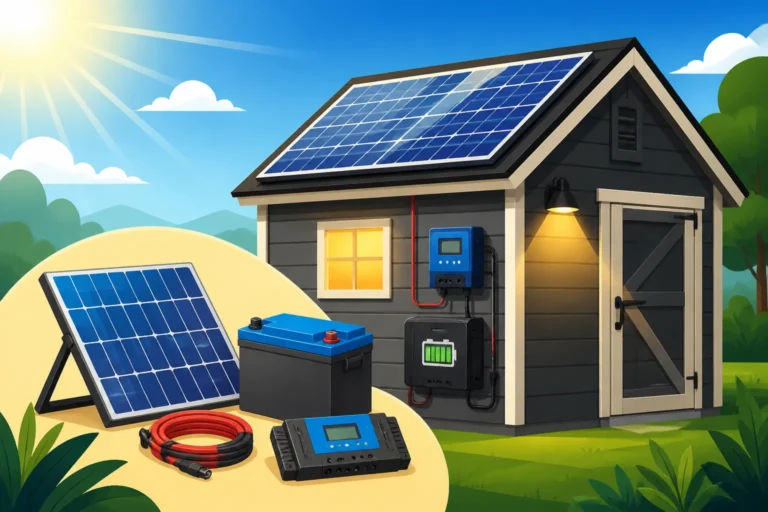
Installing an off-grid solar system on a houseboat requires meticulous attention to detail, particularly concerning marine safety standards. First, mounting your panels securely is paramount. For rigid panels, custom racks or robust, low-profile marine mounts made from aluminum or stainless steel are essential. These need to be bolted through the deck with proper sealing (like marine-grade sealant and fender washers) to prevent water leaks. For flexible panels, proper adhesion to a clean, flat, and well-prepped surface is key, along with ensuring an air gap underneath if possible to prevent overheating.
Wiring is another critical area. All cables must be marine-grade (tin-coated copper wire to resist corrosion) and adequately sized to prevent voltage drop and overheating. They need to be run through conduit or well-protected areas to prevent chafing and exposure to UV light or physical damage. All connections should be crimped, not soldered, and then sealed with marine-grade heat shrink tubing to prevent moisture ingress. Pay close attention to cable entries into the boat; these must be waterproofed meticulously to avoid leaks. This entire process is covered in more detail within an Off-Grid Solar Installation Guide.
Finally, proper grounding and fusing are non-negotiable for safety. Every major component (panels, charge controller, inverter, battery bank) needs appropriate overcurrent protection (fuses or breakers) sized to protect the wiring and equipment. The entire system must be properly grounded to the boat's common ground point to prevent electrical hazards and mitigate corrosion risks. This involves understanding your boat's existing electrical system and integrating the solar components seamlessly and safely. For specifics on safety, refer to How to Ground an Off-Grid Solar System. Overlooking these installation and safety protocols can lead to catastrophic failures, fire hazards, or serious injury on the water.
Practical Solutions and Brand Recommendations
Choosing the right components and understanding how they work together is one thing, but figuring out practical solutions that fit your specific houseboat lifestyle is another. Whether you're a minimalist boater or you want all the creature comforts, there are viable off-grid solar options out there.
All-in-One Portable Power Stations for Smaller Houseboats
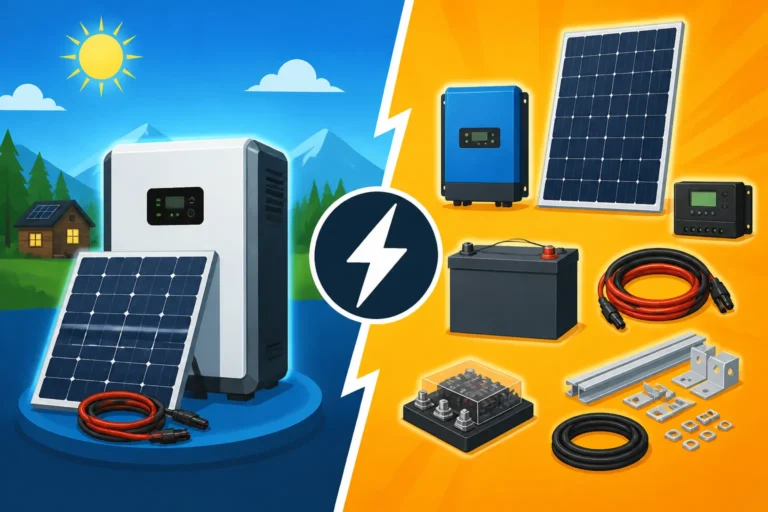
For smaller houseboats, weekend cruisers, or those who simply need to supplement an existing electrical system, all-in-one portable power stations are an excellent, low-fuss solution. These units integrate a battery, inverter, and charge controller into a single, compact box, making them incredibly easy to use. You simply plug in your solar panels, and the unit charges, then you plug in your appliances. They are fantastic for running smaller loads like charging phones, laptops, powering LED lights, or even a small 12V refrigerator.
The beauty of these portable power stations is their flexibility. You can move them where needed, take them ashore, and they require almost no installation beyond connecting your solar panels. This is perfect for those who aren't ready for a full, hard-wired system or who need a reliable backup. Many models even allow for multiple charging inputs, including solar, shore power, and even your boat's alternator while cruising.
A popular brand in this space is Jackery. Their portable power stations, such as the Jackery Explorer series, are highly regarded for their robust build, user-friendly interface, and impressive capacity range. A Jackery Explorer 1000 or 2000 Pro, for instance, could easily handle a small houseboat's lighting, electronics, and even a small 12V fridge for a couple of days on a single charge, especially when paired with their portable solar panels. These units are an ideal starting point for many houseboat owners, providing immediate off-grid capability without a complex installation. For more options, take a look at our guide on the Best Solar Generators for Off-Grid.
Integrated System Kits for Comprehensive Power
For larger houseboats or those planning to live off-grid full-time with more extensive power needs, a fully integrated system kit offers a more comprehensive and robust solution. These kits typically include marine-grade solar panels, a high-capacity LiFePO4 battery bank, a powerful MPPT charge controller, and a pure sine wave inverter (often an inverter-charger combination). Brands like Renogy and Victron Energy offer excellent component-based systems that are perfect for tailoring to specific marine requirements.
These systems, while requiring more installation and planning, provide a much higher level of customization and power output. You can design them to handle everything from your entire galley (fridge, microwave, oven) to air conditioning and high-demand power tools. The components are often modular, allowing for future expansion as your power needs grow. For example, a Victron Energy system, known for its quality and advanced monitoring capabilities, can be configured with multiple battery banks and solar arrays, all managed by a sophisticated GX device for remote monitoring.
Choosing an integrated kit or building one from well-matched components means a deeper understanding of electrical systems, but the payoff is a truly independent and reliable power source designed for your specific houseboat. You'll gain greater control, efficiency, and the ability to run almost any appliance you would on land. If you're new to this, browsing guides like Best Off-Grid Solar Kits for Beginners or delving into Best Off-Grid Solar System Components Explained can give you a great head start.
Budgeting and Future-Proofing Your Houseboat Solar
Let's be realistic: setting up a high-quality off-grid solar system for a houseboat isn't cheap. The marine-grade components, the need for efficiency in limited space, and the demands of a harsh environment mean initial costs can be higher than a comparable land-based system. Expect to invest anywhere from a few thousand dollars for a basic setup to well over $20,000 for a large, comprehensive system for full-time living. However, it's crucial to look at this as a long-term investment.
The savings on generator fuel, the quiet enjoyment of your surroundings, and the independence from shore power add up significantly over the years. You're buying freedom and peace of mind. A smart way to manage costs is to phase your build. Start with your critical loads and a smaller system, then expand your solar array and battery bank as your budget allows. This approach, outlined in guides like How to Budget for an Off-Grid Solar System, lets you get started with off-grid power without breaking the bank upfront.
When planning your system, always think about future-proofing. Can you easily add more solar panels if your energy needs increase? Is your inverter large enough to handle a future appliance? Choosing components from reputable brands that offer good customer support and expandability, like Victron, Renogy, or even a robust Jackery portable system, can save you headaches and money down the line. While the initial sticker shock can be real, the long-term benefits of reliable, quiet, and environmentally friendly power on your houseboat make it an incredibly worthwhile endeavor. For a deeper dive into financial aspects, explore Off-Grid Solar Cost: Complete Breakdown.
| Feature | LiFePO4 Batteries (Lithium) | AGM Batteries (Lead-Acid) |
|---|---|---|
| Weight | Significantly lighter | Very heavy |
| Usable Capacity | 80-100% of rated capacity | ~50% of rated capacity |
| Lifespan (Cycles) | 3,000 – 10,000+ cycles (10-15+ years) | 400 – 1,200 cycles (3-5 years) |
| Charging Speed | Very fast, accepts high charge rates | Slow, requires multi-stage charging |
| Maintenance | None (sealed, internal BMS) | Low (sealed, but sensitive to deep discharge) |
| Voltage Drop | Minimal, consistent voltage delivery | Significant voltage drop under load |
| Cost (Upfront) | Higher | Lower |
| Cost (Lifetime) | Lower (due to longer lifespan) | Higher (due to frequent replacements) |
| Marine Suitability | Excellent (lightweight, durable, consistent power) | Fair (heavy, less efficient for deep discharge) |
Disclaimer
Please remember that while this guide offers comprehensive advice, it is intended for informational purposes only. Off-grid solar system design and installation can be complex and should always be undertaken with a strong understanding of electrical principles and safety standards. If you are unsure about any aspect of your system, especially concerning marine electrical systems, it is highly recommended to consult with a qualified electrician or marine solar specialist. Incorrect installation can lead to equipment damage, fire hazards, or serious injury. Always prioritize safety.