Best Off-Grid Solar Kit with Generator Backup
Stepping into the world of off-grid solar can feel incredibly liberating, but let's be real: the dream of endless sunshine doesn't always align with cloudy weeks, short winter days, or those unexpected power surges from your favorite appliance. Many folks worry about losing power when the sun isn't cooperating, which is a completely valid concern. This comprehensive guide will walk you through everything you need to know about finding the best off-grid solar kit that seamlessly integrates with generator backup, ensuring your power stays on no matter what Mother Nature throws your way.
The Imperative for Generator Backup in Off-Grid Solar Systems
Going off-grid is about self-sufficiency, but it's also about realism. Relying solely on solar power, while often sufficient, sometimes leaves you vulnerable to the whims of weather and unexpected demands. That's where a generator steps in, not as a sign of failure, but as a smart, resilient component of a truly independent power system.
The Inevitable Gaps in Solar Production
No matter how perfectly you size your solar array or how robust your battery bank, there will be times when the sun just doesn't deliver what you need. Imagine a string of dreary, overcast days in the Pacific Northwest during winter, or a particularly smoky week from wildfires in California that blocks out direct sunlight. Your solar panels, designed to soak up those precious rays, become significantly less effective.
This dip in production can quickly drain your batteries, especially if you have consistent loads like a refrigerator, well pump, or even just keeping the lights on in the evening. The stress of constantly monitoring your battery state of charge, wondering if you'll make it through the night, can quickly overshadow the joy of off-grid living. A generator provides that crucial peace of mind, knowing you have an immediate, on-demand power source to top up your batteries or run high-draw appliances when your solar system is underperforming. It’s like having an insurance policy for your energy independence.
Why a Generator Isn't a Failure, But a Smart Choice
Some purists might argue that relying on a fossil-fuel-powered generator defeats the purpose of "off-grid" solar. However, most experienced off-gridders view a generator as a vital complementary tool, not a replacement. Think of it this way: your solar system handles 90-95% of your power needs, silently and cleanly. The generator is there for that remaining 5-10%—the emergency situations, the extended cloudy spells, or when you need to run a high-surge tool that your inverter might struggle with on battery power alone.
Using a generator strategically can actually extend the lifespan of your expensive battery bank by preventing deep discharges, which are particularly damaging to certain battery chemistries. It also allows you to handle occasional, heavy loads like running a washing machine, air compressor, or large power tools without having to drastically oversize your entire solar array and battery bank for those rare occasions. Instead of investing tens of thousands more in panels and batteries just for a few hours of heavy use each month, a generator offers a cost-effective solution. In the long run, this balanced approach can save you money and headaches, making your off-grid experience far more sustainable and less stressful.
Decoding the Components of a Generator-Ready Off-Grid Solar Kit
A comprehensive off-grid solar kit designed for generator backup isn't just a collection of parts; it's a carefully engineered system where each component plays a crucial role in harmonizing solar input with a backup generator. Understanding these parts is key to choosing a system that truly meets your needs.
The Solar Array: Panels and Charge Controller
At the forefront of any solar kit are, of course, the solar panels. These silicon wonders convert sunlight into DC electricity. For off-grid applications, you'll typically find rigid monocrystalline panels, known for their efficiency and durability. However, depending on your setup, you might consider flexible panels for RVs or portable options if your power needs are smaller or mobile. The number and wattage of your panels directly impact how quickly you can recharge your batteries and power your loads during sunny periods. It’s a good idea to consider your location's Peak Sun Hours Explained when determining your array size.
Connected to your solar panels is the charge controller, a vital piece of equipment that regulates the voltage and current coming from your panels to your battery bank. Its job is to ensure your batteries are charged safely and efficiently without being overcharged or damaged. There are two main types: PWM (Pulse Width Modulation) and MPPT (Maximum Power Point Tracking). MPPT controllers are generally preferred for off-grid systems because they are significantly more efficient, especially in varying light conditions, extracting more power from your panels. They can also convert higher voltage solar input into a lower voltage for your battery bank, allowing for more flexible panel wiring configurations.
The Battery Bank: Heart of Your Off-Grid System
The battery bank is arguably the most critical component of your off-grid solar system. It stores the electricity generated by your solar panels for use when the sun isn't shining. Without it, you'd only have power during daylight hours. When considering Best Off-Grid Solar Batteries, you'll primarily be looking at two main chemistries: lead-acid (which includes flooded, AGM, and Gel types) and lithium iron phosphate (LiFePO4).
LiFePO4 batteries have become incredibly popular for off-grid use due to their long cycle life, high depth of discharge (meaning you can use more of their stored energy without damage), faster charging capabilities, and lighter weight. While they have a higher upfront cost, their longevity and performance often make them more cost-effective over time. Lead-acid batteries, particularly AGM, are a more budget-friendly entry point but require more careful management and typically have a shorter lifespan. Your battery bank's capacity, measured in amp-hours (Ah) or kilowatt-hours (kWh), dictates how long you can run your appliances without solar input or generator backup. Proper sizing, as detailed in our guide on How Many Batteries for an Off-Grid System, is essential for system reliability.
The Inverter and Transfer Switch: Managing Your Power
The inverter is the unsung hero of many off-grid systems. Solar panels and batteries produce direct current (DC) electricity, but most modern appliances, from your refrigerator to your laptop charger, run on alternating current (AC). The inverter's job is to convert that DC power from your batteries into usable AC power for your home or cabin. When learning How to Choose an Off-Grid Inverter, you'll encounter terms like "pure sine wave" and "modified sine wave." Always opt for a pure sine wave inverter, as it produces clean, grid-quality power that is safe for all electronics, including sensitive medical devices and complex motor-driven appliances.
For systems integrating a generator, an inverter-charger is often the most efficient solution. This smart device combines the functions of an inverter (DC to AC) and a battery charger (AC to DC), allowing it to not only power your AC loads from your batteries but also to charge your batteries using electricity from a generator or even grid power if you temporarily connect to it. Crucially, many inverter-chargers feature an integrated automatic transfer switch (ATS) or the ability to work with one. An ATS automatically senses when grid power (or generator power) is available and switches your loads over, preventing backfeeding into the generator and ensuring a smooth transition between power sources. Without an ATS, you’d be manually plugging and unplugging appliances, which is far less convenient and potentially unsafe.
Integrating the Generator: Types and Considerations
The generator itself is the crucial backup power source. When paired with an off-grid solar system, its primary role isn't to power your entire home continuously, but to supplement solar and charge batteries during low production periods or to handle surge loads. You'll find several types of generators, each with pros and cons:
- Gasoline Generators: These are the most common and often the least expensive upfront. They are readily available and come in a wide range of sizes. However, they are typically loud, less fuel-efficient, and require storing flammable gasoline, which has a limited shelf life.
- Propane Generators: Propane burns cleaner than gasoline, has a longer storage life, and is often preferred for more permanent backup installations. They can be slightly more expensive and sometimes less powerful than similarly sized gasoline models, but their convenience and cleaner operation are a big plus.
- Diesel Generators: These are the workhorses of large, continuous backup power. They are highly durable, very fuel-efficient under load, and have a long lifespan. However, they are significantly more expensive, heavier, and typically louder than their gasoline or propane counterparts, often making them overkill for most residential off-grid solar backup needs unless you have very large, constant loads.
- Inverter Generators: These generators use advanced electronics to produce clean, stable AC power, similar to what you'd get from a pure sine wave inverter. They are much quieter, more fuel-efficient, and more compact than conventional generators. Brands like Honda, Yamaha, and Predator offer excellent inverter generators. They are ideal for charging sensitive electronics and are generally a fantastic choice for off-grid solar backup where noise and fuel efficiency are concerns. For more on what it costs to integrate, check out our guide on the Cost of Adding a Generator to Off-Grid Solar.
When choosing a generator, consider its starting watts (for initial surges) and running watts (for continuous operation), fuel type, noise level, and features like electric start or remote start for convenience. Many modern inverter-chargers can even send a signal to automatically start a compatible generator when battery levels drop below a certain threshold, providing completely hands-off backup.
Essential Considerations When Choosing an Off-Grid Solar Kit with Generator Integration
Picking the right off-grid solar kit that plays well with a generator isn't a "one size fits all" situation. It involves careful thought about how all the pieces work together and what your daily life truly demands. You want a system that works for you, not one you constantly have to troubleshoot.
Compatibility and Integration Capabilities
This is perhaps the most critical factor. An off-grid solar kit isn't just about solar panels and batteries; it's about how gracefully your entire power ecosystem works together, especially when you need to bring a generator into the mix. You're looking for a system where the components are designed to communicate and cooperate. Many reputable brands offer integrated solutions or specific components engineered to work seamlessly with generator backup.
For instance, many all-in-one inverter-chargers, like those from Victron Energy, Sol-Ark, or even some offerings from Renogy and Growatt, are specifically designed with generator integration in mind. They'll have dedicated generator input ports, often with programmable settings that allow you to define when the generator should kick on (e.g., battery voltage drops below 48V, or for a scheduled battery top-off). Some even support an auto-start feature, meaning your inverter-charger can actually tell your generator to turn on when needed and shut off when the batteries are recharged. This level of automation is invaluable for hassle-free off-grid living, especially if you're not always present to monitor your system. Without proper compatibility, you could end up with a hodgepodge of components that don't talk to each other, leading to inefficient charging, potential safety hazards, or constant manual intervention.
Sizing for Your Specific Needs and Autonomy
Before you even start looking at kits, you absolutely must do your homework on your power consumption. This means figuring out How to Calculate Daily Energy Usage for every appliance and device you plan to run. Don't guess; grab a kill-a-watt meter or carefully check appliance labels. This load analysis will tell you your average daily watt-hour (Wh) or kilowatt-hour (kWh) consumption.
Once you have your load calculation, you can effectively size your solar array and battery bank to meet your needs, taking into account factors like your location's sunlight hours and your desired "days of autonomy" (how many days your batteries can power your home without any solar input or generator). For example, if you live in a region with frequent cloudy weather, you might aim for 3-5 days of autonomy. A properly sized system will minimize your reliance on the generator, using it only for those extended periods or peak demands. Over-sizing your solar array slightly can also help, as discussed in How Much to Oversize Your Solar Array, ensuring you capture more energy even on partly cloudy days. However, knowing that a generator is there to pick up the slack allows you to size your solar system realistically without overspending on an array so massive it could power a small town.
Quality, Reliability, and Warranty
Investing in an off-grid solar kit is a significant decision, and cutting corners on quality can lead to endless frustration and unexpected replacement costs down the line. Look for reputable brands with a proven track record in the off-grid community. Think about the components:
- Solar Panels: Look for panels with good efficiency ratings and robust construction that can withstand harsh weather. Many panels come with a 25-year performance warranty.
- Batteries: This is where reliability truly counts. LiFePO4 batteries from brands like Battle Born, EG4, or SOK generally offer long cycle lives (3,000 to 10,000 cycles) and solid warranties. Understanding How Batteries Drive Off-Grid Solar Cost highlights why this investment is crucial.
- Inverter-Chargers and Charge Controllers: These are the brains of your system. Brands like Victron Energy, Sol-Ark, and Outback Power are known for their robust, feature-rich, and reliable inverter-chargers and MPPT controllers. While they might be pricier, their advanced controls, monitoring capabilities, and durability often justify the investment, especially when integrating a generator.
- Cables and Connectors: Don't overlook the smaller stuff! High-quality, appropriately sized cables and connectors are essential for efficiency and safety.
Always review warranties for individual components and the kit as a whole. A good warranty provides peace of mind and indicates the manufacturer's confidence in their product. A reliable system means less downtime, fewer repairs, and more time enjoying your off-grid lifestyle rather than fixing it.
Exploring Different Off-Grid Solar Kit Options for Generator Backup
The landscape of off-grid solar kits is incredibly diverse, ranging from compact, portable power stations to comprehensive, whole-home systems. The "best" kit truly depends on your specific power needs, the permanence of your setup, and your budget.
All-in-One Power Stations with Solar Inputs
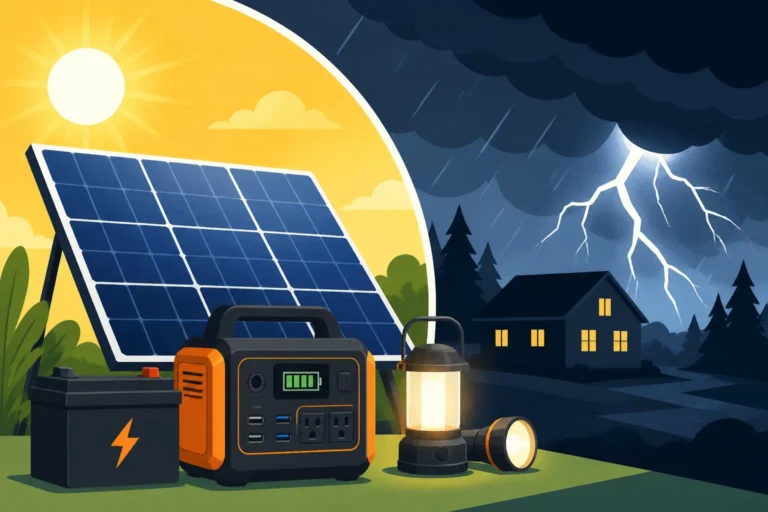
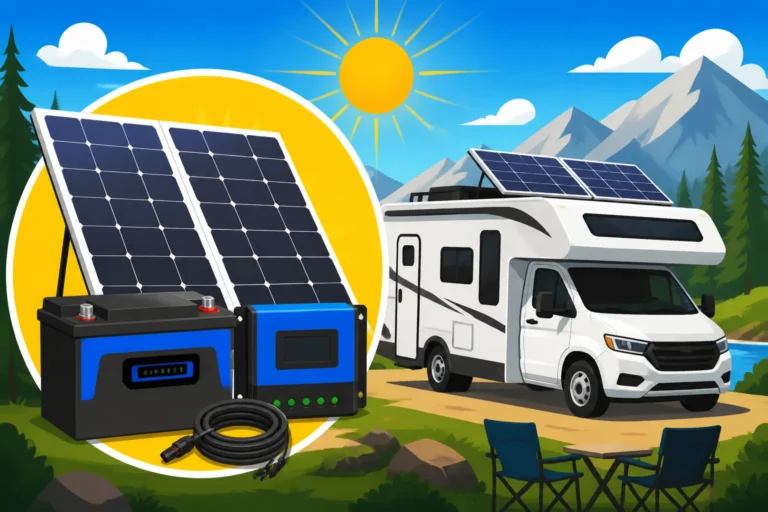
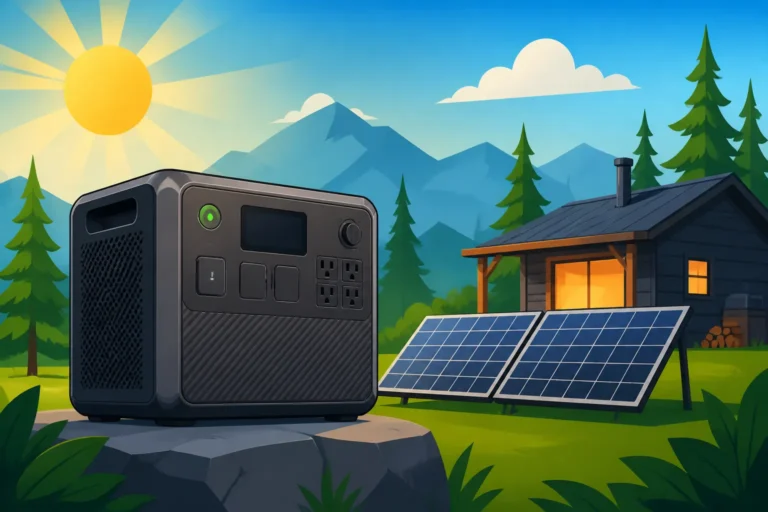
For smaller off-grid applications, emergency backup, or mobile setups like RVs and vans, all-in-one power stations have revolutionized accessibility to solar power. Brands like Jackery, EcoFlow, and Bluetti offer portable power stations that integrate a battery, inverter, and charge controller into a single, compact unit. They are incredibly user-friendly; you simply plug in your solar panels to charge the internal battery, and then plug your AC appliances directly into the unit.
Many of these power stations also feature a dedicated AC input, allowing you to charge them quickly from a generator when solar isn't available. For example, a Jackery Explorer 1000 Pro can be charged via its DC input from solar panels and simultaneously from a small gasoline inverter generator plugged into its AC input, effectively shortening charge times. This setup is fantastic for running essential electronics, charging devices, and powering small appliances for short periods. However, it's crucial to understand their limitations. These units are typically designed for lower power consumption and shorter run times compared to dedicated, larger off-grid systems. They might struggle with continuous high-draw appliances like full-size refrigerators or well pumps, and their battery capacity is generally much smaller than a traditional battery bank. They excel as a portable power solution or for complementing a very small off-grid cabin.
Modular Systems and Component Integration
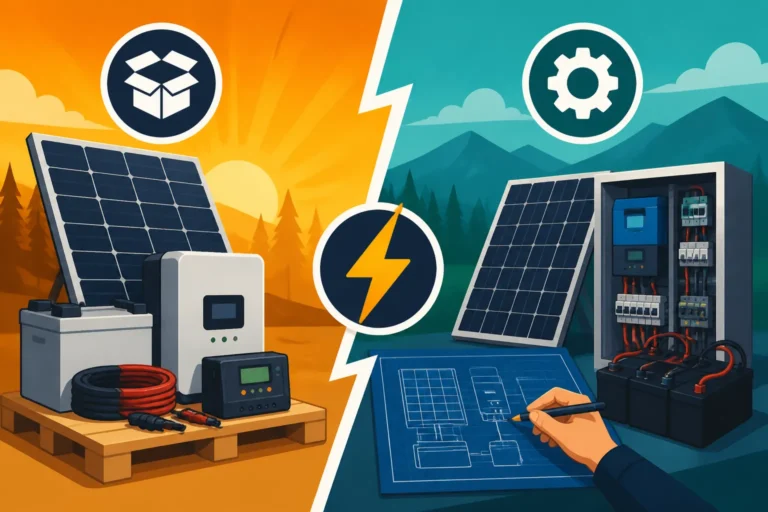
For those with larger power demands, a more permanent structure, or a desire for greater flexibility and expandability, building a modular system by integrating individual components is often the way to go. This approach involves selecting your solar panels, charge controller, battery bank, and inverter-charger separately. While it requires more planning and potentially professional installation, it allows for a highly customized and robust system.
The key to generator integration in a modular system is the inverter-charger. High-quality inverter-chargers from brands like Victron MultiPlus, Sol-Ark, or Outback Power Radian series are specifically designed to manage multiple power sources. These units can automatically switch between drawing power from your solar-charged batteries and engaging a connected generator. They prioritize solar, then battery power, and only kick in the generator when batteries are low or when a heavy load demands more power than the batteries can supply. This intelligent management ensures maximum efficiency, minimizes generator run time, and extends the life of your batteries. This approach also allows for easy expansion. If your power needs grow, you can add more solar panels, increase your battery capacity, or even upgrade your inverter-charger without scrapping the entire system. For a deep dive into putting all the pieces together, our Off-Grid Solar System Design Basics guide is a great resource.
Hybrid Inverter Systems with Generator Ports
Hybrid inverter systems represent a sophisticated blend of grid-tied and off-grid technology, but many versions are perfectly suited for off-grid applications with generator backup. These systems often come as integrated units or a combination of specialized components that allow for even more granular control over power flow. They prioritize solar production, storing excess in batteries, and then use the generator only when absolutely necessary, often with an auto-start feature.
Many modern hybrid inverters can automatically manage the generator, determining optimal times to run it for battery charging or to assist with heavy loads. For example, if your solar panels are producing 3,000 watts, and your home is drawing 5,000 watts, the hybrid inverter might pull 2,000 watts from your batteries. But if the batteries are getting low, or if the load suddenly jumps to 7,000 watts, the inverter would signal the generator to start, using its power to meet the demand and potentially recharge the batteries simultaneously. Once the demand drops or batteries are full, the generator shuts down. This level of automation is truly a game-changer for convenience and fuel efficiency. When you're looking for a Best Off-Grid Solar Kit with Battery and Inverter, ensure that the inverter component has robust generator input and management capabilities.
Here’s a quick overview comparing common generator types suitable for off-grid solar backup:
| Generator Type | Pros | Cons | Best Use Case for Off-Grid Backup |
|---|---|---|---|
| Gasoline (Inverter) | Quiet, fuel-efficient, clean power, portable | Requires fuel storage, higher cost than conventional gasoline gens | Small cabins, RVs, emergency charging for power stations |
| Gasoline (Conventional) | Low upfront cost, widely available, powerful | Noisy, less fuel-efficient, dirty power, fuel storage issues | Intermittent, heavy-duty backup for large loads (e.g., well pump) |
| Propane (Inverter) | Clean-burning, long fuel shelf-life, quiet | Slightly higher fuel cost, less common fueling stations | Primary backup for cabins, RVs, cleaner emissions |
| Diesel (Conventional) | Very durable, fuel-efficient under load, long lifespan | Very expensive, heavy, noisy, emissions, cold-weather starting issues | Large homesteads, continuous heavy loads, industrial applications |
Disclaimer
The information provided in this guide is intended for general informational purposes only and does not constitute professional advice. Off-grid solar system design and installation can be complex and involve electrical hazards. Always consult with a qualified solar professional or licensed electrician before designing, installing, or modifying any off-grid solar or electrical system. Local codes and regulations may apply.