Best Off-Grid Solar for Running a Fridge
Keeping your food fresh and drinks cold is often one of the biggest challenges when you're exploring the idea of off-grid living, whether it's in an RV, a remote cabin, or even just for emergency preparedness. The sheer thought of losing power to your refrigerator can bring a cold sweat, especially when you're used to the reliable hum of grid power. This guide is here to walk you through everything you need to know about setting up the best off-grid solar system specifically designed to keep your fridge running smoothly, ensuring your provisions stay perfectly chilled.
Understanding Your Fridge's Power Demands
Before you even think about solar panels and batteries, the first step is to truly understand the electrical appetite of your refrigerator. It's not just about what it says on the label; real-world usage can vary quite a bit, and knowing these details is crucial for building a reliable off-grid system.
The Difference Between Starting and Running Watts
This is a big one, and it often trips people up when they're first dipping their toes into off-grid power. Every appliance, especially those with motors like a refrigerator's compressor, has two distinct power ratings: its running watts (or continuous watts) and its starting watts (also known as surge watts).
Think of it like pushing a heavy car. It takes a lot more initial oomph to get it rolling from a dead stop than it does to keep it moving once it's already in motion. A refrigerator's compressor motor behaves similarly. When it kicks on, it briefly demands a much higher burst of electricity to overcome inertia and start the cooling cycle. This surge can be anywhere from 2 to 5 times its running wattage, though modern, energy-efficient fridges tend to have lower surge requirements. If your inverter isn't sized to handle this brief, high-power demand, it'll simply trip or shut down, leaving your food in peril. This is particularly important for standard residential AC fridges, which rely on robust compressors. DC-powered fridges or those designed for RVs and boats often have more efficient compressors with lower surge demands, making them a more forgiving choice for off-grid setups.
Calculating Daily Watt-Hour Consumption
Knowing the surge is important for your inverter, but knowing your daily watt-hour (Wh) consumption is absolutely vital for sizing your entire solar array and battery bank. This tells you how much total energy your fridge will consume over a 24-hour period. You can't just look at the wattage listed on the appliance tag and multiply it by 24 hours because a fridge doesn't run constantly. It cycles on and off throughout the day to maintain temperature.
Here’s how you can get a more accurate picture:
- Check the Energy Guide Label: Newer refrigerators will have an EnergyGuide label, often yellow, that provides an estimated annual kilowatt-hour (kWh) consumption. Divide that number by 365 to get a daily kWh, then multiply by 1000 to get daily watt-hours. For example, if it says 365 kWh/year, that's roughly 1 kWh (or 1000 Wh) per day.
- Use a Kill-a-Watt Meter: This is the most accurate method for an existing fridge. Plug your refrigerator into a Kill-a-Watt meter for a few days (or even a week) to get an average daily watt-hour reading. These inexpensive meters measure actual power usage over time, giving you a true snapshot of how your specific fridge behaves in your environment. You might be surprised to see how much it fluctuates based on how often the door is opened, the ambient temperature, and whether it's undergoing a defrost cycle.
- Consider External Factors: The external temperature significantly impacts how often your fridge runs. A fridge in a hot garage in Arizona will consume far more power than the same fridge in a cool basement in Vermont. How frequently you open the door, how much food is inside (a full fridge is more efficient than an empty one), and its age and insulation all play a role. Factor these real-world conditions into your estimates.
For instance, a compact energy-efficient mini-fridge might use only 100-300 Wh per day, while a full-sized residential refrigerator could easily consume 1000-2000 Wh or more daily, especially in warmer climates. Armed with this daily watt-hour number, you can accurately plan your solar panel array and battery storage.
Key Components for Fridge-Powered Off-Grid Solar
Building a robust off-grid solar system to power your refrigerator involves several key components, each playing a critical role in reliably delivering power. Choosing the right ones is paramount for hassle-free chilling.
Solar Panels: Your Energy Harvesters
Solar panels are the workhorses of your off-grid system, converting sunlight into electricity. For powering a refrigerator, you need enough panels to generate the daily watt-hours your fridge consumes, plus extra to charge your batteries and account for less-than-ideal sun conditions.
- Monocrystalline vs. Polycrystalline: Monocrystalline panels are generally more efficient, meaning they produce more power per square foot, which can be a huge advantage if you have limited space (like on an RV roof or a small cabin). Polycrystalline panels are typically less efficient but often more affordable. Given that fridges need consistent power, investing in higher efficiency might pay off in the long run.
- Panel Sizing: To determine how many panels you need, divide your fridge's daily watt-hour consumption by the average peak sun hours in your location, and then divide that by the wattage of your chosen panels. Always add a buffer of at least 20-30% to account for cloudy days, shading, and system losses. For a deeper dive into sizing, check out our guide on How Many Solar Panels for Off-Grid Living. You'll want to ensure you're generating enough power to replenish your battery bank daily, even when the sun isn't at its strongest.
Batteries: The Heart of Your System
Batteries are arguably the most crucial component for running a fridge off-grid, as they store the energy generated by your panels for use when the sun isn't shining.
- LiFePO4 vs. Lead-Acid: This is where the choice really matters for a demanding appliance like a fridge.
- Lithium Iron Phosphate (LiFePO4) Batteries: These are the gold standard for off-grid systems. They offer a much deeper depth of discharge (you can use 80-100% of their capacity without damage), have an incredibly long cycle life (thousands of cycles), are lightweight, and perform well in a wider range of temperatures (though very cold temperatures still require precautions or internal heating). While their upfront cost is higher, their longevity and performance often make them more cost-effective over time. Brands like Battle Born and EG4 offer excellent LiFePO4 options. For more information, explore LiFePO4 vs Lead-Acid Battery Cost.
- Lead-Acid Batteries (AGM, Gel, Flooded): These are cheaper upfront but come with significant drawbacks for consistent fridge power. They have a shallower depth of discharge (usually 50% max to prolong life), shorter cycle life, and are sensitive to being deeply discharged, which can easily happen with a continuous load like a fridge. They are also much heavier and often require more maintenance.
- Battery Bank Sizing: Your battery bank needs to store enough energy to power your fridge through the night and potentially for a few cloudy days (known as "days of autonomy"). For example, if your fridge uses 1000 Wh per day and you want 3 days of autonomy, you'll need 3000 Wh of usable battery capacity. Remember to factor in the battery's depth of discharge. Our article on How Many Batteries for an Off-Grid System can help you determine the right size.
Inverters: Converting Power for Your Fridge
An inverter takes the DC (direct current) electricity from your batteries and converts it into AC (alternating current) power, which is what most standard refrigerators use.
- Pure Sine Wave is Essential: For sensitive electronics and appliances with motors, a pure sine wave inverter is non-negotiable. It produces electricity that's identical to what you get from the utility grid, ensuring your fridge runs smoothly, efficiently, and without damage. Modified sine wave inverters are cheaper but can cause motors to run hotter, less efficiently, and potentially fail prematurely.
- Sizing for Surge: As discussed earlier, your inverter must be able to handle the fridge's starting (surge) watts, not just its running watts. Always oversize your inverter a bit. If your fridge runs at 150 watts but surges to 900 watts, you'll need an inverter with a continuous rating well above 150W, and a surge rating comfortably above 900W. A 1500-2000W pure sine wave inverter is a good starting point for many standard residential fridges, but always confirm your specific appliance's needs. For comprehensive guidance on this, see How to Size an Off-Grid Inverter. High-quality brands like Victron Energy and Sol-Ark offer reliable inverter options.
Charge Controllers: The System's Gatekeeper
The charge controller regulates the voltage and current coming from your solar panels, ensuring your batteries are charged safely and efficiently without being overcharged or damaged.
- MPPT vs. PWM:
- MPPT (Maximum Power Point Tracking) Controllers: These are significantly more efficient, especially in varying weather conditions or when panel voltage doesn't perfectly match battery voltage. They can extract up to 30% more power from your panels compared to PWM controllers. Given the constant power needs of a fridge, MPPT is almost always the preferred choice for an off-grid system.
- PWM (Pulse Width Modulation) Controllers: These are simpler and cheaper but less efficient. They effectively "clip" the panel voltage to match the battery voltage, wasting potential power. They are typically only suitable for very small, simple systems.
- Sizing and Programming: The charge controller must be sized to handle the maximum current output from your solar array. Proper programming, including setting the correct battery charging parameters (bulk, absorption, float voltages), is critical for battery health and longevity. Dive deeper into your options with our guide to Best MPPT Charge Controllers.
Designing Your Fridge-Specific Off-Grid Solar System
Designing an off-grid solar system specifically for a refrigerator requires careful consideration to ensure reliability and efficiency. It’s not just about throwing panels and batteries together; it’s about creating a harmonious system that meets your specific needs.
System Sizing: Tailoring to Your Fridge
Let's walk through a hypothetical sizing example for a common off-grid fridge scenario. Imagine you have an energy-efficient 12V DC compressor fridge that draws about 60 watts when running, but it only runs about 30% of the time over a 24-hour period.
-
Calculate Daily Watt-Hour (Wh) Consumption:
- Running Watts: 60W
- Daily Run Time: 24 hours * 0.30 = 7.2 hours
- Daily Consumption: 60W * 7.2 hours = 432 Wh per day.
-
Determine Days of Autonomy (Battery Storage):
- You want to be able to run your fridge for 2 cloudy days without sun.
- Total Wh needed: 432 Wh/day * 2 days = 864 Wh.
-
Size Your Battery Bank (LiFePO4 Recommended):
- Since LiFePO4 batteries allow for a deep depth of discharge (e.g., 90%), your required battery capacity in Wh would be 864 Wh / 0.90 = 960 Wh.
- If you're using a 12V system, that's 960 Wh / 12V = 80 Ah. So, an 80-100Ah LiFePO4 battery would be ideal for this specific fridge.
-
Size Your Solar Array (Panels):
- Let's assume you have 5 peak sun hours per day in your location (a reasonable average).
- You need to generate 432 Wh daily.
- Panel wattage needed: 432 Wh / 5 peak sun hours = 86.4 Watts.
- However, we need to account for system losses (inverter efficiency, wire loss, temperature, dust on panels) and provide a buffer. A general rule of thumb is to add 20-30% for losses and possibly another 20% for charging the batteries beyond just the fridge.
- Adjusted panel wattage: 86.4 W * 1.5 (for losses and buffer) = ~130 Watts.
- So, a single 100W or 200W panel (depending on the actual 12V output and sun conditions) would likely be sufficient. For colder, cloudier climates, or if you plan to run other small appliances, you might look at 300-400 watts of panels.
- Our detailed article on How to Size an Off-Grid Solar System offers more complex calculations and considerations, while How to Calculate Off-Grid Solar Needs can help you with your overall energy audit.
Practical Considerations and Setup Tips
- Energy-Efficient Appliances: The single best thing you can do for an off-grid fridge system is to buy an energy-efficient appliance. Look for DC-powered fridges specifically designed for RVs, marine use, or off-grid cabins. They are incredibly efficient and eliminate the need for an inverter (if all your loads are DC), significantly reducing system complexity and cost.
- Optimize Placement:
- Panels: Place your solar panels where they receive maximum, unobstructed sunlight throughout the day. Consider ground mounts for easy adjustment or roof mounts for permanent structures.
- Batteries: Store batteries in a cool, dry, well-ventilated area, protected from extreme temperatures. LiFePO4 batteries are more forgiving, but lead-acid batteries need more stringent temperature control.
- System Monitoring: Invest in a good battery monitor (like a Victron SmartShunt) to keep track of your battery's state of charge, voltage, current in/out, and overall health. This gives you real-time insight into your system's performance and prevents unexpected power outages.
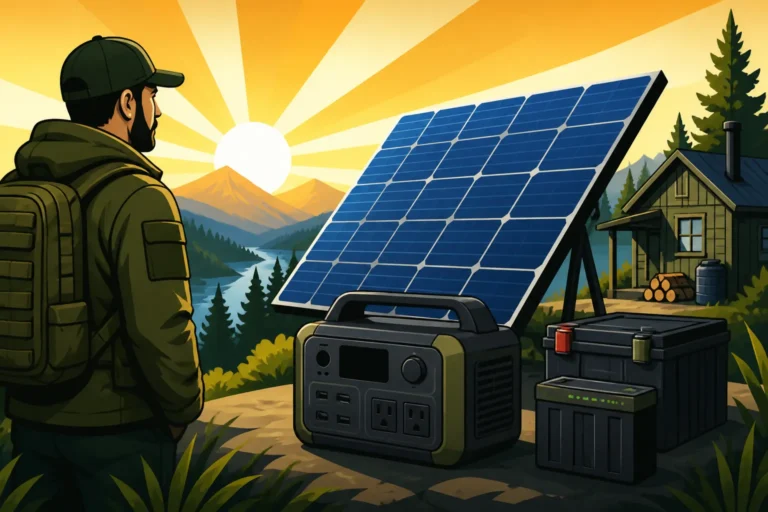
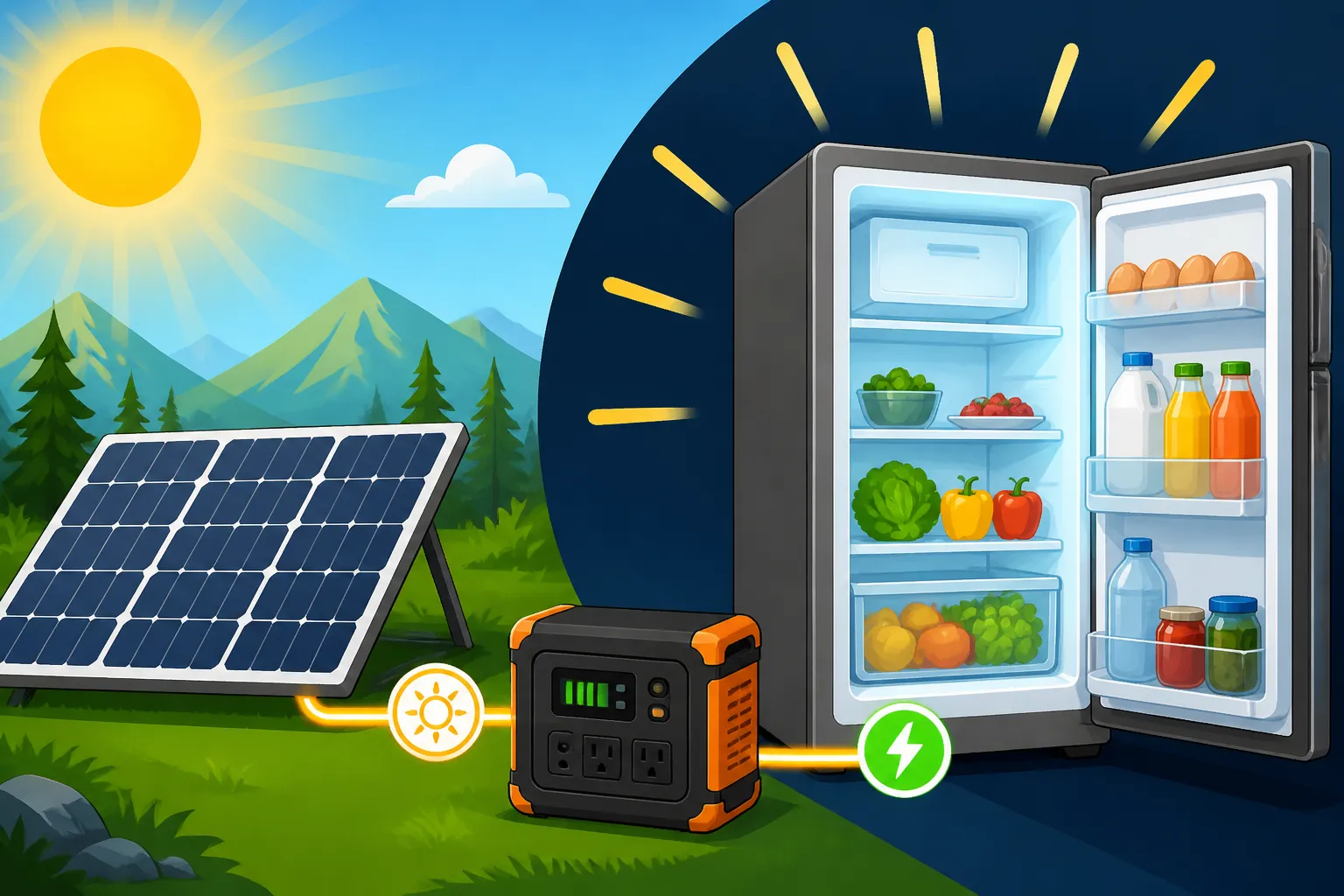
- Solar Generators: For smaller setups, temporary use, or as a backup, a portable solar generator can be an excellent choice for running a fridge. Brands like Jackery offer portable power stations (like the Jackery Explorer series) that combine a battery, inverter, and charge controller into a single, user-friendly unit. They can be charged via solar panels, a car 12V outlet, or AC wall power, making them incredibly versatile for running a portable fridge or even a small residential one for short periods. This is an ideal solution for a camping trip or for a small cabin where you only need occasional refrigeration. Explore Best Solar Generators for Off-Grid for more options.
Choosing the Right Fridge for Off-Grid Living
The type of refrigerator you choose will heavily influence the design and cost of your off-grid solar system. Not all fridges are created equal when it comes to living off the grid.
AC vs. DC Refrigerators
Understanding the fundamental differences between AC (alternating current) and DC (direct current) refrigerators is critical for an efficient off-grid setup.
- AC Refrigerators (Standard Household Fridges):
- Pros: Widely available, often cheaper to purchase upfront, and offer a vast range of sizes and features.
- Cons: Designed to run on grid power, meaning they generally require an inverter to convert your battery's DC power to AC. This conversion process incurs efficiency losses (typically 10-15%), meaning you need a larger solar array and battery bank to account for the wasted energy. Their compressors can also have high surge requirements, demanding a robust inverter. They are generally less efficient overall for continuous off-grid use compared to dedicated DC models.
- DC Refrigerators (12V/24V):
- Pros: Built specifically for direct connection to battery banks (12V or 24V), eliminating the need for an inverter (and its associated losses) if all your loads are DC. They are designed with highly efficient compressors that minimize power consumption and typically have much lower surge demands. Brands like Engel, Dometic, and Norcold are renowned for their efficient DC compressor fridges, perfect for RVs, boats, and small cabins. This direct current use makes them incredibly efficient for off-grid living.
- Cons: Can be more expensive initially than comparable AC models. Selection might be more limited in terms of large residential sizes or specific features.
For maximum efficiency and simplicity in an off-grid solar system, especially if the fridge is your primary power draw, a dedicated DC refrigerator is almost always the superior choice.
Propane/Absorption Refrigerators: An Alternative
While not solar-powered in the traditional sense, propane (or absorption) refrigerators are a common sight in RVs and off-grid cabins, offering a different approach to refrigeration.
- How They Work: Unlike compressor fridges that use a motor, absorption fridges use a heat source (propane flame or an electric heating element) to create a cooling cycle. They don't have moving parts, so they are silent.
- Pros: Can run on propane, reducing reliance on your electrical system. This means no inverter is needed, and your solar system can be sized smaller as it doesn't need to power the fridge directly. They are excellent for extending autonomy during long cloudy stretches or for locations with limited solar exposure.
- Cons: Generally less efficient than compressor fridges, especially DC models. They require proper ventilation to safely vent exhaust fumes and heat. The electric heating element mode is often a significant power hog, making propane operation the preferred method for off-grid living. They can also be sensitive to being unlevel, which affects their cooling performance.
Propane fridges can be a fantastic complementary solution, or even a primary one for those who want to minimize their electrical load, especially for year-round living in a Off-Grid Solar Cost for a Cabin where propane delivery might be easier than a massive solar array.
Real-World Scenarios and Brands for Fridge Power
Let's look at how these components and considerations come together in practical off-grid settings. The "best" off-grid solar for running a fridge isn't a one-size-fits-all answer; it depends heavily on your specific application.
Small Cabin or RV Setup
For a smaller footprint, like a weekend cabin, a hunting cabin, or an RV, efficiency and compactness are key.
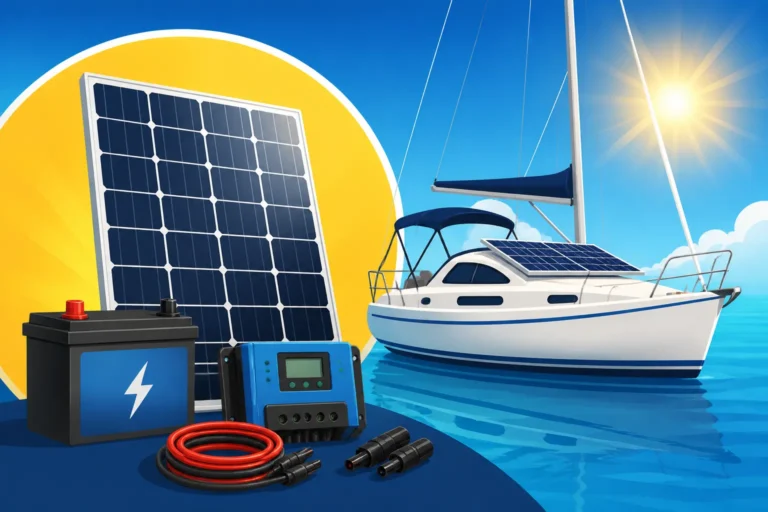
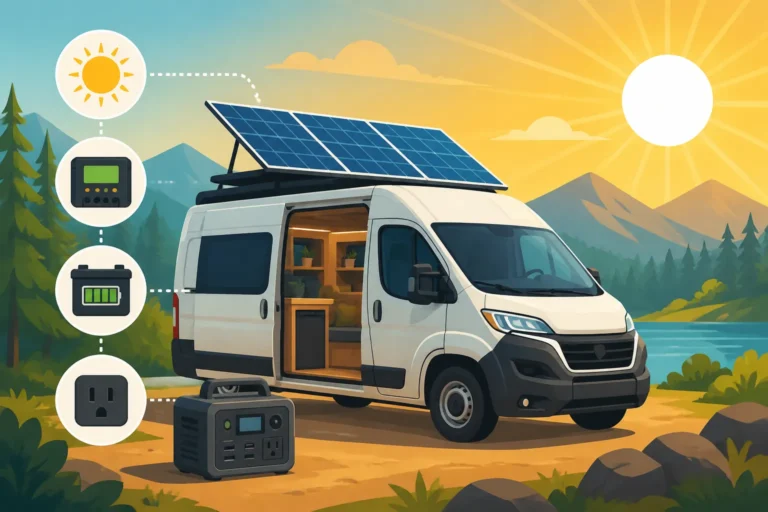
- Typical Setup: You'd likely start with one or two 100-200W solar panels on the roof, connected to an MPPT charge controller (like a Renogy Rover or Victron SmartSolar) which charges a 100-200Ah LiFePO4 battery. A small, high-quality pure sine wave inverter (around 1000-2000W) would handle any AC loads, including a small AC fridge if you opted for one, but ideally, you'd have a 12V DC compressor fridge to bypass the inverter losses entirely.
- Portable Power Stations: For truly minimalist setups, or as a convenient backup, a portable power station can be incredibly useful. A Jackery Explorer 1000 or larger can effortlessly run a portable 12V fridge for a day or two on a single charge and can be recharged via a single portable solar panel. It's a fantastic, all-in-one solution for those who aren't ready for a full-blown system or need flexibility.
- Brands: For panels, you might look at brands like Renogy or Rich Solar. For batteries, Battle Born or EG4 are popular LiFePO4 choices. For inverters and charge controllers, Victron Energy provides top-tier performance, though Renogy also offers integrated kits that simplify the process. Our articles like Off-Grid Solar Cost for a Cabin and Off-Grid Solar Cost for an RV can provide more tailored financial breakdowns.
Full-Time Off-Grid Home
Powering a full-sized residential refrigerator in a permanent off-grid home demands a more robust and often higher-voltage system.
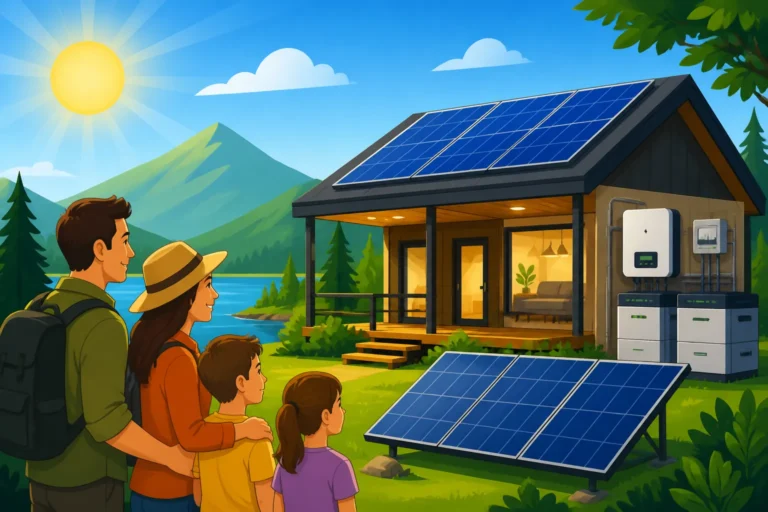
- Typical Setup: Here, you're looking at a larger solar array, often 1000W to 5000W (or more), possibly wired in a higher voltage configuration (24V or 48V) to reduce current and wire losses over longer distances. A substantial LiFePO4 battery bank (perhaps 400Ah-1000Ah at 48V) would be necessary for multiple days of autonomy, especially if the fridge is running constantly alongside other household appliances. The inverter will also be larger, typically 3000W to 8000W pure sine wave, often an inverter-charger hybrid unit from brands like Victron MultiPlus, Sol-Ark, or Growatt, which can also integrate a generator backup seamlessly.
- Reliability is Key: For a full-time residence, reliability is paramount. You need components that can withstand continuous operation and environmental stresses. Investing in high-quality, proven brands for all components will save headaches (and spoiled food) in the long run.
- Design Focus: When you're dealing with an entire home, you're not just thinking about the fridge. You're balancing all your loads. Our Off-Grid Solar System Design Basics and specific guidance on Best Off-Grid Solar Inverters will be invaluable here, helping you understand how to create a coherent and reliable system.
Portable Power Stations as a Fridge Backup/Primary
Portable power stations, often called solar generators, have gained immense popularity for their ease of use and versatility. They're a fantastic way to run a fridge without the complexity of a custom-built system.
- Utility: For small portable fridges (like those used for camping, tailgating, or even an emergency backup for a home fridge), a portable power station like a Jackery Explorer 1500 or an EcoFlow Delta Pro is a perfect fit. These units come with everything built-in: battery, inverter, and charge controller. You simply plug in your fridge and connect a solar panel to recharge the station.
- Advantages: No wiring expertise needed, highly portable, and scalable (you can buy larger units if needed). They are ideal for situations where you might only need refrigeration intermittently or want the flexibility to move your power source. Many even have 12V DC outlets, making them perfect for powering those super-efficient DC fridges directly.
- Considerations: While powerful, they have finite battery capacities. For continuous, long-term operation of a full-sized residential fridge, a dedicated, larger off-grid system will usually be more cost-effective and robust. However, for backup or smaller, mobile refrigeration, they are unparalleled. If you're weighing your options, exploring Best All-in-One Off-Grid Power Stations could help you decide if a portable unit is right for you.
Off-Grid Fridge System Comparison
Here's a quick comparison of different fridge types and their implications for your off-grid solar setup:
| Feature/Fridge Type | Standard AC Compressor Fridge | 12V/24V DC Compressor Fridge | Propane/Absorption Fridge |
|---|---|---|---|
| Initial Cost | Low-Medium | Medium-High | Medium-High |
| Energy Efficiency | Low-Medium (off-grid) | Very High (off-grid) | Low-Medium |
| Power Source | AC (requires inverter) | DC (direct battery connect) | Propane (electric optional) |
| Inverter Needed? | Yes (Pure Sine Wave) | No (if all loads DC) | No |
| Surge Current | High | Low | N/A (no compressor) |
| Solar System Impact | Larger array & battery, robust inverter, energy loss | Smaller array & battery, no inverter loss, simpler | Minimal electrical load, relies on propane storage |
| Best For | Budget-constrained, less frequent use of grid-type items | Full-time off-grid, RVs, marine, maximizing solar efficiency | Extended autonomy, remote locations, backup to electric |
| Common Brands | Whirlpool, Samsung, LG | Dometic, Engel, Norcold | Dometic, Norcold |
Disclaimer
The information provided in this guide is for general informational purposes only and does not constitute professional advice. Off-grid solar system design and installation can be complex and should ideally be undertaken by or with the consultation of certified professionals. Improper installation or component selection can lead to hazards, including electrical shock and fire. Always adhere to local electrical codes and safety guidelines.