Solar Generator vs Off-Grid Solar System
It’s easy to feel a bit overwhelmed when you start looking into solar power, especially with all the different systems out there. Many people wonder if they need to commit to a complex, full-blown off-grid setup or if one of those popular, sleek solar generators can actually power their needs. This guide is here to untangle that confusion, providing a clear, in-depth comparison to help you understand the nuances of each system and decide which is truly the best fit for your unique situation.
Understanding the Fundamental Differences
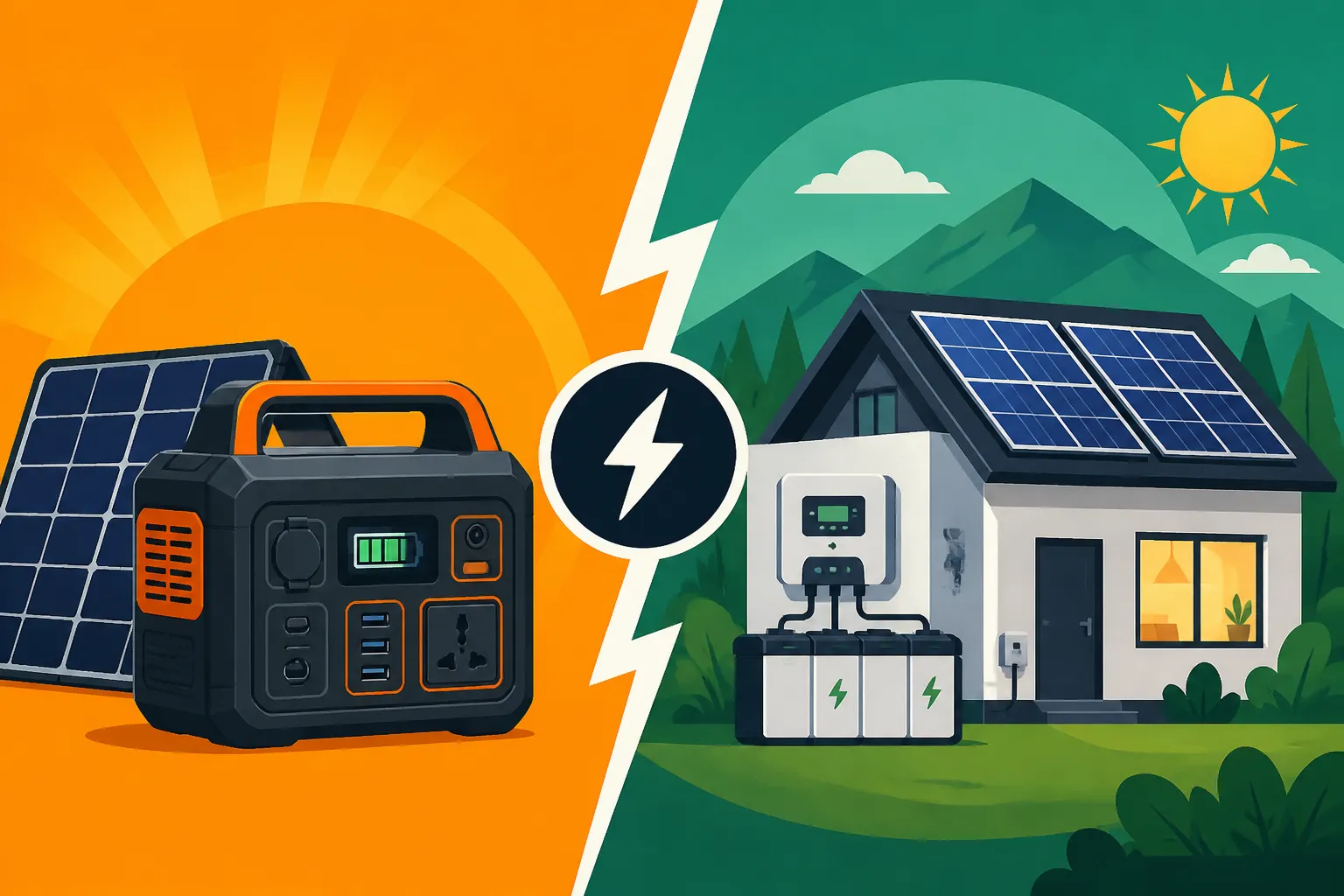
When we talk about going off-grid with solar, there are typically two main paths people consider, and they couldn't be more different in their design philosophy and application. On one side, you have the highly integrated, often portable "solar generator," and on the other, the robust, modular "traditional off-grid solar system." While both rely on the sun to produce electricity, how they achieve that and what they can ultimately do for you varies wildly.
What Exactly is a Solar Generator?
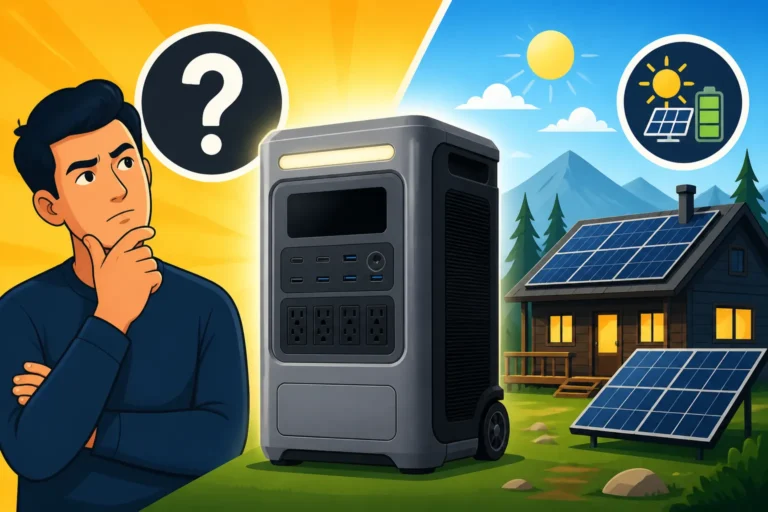
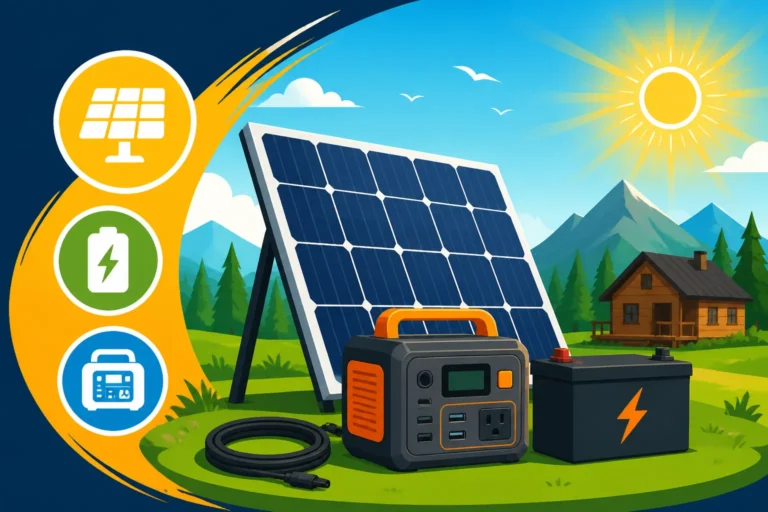
Imagine a portable power station that includes all the core components of a solar electric system neatly packaged into a single, often suitcase-sized unit. That's essentially a solar generator. These devices bundle a battery bank, an inverter, and a charge controller into one compact box. You connect solar panels (often sold separately or as a specific add-on from the same brand) directly to the generator, and it handles the rest – converting sunlight into electricity, storing it in its internal battery, and then converting it to AC power through its built-in inverter.
The magic of a solar generator lies in its simplicity and portability. There’s usually no complicated wiring or deep understanding of electrical systems required. You plug in your solar panels, plug in your devices, and you're good to go. This "plug-and-play" nature makes them incredibly appealing for folks who need power on the go, for camping trips, tailgating, emergency backup, or powering a few small devices in a remote cabin. Popular brands like Jackery have truly revolutionized access to portable power for many, making it accessible even to those with no prior solar experience.
What is a Traditional Off-Grid Solar System?
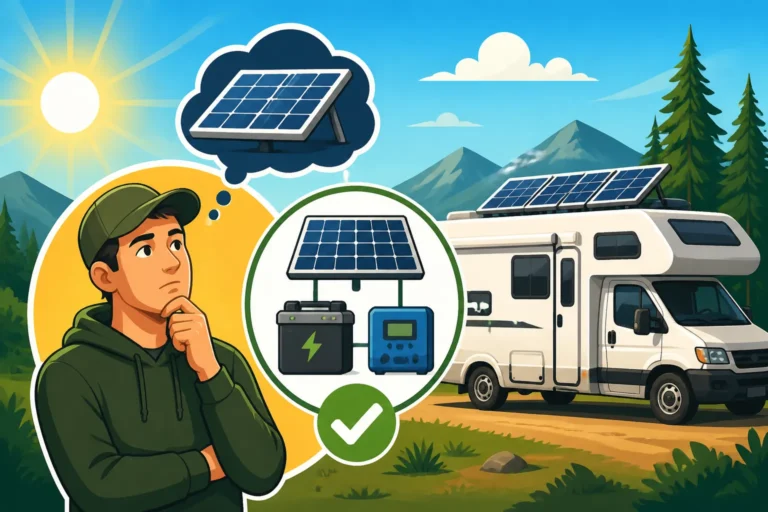
Now, shift your focus from a portable box to a dedicated, typically larger installation designed for continuous, substantial power delivery. A traditional off-grid solar system is a permanent or semi-permanent setup that is custom-built to meet the specific energy demands of a home, cabin, RV, or other structure entirely disconnected from the utility grid. Unlike a solar generator, this system is not an all-in-one unit but rather a collection of carefully selected, independent components working in concert.
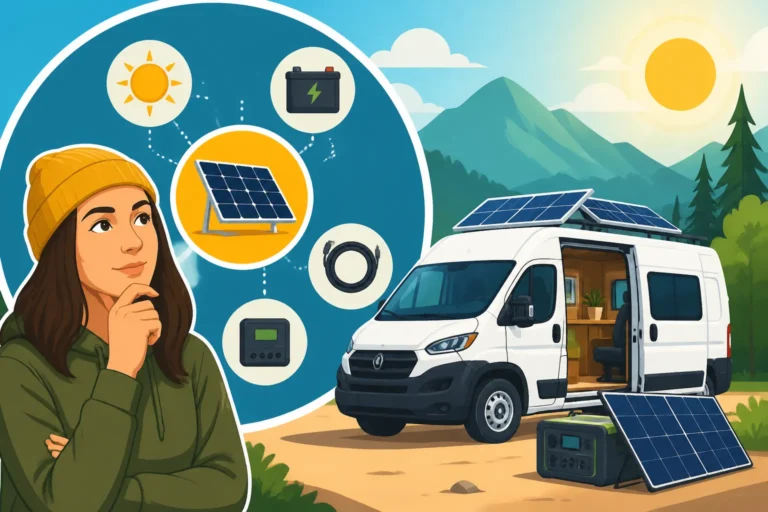
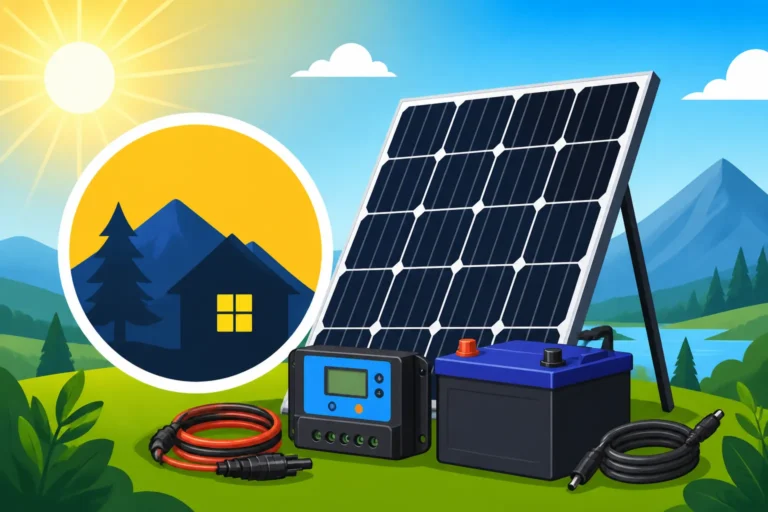
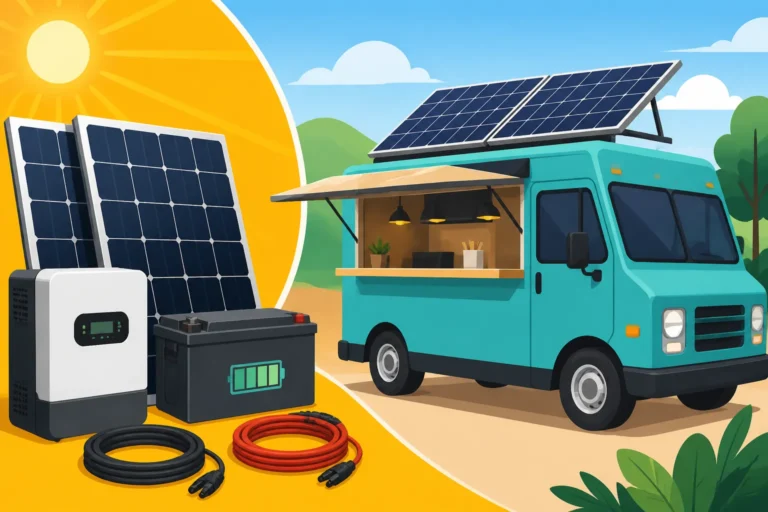
These systems comprise several distinct parts: a solar array (multiple panels), a charge controller, a battery bank, and an inverter. Each component is sized independently and connected together with heavy-gauge wiring. The design is tailored to your specific energy usage, geographical location, and desired "days of autonomy" (how long your system can run without sun). This type of setup is what truly enables energy independence for a full-time residence or a heavy-use workshop, providing the capacity and reliability to run everything from refrigerators and washing machines to well pumps and air conditioners. If you're looking for a comprehensive guide on building one, check out our How to Install an Off-Grid Solar System article.
Deconstructing the Components: Where They Diverge
The fundamental difference between a solar generator and a traditional off-grid solar system becomes clearer when we look at their individual components and how they're integrated. While both systems feature panels, batteries, inverters, and charge controllers, the scale, quality, and flexibility of these components are drastically different.
Power Generation: Panels and Their Integration
With a solar generator, the panels are typically designed to be portable and easy to set up. Many come as foldable units, or small, rigid panels meant for temporary deployment. These panels are often proprietary, meaning they are designed to work seamlessly with specific generator models, sometimes limiting your options for expansion or upgrade. Their power output is generally modest, ranging from 100W to 400W for a single panel, sufficient for recharging the generator's internal battery over several hours.
In contrast, a traditional off-grid system utilizes standard, full-sized solar panels, usually rated between 300W and 500W each. These are typically installed permanently on a roof, pole mount, or ground array. They are designed for maximum efficiency and durability over decades, forming a robust solar array that can generate thousands of watts of power. The choice of panels is far more flexible, allowing you to select from a wide range of manufacturers and technologies, like monocrystalline panels, to optimize for your specific climate and space.
Energy Storage: Batteries and Their Role
The battery is the heart of any off-grid system, and this is perhaps where the two approaches diverge the most. A solar generator houses an integrated battery bank, almost always a Lithium Iron Phosphate (LiFePO4) battery due to its superior lifespan, depth of discharge, and lighter weight compared to older lead-acid technologies. While LiFePO4 is a great choice, the battery capacity within a solar generator is fixed. What you buy is what you get; there’s no easy way to expand its storage capacity later on. For instance, a common Jackery model might offer around 1000Wh to 3000Wh of battery capacity, which is great for short-term needs but quickly exhausted by larger appliances.
A traditional off-grid system, however, relies on a modular battery bank. This means you choose individual batteries and wire them together to create the desired capacity. You have the flexibility to select the battery chemistry – be it LiFePO4, AGM, or even flooded lead-acid – and the capacity can be massive, easily ranging from 10,000Wh to 50,000Wh or more for a full-sized home. This modularity means you can start with a smaller bank and expand it as your energy needs grow or your budget allows. Understanding How Battery Choice Affects Off-Grid Cost is crucial here, as batteries often represent a significant portion of the overall investment.
Power Conversion and Management: Inverters and Charge Controllers
In a solar generator, the inverter and charge controller are integrated seamlessly into the unit's internal electronics. The charge controller manages the flow of electricity from the solar panels to the battery, preventing overcharging. The inverter then converts the battery's DC power into the AC power that most household appliances use. These integrated components are typically factory-tuned for the specific battery and output of the generator, offering a simplified user experience. However, this also means less control and less ability to troubleshoot or upgrade individual components. The inverter capacity, in particular, is a limiting factor, usually ranging from 1000W to 3000W of continuous output, with limited surge capabilities.
For a traditional off-grid system, the charge controller and inverter are separate, robust units. You'll often choose an MPPT (Maximum Power Point Tracking) charge controller for its efficiency, which is specifically sized to handle the output of your solar array. The inverter is a powerful, standalone device, often a pure sine wave inverter, chosen for its ability to handle high surge loads (like starting a well pump or refrigerator) and its continuous output capacity, which can range from 3000W to 15,000W or more. These individual components allow for much greater customization, reliability, and the ability to replace or upgrade parts independently, making the system more resilient and adaptable in the long run. We often discuss Best Off-Grid Solar Inverters and Best MPPT Charge Controllers as crucial decisions for system builders.
Performance and Scalability: Tailoring to Your Needs
The core difference between these two solar solutions boils down to their intended purpose and how much power they can realistically provide. One is designed for convenience and smaller tasks, while the other is built for sustained, substantial power delivery.
Power Output and Capacity Limitations
A solar generator, by its very nature, is a self-contained unit with a fixed capacity. You buy a 1000Wh unit, and that's your total energy storage. The continuous power output of its inverter is also limited, typically to 1000-2000 watts, with some larger models pushing 3000 watts. This is perfectly adequate for charging laptops, phones, running a few lights, or a small portable refrigerator. However, try to run a high-demand appliance like a full-sized air conditioner, an electric water heater, or even a large microwave for an extended period, and you’ll quickly hit its limits, potentially tripping its overload protection or depleting its battery in a flash.
A traditional off-grid solar system, on the other hand, is built for scale. The Off-Grid Solar System Sizing Guide is a testament to this, detailing how you calculate your specific energy needs and then build a system around them. Your battery bank can be as large as you need it to be, providing days of autonomy even without sunshine. Your inverter can be chosen to handle high surge loads and continuous heavy usage, capable of powering entire homes with multiple large appliances running simultaneously. If your daily energy consumption is, say, 10 kWh, a traditional system can be sized to meet that demand comfortably, something a solar generator simply isn't designed to do.
Expandability and Customization
One of the biggest downsides of a solar generator is its lack of expandability. Once you've purchased a unit, its battery capacity and inverter output are set in stone. While some newer models might allow for connecting external "expansion batteries," these are usually proprietary to the brand and still within a relatively small overall system size compared to a true off-grid setup. If your energy needs unexpectedly grow, you're looking at buying a whole new generator, not just adding components.
Traditional off-grid systems excel in this area. They are inherently modular and designed with future expansion in mind. Need more power? Add more solar panels. Need more storage? Add more batteries to your bank. Want to upgrade your inverter for higher output? You can swap it out without affecting the rest of the system. This modularity means your initial investment isn't rigid; your system can evolve with your lifestyle and energy demands, making it a far more flexible and long-term solution. This adaptability is a key reason why they are preferred for permanent installations and growing homesteads.
Reliability and Redundancy
For critical applications or full-time living, reliability is paramount. A traditional off-grid system, built with robust, separate components, generally offers higher reliability and easier maintenance. If one component, say the charge controller, fails, it can be replaced without taking down the entire system (assuming you have a bypass or spare). Many traditional setups also incorporate redundant components or integrate a backup generator, adding an extra layer of security. This kind of system is designed to provide consistent, uninterrupted power for decades.
Solar generators, while convenient, can be a single point of failure. If the integrated inverter or charge controller goes out, the entire unit may need to be sent for repair, leaving you without power. While many models from reputable brands like Jackery are very durable for their intended use, they aren't typically built with the same industrial-grade components or redundancy features found in a custom-designed off-grid home system. They are generally reliable for portable and temporary power but might not offer the same peace of mind for mission-critical, continuous power needs.
Practical Applications and Best Use Cases
Understanding the strengths and limitations of solar generators and traditional off-grid solar systems helps pinpoint exactly when to choose one over the other. It’s not about which is "better" in an absolute sense, but which is better for your specific needs.
When a Solar Generator Shines
Solar generators are absolute champions for situations demanding portability, ease of use, and relatively modest power requirements. Think of scenarios where you need power away from any fixed infrastructure, but not necessarily for an entire household's worth of appliances.
- Camping and Outdoor Adventures: This is perhaps their most obvious strong suit. A solar generator allows you to power lights, charge phones, run a portable cooler, or even a small fan while you're deep in the wilderness. There's no complex setup; just deploy the portable panels, plug in, and enjoy your gadgets. Many models are rugged enough to handle outdoor conditions and lightweight enough to transport easily.
- Emergency Backup Power: When the grid goes down due to a storm or outage, a solar generator can be a lifesaver. It can keep essential devices running—your phone, a light, a medical device like a CPAP machine, or a small refrigerator to keep food from spoiling. Their quick deployment means you can have backup power almost instantly without needing to deal with gasoline or propane. This kind of power solution is invaluable for short-term disruptions.
- Small, Remote Workstations or Hobbies: If you need to power a laptop, a drone charger, or specialized tools for a few hours in a remote location—say, for photography, field research, or a small DIY project away from an outlet—a solar generator offers the perfect solution. It's a convenient, quiet, and fume-free alternative to a gas generator.
When a Traditional Off-Grid System is Indispensable
For serious energy independence, continuous power, and running a full suite of modern appliances, a traditional off-grid solar system is the only way to go. These systems are designed to replace the utility grid entirely.
- Full-Time Off-Grid Living: If you're building a home, cabin, or tiny home that will never connect to the utility grid, a traditional system is essential. It's designed to provide the daily kilowatt-hours needed to run lights, kitchen appliances, entertainment systems, and HVAC. This is where you calculate precisely How Many Watts of Solar You Need and How Many Batteries for an Off-Grid System to ensure your lifestyle isn't compromised. Our guide on Off-Grid Solar Cost for a Whole House delves into what such a system entails.
- Powering Heavy-Demand Appliances: Do you need to run a well pump, an air conditioner, an electric water heater, or power tools in a workshop? These appliances have significant power draws, often with high starting (surge) requirements. A traditional system's robust inverter and large battery bank are built to handle these loads without breaking a sweat, ensuring consistent performance. Trying to run a large appliance with a solar generator would be an exercise in frustration.
- Year-Round Operation and Four-Season Dependability: For properties in areas with variable weather, like prolonged cloudy periods or heavy snowfall, a traditional system can be sized to account for these challenges. This includes having enough battery storage for several days of autonomy and a large enough solar array to rapidly recharge when the sun returns. Solar generators are typically not designed for such sustained, high-demand, and variable environmental conditions.
- Long-Term Investment and Self-Sufficiency: For those looking to truly detach from rising electricity costs and achieve genuine self-sufficiency, a traditional off-grid system represents a significant, long-term investment. While the upfront costs can be higher, the lifetime value and freedom from utility bills are substantial. Many consider Is Off-Grid Solar Worth the Cost for this very reason, as the savings accumulate over decades.
Cost, Installation, and Maintenance Considerations
The decision between a solar generator and a traditional off-grid solar system isn't just about power output; it also heavily depends on your budget, your willingness (or ability) to undertake installation work, and the long-term commitment to maintenance.
Upfront Investment and Long-Term Value
At first glance, solar generators appear to be the more budget-friendly option. You can pick up a decent quality solar generator, often from brands like Jackery, for anywhere from $300 to $5,000, depending on its capacity and features. This is a single, often immediate purchase that provides power without much fuss. However, when you break down the "cost per watt-hour" or "cost per continuous watt," a solar generator often doesn't offer the same value as a larger, modular system, especially for sustained, high-power usage. They are excellent for specific, smaller applications but become expensive very quickly if you try to scale their capabilities.
A traditional off-grid solar system, in contrast, requires a substantially larger upfront investment. The How Much Does an Off-Grid Solar System Cost article details this extensively, but you can expect to spend anywhere from $10,000 for a modest cabin system to $50,000 or even $100,000+ for a full-sized off-grid home. This cost covers high-capacity panels, a robust battery bank, powerful inverters, charge controllers, wiring, mounting hardware, and potentially professional installation. While the initial outlay is higher, the long-term value is immense. You're buying decades of energy independence, significant power capacity, and the ability to run a modern lifestyle without a utility bill. Over its lifespan, a well-designed traditional system often provides a superior return on investment for large-scale energy needs.
Installation Complexity and DIY Potential
This is a major distinguishing factor. Solar generators are designed for extreme ease of installation—they are essentially "plug-and-play." You connect solar panels (often with simple MC4 connectors or proprietary plugs) and then plug your appliances into the generator's outlets. No electrical knowledge, no complex wiring diagrams, and certainly no permits are typically required for these portable units. This makes them ideal for anyone who wants power with minimal hassle.
Traditional off-grid solar systems, however, are a much more involved undertaking. They require careful design, extensive wiring (both AC and DC), mounting of large solar arrays, and the safe connection of batteries, charge controllers, and inverters. This often involves working with high voltages and currents, which can be dangerous if not handled properly. While many enthusiastic DIYers successfully build their own systems, it requires a significant amount of research, electrical expertise, and adherence to safety codes. For a thorough breakdown of the process, our DIY Off-Grid Solar Installation Step by Step guide is invaluable. Many people opt for professional installation due to the complexity and safety concerns, which adds to the overall Off-Grid Solar Installation Cost. Permits and inspections are almost always necessary for permanent installations to ensure compliance with local electrical codes.
Maintenance and Longevity
Solar generators are generally low maintenance. Their enclosed design means fewer exposed parts to clean or inspect. The main maintenance involves keeping the solar panels clean and occasionally checking the unit for firmware updates or general wear and tear. If a component inside fails, repair can be challenging or impossible for the end-user, often requiring the entire unit to be serviced by the manufacturer, which could mean downtime.
Traditional off-grid solar systems require more active maintenance. This includes regular cleaning of solar panels, checking battery terminals for corrosion (especially with lead-acid batteries), monitoring battery health (voltage, state of charge), inspecting wiring connections, and ensuring all components are functioning optimally. However, the modular nature means that if one component fails, it can often be individually replaced or repaired, minimizing overall system downtime. For example, if a single battery in a large bank fails, you can replace just that battery rather than the entire bank. Proper maintenance can significantly extend the lifespan of a traditional system, often well beyond 20-25 years for panels and 10-15 years for quality lithium batteries. Check out our Off-Grid Solar Maintenance Costs article for more details.
Comparative Overview: Solar Generator vs. Traditional Off-Grid System
To help you visualize the differences, here's a quick comparison table summarizing the key aspects we've discussed.
| Feature | Solar Generator | Traditional Off-Grid Solar System |
|---|---|---|
| Purpose | Portable power, emergency backup, small appliances | Primary power for homes/cabins, heavy continuous loads |
| Components | All-in-one unit (battery, inverter, charge controller) | Separate, modular components |
| Power Output | Low to moderate (1-3kW continuous) | High (3-15kW+ continuous) |
| Battery Capacity | Fixed, integrated (1-5 kWh typically) | Modular, expandable (10-50 kWh+ custom built) |
| Scalability | Very limited or none | Highly expandable and customizable |
| Installation | Plug-and-play, easy, no permits | Complex, professional or skilled DIY, permits often required |
| Cost (Upfront) | Lower ($300 – $5,000) | Significantly higher ($10,000 – $100,000+) |
| Longevity | Generally good for portable use; unit replacement | Designed for decades of continuous operation; component replacement |
| Maintenance | Low, unit-based servicing | Higher, component-based checks and cleaning |
| Portability | High | Low (fixed installation) |
| Key Advantage | Convenience, portability, immediate power | True energy independence, high capacity, long-term reliability |
When making your choice, think about what you truly need. Is it reliable, uninterrupted power for a house or cabin, year-round? Then a traditional off-grid system is your answer. Do you need power for weekend camping trips, emergency light and phone charging, or a small remote setup? A solar generator will likely serve you well. It’s about aligning the tool with the task at hand.
Disclaimer
The information provided in this article is for general informational purposes only and does not constitute professional advice. Off-grid solar system design and installation can be complex and involve electrical hazards. Always consult with qualified professionals and adhere to all local codes and regulations when planning or installing a solar energy system.