How to Choose an Off-Grid Solar System
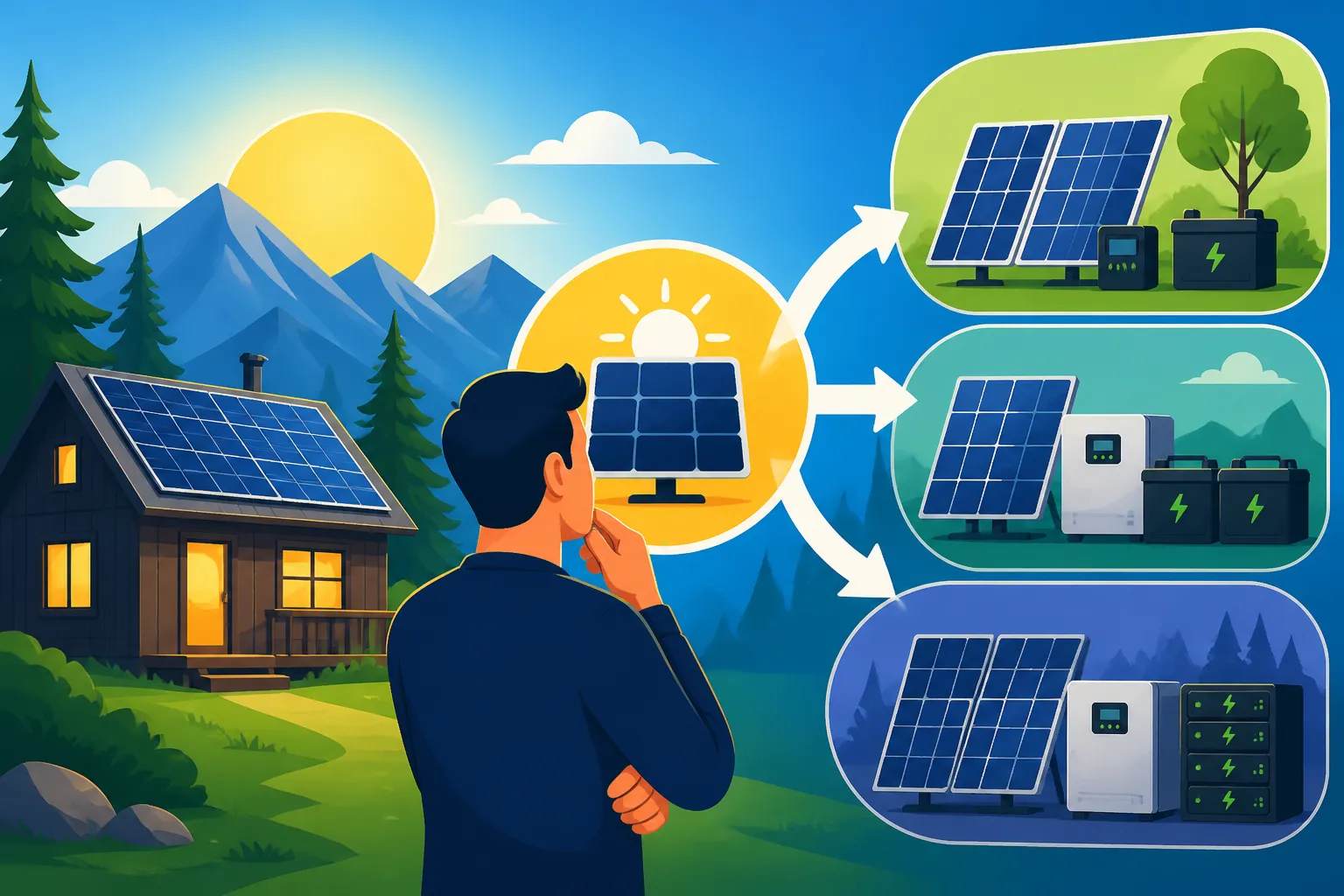
Embarking on the journey to power your life off the grid with solar energy is an incredibly exciting prospect, but let's be real, the sheer volume of information and component choices can feel like trying to navigate a dense forest without a compass. Many folks get overwhelmed by questions about panel types, battery chemistry, inverter sizing, and whether they can even tackle this themselves. This comprehensive guide is here to cut through the noise, validate those very frustrations, and walk you step-by-step through how to choose an off-grid solar system that perfectly fits your unique needs and lifestyle.
Understanding Your Energy Needs is Step One
Before you even think about buying a solar panel or a battery, the absolute first thing you need to do is get intimately familiar with your energy consumption. This isn't just about guessing; it's about a diligent inventory of every electrical item you plan to use. Skipping this crucial step is like building a house without blueprints – you might end up with something, but it probably won't be what you need, and it certainly won't be efficient.
Calculating Your Daily Watt-Hours
Imagine your off-grid system as a personal power plant for your home, cabin, or RV. To know how big that plant needs to be, you first have to figure out how much "fuel" (electricity) all your appliances consume. This is measured in watt-hours (Wh) per day. Don't let the technical terms scare you; it's simpler than it sounds.
Start by making a detailed list of every single electrical device you use, or intend to use. Think about everything from your refrigerator and lights to your laptop, phone charger, and even that little electric toothbrush. For each item, you need two pieces of information: its wattage and how many hours per day you plan to use it. You can usually find the wattage on a label on the appliance itself, in the owner's manual, or with a quick online search. Some devices, like a refrigerator, cycle on and off throughout the day, so you'll need to estimate its run time. A typical full-size energy-efficient refrigerator, for example, might draw around 100-200 watts but only actively run for 8-12 hours a day, even though it's plugged in 24/7. So, if your fridge is 150 watts and runs for 10 hours, that's 1500 Wh per day just for that appliance.
Do this for every item, then add them all up. This total daily watt-hour consumption is your baseline. It's the minimum amount of energy your system needs to generate and store each day to keep your life humming along. Be realistic, and err on the side of slightly overestimating rather than underestimating, especially when you're first starting out. It's a common frustration to build a system only to find you're constantly running out of juice because you forgot about the coffee maker or the occasional power tool use.
Accounting for Surge Loads and Peak Demand
Beyond your average daily consumption, there's another critical factor: surge loads. These are the sudden, temporary bursts of power that certain appliances demand when they first start up. Think about a well pump kicking on, a microwave heating up your dinner, or the compressor in your refrigerator cycling on. These devices often require significantly more power for a few seconds or minutes than their continuous running wattage.
For instance, a refrigerator that runs at 150 watts might momentarily spike to 800-1000 watts when its compressor starts. A microwave might draw 1500 watts continuously, but its initial surge could be even higher. If your inverter – the component that converts battery power into usable household AC electricity – isn't sized to handle these surges, it will simply shut down, leaving you in the dark or with a warm fridge. This is incredibly frustrating, especially if you've done all your calculations for continuous loads but neglected those startup spikes. It's vital to identify all your high-surge appliances and factor their peak wattage into your inverter selection. This often means choosing an inverter with a continuous rating slightly higher than your total running load, and a surge rating capable of handling your highest single surge load.
Planning for Future Expansion
One of the biggest regrets many off-gridders have is not planning for growth. What starts as a simple cabin setup with a few lights and a fridge can quickly evolve. Maybe you decide to add a small washing machine, a mini-split AC unit, or perhaps a partner moves in with their own set of electronics. Suddenly, your perfectly sized system is struggling to keep up.
It's always a good idea to build a little wiggle room into your initial design. This doesn't mean you need to double your system size from day one, but consider choosing components that are easily expandable. For example, selecting an inverter that has a higher capacity than your immediate needs, or designing your battery bank and charge controller to allow for additional batteries and solar panels down the line. Modular systems, where you can simply add more of the same components, are often a smart choice. While it might mean a slightly higher upfront cost, it saves you the headache and expense of completely overhauling your system later. Think of it as future-proofing your independence.
Essential Components of an Off-Grid Solar System
Now that you have a firm grasp of your energy needs, it's time to look at the individual pieces that make an off-grid solar system work. Each component plays a vital role, and understanding their functions will help you make informed choices.
Solar Panels: The Power Harvesters
Solar panels are, quite literally, your power source. They capture sunlight and convert it into usable electricity. When it comes to choosing panels, you'll encounter a few main types, each with its own characteristics.
Most commonly, you'll see monocrystalline and polycrystalline panels. Monocrystalline panels are generally more efficient, meaning they can produce more power in a smaller footprint. They tend to perform better in lower light conditions and extreme heat, but they are also typically more expensive. Polycrystalline panels are a bit less efficient, requiring more space for the same power output, but they are usually more budget-friendly. For many larger off-grid homes with ample roof or ground space, the lower cost of polycrystalline panels can make them an attractive option, but for smaller applications like an RV or a tiny home where space is at a premium, monocrystalline's higher efficiency is often worth the extra investment.
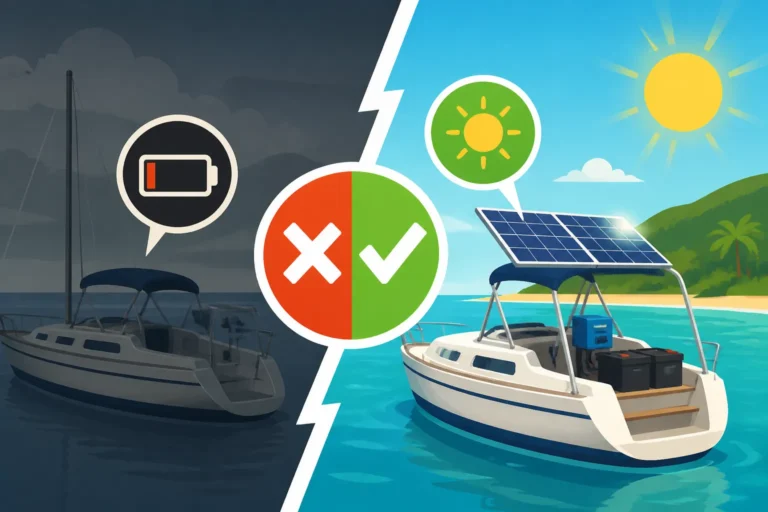
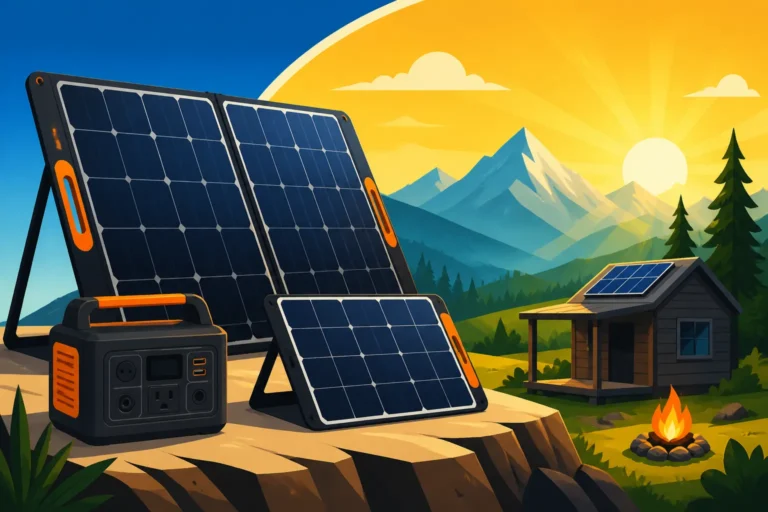
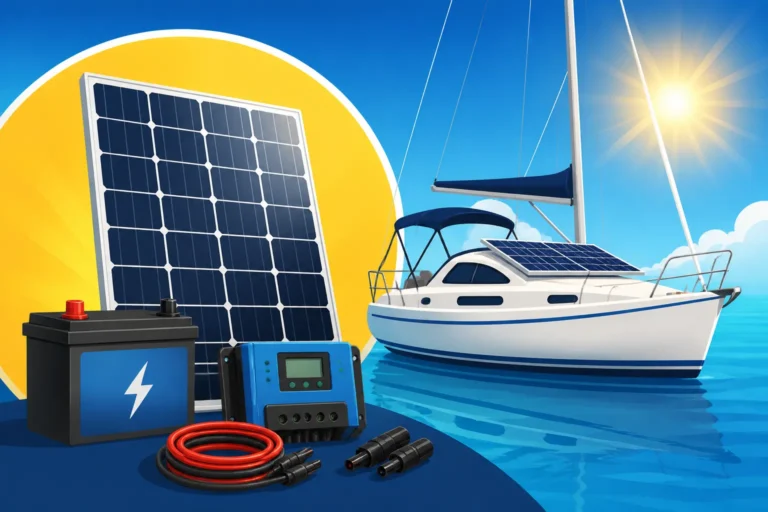
Beyond these, there are also flexible solar panels, which are great for curved RV roofs or boats, and thin-film panels, though these are less common for residential off-grid setups due to lower efficiency. Consider the durability of the panels, their warranty, and how they will be mounted. Will they be on a fixed roof mount, a ground mount that can be adjusted seasonally for optimal sun exposure, or perhaps portable panels you can move around, like some of the robust options from Jackery, which are great for smaller setups and emergency backup? The choice really boils down to your specific application, budget, and available space.
Batteries: The Heart of Your System
If solar panels are the lungs of your system, breathing in sunlight, then batteries are undoubtedly the heart, pumping stored energy throughout your home when the sun isn't shining. This is where a significant portion of your system's cost and reliability lies. The most critical decision here is often between LiFePO4 (Lithium Iron Phosphate) and various types of lead-acid batteries (AGM, Gel, and Flooded).
-
LiFePO4 Batteries: These are the new darlings of the off-grid world, and for good reason. They offer a much longer lifespan (often 10-15 years or more), can be discharged much deeper (typically 80-100% Depth of Discharge or DoD) without damage, are lighter, and perform better in terms of efficiency and sustained power output. They also require virtually no maintenance. The main drawback is their higher upfront cost. However, when you factor in their longer lifespan and deeper usable capacity, the LiFePO4 vs Lead-Acid Battery Cost often evens out, or even favors lithium, in the long run. Many experienced off-gridders swear by them for their reliability and peace of mind. Check out our guide on Best Off-Grid Solar Batteries for more insights.
-
Lead-Acid Batteries (AGM, Gel, Flooded): These have been the traditional choice for decades.
- Flooded Lead-Acid (FLA): The most affordable upfront, but they require regular maintenance (checking water levels, equalizing charges) and must be vented due to off-gassing. They also have a shorter lifespan (3-7 years) and should only be discharged to about 50% DoD to maximize their life.
- AGM (Absorbed Glass Mat): A step up from FLAs. They are sealed, maintenance-free, don't require venting, and are more tolerant to temperature extremes. They still prefer a 50% DoD, though. They are more expensive than FLAs but cheaper than LiFePO4.
- Gel Batteries: Similar to AGM but perform slightly better in high temperatures and deep discharges. They are more expensive than AGMs and can be sensitive to overcharging.
Your battery choice will profoundly impact your daily experience off-grid, affecting how long you can run appliances, how often you need to replace batteries, and how much monitoring you'll have to do.
Inverters and Charge Controllers: The Brains and Brawn
These two components are the unsung heroes, managing the flow of electricity and making it usable for your home.
-
Charge Controller: This device sits between your solar panels and your batteries. Its job is crucial: it regulates the voltage and current coming from the solar panels to ensure your batteries are charged safely and efficiently, preventing overcharging which can severely damage them. There are two main types:
- PWM (Pulse Width Modulation): These are simpler, less expensive, and less efficient, especially when the panel voltage significantly differs from the battery voltage. They essentially throttle the panel output to match the battery voltage.
- MPPT (Maximum Power Point Tracking): These are more sophisticated and significantly more efficient. They actively track the optimum voltage and current output of the solar panels, converting any excess voltage into additional current. This means you get more usable power from your panels, particularly in varying light conditions or when panel voltage is high (like with 60-cell or 72-cell panels charging a 12V or 24V battery bank). While more expensive upfront, an MPPT controller often pays for itself through increased energy harvest, allowing you to potentially use fewer panels or charge your batteries faster.
-
Inverter: This is what takes the DC (Direct Current) electricity stored in your batteries and converts it into AC (Alternating Current) electricity, which is what most household appliances use. The quality and capacity of your inverter are paramount.
- Pure Sine Wave Inverters: These produce electricity that is identical, or even cleaner, than what you get from the utility grid. They are essential for sensitive electronics (laptops, TVs, medical equipment) and anything with a motor (refrigerators, pumps, power tools), as they prevent humming, overheating, and potential damage. They are more expensive but are the gold standard for off-grid living.
- Modified Sine Wave Inverters: These are cheaper but produce a "choppier" waveform. While they might power simple resistive loads (like old incandescent light bulbs), they can damage sensitive electronics and cause motors to run inefficiently or overheat. For serious off-grid living, they are generally not recommended.
When choosing an inverter, remember to factor in those surge loads we talked about earlier. A 3000-watt continuous inverter might have a 6000-watt surge capacity, which is critical for starting appliances like a well pump. A high-quality inverter from a brand like Victron or Sol-Ark can be a significant investment, but it's one area where skimping can lead to constant headaches and equipment failure. Our guide on How to Size an Off-Grid Inverter can help you nail down the right capacity.
Sizing Your System for Real-World Scenarios
Alright, we've covered what you need to power and the components that do the powering. Now, let's put it all together to figure out the actual dimensions of your system. This is where your daily watt-hour calculation truly comes into play.
Matching Panels to Your Daily Consumption
You've calculated your total daily watt-hour needs. Let's say, for example, your cabin requires 5,000 Wh (or 5 kWh) per day. To figure out how many solar panels you need, you have to consider two main things: the wattage of each panel and your local "peak sun hours."
Peak sun hours (PSH) are a measure of how many hours per day, on average, your location receives sunlight intense enough to generate maximum power from your panels. This isn't just sunrise to sunset; it's a specific metric that accounts for varying sun angles and intensity throughout the day and year. For example, a location might have 5 PSH in the summer but only 2-3 PSH in the dead of winter. You can find average PSH data for your region through online tools or weather resources.
Let's assume you live in a region with an average of 4 peak sun hours per day, and you're considering 400-watt solar panels.
The calculation looks like this:
- Total Daily Watt-Hours Needed / (Panel Wattage * Peak Sun Hours) = Number of Panels
So, for our example: 5000 Wh / (400 W * 4 PSH) = 5000 / 1600 = 3.125 panels.
Since you can't buy a quarter of a panel, you'd round up to 4 panels.
However, this is a simplified calculation. You also need to factor in system losses (due to wiring, temperature, dust, etc., typically 15-25%), and critically, you need to consider the worst-case scenario. If you plan to live off-grid year-round, you absolutely must size your system based on the shortest, cloudiest days of winter, not the sunny days of summer. This often means oversizing your array significantly for summer to meet winter demands. Our comprehensive Off-Grid Solar System Sizing Guide dives much deeper into these calculations.
Determining Battery Bank Capacity
Your battery bank is your energy reservoir. It needs to be large enough to store all the power your panels generate and supply your loads, especially during the night or on cloudy days when solar input is low. The key here is "days of autonomy" – how many days your battery bank can power your home without any input from the solar panels. Most off-gridders aim for 2-5 days of autonomy, depending on their location's weather patterns and their backup generation strategy.
Let's stick with our 5,000 Wh daily need. If you want 3 days of autonomy, you need 15,000 Wh of usable battery capacity.
Now, remember the Depth of Discharge (DoD) for different battery chemistries:
- LiFePO4: You can safely use 80-100% of their rated capacity. So, for 15,000 Wh usable, you'd need roughly 15,000-18,750 Wh of total LiFePO4 capacity.
- Lead-Acid (AGM/Gel/Flooded): You should only discharge these to about 50% DoD to maximize their lifespan. This means if you need 15,000 Wh of usable power, you'd need a total battery bank capacity of 30,000 Wh!
This stark difference in usable capacity highlights why LiFePO4 batteries, despite their higher upfront cost, are often more economical and practical in the long run.
Finally, consider your system voltage: 12V, 24V, or 48V.
- 12V systems are common for small RVs or simple setups.
- 24V systems are better for medium-sized cabins.
- 48V systems are the standard for whole-home off-grid applications. Higher voltages mean lower current for the same power, which allows for thinner (and cheaper) wiring and reduced power losses over longer distances.
Our guide on How Many Batteries for an Off-Grid System provides detailed steps on calculating your battery needs and choosing the right voltage.
Inverter Sizing for Peak and Continuous Loads
We briefly touched on this, but it's worth revisiting because an undersized inverter is a common pitfall. Your inverter must be able to handle two types of loads:
- Continuous Running Loads: This is the total wattage of all the appliances that might be running simultaneously at any given time. For example, if your refrigerator (150W), some lights (50W), a laptop (60W), and a fan (50W) are all on at once, your continuous load is 310W.
- Surge (Starting) Loads: This is the highest instantaneous power spike created by a single appliance turning on. As discussed, a well pump or microwave can have a surge wattage several times its running wattage.
Your inverter needs a continuous power rating that exceeds your maximum anticipated continuous load, with a comfortable buffer. More importantly, its surge rating must be higher than the single largest surge load you expect. If your well pump surges to 3000 watts, your inverter must have a surge capacity of at least 3000 watts, even if its continuous rating is much lower.
It's smart to add a 20-30% buffer to both your continuous and surge calculations to account for unforeseen circumstances or future small additions. Choosing a robust pure sine wave inverter is paramount for system reliability and the longevity of your appliances.
DIY vs. Pre-Built Kits vs. Professional Installation
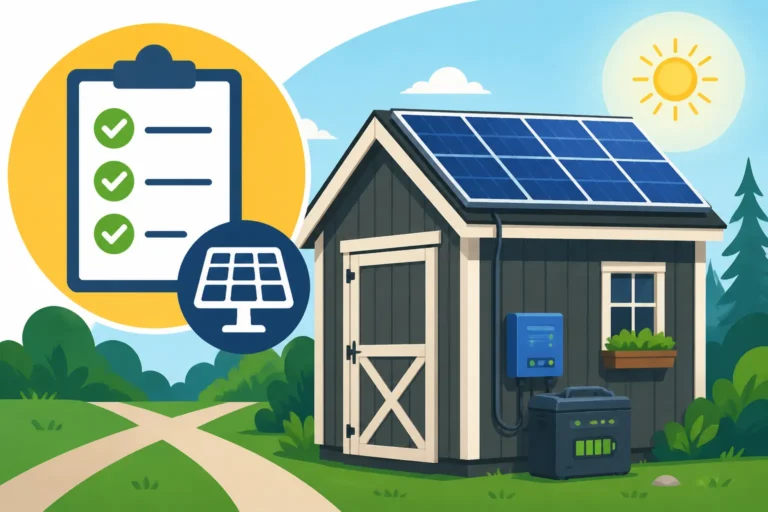
Once you have a handle on what components you need and how large they should be, the next big question is: who's putting it all together? Your skills, budget, and comfort level with electrical work will dictate the best approach.
The DIY Route: Freedom and Savings
For many off-gridders, the appeal of a DIY installation is strong. The thought of being completely self-sufficient and saving a substantial amount on labor costs is very motivating. If you're handy, enjoy learning, and have a good understanding of electrical principles, going DIY can be incredibly rewarding.
Pros of DIY:
- Cost Savings: This is often the biggest driver. You can save thousands of dollars on installation labor, which can be a significant portion of the total cost.
- Deep Understanding: By installing it yourself, you gain an intimate knowledge of how your system works, making troubleshooting and future maintenance much easier.
- Customization: You have complete control over every component choice and how the system is laid out, allowing for a truly bespoke setup.
- Sense of Accomplishment: There's immense satisfaction in building your own power independence.
Cons of DIY:
- Time and Effort: It's a significant time commitment, from research and planning to procurement and physical installation.
- Complexity: Off-grid systems involve DC and AC wiring, potentially high voltages and currents, and proper grounding. Mistakes can be dangerous and costly.
- Permitting: Even for DIY, many areas require permits and inspections, which means your work must meet local electrical codes (like the National Electrical Code in the US). Navigating this can be challenging.
- Warranty: While component warranties remain, you won't have an installation warranty to fall back on if something goes wrong due to your wiring.
The DIY route is best for those with electrical experience, a strong aptitude for learning, and a willingness to meticulously follow safety guidelines and code requirements. It also requires the right tools, from multimeters to crimpers and proper safety gear. For a detailed comparison, check out our article on DIY vs Professional Off-Grid Solar Cost.
Off-Grid Solar Kits: Convenience and Simplicity
For those who want the benefits of off-grid solar without the deep dive into individual component matching, pre-designed off-grid solar kits can be an excellent middle-ground. These kits typically include compatible panels, batteries, an inverter, a charge controller, and sometimes even basic wiring and mounting hardware.
Pros of Kits:
- Component Compatibility: The biggest advantage is that all components are designed to work together, taking the guesswork out of sizing and matching.
- Easier Installation: Many kits come with detailed instructions and simplified wiring diagrams, making them more approachable for a skilled DIYer.
- Cost-Effective: Often, kits are more affordable than buying individual components separately.
- Variety: You can find kits for almost any application, from small portable setups for camping to larger systems for cabins or tiny homes. For instance, smaller kits from brands like Jackery offer portable power stations paired with flexible or foldable solar panels, which are perfect for weekend adventures or as emergency backup power.
Cons of Kits:
- Less Customization: You're limited to the components included in the kit, which might not be the absolute ideal for your specific needs.
- Still Requires Effort: While simpler, installation still requires electrical knowledge and physical labor.
- Quality Varies: The quality of kits can differ significantly between manufacturers. It's crucial to research reputable brands.
Off-grid solar kits are a fantastic option for beginners, RV owners, or those with smaller power needs who want a more streamlined approach. Our guide on the Best Off-Grid Solar Kits for Beginners can help you navigate the options available.
Professional Installation: Peace of Mind and Expertise
For large, complex off-grid systems, or if you simply prefer to leave electrical work to the experts, professional installation is the way to go. This typically involves hiring a qualified solar installer or electrician specializing in off-grid systems.
Pros of Professional Installation:
- Expertise and Safety: Professionals have the knowledge and experience to design a safe, efficient, and code-compliant system. They understand wiring, grounding, and system optimization.
- Permit Handling: They will typically handle all necessary permits and inspections, saving you a major headache.
- Warranties: You usually get an installation warranty in addition to component warranties, providing extra peace of mind.
- Time-Saving: They handle the entire process, freeing up your time and effort.
Cons of Professional Installation:
- Highest Cost: This is the most expensive option due to labor costs.
- Less Control: You'll have less direct control over component choices and the installation process compared to DIY.
While professional installation is a significant investment, it can be invaluable for whole-home systems, ensuring everything is done correctly and safely from the start. This is especially true if you're connecting your off-grid system to a conventional breaker panel in your home, which involves more complex AC wiring that should only be tackled by licensed electricians.
Considering Your Location and Environmental Factors
Your physical location isn't just a place on a map; it's a critical determinant of your solar system's design and performance. Overlooking environmental factors can lead to frustrating underperformance and unexpected costs.
Sunlight Availability and Shading
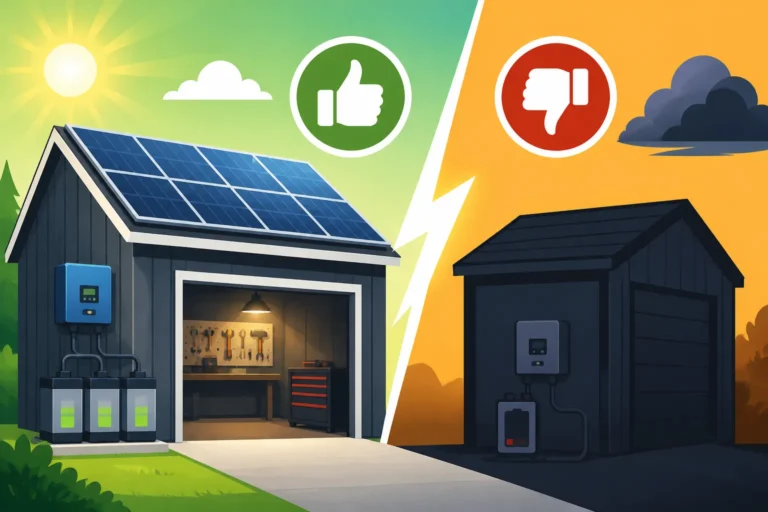
The amount of sunshine your location receives directly impacts how many solar panels you'll need. As discussed with peak sun hours, a cabin in sunny Arizona will require fewer panels than one in cloudy, rainy Oregon to generate the same amount of power. Online tools and local weather data can provide specific irradiance values for your area, helping you accurately size your array.
However, it's not just about overall regional sunshine; it's about the microclimate of your specific site. Are there tall trees that cast shadows on your roof or potential ground mount location during certain times of the day or year? Even partial shading on a single panel can drastically reduce the output of an entire string of panels if they're wired in series. When planning your layout, carefully observe your site throughout the day and across seasons to identify any potential shading issues. Sometimes, trimming a few branches can make a world of difference. If shading is unavoidable, consider using micro-inverters or optimizers on each panel, which allow individual panels to perform independently, minimizing the impact of shade on the rest of the array.
Temperature Extremes and Weather Conditions
Solar panels and batteries are sensitive to temperature.
- Solar Panels: Paradoxically, solar panels produce slightly less power as they get hotter. While they need sun, excessive heat reduces their efficiency. This is why good ventilation around panels, preventing heat buildup, is important.
- Batteries: Batteries are much more vulnerable to temperature extremes.
- Cold Weather: Lead-acid batteries lose capacity in cold temperatures and can be permanently damaged if charged while frozen. LiFePO4 batteries also lose capacity in the cold and should not be charged below freezing without a self-heating feature. If you live in a cold climate, you'll need to insulate your battery bank, possibly include heating elements, or select batteries specifically designed for low-temperature operation. Our article on Off-Grid Solar Cost in Cold Climates explores this in detail.
- Hot Weather: Excessive heat can accelerate degradation in all battery types, especially lead-acid. Proper ventilation for your battery enclosure is critical to dissipate heat and prevent thermal runaway in lithium batteries.
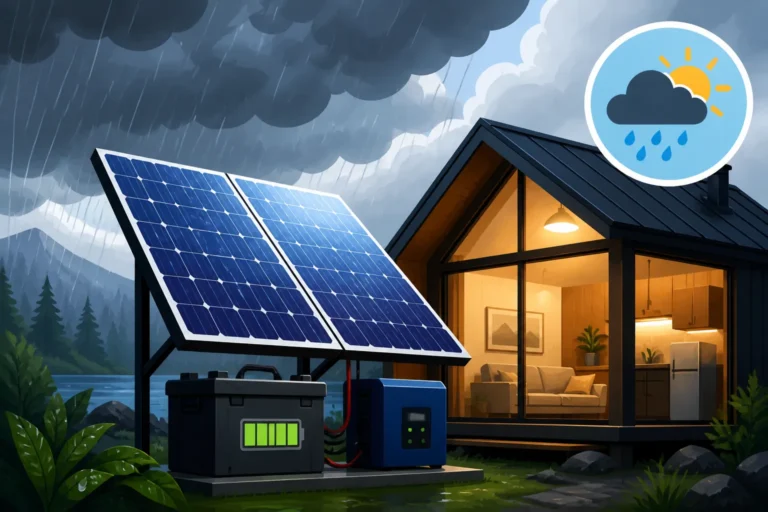
Beyond temperature, consider other weather elements. High winds necessitate robust mounting hardware. Heavy snow loads require strong panel frames and mounting structures, and you'll need a plan for snow removal to keep your panels producing. Hail storms might warrant extra protective measures or impact-resistant panels. Factor these conditions into your equipment choices and installation methods for long-term durability.
Permitting, Codes, and Homeowner Association Rules
This is often the most overlooked and frustrating aspect of setting up an off-grid system. While you're "off the grid," you're usually still on the map, meaning local authorities often have jurisdiction.
- Permitting: Many counties and municipalities require permits for electrical installations, even if they're off-grid. This is primarily for safety reasons, ensuring your system meets electrical and building codes. The permitting process can involve detailed plans, multiple inspections, and fees. Failing to get proper permits can lead to fines, forced system modifications, or even removal.
- Electrical Codes: In the United States, the National Electrical Code (NEC) sets the standards for safe electrical installations. Even if permits aren't strictly enforced for small off-grid cabins in very rural areas, adhering to NEC guidelines is crucial for your safety and the longevity of your equipment. This includes proper wire sizing, overcurrent protection (fuses and breakers), grounding, and disconnects.
- Homeowner Association (HOA) Rules: If your property is part of an HOA, they might have restrictions on visible solar panels, particularly concerning placement or aesthetic requirements. Always check with your HOA before planning your installation to avoid disputes.
Navigating these bureaucratic hurdles can be complex and time-consuming. This is one area where professional installers truly shine, as they are typically well-versed in local codes and permitting processes. Even if you DIY, research your local requirements thoroughly. You can find more information in our guide on Off-Grid Solar Permit Requirements.
Budgeting and Long-Term Cost Considerations
Let's talk money. Going off-grid with solar is an investment, and understanding the financial landscape is just as important as knowing your watt-hours. It's not just about the initial purchase; it's about the full lifecycle cost.
Initial Investment: Components and Installation
The upfront cost of an off-grid solar system can vary wildly, from a few hundred dollars for a small portable setup to tens of thousands for a full-sized home system. The major cost drivers are:
- Batteries: This is often the single most expensive component, easily accounting for 30-50% of the total system cost, especially if you opt for LiFePO4.
- Inverter/Charge Controller: High-quality, robust inverter-chargers are a significant investment, but they are critical for system performance and reliability.
- Solar Panels: Panel prices have come down considerably, but the total number of panels you need will add up.
- Mounting Hardware: Roof mounts, ground mounts, and pole mounts all have different costs.
- Wiring, Fuses, Breakers, and Safety Gear: These might seem minor but are essential for a safe, functional system and can add a surprising amount to the total.
- Installation Labor: If you hire professionals, this will be a substantial part of your budget.
When budgeting, get quotes for all major components from different suppliers. Consider reputable brands known for their durability and customer support. For example, while a simple Jackery power station might be a great entry point for minimal power needs, a comprehensive whole-home setup will involve larger, more integrated systems from companies like Victron Energy or Sol-Ark.
Hidden Costs and Maintenance
It's easy to focus on the big-ticket items and forget about the smaller, often overlooked expenses that can creep up. These "hidden costs" can significantly impact your overall budget.
- Permitting Fees: As mentioned, permits can cost anywhere from a few hundred to over a thousand dollars, depending on your location and system size.
- Tools: If you're doing a DIY installation, you'll need specialized tools (multimeter, crimpers, wire strippers, safety equipment) if you don't already own them.
- Shipping Costs: Large, heavy components like batteries and solar panels can incur substantial shipping fees, especially to remote off-grid locations.
- Backup Generator: Many off-grid systems integrate a backup generator for prolonged cloudy periods. This is an additional cost for the generator itself, its fuel, and maintenance.
- Maintenance: While off-grid solar systems are relatively low-maintenance, they're not maintenance-free. Panels need occasional cleaning, especially if you have a lot of dust, pollen, or bird droppings. Lead-acid batteries require periodic inspection and watering. You might need to replace fuses, check connections, or update firmware on your inverter.
- Battery Replacement: This is the most significant long-term cost. While LiFePO4 batteries last a long time, they eventually need replacing, and this is a substantial expense. Lead-acid batteries have a shorter lifespan, so you'll face this cost more frequently.
Factoring in these Hidden Costs of Going Off-Grid from the outset will prevent unwelcome surprises down the road.
Incentives and Return on Investment
For many years, tax credits and incentives primarily favored grid-tied solar systems. However, the landscape is slowly changing.
- Federal Solar Tax Credit (ITC): In the United States, the Investment Tax Credit (ITC) offers a percentage of the cost of installing a solar energy system as a tax credit. Crucially, as of recent updates, off-grid battery storage is eligible, even if it's not connected to the grid, as long as it's charged by a renewable energy source like solar. This can offer a significant reduction in your overall cost. Always consult with a tax professional to understand your eligibility. You can learn more about this in our article Does the Federal Tax Credit Apply to Off-Grid Solar.
- State and Local Incentives: Some states or local utilities may offer their own rebates, grants, or property tax exemptions for renewable energy installations. These are less common for purely off-grid systems compared to grid-tied, but it's always worth checking with your state energy office or local municipality.
While the "return on investment" for off-grid solar isn't always a direct financial payback in the same way a grid-tied system might be (through reduced utility bills), the value of energy independence, reliability, and living a self-sufficient lifestyle is immeasurable for many. For those in remote locations, the cost of extending grid power can be astronomical, making off-grid solar an incredibly cost-effective alternative from day one.
Advanced Considerations and System Upgrades
As you get more comfortable with your off-grid system, or as your needs evolve, you might start thinking about integrating additional features to enhance reliability, convenience, and efficiency.
Integrating a Backup Generator
Even the most meticulously designed off-grid solar system can face challenges. Prolonged periods of bad weather, unexpected spikes in energy consumption, or a component failure can leave you short on power. This is where a backup generator becomes a crucial asset for many off-gridders.
A generator provides a reliable source of power that can directly run certain loads or, more commonly, recharge your battery bank when solar production is insufficient. Modern inverter-chargers from brands like Victron or Outback Power are often designed to seamlessly integrate with a generator, automatically starting it when battery voltage drops to a certain level and shutting it off once the batteries are topped up. This "auto-start" feature can be a real game-changer, especially during winter months or when you're away from your property. Generators come in various fuel types (gasoline, diesel, propane) and sizes, and the choice depends on your needs, fuel availability, and budget. While adding a generator means an extra upfront cost and ongoing fuel expenses, it offers unparalleled peace of mind and significantly boosts your system's reliability.
Monitoring and System Management
One of the best ways to ensure the longevity and efficiency of your off-grid solar system is through robust monitoring. This isn't just about seeing if your lights are on; it's about understanding your system's health, performance, and energy flows.
A good battery monitor (often a shunt-based system) will give you precise information about your battery's state of charge, current draw, and total amp-hours consumed. This is far more accurate than simply looking at voltage, which can be misleading. Beyond individual component monitoring, many modern inverter-chargers and charge controllers offer comprehensive system monitoring solutions, often with Bluetooth or internet connectivity. For example, Victron Energy's Cerbo GX system allows you to monitor nearly every aspect of your solar array, battery bank, inverter, and even generator from a single interface, accessible via a local display or remotely through an app or web portal. This kind of detailed insight empowers you to optimize your energy consumption, identify potential issues early, and ensure your system is performing as expected. Without adequate monitoring, you're essentially flying blind, which can lead to inefficient use of power or even damage to your expensive components.
Expandability and Future-Proofing
As we discussed in the beginning, planning for future expansion is paramount. Few off-grid setups remain static over time. You might start with a minimal system for weekend use and later decide to make it your full-time residence, requiring more power.
When designing your initial system, consider:
- Inverter Capacity: Choosing an inverter with a slightly higher continuous rating and ample surge capacity than your immediate needs provides headroom for future additions without needing an entirely new inverter.
- Charge Controller Capacity: Ensure your charge controller can handle additional solar panels if you decide to expand your array. It's often more cost-effective to buy a slightly larger MPPT controller initially than to buy a new one later.
- Battery Bank: Designing your battery bank to be easily expandable is crucial. This often means choosing a higher system voltage (like 48V) and selecting batteries that can be added in parallel (for lithium) or series-parallel (for lead-acid) without compromising the existing bank.
- Wiring: Oversizing your main battery cables and PV wire slightly can accommodate future increases in current without needing to re-wire everything.
- Mounting Space: When installing panels, consider if there's available space nearby for additional panels in the future.
By making these thoughtful choices upfront, you can avoid the frustrating and expensive process of completely overhauling your system as your energy needs grow. It allows you to phase your off-grid build, spreading out costs while maintaining a pathway to greater energy independence.
| Component Type | Common Off-Grid Choices | Key Characteristics | Considerations |
|---|---|---|---|
| Solar Panels | Monocrystalline, Polycrystalline | Monocrystalline: Higher efficiency (18-22%), smaller footprint, better low-light performance, typically higher cost. Polycrystalline: Lower efficiency (15-17%), larger footprint for same power, generally more affordable. |
Efficiency vs. Cost: Space constraints (RV/tiny home) favor mono; ample space (ground mount) can use poly. Durability & Warranty: Look for robust frames and long product/power warranties. Mounting: Roof, ground, pole, or portable options. |
| Batteries | LiFePO4, AGM, Flooded Lead-Acid (FLA), Gel | LiFePO4: Long lifespan (10-15+ years), 80-100% DoD, lightweight, high efficiency, no maintenance, higher upfront cost. AGM: Sealed, maintenance-free, moderate lifespan (5-8 years), ~50% DoD, good for moderate temps. FLA: Lowest upfront cost, shortest lifespan (3-7 years), ~50% DoD, requires venting & maintenance (watering). Gel: Similar to AGM, better for deep cycling & high temps, sensitive to overcharging. |
Lifespan vs. Upfront Cost: LiFePO4 has best long-term value. Depth of Discharge: Affects usable capacity & overall bank size. Maintenance: LiFePO4 & AGM are maintenance-free. Temperature: Extreme climates need special considerations (heating/cooling). System Voltage: 12V, 24V, 48V. |
| Charge Controller | MPPT, PWM | MPPT: More efficient (92-97%), converts excess panel voltage to current, better in varying light & for high-voltage panels, higher cost. PWM: Less efficient (75-85%), throttles panel voltage, simpler, lower cost, suitable for small systems where panel/battery voltage is similar. |
Efficiency: MPPT is almost always preferred for larger systems for greater energy harvest. Panel/Battery Voltage: MPPT excels when panel voltage is much higher than battery voltage. Budget: PWM can be an option for very small, budget-conscious setups. |
| Inverter | Pure Sine Wave, Modified Sine Wave | Pure Sine Wave: Produces clean, grid-like AC power, essential for sensitive electronics & motors, higher cost, robust. Modified Sine Wave: Produces a "choppy" AC waveform, cheaper, can damage sensitive electronics & cause motor hum/overheating, generally not recommended for primary off-grid use. |
Appliance Compatibility: Pure sine wave is a must for modern living. Continuous Power Rating: Must exceed simultaneous running loads. Surge Power Rating: Critical for starting motors (fridge, well pump, microwave). Efficiency: Look for high conversion efficiency. |
Disclaimer
The information provided in this guide is intended for educational and informational purposes only and should not be considered professional advice. Off-grid solar system design and installation can be complex and involve significant electrical hazards. Always consult with qualified and licensed professionals (electricians, solar installers) for specific advice tailored to your situation, and ensure all installations comply with local codes and regulations. Working with electricity carries inherent risks, and improper installation can lead to property damage, injury, or death.