Best Battery Bank for Off-Grid
Living off-grid means truly embracing self-sufficiency, but few things are more frustrating than a power system that constantly leaves you in the dark or forces you to ration electricity. The heart of any reliable off-grid solar setup isn't just the panels on your roof, but the battery bank tucked away, quietly storing all that hard-earned sunshine. Choosing the right battery bank can feel overwhelming with all the options out there, but this guide is designed to help you navigate the complexities and ensure your power needs are met, day in and day out.
Understanding Off-Grid Battery Bank Essentials
When you decide to break free from the utility company, your entire world changes. You become your own power company, and that means taking responsibility for both generation and storage. The sun only shines part of the day, and sometimes not at all, so having a robust battery bank is absolutely non-negotiable for consistent, reliable power.
Why Batteries are the Heart of Your Off-Grid System
Think of your off-grid solar panels as the busy workers generating electricity, diligently converting sunlight into usable power. But where does that power go when you don't need it instantly, or when the sun goes down? That's where your battery bank steps in. It's the essential reservoir that stores all that surplus energy, allowing you to use electricity on cloudy days, throughout the night, or during peak demand times when your solar panels might not be producing enough. Without a properly sized and maintained battery bank, your off-grid dream quickly becomes a frustrating nightmare of limited power and constant generator reliance.
The battery bank acts as a buffer between your sporadic solar generation and your constant energy demands. It smooths out the peaks and valleys of power production, ensuring a steady flow of electricity to your appliances, lights, and electronics. This continuous availability is what truly defines off-grid living; it's the difference between merely charging a phone and running a full household with refrigeration, water pumps, and entertainment. Understanding its critical role is the first step in appreciating why investing in the best battery bank for off-grid living is so important.
Key Metrics and Terminology for Battery Banks
Diving into battery specifications can feel like learning a new language, but a few key terms will help you understand what you're looking at. Knowing these will empower you to make informed decisions about your system.
-
Capacity (Ah or kWh): This is perhaps the most important metric, telling you how much energy a battery can store. It's typically expressed in Amp-hours (Ah) for individual batteries or kilowatt-hours (kWh) for an entire bank. A larger capacity means more stored energy and longer periods between charges. For example, a 100Ah 12V battery stores 1200 Watt-hours (Wh) or 1.2 kWh. When you're looking at different options, comparing the overall kWh capacity of the bank is crucial for understanding how much power it can actually deliver. If you're wondering, "How Much Battery Capacity You Need", this is where capacity comes into play.
-
Voltage (V): Off-grid battery banks commonly operate at 12V, 24V, or 48V. While 12V systems are popular for RVs and small cabins, larger homes or power-hungry setups typically opt for 24V or 48V systems. Higher voltages allow for thinner wiring (reducing costs and voltage drop) and are generally more efficient for larger systems with higher power demands. Your inverter and charge controller will need to match your battery bank's voltage, so this is a fundamental design decision.
-
Depth of Discharge (DoD): This refers to the percentage of a battery's capacity that has been discharged. For instance, if a 100Ah battery has 50Ah remaining, its DoD is 50%. This metric is crucial because different battery chemistries tolerate different depths of discharge without significantly impacting their lifespan. For lead-acid batteries, a DoD of 50% is generally recommended to maximize cycle life, while lithium batteries can often be discharged to 80-100% without issue.
-
Cycle Life: This specifies how many charge and discharge cycles a battery can endure before its capacity significantly degrades (usually to 80% of its original capacity). Batteries with higher cycle lives are more durable and offer a better long-term return on investment, even if their initial cost is higher. A battery with a 5,000-cycle life will last much longer than one with 500 cycles.
-
C-Rating: This indicates the rate at which a battery can be safely charged or discharged relative to its capacity. A 1C rate means the battery can be charged or discharged at a current equal to its full capacity in one hour. For example, a 100Ah battery with a 1C rating can handle 100 amps for one hour. This is important for ensuring your battery can handle the surge demands of appliances or rapid charging from your solar array.
Exploring Different Off-Grid Battery Chemistries
The world of off-grid batteries has seen significant advancements, offering various chemistries, each with its own set of pros and cons. Understanding these differences is key to selecting the right fit for your unique off-grid lifestyle.
Lead-Acid Batteries: Flooded, AGM, and Gel
Lead-acid batteries have been the workhorse of off-grid and backup power systems for decades. They are well-understood, relatively inexpensive upfront, and widely available. Within the lead-acid family, you'll typically encounter three main types: flooded, Absorbed Glass Mat (AGM), and Gel.
-
Flooded Lead-Acid (FLA): These are the most traditional and often the least expensive per Amp-hour. FLAs require regular maintenance, as their electrolyte (a mixture of sulfuric acid and water) needs to be topped off with distilled water periodically. They also need to be installed in a well-ventilated area because they release hydrogen gas during charging. While robust, FLAs are sensitive to deep discharges, and generally, you should aim for a maximum of 50% Depth of Discharge to maximize their lifespan. Their relatively low upfront cost makes them appealing for those on a tight budget or for seasonal applications like a hunting cabin, but the maintenance and ventilation requirements are a commitment.
-
Absorbed Glass Mat (AGM): AGM batteries are a step up from FLAs in terms of convenience and performance. In an AGM battery, the electrolyte is absorbed into fiberglass mats between the plates, making them "sealed" or "maintenance-free." This design allows them to be installed in various orientations (though not upside down) and eliminates the need for watering. They are also more resistant to vibrations and temperature fluctuations, making them popular for RVs, boats, and other mobile applications. AGMs tolerate deeper discharges than FLAs, often up to 80% DoD, but consistently cycling them beyond 50% will still reduce their overall cycle life. They are more expensive than FLAs but offer a good balance of performance and convenience. Many choose AGM batteries due to their reliability.
-
Gel Batteries: Similar to AGMs, Gel batteries are also sealed and maintenance-free. Instead of a liquid or mat-absorbed electrolyte, Gel batteries use a silica-gel paste to suspend the electrolyte. This makes them extremely robust, spill-proof, and highly resistant to vibration. They excel in high-temperature environments and perform well in slow discharge applications. However, Gel batteries have specific charging requirements and can be easily damaged by overcharging at too high a voltage or current. They also typically have a lower power output (C-rating) compared to AGMs and can be the most expensive lead-acid option. While durable, their sensitivity to charging parameters makes precise charge controller settings crucial. If you're weighing the options, exploring AGM vs Gel Batteries for Off-Grid can offer more insights.
Lithium-Ion Batteries: The Rise of LiFePO4
Lithium-ion batteries, specifically Lithium Iron Phosphate (LiFePO4 or LFP), have become the gold standard for off-grid battery banks in recent years, despite their higher initial cost. They offer a compelling list of advantages that often make them the most cost-effective solution over the long term.
LiFePO4 batteries are lighter, more compact, and significantly more efficient than lead-acid batteries. They boast an incredibly long cycle life, often 3,000 to 5,000 cycles or even more, compared to the 500-1500 cycles typical of lead-acid. This means they can last for a decade or two, potentially outliving multiple sets of lead-acid batteries. Their efficiency is also a major plus; they have very low internal resistance, which means less energy is lost as heat during charging and discharging. This translates to more usable power from your solar panels.
One of the biggest game-changers with LiFePO4 is their ability to handle deep discharges. You can regularly discharge them to 80% or even 100% Depth of Discharge without significantly impacting their lifespan. This means a 100Ah LiFePO4 battery offers nearly twice the usable capacity of a 100Ah lead-acid battery (which should ideally only be discharged to 50%). This higher usable capacity often offsets some of the initial cost difference, as you might need fewer LiFePO4 batteries to achieve the same usable energy storage.
Furthermore, LiFePO4 batteries maintain a more consistent voltage throughout their discharge cycle, ensuring stable power delivery to your appliances. They also charge much faster than lead-acid batteries, allowing you to maximize energy capture during shorter solar windows. Most LiFePO4 batteries come with an integrated Battery Management System (BMS), which protects the cells from overcharging, over-discharging, over-current, and temperature extremes, making them safer and easier to manage. Brands like Renogy and Battle Born are well-known for their robust LiFePO4 offerings. You can find many options on platforms like Amazon, making them accessible for DIY builders.
Comparing LiFePO4 vs Lead-Acid Battery Technologies
When it comes down to choosing between lead-acid and lithium, it's a balance of upfront cost, long-term value, performance, and maintenance.
| Feature | Flooded Lead-Acid (FLA) | Absorbed Glass Mat (AGM) | Lithium Iron Phosphate (LiFePO4) |
|---|---|---|---|
| Initial Cost | Lowest | Moderate | Highest |
| Usable Capacity | ~50% of rated capacity | ~50-60% of rated capacity (can go to 80% with reduced life) | ~80-100% of rated capacity |
| Cycle Life | 500-1200 cycles | 600-1500 cycles | 3000-8000+ cycles |
| Weight | Heaviest | Heavy | Lightest |
| Size | Largest | Large | Smallest |
| Maintenance | High (watering, ventilation) | Low (sealed, no watering) | Very Low (sealed, BMS managed) |
| Charging Speed | Slow (sensitive to charge rates) | Moderate | Fast (can accept high charge rates) |
| Voltage Sag | Significant throughout discharge | Moderate | Very little until fully depleted |
| Temperature Range | Good, but capacity reduced in cold | Good, better in cold than FLA | Excellent, especially with heated versions for cold charging |
| Safety | Releases hydrogen gas, acid spills potential | Sealed, less risk | Very stable chemistry, built-in BMS protection |
| Installation | Requires ventilation, upright only | Flexible mounting, no ventilation needed | Flexible mounting, no ventilation needed |
As you can see, the higher upfront cost of LiFePO4 batteries is often offset by their superior performance, longer lifespan, and minimal maintenance. Over a 10-20 year period, the total investment can actually be lower for LiFePO4, as you might buy only one set of lithium batteries versus two or three sets of lead-acid. For those seeking maximum convenience, efficiency, and longevity, lithium is usually the preferred choice for an off-grid battery bank. If you're exploring the broader topic of Lifetime Cost of an Off-Grid Solar System, this comparison helps illustrate why it's a significant factor.
Sizing Your Off-Grid Battery Bank for Reliability
One of the biggest mistakes off-gridders make is undersizing their battery bank. This leads to constant anxiety about power, reliance on generators, and premature battery degradation. Properly sizing your battery bank is a critical step in building a reliable and worry-free off-grid system. It ensures you have enough stored energy to cover your needs, even during periods of low solar production. This is more than just guessing; it involves a methodical approach to understand your consumption patterns and environmental factors. For a deeper dive into these calculations, consider reading our guide on How to Size an Off-Grid Battery Bank.
Calculating Your Daily Energy Needs
Before you can determine the size of your battery bank, you need to know exactly how much electricity you actually use. This isn't just a mental estimate; it requires a detailed load analysis. Grab a pen and paper, or open a spreadsheet, and list every electrical appliance and device you plan to use in your off-grid setup.
For each item, you'll need two pieces of information: its wattage (W) and the average number of hours per day you'll use it. You can usually find the wattage on the appliance's label, in its manual, or by searching online. Don't forget those phantom loads or occasional use items like a vacuum cleaner or power tools.
Let's do an example:
- Refrigerator: 100W, runs 8 hours/day (compressor cycle, not continuously) = 800 Wh/day
- LED Lights (5 bulbs): 7W each, 5 bulbs = 35W, run 4 hours/day = 140 Wh/day
- Laptop: 60W, used 5 hours/day = 300 Wh/day
- Well Pump: 1000W, runs 0.5 hours/day (30 minutes total) = 500 Wh/day
- Phone Charger: 10W, used 2 hours/day = 20 Wh/day
Total all these up to get your estimated daily Watt-hour (Wh) consumption. In this example, 800 + 140 + 300 + 500 + 20 = 1760 Wh/day.
Don't forget to account for surge loads from appliances with motors, like refrigerators, well pumps, or power tools. While these surges don't add much to your daily Wh consumption, they dictate the instantaneous power your inverter needs to provide, which indirectly affects your battery bank's ability to deliver high current. When you're thinking about sizing, this load analysis forms the absolute bedrock. A detailed guide on How to Do an Off-Grid Load Analysis can walk you through this process more thoroughly.
Determining Days of Autonomy and Depth of Discharge
Once you have your daily energy consumption, you need to consider how many days you want your system to run without any solar input. This is called your days of autonomy. For most off-grid homes, 3 to 5 days of autonomy is a common target, especially in areas with frequent cloudy weather or during winter. For an RV that moves frequently, you might get away with 1-2 days. If you're in a critical remote location, or if you want absolute peace of mind, you might aim for 7 days.
Now, bring in the Depth of Discharge (DoD) we discussed earlier. This is where battery chemistry really matters.
- For lead-acid batteries, if you have 100Ah of capacity, you can only realistically use about 50Ah to ensure a decent lifespan. So, your usable capacity is half of the stated capacity.
- For LiFePO4 batteries, if you have 100Ah of capacity, you can safely use 80-100Ah. Your usable capacity is much closer to the stated capacity.
Here's the calculation:
- Calculate Total Required Energy (Wh): Daily Watt-hours * Days of Autonomy
- Using our example: 1760 Wh/day * 3 days = 5280 Wh
- Account for Inverter Efficiency Loss: Inverters aren't 100% efficient. Assume a 10-15% loss.
- Required energy from batteries = 5280 Wh / 0.85 (for 85% efficiency) = 6211 Wh
- Calculate Required Amp-hours (Ah) at System Voltage:
- If you're using a 12V system: 6211 Wh / 12V = 517.6 Ah
- If you're using a 48V system: 6211 Wh / 48V = 129.4 Ah
- Factor in Depth of Discharge (DoD): This gives you the total nameplate capacity you need to purchase.
- For Lead-Acid (50% DoD): 517.6 Ah / 0.50 = 1035.2 Ah (at 12V)
- For LiFePO4 (80% DoD): 517.6 Ah / 0.80 = 647 Ah (at 12V)
As you can see, you need significantly less nameplate capacity with LiFePO4 to get the same usable energy. This is a crucial point when comparing LiFePO4 vs Lead-Acid Batteries for Off-Grid or when figuring out How Many Batteries for an Off-Grid System. Don't forget that if you are thinking about How Much to Budget for Off-Grid Batteries, your sizing calculations will be a major factor in that budget.
Crucial Factors When Choosing an Off-Grid Battery Bank
Beyond the basic chemistry and sizing, several other critical factors play a huge role in the long-term success, safety, and satisfaction of your off-grid battery bank. Overlooking these details can lead to costly mistakes down the line.
Lifespan, Cycle Count, and Warranty
When you're making a significant investment in a battery bank, you want it to last. This is where lifespan, cycle count, and warranty become paramount.
-
Lifespan: This refers to the expected functional life of the battery. While lead-acid batteries might last 3-7 years, modern LiFePO4 batteries are often rated for 10-20 years or more. A longer lifespan means fewer replacements and a better long-term return on your investment. It also means less hassle and less waste. Think about the peace of mind knowing you won't be replacing your entire battery bank every few years.
-
Cycle Count: As discussed, this is the number of times a battery can be fully discharged and recharged before its capacity significantly degrades. Look closely at the manufacturer's specified cycle life, and pay attention to the DoD at which it's rated. A battery rated for 5,000 cycles at 80% DoD is vastly superior to one rated for 1,000 cycles at 50% DoD. High cycle counts are a hallmark of quality, particularly in LiFePO4 batteries from reputable brands. This directly impacts the return on investment, as a longer-lasting battery means those costs are spread out over more years.
-
Warranty: A strong warranty is a testament to a manufacturer's confidence in their product. LiFePO4 batteries often come with warranties ranging from 5 to 10 years, sometimes even longer. Lead-acid warranties are typically much shorter. A good warranty provides protection against manufacturing defects and premature failure, offering crucial peace of mind. Always read the fine print of any warranty, understanding what it covers and for how long.
Temperature Performance and BMS Importance
Batteries are sensitive creatures, especially when it comes to temperature. Extreme heat or cold can severely impact their performance, efficiency, and overall lifespan.
-
Temperature Performance:
- Cold Weather: All batteries lose some capacity in cold temperatures. Lead-acid batteries can suffer permanent damage if charged below freezing temperatures, as ice crystals can form within the electrolyte. LiFePO4 batteries also lose capacity in the cold and, critically, cannot be charged when their internal temperature is below freezing (typically 32°F or 0°C) without risking permanent damage to the cells. Many high-quality LiFePO4 batteries, like those from Battle Born or some Renogy models, now include internal heating elements or are rated for wider temperature ranges to mitigate this issue, making them ideal for cold climates. If you live in an area with harsh winters, investing in temperature-tolerant batteries or ensuring proper insulation for your battery bank is vital.
- Hot Weather: High temperatures can also degrade batteries faster, especially lead-acid chemistries. Excessive heat accelerates internal chemical reactions, reducing lifespan. Proper ventilation for any battery bank (but especially lead-acid) is essential to prevent heat buildup.
-
Battery Management System (BMS): For LiFePO4 batteries, a robust BMS is an absolute necessity. It's the brain of the battery, monitoring individual cell voltages, temperatures, and currents. The BMS protects the battery from:
- Overcharging: Prevents cells from being charged beyond their safe voltage limits.
- Over-discharging: Disconnects the battery before cells drop below a dangerous voltage, which can cause irreversible damage.
- Over-current: Protects against drawing too much current at once, which can overheat the cells.
- Over-temperature/Under-temperature: Shuts down charging or discharging if temperatures are outside safe operating parameters, crucial for cold-weather protection in LiFePO4.
- Cell Balancing: Ensures all cells in the battery bank maintain similar voltage levels, which is critical for the overall health and longevity of the entire bank.
A high-quality, reliable BMS can be the difference between a long-lasting, safe LiFePO4 battery and a premature failure. Always ensure any LiFePO4 battery you consider has an integrated, well-regarded BMS.
Expandability and System Voltage
Thinking ahead is always a good idea when building an off-grid system. Your energy needs might grow, or you might want to add more panels in the future.
-
Expandability: Can you easily add more batteries to your bank later on if your energy demands increase?
- Lead-Acid: Generally, it's not recommended to mix old and new lead-acid batteries, or batteries of different capacities or types, as this can lead to imbalances and shorten the life of the entire bank. If you expand, it's best to add a completely new, separate bank or replace the entire existing one.
- LiFePO4: Many LiFePO4 batteries are designed with expandability in mind. As long as you add batteries of the same brand, capacity, and ideally, from the same batch (or manufactured close in time), expansion is often much simpler. Some systems even offer parallel connection kits to make this process easier. This flexibility allows you to start smaller and grow your system as your needs and budget evolve.
-
System Voltage (12V, 24V, 48V): The choice of system voltage (12V, 24V, or 48V) affects the efficiency of power transfer, wiring costs, and the availability of components.
- 12V Systems: Common for smaller setups like RVs, vans, or tiny cabins, where lower power demands and shorter wire runs are typical. Many common DC appliances (car accessories, LED lights) are readily available in 12V. However, for higher power applications, 12V systems require much thicker, more expensive wiring to avoid significant voltage drop and power loss.
- 24V Systems: A good middle ground, offering better efficiency and allowing for thinner wiring than 12V, while still being relatively straightforward for DIYers. It's suitable for small to medium-sized cabins or homes with moderate power needs.
- 48V Systems: The preferred choice for larger off-grid homes and substantial power demands. Higher voltage means lower current for the same amount of power (P = V*I), which reduces resistive losses and allows for much thinner (and cheaper) wiring. Many powerful inverters and charge controllers are designed for 48V systems, making them highly efficient for whole-house applications. While a 48V system requires careful planning and potentially specialized components, it offers the most robust and efficient solution for comprehensive off-grid living. When considering system voltage, this voltage choice heavily influences component selection and future scalability.
Top Contenders in the Off-Grid Battery Market
The off-grid battery market is bustling with innovation, particularly in the lithium sector. While traditional lead-acid options still exist, the performance and longevity of LiFePO4 have positioned them as the frontrunners for many off-grid enthusiasts. Let's look at some of the best options available today.
High-Performance LiFePO4 Options
When it comes to LiFePO4 batteries, you're looking for high energy density, a long cycle life, robust BMS protection, and excellent temperature performance.
-
Battle Born Batteries: Often considered the industry standard for premium LiFePO4, Battle Born (now owned by Dragonfly Energy) offers incredibly robust and reliable batteries. Their 100Ah 12V deep cycle batteries are renowned for their quality, long cycle life (3000-5000 cycles at 100% DoD), and impressive 10-year warranty. They are built for extreme conditions, resistant to vibration, and have an excellent internal BMS. While their upfront cost is higher, their longevity and performance often justify the investment, especially for full-time off-grid living or demanding applications. You can often find them on Amazon, though their website is also a primary source.
-
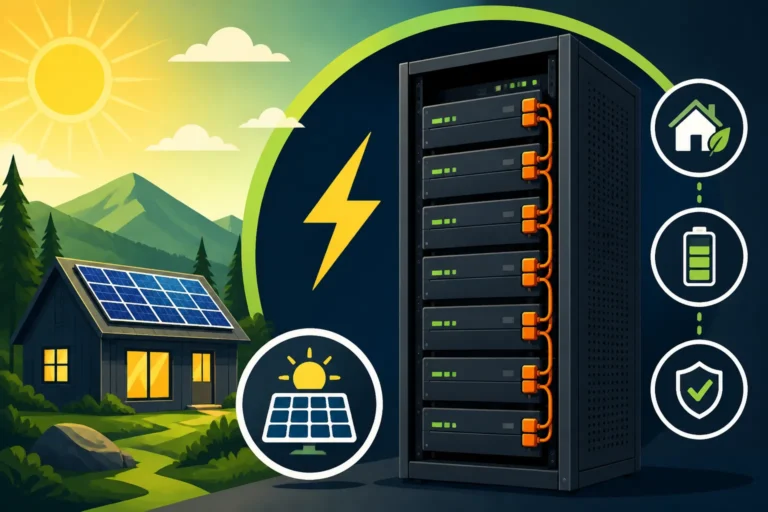
EG4 Batteries: EG4 has emerged as a strong contender, offering high-quality LiFePO4 batteries at a more competitive price point. Their server rack-style batteries, like the EG4 LifePower4, are particularly popular for larger home systems. These modular units are designed for 48V systems, offering thousands of cycles and excellent performance. They integrate robust BMS and are built to be easily expandable. Their balance of cost and performance makes them a favorite among those building substantial off-grid setups.
-
Victron Energy Smart Lithium Batteries: Victron Energy is a well-respected name in the off-grid world, known for its high-quality components. Their Smart Lithium batteries integrate seamlessly with other Victron components (inverters, charge controllers) through their VE.Bus system, allowing for sophisticated monitoring and control. These batteries are designed for serious off-grid applications, offering excellent cycle life and robust performance. While often at the higher end of the price spectrum, the integrated system approach and reliability are a major draw.
-
Renogy LiFePO4 Batteries: Renogy offers a wide range of LiFePO4 batteries that are a popular choice for both beginners and experienced off-gridders. They provide a good balance of performance, features, and price, often making them a go-to for DIY builds. Their batteries come in various capacities and voltages, often with built-in BMS and low-temperature protection in some models. They are widely available and supported, making them an accessible entry point into lithium power.
Other notable brands providing excellent LiFePO4 options include SOK Battery, Dakota Lithium, and Chins, all of which offer compelling features and warranties for specific off-grid needs. To choose the absolute best battery bank, considering these top-tier brands is crucial.
Reliable Lead-Acid Alternatives
While LiFePO4 batteries dominate the high-performance segment, lead-acid batteries still have their place, particularly for those on a tighter budget, with less demanding power needs, or for seasonal use where maintenance is manageable.
-
Rolls Surrette Batteries (FLA): For those committed to flooded lead-acid, Rolls Surrette is often cited as the gold standard. Manufactured in Canada, these batteries are incredibly robust, heavy-duty, and designed for deep cycling in demanding off-grid environments. Their larger plate surface area and higher density paste are engineered for longevity, often providing more cycles than other FLAs. They are more expensive than typical FLAs but offer superior performance and a longer lifespan within the lead-acid category. They require diligent maintenance but can provide decades of service if properly cared for.
-
Trojan Batteries (FLA & AGM): Trojan is another highly reputable brand for lead-acid batteries, particularly known for its golf cart batteries, which are popular for off-grid applications due to their deep-cycle capabilities. They offer both flooded and AGM options. Their L16 series (FLA) is a staple in many off-grid homes, known for its durability and relatively good cycle life. Trojan AGMs offer the convenience of being sealed and maintenance-free, making them suitable for situations where venting is an issue or for mobile applications.
-
Fullriver DC Series (AGM): Fullriver offers a range of high-quality deep-cycle AGM batteries that are well-regarded in the off-grid community. Their DC series is designed for frequent deep cycling and offers good resistance to vibration and temperature changes. They provide a strong balance between performance and the convenience of a sealed, maintenance-free battery, making them a solid choice for RVs, cabins, and smaller off-grid systems where lithium might be overkill or out of budget. For more details, refer to our article on Best AGM Batteries for Off-Grid.
Integrated Solutions and All-in-One Power Systems
For those who prefer a simpler, more plug-and-play approach, or for smaller, portable off-grid needs, integrated solutions and all-in-one power systems have become increasingly popular.
-
EcoFlow and Bluetti Power Stations: These brands offer portable power stations that combine a LiFePO4 battery, inverter, and charge controller into a single, compact unit. Products like the EcoFlow Delta Pro or Bluetti AC200L are essentially "solar generators" that can be charged from solar panels, AC outlets, or even a car. While not typically scalable for a full-sized off-grid home, they are excellent for emergency backup, van life, camping, remote workshops, or as a starting point for smaller systems. They offer ease of use, portability, and usually come with a good warranty. You can often find these versatile units on Amazon.
-
Hybrid Inverter/Battery Systems: Some advanced inverter manufacturers, like Victron Energy (with their MultiPlus or Quattro series) and Sol-Ark, offer inverter-chargers that are highly integrated with specific battery chemistries, including LiFePO4. While not "all-in-one" in the portable sense, these systems are designed to manage power flow seamlessly between solar, battery, generator, and even grid connections (if you have one). They require individual components but are designed to work together as a cohesive, highly efficient, and programmable system. These are typically for more complex, larger off-grid homes.
These integrated solutions provide simplicity and often excel in specific niche applications. However, for a truly custom, scalable, and robust off-grid home, a component-based system with separate, high-quality solar panels, charge controller, inverter, and a purpose-built battery bank usually offers the best long-term performance and flexibility.
Installation and Maintenance Considerations
Once you've chosen your off-grid battery bank, the journey isn't over. Proper installation, safe wiring, and diligent maintenance are crucial for ensuring its longevity, efficiency, and safety. Cutting corners here can lead to dangerous situations and premature battery failure. A deep understanding of How to Install an Off-Grid Battery Bank is crucial here.
Proper Wiring and Safety Practices
Wiring your battery bank correctly is non-negotiable for both performance and safety. Incorrect wiring can lead to dangerous shorts, fires, damage to components, and inefficient power delivery.
- Cable Sizing: Always use appropriately sized cables (gauge) for the current they will carry. Undersized cables can overheat, cause significant voltage drop, and reduce the efficiency of your system. The longer the cable run and the higher the current, the thicker the cable needs to be. Consult wiring charts based on distance, current, and voltage to ensure you select the correct gauge.
- Fuses and Breakers: Every major circuit and component in your off-grid system, especially the battery bank, must be protected by appropriately sized fuses or circuit breakers. These devices are your primary line of defense against overcurrents and short circuits. They prevent damage to components and, more importantly, protect against fire hazards. A main battery bank fuse, often a large ANL fuse or a DC-rated breaker, should be installed as close to the battery positive terminal as possible.
- Terminal Connections: Ensure all terminal connections are clean, tight, and corrosion-free. Loose connections create resistance, which leads to heat buildup and power loss. Use appropriate tools to tighten terminals, but avoid over-tightening, which can strip threads or damage battery posts. For lead-acid batteries, apply an anti-corrosion grease.
- Ventilation (Lead-Acid): If you're using flooded lead-acid batteries, they must be installed in a well-ventilated enclosure or room. During charging, these batteries produce hydrogen gas, which is highly flammable and can explode if concentrated. Never store FLAs in a sealed space without active ventilation.
- Battery Enclosure: Protect your battery bank from physical damage, extreme temperatures, and moisture. A dedicated battery box or enclosure is highly recommended. For indoor installations, this also helps contain any potential spills or off-gassing. For LiFePO4 batteries in cold climates, consider an insulated enclosure or even a heated one to ensure they can charge safely when temperatures drop.
- Proper Grounding: All metallic components of your solar system and battery bank should be properly grounded to prevent electrical shock hazards in case of a fault. This involves connecting non-current-carrying metal parts to an earth ground, usually via a grounding rod.
- Tools and PPE: Always use insulated tools when working on electrical systems. Wear appropriate Personal Protective Equipment (PPE), including safety glasses, gloves, and non-conductive footwear. Remove any metal jewelry that could cause a short.
For a detailed guide on the subject, check out our comprehensive article on Off-Grid Solar Safety and Grounding.
Long-Term Care and Monitoring Your Battery Bank
Even the best battery bank requires some love and attention to perform optimally and last its full lifespan. Regular monitoring and periodic maintenance can identify issues before they become major problems.
- Regular Inspections: Periodically inspect your battery bank for any signs of corrosion, loose connections, bulging cases (a sign of internal failure), or leaks. Clean terminals as needed with a wire brush and baking soda solution (for lead-acid corrosion), rinsing with distilled water.
- State of Charge (SoC) Monitoring: Invest in a reliable battery monitor (shunt-based is best) that accurately displays your battery's State of Charge (SoC) in real-time. This is vastly more accurate than relying solely on voltage readings. Knowing your SoC helps you manage your energy consumption, prevent over-discharging, and understand how your solar array is performing. Many LiFePO4 batteries have Bluetooth connectivity to monitor SoC via a smartphone app.
- Temperature Monitoring: Keep an eye on the ambient temperature around your battery bank. If it's consistently too hot or too cold, take steps to improve ventilation or insulation. For LiFePO4 batteries without internal heaters, be especially vigilant about temperatures below freezing and ensure they are not charged when too cold.
- Watering (Flooded Lead-Acid): If you have FLA batteries, regularly check the electrolyte levels and top them off with distilled water as needed. Never use tap water. The frequency depends on your usage, but it could be anywhere from monthly to quarterly.
- Equalization (Flooded Lead-Acid): Some FLA battery manufacturers recommend periodic equalization charges. This is a controlled overcharge that helps balance the cells and remove sulfation from the plates, which can improve battery performance and extend its life. Only perform equalization if specifically recommended by the manufacturer and with a charge controller that supports it. Never equalize AGM or Gel batteries.
- Firmware Updates (LiFePO4 with Smart BMS): For advanced LiFePO4 batteries with smart BMS, occasionally check for firmware updates from the manufacturer. These updates can improve performance, fix bugs, or add new features.
- Cleaning Panels: While not directly battery maintenance, ensuring your solar panels are clean and free of debris directly impacts how effectively your battery bank gets charged. Dirty panels mean less energy, leading to longer charge times and potentially lower battery SoC.
By diligently following these installation and maintenance guidelines, you can significantly extend the life of your off-grid battery bank, maximize its performance, and enjoy consistent, reliable power for years to come. Remember, the initial investment can be substantial, but proper care minimizes the replacements, making your off-grid journey much more sustainable.
Disclaimer
The information provided in this guide is for general informational and educational purposes only and is not a substitute for professional advice. Off-grid solar systems involve high voltages and currents and can be dangerous if not installed and maintained correctly. Always consult with a qualified electrician or solar professional before designing, installing, or servicing any off-grid electrical system. Adhere to all local electrical codes and safety regulations.