How to Choose an Off-Grid Inverter
Deciding to dive into off-grid solar power is a fantastic step towards energy independence, but let's be honest, the sheer number of components and choices can feel utterly overwhelming. One piece of the puzzle that often stumps folks, even seasoned DIYers, is selecting the right inverter. It’s the brain of your system, the translator between your solar panels and your beloved appliances, and getting it wrong can lead to flickering lights or worse, dead electronics. This comprehensive guide is here to demystify the process, helping you choose an off-grid inverter that perfectly suits your unique energy needs and lifestyle.
Understanding the Heart of Your Off-Grid System: The Inverter's Role
When you first start looking into off-grid solar, you hear a lot about panels and batteries, and rightly so – they’re crucial! But there’s a quiet hero in every system, working tirelessly behind the scenes: the inverter. Without it, your powerful solar array and robust battery bank wouldn't be able to run most of the creature comforts you’re used to. It's truly the bridge between raw solar power and your everyday electrical needs.
What an Inverter Actually Does for Your Power
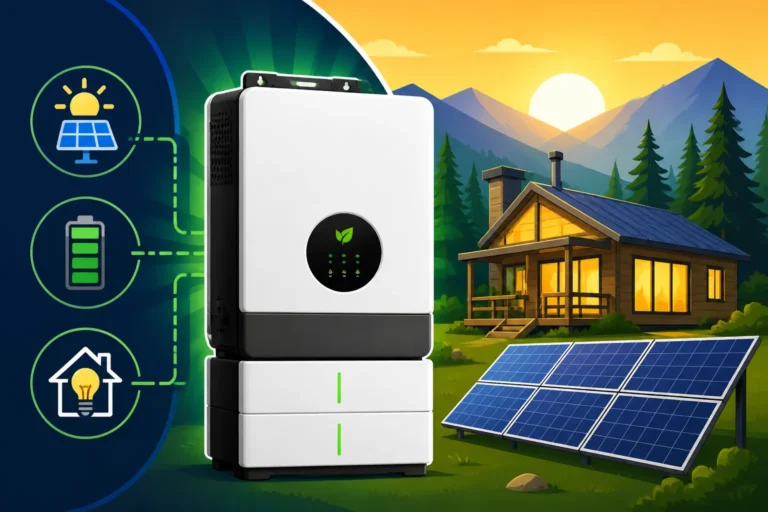
At its core, an off-grid inverter has one primary job: to take the direct current (DC) electricity generated by your solar panels and stored in your batteries and transform it into alternating current (AC) electricity. Why is this so important? Well, think about nearly every appliance in your home, RV, or cabin – your refrigerator, microwave, TV, laptop charger, lights, and even many power tools. They all run on AC power, just like what comes out of a standard wall outlet. Your solar panels and batteries, however, produce and store DC power. The inverter is the essential piece of equipment that makes this conversion happen, allowing your AC appliances to operate seamlessly on solar-generated power.
Imagine you're out at your remote cabin, far from any utility poles. Your solar panels are soaking up the sun, sending DC power to your battery bank. When you decide to brew a pot of coffee, that DC power from your batteries flows into your inverter. The inverter then converts that DC into clean, usable AC power, sending it to your coffee maker. It's a fundamental part of the system that ensures you can power everything from sensitive electronics to heavy-duty workshop tools without a hitch. This conversion is constant and critical for providing a stable, reliable power supply that mimics what you’d get from the grid, ensuring your devices run smoothly and efficiently.
Why Off-Grid Inverters Are Different
It’s easy to assume all inverters are created equal, but off-grid inverters have a very distinct role compared to their grid-tied cousins. A grid-tied inverter's main purpose is to convert solar DC into AC that can be fed directly into the public utility grid, often without any battery storage. They synchronize with the grid and, in most cases, shut down when the grid goes down for safety reasons. An off-grid inverter, however, is designed to create its own independent AC grid, operating completely autonomously. It's responsible for managing the power flow from your batteries to your loads, making sure there's always a stable voltage and frequency, regardless of what's happening outside your property.
Because they operate independently, off-grid inverters need to be far more robust and capable of handling significant fluctuations in load without skipping a beat. They must reliably supply power even when demand surges, like when a well pump kicks on or an air conditioner compressor starts up. This means they're typically built with stronger components, larger transformers (especially for low-frequency models), and more advanced control algorithms to maintain stable power output. They often feature battery charging capabilities, allowing you to charge your battery bank from a generator or other AC source when solar input is low. This comprehensive functionality is what truly sets them apart and makes them the crucial cornerstone of any self-sufficient power system.
Types of Off-Grid Inverters: Matching Tech to Your Needs
When you start digging into the world of off-grid inverters, you'll quickly discover it's not a one-size-fits-all situation. There are different technologies and designs, each with its own strengths and weaknesses. Understanding these differences is key to making an informed decision that aligns with your specific power requirements and budget. The right choice here can save you a lot of headaches and money down the road, ensuring your appliances run optimally and safely.
Pure Sine Wave vs. Modified Sine Wave
This is probably one of the first distinctions you'll encounter, and it's a critical one. It refers to the quality of the AC waveform the inverter produces.
A pure sine wave inverter produces an AC waveform that is virtually identical to the power you get from your utility company. It's a smooth, continuous wave that's ideal for all electronics, especially sensitive ones like laptops, medical equipment (like CPAP machines), modern refrigerators, and anything with a digital clock or motor. These inverters are typically more efficient, run cooler, and extend the lifespan of your appliances. They eliminate buzzing noises often heard from motors on lower-quality power, and they prevent potential damage to delicate circuitry. For anyone planning to run a full suite of modern appliances off-grid, a pure sine wave inverter is really the only way to go. While they generally cost more upfront, the peace of mind and protection they offer for your valuable electronics make them a worthwhile investment.
On the other hand, a modified sine wave inverter (sometimes called a "modified square wave" or "quasi-sine wave") produces a waveform that's a stepped approximation of a pure sine wave. Think of it like a staircase trying to mimic a smooth hill. These inverters are much less expensive, which can be tempting for budget-conscious builders. They can power simple loads like incandescent lights, resistive heaters, and older, less sensitive motors. However, they are not suitable for sensitive electronics. Running items like laptop chargers, certain LED lights, some microwaves, or anything with a digital display on a modified sine wave inverter can lead to buzzing, overheating, reduced efficiency, and even permanent damage. Motors may run hotter, less efficiently, and potentially fail prematurely. If your off-grid setup is basic, maybe just for some lights and charging a phone occasionally, a modified sine wave inverter might suffice, but for any real living or working situation, the pure sine wave is truly the superior and safer choice.
Low Frequency vs. High Frequency Inverters
Beyond the sine wave, inverters are also categorized by their operating frequency, which largely impacts their surge capabilities and physical characteristics.
Low frequency inverters are generally built with large, heavy transformers. This design gives them exceptional surge capacity, meaning they can handle sudden, high power demands for short periods, like when a refrigerator compressor or a well pump first kicks on. These inductive loads require a momentary burst of power (often 3-7 times their running wattage) to start up. A low-frequency inverter's robust transformer can absorb this surge much more effectively without straining the system. They tend to be more durable and reliable in demanding off-grid environments where heavy inductive loads are common. Brands like Victron Energy and Outback Power are well-known for their robust low-frequency inverter-chargers. The trade-off is their size, weight, and often higher cost.
High frequency inverters are lighter, more compact, and generally more efficient in terms of idle power consumption. They achieve this by using smaller, lighter high-frequency transformers and more advanced electronic switching components. While modern high-frequency inverters have improved significantly in their surge capabilities, they typically cannot match the sustained high surge performance of a quality low-frequency unit. They're often a great choice for systems with lower surge requirements or where space and weight are at a premium, such as in RVs or small cabins. They are also usually more affordable. If your biggest loads are resistive (heaters, toasters) or modern, soft-start appliances, a high-frequency inverter can be an excellent, efficient choice. However, if you plan to run large motors or power tools regularly, carefully check their surge rating and compare it to your appliance's starting watts.
Inverter Chargers and All-in-One Units
For many off-grid dwellers, simplifying the system and maximizing functionality is a huge win. That's where inverter chargers and all-in-one units really shine.
An inverter charger combines the functionality of a pure sine wave inverter with a robust battery charger. This means that not only can it convert your battery's DC power into AC for your appliances, but it can also take AC power from an external source—like a generator or a shore power connection (if you're using it in an RV or boat)—and convert it into DC to efficiently recharge your battery bank. This is incredibly useful for those cloudy stretches when solar production is low, as you can easily top up your batteries without needing separate components. Many inverter chargers also feature an integrated transfer switch, which automatically switches your loads between inverter power and generator/shore power, providing a seamless transition and continuous power supply. For example, a reliable unit like the Renogy 3500W Inverter Charger simplifies your wiring and power management considerably.
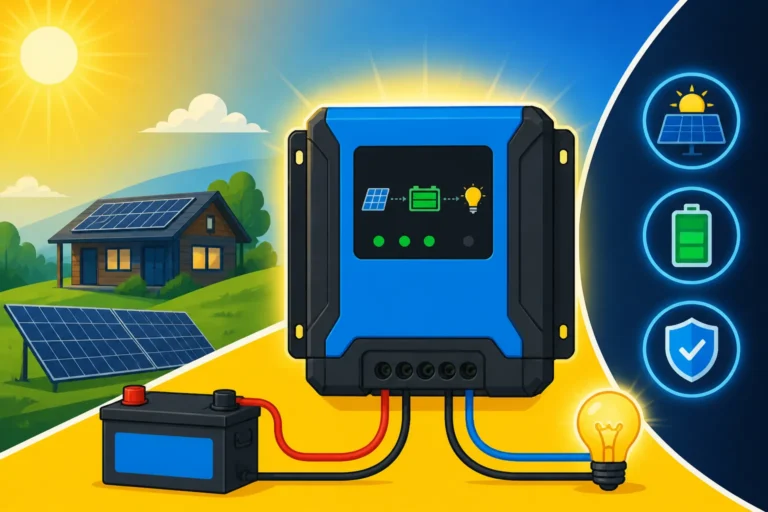
All-in-one units, sometimes called hybrid inverters or integrated power systems, take this concept even further. They often combine the inverter, charge controller (which manages solar input to batteries), and battery charger into a single, compact device. This integrated approach offers several benefits: reduced wiring complexity, a smaller footprint, easier installation, and often a centralized monitoring system for your entire off-grid setup. Brands like Sol-Ark offer advanced all-in-one systems that can even manage multiple energy sources (solar, battery, generator, grid if you have a hybrid setup) and seamlessly switch between them based on programmable priorities. While these units typically have a higher upfront cost, they can save significantly on installation time, component compatibility issues, and overall system management. They're particularly popular for comprehensive home or large cabin systems where space and ease of use are paramount.
Sizing Your Off-Grid Inverter: Powering Your Lifestyle
Choosing the right size inverter is arguably the most critical step after deciding on the type. An inverter that's too small will constantly trip, refuse to power your appliances, or even be damaged by overload. One that's vastly oversized, while technically capable, will be an unnecessary expense and likely lead to higher idle power consumption, draining your batteries more quickly. It's a careful balancing act, and it all starts with understanding your actual power needs.
Calculating Your Continuous Wattage Needs
The first step in sizing your inverter is to conduct a thorough load analysis, which simply means figuring out exactly how much power your appliances will draw. Don't just guess; grab a pen and paper (or a spreadsheet!) and list every single AC appliance you plan to run. For each item, find its wattage rating. This is usually listed on a sticker on the appliance itself, in the owner's manual, or a quick search online will provide typical values.
Here's the trick: you need to account for your simultaneous power usage. You likely won't run everything at once, but you might have your refrigerator, a few lights, a laptop, and maybe the TV on at the same time. Add up the running wattage of all the appliances you anticipate using simultaneously. This sum gives you your continuous wattage requirement. For instance, if your fridge draws 150W, your lights 100W, your laptop 60W, and your TV 80W, your continuous demand could be around 390W. It's always a good idea to add a buffer, say 15-20%, for unexpected loads or if you slightly underestimate. This is covered in much more detail in our guide on Off-Grid Solar Load Calculation Explained.
Consider a real-world scenario: you're living in a small off-grid cabin. You want to run a modest refrigerator (150W), some LED lights (50W), charge a laptop (60W), and occasionally use a blender (300W peak, 150W running) for smoothies. If you plan to run the fridge, lights, and laptop all the time, your continuous draw is 260W. If you also want to blend a smoothie while those are running, your continuous draw momentarily goes up to 410W. Your inverter must be able to handle this highest simultaneous running load comfortably.
Understanding Surge Power for Start-Up Loads
This is where many people get tripped up. While the continuous wattage is important, many appliances, especially those with motors, draw a much higher "surge" or "starting" wattage for a brief moment when they first kick on. This surge can last for a fraction of a second to a few seconds. If your inverter can't handle this momentary spike, it will trip its overload protection and shut down, leaving you in the dark or with a warm fridge.
Common culprits for high surge demands include refrigerators, freezers, air conditioners, well pumps, microwaves, and power tools like saws and drills. A typical refrigerator might run at 150-200 watts continuously, but its compressor could demand 800-1200 watts for a split second when it starts. A 1/2 HP well pump might run at 1000 watts but surge to 3000-4000 watts to get going. You need to identify the appliance with the highest individual surge requirement and ensure your inverter's surge rating can accommodate it. This can be significantly higher than its continuous rating. Our detailed article on How to Size an Inverter for Surge Loads dives deeper into these calculations, but generally, you'll need an inverter with a surge rating at least 2-3 times your largest motor's running wattage, and sometimes even more.
Considering Future Expansion and Oversizing
It’s often tempting to buy an inverter that precisely matches your current calculations, especially if you’re on a tight budget. However, seasoned off-grid living enthusiasts will tell you that it's almost always wise to slightly oversize your inverter. Why? Because needs change, and you might find yourself wanting to add a new appliance or expand your system down the road. Maybe you start with just a few lights and a fridge, but later decide you want to run a small washing machine or a mini-split air conditioner. If your inverter is maxed out from day one, you’ll be faced with the costly and inconvenient task of upgrading it entirely.
Adding a little buffer—say, 20-30% above your calculated peak simultaneous surge demand—provides valuable flexibility. It means your inverter won't always be running at its absolute limit, which can extend its lifespan and reduce stress on its components. It also gives you room to grow without completely overhauling your electrical system. While an excessively oversized inverter might have a slightly higher idle power draw, a moderately oversized unit often provides the best balance between cost, efficiency, and future-proofing. Think of it as investing a little more now to avoid a lot of hassle and expense later.
Key Features and Specifications to Look For
Beyond the basic type and size, off-grid inverters come with a myriad of features and specifications that significantly impact their performance, reliability, and ease of use. Diving into these details can help you distinguish between a good inverter and a great one, ensuring you get a unit that's not just functional, but truly robust and tailored to your off-grid lifestyle. It's about looking under the hood and understanding what truly makes these devices tick.
Input Voltage and Output Voltage
Matching the voltage of your inverter to your system components is absolutely fundamental.
The input voltage refers to the DC voltage from your battery bank that the inverter expects. Common off-grid system voltages are 12V, 24V, and 48V. Your inverter must match your battery bank's nominal voltage. If you have a 12V battery bank, you need a 12V inverter. If you have a 48V battery bank, you need a 48V inverter. Mismatching these will result in either non-functionality or, worse, damage to your equipment. Generally, larger systems (those with higher wattage requirements) benefit from higher DC voltages (24V or 48V). Higher voltages mean lower current flow for the same amount of power, which allows for thinner wiring, less voltage drop, and often more efficient system operation. For comprehensive guidance on this, check out 12V vs 24V vs 48V: Which to Choose.
The output voltage refers to the AC voltage the inverter provides to your appliances. In North America, this is typically 120V AC, and for larger homes, you might need split-phase 120/240V AC. Most smaller inverters (under 3000W-4000W) will provide a single 120V output. For running larger appliances like electric clothes dryers, well pumps, or central air conditioning, you will likely need an inverter that can output 240V AC, either directly or by ganging two 120V inverters together to create a split-phase system. Always confirm the output voltage matches your intended loads, especially if you're trying to power an entire off-grid home.
Efficiency and Self-Consumption
These two metrics are crucial for maximizing the energy you've meticulously harvested and stored.
Efficiency measures how much of the DC power going into the inverter is successfully converted into usable AC power, expressed as a percentage. No conversion process is 100% efficient; some energy is always lost as heat. A good quality pure sine wave inverter will typically have an efficiency rating of 85-95%. For instance, an inverter that's 90% efficient means that for every 100 watts of DC power it draws from your batteries, it delivers 90 watts of AC power to your appliances, with 10 watts lost. Higher efficiency is always better because it means less wasted energy, allowing your batteries to last longer and your solar array to meet more of your demands. Over the long term, a few percentage points difference in efficiency can translate into significant energy savings and reduced strain on your battery bank.
Self-consumption (also known as "idle draw" or "no-load current") refers to the amount of power the inverter itself consumes just to be on, even when it's not powering any loads. This is essentially overhead. A small, constant draw from your batteries, especially when no appliances are running, can slowly but surely deplete your valuable stored energy. High-quality inverters, particularly those designed for off-grid use, are engineered to have very low idle draw, often just a few watts. Some advanced inverters even have a "search mode" or "power-save mode" where they periodically check for a load and go into a very low-power standby state when none are detected, only fully activating when an appliance is switched on. Always compare these specifications when choosing an inverter, as a few extra watts of idle draw can add up to a significant drain on your battery bank over days or weeks.
Safety Features and Certifications
Safety should never be an afterthought, especially with electrical systems handling high currents and voltages. A good off-grid inverter will come equipped with several built-in safety mechanisms to protect itself, your batteries, your appliances, and most importantly, you.
Look for features like overload protection, which automatically shuts down the inverter if the power demand exceeds its rated capacity, preventing damage from excessive loads. Over-temperature protection will power down the unit if it gets too hot, protecting its internal components from overheating. Low voltage disconnect (LVD) protects your batteries from being over-discharged, which can severely shorten their lifespan (especially for lead-acid types). Similarly, high voltage disconnect protects against overcharging from an external source or issues with your charge controller. Other important features include short-circuit protection and reverse polarity protection on the DC input.
Beyond internal features, consider certifications. In the United States, look for inverters that are UL listed (Underwriters Laboratories) or have equivalent certifications (like ETL). These certifications indicate that the product has been independently tested and meets recognized safety standards. While off-grid systems often fall into a regulatory gray area compared to grid-tied installations, having certified equipment is a strong indicator of quality, reliability, and safety. Some local jurisdictions may require specific certifications even for off-grid setups, especially if they are connected to permanent structures. Proper grounding, as discussed in Off-Grid Solar Safety and Grounding, is also paramount, and your inverter should have clear provisions for it.
Budgeting and Brands: Quality Meets Cost
Let's face it, cost is always a factor when building an off-grid solar system. While it's tempting to cut corners, the inverter is one component where investing in quality truly pays off. A cheap, unreliable inverter can be a constant source of frustration, potentially damaging your appliances and leaving you without power when you need it most. Balancing your budget with the need for a dependable, efficient unit is crucial for long-term off-grid success.
Inverter Price Ranges and What Influences Them
The cost of an off-grid inverter can vary wildly, from a couple of hundred dollars for a small, basic modified sine wave unit to several thousand dollars for a powerful, feature-rich pure sine wave inverter charger. Generally, you can expect to pay anywhere from $500 to $4,000+ for a quality pure sine wave off-grid inverter, with integrated inverter chargers and higher wattage capacities naturally falling on the higher end of that spectrum. For a deeper look at specific costs, check out our guide on the Cost of an Off-Grid Solar Inverter.
Several factors contribute to these price differences:
- Waveform: Pure sine wave inverters are inherently more expensive to manufacture than modified sine wave units due to the more complex electronics required to produce a clean waveform.
- Wattage and Surge Capacity: Higher continuous wattage ratings and greater surge capabilities (especially for low-frequency inverters) require larger components, more robust cooling systems, and more sophisticated design, all of which drive up the price.
- Features: Integrated battery chargers, automatic transfer switches, advanced monitoring capabilities, remote control options, and features like generator auto-start add to the complexity and cost.
- Brand Reputation and Warranty: Established brands with a proven track record for reliability and strong customer support often command a higher price. Their products often come with better warranties, reflecting their confidence in their equipment.
- Technology: Low-frequency inverters, with their heavy transformers, tend to be more expensive but offer superior surge handling.
It's important to view an inverter as a long-term investment. While a cheaper unit might seem appealing initially, the cost of replacing it frequently, repairing damaged appliances, or dealing with power outages can quickly outweigh the initial savings.
Reputable Off-Grid Inverter Brands
When it comes to off-grid inverters, quality and reliability are paramount. You want a brand that stands behind its products and has a solid reputation in the solar community. Here are a few names that consistently come up when discussing dependable off-grid inverters:
- Victron Energy: Widely regarded as a premium brand, Victron offers extremely robust and highly configurable inverter-chargers like the MultiPlus series. They are known for their exceptional quality, advanced features, and comprehensive monitoring capabilities, though they do come with a higher price tag.
- Outback Power: Another industry leader, Outback Power produces heavy-duty inverter-chargers designed for serious off-grid applications. Their FX and Radian series are known for their reliability, high surge capacity, and modular design.
- Sol-Ark: Gaining popularity for its all-in-one hybrid inverters, Sol-Ark offers units that integrate the inverter, charge controller, and transfer switch into a single intelligent device. They are highly efficient, feature-rich, and excellent for managing multiple power sources.
- Schneider Electric (Conext series): Known for robust and efficient off-grid and hybrid inverter solutions, Schneider Electric offers a range of options suitable for various system sizes.
- Renogy: For those looking for good value without sacrificing too much quality, brands like Renogy offer a variety of pure sine wave inverters and inverter-chargers. They are particularly popular for RVs, vans, and smaller cabin setups, providing accessible and reliable options. Many Renogy products are readily available on platforms like Amazon, making them easy to acquire for DIY projects.
- Magnum Energy: Another reputable brand, Magnum offers durable and reliable pure sine wave inverter-chargers, often found in RV and marine applications, as well as residential off-grid setups.
When evaluating brands, always consider their warranty, customer support, and the availability of replacement parts or service. You can explore more options in our deep dive into the Best Off-Grid Solar Inverters.
Where to Buy and Installation Considerations
Once you've zeroed in on the perfect inverter, the next step is acquiring it and thinking about its installation.
You have several options for purchasing:
- Specialized Solar Retailers: Companies that focus specifically on solar equipment often have the most knowledgeable staff, a wider selection of high-end brands, and better technical support. They can also help with system design if needed.
- Online Marketplaces: Platforms like Amazon are great for finding a wide range of inverters, especially from brands like Renogy. While prices can be competitive, always read reviews carefully and ensure you're buying from a reputable seller, especially for more expensive units.
- Local Distributors: Some larger cities or regions may have local solar equipment distributors. Buying locally can sometimes offer faster shipping, easier returns, and face-to-face technical advice.
Installation considerations are just as important as the purchase itself. While many off-grid inverters are designed to be user-friendly for DIYers, it’s critical to remember that you’re dealing with high voltages and currents. Incorrect wiring can be dangerous and damage your expensive equipment.
- Safety First: Always follow the manufacturer's installation manual precisely. Ensure proper wire sizing, fusing, and grounding. Our guide on Off-Grid Solar Safety and Grounding is a good resource.
- Ventilation: Inverters generate heat, so they need to be installed in a well-ventilated area, protected from direct sunlight and moisture. Overheating will reduce efficiency and shorten the inverter's lifespan.
- Proximity to Batteries: Keep the inverter as close as practically possible to your battery bank. This minimizes the length of the thick DC cables, reducing voltage drop and ensuring efficient power transfer.
- Professional Help: If you’re not confident in your electrical skills, seriously consider hiring a qualified electrician or an experienced solar installer, even if you’re doing most of the system yourself. While going DIY can save you money, as explored in DIY vs Professional Off-Grid Solar Cost, the inverter is too critical to risk a botched installation. Check out How to Install an Off-Grid Inverter for detailed steps.
Choosing an off-grid inverter might seem like a daunting task at first, but by understanding your power needs, comparing the different types and features, and investing in a reputable brand, you can confidently select the right heart for your independent power system. It’s a vital step on your journey to energy freedom, and with the right choice, you’ll enjoy reliable, clean power for years to come.
Inverter Type Comparison Table
To help you visualize the core differences, here's a quick comparison of the two main types of off-grid inverters based on their waveform.
| Feature | Pure Sine Wave Inverter | Modified Sine Wave Inverter |
|---|---|---|
| Output Waveform | Smooth, continuous sine wave | Stepped, blocky approximation of a sine wave |
| Device Compatibility | Excellent for all electronics, especially sensitive ones, motors, medical equipment, digital clocks. | Suitable for basic resistive loads (lights, heaters) and older, less sensitive motors. |
| Efficiency | Generally higher efficiency, less heat generated | Lower efficiency for many loads, can generate more heat |
| Appliance Longevity | Prolongs lifespan of appliances, reduces wear and tear | Can shorten appliance lifespan, cause buzzing or overheating for sensitive devices |
| Cost | Higher upfront cost | Lower upfront cost |
| Noise | Quieter operation for inductive loads | Can cause audible hum or buzz in some appliances |
| Best For | Full-time off-grid living, homes, RVs with modern appliances, workshops | Very basic, intermittent power needs, budget-critical setups with only resistive loads |
Disclaimer
The information provided in this guide is for general informational and educational purposes only. While we strive to offer accurate and up-to-date advice, off-grid solar system design and installation can be complex and should always be undertaken with due diligence and, when necessary, with the guidance of certified professionals. Electrical work carries inherent risks, and improper installation can lead to injury, fire, or damage to equipment. Always consult local codes, regulations, and a qualified electrician or solar installer before making significant purchasing decisions or attempting any electrical installation.