What Size Inverter to Run Lights And Electronics
It's incredibly frustrating when you're trying to put together an off-grid solar system, even a small one, and you hit a wall trying to figure out what size inverter you actually need just for your basic lights and electronics. You don't want to buy something too small and constantly trip breakers, but you also don't want to spend a fortune on an oversized unit you'll never fully utilize. This guide is here to walk you through the precise steps to calculate your power needs and confidently choose the right inverter for all your everyday lighting and electronic devices, ensuring you have reliable, clean power without wasting money.
Understanding Your Power Needs for Lights and Electronics
Before you even think about looking at an inverter, you first need to understand the electrical demands of the devices you plan to power. This isn't just a guessing game; it's a careful inventory and calculation process that forms the bedrock of a well-designed off-grid system. Many folks make the mistake of just throwing a number out there, only to find their system can't keep up.
The Difference Between Watts and Watt-Hours
When we talk about electricity, two terms often get mixed up: watts and watt-hours. It’s vital to understand the distinction, especially when planning your off-grid setup. Watts (W) represent instantaneous power – how much electricity a device uses at any given moment when it's operating. Think of it like the speed of your car. A 60-watt light bulb uses 60 watts of power while it's on. A laptop charger might draw 45 watts. This is the figure you'll primarily be looking at when sizing your inverter, as the inverter needs to be able to supply enough power for all the devices running at the same time.
Watt-hours (Wh), on the other hand, represent energy consumption over time. This is like the distance your car travels. If that 60-watt light bulb stays on for 2 hours, it consumes 120 watt-hours of energy (60W x 2h = 120Wh). While watt-hours are critical for sizing your battery bank and determining how many solar panels you need to recharge those batteries (you can learn more about this in our guide on How Many Solar Panels for Off-Grid Living or How Many Batteries for an Off-Grid System), they don't directly tell you the inverter size. For the inverter, it's all about the watts, specifically the total watts drawn simultaneously.
Finding the wattage for your lights and electronics is usually straightforward. Most devices have a label, often on the back or bottom, that lists their power requirements. Look for "Input" or "Power" specifications, which might be in watts (W), amps (A), or volts (V). If it's in amps and volts (e.g., 120V, 0.5A), you can calculate watts by multiplying them (Volts x Amps = Watts). For example, a common LED light bulb might be just 9-15 watts, while a modern smart TV could draw anywhere from 50 to 150 watts depending on its size and features. A Wi-Fi router might only pull 10-20 watts.
Calculating Your Total Load for an Inverter
This is where the rubber meets the road. To size your inverter correctly, you need to perform what's called a load analysis, or as we like to call it, a "power budget." This isn't just a list; it's a detailed account of everything you intend to power and when. It’s a bit like meticulously going through your grocery list before you head to the store.
Start by listing every single light fixture and electronic device you plan to use. For each item, note down its wattage. Now, here's the crucial part: you need to estimate which of these devices will be running simultaneously during your peak usage period. Are all your lights typically on at the same time in the evening? Is the TV on while someone is charging their laptop and using the internet? This "worst-case scenario" (or at least your most common maximum usage) is what your inverter needs to be able to handle continuously.
Let's imagine a small cabin setup. You might have:
- Three LED ceiling lights: 15W each = 45W total
- One laptop charging: 65W
- Two cell phones charging: 10W each = 20W total
- Small TV: 80W
- Wi-Fi router: 15W
If all these are running at the same time, your total continuous load would be 45W + 65W + 20W + 80W + 15W = 225 watts. This 225 watts is your baseline for the inverter's continuous power rating. Unlike appliances with motors (like refrigerators or well pumps), most lights and electronics don't have a significant "surge" or "starting" power requirement that's much higher than their running wattage. However, it's always wise to factor in a little overhead, which we'll discuss soon. Understanding this load calculation is a fundamental step, often detailed further in resources like our comprehensive Off-Grid Solar Load Calculation Explained article.
Inverter Basics and Types for Lights and Electronics
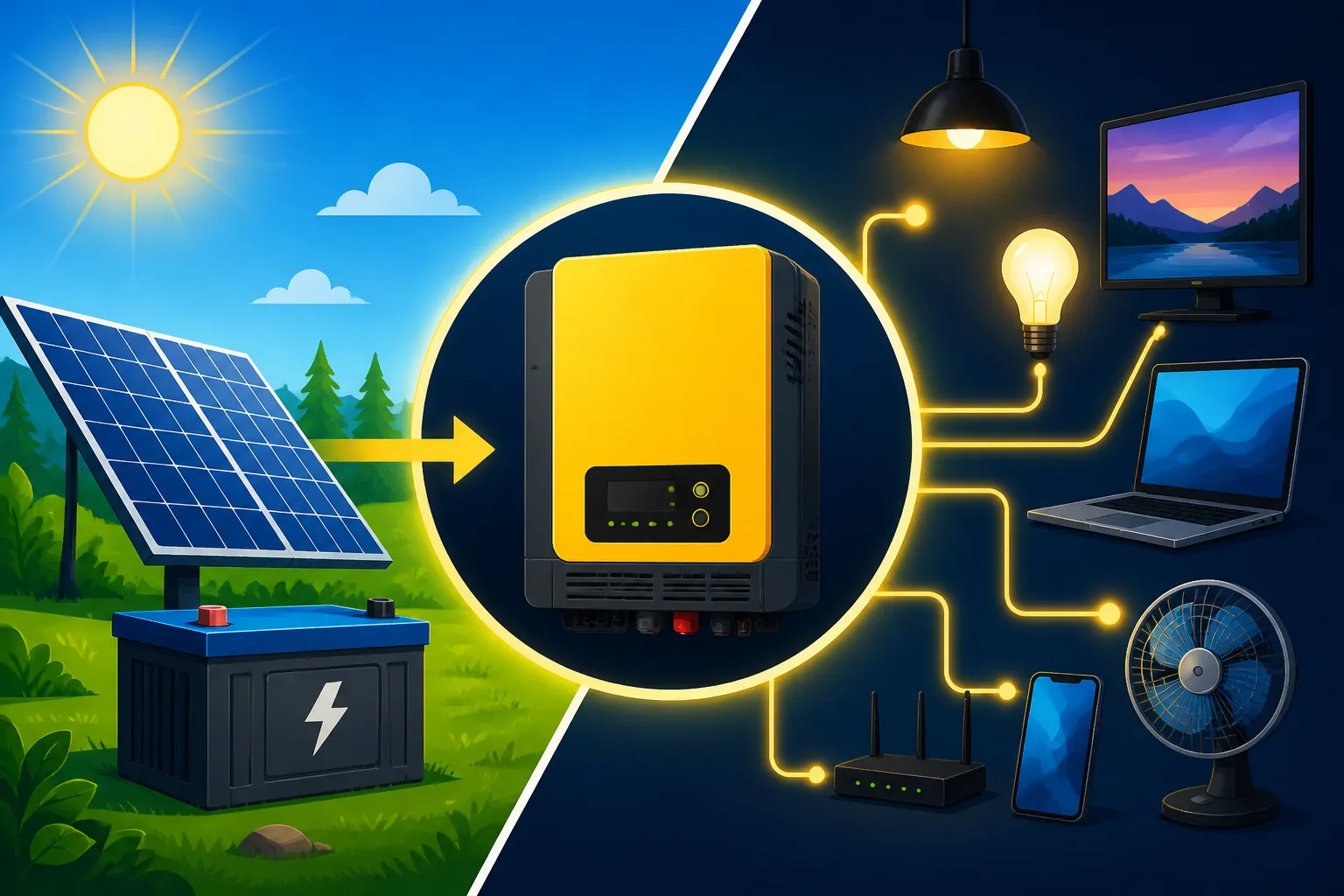
Once you have a solid grasp of your power needs, it's time to dive into the heart of your AC power supply: the inverter. This magical box takes the DC power from your batteries and transforms it into the AC power that your standard household outlets deliver. But not all inverters are created equal, especially when it comes to sensitive electronics.
Pure Sine Wave vs. Modified Sine Wave Inverters
This distinction is perhaps the most critical factor when choosing an inverter for lights and electronics. You'll often hear these terms thrown around, and for good reason.
-
Pure Sine Wave Inverters: These inverters produce a very clean, smooth electrical waveform that is virtually identical to the power you get from the grid. This is the gold standard for electronics. Devices like laptops, smart TVs, sound systems, gaming consoles, medical equipment (like CPAP machines), and even modern LED light bulbs are designed to run on pure sine wave power. Using a pure sine wave inverter ensures optimal performance, prevents damage, and avoids annoying hums or flickering that can occur with lesser quality power. For any sensitive electronics you care about, a pure sine wave inverter is a non-negotiable must-have. Brands like Victron Energy or Renogy offer reliable pure sine wave inverters that are popular in the off-grid community for their quality and performance.
-
Modified Sine Wave Inverters: These inverters produce a "stepped" or "choppy" waveform that approximates a pure sine wave. They are generally less expensive, but they come with significant drawbacks. While they might power simple resistive loads like incandescent light bulbs or old-school electric heaters, they can wreak havoc on sensitive electronics. You might experience buzzing from audio equipment, shortened lifespan of devices, inefficient operation, and sometimes outright failure of delicate circuits. Even some modern LED lights can flicker or hum on modified sine wave power. For the safety and longevity of your electronics, especially anything with microprocessors, avoid modified sine wave inverters. We cover more about this in our article on Pure Sine Wave vs Modified Sine Wave Inverters.
Understanding Continuous vs. Peak Power Ratings
Inverters typically come with two main power ratings:
-
Continuous Power Rating: This is the maximum amount of power (in watts) the inverter can reliably supply for an extended period. This is the number you'll use for your primary sizing calculation based on your simultaneous loads. If your calculated continuous load is 225 watts, your inverter's continuous rating needs to be at least that much, with some healthy headroom.
-
Peak (or Surge) Power Rating: This rating indicates the maximum power the inverter can supply for a very short duration, usually a few milliseconds to a few seconds. This is crucial for devices with motors, like refrigerators, well pumps, or power tools, which draw a massive surge of power when they first start up. For lights and most electronics, surge power isn't as big of a concern. An LED light, for example, draws its rated wattage almost immediately. However, having a little surge capacity is never a bad thing, as it offers a buffer for unexpected minor power spikes or for plugging in a device that might briefly draw more than its average. Generally, a small safety margin over your continuous load is sufficient for lights and electronics. You can dive deeper into inverter choices with our guide to the Best Off-Grid Solar Inverters.
Sizing Your Inverter Step by Step
Now that you've got the basics down, let's roll up our sleeves and go through the sizing process for your specific needs, step by step. This methodical approach will ensure you end up with an inverter that perfectly suits your lifestyle.
Inventory Your Lights and Electronics
Grab a notebook or open a spreadsheet. This isn't just a mental exercise. List every single item you plan to plug into your off-grid system that falls under "lights and electronics." Don't forget the small stuff!
Here's an example of what your list might look like for a small off-grid cabin where you enjoy some evening reading and connectivity:
| Device | Quantity | Individual Wattage (W) | Estimated Daily Use (Hours) | Total Daily Watt-Hours (Wh) |
|---|---|---|---|---|
| LED Recessed Lights | 4 | 12 | 4 | 192 |
| LED Reading Lamp | 1 | 9 | 3 | 27 |
| Laptop (while charging) | 1 | 65 | 5 | 325 |
| Phone Charger | 2 | 10 | 2 | 40 |
| Wi-Fi Router | 1 | 15 | 24 | 360 |
| Small Smart TV | 1 | 75 | 3 | 225 |
| Bluetooth Speaker | 1 | 10 | 2 | 20 |
| Total | 204 (Continuous) | 1189 |
Notice the "Total Daily Watt-Hours" column. While important for battery sizing (How Many Batteries to Run Lights And Electronics), the key figure for your inverter is the combined continuous wattage of devices you might run simultaneously. For lights and electronics, this is usually the sum of their individual wattages when on.
Calculate Your Combined Continuous Wattage
From your inventory, identify the absolute maximum wattage you anticipate drawing from your inverter at any single moment. This is your "peak simultaneous usage." Looking at our cabin example above, if you're watching TV (75W), have all four recessed lights on (4 x 12W = 48W), your laptop is plugged in (65W), your phone is charging (10W), and the Wi-Fi router is always on (15W), your immediate, continuous draw would be:
75W (TV) + 48W (lights) + 65W (laptop) + 10W (phone) + 15W (router) = 213 Watts.
This is the number your inverter must be able to supply continuously, hour after hour, without overheating or failing. It’s important to be realistic here. Don't underestimate, but don't wildly overestimate either, or you'll end up paying for more inverter than you truly need. Many reputable brands like Renogy offer a range of pure sine wave inverters suitable for these types of loads, often available through retailers like Amazon.
Account for Surge Capacity
As mentioned, lights and electronics typically don't have the massive starting surge requirements of motor-driven appliances. However, it's still good practice to build in a safety margin. Think of it like buying a backpack – you don't fill it to the brim every day, but it's nice to have space for that extra jacket or snack you spontaneously decided to bring.
A common rule of thumb is to add a 20-30% buffer to your calculated continuous wattage. So, for our 213-watt continuous load:
213 Watts * 1.20 (for 20% buffer) = 255.6 Watts
213 Watts * 1.30 (for 30% buffer) = 276.9 Watts
This suggests you'd want an inverter with a continuous rating of at least 250-300 watts. An inverter rated for 300W or 400W continuous power would be a perfectly safe bet for this scenario. This small overhead will give you peace of mind and allow for minor fluctuations or the occasional addition of a small fan or another low-power device. This careful planning helps avoid common pitfalls in off-grid system design, as explored in articles like Common Off-Grid Sizing Mistakes.
Matching Inverter to System Voltage
Beyond wattage, your inverter needs to match the voltage of your battery bank. Off-grid systems commonly operate at 12V, 24V, or 48V DC.
- 12V Systems: Common for smaller setups like RVs, vans, or small cabins. A 300W inverter running on a 12V system is quite common.
- 24V Systems: Often used for medium-sized cabins or larger RVs, allowing for thinner wires and more efficient power transfer for higher wattages.
- 48V Systems: Preferred for whole-house systems or larger homesteads, as they are the most efficient for transmitting substantial amounts of power over distance and handle high wattage loads with ease.
For a system primarily powering lights and electronics, a 12V or 24V system might be perfectly adequate, depending on your total overall power needs (including any larger appliances not considered here). Ensure the inverter you select specifies compatibility with your chosen system voltage. You can learn more about how to make this choice in 12V vs 24V vs 48V: Which to Choose.
Practical Considerations and Recommendations
Choosing an inverter isn't just about the numbers; it's also about looking ahead and ensuring your system is efficient and reliable.
Future Expansion and Oversizing
It's tempting to buy the exact size inverter you need right now, especially if you're on a tight budget. However, most off-gridders will tell you that once you get a taste of energy independence, you'll inevitably find more things you want to power. Maybe a small projector for movie nights, or a more powerful charging station for future gadgets.
Slightly oversizing your inverter from the get-go can be a smart long-term investment. If your current continuous load is 213 watts, opting for a 500-watt pure sine wave inverter instead of a 300-watt one might add a bit to the initial Cost of an Off-Grid Solar Inverter, but it gives you substantial flexibility for future additions without having to replace a core component of your system. This also ensures the inverter isn't constantly running at its absolute maximum, which can contribute to its longevity. You can always start small and expand your system, which we cover in How to Design an Expandable System.
Efficiency and Standby Power Draw
All inverters, even when no devices are drawing power, consume a small amount of electricity just to operate. This is called "standby power draw" or "no-load current." While it's usually minimal (often less than 1 amp at 12V, or roughly 10-20 watts), over 24 hours, it can add up.
For systems that are only used intermittently (like a weekend cabin or an emergency backup system), you might consider turning off the inverter when not in use to conserve battery power. For full-time living, look for inverters with high efficiency ratings (often 90% or higher) and low standby power draw. Reputable brands are generally more transparent about these specifications. Every watt-hour saved contributes to the overall efficiency of your off-grid system, making your solar panels and batteries work less to keep things running.
Integrating with Your Full Off-Grid System
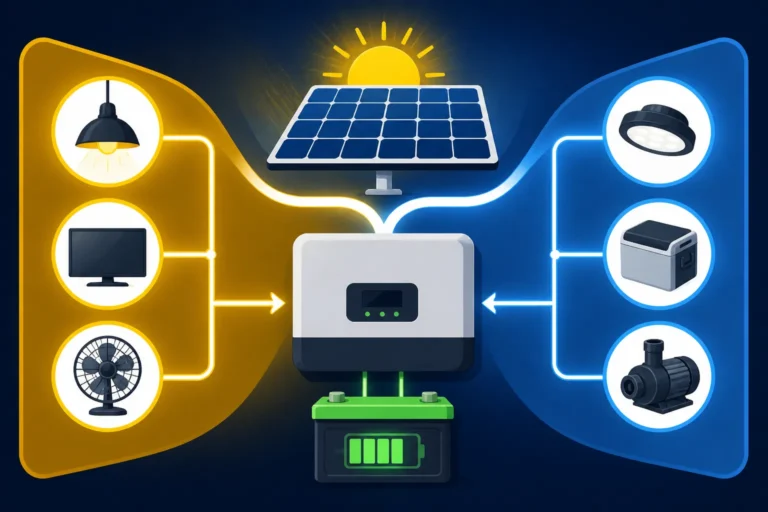
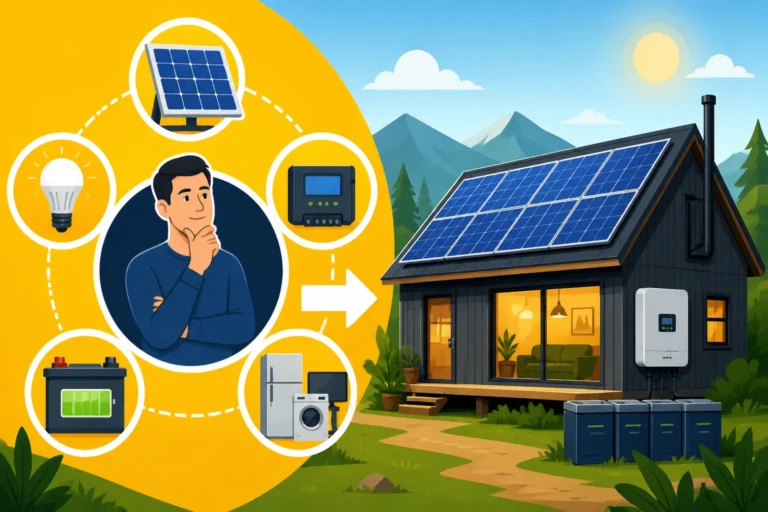
Remember, the inverter is just one piece of a larger puzzle. It works in conjunction with your solar panels, charge controller, and battery bank. Choosing the right inverter size is a critical step in the overall design process.
- Solar Panels: These generate the power. The number and wattage of your panels determine how quickly you can recharge your batteries.
- Charge Controller: This regulates the power flow from your solar panels to your batteries, protecting them from overcharging.
- Battery Bank: This stores the energy. The capacity of your battery bank determines how long you can run your devices without sun, or how many Days of Autonomy you have.
Your inverter needs to be correctly sized not just for your loads, but also to be compatible with your battery bank's voltage and capacity. A balanced system is a happy, efficient system. If you're looking for a good starting point, many companies, including Renogy, offer complete Off-Grid Solar Kits that bundle these components together, often available on platforms like Amazon. These kits can simplify the process, especially for beginners. For a full picture of how all these pieces fit, check out our guide on How to Size an Off-Grid Solar System.
Ultimately, choosing the right inverter for your lights and electronics is about being thorough in your load analysis, understanding the importance of pure sine wave power, and selecting a unit with sufficient continuous and slightly buffered surge capacity that matches your system voltage. With careful planning, you'll enjoy seamless, reliable power for all your essential devices.
Disclaimer
The information provided in this guide is for general informational and educational purposes only. While we strive to offer accurate and up-to-date advice, off-grid solar system design and installation can be complex and should always be undertaken with safety as the top priority. Consult with a qualified electrician or solar professional for specific advice tailored to your individual needs and local electrical codes. Working with electricity can be dangerous, and improper installation can lead to property damage, injury, or even death.