How to Size Off-Grid Solar for a Water Heater
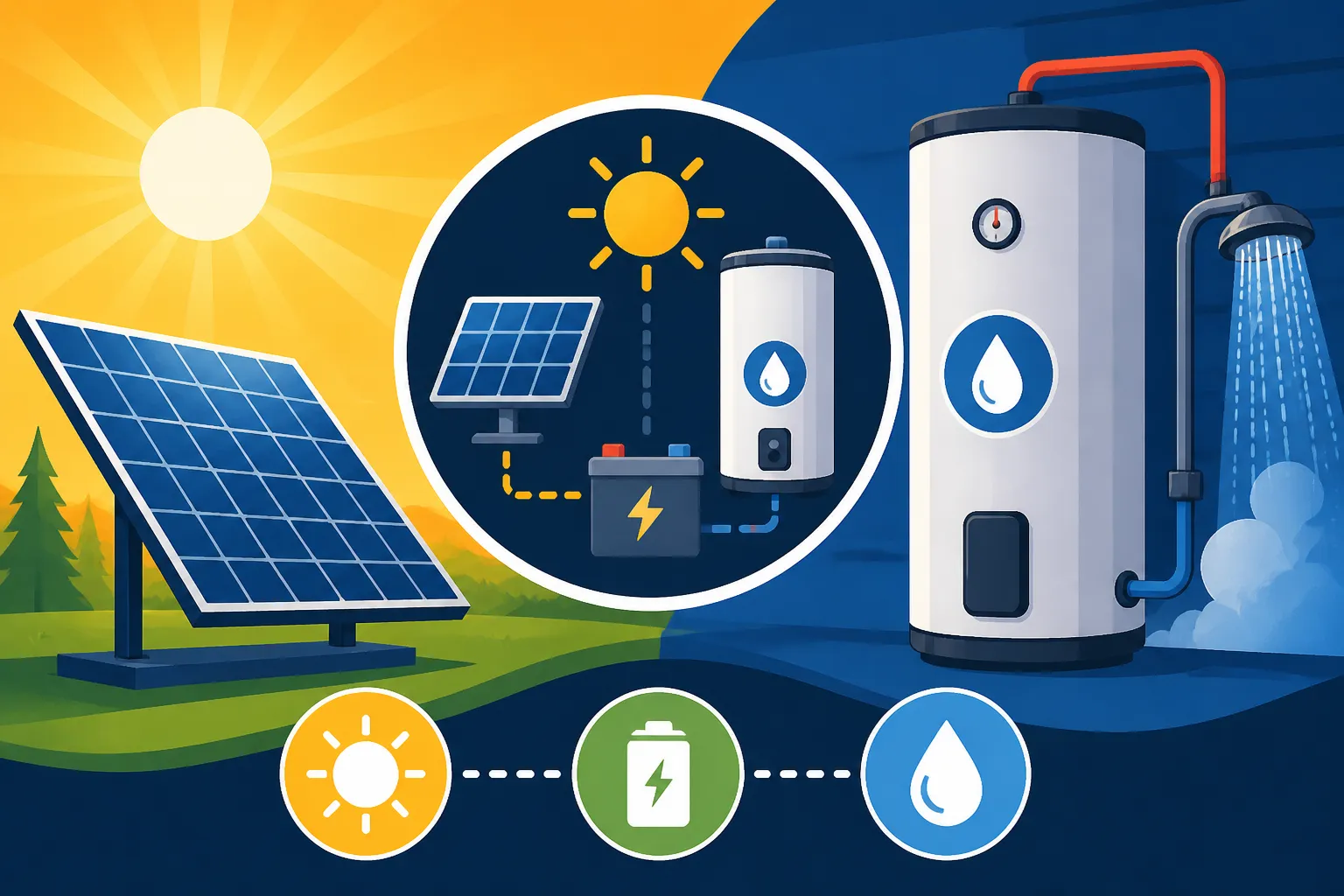
Dreaming of consistent hot water when you're living off-grid can feel like a luxurious fantasy, especially when you start looking at the sheer energy demands of a traditional water heater. It's a common stumbling block for many folks embarking on their off-grid journey – how do you get enough power without breaking the bank or sacrificing comfort? This comprehensive guide is here to demystify the process, walking you through everything you need to know about sizing an off-grid solar system specifically for your water heating needs, so you can enjoy a warm shower without the stress.
Understanding Your Water Heater's Energy Demands
Before you can even begin to think about solar panels or batteries, you absolutely must get a handle on how much energy your water heater actually consumes. This isn't a "one size fits all" situation, and overlooking this crucial first step is where many off-grid hopefuls run into trouble, ending up with an undersized system or sticker shock.
Instantaneous Versus Tank-Style Water Heaters
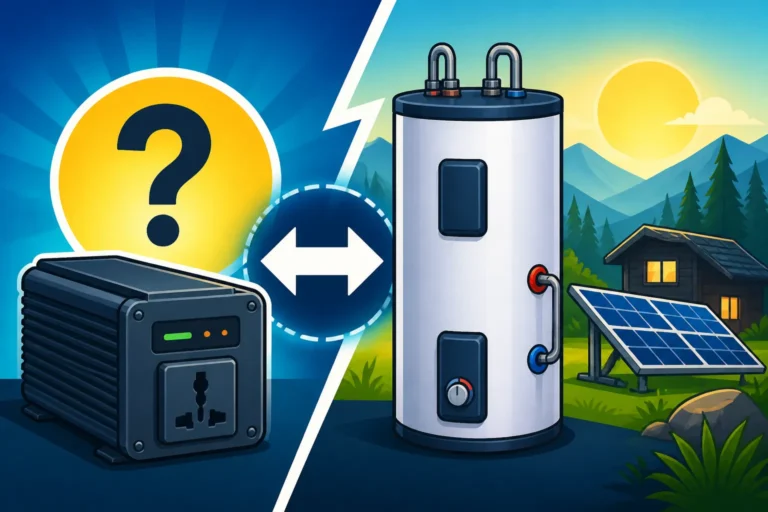
The first big question mark usually revolves around the type of water heater you're considering. There's a significant difference in how tank-style (storage) and tankless (on-demand) water heaters operate, and this directly impacts how you'll need to size your off-grid solar system.
Tank-style water heaters, like the ones you find in most conventional homes, keep a reservoir of water hot around the clock. This means they have a lower peak wattage requirement because they heat water gradually, but they also have a constant "standby" draw as they cycle on and off to maintain temperature. Even with excellent insulation, that tank is slowly losing heat to its surroundings, and the heater has to kick on periodically to compensate. This passive energy drain, over 24 hours, can add up significantly. On the flip side, their lower instantaneous power demand might mean you can get away with a slightly smaller inverter, but your daily energy storage needs will be substantial.
Tankless or instantaneous water heaters, on the other hand, don't store hot water. They only heat water when you turn on the faucet. This sounds incredibly efficient, right? And it is, in terms of not having standby losses. However, the trade-off is that when they do turn on, they require a massive burst of power – sometimes 10,000 watts (10 kW) or even more – to heat water instantly as it flows through. This huge surge in demand is a major hurdle for off-grid solar, often necessitating a very large and expensive inverter and a robust battery bank capable of delivering that kind of power. For most residential electric tankless heaters, a solar-only solution is often impractical due to these extreme power requirements, pushing many off-gridders towards propane-fired tankless units instead.
Deciphering Wattage and Daily Usage
Once you know what type of water heater you're dealing with, your next step is to figure out its actual energy appetite. This isn't always as simple as glancing at the label, as that usually gives you the instantaneous wattage (how much power it uses when it's actively heating), not its total daily energy consumption.
For electric tank-style water heaters, you'll typically find a wattage rating on the nameplate, often between 2000 and 5500 watts. This tells you how much power it draws when the heating element is active. To estimate daily usage, you need to consider how many hours per day that element will be running. This depends on factors like how many people are showering, how long those showers are, how much hot water is used for dishes and laundry, and the ambient temperature around the tank. A good starting point is to assume your water heater might be actively heating for 2-4 hours a day in total, spread throughout various cycles, for a family of two to four. You can get a more precise measurement by using a "kill-a-watt" meter plugged into the outlet, which will track actual kilowatt-hours (kWh) over a few days. These inexpensive devices can be found on platforms like Amazon and are invaluable for understanding the true energy footprint of any appliance.
For tankless electric heaters, the wattage is usually much higher, often ranging from 7,000 to 27,000 watts. Again, this is the instantaneous draw. Since they only run when hot water is called for, their daily usage depends entirely on how much hot water is used. If you take a 10-minute shower with a 15,000-watt tankless heater, that's a massive burst of power for a short duration. While the total watt-hours might be comparable to a tank heater, the power requirement for the inverter and batteries is exceptionally high, making them notoriously challenging for solar-only off-grid systems. It's crucial to differentiate between Watts (instantaneous power) and Watt-hours (energy consumed over time); understanding this difference is fundamental when you How to Calculate Daily Energy Usage.
The Critical Components for Off-Grid Hot Water
Now that you have a clearer picture of your water heater's energy demands, it's time to translate that into the actual components of your off-grid solar system. This involves carefully sizing your solar panels, battery bank, inverter, and charge controller to work in harmony, ensuring a reliable supply of hot water, even on cloudy days.
Sizing Your Solar Panel Array
Your solar panel array is the powerhouse of your system, responsible for converting sunlight into electricity. The size of this array – meaning the total wattage of your panels – directly correlates to how quickly and effectively you can replenish your battery bank after a day of hot water consumption.
First, you need to revisit your daily Watt-hour (Wh) estimate for your water heater. Let's say, for example, your electric tank water heater uses about 8,000 Wh (8 kWh) per day. Now, you need to factor in your "peak sun hours" – the average number of hours per day when your panels receive maximum sun exposure. This varies greatly by location and season. You might get 5-6 peak sun hours in summer but only 2-3 in winter. For off-grid sizing, especially for critical loads like hot water, you should always design for your worst-case scenario, which is usually winter. It's also vital to account for system losses (like wiring inefficiencies, temperature, and dust on panels), which can typically reduce your effective power by 15-25%. This detailed understanding is part of learning How Many Solar Panels for Off-Grid Living.
A rough formula would be: (Daily Watt-hours Needed / Peak Sun Hours) / System Efficiency = Minimum Panel Wattage. So, for our 8,000 Wh example, if you have 3 peak sun hours in winter and assume 75% system efficiency: (8000 Wh / 3 hours) / 0.75 = approximately 3,555 watts of solar panels. This is a substantial array, meaning around ten to twelve 300W solar panels. You might find reputable brands like Renogy offer a range of panels that fit this need. Realistically, you'll often want to oversize your array a bit to ensure full battery charging, especially if you plan to power other appliances alongside your water heater.
Selecting the Right Battery Bank
The battery bank is your energy reservoir, storing the power generated by your solar panels for use when the sun isn't shining, or when your water heater needs a sudden surge of power. For hot water, you're going to need a significant amount of storage.
To size your battery bank, you start with your daily Watt-hour consumption for the water heater. Then, consider your "days of autonomy" – how many days you want your system to run solely on battery power without any solar input (e.g., during prolonged cloudy weather). For something as essential as hot water, aiming for 2-3 days of autonomy is wise. You also need to factor in the "depth of discharge" (DoD) for your chosen battery chemistry. LiFePO4 (lithium iron phosphate) batteries can typically be discharged to 80-100% without significant harm, while lead-acid batteries (AGM or flooded) should generally not be discharged below 50% to maximize their lifespan. This difference is key when considering LiFePO4 vs Lead-Acid Battery Cost.
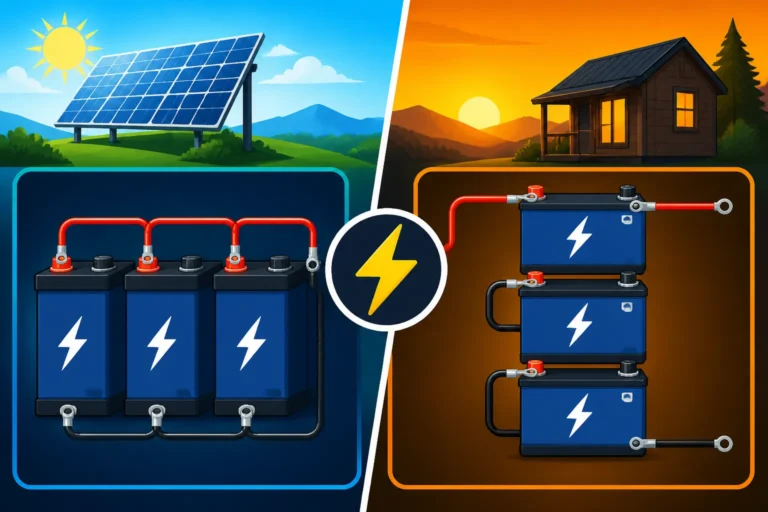
Let's continue our example: 8,000 Wh per day, aiming for 2 days of autonomy. That's 16,000 Wh needed. If you choose LiFePO4 batteries with an 80% DoD, you'd need a usable capacity of 16,000 Wh. If your system voltage is 48V (common for larger off-grid setups), then 16,000 Wh / 48V = 333 Amp-hours (Ah) of usable capacity. Since LiFePO4 can be discharged to 80%, you'd need a total battery bank capacity of about 416 Ah (333 Ah / 0.8). This will show you How Many Batteries for an Off-Grid System. You can read more about How to Calculate Battery Amp-Hours Needed to ensure you're getting the right amount of storage.
Choosing a Capable Inverter
The inverter is the unsung hero that takes the DC power from your batteries and converts it into the AC power that your standard electric water heater requires. This component is where the instantaneous wattage of your water heater becomes paramount, especially for tankless units.
For a tank-style water heater with a 4500-watt heating element, you would need an inverter capable of continuously outputting at least 4500 watts. However, resistive loads like heating elements don't typically have a massive "surge" requirement like motors do. Still, it's good practice to get an inverter with some headroom, perhaps a 5000-watt or 6000-watt pure sine wave inverter to ensure smooth operation and compatibility with other potential appliances. A pure sine wave inverter is always recommended for off-grid systems to protect all your electronics. You'll want to review your specific water heater's label for its actual wattage. Learning How to Size an Off-Grid Inverter correctly is crucial for system stability.
For electric tankless water heaters, as mentioned, their instantaneous draw can be exceptionally high. A 15,000-watt tankless water heater would require a 15,000-watt (or larger) inverter. These are specialized, expensive inverters, and powering such a load with solar and batteries alone is often cost-prohibitive for the average off-grid homesteader. Many people choose to utilize alternative heating methods, like propane or wood, for their primary hot water to avoid this massive electrical hurdle.
Charge Controller Considerations
The charge controller is the brain that manages the power flow from your solar panels to your battery bank, preventing overcharging and optimizing efficiency. While often overlooked, choosing the right one is essential for battery longevity and overall system performance.
For a large system powering a water heater, you will almost certainly want an MPPT (Maximum Power Point Tracking) charge controller. MPPT controllers are significantly more efficient than their PWM (Pulse Width Modulation) counterparts, especially in situations with fluctuating light conditions or when your panel voltage is much higher than your battery bank voltage. This efficiency gain can be critical when you need every watt to charge your large battery bank. You need to size the charge controller based on the total wattage of your solar array and the system voltage. It needs to handle the maximum current that your panels can produce. For instance, a 3500-watt solar array on a 48V battery bank will require a charge controller capable of handling over 70 amps (3500W / 48V = 73A, plus a safety margin). This is a specialized component, often offered by brands like Victron or Outback Power. Ensuring you How to Size a Charge Controller correctly protects your investment in batteries and panels.
Here’s a quick overview of estimated component sizing for common electric water heater loads:
| Water Heater Type / Usage | Avg. Daily Wh | Panels (300W ea., 3 peak sun hrs) | Battery Bank (48V LiFePO4, 80% DoD, 2 days autonomy) | Inverter (Min. Cont. Watts) |
|---|---|---|---|---|
| Small Tank (20-30 gal) | ||||
| Minimal Use (1 person) | 4,000 Wh | ~6 (1800W total) | ~208 Ah usable (260 Ah total) | 2000-3000W |
| Moderate Use (2 people) | 8,000 Wh | ~12 (3600W total) | ~416 Ah usable (520 Ah total) | 3000-4500W |
| Large Tank (40-50 gal) | ||||
| Moderate Use (2-3 people) | 12,000 Wh | ~18 (5400W total) | ~625 Ah usable (781 Ah total) | 4500-5500W |
| Heavy Use (4+ people) | 16,000 Wh | ~24 (7200W total) | ~833 Ah usable (1041 Ah total) | 5500-8000W |
| Electric Tankless | ||||
| Short Bursts | N/A | N/A (often impractical) | N/A (often impractical) | 10,000W+ |
Note: Panel and battery estimates are simplified and assume 75% system efficiency for panels and 80% usable capacity for LiFePO4 batteries. Actual needs vary significantly based on location, habits, and specific appliance efficiency.
Practical Scenarios and Considerations for Off-Grid Water Heating
Successfully integrating an electric water heater into an off-grid solar system isn't just about crunching numbers; it's also about making smart choices and understanding the real-world implications. This is often where creativity and a willingness to adapt your habits can make a huge difference in both cost and functionality.
Optimizing for Efficiency and Cost
One of the biggest lessons many off-gridders learn is that every watt-hour counts. When it comes to hot water, there are several strategies to significantly reduce your energy footprint, making your solar system far more manageable and affordable. The most effective way to How to Save Money on an Off-Grid Solar Build is to reduce your consumption.
Consider supplementing your electric water heater with alternative methods. A propane-fired on-demand water heater, for instance, provides instant hot water with a relatively low propane consumption, completely sidestepping the massive electrical load of an electric version. Many off-gridders find this to be a much more practical and cost-effective solution for hot water. Another excellent option, especially if you have ample sunshine, is a solar thermal hot water system. These systems use specialized panels to directly heat water that then circulates into a storage tank, often pre-heating the water before it even reaches a conventional electric element. This dramatically reduces the amount of electrical energy needed for the final heating. Even something as simple as insulating your hot water pipes and your tank more thoroughly can cut down on standby losses, reducing how often your electric element needs to kick on.
Furthermore, changing your habits can play a huge role. Taking shorter showers, installing low-flow showerheads, and being mindful of hot water usage for dishes and laundry can drastically cut down your daily energy demand. If you're building out a new off-grid home, investing in highly efficient, smaller appliances designed for off-grid living can compound these savings across your entire energy budget.
The "Off-Grid Solar for a Water Heater" Worksheet Example
Let's walk through a hypothetical scenario to bring these concepts to life. Imagine you have a small off-grid cabin in northern Arizona, used year-round by two people. You want an electric tank-style water heater, perhaps a 30-gallon unit with a 3,000-watt heating element. You estimate daily hot water usage will result in the heating element being active for about 2.5 hours total per day.
-
Calculate Daily Watt-hours for Water Heater:
- 3,000 watts (heater) x 2.5 hours = 7,500 Watt-hours (Wh) per day.
-
Account for System Losses:
- Let's assume an overall system efficiency of 75% (panels, wiring, inverter).
- Required energy from panels = 7,500 Wh / 0.75 = 10,000 Wh per day.
-
Determine Peak Sun Hours:
- In northern Arizona, even in winter, you might average 4-5 peak sun hours. Let's use 4 hours for conservative design.
-
Calculate Solar Panel Array Size:
- 10,000 Wh / 4 peak sun hours = 2,500 Watts of solar panels.
- If you use 300-watt panels, you'd need 2,500W / 300W = 8.33 panels. So, you'd need 9 x 300-watt solar panels (2,700W total). You could source these from a reliable provider like Renogy.
-
Calculate Battery Bank Size (assuming 48V LiFePO4, 80% DoD, 2 days autonomy):
- Total Wh needed for 2 days autonomy = 7,500 Wh/day * 2 days = 15,000 Wh.
- Total Wh capacity needed (to allow for 80% DoD) = 15,000 Wh / 0.80 = 18,750 Wh.
- Amp-hours needed at 48V = 18,750 Wh / 48V = 390.6 Ah. You'd likely get a few 100Ah or 200Ah 48V batteries (or string 12V batteries) to meet this, for example, two 200Ah 48V batteries. This kind of detailed calculation is a core part of any Off-Grid Solar System Sizing Guide.
-
Select Inverter Size:
- Your heater is 3,000 watts. A 4000-watt pure sine wave inverter would provide sufficient continuous power and a small buffer.
-
Select Charge Controller Size:
- Total panel wattage is 2,700W. For a 48V system, this means a current of 2,700W / 48V = 56.25 Amps. You'd want an MPPT charge controller rated for at least 60-70 Amps.
As you can see, even for a modest hot water load for two people, the solar system components quickly add up to a significant size. This example only covers the water heater, not lights, refrigerator, or other cabin electronics!
Real-World Expectations and Budgeting
It's important to be realistic about the undertaking of powering an electric water heater with off-grid solar. As demonstrated, it often represents one of the largest and most demanding loads on a typical off-grid system. The sheer number of panels and the large battery bank required can lead to a substantial initial investment.
When you start to put together the components, you'll quickly realize that Off-Grid Solar Cost: Complete Breakdown shows that batteries are a significant portion of the expense. The inverter needed to handle the instantaneous draw of a water heater is also not a small item. Because of these factors, many off-grid dwellers opt for alternative water heating methods entirely or combine them. For instance, you might use a solar thermal system to pre-heat water for much of the year, only relying on a small electric element or a propane backup for the coldest, cloudiest days.
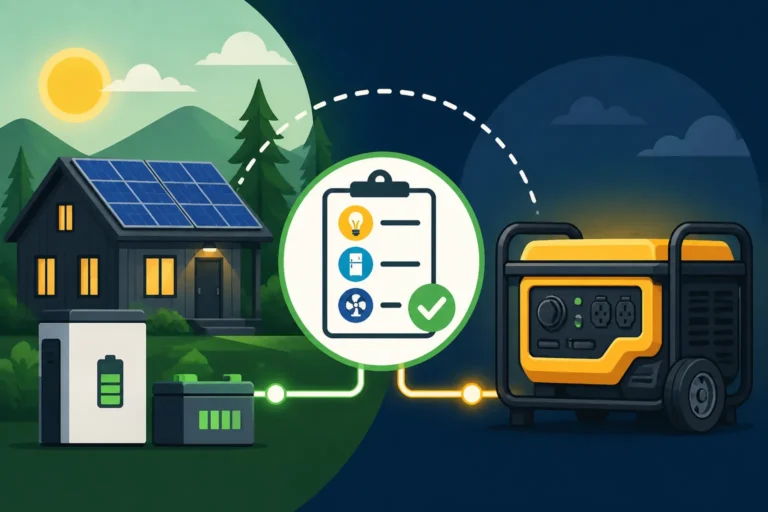
Having a backup generator is also a common strategy for systems with high loads like electric water heaters. On those notoriously cloudy stretches, a generator can quickly top off your batteries and provide power directly to your water heater, ensuring you don't run out of hot water when solar production is low. Budgeting for the cost to add a generator to off-grid solar is a smart move for ensuring reliability and comfort, especially if your hot water demands are non-negotiable. Don't underestimate the power of simply accepting slightly cooler showers or prioritizing hot water use during peak sun hours to allow your system to recover. Going off-grid often means a shift in lifestyle and expectations, and hot water is a prime example of where flexibility can save you a lot of money and complexity.
Disclaimer
Please remember that the information provided in this guide is for educational purposes only and should not be considered professional advice. Off-grid solar system design and installation can be complex and involve high voltages and currents that can be dangerous if not handled properly. Always consult with qualified professionals and adhere to all local electrical codes and regulations when designing, installing, or maintaining an off-grid solar system. Energy needs and component sizing will vary greatly based on your specific location, climate, energy usage habits, and equipment choices.