How to Size an Off-Grid Inverter
Navigating the world of off-grid solar can feel like learning a whole new language, and few components cause more head-scratching than the inverter. It's frustrating to invest in a solar system only to find your lights flicker or your well pump won't even hum because your inverter isn't up to the task. This comprehensive guide will walk you through exactly how to size an off-grid inverter, ensuring your hard-earned power is reliably converted into usable electricity for all your needs, without the guesswork or blown fuses.
Understanding the Role of an Inverter in Off-Grid Systems
Think of your off-grid solar system as a complex symphony, and the inverter is the conductor. Without a skilled conductor, even the best musicians (your solar panels and batteries) won't produce a harmonious sound. In the world of off-grid living, that harmony translates directly to consistent, reliable power for your home, RV, or cabin. It’s not just about having power, but having the right kind of power delivered efficiently.
What an Inverter Actually Does
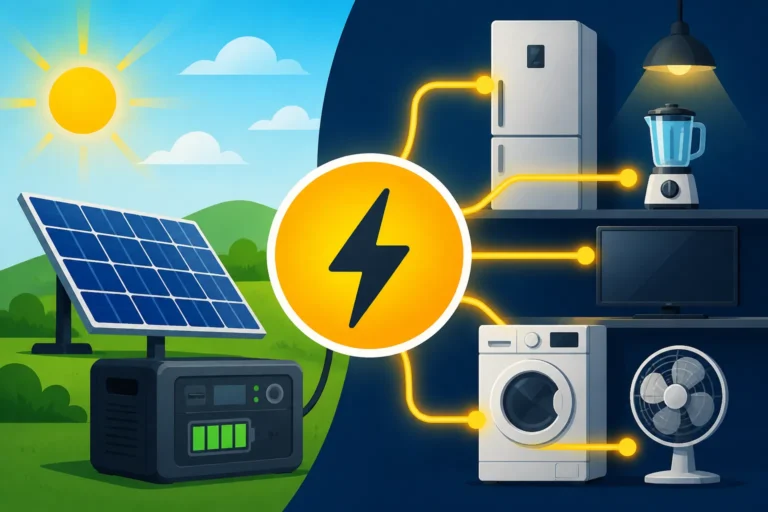
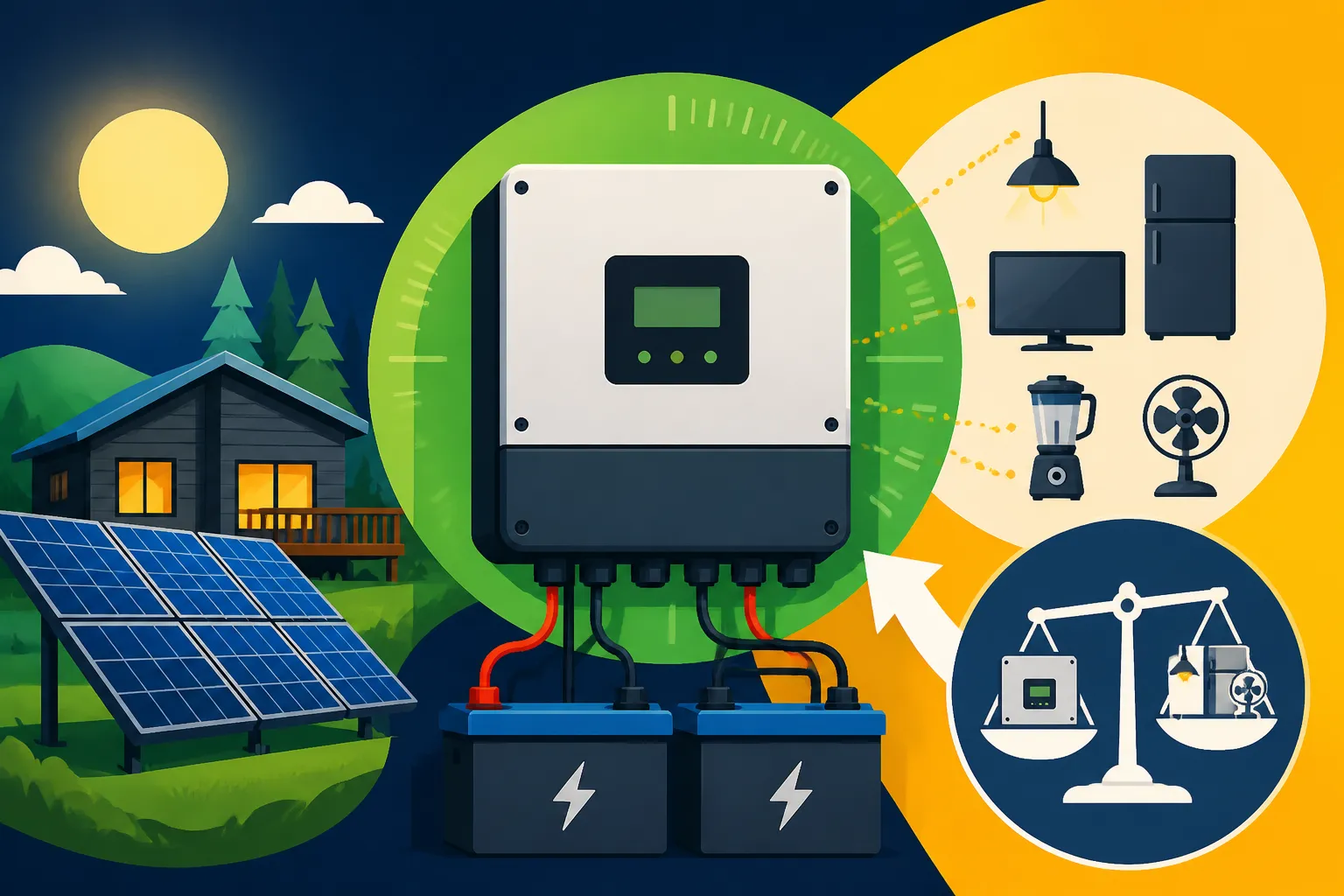
At its core, an inverter has one primary job: to transform the direct current (DC) electricity generated by your solar panels and stored in your batteries into alternating current (AC) electricity. Why AC? Because the vast majority of our everyday appliances – from refrigerators and microwaves to laptops and televisions – run on AC power, just like they would if they were plugged into a standard wall outlet in a grid-tied home. Your solar panels produce DC, your batteries store DC, but your coffee maker needs AC. The inverter is that crucial bridge, making your stored energy usable.
Without a properly functioning inverter, all the solar energy you've meticulously harvested would be stuck in your battery bank, unable to power anything beyond small DC-specific devices. It's the silent workhorse that unlocks the potential of your entire system. A good inverter works continuously, often without you even noticing, ensuring a smooth flow of power to everything from your lights to heavy-duty power tools.
Why Inverter Sizing is Crucial for Performance
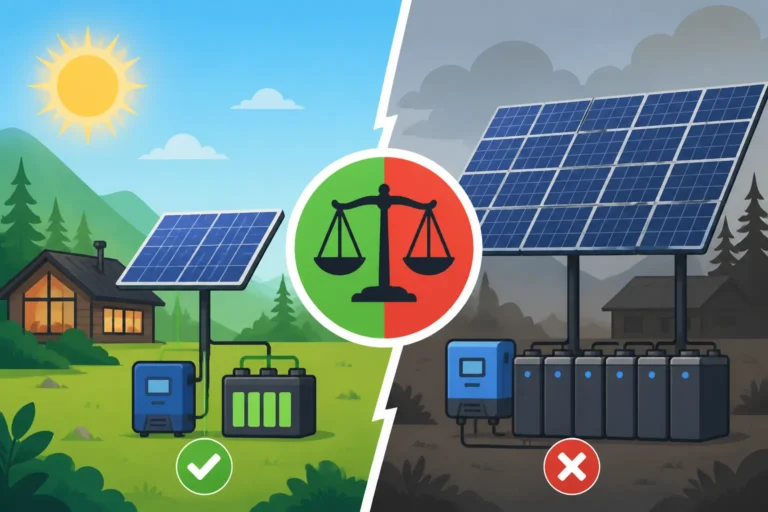
Getting the inverter size wrong is one of the most common and costly mistakes in off-grid solar. An undersized inverter simply won't be able to handle the electrical demand of your appliances, leading to frustrating issues like circuit trips, unexpected shutdowns, and potential damage to both your inverter and your electronics. Imagine trying to run a powerful blender and a vacuum cleaner simultaneously on a circuit designed only for a lamp; that’s what an undersized inverter feels like to your appliances. You might hear strange noises, or the inverter might simply shut down as a protective measure, leaving you in the dark.
On the flip side, while it might seem tempting to just buy the biggest inverter you can find, an excessively oversized inverter isn't ideal either. While it won't typically harm your system, it often comes with a higher price tag and can sometimes lead to lower efficiency at lighter loads. This means you’re spending more money for capabilities you don't need, and potentially wasting precious battery power in the conversion process. The goal isn't just power, it's efficient power. Understanding How to Size an Off-Grid Solar System is critical, and the inverter plays a starring role in that calculation.
Calculating Your Total Power Needs: The Foundation of Sizing
Before you even think about looking at inverter specifications, you absolutely must know your energy consumption inside and out. This isn't just guessing; it's a detective job where you're uncovering every watt and amp-hour your devices demand. Without this foundational understanding, you're essentially shooting in the dark, hoping to hit a target you haven't even defined. This is where the real work begins, and it's worth every minute you put into it.
Identifying Your AC Appliances and Their Wattage
The first step in sizing your inverter is to make an exhaustive list of every single AC appliance you plan to run. And I mean every single one. This includes everything from your major energy hogs like refrigerators, microwaves, and air conditioners, down to smaller items like phone chargers, LED lights, and blenders. Don't forget occasional-use items like power tools, hair dryers, or a coffee maker – they might not run often, but when they do, they demand significant power.
Once you have your list, for each appliance, you need to find its running wattage. This information is usually found on a label on the appliance itself, in the user manual, or by doing a quick web search for the specific model. Sometimes it will be listed in amps at a specific voltage (e.g., 10 amps at 120V); in that case, multiply amps by volts to get watts (10A * 120V = 1200W). Be meticulous here! Missing a single high-draw appliance could throw off your entire system. This detailed Off-Grid Solar Load Calculation Explained is the backbone of your sizing efforts.
Differentiating Continuous Load versus Surge Load
This is where many off-gridders get tripped up. Appliances have two main power ratings: continuous (or running) wattage and surge (or starting) wattage.
- Continuous Load: This is the power an appliance consistently draws while it's operating normally. For example, a refrigerator might continuously draw 150-200 watts while its compressor is running. Your lights, laptops, and TVs also represent continuous loads when they're on. Your inverter needs to be able to supply the sum of all continuous loads you anticipate running simultaneously.
- Surge Load: This is a much higher, but very brief, burst of power an appliance draws when it first starts up. Motors, compressors, and heating elements are notorious for high surge loads. A refrigerator's compressor, while running at 150-200 watts, might momentarily spike to 800-1200 watts for a fraction of a second when it kicks on. Power tools, microwaves, and even some pumps can have surge demands several times higher than their running wattage. Your inverter must be able to handle the highest individual surge load of any appliance you plan to start, while other continuous loads are already running. This is often the trickiest part to account for.
It's common for people to underestimate surge loads, especially with things like well pumps or certain shop tools. A good rule of thumb is that if an appliance has a motor or a compressor, it will likely have a significant surge demand. For a deeper dive into this, you might find How to Calculate Daily Energy Usage helpful in distinguishing these loads over time.
The Importance of a Detailed Load Analysis
A proper load analysis isn't just about listing watts; it's about understanding your lifestyle. You need to identify which appliances will operate at the same time. Will you be running the microwave while the washing machine is on? Will your air conditioner be humming while you run your coffee maker in the morning?
Create a spreadsheet or a simple table listing each AC appliance, its continuous wattage, and its surge wattage. Then, group them into scenarios.
- Scenario 1 (Worst-Case Continuous): Add up the continuous wattage of all appliances you might realistically run at the same time. This could be evening usage: lights, TV, laptop, and refrigerator.
- Scenario 2 (Worst-Case Surge): Take your worst-case continuous load, and then identify the single appliance with the highest surge wattage among all your appliances. Add that highest surge wattage to your worst-case continuous load. This total represents the absolute maximum power your inverter might need to supply, even if only for a second or two.
Let's say your continuous load for an evening is 1000 watts (TV, lights, fridge running). If your well pump has a running wattage of 1200 watts but a surge wattage of 3500 watts, your inverter must be able to handle 1000W (continuous) + 3500W (well pump surge) = 4500 watts momentarily. This meticulous planning in your How to Do an Off-Grid Load Analysis will prevent countless headaches down the road.
Choosing the Right Inverter Type for Your Off-Grid Lifestyle
Once you have a solid grasp of your power needs, it's time to consider the different types of inverters available. This isn't a one-size-fits-all situation; the right inverter for you depends heavily on the sensitivity of your electronics and the overall sophistication you want for your off-grid power system.
Pure Sine Wave versus Modified Sine Wave Inverters
This is perhaps the most critical distinction when choosing an inverter for off-grid applications.
-
Pure Sine Wave Inverters: These are the gold standard for off-grid power. They produce AC power that is virtually identical to the power you get from the utility grid. This clean, smooth waveform is essential for sensitive electronics like laptops, medical equipment (CPAP machines), power tools with variable speed motors, and modern appliances with complex microprocessors (like newer refrigerators, microwaves, and flat-screen TVs). They run cooler, quieter, and more efficiently with these types of loads, and prevent potential damage or malfunction to your expensive gear. While they are generally more expensive than their modified sine wave counterparts, for most off-grid homes aiming for grid-like reliability, a pure sine wave inverter is an absolute must. You'll find many reliable pure sine wave inverters on marketplaces like Amazon.
-
Modified Sine Wave Inverters: These inverters produce a waveform that is a stepped approximation of a pure sine wave. They are generally much more affordable. However, this "choppier" waveform can cause issues with certain appliances. Motors may run hotter, less efficiently, or make humming noises. Digital clocks might run fast. Some sensitive electronics simply won't work, while others might experience reduced lifespan or even permanent damage. They are generally acceptable for basic, resistive loads like incandescent lights, simple heating elements, and older, less sensitive electronics. For example, if you just need to power some basic LED lights and charge a phone in a shed, a modified sine wave inverter might suffice. But for any significant off-grid living, especially with modern appliances, they are almost universally discouraged. For more information, check out Pure Sine Wave vs Modified Sine Wave Inverters.
Low-Frequency versus High-Frequency Inverters
This distinction refers to the design and operation of the inverter's internal transformer.
-
Low-Frequency Inverters: These inverters use a large, heavy copper transformer. This design makes them incredibly robust and capable of handling extremely high surge loads for longer durations, often two to three times their continuous rating, and sometimes for several seconds. This "grunt" power is invaluable for appliances with very high startup demands, such as well pumps, air compressors, and heavy-duty shop tools. Their robust build also makes them highly durable and often more tolerant of harsh electrical environments. However, they are typically larger, heavier, and more expensive. Brands like Victron Energy and Outback Power are well-known for their reliable low-frequency inverter offerings, often preferred for whole-home off-grid systems.
-
High-Frequency Inverters: These inverters use smaller, lighter, and more efficient electronic components instead of a heavy transformer. This makes them more compact, lighter, and generally less expensive to manufacture. They are often found in smaller, more portable solar generators and some budget-friendly off-grid kits. While their efficiency can be good at optimal loads, they typically have less surge capability and are less tolerant of sustained overloads compared to low-frequency models. They are perfectly adequate for many applications, especially if your surge loads are well within their specified limits. For RVs or smaller cabins with fewer heavy motor loads, a high-frequency pure sine wave inverter can be an excellent, cost-effective choice.
All-in-One Inverter Chargers
For many off-grid installations, especially newer ones, an all-in-one inverter charger is a popular choice. These units integrate multiple critical components into a single, cohesive device: an inverter, a battery charger, and often a solar charge controller.
This combination simplifies wiring, reduces system complexity, and can streamline monitoring and control. For instance, an inverter charger can use a generator or another AC source (if available) to recharge your battery bank when solar production is low, or even supplement the inverter's output during peak demand. This feature is particularly useful for those who want the option of generator backup. Many popular off-grid brands like Sol-Ark, Growatt, and Renogy offer excellent all-in-one inverter chargers that combine the power conversion with smart battery management. These systems are fantastic for creating a streamlined, efficient power hub.
The Step-by-Step Process for Inverter Sizing
Now that you understand the different types of inverters and the crucial difference between continuous and surge loads, let’s get down to the brass tacks: the actual calculations. This is where your detailed load analysis really pays off, transforming abstract concepts into concrete numbers that will guide your purchase.
Calculating Your Continuous Running Wattage
Your inverter must be able to continuously supply all the power needed by the appliances you expect to run simultaneously. This is your baseline. Go back to your load analysis where you listed all your AC appliances.
- Identify Simultaneous Loads: Think about typical times of high usage. This might be a busy morning with the coffee maker, toaster, and refrigerator all running, or an evening with lights, a TV, a laptop, and the refrigerator. It's usually wise to consider your absolute busiest period.
- Sum the Continuous Wattage: Add up the continuous running wattage for all appliances in your peak simultaneous use scenario.
- Example:
- Refrigerator (running): 200W
- LED Lights (total): 100W
- Laptop Charger: 60W
- TV: 80W
- Microwave (running, if you use it simultaneously often): 1500W
- Total Continuous Running Wattage = 200 + 100 + 60 + 80 + 1500 = 1940 Watts
- Example:
This 1940 watts is the minimum continuous power your inverter needs to provide. Any inverter you select must have a continuous output rating at least equal to this number. It's better to round up or add a buffer here.
Determining Your Peak Surge Wattage Requirements
This is where you account for those momentary power spikes. Your inverter needs to handle the highest surge load of any single appliance you plan to start, while other continuous loads are already running.
- Revisit Your Load Analysis: Look at the surge wattage for all your appliances, not just the ones in your continuous load scenario.
- Identify the Highest Surge: Pick the single appliance with the absolute highest surge wattage from your entire list.
- Example (continuing from above):
- You have a well pump that runs at 1200W but surges to 3500W.
- Your microwave surges to 2000W.
- Your refrigerator surges to 1200W.
- The highest surge is from the well pump: 3500W.
- Example (continuing from above):
- Calculate Total Peak Wattage: Add this highest single surge wattage to your peak continuous running wattage.
- Total Peak Wattage = (Peak Continuous Running Wattage) + (Highest Single Appliance Surge Wattage)
- Total Peak Wattage = 1940W (from example above) + 3500W (well pump surge) = 5440 Watts
This 5440 watts is the absolute maximum power spike your inverter must be able to handle, even if only for a very short duration (milliseconds to a few seconds). When looking at inverter specifications, you'll see a "surge rating" or "peak power" listed. This number needs to be equal to or greater than your calculated total peak wattage. This step is critical in ensuring your inverter can start motors like those in well pumps or large appliances. Understanding How to Size an Off-Grid Inverter for these scenarios is paramount.
Applying a Safety Margin to Your Calculations
Once you have your continuous and peak wattage numbers, it's wise to add a safety margin. Life off-grid often involves unexpected electrical needs, and you don't want to constantly be at your inverter's absolute limit.
- Continuous Margin: For your continuous wattage, adding a 15-20% buffer is a good idea. This accounts for:
- Slight inaccuracies in appliance ratings.
- Future additions of small appliances.
- Degradation of efficiency over the inverter's lifespan.
- Variations in environmental conditions (e.g., extreme heat affecting performance).
- Example: Your calculated continuous wattage is 1940W. With a 20% margin: 1940W * 1.20 = 2328W. So, you'd look for an inverter with a continuous rating of at least 2300-2500 watts.
- Surge Margin: While surge ratings are usually more robust, giving yourself a little wiggle room here can also be beneficial, especially if your highest surge appliance is critical (like a well pump). Aim for your inverter's surge capacity to be at least 10-15% higher than your calculated peak surge wattage.
- Example: Your calculated total peak wattage is 5440W. With a 10% margin: 5440W * 1.10 = 5984W. You would want an inverter with a surge rating of at least 6000 watts, possibly even 7000-8000W if you want extra assurance, especially with a low-frequency unit.
By applying these margins, you're not just buying an inverter; you're investing in peace of mind and the longevity of your system. It prevents you from constantly pushing your inverter to its limits, which can shorten its lifespan and lead to inefficiencies.
Considering System Voltage and Future Expansion
Beyond wattage, the voltage of your off-grid system is another fundamental aspect that directly influences your inverter choice. Making the right decision here impacts not only the inverter but also your battery bank and wiring. Thinking ahead about how your power needs might evolve is also crucial to avoid costly overhauls later.
Matching Inverter Voltage to Your Battery Bank (12V, 24V, 48V)
The DC input voltage of your inverter must match the nominal voltage of your battery bank. This is not optional. You cannot connect a 12V inverter to a 48V battery bank, or vice-versa, without special converters, which add complexity and cost.
- 12V Systems: These are common for smaller applications like RVs, vans, small cabins, or basic shed setups where power demands are minimal. They are simpler to set up and often use readily available 12V components. However, for higher power demands, 12V systems require very thick and expensive wiring to minimize voltage drop, and larger battery banks can become cumbersome to wire. While easy for a Cost of a 100W Off-Grid Solar System, scaling up can be problematic.
- 24V Systems: A good middle-ground, 24V systems are more efficient for moderate power needs compared to 12V, as they require half the current for the same wattage, allowing for thinner wiring. They are suitable for many cabins, tiny homes, or larger RVs with typical residential appliances.
- 48V Systems: These are the preferred choice for larger off-grid homes with significant power demands, especially if you're running major appliances like well pumps, air conditioning, or multiple high-wattage items simultaneously. 48V systems are the most efficient at handling higher power loads because they require even less current, leading to minimal voltage drop and allowing for much thinner (and less costly) wiring. Most high-quality, whole-home inverters, especially low-frequency models, operate at 48V DC input. For a deep dive into this, consult 12V vs 24V vs 48V: Which to Choose.
When designing your system, it’s often recommended to go with the highest practical voltage for your anticipated loads. This is a key decision when you How to Size an Off-Grid Battery Bank. If you're planning a sizable off-grid homestead, starting with 48V usually saves money and hassle in the long run.
Planning for Future Power Needs
One of the biggest regrets for many off-gridders is not planning for expansion from the outset. Your power needs tend to grow. You might start with a small cabin, then add a workshop, or perhaps decide to get a more energy-intensive appliance like a freezer or a mini-split air conditioner.
- Modular Approach: If you anticipate growth, consider an inverter that can be expanded or easily swapped out. Some advanced inverter systems allow for parallel stacking, meaning you can add a second identical inverter to double your output capacity. While this means a higher initial investment, it can be more cost-effective than replacing an entire inverter system later.
- Oversizing Slightly: While I cautioned against excessive oversizing earlier, adding a reasonable buffer (e.g., an extra 20-30% on your continuous rating) can accommodate minor future additions without needing an immediate upgrade. If your calculations point to a 2500W continuous need, opting for a 3000W inverter from the start can provide that crucial flexibility.
- Infrastructure: Even if you don't buy the larger inverter now, design your battery bank and wiring (especially the cables from the battery to the inverter) to accommodate a higher voltage or larger inverter down the line. It's much cheaper to run slightly thicker wire now than to tear everything out and re-wire later. Think about How Much Solar to Charge Your Batteries Daily and how that might increase.
By thinking strategically about voltage and future expansion, you ensure that your off-grid system remains adaptable and can grow with your needs, preventing the headache and expense of a complete overhaul.
Common Mistakes and Troubleshooting Tips in Inverter Sizing
Even with all the calculations and careful planning, it’s easy to stumble into common pitfalls when sizing an off-grid inverter. Understanding these potential missteps and how to avoid them can save you a world of frustration and costly equipment damage.
The Dangers of Undersizing Your Inverter
Undersizing an inverter is like trying to draw water from a fire hydrant through a garden hose – it simply won't work efficiently, and something's bound to give. The consequences can range from annoying interruptions to serious damage.
- Frequent Overload Shutdowns: This is the most immediate and common issue. Your inverter's internal protection mechanisms are designed to shut down the unit if the power demand exceeds its rated capacity, especially during surge events. If your well pump or microwave kicks on and your inverter instantly trips, it's a clear sign you've undersized for your peak loads. This constant tripping is not only frustrating but can also put stress on the inverter's components.
- Damage to Appliances: Running sensitive electronics on an inverter that is struggling to deliver stable power can lead to intermittent operation, reduced lifespan, or even outright failure of the appliance. Imagine trying to power a refrigerator with constant brownouts; it's not going to last long.
- Inverter Overheating and Failure: When an inverter is consistently run close to or above its maximum continuous rating, it generates excessive heat. While inverters have cooling fans, prolonged overheating can degrade internal components, leading to premature failure of the inverter itself. This is particularly true for high-frequency inverters that are less robust in handling sustained overloads.
- Inefficient Operation: An undersized inverter might struggle to maintain voltage stability, leading to power quality issues that reduce the efficiency of your appliances, meaning they consume more power to do the same job, thus draining your batteries faster.
- Fire Hazard: In extreme cases, a severely undersized inverter operating under constant strain without proper protective fuses and breakers can pose a fire risk due to overheating and electrical arcing. Always ensure your system, including your inverter and battery bank, is properly protected.
Always remember that for an inverter, it's generally better to be slightly over capacity than under.
Why Oversizing Isn't Always the Best Solution
While undersizing is definitively bad, simply buying the biggest inverter you can find isn't necessarily the wisest strategy either. There's a sweet spot to hit.
- Higher Initial Cost: Larger inverters, especially low-frequency, pure sine wave models, come with a significantly higher price tag. If your actual power needs only require a 3000W inverter, buying a 6000W unit means you're tying up capital that could be better spent on other critical system components like more battery capacity or additional solar panels. Remember, knowing the Off-Grid Solar Cost: Complete Breakdown helps you budget wisely across all components.
- Reduced Efficiency at Light Loads: Many inverters, particularly larger ones, are most efficient when operating at a significant percentage of their rated capacity (e.g., 50-80%). When a large inverter is only running very light loads (like a few LED lights and a phone charger), its idle power consumption (the power it draws just to be on and ready) can represent a larger percentage of the total power being converted. This means a larger inverter might consume more precious battery power just to run itself when your actual loads are minimal, leading to slightly faster battery drain.
- Physical Size and Weight: Larger inverters are heavier and take up more physical space. For applications like RVs, vans, or small cabins where space is at a premium, a massive inverter might be impractical to install.
- Compatibility with Other Components: While less common, an excessively large inverter might also be overkill for your charge controller or battery bank voltage, creating an unbalanced system. Ensure that when you're thinking about How Many Solar Panels for Off-Grid Living and How Many Batteries for an Off-Grid System, your inverter choice fits into the overall system design.
The goal is to find an inverter that comfortably meets your peak surge and continuous power demands, with a healthy safety margin, without going overboard. This ensures optimal efficiency, reliability, and cost-effectiveness for your unique off-grid situation.
Advanced Inverter Features and Considerations
Beyond the fundamental sizing and waveform type, modern off-grid inverters come packed with a variety of advanced features that can significantly enhance the performance, monitoring, and overall user experience of your solar power system. Overlooking these can mean missing out on convenience and reliability.
Monitoring and Communication Capabilities
In today's interconnected world, an inverter that can communicate its status is a game-changer for off-grid living. Many high-quality inverters now come with built-in monitoring capabilities that allow you to track your system's performance in real-time.
- Local Displays: Most inverters will have a basic LCD screen that shows critical data like battery voltage, AC output voltage, current draw, and error codes. This is useful for quick checks on site.
- Remote Monitoring: The real magic happens with remote monitoring. Brands like Victron Energy (with their Cerbo GX and VRM portal) and Sol-Ark offer sophisticated communication interfaces that allow you to connect your inverter to the internet. This enables you to:
- Monitor your system's performance from anywhere in the world via a smartphone app or web browser.
- Track energy production, consumption, battery state of charge, and historical data.
- Receive alerts for system issues (e.g., low battery, overload, fault codes).
- Sometimes even remotely adjust settings or troubleshoot minor problems.
This level of insight is invaluable for proactive maintenance and peace of mind, especially if you have a remote cabin or are away from your off-grid property for extended periods. It can also help you identify trends in your energy usage, allowing you to fine-tune your Off-Grid Solar System Design Basics.
Generator Integration and Automatic Transfer Switches
For many off-gridders, a backup generator isn't just a luxury; it's a necessity, especially during prolonged cloudy periods or when unexpected high loads occur. Modern inverter chargers are designed to seamlessly integrate with generators, making power management effortless.
- Automatic Start/Stop: Many inverter chargers can be programmed to automatically start your generator when your battery bank reaches a certain low state of charge or when a heavy load causes the inverter to approach its limits. Once the batteries are sufficiently recharged or the load subsides, the inverter will automatically shut down the generator, saving fuel and wear. This 'set it and forget it' functionality is a huge convenience, especially during extended periods of low sun or when you're away from home.
- Automatic Transfer Switch (ATS): Integrated into most inverter chargers, an ATS automatically switches your home's AC loads between the inverter (solar power) and the generator (or grid, if you have a hybrid setup). When the generator starts, the ATS detects the incoming power and seamlessly transfers your loads to the generator, ensuring uninterrupted power. When the generator shuts down, it automatically transfers back to the inverter. This prevents you from having to manually plug and unplug appliances or throw breaker switches, enhancing safety and convenience. Understanding How to Add a Generator to Your Design is an important consideration for year-round reliability.
- Generator Charging Capabilities: Beyond just running your AC loads, an inverter charger can use the generator's output to rapidly recharge your battery bank. Many units have powerful internal chargers (e.g., 50A, 100A, or more at 48V), allowing you to quickly top off your batteries when solar input is insufficient.
When choosing an inverter with generator integration, consider the generator's output type (120V or 240V), its wattage, and whether it has an electric start feature for automatic operation. Brands like Outback, Schneider Electric, and Magnum Energy excel in robust generator integration.
Real-World Examples of Off-Grid Inverter Sizing
Theory is great, but sometimes it helps to see how these calculations play out in real-world scenarios. Let's look at a couple of common off-grid setups and how you might approach inverter sizing for each. These examples aren't exhaustive, but they illustrate the process.
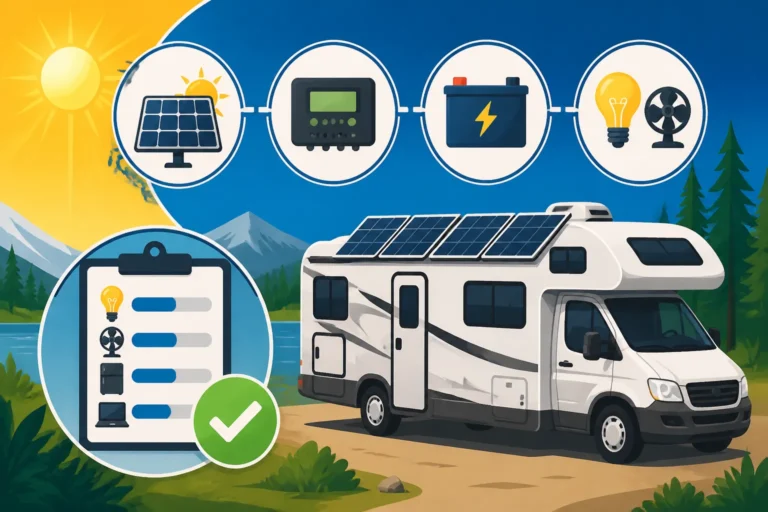
Sizing for a Small Cabin or RV
Imagine a small, remote cabin or an RV used for weekend getaways, with moderate power needs.
Appliances and Estimated Wattages:
| Appliance | Continuous Watts (Approx.) | Surge Watts (Approx.) | Notes |
|---|---|---|---|
| LED Lights (total) | 50W | – | Used regularly in the evening |
| Mini-Fridge | 100W | 800W | Compressor-driven, cycles on/off |
| Laptop Charger | 60W | – | Used for work or entertainment |
| Phone Charger | 10W | – | Always on, small draw |
| Water Pump (small) | 150W | 500W | For sink/shower, brief use |
| Microwave (small) | 800W | 1500W | Occasional, short bursts |
| Fan (oscillating) | 50W | – | For summer cooling |
| Total |
1. Calculate Peak Continuous Running Wattage:
Let's consider an evening scenario: Lights, mini-fridge (compressor on), laptop, phone charger, and the fan.
- 50W (lights) + 100W (fridge) + 60W (laptop) + 10W (phone) + 50W (fan) = 270 Watts
2. Determine Highest Single Surge Wattage:
Looking at the list, the microwave has the highest surge at 1500W. The mini-fridge is 800W, water pump 500W.
3. Calculate Total Peak Wattage (Worst-Case Surge):
This would be our peak continuous load (270W) PLUS the highest single surge (Microwave: 1500W)
- 270W (continuous) + 1500W (microwave surge) = 1770 Watts
4. Apply Safety Margin:
- Continuous: 270W * 1.20 (20% margin) = 324W. Round up to 350-400 Watts continuous.
- Surge: 1770W * 1.15 (15% margin) = 2035W. Round up to 2000-2200 Watts surge.
Conclusion for Small Cabin/RV: You would be looking for a pure sine wave inverter with a continuous rating of at least 400-500 watts and a surge rating of 2000-2200 watts. Many 1000W or 1500W pure sine wave inverters would fit this bill comfortably, providing plenty of headroom. For an RV, a 12V system is common, so a 12V input inverter would be appropriate. Renogy offers various compact pure sine wave inverters that would be a good fit for this type of scenario. For more specialized needs, explore Best Off-Grid Solar Kit for an RV.
Sizing for a Full-Time Off-Grid Home
Now, let's consider a larger, full-time off-grid home with more appliances and higher demands.
Appliances and Estimated Wattages:
| Appliance | Continuous Watts (Approx.) | Surge Watts (Approx.) | Notes |
|---|---|---|---|
| Refrigerator (large) | 250W | 1500W | Runs continuously, cycles compressor |
| Freezer (large) | 200W | 1200W | Runs continuously, cycles compressor |
| Well Pump (deep) | 1500W | 4500W | High startup surge, infrequent use |
| Washing Machine | 500W | 1800W | Used frequently, motor cycles, heating element |
| Microwave | 1500W | 2500W | Daily use, short bursts |
| LED Lights (entire home) | 200W | – | Used mostly in evenings |
| TV (large) | 150W | – | Daily use for entertainment |
| Laptops (2) | 120W | – | Constant use |
| Water Heater (instant) | 0W (Propane) | 0W | (Assume propane for less electrical load; electric requires huge inverter) |
| Power Tools (e.g., saw) | 1200W | 3000W | Occasional use, high surge |
| Total |
1. Calculate Peak Continuous Running Wattage:
Consider a scenario where the refrigerator, freezer, lights, TV, and two laptops are running. Perhaps the washing machine is also in a continuous cycle, but not the well pump or microwave simultaneously.
- 250W (fridge) + 200W (freezer) + 200W (lights) + 150W (TV) + 120W (laptops) + 500W (washing machine running) = 1420 Watts
2. Determine Highest Single Surge Wattage:
- Well Pump: 4500W
- Power Tools (saw): 3000W
- Microwave: 2500W
The highest surge is from the well pump at 4500 Watts.
3. Calculate Total Peak Wattage (Worst-Case Surge):
This would be our peak continuous load (1420W) PLUS the highest single surge (Well Pump: 4500W)
- 1420W (continuous) + 4500W (well pump surge) = 5920 Watts
4. Apply Safety Margin:
- Continuous: 1420W * 1.20 (20% margin) = 1704W. Round up to 1800-2000 Watts continuous.
- Surge: 5920W * 1.15 (15% margin) = 6808W. Round up to 7000-7500 Watts surge.
Conclusion for a Full-Time Off-Grid Home: You would need a robust pure sine wave inverter, likely a low-frequency model, with a continuous rating of at least 2000 watts and a surge rating of 7000-7500 watts. A 48V system is almost always recommended for this scale. An inverter in the 3000W to 5000W continuous range (with high surge capacity) would be appropriate. For systems of this size, you're likely looking at integrated inverter chargers from reputable brands that can also handle generator backup. This also influences decisions like How Much to Budget for Off-Grid Batteries since a larger inverter implies a larger battery bank.
Disclaimer
The information provided in this guide is for general informational purposes only and does not constitute professional electrical advice. Off-grid solar systems involve high voltages and currents that can be dangerous. Always consult with a qualified electrician or solar professional before designing, installing, or making modifications to your off-grid solar power system. Adherence to local electrical codes and safety standards is paramount.