Buying Used Off-Grid Solar Equipment: Worth It
Venturing into off-grid living or just powering a remote cabin often comes with a hefty price tag, making many of us wonder if there's a way to cut costs without sacrificing reliability. The idea of buying used off-grid solar equipment can seem like a golden ticket to energy independence on a budget, but it’s a path fraught with both incredible savings and potential headaches. This guide will walk you through everything you need to know to decide if diving into the world of pre-owned solar gear is truly worth it for your unique off-grid adventure.
The Allure and Risks of Used Off-Grid Solar Equipment
Let's be real, the upfront cost of a brand-new off-grid solar system can be a major barrier for many folks dreaming of energy independence. We've all looked at the numbers and thought, "There has to be a more affordable way!" This is where the world of used equipment enters the picture, promising relief to your wallet. But like any shortcut, it comes with its own set of twists and turns.
Why Consider Used Gear in the First Place?
The primary driver, without a doubt, is cost. When you start calculating the total cost of an off-grid solar system, you quickly realize that panels, batteries, inverters, and charge controllers add up fast. Just the Cost of an Off-Grid Solar Battery Bank alone can be a huge chunk of your budget. If you can find components that are still functional at a fraction of their original price, that's a massive win. For instance, a high-quality solar panel that might cost $200-$300 new could be found for $50-$100 used. This kind of saving isn't just a drop in the bucket; it can literally make an off-grid project feasible for someone who otherwise couldn't afford it.
Beyond the financial aspect, there's a strong argument for sustainability. Reusing perfectly good equipment helps reduce waste and lessens the demand for new manufacturing, which is always a positive for the planet. For smaller projects, like powering a shed for tools or a simple lighting setup for a hunting cabin, new equipment might be overkill. A few used panels and a small battery could be all you need, bringing the project within a reasonable budget without the pressure of a huge investment. It’s also a fantastic way to dip your toes into solar before committing to a full-scale, expensive system. Think of it as a trial run to see if the off-grid life really suits you, or if you can handle the intricacies of an off-grid system without breaking the bank.
The Hidden Pitfalls: What Can Go Wrong?
While the idea of saving money is appealing, used solar equipment comes with significant risks. Unlike a new product with a manufacturer's warranty and guarantee, used items often come "as-is" with no recourse if they fail shortly after purchase. This lack of warranty is perhaps the biggest red flag. If a brand new inverter from, say, Victron Energy or Sol-Ark, comes with a 5 or 10-year warranty, you can rest easy knowing you're covered. A used one? Not so much.
Performance degradation is another major concern. Solar panels lose efficiency over time, and batteries have a finite number of charge cycles. When buying used, you're inheriting that wear and tear. A battery might seem cheap, but if it only has 20% of its original capacity left, you're not getting a good deal at all. Inverters and charge controllers can also suffer from internal component fatigue, especially if they've been exposed to harsh conditions, improper sizing, or frequent power surges.
Compatibility issues can also sneak up on you. Older components might not play nicely with newer technologies, or they might not meet current electrical codes if you're attempting to pass an inspection. For example, some older charge controllers might not be optimized for modern LiFePO4 batteries, leading to inefficient charging or even damage. There’s also the question of unknown history: was the equipment properly maintained? Was it exposed to extreme weather? Was it part of a poorly designed system that put undue stress on its components? Without clear answers, you're essentially taking a gamble, and that gamble can easily eat up any initial savings if you have to replace failed components prematurely. This is why understanding the true Off-Grid Solar Payback Period Explained can become much murkier with used equipment.
What to Look For When Buying Used Solar Components
Alright, so you're still considering the used route, and I totally get it. The savings can be too tempting to ignore. But if you're going to do it, you need to be smart, analytical, and a little bit skeptical. This isn't like buying a used couch; a faulty component can literally leave you in the dark or even pose a fire hazard.
Inspecting Used Solar Panels
Solar panels are often the most robust components in a system, but they're not indestructible. When you're looking at a used panel, start with a thorough visual inspection. Look for any cracks, chips, or spiderweb patterns on the glass. Even small imperfections can indicate structural damage that will compromise performance and lifespan, allowing moisture to seep in over time. Delamination, where the protective layers separate from the solar cells, appears as cloudy or yellowish areas under the glass. This is a big no-no, as it's a sign of water ingress and impending failure.
Check the frame for bends or corrosion, especially around the mounting holes. Ensure the junction box on the back is intact, sealed, and that the wiring connections (usually MC4 connectors) aren't corroded or damaged. If possible, ask the seller about the panel's age and how it was stored. A panel that's been lying flat in a field for years will likely have different issues than one professionally decommissioned from a rooftop. Ideally, you want to test its output with a multimeter under direct sunlight. Compare the voltage (Voc – Open Circuit Voltage) and current (Isc – Short Circuit Current) to the specifications on the panel's label. If the actual readings are significantly lower than the rated values, it's a clear sign of degradation. For serious buyers, a megohmmeter can test for insulation breakdown, which is a sign of internal electrical issues. These kinds of checks are crucial, as even the Best Off-Grid Solar Panels will degrade without proper care.
Evaluating Used Batteries
This is arguably the trickiest part, as batteries are the heart of any off-grid system and often the most expensive component. Their condition is paramount.
- Lead-Acid Batteries (Flooded, AGM, Gel): For flooded lead-acid batteries, check the electrolyte levels (if accessible) and look for excessive corrosion on the terminals. A hydrometer can measure the specific gravity of the electrolyte, giving you an indication of the battery's state of health. For all lead-acid types, ask about their age, how they were charged, and if they were ever deeply discharged and left that way (a death sentence for lead-acid). Puffed-up cases are a sign of internal damage and should be avoided.
- LiFePO4 (Lithium Iron Phosphate) Batteries: These are often pricier but have a much longer cycle life. With LiFePO4, it's harder to visually assess internal health. You'll want to know the battery's age, its estimated cycle count, and if it has a functional Battery Management System (BMS). A BMS protects the battery from overcharging, over-discharging, and temperature extremes. If possible, discharge and recharge the battery to measure its actual usable capacity against its rated capacity. Some smart LiFePO4 batteries, like those from Battle Born or EG4, have Bluetooth connectivity that can tell you cycle count and current health status, which is a huge bonus for used purchases. This is particularly important when considering the LiFePO4 vs Lead-Acid Battery Cost over the long term.
A general rule of thumb: if you can't test a battery, or if the seller is vague about its history, walk away. The risk of buying a dead or dying battery that needs replacing quickly far outweighs any initial savings. When budgeting for your system, remember that the Cost of an Off-Grid Solar Battery Bank is often the most significant investment.
Assessing Used Inverters and Charge Controllers
These electronic brains of your system are sensitive.
- Inverters: For used inverters, check for physical damage, burn marks, or strong chemical odors that might indicate overheating. Ask to see it powered on, ideally under a small load, to ensure it produces clean AC power. Listen for unusual buzzing or fan noises. If it's an inverter charger, ensure both the inverter and charging functions work. Verify the input voltage range is compatible with your solar array and battery bank. Brand reputation matters here; an older Victron MultiPlus, even used, might be a safer bet than a no-name brand you've never heard of.
- Charge Controllers (MPPT and PWM): Again, visual inspection for damage or signs of overheating. Ask to see it working, displaying accurate voltage and current readings. Ensure all terminals are clean and functional. For MPPT controllers, ask about its history and if it was ever exposed to excessive voltage or current from the solar array. PWM controllers are simpler but still need to be functional. Some controllers have diagnostic screens or can connect to apps to show historical performance, which is incredibly helpful. Firmware updates are also a consideration; an outdated unit might lack essential features or bug fixes.
Here’s a quick reference table for component checks:
| Component | Key Visual Checks | Key Functional Checks | Red Flags |
|---|---|---|---|
| Solar Panels | Cracks, delamination, frame damage, junction box | Multimeter (Voc, Isc), shading performance | Yellowing, bubbles under glass, shattered glass, corroded connectors |
| Batteries | Swelling, leaks, corrosion, terminal condition | Hydrometer (lead-acid), capacity test (LiFePO4), BMS data (LiFePO4) | Puffed case, strong acid smell, heavy corrosion, no power output |
| Inverter | Burn marks, dents, fan condition, display screen | Power-on test, load test, AC voltage output | Constant buzzing, no display, immediate shutdown, error codes |
| Charge Controller | Terminal condition, display screen, casing | Power-on test, input/output voltage, charging current | Error codes, intermittent function, hot to touch, unresponsive buttons |
Smart Strategies for Sourcing Used Off-Grid Solar Gear
Finding used equipment is one thing, but finding reliable used equipment requires a strategic approach. You're not just looking for a deal; you're looking for a good investment that won't leave you stranded.
Where to Find Reliable Used Equipment
This is where your detective skills come in handy.
- Online Marketplaces: Websites like eBay, Facebook Marketplace, and Craigslist are common hunting grounds. You might find individual components or even full systems being sold by people upgrading or moving off-grid. Be cautious here – always try to inspect items in person if possible. On platforms like Amazon, you can sometimes find refurbished items directly from manufacturers or authorized resellers, which often come with a limited warranty, making them a safer bet than truly "used" items.
- Specialized Forums and Groups: There are many online communities dedicated to off-grid living, DIY solar, and homesteading. These often have "for sale" sections where members trade or sell equipment. The advantage here is that the sellers are often enthusiasts who understand the equipment and might provide more honest assessments and troubleshooting advice. You can usually ask for detailed photos, videos, and even remote tests.
- Local Auctions and Liquidators: Businesses, particularly those that installed solar commercially or dealt with bankruptcies, might liquidate equipment. This can be a goldmine, but often requires quick decision-making and a good eye for quality. You might even find companies specializing in refurbishing and reselling solar equipment.
- Local Installers/Decommissioning Projects: Sometimes, a local solar installer might have perfectly good panels or inverters from a system upgrade or a project where components were over-ordered. It's worth a call to see if they have any inventory they're willing to sell at a discount. Similarly, older grid-tied systems that are being decommissioned might yield usable panels, especially if the owner is simply upgrading to a larger array. If you're comparing DIY vs Professional Off-Grid Solar Cost, this can be a significant way to save money on the DIY path.
Essential Questions to Ask Sellers
Don't be shy! A good seller will be transparent.
- "How old is the equipment?" This gives you a baseline for expected degradation and remaining lifespan, especially for batteries and panels.
- "What was it used for?" Was it a full-time off-grid home, a weekend RV setup, or a backup system? This indicates how heavily it was used.
- "Why are you selling it?" People upgrade, move, or simply decide off-grid isn't for them. A clear, honest answer builds trust.
- "Has it ever had any issues or repairs?" Be wary of vague answers. Ask for specifics about faults or parts replacement.
- "How was it stored/maintained?" Proper storage (e.g., batteries kept charged, panels protected from physical damage) is crucial.
- "Can I see it working, or can we test it?" This is non-negotiable for electronic components and batteries. If they refuse, reconsider.
- "Are there any warranties, even limited, or return policies?" Most used sales are "as-is," but it doesn't hurt to ask. Some refurbished items might come with a short warranty.
- "Do you have the original manuals or documentation?" These can be invaluable for installation and troubleshooting.
Testing and Verification Before Purchase
Never just take a seller's word for it. You need to verify the condition yourself, or bring someone knowledgeable with you.
- Bring your own tools: A multimeter is essential for checking panel voltage/current and battery voltage. A hydrometer is crucial for flooded lead-acid batteries. For inverters, a simple appliance (like a light bulb or a small fan) can confirm it powers AC loads. For DC components, a small 12V test light or a USB charging adapter can confirm basic functionality.
- Look for signs of tampering: If a battery case looks like it's been pried open, or an inverter's screws are stripped, it might indicate unauthorized or improper repairs.
- Photograph everything: Document the condition of the equipment before purchase. This protects you in case of disputes, especially if you arranged for shipping.
- Don't rush: It's easy to get excited about a good deal, but take your time to inspect thoroughly. A few extra minutes of careful examination can save you hundreds, if not thousands, down the line. Remember, building an off-grid system, even on a tight budget, is a significant undertaking, and you want reliable components.
Is Buying Used Off-Grid Solar Equipment Worth the Effort?
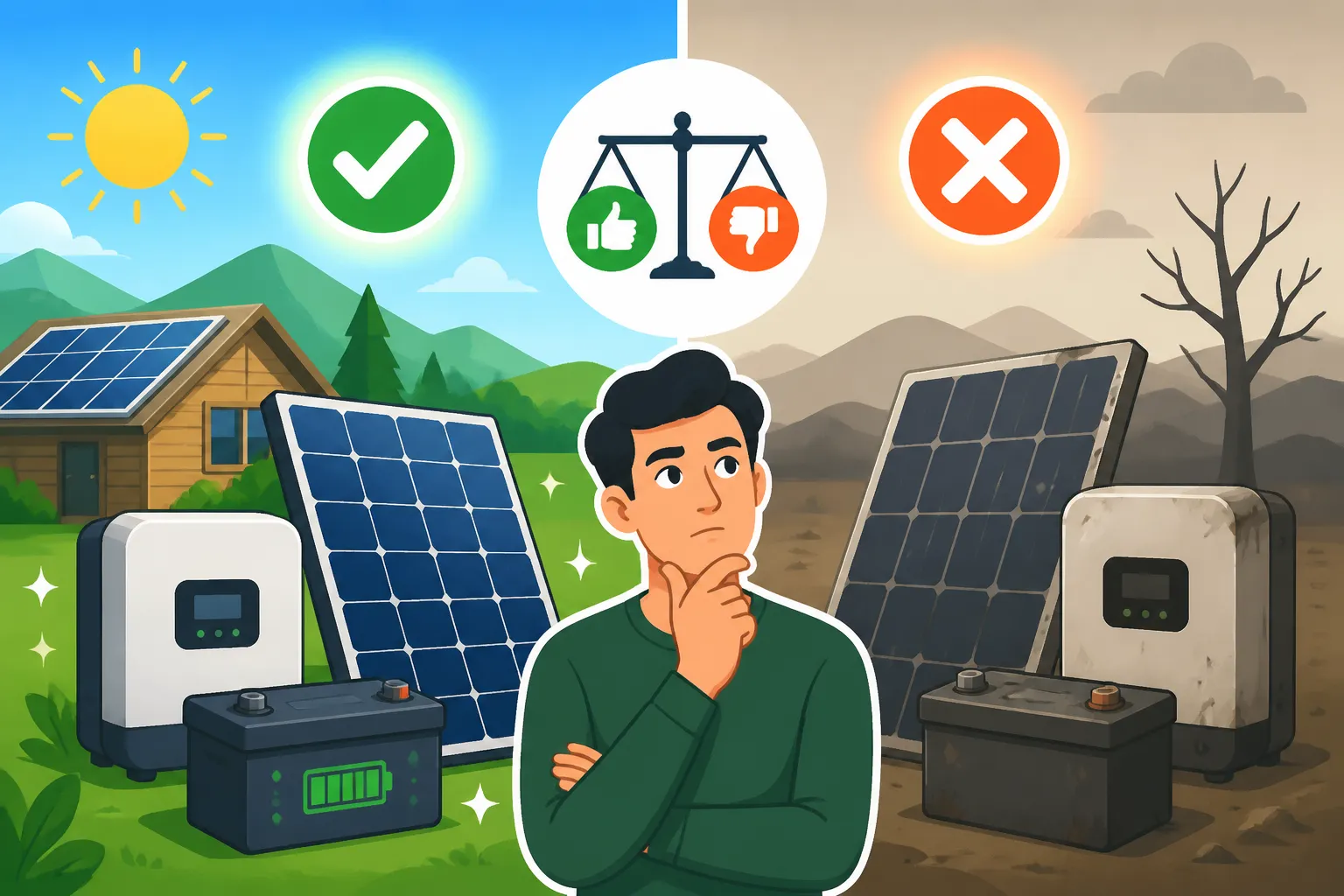
So, after all this careful consideration and inspection, is it actually worth the hassle? This is the million-dollar question, and honestly, the answer is usually "it depends." It depends on your project, your budget, your technical skills, and your risk tolerance.
Balancing Cost Savings Against Potential Headaches
There's no denying the immediate appeal of saving money. A brand new, robust 5kW Off-Grid Solar System Cost could easily run into the tens of thousands. If you can shave 30-50% off that by finding good used components, it's a huge win. For simple setups, like powering an Off-Grid Solar Cost for a Shed or a casual RV trip, the risk might be manageable. If a used panel underperforms, it's not the end of the world for a non-critical application.
However, the headaches can quickly erase those savings. Imagine buying a "deal" on batteries, only to discover they only hold half a charge. Now you're scrambling to find new batteries, potentially spending more than if you'd just bought new ones in the first place, and you've lost time and energy. Or perhaps a used inverter fails during a critical moment, leaving you without power when you need it most. These hidden costs – lost time, frustration, replacement parts, and potentially even safety risks – can quickly diminish the initial financial gain. This is where topics like How to Budget for an Off-Grid Solar System become critical.
When Used Makes Sense and When It Doesn't
-
When Used Makes Sense:
- Small, Non-Critical Projects: Powering a garden shed, a temporary camp setup, or a small hobby workshop. If a component fails, the consequences are minimal.
- Learning and Experimentation: If you're just starting and want to learn the ropes of solar wiring and system design without a huge investment. It’s like buying a used car to learn how to drive stick.
- Component Additions: You might already have an existing system and need an extra panel or two to slightly boost capacity, or a spare part that's hard to find new.
- Budget Constraints: When the budget is absolutely razor-thin, and new equipment is simply out of reach. Just make sure you understand the risks involved. Learning How to Save Money on an Off-Grid Solar Build often involves considering used components, but with extreme caution.
-
When Used Doesn't Make Sense:
- Whole-House or Critical Systems: For powering your main residence, especially if you rely on it for heating, cooling, well pumps, or medical devices. The reliability needs to be paramount. This is where a proper How to Size an Off-Grid Solar System with new, warrantied components is essential.
- Long-Term, Permanent Installations: If you're building a system you expect to last 20+ years, investing in new, high-quality components with full warranties provides peace of mind and better long-term performance.
- No Technical Expertise: If you're not comfortable testing equipment, troubleshooting, or don't have a reliable friend who can help, the risks are significantly higher.
- Tight Installation Timeline: Hunting for good used deals takes time and patience. If you need a system up and running quickly, new equipment is generally faster to acquire and install.
Ultimately, buying used off-grid solar equipment can be a fantastic way to achieve energy independence without breaking the bank, but it requires diligent research, careful inspection, and a realistic understanding of the trade-offs. It's a path for the savvy, patient, and somewhat adventurous DIYer who isn't afraid to get their hands dirty and has a contingency plan for when things don't quite go as expected. For some, the thrill of the hunt and the satisfaction of a self-built, budget-friendly system is absolutely worth it. For others, the peace of mind that comes with new, warrantied equipment is priceless.
Disclaimer
The information provided in this article is for general informational and educational purposes only and is not intended as professional advice. Off-grid solar system design and installation can be complex and involve electrical hazards. Always consult with qualified professionals and adhere to all local codes and regulations. Investing in used equipment carries inherent risks, and individual results may vary.