Cost of a 100W Off-Grid Solar System
Trying to figure out how to get just enough power for those essentials without connecting to the grid, but feeling overwhelmed by the thought of massive solar installations and huge price tags? You're not alone. Many folks just need a simple, reliable power source for basic needs, and a 100W off-grid solar system often hits that sweet spot. This guide will meticulously break down the actual costs involved, what you can expect to power, and how to get started without overspending or underspending.
Understanding What a 100W Off-Grid Solar System Can Power
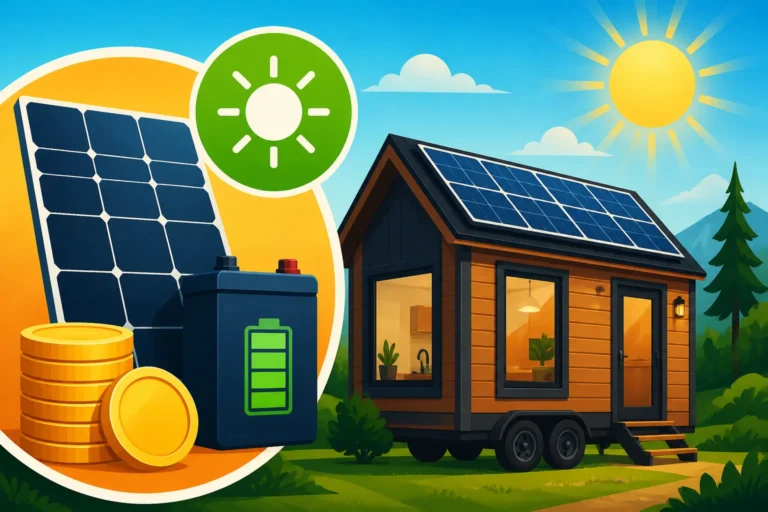
When you hear "100W solar system," it's easy to picture something tiny, barely capable of charging a phone. While it's certainly on the smaller end of the spectrum, a well-designed 100-watt system, paired with the right battery storage, can be surprisingly useful for specific, low-power applications. It's not going to run your central air conditioner or a full-sized refrigerator for days on end, but it's perfect for those who want to dip their toes into off-grid living or simply supplement their power needs in a small cabin, RV, or even just for camping trips. It's about smart energy management, not limitless power.
Everyday Electronics and Charging
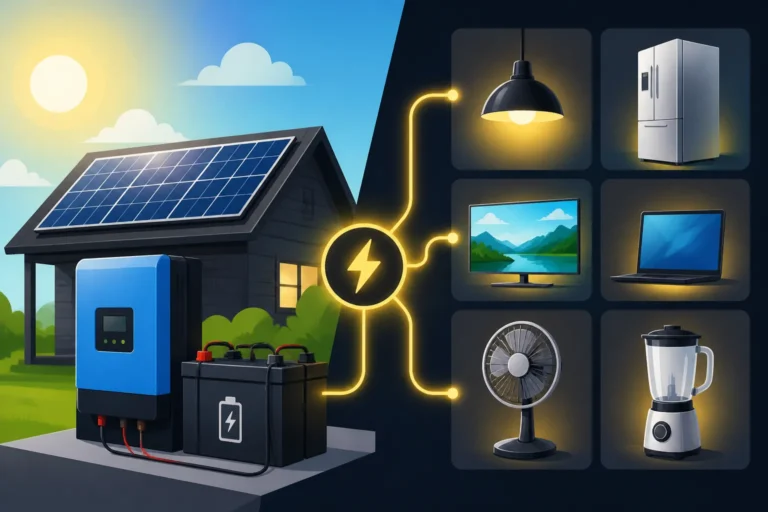
A 100-watt solar panel, especially when combined with a sufficient battery, is fantastic for keeping your everyday personal electronics topped up. Think about all those devices that have become indispensable: smartphones, tablets, e-readers, and even portable speakers. A 100W panel can steadily feed power into a battery bank, which then acts as a reservoir for these gadgets.
For instance, imagine you're out at a remote campsite, far from any outlet. Your phone battery is dwindling, and you've got a couple of kids who need their tablets charged for evening entertainment. A 100W panel connected to a deep-cycle battery can easily handle this. It might take a few hours of good sunlight to fully replenish a phone or tablet multiple times, but the crucial point is that you're generating that power yourself. Even small LED lighting strips for your tent or cabin can run for hours off the stored energy from a 100W system, transforming a dark space into a cozy retreat. This setup provides independence for those crucial communication and entertainment needs without the constant worry of finding a plug.
Small Appliances and Occasional Use
Beyond personal electronics, a 100-watt system can also manage certain small appliances for occasional or light use. The key here is "small" and "occasional." We're talking about things like a small 12V portable cooler that sips power, keeping your drinks cold during a picnic or a road trip. While a full-sized refrigerator is out of the question for continuous operation, these mini-coolers or thermoelectric units are well within the capabilities of a 100W system, provided they run directly off a 12V battery or through a very small inverter for short bursts.
Another practical application could be running a laptop for a few hours a day. Laptops typically draw between 20-60 watts, so a 100W panel can comfortably charge the battery and even power it directly when the sun is shining. If you're working remotely from a tiny home or a van, this kind of setup could provide the critical juice you need for essential tasks. However, remember that running appliances with heating elements, like a coffee maker or a toaster, will quickly deplete your battery and exceed the immediate generation capacity of a single 100W panel. For those, you'd be looking at a much larger setup, perhaps something that can manage a Cost to Run A Microwave on Off-Grid Solar or even a Cost to Run A Water Heater on Off-Grid Solar, which is a whole different ballgame.
Deconstructing the Cost of a 100W Off-Grid Solar System
Breaking down the cost of an off-grid solar system can feel a bit like dissecting a frog in biology class – it's complicated, but understanding the individual parts makes the whole less intimidating. For a 100W setup, the components are fairly straightforward, but the quality and brand you choose for each can significantly sway the final price. We're looking at more than just the panel itself; there's a whole ecosystem of equipment that needs to work together seamlessly to generate and store your power.
The Core Components and Their Prices
The heart of any off-grid solar system, no matter how small, comprises four main components: the solar panel, a charge controller, a battery, and often an inverter. Let's look at what each entails for a 100W setup.
First up, the solar panel itself. A single 100-watt solar panel is usually quite affordable. You can often find a decent monocrystalline panel, known for its efficiency, ranging from $80 to $150. Brands like Renogy and Rich Solar offer reliable options at this wattage. This is your initial power generator, converting sunlight into electricity. It's a relatively small investment compared to larger panels, which is why a 100W system is a great entry point. If you're curious about different types of panels, you might want to read about How Panel Prices Affect Total Off-Grid Cost.
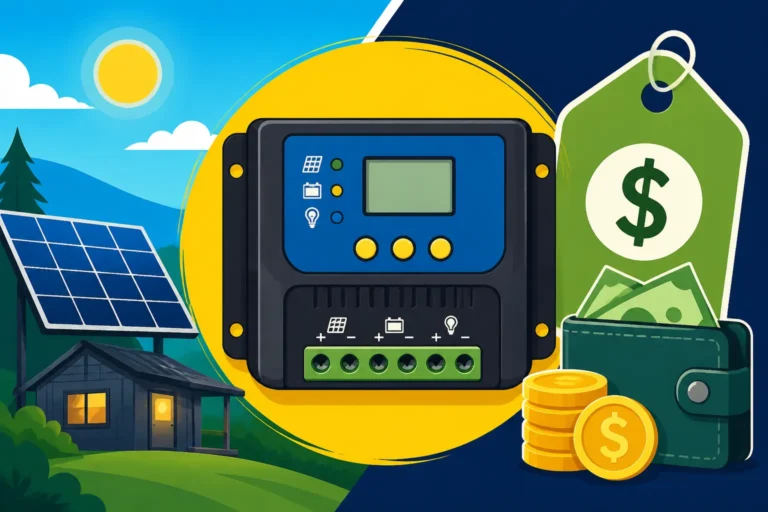
Next, you need a charge controller. This vital piece of equipment regulates the power flow from your solar panel to your battery, preventing overcharging and extending battery life. For a 100W panel connected to a 12V battery, a simple Pulse Width Modulation (PWM) charge controller is often sufficient and very budget-friendly, costing around $20 to $50. However, if you want to maximize efficiency, especially in less-than-ideal sun conditions, an MPPT (Maximum Power Point Tracking) controller, while more expensive at $50-$100+, will extract more power from your panel. Given the small scale, a PWM controller is perfectly acceptable for most 100W systems. You can learn more about choosing the right one in our guide on the Cost of a Charge Controller.
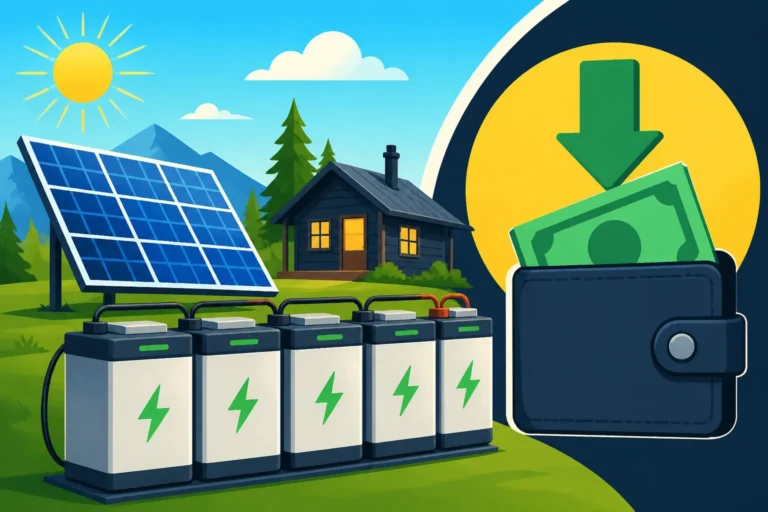
The battery is arguably the most crucial component for an off-grid system, as it stores the energy generated by your panel for use when the sun isn't shining. For a 100W system powering small loads, a single 100Ah (Amp-hour) 12V battery is a common choice. Lead-acid batteries (like AGM or Gel) are the most economical, with a 100Ah AGM battery typically costing between $180 and $250. These are readily available on platforms like Amazon. If you're looking for longer lifespan, lighter weight, and deeper discharge capabilities, a 100Ah LiFePO4 (lithium iron phosphate) battery is superior but comes at a higher price, often $300 to $500. The choice here largely depends on your budget and how frequently you plan to use the system. Dive deeper into battery options with our article on the Cost of an Off-Grid Solar Battery Bank.
Finally, the inverter. This component converts the DC (direct current) power stored in your battery into AC (alternating current) power, which is what most household appliances use. For a 100W system, you're likely only running small AC loads (if any), so a modest pure sine wave inverter in the 300W-700W range is usually plenty. These typically run from $50 to $150. A pure sine wave inverter is recommended even for small systems to ensure your sensitive electronics operate smoothly without damage. Cheaper modified sine wave inverters are available, but they can be problematic for many devices.
Essential Extras and Hidden Costs
It's easy to focus solely on the big-ticket items like panels and batteries, but the "essential extras" are where many first-time off-gridders get caught off guard. These smaller items are critical for safety, efficiency, and proper functionality, and they definitely add up. Ignoring them can lead to a non-functional or, worse, dangerous system.
First, you'll need wiring and connectors. This includes solar panel cables (often with MC4 connectors), battery cables, and any wiring for your inverter or DC loads. Quality copper wiring is crucial to minimize voltage drop and ensure safety. A set of MC4 connectors, necessary for connecting solar panels, might cost $10-$20, and several feet of appropriate gauge wire could add another $30-$50. Don't skimp here; undersized wires are a fire hazard.
Mounting hardware is another consideration. If you're setting up your 100W panel on an RV roof, a shed, or a pole mount, you'll need brackets, screws, and possibly tilt mounts. Basic Z-brackets for a single panel can be found for around $20-$40. For a more robust or adjustable setup, the cost could increase slightly. For those interested in mounting, checking out guides like How to Install an Off-Grid Solar Panels can be incredibly helpful.
Safety components like fuses and breakers are non-negotiable. You'll need an inline fuse for your solar panel array, a fuse or breaker between your charge controller and battery, and typically a breaker between your battery and inverter. These are inexpensive, often $5-$15 each, but absolutely vital for protecting your components and preventing electrical fires. Consider a small fuse block or a circuit breaker panel for neatness and safety, which might add another $20-$40.
Lastly, while a 100W system is often too small to require formal permits in many areas, it's always wise to check local regulations, especially if it's a fixed installation on a structure. "Hidden costs" might also include tools if you don't already own them – wire strippers, crimpers, a multimeter, and a drill can quickly add $50-$100 to your initial outlay. Shipping costs for larger components, especially batteries, can also be a significant factor if you're ordering online from various vendors. Keeping a detailed budget for these smaller, often overlooked items is key to understanding the true total Off-Grid Solar Cost: Complete Breakdown.
DIY vs. Pre-Built Kits for a 100W System
When you're looking at a 100-watt off-grid solar system, you essentially have two main paths: piecing it together yourself, or buying a pre-packaged kit. Each has its pros and cons, and the best choice really depends on your comfort level with electrical work, your budget, and how much time you're willing to invest. There's no single "right" answer, only the right answer for you.
The DIY Approach: Savings and Challenges
The do-it-yourself (DIY) route is incredibly popular for smaller off-grid solar systems, especially for something as manageable as 100 watts. The biggest draw, without a doubt, is the potential for significant cost savings. When you source individual components – a panel here, a controller there, a battery from a different vendor – you can often find better deals and shop around for sales. This allows you to handpick each part, ensuring it meets your specific requirements and quality standards without paying for the convenience markup of a bundled kit. For instance, you might find a fantastic deal on a 100W solar panel during a flash sale, then pick up a compatible charge controller from a different supplier. Platforms like Amazon are treasure troves for individual components, making it easier to compare prices across different brands like Renogy and BougeRV.
Beyond the savings, the DIY approach offers unparalleled customization. You get to choose the exact battery chemistry, the specific type of charge controller (PWM vs. MPPT), and the inverter size that perfectly matches your projected loads. This means your system is tailor-made, not a one-size-fits-all solution. Plus, there's a huge sense of accomplishment and a deeper understanding of your system when you build it yourself. Knowing how everything connects and functions will be invaluable for future troubleshooting or expansion. If you're thinking about building your own, you'll definitely want to check out resources like How to Wire an Off-Grid Solar System to ensure you're doing it safely and correctly.
However, the DIY path isn't without its challenges. The primary hurdle is the time commitment required for research, sourcing, and actual installation. You need to understand basic electrical principles, safety precautions, and how each component integrates. Mistakes can be costly, both in terms of damaged equipment and potential safety hazards. It also demands patience and a willingness to learn. You might also find yourself with compatibility issues if you're not careful in selecting components from different manufacturers. While you might save money upfront on components, you're investing your own labor and knowledge.
The Convenience of Pre-Built 100W Kits
On the flip side, pre-built 100W solar kits offer a compelling package of convenience and peace of mind. These kits are designed to be plug-and-play, often including everything you need: a solar panel, a charge controller, pre-cut wiring, and sometimes even a small inverter and battery, all designed to work together right out of the box. For beginners or those with limited electrical experience, this can be an absolute godsend. You don't have to worry about component compatibility or complex wiring diagrams; the manufacturer has done all that legwork for you. Brands like Jackery, EcoFlow, and Renogy are well-known for offering user-friendly, pre-built solutions that make going off-grid incredibly accessible. A good example might be an entry-level Jackery Portable Power Station bundled with a 100W portable solar panel, which functions as a complete, albeit often compact, off-grid system.
The ease of installation for these kits is a major selling point. Many are portable, requiring no permanent mounting, making them ideal for camping, emergency backup, or powering a remote workstation. The instructions are typically clear and straightforward, guiding you through a simple setup process. This can save you countless hours of research and potential frustration. If you're curious about what to look for, our Best Off-Grid Solar Kits for Beginners article offers some excellent guidance.
The main drawback of pre-built kits is usually the higher price point compared to a meticulously sourced DIY system. You're paying for the convenience, the integrated design, and often the brand name. While they are easy to set up, they can be less flexible. You might be locked into specific component choices, which could limit future expansion or customization if your needs change. For instance, if a kit comes with a PWM charge controller and you later decide you want the efficiency of an MPPT, you might have to replace the entire charge controller rather than just upgrading a component within a DIY setup. However, for a simple 100W system intended for specific, modest needs, a kit often provides excellent value for its ease of use and reliability.
Real-World Scenarios and Budgeting for Your 100W System
So, you've got a handle on the components and the DIY vs. kit debate. Now, let's talk real numbers and practical applications. Budgeting for your 100W system isn't just about tallying up component costs; it's about matching those costs to your actual usage scenarios and deciding if a 100W system truly fits the bill. Sometimes, a slightly larger initial investment can save you headaches (and money) down the road.
Budgeting for a Basic Setup (e.g., a Camping Setup)
Let's imagine you're planning a weekend camping trip to a beautiful, off-grid spot near Joshua Tree, California. You want to keep your phones charged, run a few LED lights in the tent at night, and perhaps power a small portable fan for a few hours. A 100W system is an excellent choice for this kind of basic, intermittent use. Here’s a typical breakdown for a budget-friendly DIY setup:
| Component | Estimated Low Cost | Estimated High Cost | Notes |
|---|---|---|---|
| 100W Monocrystalline Panel | $80 | $150 | Basic rigid panel |
| PWM Charge Controller | $20 | $50 | Simple, effective for small systems |
| 100Ah AGM Deep Cycle Battery | $180 | $250 | Good balance of cost and performance |
| 300W Pure Sine Wave Inverter | $50 | $100 | For small AC loads like laptop chargers |
| Wiring (MC4, battery cables) | $30 | $50 | Proper gauge for safety and efficiency |
| Mounting (Z-brackets) | $20 | $40 | For securing the panel to a roof or ground |
| Fuses & Breakers | $15 | $30 | Essential safety components |
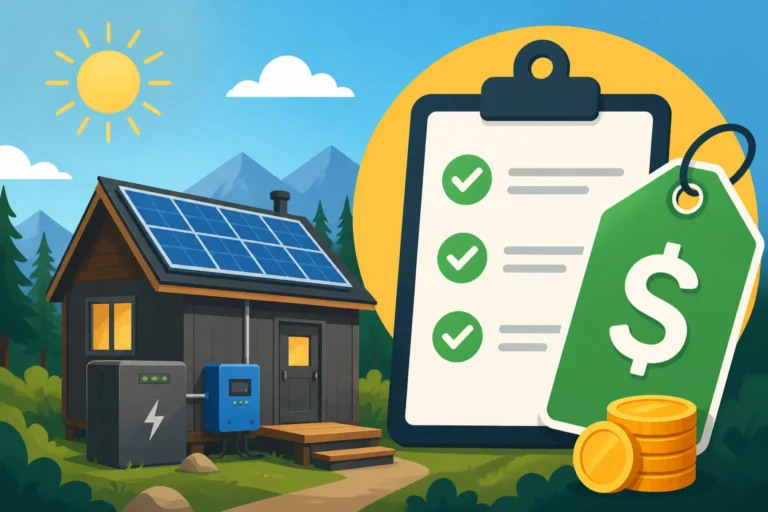
| Total Estimated Cost | $355 | $670 | This doesn't include tools or shipping |
As you can see from the table, a very functional 100W system can be assembled for under $700, and potentially closer to $400-500 if you hunt for deals and stick to basic components. For a camping trip, this investment provides incredible freedom from relying on noisy generators or finding powered sites. It's a fantastic starting point for understanding how solar works and managing your power consumption. Many individuals find these components readily available through online retailers like Amazon, often with competitive pricing. This initial investment also teaches you valuable lessons in energy management, which can be applied to larger systems later. For more budgeting tips, consider checking out our guide on How to Budget for an Off-Grid Solar System.
Expanding Your 100W System or Deciding to Go Bigger
After a few trips with your 100W system, you might realize it's perfect for your current needs, or you might find yourself wishing for a bit more power. Perhaps you want to run a larger fan, a small blender for morning smoothies, or power a more significant portion of your tiny home's lights. This is where you face a decision: do you expand your existing 100W setup, or do you decide it's time to graduate to a larger system altogether?
Expanding a 100W system often means adding another 100W panel (or two, depending on your charge controller's capacity and battery bank size), and potentially increasing your battery storage. If you have an MPPT charge controller, adding another panel in series or parallel (depending on voltage requirements) is often straightforward. If you have a PWM controller, you might need to upgrade to handle the additional wattage efficiently. You would also likely need to increase your battery capacity to store that extra power. For instance, moving from one 100Ah battery to two, or even a larger 200Ah battery, would be a common next step. Our article on Cost of Expanding an Off-Grid System offers more details on this process.
However, there comes a point where expanding incrementally becomes less cost-effective or practical than designing a larger, integrated system from the start. If you consistently find yourself running out of power, or if you're frequently wanting to power appliances that draw significantly more than a few hundred watts (like a small electric cooler for longer periods or even a Cost to Run A Refrigerator on Off-Grid Solar), a 100W setup will feel inadequate. At that stage, you'd be looking at a system closer to 400W, 600W, or even 1000W. These larger systems often require a different approach to system voltage (e.g., 24V or 48V instead of 12V), more robust inverters, and significantly more battery capacity. While the initial cost of a 100W system is low, understanding your long-term power goals is key to avoiding spending money twice. If your needs are likely to grow quickly, it might be more sensible to explore something like a Best Off-Grid Solar Kit for a Tiny Home from the outset.
Disclaimer
The information provided in this article is for general informational purposes only and does not constitute professional advice. Off-grid solar system design and installation can be complex and involve electrical hazards. Always consult with a qualified electrician or solar professional before installing or modifying any electrical system. Prices and product availability are subject to change.