Best Value Off-Grid Solar Kits
Venturing into off-grid living or simply seeking energy independence for a cabin or RV often feels like stepping into a financial maze. You've probably found yourself staring at countless solar kits online, each promising the "best deal," only to feel overwhelmed and unsure if you're really getting value or just a cheap system that will fail prematurely. It’s a genuine frustration, trying to sift through all the specs and marketing speak to find something truly reliable that won't drain your bank account twice. This guide is dedicated to cutting through that confusion, helping you pinpoint what truly makes an off-grid solar kit a great value, ensuring you invest wisely in a system that delivers power and peace of mind for years to come.
Understanding "Value" in Off-Grid Solar Kits
When we talk about "value" in off-grid solar, it's easy to immediately think about the lowest price tag. However, that’s often a rookie mistake. A truly valuable off-grid solar kit isn't just about what you pay upfront; it's about the entire lifespan of the system, its performance, and how well it meets your needs without constant headaches or unexpected expenses. It's about getting the most bang for your buck, not just in terms of watts and amp-hours, but in reliability, durability, and peace of mind.
Beyond the Sticker Price: Initial Investment vs. Long-Term Savings
The biggest pitfall many first-time off-gridders fall into is fixating solely on the initial purchase price. You see a kit advertised for a surprisingly low sum, and it seems like a no-brainer. But often, those "deals" hide significant long-term costs that can quickly turn your bargain into a budget black hole. Imagine purchasing an inexpensive battery bank that only lasts two or three years before needing full replacement, or an inverter that constantly struggles with surge loads, shortening the lifespan of your appliances.
Consider a real-life scenario: my friend, Mr. Henderson, decided to power his remote hunting cabin with what he thought was a great value solar kit he found online. The initial cost was indeed low, around $1,500. However, the lead-acid batteries in the kit only lasted about 2.5 years due to inadequate capacity and poor quality. He also found the inverter was a modified sine wave model, which caused issues with his power tools and refrigerator, forcing him to replace it prematurely. If he had initially invested slightly more in higher-quality LiFePO4 vs Lead-Acid Battery Cost and a pure sine wave inverter, his initial outlay might have been $3,000, but his system would have lasted significantly longer and performed far better, saving him thousands in replacement costs and frustration over a decade. The initial "savings" quickly evaporated, illustrating that a lower upfront cost can often lead to significantly higher lifetime expenses. It’s crucial to think about the total Off-Grid Solar Cost: Complete Breakdown over the system's anticipated life, not just the day you swipe your card.
The True Cost of Reliability and Warranty
Another critical factor in assessing value is the reliability of the components and the strength of the warranty behind them. A reputable brand that stands by its products offers immense value, even if their kits carry a slightly higher price tag. What happens if your charge controller fails after six months? If you bought a no-name brand off an obscure website, you might be out of luck, forced to buy a new one and deal with the downtime. This downtime means no power, possibly spoiling food or disrupting your work.
On the other hand, established brands like Renogy, EcoFlow, or Victron often provide comprehensive warranties—sometimes 5 to 10 years on major components—and have dedicated customer support teams. This means that if something goes wrong, you can get a replacement or repair, minimizing your stress and avoiding additional costs. Think of it this way: a solar panel might have a 25-year performance warranty, but if the company goes out of business next year, that warranty is worthless. True value includes the assurance that your investment is protected and that you have recourse if something isn't working as it should. This translates directly into peace of mind, which, let's be honest, is invaluable when you're relying on your system day in and day out. Don't underestimate the worth of knowing you're not alone if a technical hiccup arises.
Key Components of a High-Value Off-Grid Solar Kit
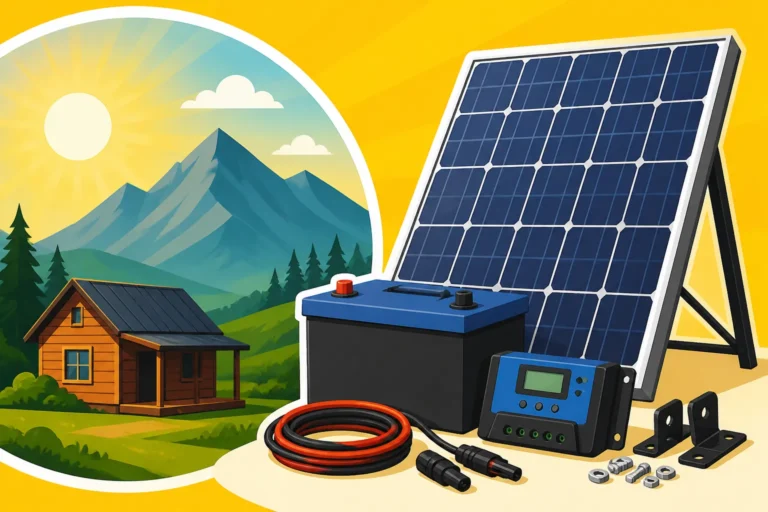
Understanding the individual components and what makes them "valuable" is fundamental to choosing the right kit. You can't just look at a combined "kit" price; you need to appreciate the quality and specifications of each part, as they all work in concert to deliver reliable power. Skimping on one crucial piece can undermine the performance and longevity of the entire setup.
Solar Panels: Efficiency, Durability, and Wattage
Solar panels are often the first thing people think about, and for good reason. For value, you're looking for a balance of efficiency, physical durability, and appropriate wattage for your needs. Monocrystalline panels are generally more efficient, meaning they produce more power per square foot, which can be a significant advantage if you have limited roof space or want to minimize your solar footprint. While often slightly more expensive per watt than polycrystalline, their higher efficiency can lead to fewer panels needed, potentially saving on mounting hardware and installation time.
Durability is also key. Panels designed for off-grid use, especially in harsh environments, should have robust aluminum frames, tempered glass, and weatherproof connectors. A panel might promise high wattage, but if it can't withstand a hailstorm or strong winds, it's not a true value. Always check the temperature coefficient as well; this tells you how much a panel's output degrades in high heat. A panel with a better (lower) temperature coefficient will perform more consistently on scorching summer days. When considering Cost of Off-Grid Solar Panels, remember that buying slightly more robust panels upfront means fewer worries about breakage or performance degradation over the long haul, making it a smarter long-term investment.
Batteries: The Heart of Your System
The battery bank is arguably the most critical and often the most expensive component of any off-grid solar system, and it's where "value" truly shines through or falls apart. For most modern off-grid applications, LiFePO4 (Lithium Iron Phosphate) batteries offer superior value despite their higher initial Cost of an Off-Grid Solar Battery Bank. Why? Because they offer a vastly longer cycle life (typically 3,000-10,000 cycles compared to 300-1,000 for lead-acid), can be discharged deeper without damage (80-100% vs. 50%), are lighter, and require virtually no maintenance.
While a lead-acid (like AGM or flooded) battery bank might cost less initially, you'll likely replace them two to four times over the lifespan of a single LiFePO4 bank. This frequent replacement, coupled with their lower usable capacity and higher maintenance, makes them a false economy for many permanent or heavy-use off-grid setups. For instance, a quality 100Ah LiFePO4 battery from a brand like Battle Born or EG4 might cost $700-$1000, but it could last 10-15 years. A comparable 100Ah AGM battery might cost $200-$300, but you'd need two of them for similar usable capacity and they might only last 3-5 years. Over a decade, you’re looking at significantly more money spent on lead-acid. For small, temporary setups or extremely tight budgets where weight and longevity aren't paramount, lead-acid might make sense, but for genuine value and long-term satisfaction, LiFePO4 is the clear winner for Best Off-Grid Solar Batteries.
Inverter and Charge Controller: The Brains of the Operation
The inverter transforms the DC power from your batteries into the AC power your household appliances use, while the charge controller manages the power flow from your solar panels to your batteries, preventing overcharging. For value, look for a pure sine wave inverter. Modified sine wave inverters are cheaper but can damage sensitive electronics and run motors less efficiently, reducing the lifespan of your appliances and causing headaches. A pure sine wave inverter, even if it adds to the upfront kit cost, offers far better protection and compatibility for all your devices, representing true value.
When it comes to charge controllers, Maximum Power Point Tracking (MPPT) controllers are generally more efficient than Pulse Width Modulation (PWM) controllers, especially in cooler weather or when panels and batteries have different voltage profiles. An MPPT controller can extract up to 10-30% more power from your panels, meaning you either need fewer panels or get more energy from the ones you have. This increased efficiency translates directly into more usable power and faster battery charging, adding significant value over the system's lifetime. Many modern off-grid kits, particularly those aimed at comprehensive solutions, will feature an integrated inverter-charger, which combines both functions into one unit, often simplifying wiring and saving space, providing another layer of value through integration.
Balance of System: Cabling, Fuses, and Mounting Hardware
It’s easy to overlook the "balance of system" (BOS) components in a kit, but they are absolutely crucial for safety, efficiency, and longevity. Value isn't just about the big-ticket items. Poor-quality cabling can lead to voltage drop, reducing the power reaching your batteries and appliances, effectively wasting the power your panels generate. Undersized fuses or breakers are a significant fire hazard, while flimsy mounting hardware can see your panels flying off the roof in a strong gust of wind.
A truly valuable off-grid solar kit will include properly sized, UV-resistant cables (like 10 or 12 AWG for solar panel strings, and much thicker for battery connections), appropriate fuses and breakers for overcurrent protection, and sturdy mounting brackets. Don't compromise here; safety and system integrity are paramount. While these items might not be glamorous, their quality contributes immensely to the overall reliability and safety of your system, ensuring your investment is sound. When looking at a complete kit, verify that these often-overlooked components are of good quality. You can learn more about proper connections in a guide on How to Wire an Off-Grid Solar System.
| Component Category | Value Consideration | Why It Matters for Off-Grid |
|---|---|---|
| Solar Panels | Monocrystalline efficiency, durable frame, good temperature coefficient | More power per square foot, withstands weather, consistent output in heat |
| Batteries | LiFePO4 chemistry, high cycle life, deep discharge capability | Lasts 3-10x longer, more usable energy, maintenance-free, lighter |
| Inverter | Pure Sine Wave | Protects sensitive electronics, efficient operation of all appliances |
| Charge Controller | MPPT technology | Up to 30% more power harvested from panels, faster charging |
| Cabling | Proper gauge (AWG), UV-resistant, copper wire | Minimizes voltage drop, prevents overheating, durable outdoors |
| Fuses/Breakers | Appropriate sizing, high quality | Essential for safety, fire prevention, protecting components from surges |
| Mounting Hardware | Robust, weather-resistant materials (e.g., aluminum, stainless steel) | Securely holds panels, withstands wind and snow loads |
Choosing the Right Value Kit for Your Needs
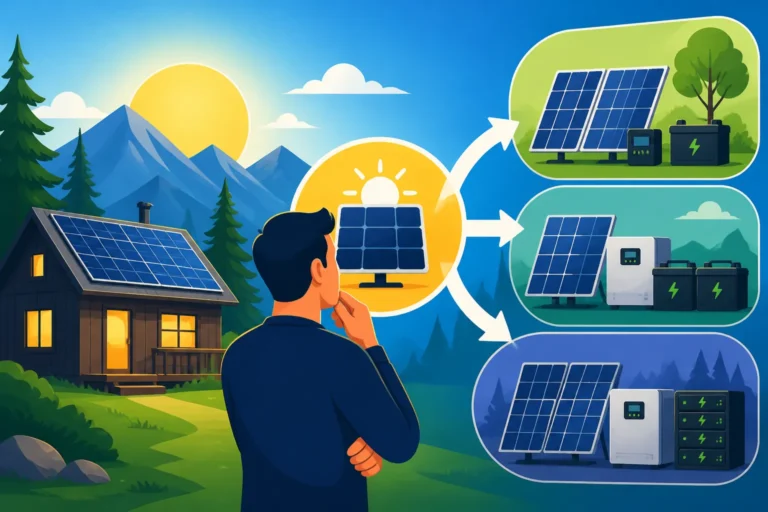
Selecting the best value off-grid solar kit isn't a one-size-fits-all endeavor. Your specific energy requirements, lifestyle, and willingness to DIY will all play a significant role in determining what truly offers the best value for you.
Accurate Sizing: Avoiding Overkill and Under-Powering
This is probably the most critical step in finding value: knowing exactly what you need. Buying a kit that's too small for your power demands will lead to constant frustration, dead batteries, and potentially damaged components from being overstressed. You'll either have to upgrade quickly (double cost!) or live with constant power shortages. Conversely, buying a system that's vastly oversized for your actual needs means you've spent money on capacity you'll never use, which isn't good value either.
To get this right, you need to perform a detailed load analysis, figuring out every appliance you want to run, its wattage, and how many hours per day you'll use it. This will give you your total daily How to Calculate Daily Energy Usage in watt-hours (Wh) or kilowatt-hours (kWh). Only then can you accurately size your solar array and battery bank. Many people underestimate their power needs, especially for high-draw items like refrigerators, microwaves, or well pumps. Taking the time to properly calculate How to Size an Off-Grid Solar System will prevent both overspending and underperformance, ensuring you get a system that's just right and therefore, a great value.
Expandability and Future-Proofing Your Investment
Life off-grid often evolves. You might start with a small cabin and a few lights, but soon you're adding a mini-fridge, a laptop, and maybe even a small washing machine. A truly valuable off-grid solar kit is designed with expandability in mind. This means the charge controller has extra capacity for more panels, the inverter can handle a bit more load, and the battery bank can be easily added to.
Some kits, particularly those from modular brands like Renogy or even all-in-one portable power stations like a larger Jackery or EcoFlow system, are specifically designed to be easily expanded. You can often add more solar panels by simply plugging them in, or connect additional battery packs as your needs grow. Investing in a system that allows for gradual expansion prevents you from having to scrap your entire initial setup and start from scratch when your power demands inevitably increase. This foresight is a key component of long-term value, protecting your initial investment.
DIY vs. Professional Installation: Weighing the Costs
The installation method heavily influences the total cost and, therefore, the perceived value of an off-grid solar kit. If you're handy and have a good understanding of electrical systems, going the DIY route can save you a substantial amount on Off-Grid Solar Installation Cost. Many kits are designed for DIYers, with clear instructions and pre-wired components. However, this path requires a significant time commitment, careful attention to safety, and a willingness to learn about electrical wiring, grounding, and system commissioning.
For those who lack the time, expertise, or confidence, professional installation offers immense value through expertise, safety, and code compliance. While the labor costs will add significantly to your overall budget, you gain the assurance that the system is installed correctly, safely, and efficiently. A professionally installed system is less likely to have issues down the road and can often be covered by installer warranties. When considering DIY vs Professional Off-Grid Solar Cost, think about your own skills and comfort level. Sometimes, paying an expert to do it right the first time is the best value you can get. A hybrid approach, where you handle the physical panel mounting and an electrician does the final wiring, can also be a good middle ground.
Finding the Sweet Spot: Balancing Cost, Performance, and Longevity
Ultimately, finding the best value off-grid solar kit is about hitting that sweet spot where initial cost, ongoing performance, and long-term durability align perfectly with your budget and energy goals. It's a journey of careful consideration, not impulsive buying.
Identifying Hidden Costs and Avoiding Pitfalls
The allure of a low-priced off-grid solar kit can often distract from a range of Hidden Costs of Going Off-Grid that aren't included in the headline price. These can sneak up on you and significantly inflate your total expenditure. For example, did the kit include all the necessary permits and inspection fees required by your local municipality? Often, they don't, and these can vary wildly. What about additional wiring and conduit that might be needed to safely run cables from your panels to your battery bank or from your inverter to your main electrical panel? Sometimes, even basic tools for installation aren't accounted for.
Beyond installation, consider ongoing maintenance. While LiFePO4 batteries are low-maintenance, lead-acid batteries require regular checks and watering. Panels need occasional cleaning. What about unexpected repairs or replacements not covered by warranty? Factor in shipping costs, especially for heavy batteries or large panels, as these can add hundreds of dollars. By anticipating these potential extra expenses, you can create a more realistic budget and avoid the unpleasant surprise of an apparently cheap kit morphing into an unexpectedly expensive project.
The Role of Reputable Brands and Customer Support
In the world of off-grid solar, brand reputation isn't just about marketing; it's a solid indicator of product quality, reliability, and accessible customer support. While no-name brands might tempt you with rock-bottom prices, they often come with inadequate documentation, non-existent customer service, and short or non-existent warranties. This can turn a minor technical issue into a major, costly headache.
Reputable brands like Victron Energy, Renogy, EcoFlow, and Jackery have built their names on consistent performance and reliable support. They invest in R&D, use higher-quality components, and provide extensive resources like user manuals, wiring diagrams, and troubleshooting guides. More importantly, if you encounter a problem, you can usually reach a human being who can help you resolve it. This support is an invaluable part of the overall value proposition. Spending a bit more on a kit from a trusted brand often means you’re buying into a proven track record, better engineering, and the peace of mind that comes with knowing you have support when you need it most.
Value-Driven Kit Examples and Scenarios
Let's look at some real-world examples of what "best value" might mean in different scenarios:
For someone looking to power a tiny hunting cabin or an occasional camping trip with basic needs like lights, phone charging, and a small fan, a portable solar generator kit could be excellent value. A Jackery Explorer 1000 or EcoFlow Delta 2, paired with a couple of portable 100W solar panels, offers a compact, plug-and-play solution. The initial investment is manageable (often under $1,500-$2,500), installation is minimal, and it provides immediate, reliable power for those specific uses. This kind of setup represents incredible value for simplicity and portability, effectively answering the call for basic off-grid power needs.
If you're outfitting a small RV or a modest off-grid shed with more consistent power demands, a dedicated solar kit from brands like Renogy or BougeRV might offer better long-term value. A 400-800W kit with a quality MPPT charge controller, a 200Ah LiFePO4 battery, and a pure sine wave inverter (around $2,500-$5,000) will provide more robust power for a refrigerator, lights, and electronics. While a higher upfront cost, the durability, expandability, and performance of these integrated systems make them a superior value for sustained use. This type of kit, where you get robust components designed to work together, means fewer upgrades or replacements down the line.
Ultimately, the best value off-grid solar kit is the one that reliably meets your current and anticipated energy needs, minimizes your long-term operating costs, and comes with the support and warranty to back it up, all while fitting within a realistic budget. It’s about being an informed buyer and understanding that sometimes, paying a little more upfront saves you a lot more down the road.
Disclaimer
The information provided in this guide is for general informational purposes only and does not constitute professional advice. Off-grid solar system design and installation can be complex and should always be undertaken with a thorough understanding of electrical safety and local codes. Consult with a qualified electrician or solar professional before making any purchasing or installation decisions.