Anker SOLIX F3800 Review for Off-Grid Use
Living off-grid, even for short stints at a remote cabin or in a camper van, often brings the universal frustration of trying to balance your need for reliable power with the hassle of noisy, fuel-guzzling generators or the complexity of building a full-scale solar system from scratch. It's a constant struggle to find a power solution that's robust enough to run your essentials without being a logistical nightmare. This comprehensive guide is here to shed light on a formidable contender in this space: the Anker SOLIX F3800 portable power station. We'll explore its features, real-world performance, and how it truly stands up for various off-grid uses, helping you cut through the confusion and decide if it’s the right powerhouse for your independent lifestyle.
Deep Dive into the Anker SOLIX F3800 for Off-Grid Living
When you're looking at powering life away from the traditional grid, whether it's for a weekend escape or a more permanent setup, you need something dependable. The Anker SOLIX F3800 isn't just another battery pack; it's a serious piece of equipment designed to bridge the gap between small portable chargers and full-blown home energy systems. For many, the idea of an all-in-one power solution that can handle significant loads is incredibly appealing, especially when facing the typical frustrations of limited power or the constant noise of a gas generator.
What Makes the F3800 Stand Out?
The first thing that grabs your attention with the Anker SOLIX F3800 is its sheer capability. We're talking about a unit that boasts a substantial 3.84 kilowatt-hours (kWh) of battery capacity and a whopping 6000-watt AC output, with a surge capability that's even higher. This isn't your average portable power station for charging phones and laptops; this is designed to power things like a refrigerator, a microwave, or even a smaller air conditioner. Many off-grid enthusiasts have felt the sting of buying a smaller, seemingly capable unit only to find it trips when trying to start up a high-draw appliance. The F3800 aims to eliminate that disappointment.
Its use of Lithium Iron Phosphate (LiFePO4) battery chemistry is also a massive advantage for off-grid users. Unlike older lead-acid or even some traditional lithium-ion batteries, LiFePO4 offers superior longevity, often rated for 3,000 charge cycles to 80% capacity or more. What does that mean for you? It means you can rely on this unit day in and day out for years without significant degradation, which is absolutely critical when your power source isn't just a convenience but a necessity. This robust chemistry also contributes to enhanced safety, giving you peace of mind whether it’s tucked away in your remote cabin or sitting in your RV. It’s built to last and perform consistently, reducing the worry about frequent replacements that can add to your overall Lifetime Cost of an Off-Grid Solar System.
Core Components for Off-Grid Use
The brilliance of the F3800 for off-grid applications lies in its integrated design. Instead of needing to piece together separate components – an inverter, a charge controller, a battery management system (BMS) – it's all built into one cohesive unit.
The integrated inverter is a pure sine wave inverter, which is non-negotiable for sensitive electronics. Many cheaper portable power stations use a modified sine wave inverter, which can damage or perform poorly with devices like laptops, medical equipment, or power tools. The pure sine wave output from the F3800 means your electronics run smoothly and efficiently, just as they would from grid power. This eliminates the headaches of compatibility issues that can plague makeshift off-grid setups.
Furthermore, the sophisticated Battery Management System (BMS) isn't just a buzzword; it's the guardian of your battery bank. It monitors voltage, current, temperature, and state of charge, preventing overcharging, over-discharging, and overheating. This protection extends the life of the LiFePO4 batteries and ensures safe operation, which is a common concern when people consider off-grid energy. Without a good BMS, a powerful battery could quickly become a liability. The integrated solar charge controller (MPPT, of course) also means you don't need to shop for and wire a separate component to connect your solar panels, streamlining the entire process of getting your off-grid power up and running. If you're pondering how to set up an off-grid system for a RV, a portable power station like this makes the initial setup much simpler than a full DIY Off-Grid Solar Build.
Key Features and Specifications for Off-Grid Application
Understanding the raw numbers and features of a power station like the Anker SOLIX F3800 is essential to grasp its true potential for an off-grid lifestyle. It's not just about having "power"; it's about having the right kind of power in the right quantity for your specific needs.
Power Output and Appliance Compatibility
Let's talk about the F3800's power output. With a continuous AC output of 6000W and a surge capability of up to 12000W, this unit is truly in a league of its own when it comes to portable power stations. What does this mean in practical terms for off-grid living? It means you can realistically run heavy-duty appliances that would instantly trip or severely strain smaller units.
Imagine this scenario: you're at your remote cabin, far from any utility pole. You need to use a well pump to draw water, or perhaps a miter saw for a carpentry project, or even a small window air conditioner on a hot summer day. Many portable power stations, even those boasting respectable capacities, often fall short on the continuous wattage or surge capacity required for these items, leading to frustrating shutdowns. The Anker SOLIX F3800 can handle these bursts of power demand with ease. It's perfectly capable of powering a refrigerator, your lights, charging all your devices, and even running a demanding appliance like a well pump for the few minutes it needs to operate. This capability significantly reduces the compromises you often have to make when living off the grid. For a deeper dive into the specifics, you might find our guide on What Size Inverter to Run A Well Pump incredibly useful.
Battery Capacity and Expandability
The heart of any off-grid power system is its battery bank, and the F3800's 3.84kWh (or 3840Wh) LiFePO4 battery is a robust foundation. To put that in perspective, a typical residential refrigerator uses about 1-2 kWh per day, and a small cabin might consume 5-10 kWh daily depending on appliances. This base capacity alone can easily handle a moderate daily load for several days without recharge, assuming careful energy management.
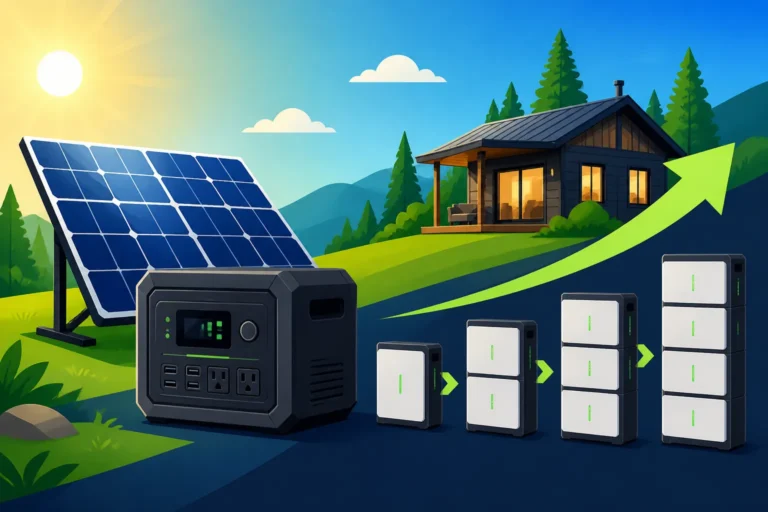
But here's where the Anker SOLIX F3800 truly shines for long-term or more demanding off-grid scenarios: its expandability. You can connect up to six additional expansion batteries, each adding another 3.84kWh, for a staggering total capacity of nearly 27 kWh (26.88 kWh, to be precise). This kind of scalable storage is revolutionary for a "portable" system. It means you can start with a single unit for smaller needs and gradually expand as your power requirements grow, perhaps as you add more comforts to your cabin or transition to full-time RV living. This modularity takes away the dread of having to completely overhaul your power system if your needs change, and directly addresses the planning required when you're thinking about How Many Batteries for an Off-Grid System. The long cycle life of LiFePO4 batteries (3,000 cycles to 80% capacity) further ensures that this investment will serve you reliably for a very long time, even with daily deep discharges.
Charging Options and Speed
An off-grid power source is only as good as its ability to recharge. The Anker SOLIX F3800 offers impressive flexibility and speed when it comes to getting its batteries topped up.
- AC Charging: When you do have access to grid power or a robust generator, the F3800 can charge incredibly fast. It can accept up to 2900W from a standard AC outlet, allowing it to go from 0% to 100% in roughly 1.7 hours. This rapid charging is a huge advantage if you’re using it as a portable power solution for work sites, or if you make occasional trips to town and want to quickly replenish your reserves before heading back to your off-grid haven.
- Solar Charging: For true off-grid independence, solar charging is paramount. The F3800 is equipped to handle up to 2400W of solar input via its built-in MPPT charge controller. This high solar input capability means that with a decent array of solar panels (say, six 400W panels), you can theoretically fully recharge the base unit in under two hours of peak sunlight. This is a game-changer for maintaining power during extended periods away from the grid. While other brands like Jackery offer excellent portable solar charging, the sheer scale of solar input the Anker F3800 can handle puts it in a more robust category for more serious, continuous off-grid use. Efficient solar input is vital, especially when considering How to Account for Cloudy Days in your power planning.
- Car Charging: For those on the move, like RVers or van lifers, the F3800 can also be charged from your vehicle's 12V cigarette lighter port, albeit at a much slower rate. This serves as a trickle charge to keep things topped up during transit, adding another layer of versatility to its off-grid utility.
Comparison Table: Anker SOLIX F3800 vs. Common Portable Power Stations
| Feature | Anker SOLIX F3800 | Mid-Range Solar Generator (e.g., Jackery Explorer 1000) | Small Entry-Level Unit (e.g., Goal Zero Yeti 500X) |
|---|---|---|---|
| Battery Capacity | 3.84 kWh (expandable to 26.88 kWh) | ~1 kWh | ~0.5 kWh |
| AC Output Power | 6000W continuous / 12000W surge | 1000W continuous / 2000W surge | 300W continuous / 600W surge |
| Battery Type | LiFePO4 (3000+ cycles) | Li-ion (500-800 cycles) | Li-ion (500-800 cycles) |
| Max Solar Input | 2400W | ~200W | ~120W |
| Recharge Time (AC) | ~1.7 hours | ~7 hours | ~7 hours |
| Typical Appliances | AC, well pump, power tools, refrigerator, stove | Refrigerator (small), microwave (brief), lights, electronics | Lights, electronics, small fan |
| Expandability | Yes (up to 6 extra batteries) | No | No |
| Portability (with wheels) | High for its class | Moderate (carrying handle) | High (carrying handle) |
This table clearly illustrates how the F3800 positions itself at the higher end of portable power, offering capabilities that rival or exceed even some smaller, dedicated off-grid battery banks.
Real-World Off-Grid Scenarios and Performance
Understanding specifications is one thing, but how does the Anker SOLIX F3800 actually perform when you’re out in the wild, far from the grid? Let's walk through some common off-grid scenarios to see where it truly shines and where its limitations might lie.
Powering a Remote Cabin or Tiny Home
Imagine your cozy, remote cabin. You might have a small refrigerator, some LED lights, a fan for summer, perhaps a laptop for work or entertainment, and a water pump. A traditional setup would require a dedicated solar array, charge controller, battery bank, and inverter, all wired together – a significant undertaking. The Anker F3800 simplifies this immensely.
With its 3.84kWh capacity, the base unit can easily run a modern, energy-efficient refrigerator (which might draw 50-100 watts when running) continuously, alongside your lights and device charging, for a couple of days without needing a recharge. If you're judicious with your power, turning off lights when not needed and only running high-draw items like a microwave for short bursts, it can extend that much further. When the sun is shining, the F3800's ability to accept up to 2400W of solar input means that on a good day, your panels could quickly replenish any drawn power, essentially creating a self-sustaining cycle. This capability makes it an excellent central hub for many off-grid cabins, especially for those looking for a simpler setup than a complex custom system. To estimate your exact needs, it's always wise to perform a How to Calculate Daily Energy Usage for your specific appliances. For instance, knowing Sizing Solar for a Refrigerator is crucial for efficient power management.
RV Life and Mobile Applications
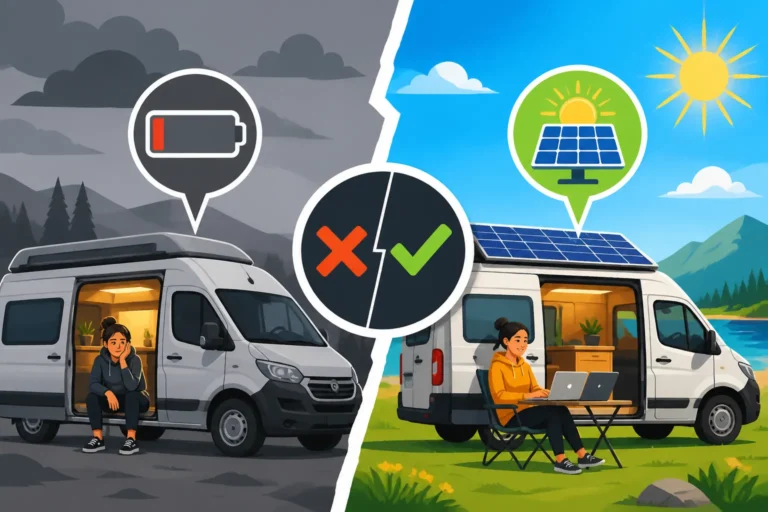
For the nomadic souls living the RV or van life, the Anker SOLIX F3800 brings a new level of freedom. The dread of running out of power for essentials like your coffee maker, microwave, or even an air conditioner on a hot night is a common frustration for RVers. The F3800, with its high capacity and output, can alleviate much of this.
It can comfortably run an RV air conditioner for several hours, depending on the AC unit's wattage and the ambient temperature. For shorter bursts or overnight cooling, it's a phenomenal solution. Its integrated design also means less clutter and complex wiring in your limited RV space. What's more, the F3800 comes with built-in wheels and an extendable handle, making it surprisingly portable for its size, allowing you to move it to where the sun is best for solar charging, or simply wheel it into a convenient spot in your RV or campsite. While a brand like Jackery might offer smaller, more easily stowable units, they often lack the raw power to truly make an RV feel like home when it comes to high-demand appliances. The Anker F3800 helps bridge that gap significantly for those who want more creature comforts on the road.
Backup for Off-Grid Systems
Even for those who have invested in a larger, more permanent off-grid solar system for a homestead, the Anker SOLIX F3800 can serve as an invaluable backup. System maintenance, unexpected component failures, or simply long stretches of cloudy weather can sometimes leave a primary off-grid system struggling. Having a powerful, self-contained unit like the F3800 on standby can be a lifesaver.
It can be quickly deployed to power critical loads such as freezers, medical equipment (like a CPAP machine), or communication devices when your main system is down or underperforming. Given its high solar input, it can also quickly charge from a separate, smaller portable solar array, acting as a quick-response energy source. This adds a crucial layer of redundancy and resilience to any off-grid setup, ensuring continuity of power when you need it most. It's an excellent insurance policy against the unforeseen, mitigating the risk of being completely without power. Think of it as your portable fortress against the unexpected, especially when considering the potential need for Off-Grid Solar Generator Backup Cost.
Comparing the Anker SOLIX F3800 to Other Portable Power Stations
When you’re making a significant investment in off-grid power, it’s only natural to compare your options. The Anker SOLIX F3800 is a powerful unit, but it exists in a diverse market. Let's look at how it stacks up against other types of portable power solutions.
F3800 vs. Traditional Solar Generators
The market for portable power stations, often called "solar generators," has exploded, with many options from brands like Jackery, Bluetti, EcoFlow, and of course, Anker. However, the F3800 typically occupies a higher tier than many common models.
Most traditional portable solar generators, even larger ones, often cap out at around 2000-3000W continuous output and 1-2 kWh of battery capacity. While these are perfectly adequate for camping, tailgating, or light backup power (running basic electronics, lights, and a mini-fridge), they often struggle with appliances like electric kettles, microwaves, hair dryers, or power tools that demand high wattage.
The Anker SOLIX F3800, with its 6000W output and 3.84kWh base capacity (expandable to 26.88 kWh), offers a significant leap in capability. This means fewer compromises for off-grid living. While a Jackery Explorer 2000 Pro is a fantastic unit for many applications, it doesn't offer the same level of continuous output for heavy appliances or the massive expandability that the F3800 does. For someone trying to run a full off-grid workshop, for example, the Anker F3800 would be the clear winner. However, this increased capability comes with a higher price point, so it’s essential to align it with your specific needs and budget. For a broader view, our guide to Best Off-Grid Solar Generators can offer more comparisons.
Is it a Replacement for a Full Off-Grid System?
This is a crucial question and one that often leads to misunderstanding. While the Anker SOLIX F3800 is incredibly powerful for a portable unit, and its expandability makes it capable of large energy storage, it's generally not a direct, permanent replacement for a well-designed, large-scale, fixed off-grid solar system for a full-sized residential home.
A traditional home off-grid system, as detailed in guides like Off-Grid Solar System Design Basics, typically involves a dedicated ground-mounted or roof-mounted solar array with hundreds or even thousands of watts of solar panels, a large, robust battery bank (often in the 20-50 kWh range for a family home), a powerful inverter (5000-15000W), and a complex wiring scheme that integrates with the home's electrical panel. These systems are designed for decades of continuous, high-demand use with minimal interaction.
The Anker F3800, even with expansion batteries, still operates as a self-contained unit. While it can absolutely provide substantial power for a cabin, RV, or workshop, or serve as a fantastic backup solution, it's generally aimed at flexibility and ease of deployment rather than permanent, heavy-duty integration into a grid-style home electrical system. Its portability, while a strength, means it's not permanently affixed or wired into the house's infrastructure in the same way.
However, for smaller off-grid dwellings like tiny homes, remote offices, or even simply for primary power for a cabin during specific seasons, the F3800 with its expansion batteries can absolutely serve as the core of your power system. It simplifies the setup dramatically, reducing the need for an electrician to wire up an entire system from individual components. It offers a powerful, user-friendly alternative for those who want robust off-grid power without the full complexity and cost of a custom-built, large-scale system. Thinking about Off-Grid Solar Kit Price Ranges can also give you a better sense of how these integrated solutions compare to buying individual components. Ultimately, the F3800 represents an excellent middle ground, offering significant power and capacity in a much more manageable and portable package than a full custom off-grid installation.
Disclaimer
The information provided in this guide is for general informational purposes only and should not be considered professional advice. While we strive to offer accurate and up-to-date content, off-grid solar systems involve electrical work and safety considerations. Always consult with qualified professionals and adhere to local codes and regulations before installing or modifying any electrical or solar system.