How to Choose Off-Grid Solar for a Tiny Home
Embarking on the journey of tiny home living is incredibly exciting, but the prospect of powering your cozy abode off-grid can feel like a daunting puzzle. Many folks get overwhelmed trying to figure out how to keep the lights on, the fridge cold, and their devices charged without a traditional utility connection, fearing they'll either drastically undersize their system and live in the dark, or wildly oversize it and blow their budget. This comprehensive guide will walk you through the entire process of choosing the perfect off-grid solar system for your tiny home, ensuring you have reliable power without the guesswork.
Understanding Your Tiny Home's Energy Demands
Before you even start looking at solar panels or batteries, the absolute first step is to get a crystal-clear picture of your tiny home's energy consumption. This isn't just about counting appliances; it's about understanding how much power each item draws and for how long. Skipping this crucial step is like trying to build a house without a blueprint – you're almost guaranteed to run into problems down the line. It's the foundation of properly sizing an off-grid solar system.
Calculating Your Daily Watt-Hour Consumption
Think about every single electrical device you plan to use in your tiny home, from the smallest phone charger to the biggest mini-split air conditioner. For each item, you need two pieces of information: its wattage (how much power it uses at any given moment) and how many hours per day you expect to use it. You can usually find the wattage on a label on the appliance itself, in the owner's manual, or with a quick online search. Don't forget items like lights, a water pump, or even a small fan.
Once you have the wattage for an item, multiply it by the estimated daily usage in hours. This gives you its daily watt-hour (Wh) consumption. For example, a 100-watt laptop used for 4 hours a day consumes 400 Wh (100W * 4h). Do this for every appliance, then add all those watt-hour figures together. That grand total is your estimated daily energy usage, which is a critical number when you're learning How to Calculate Daily Energy Usage for your tiny home. Remember, it's better to overestimate a little than underestimate a lot when it comes to off-grid living, especially if you want to avoid dark nights or a warm fridge.
Identifying Peak Loads and Surge Requirements
Beyond daily consumption, you also need to consider peak loads and surge requirements. A peak load is the maximum amount of power your system needs to deliver at any single moment when multiple high-draw appliances are running simultaneously. Imagine running your microwave, coffeemaker, and hair dryer all at once – that's a significant peak load. Your inverter needs to be able to handle this combined wattage.
Surge requirements are slightly different. Many appliances, especially those with motors like refrigerators, well pumps, or power tools, draw a much higher amount of power for a very brief moment when they first start up. This "starting wattage" or "surge wattage" can be 2-7 times their continuous running wattage. Your inverter must be able to handle this surge, or it will simply trip or fail to power the appliance. This is a common pitfall for new off-gridders. Understanding these nuances is key to selecting the right inverter and ensuring your system can handle the real-world demands of your tiny home.
Planning for Seasonal Variations
Tiny homes, whether stationary or mobile, experience different energy demands depending on the season and climate. In winter, you might need more lighting due to shorter days, run a furnace fan, or charge devices more often indoors. Cloudy weather means less solar production. In summer, air conditioning or more frequent fan use will drastically increase your consumption. If your tiny home is in a region with distinct seasons, your energy calculations need to reflect these changes.
For example, a tiny home in the Pacific Northwest will have vastly different solar input capabilities in December compared to July. You might need to size your system for the worst-case scenario (e.g., cloudy winter days) or be prepared to supplement with a generator during those leaner months. Conversely, a tiny home in Arizona might generate abundant power year-round but also consume a lot more energy for cooling during intense summer heat. Factor in the number of "days of autonomy" you want – how many days your battery bank can power your home without any solar input. This ensures you're not caught without power during extended periods of bad weather.
Core Components of an Off-Grid Tiny Home Solar System
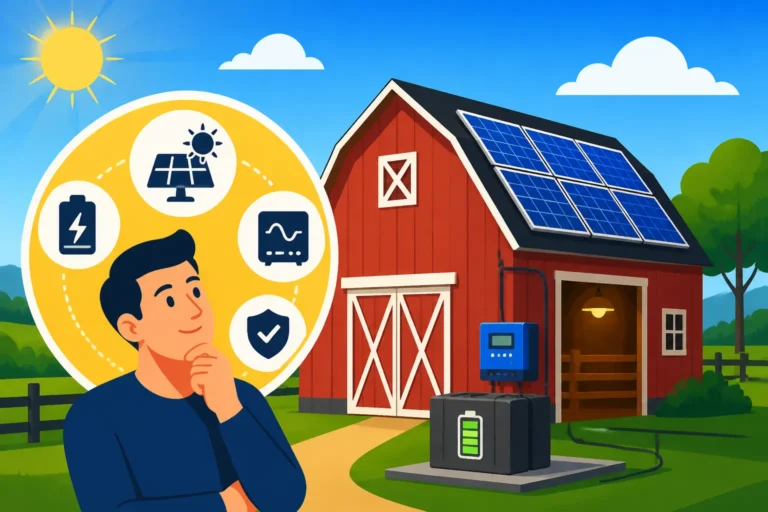
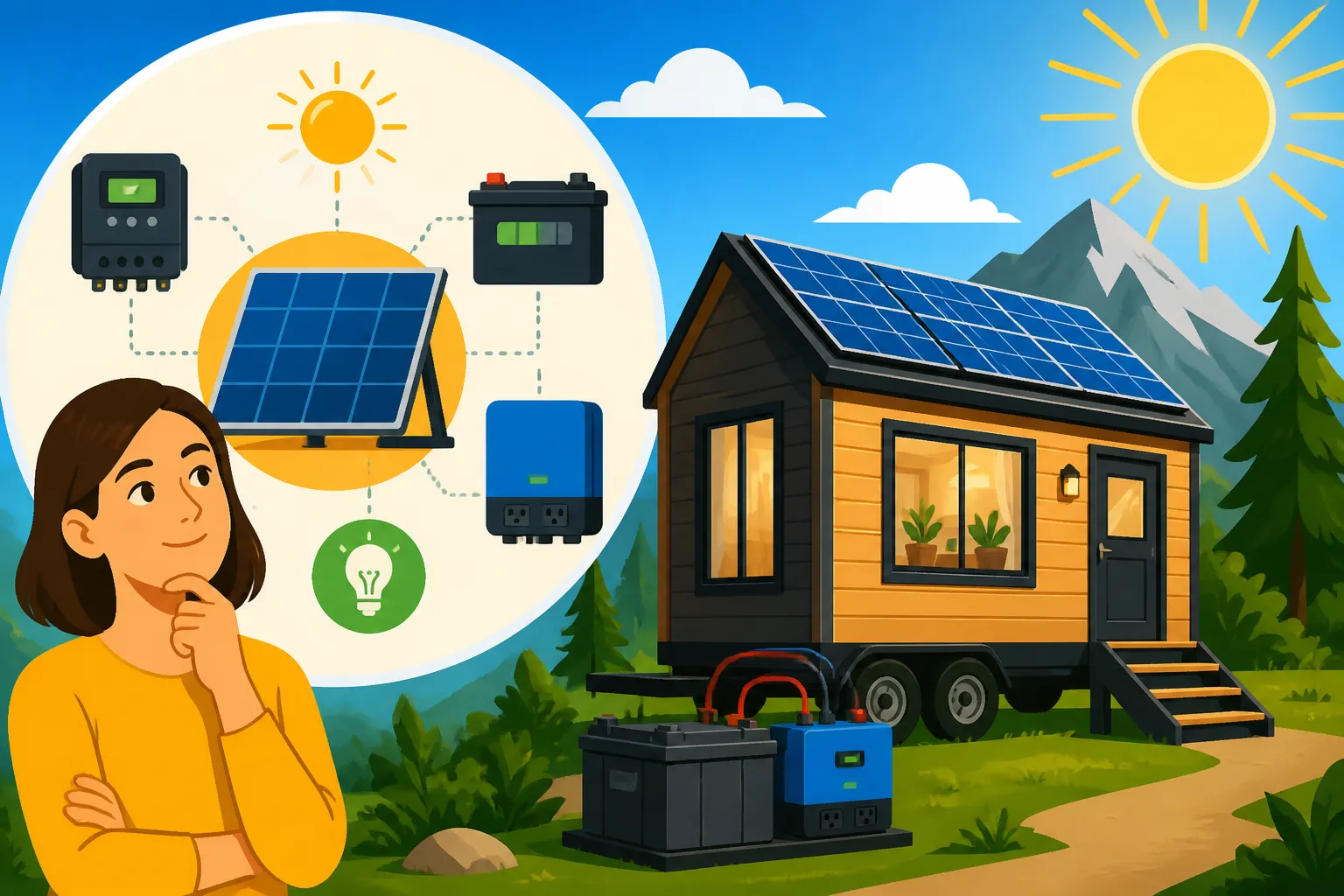
Building an off-grid solar system for your tiny home involves several key components, each playing a vital role in harvesting, storing, and delivering power. Understanding what each part does will help you make informed decisions about your setup. Think of it like a carefully orchestrated team, where every player has a specific job to do.
Solar Panels: The Energy Harvesters
The solar panels are the frontline workers, converting sunlight into usable electricity. For tiny homes, space is often at a premium, so efficiency and physical dimensions are important considerations. You'll typically encounter monocrystalline panels, which are known for their higher efficiency and sleek black appearance. Polycrystalline panels, while slightly less efficient, can be a more budget-friendly option. Flexible panels are also available, particularly popular for curved roofs or mobile tiny homes where lightweight and low-profile solutions are desired.
When deciding on panels, consider factors like the physical space available on your roof or ground mount, the average sun hours in your location, and potential shading. For a tiny home, you might have limited roof space, so maximizing the wattage per square foot becomes crucial. Many tiny home dwellers opt for a setup where panels can be slightly tilted or adjusted to optimize for seasonal sun angles, especially if they are stationary. You can dive deeper into How Many Solar Panels for Off-Grid Living to determine the right quantity for your energy profile.
Batteries: Your Energy Reservoir
Batteries are arguably the most critical component in any off-grid system, as they store the energy generated by your solar panels for use when the sun isn't shining. Without a robust battery bank, your tiny home would only have power during daylight hours. The two main types you'll consider are lead-acid and lithium-ion (specifically LiFePO4).
Lead-acid batteries, like flooded lead-acid or AGM, are generally cheaper upfront but have a shorter lifespan, require more maintenance (especially flooded), and can only be discharged to about 50% without damaging them. This means you need double the capacity compared to lithium to get the same usable energy. Lithium iron phosphate (LiFePO4) batteries, on the other hand, are more expensive initially but offer significantly longer lifespans (thousands of cycles), can be discharged deeper (80-100%), are lighter, and are virtually maintenance-free. For the long haul and peace of mind in a tiny home, LiFePO4 batteries are often the preferred choice despite the higher initial investment. Learning about Cost of an Off-Grid Solar Battery Bank can help you weigh these options.
Charge Controller: The Battery Protector
The charge controller is the unsung hero of your off-grid system. Its primary job is to regulate the voltage and current coming from your solar panels to your battery bank. Without it, your batteries would be overcharged or undercharged, leading to premature failure. There are two main types: PWM (Pulse Width Modulation) and MPPT (Maximum Power Point Tracking).
PWM controllers are simpler and less expensive, but less efficient, especially in colder temperatures or when there's a significant voltage difference between the panels and batteries. MPPT controllers are more advanced, actively tracking the maximum power point of your solar array to optimize charging efficiency, often resulting in 10-30% more energy harvested. For a tiny home where every watt counts, and you want to maximize your investment, an MPPT charge controller is almost always the superior choice.
Inverter: Converting Power for Your Appliances
Most of the appliances in your tiny home, like your refrigerator, microwave, laptop charger, and lights, run on AC (alternating current) power, just like in a traditional stick-built house. However, your solar panels and batteries produce DC (direct current) power. The inverter is the device that converts that DC power from your batteries into usable AC power for your appliances.
You'll need a pure sine wave inverter, especially for sensitive electronics and appliances with motors. Modified sine wave inverters are cheaper but can damage certain devices and run others less efficiently. The size of your inverter (measured in watts) needs to be carefully matched to your tiny home's peak load – the maximum combined wattage of all devices you anticipate running simultaneously. If your largest surge appliance is a well pump that briefly draws 3000 watts, your inverter needs to handle at least that much, even if its continuous output is lower. Understanding What Size Inverter to Run A Refrigerator or other key appliances is essential.
Sizing Your Off-Grid Solar System for a Tiny Home
Now that you understand the components and your energy needs, it's time to put it all together and size your system. This is where the rubber meets the road, ensuring your tiny home has enough power without breaking the bank. A well-sized system means comfort and reliability.
Determining Solar Panel Array Size
To figure out how many solar panels you need, you'll use your daily watt-hour consumption number and factor in your local "peak sun hours." Peak sun hours refer to the average number of hours per day when the intensity of sunlight is equivalent to 1,000 watts per square meter. This varies significantly by location and season. You can find this data from online resources or solar calculators specific to your area.
The basic formula is: (Daily Watt-Hour Consumption) / (Peak Sun Hours) = (Total Watts Needed from Panels). Then, divide this total wattage by the wattage of a single panel (e.g., 300W) to get the number of panels. It's often wise to slightly "oversize" your solar array, perhaps by 10-20%, to account for less-than-ideal weather, panel degradation over time, and potential future additions. This gives you a buffer, especially during those cloudy stretches. For a more detailed walkthrough, refer to How to Size an Off-Grid Solar System.
Calculating Battery Bank Capacity
Your battery bank needs to store enough energy to cover your daily consumption, plus provide a few "days of autonomy" for cloudy periods or increased usage. For instance, if your tiny home uses 3,000 Wh per day, and you want 3 days of autonomy, you need 9,000 Wh of usable battery capacity. Remember the discharge depth for different battery types:
- LiFePO4: You can use nearly 100% of their rated capacity (e.g., a 100 Ah LiFePO4 battery at 12V gives 1200 Wh usable).
- Lead-Acid/AGM: You should only discharge them to 50% to maximize their lifespan (e.g., a 100 Ah lead-acid battery at 12V gives only 600 Wh usable, requiring you to double the actual capacity).
Considering usable capacity is crucial when you're working out How Many Batteries for an Off-Grid System. Always factor in the system voltage (12V, 24V, or 48V) as well. Larger tiny homes with higher energy demands often benefit from 24V or 48V systems, as higher voltage reduces current, allowing for thinner wires and less energy loss.
Selecting the Right Inverter Size
The inverter's size depends directly on your tiny home's peak load and surge requirements. Let's say your refrigerator surges to 1500 watts, your microwave is 1000 watts, and you might run a few lights (100 watts total) and a laptop (60 watts) simultaneously. Your peak combined load is roughly 2660 watts (1500+1000+100+60). You'd want an inverter rated for at least 3000 watts continuous output, with a surge capacity that exceeds your highest starting load.
Many inverters have a continuous power rating and a higher surge rating for short durations. Always choose a pure sine wave inverter to protect your electronics. Brands like Victron and Sol-Ark offer excellent inverter-chargers that combine the functions of an inverter and a charge controller, streamlining your system and often making management easier. When considering different options, a thorough Off-Grid Solar System Sizing Guide will help ensure you make the best choice.
Choosing the Right Equipment for Your Tiny Home
Once you have your sizing calculations in hand, it's time to actually pick out the specific pieces of equipment. This is where researching brands and product types comes into play, ensuring you get reliable, efficient components that fit your tiny home lifestyle and budget.
Panel Types and Mounting Solutions
For tiny homes, especially those on wheels, panel choice and mounting are particularly important.
- Rigid Monocrystalline Panels: These are the most common and efficient. They can be mounted securely to a tiny home roof using specialized racking systems. Consider tilt mounts if you want to manually adjust their angle for optimal sun exposure during different seasons, which can significantly boost energy harvest in areas with varied sun paths.
- Flexible Solar Panels: Lighter and more discreet, flexible panels can be glued or screwed directly onto curved or limited roof spaces. They are less efficient than rigid panels and have a shorter lifespan, but their low profile is a major advantage for some tiny home designs or for mobile applications where aerodynamics matter.
- Ground Mounts: If your tiny home is stationary and you have yard space, a ground mount allows you to optimize panel tilt and orientation without cluttering your roof. It also makes cleaning and maintenance easier.
When choosing, consider how much you move your tiny home, the aesthetics, and the long-term durability you're looking for.
Battery Chemistry: Lithium vs Lead-Acid
The battery choice is paramount. As discussed, LiFePO4 batteries are typically the preferred choice for tiny homes despite the higher initial cost. They offer:
- Longer Lifespan: Up to 10-15 years or more, compared to 3-7 years for lead-acid.
- Deeper Discharge: Safely use 80-100% of their capacity, meaning you need less physical battery capacity for the same usable energy.
- No Maintenance: Unlike flooded lead-acid, they don't require watering.
- Higher Efficiency: Better at storing and releasing energy, with less energy loss.
- Lighter Weight: Crucial for mobile tiny homes where every pound counts.
While lead-acid (especially sealed AGM) can be an option for very budget-constrained setups or very small, intermittent use systems, the long-term value and convenience of lithium batteries, like those offered by Battle Born Battery Review for Off-Grid Solar, often outweigh the upfront cost difference. You can find many options for Best Off-Grid Solar Batteries to fit your specific needs.
All-in-One Solutions and Solar Generators
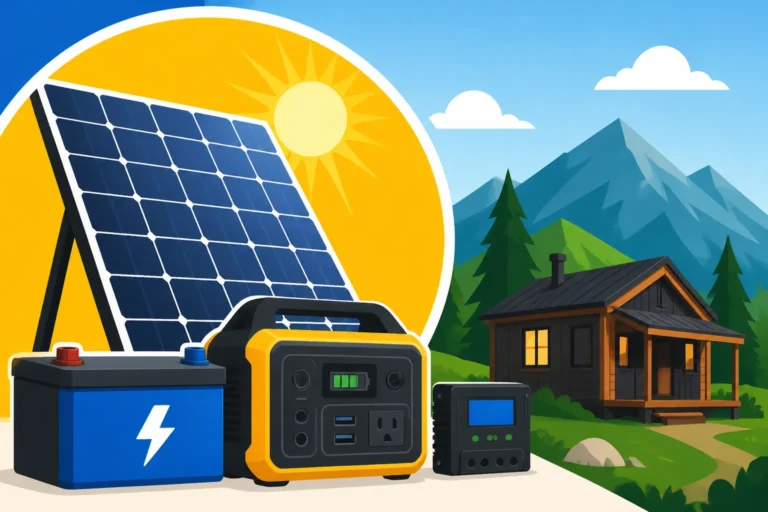
For simpler tiny home setups, especially smaller ones or those with lower energy demands, an all-in-one solar generator might be a fantastic solution. These units combine a battery, inverter, and charge controller into a single, portable box. They are easy to set up, require minimal wiring, and are great for weekend warriors or as a supplemental power source.
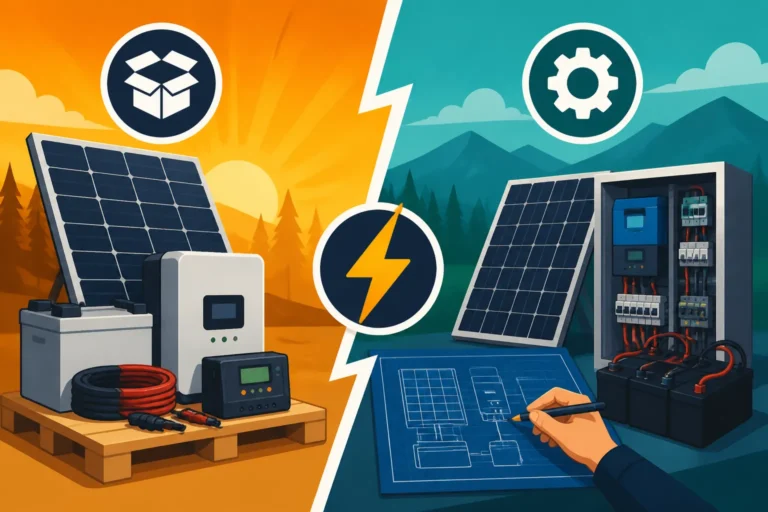
Brands like Jackery, Goal Zero, and EcoFlow offer a range of powerful solar generators that can be paired with their portable solar panels. For example, a Jackery Explorer 1500 or even a larger Jackery Explorer 2000 Pro might be sufficient to power basic needs, charge devices, and run small appliances for a few days, especially if you're not trying to run major loads like an air conditioner. While a comprehensive DIY system offers more customizability and often better long-term scalability, a high-capacity solar generator provides an immediate and convenient off-grid power solution, making it ideal for those who prefer plug-and-play simplicity. This is a common starting point for many tiny home owners, and it's always an option to add more panels or larger batteries to a more robust setup later.
Installation Considerations for Tiny Home Off-Grid Solar
Installing an off-grid solar system on a tiny home presents unique challenges and opportunities compared to a traditional house. Space, weight, and mobility all play a role in how you approach the installation. Understanding these factors beforehand will help you plan a smooth and safe setup.
Space Constraints and Aesthetics
Tiny homes, by their very nature, are compact. This means every inch of roof space, interior wall, and storage area needs to be utilized efficiently. When installing solar panels, consider their footprint and potential shading from roof vents, chimneys, or trees. For stationary tiny homes, optimizing panel placement for sun exposure is paramount, while for mobile homes, the ability to pack down or secure panels during transit is key.
Internally, finding space for your battery bank, inverter, and charge controller can be a challenge. You'll want a cool, dry, and well-ventilated area that's protected from the elements but also easily accessible for monitoring and maintenance. Some tiny homeowners integrate these components into built-in cabinets or utility closets. Aesthetics also come into play; you want a system that's functional but doesn't detract from the beautiful design of your tiny home. Carefully consider how to route cables cleanly and discreetly to maintain a tidy living space.
Wiring and Safety Best Practices
Wiring is critical for safety and efficiency. All electrical connections must be secure, properly sized for the current they carry, and protected by fuses or circuit breakers. Undersized wires can overheat, causing fires, while improperly protected circuits can lead to equipment damage or electrocution. If you're undertaking a DIY Off-Grid Solar Installation Step by Step, adhere to national and local electrical codes, even if permits aren't strictly required for your specific off-grid setup (though they often are).
Use appropriate connectors (like MC4 connectors for solar panels), ensure all components are properly grounded, and clearly label all wires and disconnects. Always disconnect the power sources (solar array, batteries) before performing any work on your system. If you're not confident with electrical work, it's highly recommended to consult with or hire a qualified electrician, at least for the final connections and safety checks. Safety should always be your number one priority in any off-grid installation. You can find more comprehensive details in an Off-Grid Solar Installation Guide.
Maintenance and Expansion Planning
An off-grid solar system isn't a "set it and forget it" solution, though modern LiFePO4 systems require far less intervention than older lead-acid setups. Regular maintenance, such as cleaning your solar panels, checking battery terminals for corrosion (if using lead-acid), and monitoring system performance, will ensure longevity and efficiency. Keep an eye on your battery state of charge and voltage readings.
It's also wise to plan for future expansion. Your energy needs might grow over time as you add new appliances or decide you want more autonomy. Design your initial system with the capacity to add more panels or batteries later without having to completely redesign the core infrastructure. For instance, choose an inverter and charge controller that can handle slightly more input than your initial array provides, or design your battery bank enclosure to accommodate additional battery modules. This forward-thinking approach will save you headaches and money down the line as your tiny home evolves.
| Component | Primary Function | Key Considerations for Tiny Homes | Common Types/Brands to Consider (Examples) |
|---|---|---|---|
| Solar Panels | Convert sunlight into DC electricity | Efficiency, physical size, mounting options (roof, ground, flexible), shading | Renogy, Rich Solar, Newpowa (Rigid & Flex) |
| Batteries | Store excess solar energy for later use | Usable capacity (Wh), lifespan (cycles), weight, maintenance, discharge depth | Battle Born, EG4, SOK (LiFePO4) |
| Charge Controller | Regulate power from panels to batteries | MPPT (recommended for efficiency), input voltage range, amperage rating | Victron, Renogy, Outback |
| Inverter | Convert battery DC power to appliance AC power | Continuous output (W), surge capacity (W), pure sine wave, system voltage (V) | Victron, Sol-Ark, AIMS Power |
| Solar Generator | All-in-one portable power station (battery, inverter, CC) | Portability, capacity (Wh), output ports, ease of use | Jackery, EcoFlow, Bluetti |
Final Thoughts on Your Tiny Home's Off-Grid Power
Choosing an off-grid solar system for your tiny home is a significant undertaking, but it’s one that brings incredible freedom and self-sufficiency. By carefully calculating your energy needs, understanding the core components, sizing your system thoughtfully, and considering installation nuances, you can create a reliable power setup that perfectly complements your tiny living dream. Don't rush the process; take your time, do your research, and don't hesitate to seek advice from experienced off-gridders or professionals. The reward of true energy independence in your tiny home is absolutely worth the effort.
Disclaimer
The information provided in this guide is for general informational purposes only and does not constitute professional advice. Off-grid solar system design and installation can be complex and involve electrical hazards. Always consult with qualified professionals and adhere to all local codes and regulations when planning or installing an off-grid solar system.