Cost of an Off-Grid Solar Battery Bank
If you've started looking into going off-grid with solar, you’ve probably quickly realized that one of the biggest unknowns, and often the most intimidating part of the entire system, is the battery bank. The sheer variety, the jargon, and especially the price tags can be enough to make anyone's head spin. This comprehensive guide is here to demystify the cost of an off-grid solar battery bank, breaking down the initial investment, exploring different battery technologies, and helping you understand the factors that truly influence your bottom line, both now and in the long run.
Understanding the Upfront Cost of Off-Grid Batteries
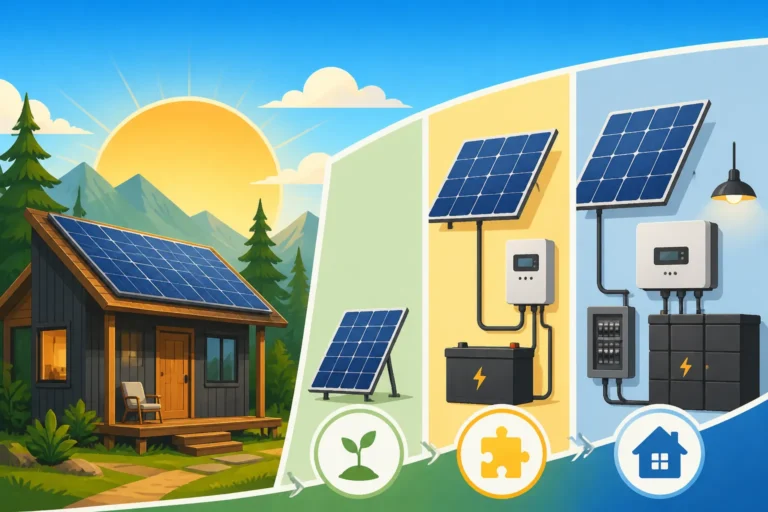
The battery bank is, without a doubt, the heart of any off-grid solar system. It's what stores all that precious energy your solar panels collect during the day so you can use it whenever you need it – especially at night or on cloudy days. Because of its critical role, it also tends to be one of the most significant line items when you're tallying up the total cost of an off-grid solar system.
Initial Sticker Shock and Why It's There
Many folks embarking on their off-grid journey are genuinely surprised by the price of batteries. It's not uncommon for the battery bank alone to account for 30% to 50% of your entire system's cost. This sticker shock is understandable when you're just starting out, especially if you're comparing it to the relatively stable prices of solar panels. However, batteries are complex pieces of chemical engineering designed to store and release substantial amounts of energy reliably, often for many years. They contain valuable raw materials, intricate internal components, and sophisticated management systems (especially lithium-ion batteries) to ensure safety and longevity.
Think of it like this: your solar panels are like the engine of a car, generating power, but your battery bank is the fuel tank, the carburetor, and the starter all rolled into one, allowing you to actually use that power on demand. This crucial function, combined with the technology involved, drives up the price. You're not just buying a box; you're investing in energy independence and the ability to live comfortably without relying on the utility grid.
The Core Components of a Battery Bank
When we talk about the "cost of a battery bank," we're not just referring to the individual battery cells themselves. A functional, safe, and efficient off-grid battery bank comprises several essential components, all contributing to the final price. First and foremost, you have the batteries, which are the main power storage units. These come in various chemistries and sizes, as we’ll discuss shortly.
Beyond the batteries, a crucial element, particularly for modern lithium systems, is the Battery Management System (BMS). This electronic guardian monitors the battery's health, balances cell voltage, protects against overcharging or over-discharging, and prevents dangerous temperatures. While some batteries have an integrated BMS, others require an external one, and its cost is definitely part of the overall battery bank expense. Then there are the necessary cables and connectors, often thick gauge wires to handle significant current, along with fuses and circuit breakers for safety. Finally, a proper enclosure for your battery bank is vital for protection from the elements, temperature fluctuations, and accidental damage, especially if you're using lead-acid batteries that require ventilation. All these elements combined form a robust and reliable battery storage system.
Average Cost Ranges by System Size
The cost of your off-grid solar battery bank can vary wildly depending on the size and scope of your off-grid dreams. Are you just looking to power a small cabin for weekend getaways, or are you aiming for full-time homesteading with all the modern conveniences? Generally, the larger your energy needs, the greater your battery capacity will need to be, and thus, the higher the cost.
For a very small, portable setup, perhaps for a tiny shed or occasional camping trips, you might look at something like a portable power station (often called a solar generator) like a Jackery Explorer. These all-in-one units combine a battery, inverter, and charge controller into one compact package, and can range from a few hundred dollars for basic models (e.g., 200-500Wh) up to a couple of thousand dollars for larger units (e.g., 1000-2000Wh). These are excellent entry points for minimal power needs.
For more substantial applications, like an RV, van, or small cabin that runs basic lights, a fridge, and charges devices, a dedicated battery bank might cost anywhere from $2,000 to $8,000. This often means a few 100Ah or 200Ah lithium batteries or a larger bank of lead-acid batteries. If you’re planning on living fully off-grid in a home, powering appliances like washing machines, well pumps, and air conditioning, your battery bank could easily run from $10,000 to $30,000 or more. This often involves multiple large-capacity lithium batteries, perhaps even server rack batteries, to provide enough storage and power for daily demands and several days of autonomy during inclement weather. Ultimately, the more energy you plan to consume, and the longer you want to go without sun (your "days of autonomy"), the more substantial your battery investment will be. If you're wondering how many batteries for an off-grid system you might need, it directly correlates with your energy usage and desired backup time.
Delving into Battery Chemistry and Its Price Impact
The choice of battery chemistry is arguably the single biggest factor influencing the cost, performance, and longevity of your off-grid battery bank. There are two main contenders in the off-grid world: the tried-and-true lead-acid batteries and the increasingly popular lithium-ion batteries. Each comes with its own set of advantages, disadvantages, and, of course, price points.
Lead-Acid Batteries: The Traditional, Budget-Friendly Choice
Lead-acid batteries have been the workhorse of off-grid solar for decades, and they remain a viable option, especially for those on a tighter budget. They come in several variations, with flooded lead-acid (FLA), Absorbed Glass Mat (AGM), and Gel batteries being the most common.
- Flooded Lead-Acid (FLA): These are often the cheapest upfront. They require regular maintenance, like checking and refilling water levels, and need proper ventilation because they off-gas hydrogen. They typically offer 300-1000 cycles, depending on depth of discharge. A 200Ah 12V FLA battery might cost $200-$400. While the initial cost is low, you can only safely use about 30-50% of their rated capacity to maximize their lifespan, meaning you need more batteries to achieve usable capacity.
- Absorbed Glass Mat (AGM): AGM batteries are sealed and maintenance-free, making them much easier to live with. They don't off-gas under normal charging conditions, so they don't require external ventilation, making them safer for indoor installations or in vehicles. They are more resistant to vibration and perform better in colder temperatures than FLAs. However, they are more expensive upfront, usually costing $400-$700 for a 200Ah 12V battery, and also have a similar usable depth of discharge (50%) and cycle life to FLAs.
- Gel Batteries: Gel batteries are also sealed and maintenance-free, offering good performance in high temperatures and deep discharge capabilities. They tend to have a slightly longer cycle life than AGMs but charge slower and are often the most expensive lead-acid option, ranging from $500-$900 for a 200Ah 12V battery.
While lead-acid batteries offer a lower initial investment, their lower usable capacity and shorter lifespan (when properly managed to maximize cycles) mean that their "true" cost over the life of your system can sometimes approach or even exceed that of lithium batteries, especially when you factor in replacement costs and maintenance. It's a common mistake to only look at the upfront price without considering the full lifecycle.
Lithium-Ion Batteries: The Modern, High-Performance Investment
When we talk about lithium-ion batteries for off-grid solar, we're primarily referring to Lithium Iron Phosphate (LiFePO4 or LFP) batteries. These are rapidly becoming the gold standard for off-grid applications due to their superior performance characteristics, despite a higher upfront cost.
LiFePO4 batteries offer several compelling advantages. First, they have a much higher usable capacity, typically allowing for 80-100% depth of discharge without significantly impacting their lifespan. This means a 100Ah LiFePO4 battery often provides as much usable energy as a 200Ah lead-acid battery. Second, their cycle life is dramatically longer, often ranging from 3,000 to 10,000 cycles, translating to 10-20+ years of use in many off-grid scenarios. This significantly pushes out your need to budget for future battery replacements. Third, they are much lighter and more compact than lead-acid batteries, a huge plus for mobile applications like RVs or vans. They also have a flatter discharge curve, meaning they maintain a more consistent voltage throughout their discharge cycle, providing more stable power to your appliances.
The downside, of course, is the cost. A 100Ah 12V LiFePO4 battery from a reputable brand like Battle Born or EG4 might cost anywhere from $700 to $1,200. While this seems significantly higher than lead-acid, when you consider the usable capacity, the number of cycles, and the lack of maintenance, the LiFePO4 vs Lead-Acid Battery Cost often works out in lithium's favor over the long term. For example, if a lead-acid battery lasts 5 years (at 50% DOD) and a LiFePO4 battery lasts 15 years (at 80% DOD), you'd need to replace the lead-acid bank three times, incurring those costs repeatedly, whereas the lithium bank would still be going strong.
Comparing LiFePO4 vs Lead-Acid Battery Cost
To truly understand the cost difference, it's essential to look beyond the initial purchase price and consider the usable capacity and lifespan. Here's a table to help visualize the comparison:
| Feature | Flooded Lead-Acid (FLA) | AGM Lead-Acid | LiFePO4 (Lithium Iron Phosphate) |
|---|---|---|---|
| Initial Cost (12V, 100Ah Equivalent Usable) | ~$400 – $800 (for 2x 100Ah nominal) | ~$800 – $1,400 (for 2x 100Ah nominal) | ~$700 – $1,200 (for 1x 100Ah nominal) |
| Usable Capacity (DoD) | 30-50% | 50% | 80-100% |
| Cycle Life (approx.) | 300-1000 (at 50% DoD) | 400-1200 (at 50% DoD) | 3000-10000+ (at 80% DoD) |
| Lifespan (avg.) | 2-5 years | 3-7 years | 10-20+ years |
| Maintenance | High (water topping, ventilation, equalizing charges) | Low (no water, but still needs proper charging) | Very Low (no maintenance, integrated BMS handles everything) |
| Weight & Size | Heavy, bulky | Heavy, bulky | Lightweight, compact |
| Efficiency | ~75-85% round-trip | ~80-85% round-trip | ~95-99% round-trip |
| Voltage Stability | Drops significantly with discharge | Drops moderately with discharge | Very stable throughout discharge |
| Temperature Range | Sensitive to extreme cold/hot | Better than FLA, but charging in freezing still an issue | Wider range, but charging below freezing requires specific BMS features |
| Total Cost of Ownership | Often higher due to replacements & maintenance | Moderate to high | Lower due to longevity & efficiency |
As you can see, while the initial price tag for a single 100Ah LiFePO4 battery may seem comparable to, or even higher than, a single 100Ah lead-acid battery, its vastly superior usable capacity and cycle life mean you typically need fewer lithium batteries and they last much, much longer. This results in a significantly lower lifetime cost of an off-grid solar system.
Factors that Influence Your Battery Bank's Price Tag
Beyond the core battery chemistry, several other key factors play a substantial role in determining the final cost of your off-grid solar battery bank. Understanding these elements will empower you to make more informed decisions and budget effectively for your system.
Capacity and Days of Autonomy
The most straightforward factor affecting cost is capacity. Simply put, the more energy you need to store, the more batteries you'll require, and thus, the higher the price. Battery capacity is measured in Amp-hours (Ah) or Watt-hours (Wh). Your total daily energy consumption (your "load") directly dictates how much capacity you need. If you're only running a few LED lights and charging a phone, your needs are minimal. If you're powering a full-sized refrigerator, a well pump, and a mini-split AC unit, you'll need significantly more capacity.
Crucially, you also need to consider your desired "days of autonomy." This refers to how many days your battery bank can power your essential loads without any input from your solar panels – think about extended periods of cloudy, rainy, or snowy weather. Living in an area like the Pacific Northwest or the Northeast, you might want 3-5 days of autonomy, meaning your battery bank needs to be much larger than someone living in sunny Arizona who might only need 1-2 days. Each additional day of autonomy directly translates to more battery storage, and therefore, a higher cost. Learning how to size an off-grid battery bank is foundational to accurately budgeting for this component.
System Voltage: 12V, 24V, 48V
The voltage of your overall off-grid solar system (12V, 24V, or 48V) also impacts battery bank cost, albeit indirectly. While the total energy stored (Wh) remains the same for a given capacity, a higher system voltage generally means lower current (amperage) flowing through the wires. Lower current allows for thinner, less expensive wiring, and can also lead to fewer efficiency losses in your system.
For example, two 12V 100Ah batteries in parallel give you 12V 200Ah. Two 12V 100Ah batteries in series give you 24V 100Ah. Four 12V 100Ah batteries configured for 48V give you 48V 100Ah. The total Watt-hours (energy) are the same, but the voltage changes. For larger systems (e.g., whole home), 48V is almost always recommended because it reduces wire gauge requirements and makes it easier for your inverter to handle large loads. However, if you're building a 48V system with 12V batteries, you'll need to purchase batteries in multiples of four (for series connection) to achieve that voltage, which can sometimes mean a higher upfront purchase if you're not ready for that many. Conversely, 12V systems are simpler and often cheaper for small applications like RVs or small cabins, but they're less efficient and require much thicker cables for the same power.
Brand and Quality
Just like with any other product, the brand and quality of your off-grid batteries play a significant role in their price. Premium brands, especially in the lithium-ion space, often command higher prices due to their proven reliability, extensive warranties, advanced internal Battery Management Systems (BMS), and superior customer support. Brands like Victron Energy, Battle Born Batteries, and EG4 are known for their high-quality, long-lasting products, but they come with a corresponding price tag.
On the other hand, there are numerous budget-friendly brands available, particularly for LiFePO4 batteries found on platforms like Amazon or from lesser-known online retailers. While these can offer substantial cost savings upfront, it's crucial to exercise caution. Some budget batteries may have less sophisticated BMS, shorter warranties, or lower-quality internal components, which could lead to a shorter lifespan or potential safety issues. It's often a trade-off between upfront savings and long-term peace of mind. For lead-acid batteries, reputable brands like Trojan or Rolls generally offer better performance and longevity than generic options. It's wise to read reviews and consider the track record of any brand before committing, especially when it comes to such a critical and expensive component.
Installation Complexity and DIY vs. Professional
The labor involved in installing your off-grid battery bank also impacts the overall cost. If you're tackling a DIY off-grid solar installation, you'll save significantly on labor expenses. However, this requires a solid understanding of electrical systems, safety protocols, and proper wiring techniques to avoid costly mistakes or, worse, dangerous situations. Wiring a battery bank, especially a large one with multiple batteries in series and parallel, demands precision.
If you opt for professional installation, you'll benefit from expert knowledge and peace of mind, but you'll need to factor in the electrician's fees. These costs can range from a few hundred dollars for a small, simple setup to several thousand for a complex, whole-home system. The complexity of your specific setup (e.g., adding a battery monitor, integrating a transfer switch, designing a secure enclosure) will also influence the installation time and thus the labor cost. Even if you're doing it yourself, remember to budget for specialized tools, safety gear, and perhaps an electrical inspection, which all add to the "installation cost."
Beyond the Purchase Price: Long-Term Battery Bank Expenses
When you're calculating the cost of an off-grid solar battery bank, it's easy to focus solely on the initial purchase price. However, just like owning a car, there are ongoing expenses and considerations that significantly impact the true long-term cost of ownership. Overlooking these can lead to unexpected financial strain down the road.
Replacement Costs Over Time
One of the most significant long-term expenses for any battery bank is eventual replacement. Batteries, regardless of chemistry, have a finite lifespan. Once they've gone through their rated number of charge and discharge cycles, their ability to hold and deliver power diminishes significantly. For lead-acid batteries, this could be as short as 2-5 years if they're used heavily or not properly maintained. This means you could be looking at replacing your entire lead-acid battery bank two or three times over a 10-15 year period, effectively tripling your initial battery investment.
Lithium Iron Phosphate (LiFePO4) batteries offer a distinct advantage here. With cycle lives often exceeding 3,000 to 10,000 cycles, they can easily last 10-20 years or more in a typical off-grid setup. This drastically reduces the frequency and thus the long-term cost of battery replacements. While their upfront cost is higher, their longevity often makes them the more economical choice over the lifespan of your entire off-grid system. It's crucial to factor in these future expenses when you're budgeting, as cost to replace off-grid solar batteries can be a huge hit if not planned for.
Maintenance Requirements and Costs
Different battery chemistries come with different maintenance demands, and these can translate into ongoing costs or time commitments.
- Lead-Acid Batteries: Flooded lead-acid (FLA) batteries require the most maintenance. You'll regularly need to check the electrolyte levels and top them off with distilled water, typically every 1-3 months depending on usage and charging cycles. This involves purchasing distilled water and spending time on the task. They also benefit from periodic "equalization" charges, which can consume extra energy from your solar array. AGMs and Gel batteries are sealed, making them "maintenance-free" in terms of watering, but they still require proper charging parameters and can be damaged by overcharging or deep discharges. Improper charging can severely shorten their life, leading to earlier replacement costs.
- Lithium-Ion Batteries (LiFePO4): This is where lithium batteries truly shine in terms of low long-term cost. Thanks to their sophisticated internal Battery Management Systems (BMS), LiFePO4 batteries are virtually maintenance-free. The BMS handles cell balancing, overcharge/discharge protection, and temperature management, meaning you don't need to do anything manually. This saves you time, the cost of distilled water, and reduces the risk of user error damaging the batteries. This minimal upkeep significantly contributes to their overall value proposition and reduces your off-grid solar maintenance costs.
Efficiency Losses and System Optimizations
While not a direct "cost" you pay, efficiency losses within your battery bank and overall system can indirectly cost you money by requiring a larger solar array or running a generator more often.
- Round-Trip Efficiency: Batteries aren't 100% efficient. When you put energy into them and then take it out, some energy is lost as heat. Lead-acid batteries typically have a round-trip efficiency of 75-85%. This means if you put 100 Watt-hours into the battery, you might only get 75-85 Watt-hours back out. Lithium batteries, particularly LiFePO4, are far more efficient, boasting round-trip efficiencies of 95-99%. This means very little energy is wasted.
- Impact on Sizing: Higher efficiency means you need less solar panel capacity to charge your batteries, or your batteries can last longer on the same amount of charge. Over the years, these small efficiency gains add up, potentially saving you from needing to expand your solar array prematurely or relying less on a backup generator, both of which have associated costs. Investing in a highly efficient battery bank might mean a slightly higher upfront cost, but it can lead to long-term savings in other areas of your system.
Smart Strategies to Budget for Your Off-Grid Battery Bank
Navigating the costs of an off-grid solar battery bank can feel overwhelming, but with a few smart strategies, you can budget effectively and ensure you're getting the most bang for your buck without compromising on reliability. Planning is key to avoiding unforeseen expenses down the line.
Accurate Load Assessment is Key
Before you even think about shopping for batteries, the absolute most critical step is to conduct a thorough and accurate load assessment. This means figuring out exactly how much energy you use (or will use) on a daily basis. Don't guess! List every single appliance, light, and electronic device you plan to power. For each item, determine its wattage and how many hours per day you'll operate it. This will give you your daily Watt-hour (Wh) consumption.
For example, a typical off-grid load analysis might include:
- LED lights: 60W for 4 hours = 240Wh
- Refrigerator: 100W for 8 hours (compressor run time) = 800Wh
- Laptop: 60W for 3 hours = 180Wh
- Water pump: 500W for 0.5 hours = 250Wh
- Microwave: 1000W for 0.1 hours (6 minutes) = 100Wh
Adding these up gives you a baseline for your energy needs. Overestimating can lead to an unnecessarily expensive battery bank, while underestimating will result in constant power shortages and frustration. There are excellent resources available, like guides on how to calculate daily energy usage or performing an Off-Grid Solar Load Calculation Explained, which walk you through this process step-by-step. This upfront work is invaluable and will prevent you from buying a battery bank that's either too small or significantly oversized.
Phasing Your Battery Bank Investment
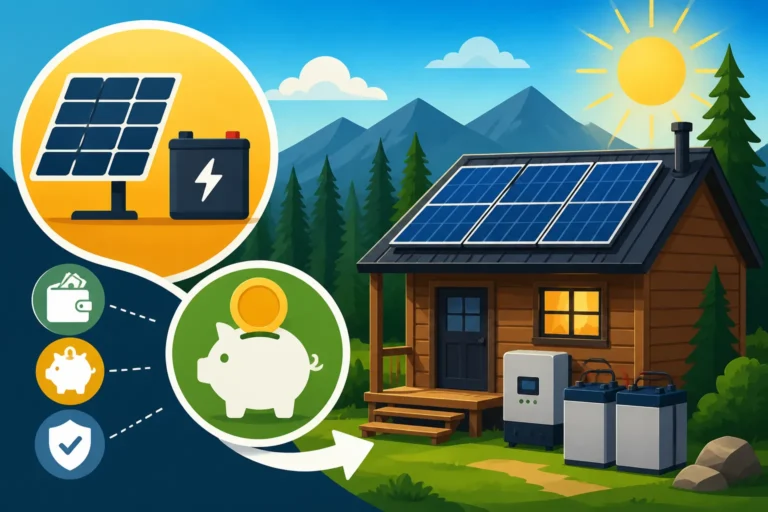
For many people, the upfront cost of a large, perfectly sized off-grid battery bank can be a major hurdle. A smart strategy to manage this expense is to phase your investment. This means starting with a smaller, sufficient battery bank that meets your immediate, critical needs, and then expanding it over time as your budget allows or as your energy demands grow.
For instance, you might initially install enough batteries to power your lights, fridge, and essential electronics. Later, when funds become available, you can add more batteries to support an electric well pump, a washing machine, or even an air conditioning unit. This approach works particularly well with lithium-ion batteries, as they are easier to expand by adding more batteries in parallel to your existing bank, provided all batteries are of the same voltage, chemistry, and ideally, from the same batch or brand. Lead-acid batteries are less forgiving when it comes to mixing old and new batteries, making expansion more challenging. This gradual approach allows you to spread the cost over several months or even years, making the journey to off-grid living more financially manageable. If you want to know how much battery capacity you need, consider your initial critical loads versus your aspirational loads.
Shopping for Deals and Used Equipment
When you're trying to keep the Off-Grid Solar Cost for a Rv or any off-grid project within budget, finding deals and considering used equipment can be tempting. Websites like Amazon are great for comparing prices on new batteries and components from various brands. You can often find competitive pricing and frequent sales, especially on individual LiFePO4 batteries from lesser-known but still reputable manufacturers. Always read reviews carefully and check the seller's return policy when purchasing online.
Venturing into the used market, however, comes with its own set of risks and rewards. You might find used lead-acid or even older lithium batteries at significantly reduced prices on local marketplaces or specialized forums. For lead-acid, thoroughly testing their capacity and checking their age is crucial, as their lifespan can be unpredictable. For lithium, it's even more complex. While you might find server rack batteries from data centers that still have considerable life left, assessing their true state of health and cycle count requires specialized equipment and knowledge. Unless you are an experienced battery technician, it’s often safer to stick to new batteries, especially for such a critical component. If you do consider used, approach with extreme caution and ideally, get them tested by a professional. Remember, a failed battery bank can leave you without power entirely, so a few upfront savings might not be worth the risk of unreliability.
Disclaimer
The information provided in this guide is for general informational purposes only and does not constitute professional financial, electrical, or engineering advice. Off-grid solar system design and installation can be complex and potentially dangerous. Always consult with qualified professionals for your specific needs, ensure compliance with local codes and regulations, and prioritize safety.