How to Waterproof Roof Penetrations
Waterproofing roof penetrations for off-grid solar installations prevents structural damage, mold growth, and expensive electrical component failures.
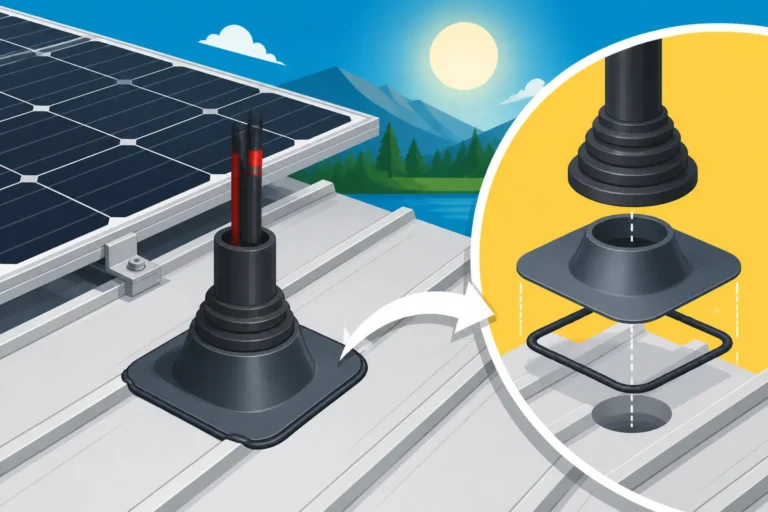
Waterproofing roof penetrations for off-grid solar installations prevents structural damage, mold growth, and expensive electrical component failures.
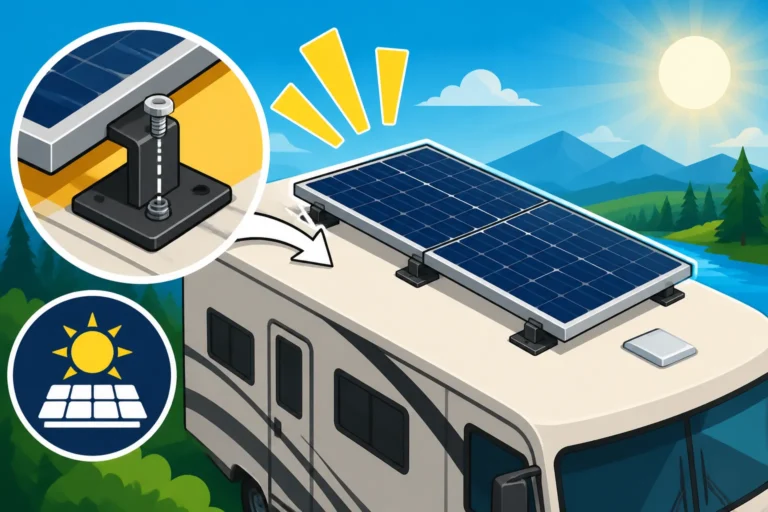
Solar panel mounting on RV roofs requires checking EPDM, TPO, or fiberglass materials, calculating load capacity, and preventing wind damage.
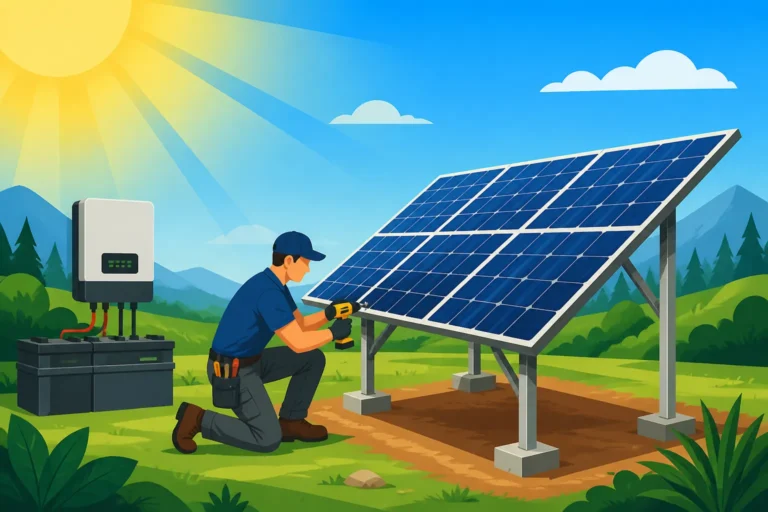
Ground-mounted solar panels provide placement flexibility and maintenance access for off-grid properties and remote cabins.
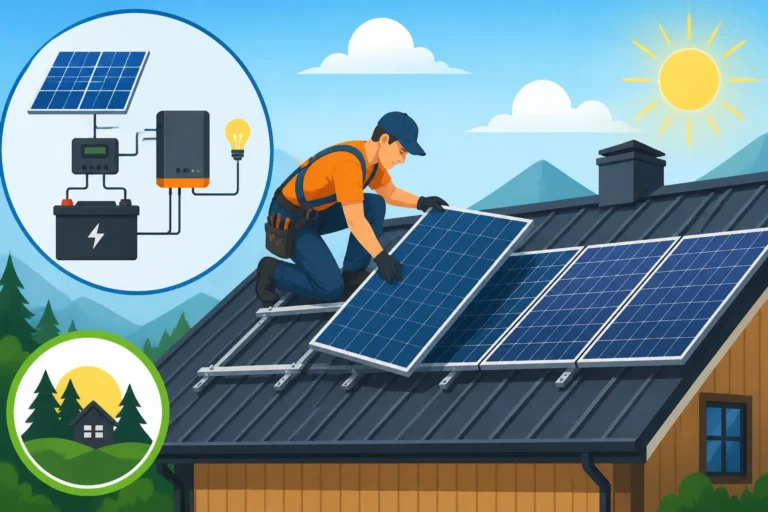
Roof structural integrity assessments and solar panel weight distribution methods prevent leaks and costly future repairs.
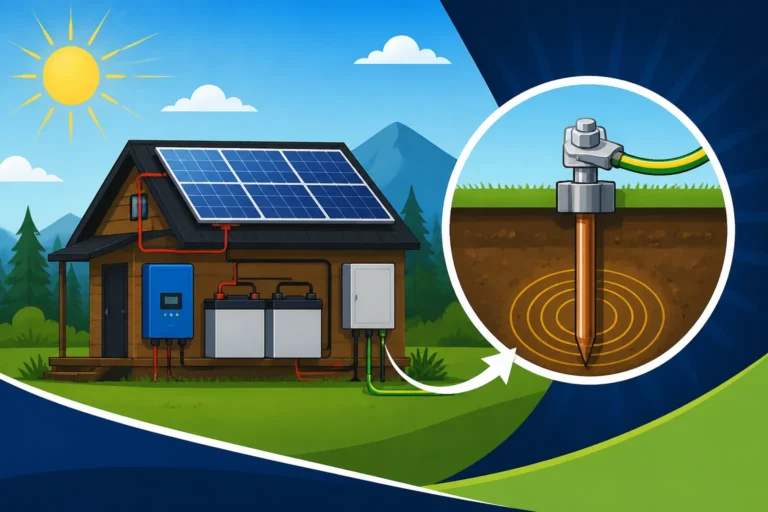
Proper grounding of off-grid solar systems protects valuable equipment from electrical surges and ensures human safety during faults.
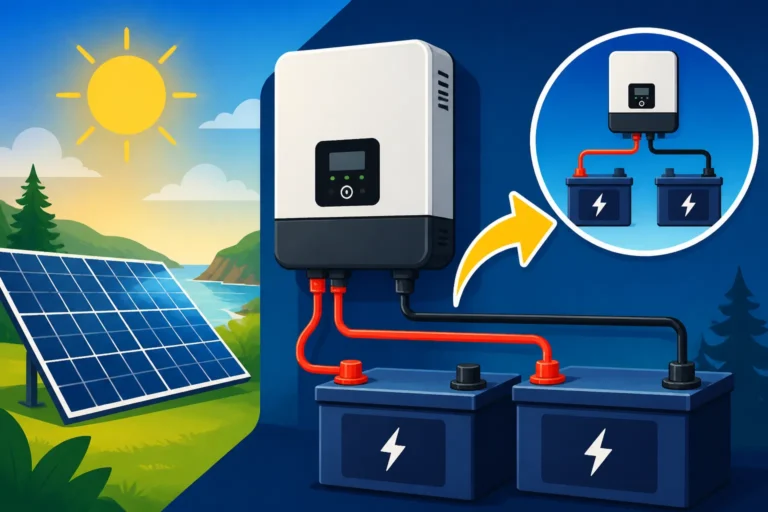
Connecting an inverter to off-grid solar batteries safely transforms stored direct current power into usable alternating current electricity.
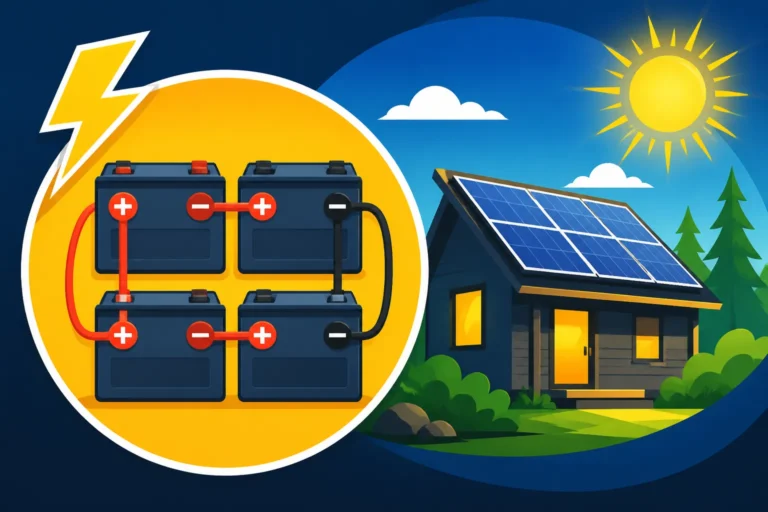
Proper wiring for an off-grid solar system prevents electrical hazards and ensures efficient energy storage for batteries.
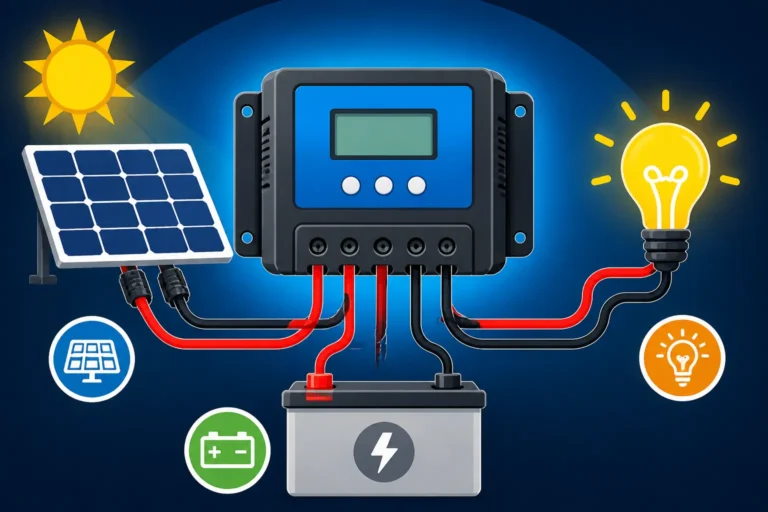
Connecting a charge controller requires following specific connection sequences and safety protocols to protect your off-grid solar system.
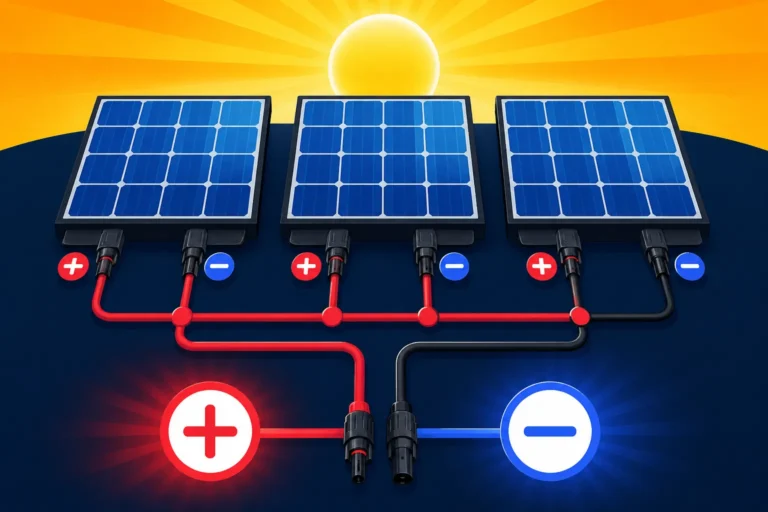
Parallel solar wiring connects positive to positive terminals, keeping voltage constant while increasing total system current.
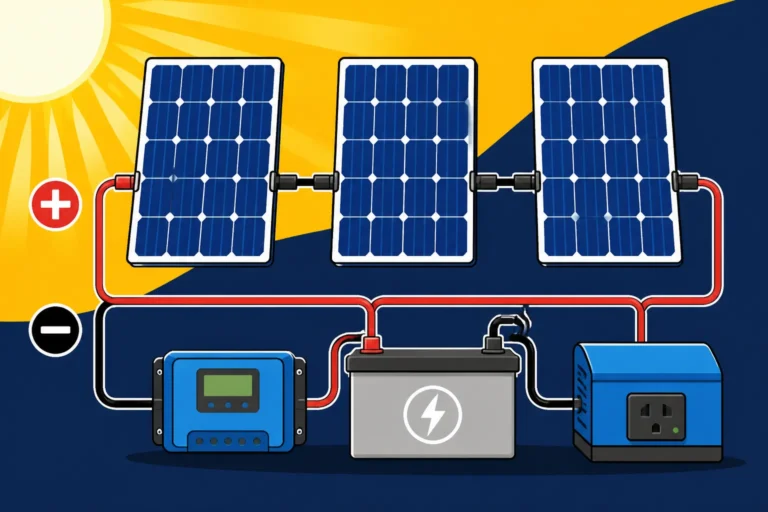
Wiring solar panels in series connects positive to negative terminals, adding individual voltages together while keeping amperage constant.