Is Victron a Good Off-Grid Inverter Brand
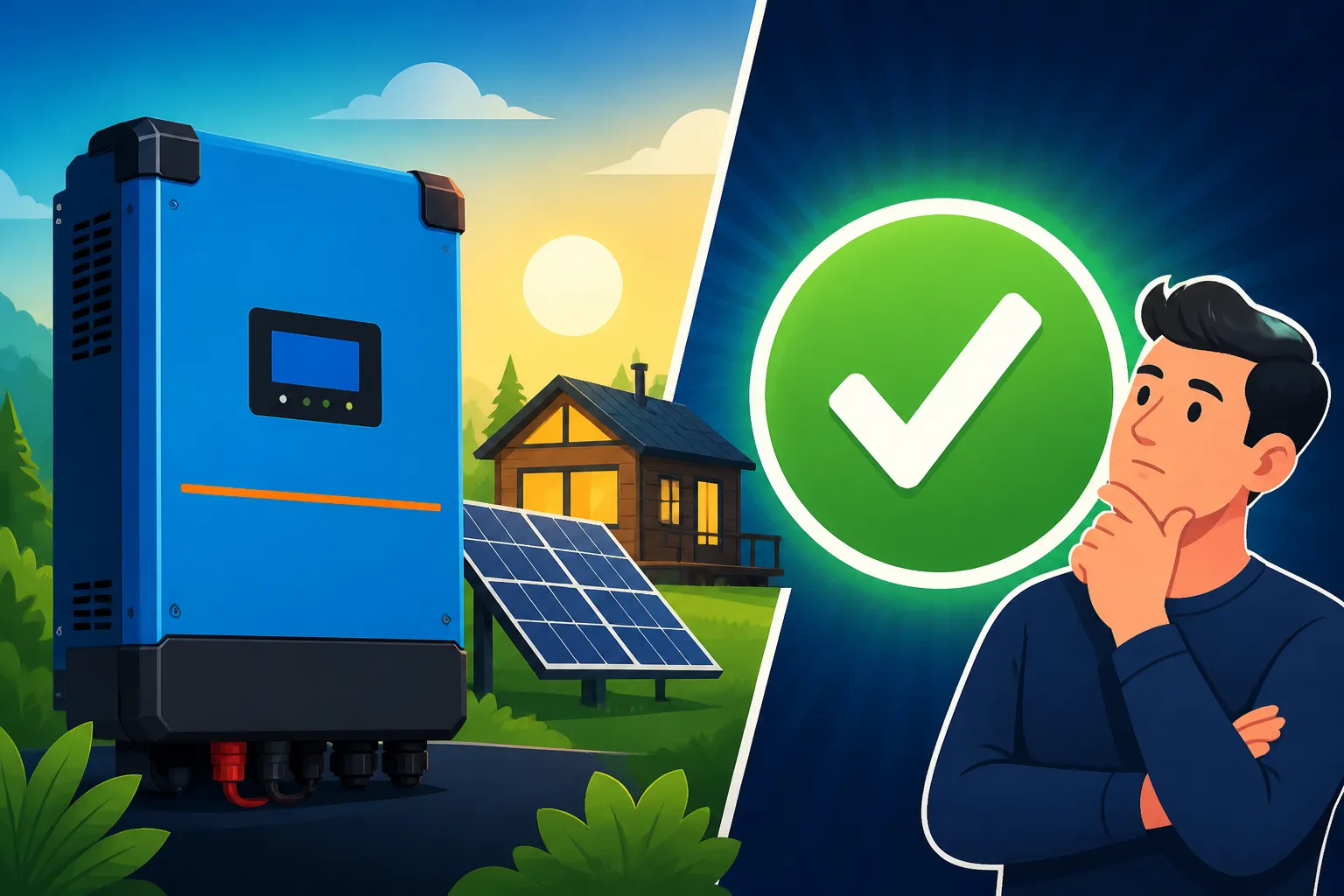
Choosing the right off-grid inverter can feel like you're trying to pick a needle out of a haystack, especially when you're betting your whole independent power system on it. Many folks worry about unreliable equipment leaving them in the dark or constantly needing costly repairs. This guide will take a deep dive into Victron Energy, a brand often whispered with reverence in off-grid circles, to help you understand if their inverters are truly the robust, reliable backbone your off-grid dreams deserve.
The Undeniable Importance of Your Off-Grid Inverter
It's easy to get excited about shiny new solar panels or massive battery banks, but honestly, the inverter is often the unsung hero, or sometimes, the silent saboteur, of an off-grid system. This critical component is what bridges the gap between the DC power stored in your batteries and the AC power that most of your household appliances, tools, and electronics demand. If your inverter isn't up to snuff, even the most perfectly sized solar array and battery bank can leave you frustrated.
Why the Inverter is the Unsung Heart of Your System
Think of your inverter as the translator in your off-grid electrical system. Your solar panels generate direct current (DC) power, which is then stored in your batteries, also as DC. But nearly everything we use daily – from your coffee maker and microwave to your laptop charger and power tools – runs on alternating current (AC) power, just like in a traditional grid-tied home. The inverter's job is to efficiently and cleanly convert that DC battery power into usable AC power, often at 120V or 240V, mimicking what you'd get from the utility company. Without a reliable inverter, all that beautiful solar energy and battery storage is essentially trapped. It’s why understanding How to Choose an Off-Grid Inverter is so crucial.
A well-chosen inverter does more than just convert power; it protects your appliances from dirty power, manages surge loads, and can even act as a system controller in more advanced setups. It influences everything from the longevity of your electronics to the overall efficiency of your power usage. This is why compromising on an inverter can lead to a cascade of problems down the line, affecting everything else connected to it.
Common Frustrations with Subpar Inverters
Many of us, myself included, have learned the hard way that skimping on an inverter can lead to a whole lot of headaches. Imagine this: you've just installed your new off-grid setup, excitedly plug in your favorite kitchen appliance, and poof – the inverter trips or simply refuses to power it. Or worse, you hear a strange buzzing from your electronics, and they start acting flaky. These are classic signs of a subpar inverter struggling to deliver clean, stable power.
Budget-friendly inverters often suffer from several issues. They might produce a "modified sine wave" AC output, which can damage sensitive electronics, motors, and anything with a timing circuit. Think about your refrigerator compressor struggling or your computer charger running hot. They might also have poor surge capabilities, meaning they can't handle the momentary extra power demand when an appliance like a well pump or an air conditioner first kicks on. Another common frustration is low efficiency, wasting precious battery power through heat, or simply failing prematurely, leaving you without power when you need it most. This is why understanding Pure Sine Wave vs Modified Sine Wave Inverters is so important for anyone looking to build a reliable off-grid system.
A Deep Dive into the Victron Energy Brand
When you start researching off-grid solar, it won't be long before the name Victron Energy pops up. They're a Dutch company with a long-standing reputation for high-quality, robust, and reliable power electronics. While their equipment might come with a higher price tag than some alternatives you might find on Amazon, many off-gridders swear by the long-term value and peace of mind they provide.
Victron's Reputation for Robustness and Reliability
Victron has built its reputation on engineering products that can withstand demanding environments and provide consistent performance, often for decades. They aren't just in the residential off-grid market; their equipment is widely used in marine applications, commercial vehicles, industrial power systems, and remote telecommunications sites – places where failure isn't an option. This kind of widespread adoption in mission-critical scenarios speaks volumes about their build quality and reliability. When you hear about an off-grid system that's been running flawlessly for 15 or 20 years, chances are it has a Victron inverter or charger at its core.
They use high-grade components and meticulous manufacturing processes, resulting in devices that are known for their durability. This commitment to quality translates directly into fewer breakdowns and a longer operational lifespan for your off-grid power system. For many, the peace of mind that comes with a Victron inverter is worth the initial investment, especially when you consider the hassle and potential costs of replacing a cheaper, less reliable unit every few years.
Understanding Victron's Product Philosophy: Modular and Integrated
One of the defining characteristics of Victron Energy is their comprehensive, modular product philosophy. Instead of just offering standalone components, they design an entire ecosystem of power electronics that are meant to work seamlessly together. This means their inverters, charge controllers, battery monitors, and system controllers all communicate and integrate, creating a highly cohesive and optimized system. This integrated approach allows for sophisticated monitoring, remote control, and intelligent power management that can be difficult to achieve with a mix-and-match approach using various brands.
Their product line caters to a wide spectrum of off-grid needs, from small RV setups to full-scale residential homesteads. While this modularity might seem intimidating at first, it offers incredible flexibility for customization and future expansion. You can start with a basic setup and gradually add components as your power needs grow or as your budget allows, knowing everything will integrate beautifully. This is crucial for anyone thinking about How to Design an Expandable System.
The Victron Ecosystem: From Inverters to Monitoring
Beyond just inverters, Victron offers a full suite of power products that form a cohesive system. Their SmartSolar MPPT charge controllers are top-tier, efficiently harvesting power from your panels and optimizing battery charging. Their BMV and SmartShunt battery monitors provide incredibly accurate real-time data on battery state of charge, voltage, current, and historical usage, which is invaluable for managing your power.
At the heart of a comprehensive Victron system often lies a "system controller" like the Cerbo GX. This device acts as the central communication hub, collecting data from all Victron components and allowing you to monitor and control your entire system remotely via the VictronConnect app or their online portal, VRM (Victron Remote Management). Imagine being able to check your battery levels, solar production, or even adjust charging parameters from anywhere in the world! This level of control and insight is a major advantage for serious off-gridders and contributes significantly to the overall reliability and efficiency of their solutions.
Key Victron Inverter Offerings for Off-Grid Living
Victron offers a range of inverters, each designed with specific applications and power demands in mind. Understanding the differences between these key product lines is essential for choosing the right one for your particular off-grid setup.
The Versatility of the Victron MultiPlus Series
The MultiPlus series is arguably Victron's most popular and versatile line of inverter/chargers, especially for off-grid applications. The name "MultiPlus" itself hints at its multi-functional nature: it's not just an inverter; it's also a sophisticated battery charger and a high-speed AC transfer switch, all in one compact unit. This integrated design simplifies wiring and installation, making it a favorite for many off-gridders.
For example, a Victron MultiPlus 3000VA unit is commonly used in medium to large off-grid cabins or RVs. It can provide a continuous 2400 watts of pure sine wave AC power, more than enough to run common household appliances. When connected to a generator or shore power (if you're in an RV), the MultiPlus automatically switches to charge your batteries while also passing through the external AC power to your loads. It can even combine the power from the generator with power from your batteries to provide a surge of power larger than what the generator could provide alone – a feature they call PowerAssist. This is incredibly useful for starting high-surge appliances like a well pump in a remote cabin. Its robust design and advanced features make it a go-to choice for those seeking reliability. Learn more about how these components fit together in an Off-Grid Solar System Design Basics.
The Powerhouse Victron Quattro Inverters
If the MultiPlus is versatile, the Victron Quattro series takes it a step further, designed for even more demanding off-grid scenarios. The key differentiator for the Quattro is its dual AC inputs, which allow you to connect two independent AC sources simultaneously, such as a generator and shore power (or two generators if you prefer). The Quattro can then automatically switch between these sources or combine them with battery power to meet your needs, providing unparalleled flexibility for managing diverse power inputs.
This makes Quattro inverters ideal for larger off-grid homes, commercial applications, or any setup where having redundant AC input options is critical. For instance, a homestead might use one AC input for a large backup generator and the other for a smaller, cleaner generator like a Honda EU2200i for lighter loads or specific battery charging. The Quattro handles the switching and power management seamlessly, ensuring a constant, stable power supply. Like the MultiPlus, the Quattro also boasts an excellent surge rating, clean pure sine wave output, and advanced charging capabilities for various battery types, including popular Best Lithium Batteries for Off-Grid options.
Smaller Scale Options and Components
While the MultiPlus and Quattro dominate the conversation for larger systems, Victron also offers excellent solutions for smaller off-grid setups and individual components that integrate into any system.
For simpler, smaller AC loads, their Phoenix Inverters provide pure sine wave power without the integrated charging or transfer switch capabilities. These are often chosen for applications where you already have a separate DC-to-DC charger or simply don't need the complexity of a MultiPlus. For example, a small solar setup for a shed might pair a SmartSolar MPPT charge controller with a Phoenix inverter to power a few lights and tools.
And of course, it's not just about the inverters. Victron's SmartSolar MPPT charge controllers are fantastic standalone units, highly efficient and programmable, making them a great choice even if you decide to go with a different inverter brand. Their battery monitors, like the SmartShunt, are also indispensable tools for keeping tabs on your battery bank's health, regardless of your inverter choice. These smaller components also benefit from the same robust build quality and integration capabilities that define the larger Victron product lines.
Here's a quick comparison of some popular Victron inverter features:
| Feature | Victron MultiPlus (e.g., 3000VA) | Victron Quattro (e.g., 5000VA) | Victron Phoenix (e.g., 1200VA) |
|---|---|---|---|
| Type | Inverter/Charger/Transfer Switch | Inverter/Charger/Dual Transfer Switch | Pure Sine Wave Inverter Only |
| AC Output Waveform | Pure Sine Wave | Pure Sine Wave | Pure Sine Wave |
| Integrated Charger | Yes | Yes | No |
| AC Inputs | 1 (for generator/shore power) | 2 (for two independent AC sources) | 0 (DC input only) |
| PowerAssist | Yes (boosts AC input with battery power) | Yes | No |
| Parallel/3-Phase Cap. | Yes (for increased power/multi-phase systems) | Yes (for increased power/multi-phase systems) | No |
| VE.Direct/VE.Bus | VE.Bus | VE.Bus | VE.Direct |
| Typical Application | RVs, cabins, small off-grid homes | Large off-grid homes, commercial, complex systems | Small off-grid setups, supplemental AC loads |
| Remote Monitoring | Yes, via Cerbo GX/VRM | Yes, via Cerbo GX/VRM | Yes, via VictronConnect (for some models) |
The Realities of Investing in Victron for Your Off-Grid Setup
Deciding on Victron for your off-grid power needs is a significant choice, and it's important to weigh both the benefits and the considerations. While their reputation for quality is well-earned, it comes with certain implications for your budget and the complexity of your system.
The Upfront Cost versus Long-Term Value Proposition
Let's be upfront: Victron equipment generally costs more upfront than many other brands on the market. If you're comparing a full Victron system to, say, a comprehensive Renogy kit you might find readily available online, the initial sticker shock can be real. For example, a high-quality Victron MultiPlus inverter can easily be two to three times the price of a similarly rated basic inverter from another brand. This is a common hurdle for many considering their first off-grid build, especially if they're trying to figure out How to Budget for an Off-Grid Solar System.
However, this higher upfront cost needs to be viewed through the lens of long-term value. Victron products are designed for longevity and resilience. They are less likely to fail prematurely, which saves you money on replacement costs, shipping, and the headache of being without power. Their efficiency often means you're wasting less precious battery power, extending your autonomy and potentially requiring a slightly smaller battery bank overall. The advanced features and integration also lead to a more reliable, stable, and manageable system, which can prevent costly appliance damage and maintenance down the road. For many, this translates into a lower total cost of ownership over the 10, 15, or even 20+ years an off-grid system is expected to last. In essence, you're paying for reliability, efficiency, and advanced control.
Installation and Configuration Considerations
Installing a Victron system, particularly a larger one with multiple integrated components like a MultiPlus, Cerbo GX, and SmartSolar controllers, can be more involved than setting up a simple plug-and-play solar generator or a basic off-grid kit. While the individual components are designed to be connected easily, the system configuration often requires a deeper understanding of electrical principles, battery charging profiles, and network settings. You’ll definitely want to refer to a thorough guide like Off-Grid Solar Installation Guide.
Victron provides excellent documentation and software (VictronConnect, VE.Config) that allows for extensive customization of charging parameters, inverter settings, generator start/stop conditions, and much more. This level of control is a huge benefit for optimizing your system, but it does mean there's a learning curve. For DIYers, it requires patience and a willingness to dive into manuals and online forums. Many will find it advantageous to consult with or hire an experienced off-grid electrician or installer familiar with Victron systems, especially for larger or more complex installations, to ensure everything is set up safely and optimally.
When Victron is the Right Choice and When it Might Not Be
So, when is Victron the absolute best fit for your off-grid vision?
- For permanent residences or critical power needs: If you're building a full-time off-grid home, a remote cabin where reliable power is non-negotiable, or powering sensitive medical equipment (like a CPAP machine), Victron's robust nature and pure sine wave output offer the highest level of reliability and power quality.
- For complex systems with multiple power sources: If you plan to integrate solar, a generator, and perhaps even wind power, or if you need sophisticated load management and remote monitoring, the Victron ecosystem excels. The ability to program generator auto-starts based on battery state or integrate seamlessly with various battery chemistries, including LiFePO4 batteries, is a major plus.
- When long-term durability and peace of mind are paramount: If you hate the idea of constantly troubleshooting or replacing components, and you want a system that will reliably serve you for decades, the investment in Victron pays off.
When might Victron not be the ideal choice?
- Tight budgets for basic needs: If you're on a shoestring budget and only need to power very basic DC loads and a few small AC items for occasional use (e.g., a simple camping setup or a small, rarely used shed), a less expensive inverter or a smaller portable solar generator might suffice. While a basic Renogy kit might get you started, you'll generally find Victron to be a higher-tier solution for more robust systems.
- Simple, temporary setups: For very small, portable power needs in an RV or camper that aren't for full-time living, a simpler, more affordable inverter, perhaps one found easily on Amazon, might be perfectly adequate. These typically don't require the same level of integration or robust features.
- Lack of willingness to learn/DIY: If you want a truly "set it and forget it" system with minimal configuration or if you're uncomfortable with the technical aspects of electrical systems, you might find the initial setup daunting without professional help.
Ultimately, Victron Energy has earned its place as a top-tier brand in the off-grid solar market. While the investment is higher, their reputation for reliability, advanced features, and comprehensive ecosystem makes them an excellent choice for anyone serious about building a robust, long-lasting, and highly manageable off-grid power system.
Disclaimer
This article is intended for informational purposes only and does not constitute professional electrical advice. Working with solar electrical systems can be dangerous. Always consult with a qualified electrician or solar professional before installing or making changes to your off-grid solar system. Follow all local codes and safety guidelines.