EcoFlow Delta Pro for Off-Grid: Specs and Review
Navigating the world of off-grid power can feel like trying to solve a complicated puzzle, especially when you're just starting out or looking to simplify an existing setup. Many folks dream of the freedom that comes with disconnecting from the utility grid, but the sheer complexity of sizing solar panels, matching inverters, and building a robust battery bank often leaves them feeling overwhelmed. This guide is here to cut through the confusion and take a close look at an increasingly popular all-in-one solution: the EcoFlow Delta Pro, delving into its specifications, real-world performance, and whether it truly offers a viable path to off-grid independence.
The Evolving Landscape of Off-Grid Power Solutions
For years, building an off-grid solar system meant a deep dive into electrical engineering. You'd be researching individual components like solar panels, charge controllers, inverters, and battery banks, trying to figure out how they all fit together safely and efficiently. It’s a rewarding journey, don’t get me wrong, but it’s definitely not for the faint of heart or those short on time. We've all been there, staring at complex wiring diagrams, wondering if we bought the right gauge wire or if our inverter could truly handle that coffee maker surge.
This traditional approach, while robust and highly customizable, has its barriers. It often requires significant technical knowledge, meticulous planning on how to install an off-grid solar system, and often a substantial upfront investment, not to mention the physical space needed for all those separate components. For someone looking to power a small cabin, an RV, or even just provide reliable backup power, the idea of a fully integrated, "plug-and-play" solution is incredibly appealing.
Enter the era of portable power stations. These devices have revolutionized the conversation around off-grid and backup power by packaging the essential components – a battery, an inverter, and a charge controller – into a single, user-friendly unit. They offer a middle ground between small, emergency-only solar generators and massive, permanently installed systems. The question then becomes, can a "portable" unit truly handle the demands of sustained off-grid living, especially when scaled up? The EcoFlow Delta Pro aims to answer that with a resounding yes, positioning itself as a legitimate contender for various off-grid scenarios, from casual camping to supporting a full-time tiny home.
Diving Deep into the EcoFlow Delta Pro Specifications and Features
When you're considering a power solution, the raw numbers tell a crucial part of the story. The EcoFlow Delta Pro isn't just another portable power station; it's a beast designed to bridge the gap between small-scale power and more comprehensive off-grid systems. Let's break down what makes it tick.
Power Output and Capacity
The heart of any off-grid system is its battery, and the Delta Pro boasts a substantial one. It features a 3,600Wh (3.6kWh) LiFePO4 battery. For those unfamiliar, LiFePO4, or Lithium Iron Phosphate, batteries are renowned for their long cycle life, safety, and stable performance, making them an excellent choice for off-grid applications. This is a significant improvement over older battery chemistries, and if you're curious about the longevity and performance, you might want to look into topics like Best Lithium Batteries for Off-Grid or compare LiFePO4 vs Lead-Acid Battery Cost.
In terms of power output, the Delta Pro offers an impressive 3,600W (Watt) continuous AC output. This means it can comfortably run most common household appliances, from a full-size refrigerator to a microwave, without breaking a sweat. Where it really shines is its X-Boost mode, which allows it to power appliances up to 4,500W, letting you briefly handle higher surge demands from motors or compressors – think starting up a well pump or a power tool. It also delivers a pure sine wave output, which is crucial for sensitive electronics, ensuring your gadgets run smoothly without risk of damage. Beyond AC, it provides a range of DC outputs, including USB-A, USB-C, and a 12V car output, catering to all your smaller device charging needs.
Charging Versatility and Speed
One of the biggest frustrations with off-grid setups can be the slow charging times, especially when relying solely on solar. The EcoFlow Delta Pro tackles this head-on with an array of charging options that are truly game-changers.
First up, AC fast charging. This unit can pull up to 3,000W from a standard AC wall outlet, meaning it can go from 0% to 80% charged in just about an hour, and a full charge in under two hours. This is exceptionally fast and incredibly convenient if you have grid access periodically or need to quickly top it off before heading out.
Then there's the solar input. The Delta Pro can accept up to 1,600W of solar input, which is a massive capability for a unit of its size. This means you can connect a significant number of solar panels directly to it, potentially reaching a full charge in as little as 2.8 to 5.6 hours with optimal sunlight, depending on the number and type of panels you're using. It comes with an integrated MPPT (Maximum Power Point Tracking) charge controller, ensuring efficient harvesting of solar energy. This robust solar input capability is vital for sustained off-grid living, as it minimizes your reliance on other charging methods. Many users pair their Delta Pro with high-efficiency solar panels from brands like Renogy or others available on Amazon to maximize their daily energy harvest. You can learn more about how to choose an off-grid solar system to fit your charging needs.
What truly sets the Delta Pro apart is its ability to charge from an EV charging station (up to 3,400W), which is a unique and incredibly useful feature for anyone on the go. You can also charge it from your car's 12V outlet, though this is much slower and best for maintaining a charge rather than significant replenishment. This multi-faceted approach to charging means you're rarely left without power, no matter where your off-grid adventures take you.
Expandability and Ecosystem
The EcoFlow Delta Pro isn't just a standalone unit; it's designed to be the core of a scalable power ecosystem. This expandability is crucial for anyone looking for a long-term off-grid solution that can grow with their needs.
The most straightforward way to expand is by adding up to two Delta Pro Smart Extra Batteries. Each extra battery adds another 3,600Wh of capacity, meaning a single Delta Pro with two extra batteries can give you a colossal 10.8kWh of storage. This kind of capacity rivals many traditional home battery banks and makes it suitable for extended off-grid stays or even powering a small home. Understanding how much battery capacity you need is key here.
But it doesn't stop there. EcoFlow offers a Smart Home Panel, which allows you to integrate two Delta Pro units (with up to four extra batteries) directly into your home's electrical system. This essentially turns them into a robust home backup power solution, seamlessly switching over when the grid goes down. While primarily designed for backup, this setup can be leveraged for off-grid living, allowing you to power crucial circuits directly. The system can also connect to a Smart Generator, which automatically kicks in to recharge the Delta Pro when its battery level gets too low, providing an extra layer of reliability. Everything can be monitored and controlled via the EcoFlow app, giving you real-time data and remote control over your power system.
Here's a quick look at the core specifications:
| Feature | Specification | Benefit |
|---|---|---|
| Battery Capacity | 3,600Wh (expandable to 10.8kWh with 2 extra batteries) | Ample power for extended use, scalable for various needs. |
| Battery Chemistry | LiFePO4 (Lithium Iron Phosphate) | Long cycle life (6,500 cycles to 50% capacity), enhanced safety. |
| AC Output | 3,600W Continuous, 4,500W X-Boost | Powers most heavy-duty appliances and tools. |
| Peak Surge | 7,200W | Handles high startup loads from motors. |
| AC Input | Up to 3,000W (wall outlet) | Ultra-fast charging from grid power. |
| Solar Input | 11-150V, 1,600W Max, 15A Max | Connects a significant solar array, efficient charging. |
| EV Charging Input | Up to 3,400W | Unique and convenient charging option on the go. |
| Weight | ~99 lbs (45 kg) | Heavy but manageable with integrated wheels and handle. |
| Dimensions | 25 x 11.2 x 16.4 inches | Compact for its capacity, but still substantial. |
Real-World Performance and Practical Applications for Off-Grid Living
Knowing the specs is one thing, but how does the EcoFlow Delta Pro actually perform when you’re out there living the off-grid dream? That’s where the rubber meets the road. It’s not just about theoretical numbers; it’s about reliable power when you need it most.
Powering a Cabin or Tiny Home
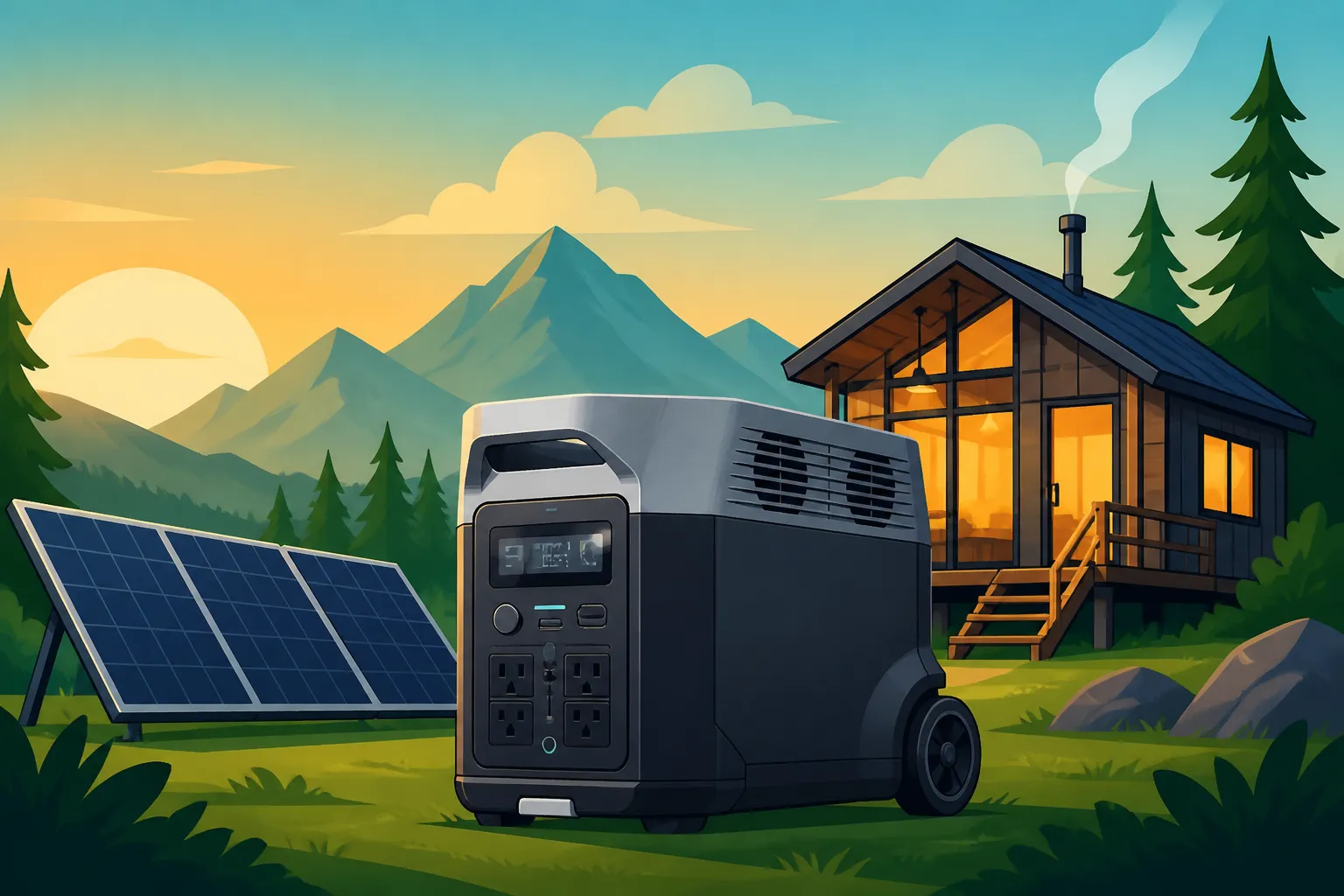
Imagine your cozy off-grid cabin tucked away in the woods. You want to run your energy-efficient refrigerator, keep the lights on after dusk, charge your laptop, and maybe even power a small well pump for a few minutes each day. A single Delta Pro can absolutely handle this. Its 3,600Wh capacity, especially when augmented by a solid solar panel setup, means you can comfortably manage your daily energy usage. For those with higher demands or a larger footprint, adding a couple of Smart Extra Batteries significantly boosts your storage, allowing you to weather several cloudy days without issue. This kind of setup can rival the capacity of many fixed installations, but with the added flexibility of being able to move the main unit if needed.
Users often pair the Delta Pro with a dedicated solar array, perhaps using high-quality panels to ensure maximum power generation, especially during the shorter, darker days of winter. For instance, if you're trying to figure out How Much Solar to Run A Refrigerator or how to keep your lights and electronics going, the Delta Pro provides a centralized, easy-to-manage solution.
RV and Van Life Integration
This is where portable power stations truly shine, and the Delta Pro is no exception. For RVers and van lifers, space and weight are always a concern, but so is reliable power. The Delta Pro, while hefty at nearly 100 lbs, has integrated wheels and a retractable handle, making it surprisingly maneuverable. This means you can roll it out to catch the sun with portable solar panels or stow it away when driving.
Its multiple charging inputs are a massive boon for life on the road. You can charge it from shore power at an RV park, from your vehicle's alternator while driving, or most importantly, from solar panels deployed when you're parked. The ability to charge from EV stations is also revolutionary for long-distance travelers. Instead of building a complex system with a dedicated inverter, charge controller, and separate battery bank in your RV, the Delta Pro offers an all-in-one approach. It simplifies the setup and maintenance significantly, allowing you to focus more on the adventure and less on electrical engineering. For anyone considering an off-grid solar cost for an RV, a solution like the Delta Pro can often present a compelling alternative to a custom build.
Emergency Preparedness and Backup
Even if your primary goal isn't full-time off-grid living, the Delta Pro makes an excellent case for emergency preparedness. Power outages can be incredibly disruptive, whether you live in a rural area prone to storms or a suburban home facing unexpected grid failures. Having a reliable backup power source that can keep your essentials running – your refrigerator, freezer, medical devices like a CPAP machine, lights, and communication devices – is invaluable.
The Delta Pro's rapid charging capabilities mean you can quickly top it off if you get a few hours of grid power between outages. Its solar input ensures you can recharge even during prolonged blackouts, providing true energy independence. When paired with the Smart Home Panel, it can automatically detect an outage and switch over to battery power in milliseconds, often faster than traditional generators can even start. This seamless transition prevents disruptions to sensitive electronics and ensures your critical appliances remain powered. It’s far quieter and cleaner than a gas generator, and the immediate switchover provides peace of mind.
Compared to Traditional DIY Systems
When we talk about the EcoFlow Delta Pro, it's natural to compare it to a custom-built off-grid solar system. A traditional DIY system, composed of individual components, offers maximum flexibility and often a lower cost per watt-hour if you’re doing all the labor yourself. Brands like Victron Energy or Outback Power are staples in the DIY community, known for their robust, modular components. However, this comes with a steep learning curve, requires significant wiring knowledge, and the initial setup time can be extensive.
The Delta Pro, on the other hand, prioritizes ease of use and rapid deployment. It's truly a "plug-and-play" solution. You connect your solar panels, plug in your appliances, and you're good to go. This makes it incredibly appealing for beginners or those who want a reliable system without the hassle of individual component selection and wiring. While the initial investment might seem higher than sourcing individual parts, you're paying for convenience, integration, and a unified system warranty. For many, this trade-off is well worth it, especially if they are looking for an Off-Grid Solar Kit Price Ranges that is within their budget.
Considerations Before Committing to the Delta Pro for Your Off-Grid Setup
While the EcoFlow Delta Pro is a powerhouse and a fantastic option for many, it's not a one-size-fits-all solution. There are always aspects to consider and alternatives to weigh before making a significant investment in your off-grid power infrastructure.
Cost Versus Value
Let's be realistic: the EcoFlow Delta Pro represents a significant upfront investment. While pricing fluctuates, it typically falls into a higher price bracket compared to smaller portable power stations. When you start adding extra batteries and accessories like the Smart Home Panel or the Smart Generator, the total cost can quickly approach that of a smaller, traditional DIY off-grid system. You might find yourself comparing its price to the cost of an off-grid solar battery bank or the combined cost of quality Best Off-Grid Solar Inverters and a separate battery.
However, it's essential to look beyond the sticker price and consider the value proposition. The Delta Pro offers unparalleled ease of use, sophisticated battery management, an integrated pure sine wave inverter, and a highly efficient MPPT solar charge controller – all in one cohesive unit. The time saved in research, wiring, and troubleshooting, plus the confidence that comes with a professionally engineered and warrantied system, adds considerable value. For some, the peace of mind and simplicity outweigh the potential for marginal savings by piecing together components themselves. If you're on a tight budget for your off-grid solar system, it's important to weigh these factors carefully.
Portability Versus Permanence
The term "portable power station" can sometimes be a bit misleading for the Delta Pro. Yes, it has wheels and a handle, and you can certainly move it around. At nearly 100 pounds, though, it's more "relocatable" than genuinely "portable" in the sense of tossing it into a backpack. While perfect for moving around a cabin, an RV, or a workshop, it's not something you'd easily carry on a hiking trip.
For truly mobile applications, like backpacking or extremely light van life, smaller solar generators or compact power banks might be more suitable. However, for a semi-permanent off-grid setup in a cabin, shed, or RV where you want the option to move your power hub or take it on specific excursions, the Delta Pro hits a sweet spot. Its ability to serve as a robust core of a system while retaining some degree of mobility is a unique advantage, allowing you to adapt your power source to changing needs or locations. For more insights on this, you might explore options like Best Off-Grid Solar Kit for a Tiny Home or Best Off-Grid Solar Kit for an RV.
Limitations and Alternatives
While the Delta Pro is highly capable, it does have some inherent limitations that might push certain users toward alternative solutions. For instance, for very large off-grid homes with substantial, year-round energy demands, especially those running multiple high-draw appliances simultaneously (think electric water heaters, central AC, or multiple power tools), even an expanded Delta Pro system might not fully meet peak demands. In such cases, a fully customized, larger-scale off-grid solar system design with higher wattage inverters and larger battery banks might be more appropriate. You can explore how to size an off-grid solar system for a whole house for these types of scenarios.
Furthermore, if you're an experienced DIY enthusiast who enjoys the process of building and customizing every aspect of your system, the integrated nature of the Delta Pro might feel restrictive. You won't have the same granular control over individual components, nor the ability to mix and match brands exactly as you please (though you can certainly connect other brands' solar panels to it, like those from Renogy, as long as they meet the voltage and wattage requirements).
Alternatives often include other robust all-in-one solar generators like the Bluetti AC300 or the Anker SOLIX F3800, which offer similar capabilities and ecosystems. For those seeking a more traditional build, purchasing individual components from reputable manufacturers and assembling them yourself can offer greater scalability and component-level replacement options down the line. Many of these components, from solar panels to battery monitors, are readily available on platforms like Amazon. Ultimately, the best choice depends on your specific energy needs, budget, technical comfort level, and the level of customization you desire for your off-grid journey.
Disclaimer
The information provided in this article is for general informational purposes only and does not constitute professional advice. Off-grid solar system design and installation can be complex and involve electrical hazards. Always consult with qualified professionals and adhere to local electrical codes and regulations before undertaking any solar installation or modification.