AIMS Power Off-Grid Inverter Review
Choosing the right inverter for your off-grid solar system can feel like navigating a maze. There are so many options out there, and the last thing you want is to invest in something that can't reliably power your precious appliances, especially when you're relying solely on it. This guide is all about shedding light on AIMS Power off-grid inverters, helping you understand their capabilities, features, and whether they're the solid choice you need for your independent power setup.
Understanding Off-Grid Inverters and Why AIMS Power Stands Out
When you're truly living off the grid, your inverter isn't just a component; it's the beating heart of your entire electrical system. It takes the direct current (DC) power stored in your batteries and transforms it into the alternating current (AC) that your everyday household appliances use. Without a reliable inverter, all that beautiful solar energy harvested by your panels and meticulously stored in your battery bank is, well, useless for most things.
The Crucial Role of an Off-Grid Inverter
Think about it: your laptop, your refrigerator, your lights, your well pump – almost everything in a modern home runs on AC power. Your solar panels, however, produce DC power, and your batteries store it as DC. The inverter is the bridge. It's not just about converting electricity; it's about doing it efficiently, cleanly, and reliably, day in and day out, often in challenging conditions.
Unlike grid-tied inverters, which are designed to work in conjunction with the utility grid, off-grid inverters must be robust enough to create their own stable AC waveform. This means they need to handle fluctuations in demand, deliver consistent power, and protect your sensitive electronics from surges or dirty power. When you're miles from the nearest power pole, you can't just call the utility company if your inverter falters. That's why reliability and durability are non-negotiable for off-grid scenarios. A good inverter should be a "set it and forget it" kind of device, requiring minimal fuss once installed correctly.
AIMS Power's Philosophy and Product Range
AIMS Power has built a solid reputation over the years in the off-grid community as a go-to brand for dependable power conversion equipment. They understand the unique demands of living independent of the grid, and their product line reflects this focus on robust performance and durability. While you might find simpler, more budget-friendly options from brands like Renogy for smaller applications, AIMS Power tends to cater to those looking for a more heavy-duty, long-term solution, especially for whole-home or substantial cabin setups.
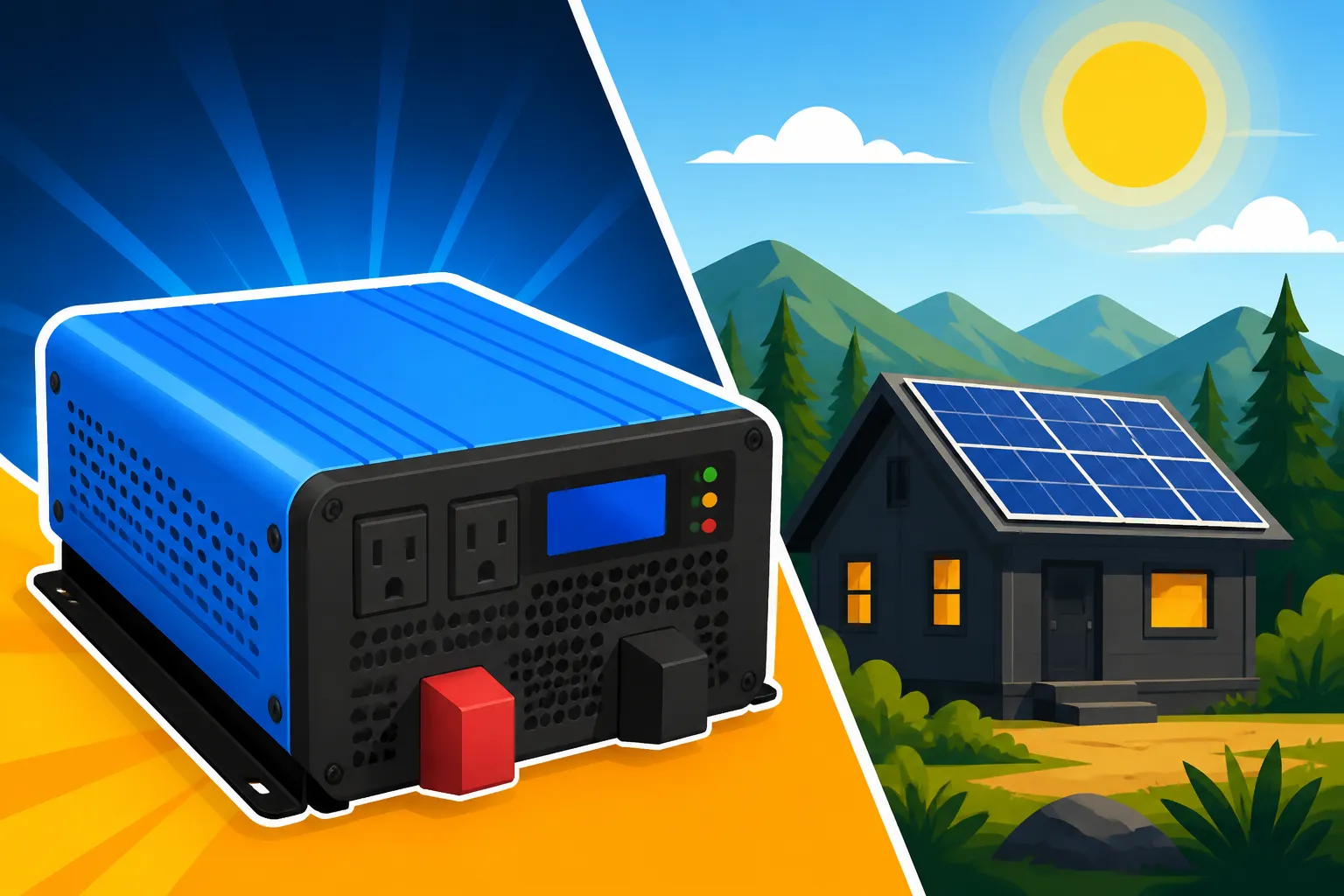
They offer a surprisingly diverse range of products, far beyond just basic inverters. You'll find pure sine wave inverters, which are the gold standard for powering sensitive electronics, as well as modified sine wave options for less demanding applications. But where they really shine for off-gridders is their comprehensive line of inverter-chargers, which combine the functions of an inverter, a battery charger, and often a transfer switch into one intelligent unit. This integrated approach can greatly simplify the design and installation of an off-grid system, reducing clutter and wiring complexity. Whether you're building a compact system for a small cabin or a robust setup for a permanent off-grid homestead, AIMS Power likely has a product tailored to your needs, often available through specialized distributors or even on online marketplaces like Amazon, though bigger units might require ordering directly or through a dealer.
Deep Dive into AIMS Power Off-Grid Inverter Features
Let's get into the nitty-gritty of what makes AIMS Power inverters tick and why their features are so important for off-grid living. It's not just about turning DC into AC; it's about doing it well.
Pure Sine Wave Output: The Gold Standard for Off-Grid
One of the most critical specifications for any off-grid inverter is its output waveform. AIMS Power primarily focuses on pure sine wave inverters, and for good reason. Imagine the electricity coming out of your wall outlets when you're connected to the grid; that's a pure sine wave. It's a smooth, continuous, and efficient flow of power.
When an inverter produces a "modified sine wave" (sometimes called a "square wave" or "stepped sine wave"), it's essentially a rough approximation of a pure sine wave. While these cheaper inverters can power simple devices like incandescent lights or basic tools, they can cause serious problems for sensitive electronics. Computers, modern refrigerators, medical equipment (like CPAP machines), microwaves, and even some power tools with brushless motors often require pure sine wave power to operate correctly, efficiently, and without damage. Running these devices on a modified sine wave can lead to buzzing, overheating, reduced lifespan, or even outright failure. AIMS Power's commitment to pure sine wave output means you can run virtually any appliance in your off-grid home with confidence, just as you would on grid power. This feature alone makes them a strong contender for anyone serious about a comfortable off-grid lifestyle. If you want to dive deeper, check out our article on Pure Sine Wave vs Modified Sine Wave Inverters.
Robust Construction and Reliability
Living off-grid often means dealing with environments that aren't always climate-controlled. Whether it's the freezing cold of a mountain cabin, the intense heat of a desert homestead, or the vibrations of an RV on the road, your equipment needs to withstand it. AIMS Power inverters are known for their sturdy, heavy-duty construction. They often feature large, efficient cooling fans and robust internal components designed to handle continuous high loads. This isn't just about surviving; it's about thriving.
Many AIMS Power models incorporate advanced protections such as overload shutdown, over-temperature protection, low and high voltage alarms, and short-circuit protection. These safeguards are absolutely vital for preventing damage to your expensive battery bank and the inverter itself, giving you peace of mind that your system won't go down under unexpected stress. For example, if your well pump kicks on and creates a sudden surge, a quality AIMS Power inverter is designed to absorb that brief spike without tripping or failing, unlike a weaker unit that might just give up. This level of reliability is what makes AIMS Power a trusted name for serious off-grid applications.
Inverter-Charger Combos for Streamlined Systems
One of the standout features of many AIMS Power offerings for the off-grid enthusiast is their line of inverter-chargers. These integrated units are true workhorses, combining an inverter, a multi-stage battery charger, and often an automatic transfer switch into a single, compact device.
What does this mean for you? It means fewer individual components to buy, wire, and troubleshoot. If you have a backup generator – and many off-gridders wisely do – an AIMS Power inverter-charger can automatically detect when the generator starts, switch your loads over, and begin charging your batteries, all seamlessly. Once the batteries are topped off or the generator fuel runs low, it can switch back to inverter power. This intelligent automation is a game-changer, especially during extended cloudy periods or when you need a quick top-up of your batteries without manually fiddling with switches and chargers. This combination simplifies wiring diagrams and makes your entire power system more efficient and user-friendly, providing a comprehensive solution often sought after in detailed system designs.
Practical Considerations and Real-World Performance
Beyond the technical specs, how do AIMS Power inverters perform in the wild? What should you keep in mind when integrating one into your precious off-grid setup?
Sizing Your AIMS Power Inverter for Your Needs
Getting the right size inverter is paramount for a successful off-grid system. Too small, and you won't be able to run all your desired appliances, especially those with high surge demands like a microwave or a power tool. Too large, and you've spent extra money and might be running it less efficiently than a perfectly sized unit.
The key is to perform a thorough load analysis, calculating both your continuous wattage needs and any potential surge loads. Continuous watts are what your appliances draw when running normally (e.g., a refrigerator humming along). Surge watts are the brief, much higher power spikes some appliances require to start up (e.g., the initial compressor kick of a fridge or a well pump). A good AIMS Power inverter will have a high surge rating, allowing it to handle these brief demands gracefully. For instance, a 3000-watt continuous inverter might have a 6000-watt surge capability, which is perfect for common household appliances. Don't forget to account for how many hours a day each appliance runs. If you're wondering how much power specific appliances need, exploring topics like What Size Inverter to Run A Refrigerator or What Size Inverter to Run An Air Conditioner can be incredibly helpful. Proper sizing ensures you maximize your investment and avoid frustrating power outages. Our guide on How to Size an Off-Grid Inverter can walk you through the entire process.
Installation and Compatibility
Installing an AIMS Power inverter, especially their larger inverter-charger units, involves careful planning and adherence to electrical safety standards. While many off-gridders are keen on DIY, it's crucial to follow manufacturer instructions precisely and consider consulting with a qualified electrician for the AC wiring, especially if connecting to a breaker panel. Proper ventilation is also key, as even the most efficient inverters generate some heat.
AIMS Power inverters are generally compatible with all common off-grid battery chemistries, including traditional lead-acid (flooded, AGM, Gel) and the increasingly popular lithium iron phosphate (LiFePO4) batteries. Many models allow you to configure charging parameters to perfectly match your battery bank's specifications, optimizing their lifespan and performance. If you're building a substantial battery bank, you might also want to look into How Many Batteries for an Off-Grid System to ensure your power storage matches your inverter's capabilities. Additionally, AIMS Power often offers optional remote monitoring panels and battery temperature sensors, which provide valuable insights into your system's health and help prolong battery life. While brands like Victron Energy are often lauded for their extensive monitoring capabilities, AIMS Power provides solid, practical solutions that get the job done reliably.
Pros and Cons of AIMS Power Inverters
Every piece of equipment has its strengths and weaknesses, and AIMS Power inverters are no exception. Understanding these can help you make an informed decision for your specific off-grid needs.
Pros:
- Exceptional Reliability and Durability: This is arguably their biggest selling point. AIMS Power units are built like tanks, designed to handle continuous operation and harsh off-grid conditions. This means less downtime and fewer headaches in remote locations.
- Pure Sine Wave Output: For anyone running modern electronics, appliances, or sensitive equipment, the clean pure sine wave power is a major advantage, ensuring smooth operation and preventing damage.
- Integrated Inverter-Charger Solutions: Their all-in-one units simplify system design, especially when integrating a backup generator, making automatic power management a breeze.
- High Surge Capability: Many models offer impressive surge ratings, which is crucial for starting motors found in refrigerators, well pumps, and power tools.
- Wide Product Range: From smaller portable units to heavy-duty whole-house systems, they offer a diverse selection to meet various power demands and budgets.
- Good Customer Support: Many users report positive experiences with AIMS Power's technical support, which is invaluable when you're troubleshooting in a remote setting.
Cons:
- Cost: Generally, AIMS Power inverters tend to be priced higher than some entry-level or budget brands you might find, for example, simple modified sine wave inverters from less specialized manufacturers. This is often a trade-off for their robust build and reliable performance. However, when you consider the Cost of an Off-Grid Solar Inverter and the long-term value, it's often a worthwhile investment.
- Size and Weight: Their more powerful units can be quite large and heavy, requiring dedicated mounting space and proper handling during installation.
- Advanced Features Can Have a Learning Curve: While their inverter-chargers offer powerful functionality, configuring specific settings for battery charging profiles or generator auto-start can sometimes require a bit of reading and understanding of the manual.
- Limited "Smart Home" Integration: Compared to some high-end brands that focus heavily on app-based monitoring and smart home integration, AIMS Power tends to be more utilitarian, prioritizing robust function over fancy digital bells and whistles.
Ultimately, the pros often outweigh the cons for those seeking a highly reliable and durable solution for their off-grid power needs.
What AIMS Power Inverters Can Power and Cost Expectations
Now, let's talk about what you can actually do with an AIMS Power inverter and what kind of investment you're looking at.
Powering Your Off-Grid Lifestyle
An AIMS Power inverter is designed to be the backbone of your entire off-grid electrical system, whether it's a small weekend cabin or a full-time family homestead. Their pure sine wave output ensures that you can power virtually any standard household appliance with confidence.
For smaller setups, a 1500-watt or 2000-watt AIMS Power inverter can easily handle a small refrigerator, lights, charging laptops and phones, a TV, and small kitchen appliances like a blender or toaster. This is perfect for a hunting cabin or a tiny home where power demands are modest and intermittent.
For a more robust system, perhaps for a full-time off-grid home, a 3000-watt to 6000-watt (or even larger) inverter-charger from AIMS Power becomes an excellent choice. These units can comfortably run larger refrigerators, freezers, washing machines, microwaves, and even a well pump or a mini-split air conditioner (though AC will require significant solar panel and battery capacity to run sustainably). They're built to handle the simultaneous demands of multiple appliances, giving you a truly home-like experience. Consider how much energy your appliances draw; for instance, understanding the Cost to Run A Refrigerator on Off-Grid Solar or the Cost to Run An Air Conditioner on Off-Grid Solar can help you determine the overall system size needed, not just the inverter.
Cost Breakdown and Value Proposition
The cost of an AIMS Power off-grid inverter can vary significantly based on its wattage, features (pure sine vs. modified sine, inverter-charger functionality), and voltage (12V, 24V, 48V). Generally, you can expect to find their pure sine wave inverters ranging from a few hundred dollars for smaller, basic models (e.g., 1000W) to several thousand dollars for their larger, more sophisticated inverter-chargers (e.g., 6000W or 10,000W models).
For comparison, a small 1000-watt pure sine wave inverter might cost anywhere from $200-$400, while a robust 6000-watt pure sine wave inverter-charger could be in the $1,500-$3,000 range, sometimes more for industrial-grade units. While this might seem like a substantial upfront investment compared to some cheaper, less feature-rich options you might see online from generic sellers, it's important to view it as a long-term investment in reliability and functionality.
When you weigh the cost against the peace of mind that comes with dependable pure sine wave power, robust build quality, and integrated charging capabilities, the value proposition of AIMS Power becomes clear. For many off-gridders, the slightly higher initial outlay prevents costly appliance damage, frustrating downtime, and the eventual need to replace cheaper, less durable equipment. It contributes significantly to the long-term viability and enjoyment of your off-grid system. You can often find a good selection of their products, including detailed specifications and pricing, on reputable off-grid solar supply websites, and occasionally, smaller units are available for purchase on Amazon. This overall approach makes a big difference in the long run, leading many to believe that Is Off-Grid Solar Worth the Cost when quality components like AIMS Power are utilized.
| Feature/Spec | AIMS Power 1500W Pure Sine Inverter (Basic) | AIMS Power 3000W Pure Sine Inverter-Charger (Mid-Range) | AIMS Power 6000W Low Frequency Inverter-Charger (Heavy-Duty) |
|---|---|---|---|
| Continuous Power | 1500 Watts | 3000 Watts | 6000 Watts |
| Surge Power (20s) | 3000 Watts | 9000 Watts | 18000 Watts |
| Waveform | Pure Sine Wave | Pure Sine Wave | Pure Sine Wave |
| Battery Voltage | 12V or 24V DC | 12V, 24V, or 48V DC | 24V or 48V DC |
| Charger Function | No (Inverter only) | Yes (Multi-stage, 30-100A options) | Yes (Multi-stage, 60-120A options) |
| Transfer Switch | No | Yes (Automatic) | Yes (Automatic) |
| Typical Use Case | Small cabin, RV, basic electronics | Medium cabin, workshop, backup power, small home | Large home, heavy appliance loads, commercial applications |
| Price Range | $200 – $400 | $800 – $1,500 | $1,800 – $3,500+ |
Remember, prices are approximate and can vary based on retailer, specific model, and current market conditions. When you're ready to make a choice, you might find our general guide on Best Off-Grid Solar Inverters helpful for comparing brands, or if you're looking for specific advice on how to select the best option, our article on How to Choose an Off-Grid Inverter can provide detailed insights.
Disclaimer
This article is for general informational purposes only and does not constitute professional advice. Laws, prices and regulations vary by location and change over time. Consult a qualified professional for guidance on your specific situation.