How to Estimate Appliance Power Draw
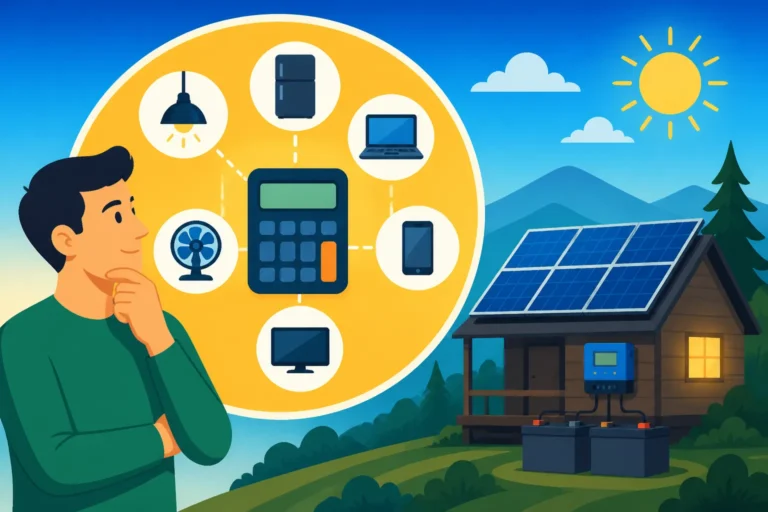
One of the biggest headaches when planning an off-grid solar system is figuring out exactly how much power your everyday gadgets and appliances actually suck up. It often feels like a giant guessing game, and getting it wrong can mean anything from dim lights to completely running out of juice when you least expect it. This guide is all about demystifying that process, showing you how to accurately estimate appliance power draw so you can design a robust and reliable off-grid setup that keeps your homestead humming along, no matter what.
Why Getting Your Power Draw Right is Absolutely Essential
When you’re relying on the sun for all your electricity, understanding how much energy each appliance consumes isn't just a good idea – it's foundational to your entire system's success. Think of it like budgeting your money; if you don't know where every dollar is going, you'll quickly find yourself in the red. The same goes for your off-grid power. Underestimating your needs can lead to a frustrating experience, while overestimating can lead to unnecessary expenses.
Avoiding System Failures and Frustrations
Imagine this: you've finally set up your beautiful off-grid cabin, the sun is shining, and you decide to fire up the well pump, only for your lights to flicker and everything to go dark. Sound familiar? This common scenario often stems from miscalculating the surge or starting power an appliance demands. Many motor-driven devices, like refrigerators, pumps, or power tools, draw a much higher burst of power for a few seconds when they first kick on, before settling into their continuous running wattage. If your inverter isn't sized to handle these surges, it will trip or even fail, leaving you in the dark.
Beyond immediate outages, consistent underestimation can also lead to long-term battery degradation. If your solar array and battery bank are constantly struggling to keep up with your daily energy demands, your batteries will be routinely discharged too deeply, significantly shortening their lifespan. Investing in a properly sized system from the start protects your valuable components and saves you money in replacement costs down the line. It really comes down to creating a reliable, stress-free off-grid experience. For a deeper dive into overall planning, check out our guide on how to size an off-grid solar system.
Optimizing Your System Sizing and Budget
Every component in your off-grid solar system – from the solar panels to the charge controller, batteries, and inverter – is directly impacted by your estimated power draw. If you don't accurately know your energy consumption, you'll either spend too much on an oversized system or constantly battle an undersized one. It’s a delicate balance, and precision pays off.
For instance, if you accurately calculate that your daily energy needs are 5 kWh, you can then move on to figuring out how many solar panels for off-grid living you’ll need to generate that much power, and subsequently, how many batteries for an off-grid system will be required to store it. An accurate load analysis, which starts with understanding appliance draw, ensures that you buy the right amount of equipment. Overspending on extra panels or a larger battery bank than you truly need can add thousands to your initial setup costs. Conversely, going too small means you’ll be constantly worried about conserving power, running a generator, or even facing system expansion down the road, which also has its own costs like those discussed in the Cost of Expanding an Off-Grid System. Getting a realistic picture of your consumption is the first critical step in building a sustainable off-grid lifestyle.
Decoding Appliance Labels and Specifications
Figuring out how much power your appliances use can sometimes feel like reading a foreign language. But once you know what to look for, those cryptic labels become incredibly helpful. Most appliances provide critical information right on the device itself, often on a small sticker or plate, or buried deep in the owner's manual.
Understanding Nameplate Data
Nearly every electrical appliance comes with a nameplate, usually a sticker or embossed metal plate, that lists its electrical specifications. This is your first and most reliable source of information. Look for details such as:
- Watts (W): This indicates the instantaneous power draw of the appliance. Some appliances might list both "running watts" and "starting watts" (or "surge watts"). Pay close attention to both, especially for anything with a motor. A microwave, for example, might be listed as 1000W, but its actual output wattage is often lower (e.g., 700W), with the 1000W being the power it draws from the wall.
- Amps (A): This is another measure of current draw. If you have Watts and Volts (V), you can easily calculate Amps (Watts / Volts = Amps). For standard household appliances in North America, the voltage is typically 120V or 240V.
- Volts (V): This is the voltage the appliance is designed to operate on. Most small household appliances are 120V AC, while larger appliances like electric clothes dryers, well pumps, or central air conditioners might be 240V AC. It’s crucial to match your inverter output to these voltage requirements.
- Watt-hours per day/year (Wh/day, Wh/year): Some energy-efficient appliances, especially refrigerators or freezers, might list an estimated annual energy consumption in kWh (kilowatt-hours). You can convert this to daily watt-hours by dividing by 365 (or 366 for a leap year) and then multiplying by 1000 (e.g., 365 kWh/year = 1 kWh/day = 1000 Wh/day).
Let's say you're looking at your trusty blender. Its nameplate might say "120V AC, 6 Amps." To find its wattage, you'd multiply: 120V * 6A = 720 Watts. If it's a motor-driven appliance, assume it has a surge draw that could be 2-3 times its running wattage, at least momentarily. This kind of detail is essential for a thorough off-grid solar load calculation explained in another one of our posts.
Utilizing EnergyGuide Labels and Online Resources
Beyond the nameplate, there are other valuable resources for estimating power draw, especially for major appliances.
- EnergyGuide Labels: In the United States, many new major appliances (refrigerators, washing machines, water heaters, etc.) come with bright yellow EnergyGuide labels. These labels provide estimated annual energy consumption in kilowatt-hours (kWh), along with cost estimates based on average utility rates. While these are designed for grid-tied homes, they offer an excellent baseline for calculating your daily off-grid energy needs. Simply divide the annual kWh by 365 to get daily kWh, then convert to Watt-hours (kWh * 1000 = Wh). Remember, these are estimates and your actual usage might vary based on your habits and environmental factors (like ambient temperature affecting refrigerator efficiency).
- Manufacturer Websites and Manuals: If the label isn't clear or is missing, head to the manufacturer's website. They often have detailed specifications for their products, including power consumption figures. User manuals are also a goldmine of information. Simply search for your appliance model number online, and you'll likely find a digital manual.
- Online Databases and Forums: Websites like Energy Star provide lists of energy-efficient appliances with their power consumption data. Additionally, off-grid and RV forums are fantastic resources where people share real-world power draw numbers for specific models of appliances. Just be mindful that actual usage can vary, so use these as a guide rather than gospel. This kind of research contributes heavily to determining how much solar to run a refrigerator or how much solar to run an air conditioner, for example.
For smaller electronics like laptops or phone chargers, their power adapters often specify output wattage. A laptop charger might say "Output: 19V, 4.74A" which calculates to about 90W. However, the laptop itself won't always draw that full amount; it depends on what you're doing. Streaming video or running intensive software will draw more power than simply browsing the web.
The Power of Measurement: Using Energy Meters
While labels and specifications give you a great starting point, nothing beats real-world data from your actual appliances. This is where energy meters, often affectionately called "kill-a-watt meters," become your best friends. These affordable devices can plug directly into an outlet, and then you plug your appliance into the meter. They measure instantaneous power draw and cumulative energy consumption, providing invaluable data for your off-grid planning.
Getting Hands-On with Kill-A-Watt Meters
A kill-a-watt meter is a small, portable device that acts as an intermediary between your wall outlet and your appliance. It measures the electricity flowing through it, displaying real-time information such as:
- Watts (W): The instantaneous power consumption. This is super helpful for identifying peak draw, especially for motor-driven appliances or appliances with heating elements. For example, a coffee maker might spike to 1000-1500W for a few minutes while brewing, then drop to near zero.
- Volt-Amperes (VA): While similar to watts, VA (apparent power) is relevant for AC circuits and inductive loads. For simple home use, focus on Watts.
- Voltage (V): Shows the current voltage of the outlet.
- Amps (A): The current draw in amperes.
- Kilowatt-hours (kWh): This is perhaps the most crucial reading for off-grid planning. The meter accumulates the total energy consumed over the period it's plugged in. By tracking an appliance's kWh over 24 hours (or a typical usage cycle), you get a precise measure of its daily energy footprint.
To get accurate data, plug in the meter, then your appliance, and let it run for a typical usage cycle. For a refrigerator, this might mean 24 hours to capture its defrost cycles and compressor on/off periods. For a washing machine, run a full load. For a laptop, track it during a typical workday. You can easily find reliable kill-a-watt style meters on Amazon for less than $30, and they are an indispensable tool for any off-grid enthusiast.
Advanced Monitoring Tools
For those with more complex setups or a desire for deeper insights, there are more advanced monitoring solutions available. These often integrate directly into your off-grid system, providing comprehensive data logging and remote access.
- System-Integrated Monitors: Brands like Victron Energy offer sophisticated battery monitors (like their BMV or SmartShunt series) and system controllers (like the Cerbo GX) that can track total energy production and consumption. While these primarily monitor DC loads and the inverter's AC output, they give you an overall picture of your system's health and performance. If you're running a larger system, seeing how your entire setup functions provides a holistic view that individual appliance meters can't.
- Smart Plugs with Energy Monitoring: Many smart plugs (e.g., from TP-Link Kasa or Wyze) now come with energy monitoring features. You can plug these into your outlets, connect them to your Wi-Fi (if you have it, or a local network for off-grid scenarios), and monitor appliance usage from an app on your phone. This is particularly useful for tracking loads in different areas of a house or cabin without constantly moving a physical meter. While they require some network infrastructure, they offer convenience and historical data.
- Clamp Meters: For electrical DIYers, a clamp meter can measure current (amps) without needing to cut into a wire. You simply clamp it around one of the appliance's power wires (not the whole cord, just one conductor inside). This is more of an instantaneous measurement tool and requires some electrical knowledge to use safely, but it's great for checking specific high-draw items or troubleshooting circuits.
Collecting this real-world data is arguably the most valuable step in your off-grid solar journey. It transforms guesswork into actionable numbers, ensuring your budget for off-grid batteries and your overall system design is as precise as possible.
Understanding the Key Power Metrics
When you start diving into off-grid solar, you'll encounter a few key terms that describe electricity. It’s vital to understand the difference between them, especially between instantaneous power and energy consumed over time, as each plays a specific role in sizing your system components.
Watts Versus Watt-Hours
This is perhaps the most common point of confusion for newcomers to off-grid living. Let's break it down:
- Watts (W): Watts measure power – the instantaneous rate at which electricity is being used or produced. Think of it like the speed of a car. If an appliance is rated at 100 Watts, it means it's drawing 100 Watts of power at that moment. Your inverter needs to be able to handle the sum of all the Watts your appliances are drawing simultaneously. This also includes the surge or starting watts mentioned earlier; if your refrigerator's compressor needs 1500W for a split second to start, your inverter better be able to deliver it, even if its running watts are only 150W.
- Watt-hours (Wh): Watt-hours measure energy – the total amount of power consumed over a period of time. Think of this like the distance a car travels. If that 100-Watt appliance runs for 3 hours, it has consumed 300 Watt-hours of energy (100W * 3 hours = 300 Wh). This is the number you're primarily concerned with when sizing your battery bank and your solar panel array. Your batteries need to store enough Watt-hours to power your devices between charging cycles, and your solar panels need to produce enough Watt-hours throughout the day to replenish those batteries and meet your direct loads.
For example, a 60W light bulb running for 5 hours consumes 300 Wh (60W * 5h). A 1200W microwave running for 10 minutes (0.167 hours) consumes 200 Wh (1200W * 0.167h). As you can see, a high-wattage appliance used for a short time can consume less total energy than a low-wattage appliance used for a long time. This distinction is paramount when calculating your daily energy usage to determine how much battery capacity you need.
Amps Versus Amp-Hours
These terms are essentially the DC (direct current) counterparts to Watts and Watt-hours, though they can also apply to AC current.
- Amps (A): Amperes measure current, which is the flow rate of electrical charge. Think of it like the volume of water flowing through a pipe. Amps are important for sizing your wires, fuses, and charge controllers. Too much current for a wire, and it overheats; too much for a fuse, and it blows.
- Amp-hours (Ah): Amp-hours measure the total amount of electrical charge stored in a battery or drawn from it over time, at a specific voltage. This is another way to express energy, especially for battery banks, which are often rated in Ah. A 100 Ah battery can theoretically deliver 100 amps for 1 hour, or 10 amps for 10 hours, or 1 amp for 100 hours (though discharge rates affect this). When you calculate your daily power needs in Watt-hours, you'll often convert this to Amp-hours at your system's voltage (e.g., 12V, 24V, 48V) to size your batteries. For instance, if you have a 12V system and need 1200 Wh per day, that's 100 Ah (1200 Wh / 12V = 100 Ah). The choice of system voltage, whether 12V vs 24V vs 48V, also plays a huge role in this.
Understanding these four terms — Watts, Watt-hours, Amps, and Amp-hours — is key to mastering your off-grid system design basics. They allow you to speak the language of electricity and make informed decisions about your components.
Practical Steps for Your Off-Grid Load Analysis
Now that we've covered the "why" and the "how-to" of finding appliance power draw, let's put it all together into a structured approach for your off-grid load analysis. This is where you create a comprehensive list of every electrical device you plan to use, how much power it consumes, and for how long.
Creating Your Appliance Inventory
The very first step is to list everything that will draw power in your off-grid setup. Don't leave anything out, no matter how small. From your big-ticket items like a refrigerator or well pump to the tiny things like phone chargers and LED string lights.
Start by walking through your space – whether it's a full-sized home, a tiny home, or an RV – and jot down every single electrical appliance. Group them by category (e.g., Kitchen, Living Area, Bathroom, Workshop, Outdoor). For each item, gather the following information:
- Appliance Name: Specific name (e.g., "Kitchen Refrigerator – GE Model X," "Laptop – Dell XPS 15").
- Running Watts: The continuous power draw in Watts.
- Starting/Surge Watts (if applicable): The momentary peak power draw (for motors, compressors, etc.).
- Daily Usage Time: How many hours per day (or how many minutes/cycles) you expect to use it. Be realistic and consider peak usage days.
- Notes: Any special considerations (e.g., "only used seasonally," "used for 2 hours on weekends").
Here’s a simplified example of how you might structure your inventory:
| Appliance | Running Watts | Surge Watts (est.) | Daily Usage (hours) | Daily Watt-hours (Wh) | Notes |
|---|---|---|---|---|---|
| LED Lights (total) | 50W | N/A | 6 | 300 | 10 bulbs @ 5W each |
| Refrigerator (energy efficient) | 80W | 1000W | 8 (compressor run time) | 640 | Cycle on/off for 24h |
| Laptop | 60W | N/A | 4 | 240 | Charging/use |
| Phone Charger | 10W | N/A | 2 | 20 | For 2 phones |
| Water Pump (well) | 750W | 2000W | 0.5 | 375 | Daily use, short bursts |
| Microwave (1000W output) | 1500W | N/A | 0.16 (10 min) | 250 | High wattage, short use |
| DAILY TOTALS | 1825 Wh | (approx 1.8 kWh) |
This table helps visualize your consumption. Remember, the "Daily Usage" for something like a refrigerator isn't continuous run time but an estimate of how long its compressor is actually running over 24 hours. A good kill-a-watt meter will give you this precise figure. For more help with these calculations, consider exploring our post on how to calculate daily energy usage.
Calculating Total Daily Watt-Hours and Peak Wattage
Once you have your inventory, the next step is to perform the actual calculations.
- Daily Watt-hours for Each Appliance: Multiply the running wattage by the daily usage time (in hours). For appliances that cycle on and off (like refrigerators), use the measured or estimated actual run time of the compressor over 24 hours.
- Example: 80W Refrigerator * 8 hours/day = 640 Wh/day.
- Total Daily Watt-hours (Energy Demand): Sum up the Daily Watt-hours for all your appliances. This grand total is your crucial "Daily Energy Consumption." This number is what you'll use to size your battery bank and your solar array.
- Example: From the table above, 300 + 640 + 240 + 20 + 375 + 250 = 1825 Wh/day.
- Peak Simultaneous Wattage (Inverter Sizing): This is where you identify the maximum instantaneous power your system might need to deliver. Think about which high-wattage appliances might run at the same time. Will you ever run the microwave, the well pump, and a vacuum cleaner all at once? Probably not every day, but it’s crucial to consider these scenarios for inverter sizing.
- Identify your top 2-3 highest running wattage appliances.
- For motor-driven appliances, factor in their surge watts.
- Add up the running watts of everything else you might have on simultaneously, plus the surge watts of the largest motor starting.
- Example: If your well pump (750W running, 2000W surge) starts while the refrigerator (80W running, 1000W surge) is running its compressor, and you're charging a laptop (60W), your peak demand could be:
- Well pump surge: 2000W
- Refrigerator running: 80W
- Laptop charging: 60W
- Total Peak: 2000W + 80W + 60W = 2140W.
- This means you'd need an inverter capable of handling at least 2500-3000W continuous with good surge capacity, just to be safe. Brands like Renogy offer robust inverter-chargers perfect for these demands.
Accounting for Variables and Future Needs
Your off-grid world isn't static, and your load analysis shouldn't be either. Always build in a buffer and consider how things might change.
- Seasonal Changes: Your power needs will likely vary with the seasons. In winter, you might use more lights, heating pads, or run a generator more often. In summer, fans or even an off-grid solar for air conditioning might become your biggest loads. Design your system for your highest anticipated usage, or consider a modular system that can be expanded later, as discussed in how to design an expandable system.
- Lifestyle Changes: Are you planning on having more people in the cabin? Will you add new appliances like a washing machine or power tools for a workshop? Your energy footprint can grow. It's smart to add a 10-20% buffer to your total daily Watt-hours for unforeseen needs or future expansion.
- Inverter Efficiency Losses: Remember that inverters aren't 100% efficient. They consume a small amount of power themselves, and there are conversion losses. Factor in about 10-15% inefficiency when calculating your total energy needs, especially if you have a lot of AC loads.
- Days of Autonomy: This refers to how many days your batteries can power your home without any sun. Living in a cloudy region, you might aim for 3-5 days of autonomy, which means multiplying your total daily Watt-hours by that many days. This will drastically increase your battery bank size. Our guide on how to calculate days of autonomy can help you navigate this.
By diligently going through this load analysis process, you’re not just guessing; you’re building a factual foundation for your off-grid system, ensuring it's reliable, efficient, and perfectly tailored to your unique needs.
Strategies for Reducing Your Power Footprint
Even with a perfectly sized system, becoming more energy-efficient is always a smart move in the off-grid world. Every watt-hour saved is a watt-hour you don't need to generate or store, which can ultimately lead to a smaller, more affordable, and more resilient system.
Embracing Energy-Efficient Appliances
The single biggest impact you can make on your power consumption is by choosing energy-efficient appliances. This isn't just about saving money on a utility bill; it's about minimizing the load on your entire solar system.
- Refrigerators and Freezers: These are often your biggest continuous loads. Opt for Energy Star rated models. Many modern, high-efficiency refrigerators designed for RVs or off-grid living can operate on significantly less power than older household models. Some even run on DC power directly, eliminating inverter losses. A well-insulated, chest-style freezer or refrigerator is often more efficient than an upright model because less cold air escapes when opened.
- Lighting: Ditch incandescent bulbs entirely. LEDs (Light Emitting Diodes) consume a fraction of the power and last much longer. Replace every old bulb with an LED equivalent. Even traditional CFLs are inefficient compared to modern LEDs.
- Heating and Cooling: Resistive heating (like electric space heaters, toaster ovens, or electric kettles) are massive power hogs. If possible, use propane, wood, or other fuel sources for major heating needs. For cooling, consider efficient DC-powered fans, evaporative coolers in dry climates, or highly efficient mini-split heat pumps if your system can handle the load. Trying to run a water heater on off-grid solar is also generally not advised unless you have a truly massive system or use solar thermal.
- Phantom Loads (Vampire Draw): Many electronics consume a small amount of power even when turned off or in standby mode. This "vampire draw" can add up over 24 hours. Unplug chargers, TVs, coffee makers, and other devices when not in use, or use power strips with on/off switches. This seemingly minor step can save dozens of watt-hours per day.
When buying new appliances, always check the EnergyGuide label or manufacturer specs for their annual kWh usage. Compare different models to find the most efficient one within your budget. While a highly efficient appliance might cost a little more upfront, the long-term savings on your solar system components (smaller battery bank, fewer panels) and overall energy independence can easily offset that initial cost.
Mindful Power Usage Habits
Beyond the equipment itself, your daily habits play a huge role in your power consumption. Cultivating a mindful approach to electricity usage is a hallmark of successful off-grid living.
- Strategic Appliance Use: Run high-draw appliances strategically. If you have a washing machine or vacuum cleaner, use them during peak solar production hours (typically midday) when your panels are generating the most power. This way, the energy is often used directly from the panels rather than drawing heavily from your battery bank. Similarly, for appliances like toasters or hair dryers which have high wattage but short usage times, consider how necessary they are.
- Natural Alternatives: Look for non-electric alternatives whenever possible. Hang-dry laundry instead of using an electric dryer. Use a manual coffee grinder or a French press. Enjoy natural light during the day instead of flipping on switches. These small shifts reduce your reliance on electricity and promote a more sustainable lifestyle.
- Insulation and Sealing: This isn't directly electrical, but it dramatically impacts the energy consumed by heating and cooling appliances. A well-insulated home, properly sealed windows and doors, and efficient window coverings will significantly reduce the workload on your heating and cooling systems, thus lowering their power draw.
- Monitor and Learn: Regularly check your battery monitor (if you have one, and you should!). See how different activities impact your battery state of charge. This real-time feedback helps you understand your system's limits and encourages smarter energy habits. A simple battery monitor shunt can provide incredible insights into your real-time usage and remaining battery capacity.
Embracing these habits isn't about deprivation; it's about smart resource management and finding a rhythm with your environment. It ensures your off-grid solar system functions optimally and reliably, giving you true energy independence and peace of mind.
Disclaimer
The information provided in this guide is for general informational purposes only and does not constitute professional advice. Off-grid solar system design and installation can be complex and involve electrical hazards. Always consult with qualified professionals and adhere to local codes and regulations when planning or installing any electrical system.