How Much Solar to Run An Air Conditioner
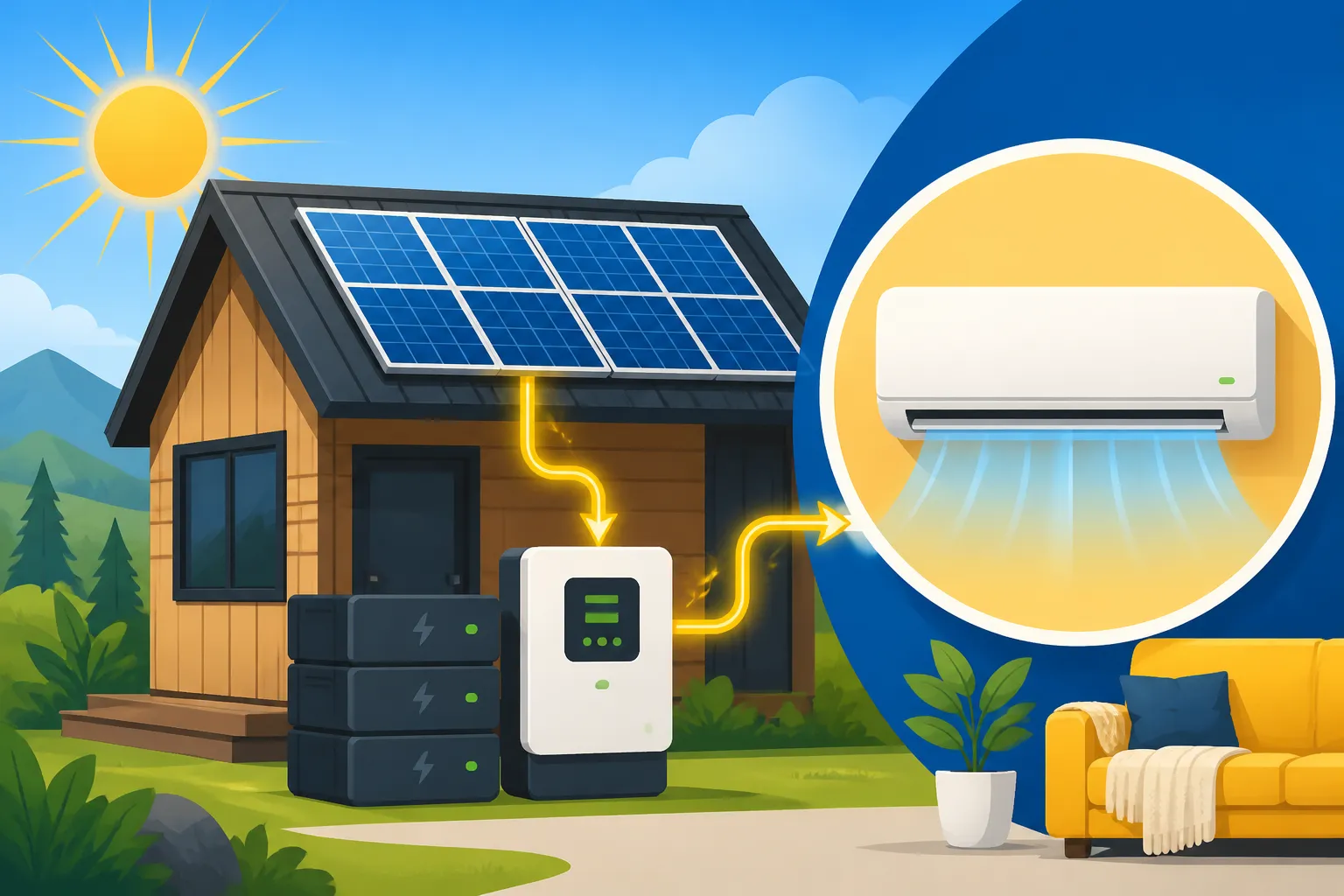
Ah, the sweet dream of a cool breeze on a sweltering summer day, even when you're completely off-grid. Many folks diving into the off-grid lifestyle quickly realize that air conditioning, while a modern comfort, can be the ultimate power hog, leaving them frustrated and sweaty. It feels like a luxury that's impossible to achieve without a massive, complicated system. This guide is here to demystify exactly how much solar power you truly need to keep your air conditioner running, turning that off-grid dream into a comfortable reality without overspending or undersizing your system.
Understanding Your Air Conditioner's Power Demands
Before you can even begin to calculate solar panel arrays or battery banks, you need to intimately understand the beast you're trying to power: your air conditioner. It's not as simple as looking at a single number, and many off-gridders make the mistake of underestimating this critical load. Air conditioners are unique in their power consumption patterns, and grasping these nuances is the first step toward a successful, sweat-free off-grid setup.
The Difference Between Starting Watts and Running Watts
This is perhaps the most crucial concept to wrap your head around when sizing an off-grid system for air conditioning. Every AC unit, whether it's a window unit, a portable AC, or a mini-split, has two primary wattage ratings you need to consider. The "running watts" (or continuous watts) refer to the power the unit draws constantly while it's operating. This is the number you'll see most often advertised or on the EnergyGuide label. However, the compressor inside an AC unit, which is the heart of its cooling power, requires a significant burst of electricity to kick on. This initial surge is known as "starting watts" or "surge watts."
For example, a typical 10,000 BTU window air conditioner might run consistently at around 1,000 watts. But when that compressor first fires up, it could demand anywhere from 2,000 to 3,000 watts for a fraction of a second or a few seconds, depending on the unit. If your inverter isn't capable of handling this brief but powerful surge, it will simply trip and shut down, leaving you in the heat. This is why when you're looking at inverters, you'll see both a continuous power rating and a peak surge rating. Always ensure your chosen inverter's surge capacity comfortably exceeds your AC's starting watts. Many people find this out the hard way, investing in a decent inverter only to realize it can't handle the initial jolt of their AC, leading to frustrating resets and a very warm cabin.
How SEER and EER Ratings Affect Solar Needs
When you're shopping for an air conditioner, you'll often encounter terms like SEER and EER. These aren't just technical jargon; they're vital indicators of how efficiently an AC unit converts electricity into cooling power, and they directly impact how much solar you'll need.
-
SEER (Seasonal Energy Efficiency Ratio): This rating is common for central air conditioners and mini-splits and reflects the cooling output during a typical cooling season divided by the total electric energy input during the same period. A higher SEER rating means a more energy-efficient unit. For example, a unit with a SEER of 20 will use significantly less electricity over a season to provide the same amount of cooling as a unit with a SEER of 10. For off-grid living, opting for the highest possible SEER rating is always a smart move, even if it means a higher upfront cost, because it drastically reduces your daily energy draw. This translates directly into needing fewer solar panels and smaller batteries, which saves you money and headaches in the long run.
-
EER (Energy Efficiency Ratio): The EER rating is similar to SEER but measures efficiency at a specific outdoor temperature (typically 95°F). It's most commonly found on window AC units. Again, a higher EER means better efficiency. When you're trying to figure out how much solar to run an air conditioner, choosing an AC with a high SEER or EER is paramount. It’s like buying a fuel-efficient car for a long road trip; it reduces the amount of "fuel" (electricity from your solar system) you'll consume. This small detail can make a huge difference in the overall cost and complexity of your off-grid solar system design.
Factors Influencing AC Power Consumption
It's not just about the AC unit itself; several external factors play a huge role in how much power your air conditioner will demand from your off-grid system. Ignoring these can lead to a system that's either woefully undersized or unnecessarily oversized.
- Climate and Outdoor Temperature: This is pretty straightforward. Living in the scorching deserts of Arizona will require your AC to work much harder and longer than if you're trying to cool a cabin in the milder Pacific Northwest. The higher the ambient temperature, the more frequently and intensely your AC's compressor will run, chewing through your battery bank faster. When planning your system, consider the peak temperatures you expect and how many hours per day you'll likely need cooling during those times.
- Insulation and Air Sealing: Your home's or RV's ability to retain cool air is arguably as important as the AC unit itself. A well-insulated structure with minimal air leaks means your AC won't have to work nearly as hard to maintain a comfortable indoor temperature. Think about a drafty old cabin versus a modern, well-sealed tiny home; the difference in cooling load is astronomical. Investing in good insulation, sealing windows and doors, and using blackout curtains can dramatically reduce the runtime and power consumption of your AC, thereby easing the burden on your solar setup. This is often a much more cost-effective solution than simply throwing more panels and batteries at the problem.
- Usage Habits and Setpoint: How you use your AC matters. Do you like your living space to feel like an arctic wonderland (68°F), or are you comfortable with a slightly warmer but still pleasant 75°F? Every degree you lower the thermostat significantly increases energy consumption. Similarly, running the AC all day, every day, will require a much larger solar system than running it only during peak heat hours. Being mindful of your comfort preferences and daily routines allows you to fine-tune your load calculations and avoid unnecessary power draws. You might find that simply running the AC for a few hours in the afternoon to pre-cool the space, then relying on fans in the evening, is a perfectly viable and much less power-intensive strategy.
Calculating Your Specific Solar Requirements for AC
Now that we've covered the basics of AC power, let's get down to the nitty-gritty: crunching the numbers to determine precisely what your off-grid solar system needs to look like. This isn't a "one size fits all" situation; your individual needs and location are key.
Step-by-Step Load Analysis for AC
This is where you become a detective, investigating every watt your AC will consume. A thorough load analysis is the bedrock of any successful off-grid solar system.
- Identify Your AC Unit's Running Watts: Look at the nameplate on your AC unit, the owner's manual, or the EnergyGuide label. You're looking for the continuous running wattage. If it only lists amps, multiply the amps by your system's voltage (e.g., 120V for household AC) to get watts (Watts = Amps x Volts). For example, a small 8,000 BTU window unit might draw about 700 watts.
- Estimate Daily AC Run Time: This is where the climate and your habits come in. How many hours a day, on average, will your AC be running during the hottest months? Are you in a hot climate needing 8-10 hours, or a milder one needing only 4-6 hours? Be realistic, and err on the side of caution. Let's say you plan to run your 700-watt AC for 6 hours a day.
- Calculate Daily Watt-Hours (Wh) for AC: Multiply your running watts by your estimated daily run time.
- Example: 700 watts * 6 hours = 4,200 Watt-hours (Wh) per day. This is the amount of energy your solar system needs to produce to run just your AC for that day.
- Consider Starting Watts for Inverter Sizing: As discussed, find the peak surge wattage of your AC unit. If not listed, a general rule of thumb is to assume 2-3 times the running wattage for a brief surge.
- Example: 700 watts running x 3 (surge factor) = 2,100 watts surge. Your inverter needs to be able to handle at least 2,100 watts for a few seconds. A 2,000-watt continuous inverter with a 4,000-watt surge rating would likely be suitable here.
Remember, this is just for the AC! You'll need to do this for all your appliances and then add them together to get your total daily energy consumption. For a more detailed look at this overall process, you might want to read our guide on how to calculate off-grid solar needs.
Determining Daily Watt-Hours for Cooling
Expanding on the load analysis, let's really nail down those daily watt-hours for your AC. This isn't just a number; it's the core energy budget for your cooling. If you underestimate it, you'll be constantly running out of power.
Imagine you have a small 12,000 BTU mini-split. Many modern mini-splits are quite efficient, especially inverter-driven models. Let's say it has a running wattage of around 900 watts. During a typical summer day at your remote cabin near Lake Tahoe, you might only need it to run intermittently, maybe kicking on for 15 minutes every hour over an 8-hour period to maintain a comfortable indoor temperature. That's actually 2 hours of actual running time (8 hours * 15/60). So, 900 watts * 2 hours = 1,800 Wh per day.
However, if you're in a full-time RV in the scorching heat of Death Valley, that same 900-watt mini-split might be running almost continuously for 10-12 hours a day. That's 900 watts * 10 hours = 9,000 Wh per day! The difference is massive. It's crucial to be honest with yourself about your expected usage patterns and environmental conditions. Overestimating slightly is always safer than underestimating.
Accounting for Days of Autonomy and Peak Sun Hours
These two concepts are the bridge between your daily energy needs and the physical components of your solar system. They dictate how robust your battery bank needs to be and how many panels you'll require.
- Days of Autonomy: This refers to how many days your battery bank can power your essential loads (including AC, if it's essential to you) without any new solar input. Think cloudy stretches, heavy rain, or even snowstorms that block your panels. For critical loads like AC, especially in hot climates, aiming for at least 2-3 days of autonomy is wise. If you're only using AC for occasional comfort, you might get away with less, but for continuous reliance, backup is essential.
- Example: If your AC needs 4,200 Wh per day, and you want 2 days of autonomy, your battery bank needs to store at least 8,400 Wh usable energy. Remember, not all battery types allow you to use 100% of their rated capacity. Lithium batteries (LiFePO4) typically offer 80-100% usable depth of discharge, while lead-acid batteries are usually limited to 50%.
- Peak Sun Hours (PSH): This is a critical metric that represents the average number of hours per day when the intensity of sunlight is equivalent to 1,000 watts per square meter. It's not the total number of daylight hours. A sunny day might have 12 hours of daylight, but only 4-6 PSH. This value varies significantly by your geographic location and the time of year. You can find PSH data for your specific location online (NREL provides excellent resources).
- Example: If your region gets an average of 5 PSH in the summer, and your daily AC consumption is 4,200 Wh, your panels need to generate that 4,200 Wh within those 5 peak hours. This directly impacts the size of your solar array. Calculating how many solar panels for off-grid living requires understanding this concept deeply.
Ignoring PSH or underestimating days of autonomy are common pitfalls that lead to insufficient power, especially during challenging weather. It's better to slightly oversize your battery bank to avoid the stress of running out of juice when you need it most.
Sizing Your Solar Components for Air Conditioning
With your load analysis and environmental factors in mind, it's time to translate those numbers into actual hardware. Each component of your off-grid solar system plays a specific role in keeping that AC humming.
Sizing Your Solar Panel Array
Your solar panels are the workhorses, converting sunlight into electricity. Sizing them correctly for an AC load is paramount.
- Total Daily Watt-Hours Needed: Let's assume our example AC unit needs 4,200 Wh per day.
- Account for System Losses: No solar system is 100% efficient. You'll lose power in the wiring, charge controller, and inverter. A common estimate for system losses is 15-30%. Let's use 20% for this example.
- Adjusted Daily Wh Needed: 4,200 Wh / 0.80 (for 20% loss) = 5,250 Wh. This is the gross energy your panels need to generate.
- Divide by Peak Sun Hours (PSH): Use the PSH for your location during the season you'll be using the AC most. Let's say 5 PSH.
- Required Panel Wattage: 5,250 Wh / 5 PSH = 1,050 Watts.
- This means you need a solar array capable of generating 1,050 watts continuously during peak sun.
- Determine Number of Panels: If you're using 200-watt solar panels (a common size from brands like Renogy, often available on Amazon), you'd need:
- Number of Panels: 1,050 watts / 200 watts/panel = 5.25 panels.
- Since you can't have a quarter of a panel, you'd round up to 6 panels to ensure you meet your needs, especially on slightly less sunny days.
This calculation provides a good starting point. Many off-gridders choose to slightly oversize their array (e.g., go for 7 panels instead of 6) to compensate for less-than-ideal weather, dirty panels, or the degradation of panels over time. This extra capacity helps keep your batteries topped off, which is crucial when demanding appliances like AC are involved.
Sizing Your Battery Bank for AC Use
The battery bank is your energy reservoir, storing the power generated by your panels for when the sun isn't shining, particularly at night or on cloudy days when you still need to cool down.
- Calculate Total Usable Watt-Hours for Autonomy:
- Daily AC need (adjusted for losses): 5,250 Wh.
- Days of autonomy: 2 days.
- Total Usable Wh: 5,250 Wh/day * 2 days = 10,500 Wh.
- Determine Battery Capacity in Amp-Hours (Ah) based on System Voltage:
- Let's assume a 48V system, which is generally more efficient for larger loads like AC.
- Required Ah at 48V: 10,500 Wh / 48V = 218.75 Ah.
- If you're using lithium (LiFePO4) batteries with 100% usable capacity, you'd need a battery bank totaling at least 220 Ah at 48V. You might achieve this with two 100Ah 48V batteries or by wiring multiple lower voltage batteries in series.
- If you were using lead-acid batteries, which typically only allow 50% depth of discharge, you'd need double the nominal capacity: 218.75 Ah / 0.50 = 437.5 Ah at 48V. This highlights why How Batteries Drive Off-Grid Solar Cost and LiFePO4 vs Lead-Acid Battery Cost are important considerations.
A common setup might involve a set of 4 100Ah 12V LiFePO4 batteries wired in series to create a 48V 100Ah bank, then potentially doubling that in parallel to get 48V 200Ah. Brands like Battle Born or EG4 offer excellent LiFePO4 options for off-grid battery banks. Remember, a larger battery bank provides more resilience and flexibility, especially if you have other significant loads besides your AC.
Choosing the Right Inverter for AC Loads
The inverter is the brain that converts your battery's DC power into usable AC power for your household appliances, including your air conditioner. This component is where the rubber meets the road when dealing with AC's surge demands.
- Continuous Power Rating: Your inverter's continuous power rating must exceed the running watts of your AC unit, plus all other appliances you might run simultaneously.
- If your AC is 700 watts and you also plan to run a refrigerator (100-200 watts), lights (50-100 watts), and a laptop (50 watts) at the same time, your continuous load could be around 1,000-1,100 watts. Your inverter should have at least this much continuous output.
- Surge Power Rating: This is absolutely critical for air conditioners. As discussed, the starting watts can be 2-3 times the running watts. Your inverter's surge rating (which typically lasts for a few seconds) must comfortably exceed this peak.
- If your AC has a 2,100-watt surge, you'd want an inverter with a surge rating of at least 2,500-3,000 watts. A 2,000-watt continuous inverter with a 4,000-watt surge capability is a common choice for smaller AC units. For larger AC units, you might be looking at 3,000-5,000-watt inverters or even larger.
- Pure Sine Wave Inverter: Always opt for a pure sine wave inverter for sensitive electronics and motor-driven appliances like air conditioners. Modified sine wave inverters can damage appliances, run them inefficiently, and cause motors to heat up and fail prematurely.
- Inverter-Charger Combos: Many off-grid systems benefit from an inverter-charger, which combines the functions of an inverter (DC to AC) and a battery charger (for charging from a generator or shore power). This is particularly useful if you plan to use a backup generator to supplement your solar power during long cloudy spells or to quickly top off batteries if your AC use is higher than expected. Brands like Victron Energy and Outback Power offer robust inverter-chargers widely used in comprehensive off-grid setups. You can dive deeper into this topic by exploring the article on How to Choose an Off-Grid Inverter Charger.
Getting your inverter wrong for an AC unit is a costly mistake. If it's too small, it'll constantly trip, or even worse, it could burn out. If it's vastly oversized, you've spent unnecessary money. Matching it closely to your maximum simultaneous continuous load and the AC's surge requirement is key.
Practical Considerations and Strategies for Off-Grid AC
Running an air conditioner off-grid isn't just about the hardware; it's also about smart energy management and understanding your environment. There are numerous ways to reduce your cooling load and make your solar-powered AC dream more attainable.
Energy Efficiency and Conservation Tips
Before you even think about buying another solar panel or battery, think about how you can reduce the amount of cooling you need in the first place. This is almost always the most cost-effective "investment" you can make for off-grid AC.
- Improve Home Insulation and Sealing: I know I mentioned it before, but it's truly critical. Adding insulation to walls, ceilings, and floors will dramatically slow down heat transfer into your living space. Seal gaps around windows, doors, and utility penetrations with caulk and weatherstripping. Even a small draft can let in a surprising amount of hot air. Consider thermal curtains or blinds for windows exposed to direct sunlight. A well-sealed home is like a well-insulated cooler; it keeps the cold in and the heat out.
- Use Shade and Ventilation: Strategically planting trees or installing awnings on the south and west sides of your home can provide significant natural shading, reducing direct solar gain. In the evenings, especially if the outdoor temperature drops, open windows on opposite sides of your house to create a cross-breeze and purge accumulated heat. A whole-house fan can also be an incredibly efficient way to cool down a house in the evening without using an energy-intensive AC compressor.
- Efficient Appliances and Lighting: While not directly related to AC, every watt you save elsewhere is a watt that can go towards cooling. Switch to LED lighting, unplug phantom loads, and consider energy-efficient appliances. For example, a modern, highly efficient refrigerator can draw a fraction of the power of an older model. Every little bit adds up to a more resilient off-grid system overall.
- Smart Thermostat Usage: If your inverter allows for it, or you have a programmable thermostat, use it wisely. Pre-cool your space during peak sun hours when your panels are generating the most power, then let the temperature rise a few degrees during the evening or night. You might find that a slightly warmer but consistent temperature is more comfortable than constantly cycling a less efficient AC unit.
The Role of Backup Power Generators and Hybrid Systems
Even with a perfectly sized solar system, there will be times when the sun just isn't cooperating. This is especially true if you live in a region with extended cloudy periods or during winter months when sun angles are low. This is where backup power comes into play.
- Generators: A reliable gasoline, propane, or diesel generator is a common and often necessary backup for off-grid systems, especially when running high-demand appliances like AC. When your batteries get low due to heavy AC usage or prolonged poor weather, the generator can kick in to charge your batteries and directly power your loads. Many modern inverter-chargers have generator auto-start features, meaning the generator can automatically fire up when battery voltage drops to a certain level. While running a generator does incur fuel costs, it provides peace of mind and ensures you won't be without cooling when you truly need it. It’s also important to understand the Off-Grid Solar vs Generator Fuel Cost to budget accordingly.
- Hybrid Systems: For those who want more continuous power or live in very hot climates, a hybrid off-grid system might be the answer. These systems integrate other power sources like wind turbines or micro-hydro generators alongside solar. While more complex and expensive upfront, they offer greater energy diversity and resilience, potentially reducing reliance on fossil fuel generators. This can be especially useful in areas with consistent wind or flowing water.
Integrating a backup generator is almost a given for most full-time off-grid households who wish to run an AC unit. It acts as a safety net, allowing you to use your AC without constantly stressing about draining your batteries during a heatwave.
Alternative Cooling Solutions
Sometimes, the best solar-powered AC is no AC at all, or at least a highly efficient alternative. Exploring these options can significantly reduce your power demands or even eliminate the need for a conventional compressor-based air conditioner.
- Evaporative Coolers (Swamp Coolers): These units work by evaporating water, which cools the air. They are incredibly energy-efficient compared to compressor-based AC units, often using 75% less electricity. However, they only work effectively in dry climates. In humid environments, they'll just make things muggier. For arid regions, a good evaporative cooler can make a huge difference, consuming very little power from your off-grid system.
- DC Mini-Splits and RV AC Units: Some specialized mini-split air conditioners and many RV air conditioning units are designed to run directly on DC power (often 12V, 24V, or 48V). This eliminates the inverter conversion losses, making them more efficient for off-grid use. While they might still have high power draws, the efficiency gain can be substantial. Look for units specifically designed for off-grid or RV use, as they are engineered with energy conservation in mind. For example, some brands offer 48V DC mini-splits that integrate seamlessly with a 48V battery bank.
- Passive Cooling Strategies: These are non-electrical methods that rely on architectural design and natural phenomena to keep your home cool. This includes strategic window placement for cross-ventilation, thermal mass (using materials like concrete or stone to absorb heat during the day and release it at night), shading structures, cool roofs (light-colored materials that reflect sunlight), and earth sheltering (building partially underground). While these require thoughtful design from the outset, they can dramatically reduce or even eliminate the need for active cooling, making off-grid living far more sustainable and less power-intensive. You can learn more about how to design off-grid solar for winter, and many of these principles apply to summer cooling too.
By combining an understanding of your AC's power appetite, careful system sizing, and smart energy conservation, you can absolutely enjoy the comfort of air conditioning in your off-grid home. It requires planning, but it's entirely achievable.
Typical AC Power Consumption and Solar Sizing Estimates
To give you a clearer picture, here's a table outlining typical power draws for various air conditioning units and the estimated minimum solar and battery capacity you'd need for them, assuming 6 hours of daily run time and 5 peak sun hours. Keep in mind these are rough estimates for illustrative purposes; your actual needs may vary based on efficiency, climate, and usage.
| AC Unit Type | Typical Running Watts | Typical Starting Watts | Daily Watt-Hours (6 hrs run time) | Recommended Solar Panel Array (Watts) | Recommended LiFePO4 Battery Bank (Ah @ 48V) |
|---|---|---|---|---|---|
| Small Window AC (5,000 BTU) | 500-600W | 1200-1800W | 3,000-3,600 Wh | 750-900W | 150-180 Ah |
| Medium Window AC (8,000 BTU) | 700-900W | 1800-2700W | 4,200-5,400 Wh | 1050-1350W | 210-270 Ah |
| Portable AC (10,000 BTU) | 800-1000W | 2000-3000W | 4,800-6,000 Wh | 1200-1500W | 240-300 Ah |
| Small Mini-Split (9,000 BTU) | 600-800W | 1500-2400W | 3,600-4,800 Wh | 900-1200W | 180-240 Ah |
| Medium Mini-Split (12,000 BTU) | 900-1200W | 2200-3600W | 5,400-7,200 Wh | 1350-1800W | 270-360 Ah |
| 12V/24V RV Rooftop AC (13,500 BTU) | 1000-1500W | 3000-4500W | 6,000-9,000 Wh | 1500-2250W | 300-450 Ah |
Note: These battery capacities assume 2 days of autonomy and a 48V system. If using 12V or 24V, the Amp-hour ratings would be proportionally higher. For lead-acid batteries, you would need double the nominal Ah capacity shown.
Disclaimer
The information provided in this guide is for educational and informational purposes only and is not intended as professional electrical advice. Off-grid solar system design and installation can be complex and involve significant electrical hazards. Always consult with a qualified electrician or solar professional before designing or installing any solar power system. Ensure all installations comply with local electrical codes and safety regulations.