How Winter Affects Off-Grid Sizing
Living off-grid during winter can feel like you're constantly fighting an uphill battle against Mother Nature. The days get shorter, the temperatures plummet, and suddenly, your perfectly balanced solar system from summer seems to be struggling to keep up. It's a common frustration for many trying to achieve energy independence, and the truth is, winter drastically changes everything about how your off-grid solar system performs and how it needs to be sized. This comprehensive guide is here to shed light on those challenges and show you exactly how to account for winter's grip when designing or upgrading your off-grid solar setup, ensuring you stay warm, lit, and powered through the coldest months.
The Harsh Reality of Winter for Off-Grid Solar
Winter isn't just about colder temperatures; it brings a whole host of environmental factors that directly impact your off-grid solar system's ability to generate and store power. Understanding these fundamental shifts is the first step toward building a resilient setup. It's not just a minor dip in performance; it's a profound change that requires significant adjustments to your planning.
Reduced Sunlight Hours and Intensity
One of the most immediate and undeniable impacts of winter is the dramatic reduction in available sunlight. This isn't just about the sun setting earlier; it's a multi-faceted problem that severely cuts into your energy production. Think about a typical winter day in, say, upstate New York or the Pacific Northwest. You might not see direct sunlight for days, or even weeks, at a time.
Firstly, the days are simply shorter. What might be 14-16 hours of daylight in summer can easily shrink to 8-9 hours in winter, particularly as you move further from the equator. This means your solar panels have far less time each day to soak up photons and convert them into electricity. Even if the sun is shining, the lower angle of the sun in the sky during winter means its rays hit your panels less directly. Imagine trying to catch a ball thrown directly at you versus one skimming past at a sharp angle; the direct hit has more impact. Similarly, direct perpendicular sunlight is far more efficient at generating power than angled, oblique sunlight. This significantly reduces the intensity of the solar radiation reaching your panels, often resulting in a substantial drop in kilowatt-hours generated per panel, even on a clear day.
Secondly, beyond the physical angle, the sun's path through the atmosphere is longer in winter. This means more of its energy is diffused, absorbed, or reflected before it even reaches your solar array. Coupled with increased cloud cover that often accompanies winter weather patterns, your panels might only experience a fraction of their rated power output for a very limited window each day. This cumulative effect—shorter days, lower sun angle, increased atmospheric interference, and more clouds—can reduce your daily energy harvest by 50% or even more compared to peak summer production. It's a rude awakening for many new off-gridders who base their system sizing solely on summer numbers.
The Shadowy Threat of Snow and Ice
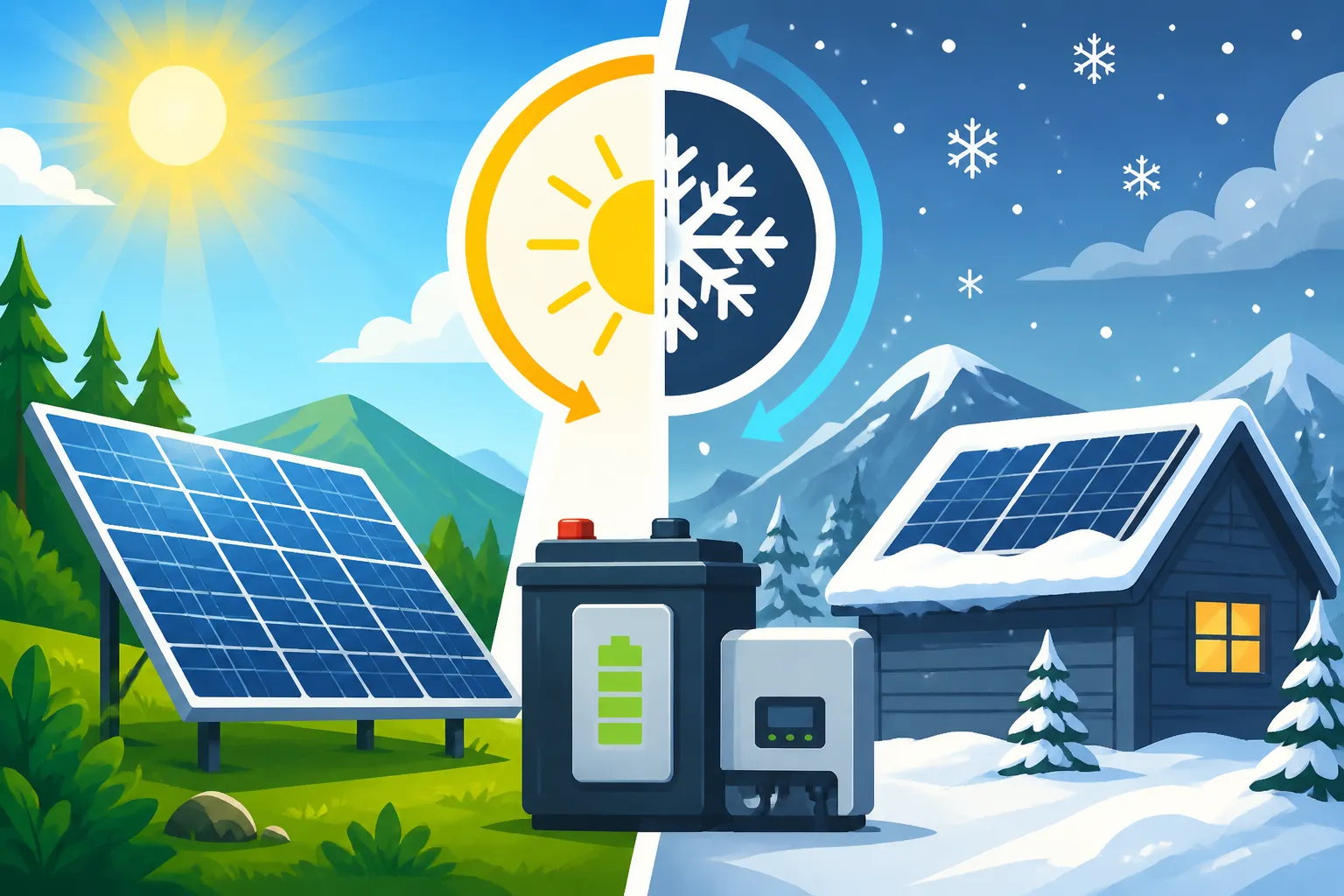
Beyond the dimming sun, winter unleashes its most direct assault on solar panels: snow and ice. A blanket of snow, even a thin layer, can completely render your solar panels useless. They become large, dark rectangles on your roof or ground array, producing absolutely zero power. This isn't just a minor inconvenience; it can be a critical failure point for your off-grid system if not properly accounted for in your design and daily management.
Consider a homestead in the Rocky Mountains or a cabin nestled deep in a forest where snow can accumulate for days or weeks. Even a light snowfall can block enough sunlight to severely impact generation. Heavier snowfalls can bury panels entirely, sometimes requiring manual clearing, which isn't always feasible, especially on tall roofs or for large arrays. Moreover, even when snow begins to melt, the remaining patches or ice buildup can still significantly reduce efficiency. Ice, in particular, can be stubborn, forming a protective, light-blocking shield that's hard to remove without risking damage to the panels.
The challenge intensifies when you factor in rapid temperature fluctuations. Snow can melt slightly during a warm spell, then refreeze into a hard, thick layer of ice when temperatures drop overnight. This cycle makes clearing even more difficult and can put stress on your panel mounts. Planning for these scenarios means either over-sizing your system enough to compensate for intermittent zero-production days or incorporating proactive measures like regular clearing or even automated snow-melting systems, which, of course, add to the complexity and cost. It's a stark reminder that an off-grid system in a snowy climate needs a different kind of resilience.
Increased Energy Demands in Colder Months
While solar production drops in winter, ironically, our energy consumption often goes in the opposite direction. The need for warmth and light increases dramatically, putting even more strain on a system that's already working with reduced input. This double whammy is why proper winter sizing is so critical – you're dealing with less coming in and more going out.
Heating and Insulation Challenges
Staying warm is a fundamental human need, and in an off-grid setting, it's often the single biggest energy consumer during winter. Even with excellent insulation, passive solar design, and wood-burning stoves, you'll likely find yourself using more electricity for comfort than you anticipated. Think about those chilly mornings when you just need a little boost of warmth, or those long, dark evenings when the wood stove isn't quite cutting it.
Many off-gridders opt for energy-efficient heating solutions like mini-split heat pumps. While incredibly efficient, they still draw significant power, especially when outdoor temperatures drop below freezing. A single mini-split running for several hours a day can consume many kilowatt-hours, far more than your summer air conditioning might. Then there are those "comfort appliances" – electric blankets, space heaters (used sparingly, of course, due to their high draw), heated mattress pads, or even electric radiant floor heating in a small bathroom. Each of these adds to your daily load, and when used consistently over weeks or months, their cumulative effect on your battery bank can be substantial. For example, a well pump in a cold climate might need a heat trace or a small heater to prevent freezing, adding another continuous, albeit small, load. If you're designing a system for a full-time off-grid home, understanding how to size solar for heating becomes paramount.
The challenge isn't just the sheer energy draw but also the timing of that draw. Heating needs are often highest in the mornings and evenings when solar production is at its lowest or non-existent. This means your battery bank bears the brunt of these loads, requiring significant capacity to carry you through the night and into the next solar day. It's a delicate balance between conserving power, maximizing passive heat, and having enough juice to keep yourself comfortable and your pipes from freezing.
More Indoor Time, More Appliance Use
Beyond just heating, winter inevitably means more time spent indoors. This shift in lifestyle directly translates to increased electricity consumption for a wide array of appliances and electronics. Imagine hunkering down during a snowstorm; suddenly, your lights are on longer, your computer is running for extended periods, and entertainment systems become essential for passing the time.
Consider the simple act of lighting. In summer, natural light might suffice well into the evening. In winter, you'll find yourself flipping on lights much earlier in the afternoon and keeping them on longer. Then there's cooking; winter often inspires more baking, slow-cooking, and generally more involved meal prep, leading to increased use of ovens, induction cooktops, microwaves, and other kitchen appliances. Laptops, tablets, and phones need charging, and with more leisure time, gaming consoles or larger TVs might see increased use. These aren't always massive individual loads, but their collective, prolonged use adds up significantly over a 24-hour period.
Even things like water usage can increase if you're doing more laundry or dishes indoors, placing more demand on well pumps or water heaters (if electric). This "lifestyle load" is often underestimated when people calculate their off-grid solar needs. What might be a modest summer load of 3-5 kWh per day for a small cabin can easily jump to 8-10 kWh or more during winter, especially if you have a family or work from home. This expanded energy budget means your system needs to be robust enough to handle these sustained demands, not just occasional spikes.
Essential Sizing Adjustments for Winter Reliability
Given the double whammy of reduced production and increased demand, simply installing a "standard" off-grid solar system isn't going to cut it in winter. You need to be proactive and deliberately over-spec certain components to ensure reliable power when you need it most. This isn't about guesswork; it's about smart, calculated decisions that make all the difference for your winter comfort and survival. This section dives deep into how to properly account for these challenges.
Oversizing Your Solar Array for Low Sun
To combat the dramatically reduced sunlight hours and intensity in winter, one of the most crucial steps is to oversize your solar panel array. This means installing more panels than you might theoretically need based on average annual sun hours. The goal is to produce sufficient power even on the shortest, cloudiest, and snowiest days of winter. This might seem counterintuitive if you're thinking about summer production, but it's vital for year-round resilience.
The core of this strategy lies in understanding "peak sun hours" – the equivalent number of hours per day when solar insolation (sunlight intensity) averages 1,000 watts per square meter. In summer, a region might boast 6-7 peak sun hours, but in winter, this can easily drop to 2-3 peak sun hours or even less in northern latitudes or consistently cloudy areas. To accurately size your system, you need to find the lowest historical average peak sun hours for your specific location, ideally for the month with the least sun (usually December or January). Websites like the National Renewable Energy Laboratory (NREL) provide excellent solar radiation data, or you can look up local meteorological data. Once you have this number, you use it in your calculations to determine how many watts of solar panels you need to meet your daily energy demand. If your panels are mounted flat or on a fixed roof, consider tilting them more steeply for winter (around latitude + 15 degrees) to maximize their exposure to the low-angle sun. Many off-gridders choose to install additional panels specifically for winter or utilize ground mounts with adjustable tilt angles.
For example, if your average daily energy consumption in winter is 10 kWh (10,000 Wh), and your winter peak sun hours are only 3, you would need a theoretical panel array capable of generating 3,333 watts per hour (10,000 Wh / 3 hours). Factoring in system losses (efficiency of charge controller, inverter, wiring, dirt, etc.), which can be around 20-30%, you'd likely need closer to a 4-5 kW solar array to consistently meet that 10 kWh daily demand in winter. This is often significantly larger than what would be required for summer. Many systems designed with Best Off-Grid Solar Panels from reputable brands like Renogy or others available on Amazon might specify their output under optimal conditions, so you must factor in real-world winter performance degradation. Remember, it's better to slightly "oversize your solar array" than to run out of power when you need it most.
Boosting Battery Bank Capacity for Days of Autonomy
If your solar panels are the engine of your off-grid system, your battery bank is the fuel tank. In winter, when solar production is unpredictable and often insufficient for daily needs, having ample energy storage becomes paramount. This means increasing your battery bank capacity to provide enough "days of autonomy"—the number of days your system can power your loads without any solar input—to safely weather extended periods of cloudy, snowy weather.
While 2-3 days of autonomy might suffice in summer, a realistic winter goal, especially in regions prone to long stretches of bad weather, should be 4-7 days. Imagine a week-long snowstorm that completely covers your panels and keeps the sun hidden. Without a sufficiently large battery bank, you'd quickly run out of power. To calculate how many batteries for an off-grid system, you'll need your average daily winter energy consumption (in Watt-hours or Amp-hours) and multiply it by your desired days of autonomy. For example, if your winter daily load is 10 kWh (10,000 Wh), and you want 5 days of autonomy, you'll need a battery bank with a usable capacity of 50 kWh. If you're using LiFePO4 batteries, which allow for a high depth of discharge (typically 80-100%), this calculation is relatively straightforward. However, with lead-acid batteries, where a 50% depth of discharge is recommended to prolong their life, you'd need twice the nominal capacity to achieve the same usable capacity. This is one of the reasons why How Batteries Drive Off-Grid Solar Cost is often a significant factor, with LiFePO4 batteries being a popular choice for their efficiency and longevity, despite higher upfront cost.
Cold temperatures also impact battery performance, especially lead-acid batteries, reducing their usable capacity and charging efficiency. LiFePO4 batteries often perform better in cold but may require specific low-temperature charging cutoff protection or even integrated heating elements if temperatures drop below freezing (around 32°F or 0°C). Some advanced LiFePO4 batteries, like those from Battle Born, offer internal heating. For other brands, you might need to house your batteries in an insulated and potentially heated enclosure to maintain optimal operating temperatures and ensure you're getting their full rated capacity. This extra protection and capacity for your battery bank is a non-negotiable part of winter-proofing your off-grid power supply.
Sizing Inverters and Charge Controllers Appropriately
While panels and batteries often get the most attention for winter sizing, your inverter and charge controller are equally critical components that need appropriate sizing to handle winter's demands. These devices are the brain and brawn of your system, ensuring power flows safely and efficiently.
Your inverter, which converts DC power from your batteries into usable AC power for your appliances, needs to be sized to handle both your continuous winter loads and any potential surge loads. As discussed, winter often means higher overall energy consumption, including potentially running larger resistive loads like electric heaters or demanding appliances for longer periods. If you plan to run a well pump and a microwave simultaneously, your inverter needs to be able to supply the combined wattage, including the significant "starting watts" or surge capacity required by motors. Overloading an inverter can lead to shutdowns, component damage, or even failure, leaving you in the dark. Many off-gridders choose to slightly oversize their inverter (e.g., a 5000W inverter for a typical 3000W continuous load) to give themselves headroom for unexpected spikes or future appliance additions. When considering Best Off-Grid Solar Inverters, look for models with robust surge ratings, ideally pure sine wave output for sensitive electronics.
The charge controller, responsible for regulating the power flow from your solar panels to your batteries, also needs careful consideration. When you oversize your solar array for winter, you must ensure your charge controller can handle the maximum voltage (Voc) and current (Isc) that your oversized array can produce, especially in cold weather (as panel voltage increases in colder temperatures). An MPPT (Maximum Power Point Tracking) charge controller is almost always recommended for winter conditions. Unlike PWM (Pulse Width Modulation) controllers, MPPT controllers are significantly more efficient at converting the higher voltage DC from your panels into the appropriate charging voltage for your batteries, especially in low-light, cloudy, or colder conditions. They can extract up to 10-30% more power from your panels compared to PWM controllers, which is a massive advantage when every watt counts. If you're pondering MPPT vs PWM Charge Controllers, winter performance should strongly sway your decision towards MPPT. Brands like Victron Energy or Midnite Solar offer robust MPPT controllers that are well-regarded for their performance and reliability in challenging conditions.
Mitigating Winter Challenges with Smart Design and Management
Beyond simply upsizing components, a truly resilient off-grid solar system for winter requires thoughtful design choices and proactive management strategies. It's about optimizing every aspect of your setup and having contingency plans in place.
Strategic Panel Placement and Angle
The physical placement and tilt of your solar panels play a massive role in their winter performance. In the summer, a less-than-ideal tilt or some partial shading might only slightly reduce your output. In winter, however, these minor issues become critical deficiencies that can severely cripple your energy harvest.
For stationary systems like those on a cabin or a ground mount, optimizing the tilt angle is key. While a year-round optimal tilt is usually equal to your latitude, a steeper angle (often latitude plus 10-15 degrees) is ideal for maximizing winter sun exposure, as the sun is much lower in the sky. If you have an adjustable ground mount, changing your tilt twice a year (summer and winter settings) can significantly boost your winter production. For fixed roof mounts, choosing the steepest possible south-facing roof section is beneficial. Even more critically, carefully assess your property for shading. What might be an innocuous tree in summer, with its full canopy, can cast long, power-robbing shadows across your panels in winter when the sun's path is low. Even a small amount of shading on just one panel can drastically reduce the output of an entire series string. This means meticulously planning How to Install Ground-Mounted Solar Panels or roof mounts to be free of all potential winter shading.
Furthermore, consider accessibility for snow removal. Ground-mounted arrays are often easier to clear than roof-mounted ones, especially for large residential systems. For areas with heavy snowfall, elevated ground mounts that allow snow to slide off or can be easily brushed are a smart choice. If roof mounting is your only option, ensure the panels are installed on a slippery surface or with sufficient spacing from the roof to allow snow to shed naturally, or at least be easily accessible for manual clearing. For those with a full-time RV, How to Install Off-Grid Solar on an RV needs special consideration for minimizing shade from awnings and other roof-mounted equipment, especially during winter camping.
Integrating Backup Power Sources
Even with the most meticulously sized and designed off-grid solar system, winter can throw curveballs that demand a reliable backup power source. Days of relentless cloud cover, unexpected system failures, or prolonged heavy snowfalls can quickly drain even a large battery bank. Having a robust backup is not just a convenience; it's a critical safety net.
The most common and effective backup for off-grid solar in winter is a fossil-fuel generator, typically propane or diesel. These generators can quickly recharge your battery bank when solar production is insufficient or non-existent, providing an essential lifeline. For a seamless experience, consider integrating an automatic transfer switch and an auto-start generator. This setup allows your inverter to detect when battery voltage drops below a certain threshold and automatically start the generator to charge the batteries, then shut off once they're topped up. This kind of integration means you rarely have to worry about power outages, even during the harshest winter conditions. When considering How to Add a Generator to Your Design, factor in fuel storage, noise, and maintenance requirements. Many off-gridders find that a high-quality portable generator from brands like Honda or Generac can serve this purpose well.
For smaller, more critical loads or as a supplementary backup, portable solar generators (often called power stations) can also be incredibly useful. Brands like EcoFlow or Bluetti offer models that combine a battery, inverter, and charge controller into a single unit. These can be charged via a small solar panel or a wall outlet (when the main system is running or the generator is on) and provide portable power for lights, communication devices, or medical equipment during emergencies. Beyond generators, simply having a plan for energy conservation is an underrated backup strategy. This includes using highly efficient DC appliances where possible, swapping incandescent bulbs for LEDs, and consciously reducing discretionary loads during prolonged cloudy periods.
Monitoring and Maintenance for Cold Weather Performance
Winter puts extra stress on every component of your off-grid solar system, making diligent monitoring and maintenance absolutely vital. Ignoring these aspects can lead to reduced efficiency, premature component failure, and unexpected power outages.
Regular physical inspection of your solar panels is crucial. During snowy periods, this means routinely checking for and clearing any snow accumulation. Even a thin layer can block a significant amount of light, and if not cleared, it can lead to uneven melting and potentially cause hot spots or uneven wear on panels. Use a soft brush or a specialized solar panel snow rake to avoid scratching the panel surface. Also, inspect wiring and connections for any signs of animal damage (rodents love to chew cables!) or corrosion, which can be exacerbated by moisture and freezing temperatures. Ensure all conduit and cable glands are secure and watertight.
Battery health is especially critical in winter. As mentioned, cold temperatures can reduce usable capacity and charging efficiency, particularly for lead-acid batteries. Monitor your battery bank's voltage and state of charge (SOC) religiously using a reliable battery monitor. If you have lead-acid batteries, ensure they are kept fully charged as much as possible, as a discharged lead-acid battery can freeze and be permanently damaged in sub-zero temperatures. For LiFePO4 batteries, confirm that their low-temperature charging cutoff is functioning correctly or that any heating elements are active. If your batteries are in an unheated space, consider adding insulation to the battery box or even a small, thermostatically controlled heating pad or low-wattage heater to keep them above freezing. Many suppliers on Amazon offer simple battery heating solutions that can be integrated with a thermostat. Remember, a well-maintained battery bank will not only perform better but also last longer, saving you significant money on Off-Grid Solar Battery Replacement Cost Over Time. Adhering to an Off-Grid Solar Maintenance Guide is your best defense against winter woes.
| Component | Summer Sizing Considerations | Winter Sizing Adjustments |
|---|---|---|
| Solar Array | Based on average sun hours (e.g., 5-6 peak) and daily load. | Oversize by 50-100% based on lowest winter peak sun hours (e.g., 2-3 peak). Optimize tilt angle (latitude + 15 degrees). Plan for snow removal. |
| Battery Bank | 2-3 days of autonomy for typical usage. | Increase to 4-7 days of autonomy to cover extended cloudy/snowy periods. Account for reduced usable capacity in cold temps. Consider heating/insulation. |
| Inverter | Max continuous load + surge capacity. | Ensure sufficient surge capacity for increased winter loads (e.g., heating). Consider higher continuous rating if more high-draw appliances used. |
| Charge Controller | Sized for max Voc/Isc of array. MPPT generally recommended. | Crucial to be MPPT for efficiency in low light. Ensure it handles oversized array's max Voc/Isc (voltage increases in cold). |
| Wiring | Sized for current and minimal voltage drop. | Check voltage drop for potentially longer runs if panel placement changes. Ensure outdoor wiring is rated for extreme cold. |
| Backup Power | Often optional or smaller portable generator. | Essential. Larger generator, auto-start feature, robust fuel storage. Consider supplemental solar generators for critical loads. |
| Energy Usage | Lower overall, less heating/lighting. | Higher overall. Account for increased heating, lighting, and indoor appliance use. Build in buffer. |
Disclaimer
Please remember that the information provided in this guide is for general educational and informational purposes only, and does not constitute professional advice. Off-grid solar system design and installation can be complex and involve electrical hazards. Always consult with qualified professionals and adhere to local codes and regulations before undertaking any solar project. Improper installation can lead to property damage, injury, or fire.