What Size Inverter to Run A Tv
One of the most common questions I get from folks diving into the off-grid lifestyle, especially if they're not quite ready to give up all their creature comforts, is "Can I still watch TV?" And the answer is a resounding yes! But figuring out what size inverter you need to run your television, along with all the other little gadgets that go with it, can feel like a daunting task. This guide is here to demystify the process, helping you confidently size an inverter so you can enjoy movie nights or catch up on the news, even when you're completely off the grid.
Understanding Your TV's Power Needs for Off-Grid Use
Before you can even begin to think about an inverter, you first need to understand how much power your television actually consumes. This isn't just about the number you see on the box; it involves both the continuous power draw and those sneaky spikes that happen when appliances first kick on. Getting this right is the foundation of a successful off-grid entertainment setup.
Differentiating Running Watts from Starting Watts
Every electrical appliance has two main power ratings: running watts and starting watts (also sometimes called surge watts). For most simple electronics like a TV, the difference between these two isn't as dramatic as it might be for something with a motor, like a refrigerator or a well pump. However, it's still an important distinction, especially when you're trying to figure out your inverter's capacity. Running watts are the continuous power your TV uses once it's on and operating normally. This is the number you'll typically see advertised or listed on the appliance's energy label.
Starting watts, on the other hand, refer to the brief, initial surge of power an appliance draws for a fraction of a second when it first turns on. While a modern LED or LCD TV might not have a huge starting surge compared to an older CRT model or a motor-driven appliance, some smart TVs with complex startup sequences or integrated sound systems can still have a minor peak. Your inverter needs to be able to handle this brief surge without tripping or shutting down. If your inverter can't handle the starting watts, your TV simply won't turn on, leaving you staring at a blank screen. It’s a common frustration, and one many new off-gridders face when they don't account for these subtle power dynamics.
Checking Your TV's Power Consumption
The absolute best way to determine your TV's power consumption is to look at its specific label. You'll often find this on the back of the TV itself, near where the power cord plugs in. It might list the power draw in watts (W) or amps (A) at a specific voltage (V). If it lists amps and voltage, you can easily calculate watts using the formula: Watts = Volts x Amps. For example, if your TV says 1.5A at 120V, that's 180 watts.
Keep in mind that the listed wattage is often the maximum, or near-maximum, draw. Many modern TVs use less power during normal viewing, especially if you're not blasting the brightness or using all its smart features simultaneously. For an accurate measurement, you could use a kill-a-watt meter, which plugs into the wall and then your TV plugs into it, giving you real-time power consumption data. These little devices are incredibly helpful for any off-grid enthusiast trying to nail down their energy usage for various appliances and are readily available on platforms like Amazon. Knowing your actual daily energy usage is crucial for a well-designed system, not just for the inverter but for the entire setup.
Different types of TVs also have different power appetites. Older plasma TVs were notorious power hogs, while modern LED and OLED TVs are much more efficient. A typical 32-inch LED TV might draw between 30-60 watts, while a larger 65-inch 4K OLED TV could consume anywhere from 100-250 watts. Factor in any soundbars, streaming devices (like an Apple TV or Roku), or game consoles you plan to use, as these all add to your total load. Each of these devices has its own power rating you'll need to find and add to your calculations. This might seem tedious, but it's an essential step in properly figuring out how to size an off-grid inverter.
| Appliance Category | Typical Running Watts (Approx.) | Typical Starting Watts (Approx.) |
|---|---|---|
| Small LED TV (32") | 30 – 60 W | 35 – 70 W |
| Medium LED TV (50") | 60 – 120 W | 70 – 140 W |
| Large LED/OLED TV (65"+) | 100 – 250 W | 120 – 300 W |
| Soundbar | 20 – 50 W | 25 – 60 W |
| Streaming Device (e.g., Roku, Fire Stick) | 3 – 10 W | 5 – 15 W |
| Game Console (idle/active) | 10 – 200 W (varies) | 15 – 250 W (varies) |
| DVD/Blu-ray Player | 10 – 20 W | 15 – 25 W |
The Role of the Inverter in an Off-Grid System
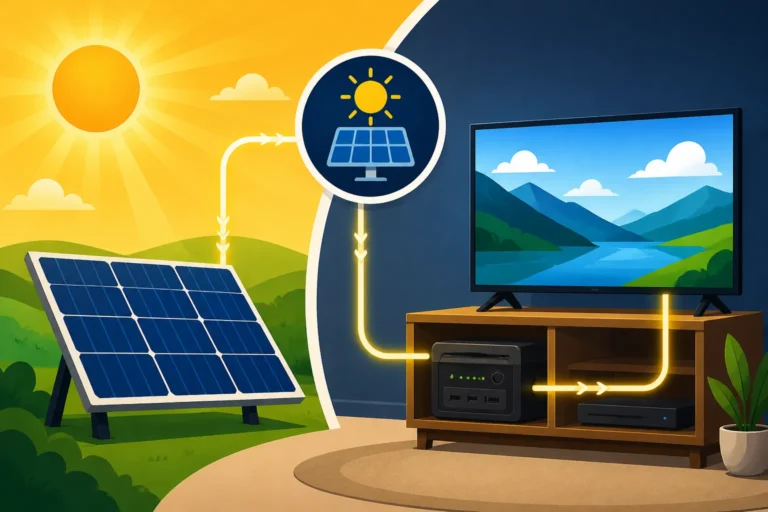
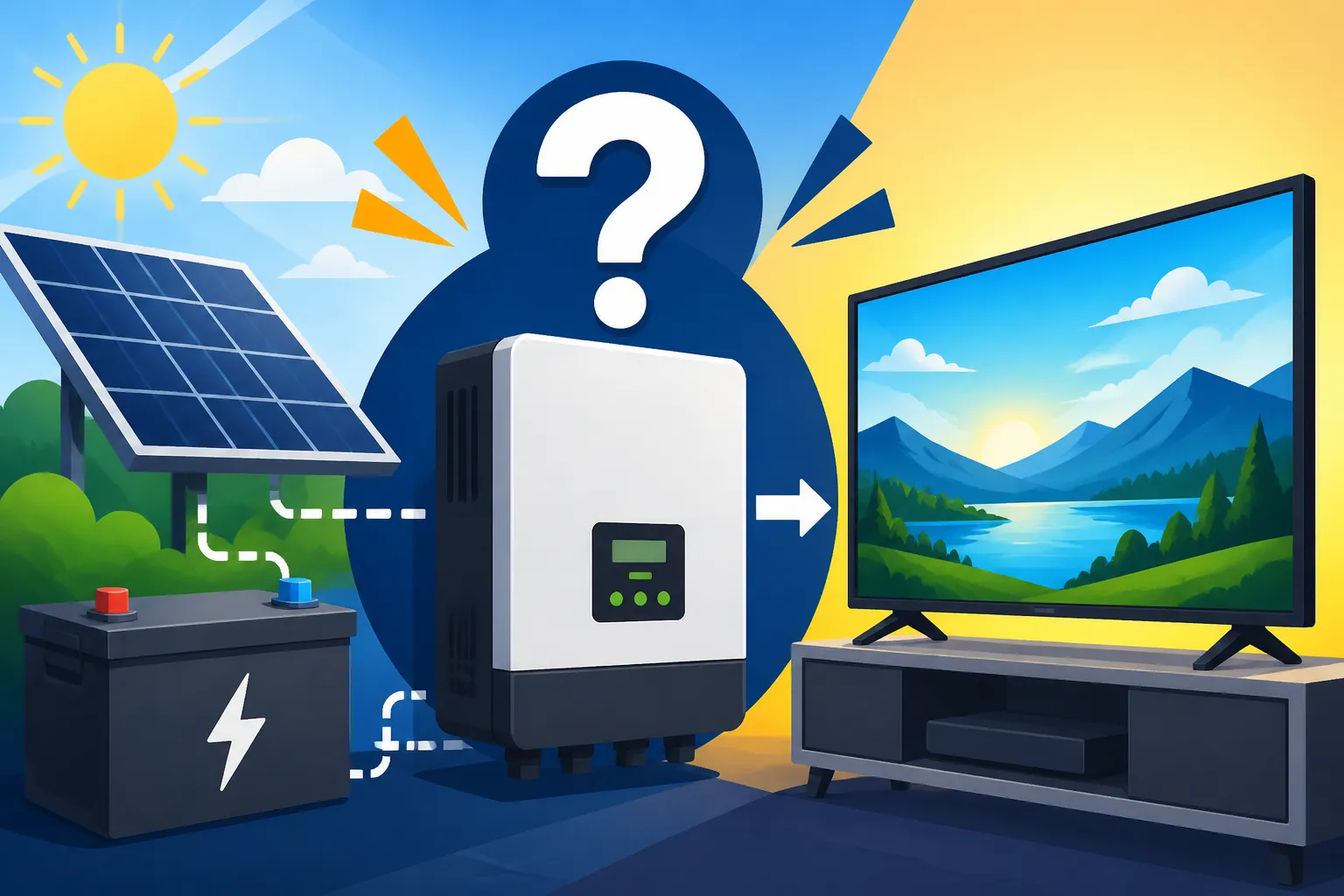
The inverter is truly the heart of your off-grid electrical system when it comes to running household appliances. It's the component that takes the direct current (DC) electricity stored in your batteries and converts it into alternating current (AC) electricity, which is what most of your standard home electronics, including your television, require. Without a properly chosen inverter, your TV and other AC appliances simply won't work, no matter how many solar panels or batteries you have.
Types of Inverters and Why Pure Sine Wave Matters for TVs
There are generally two main types of inverters you'll encounter for off-grid applications: modified sine wave and pure sine wave. While modified sine wave inverters are often cheaper, they produce an AC waveform that's more like a staircase step than a smooth, continuous curve. This "choppy" power can be problematic for sensitive electronics, and your TV is definitely on that list. Using a modified sine wave inverter with your television can lead to buzzing noises, visual artifacts, reduced lifespan for the TV's internal components, or even outright damage. Think of it like trying to perfectly fit a square peg into a round hole – it just doesn't quite work.
For any modern television, and really, for most sensitive electronics you rely on, a pure sine wave inverter is an absolute must. These inverters replicate the smooth, clean power waveform that you get from the utility grid, ensuring your TV operates exactly as it was designed to. This means clear picture, no annoying hums, and no risk of damaging your expensive electronics. While they cost a bit more upfront, the peace of mind and protection they offer your appliances are well worth the investment. Brands like Victron and Sol-Ark are well-regarded for their pure sine wave inverter quality, offering robust solutions for various off-grid needs. When you're learning how to choose an off-grid inverter, always prioritize pure sine wave for your living space.
Inverter Capacity and Surge Capability
When you're looking at inverters, you'll see a continuous wattage rating and often a surge rating. The continuous wattage is the maximum amount of power the inverter can deliver consistently, day in and day out, without overheating or failing. This number needs to be higher than the combined running watts of all the AC appliances you plan to operate simultaneously. For example, if your TV runs at 100 watts and your soundbar at 30 watts, you need an inverter with a continuous rating of at least 130 watts, plus a comfortable buffer.
The surge capacity, as mentioned before, is the brief amount of extra power the inverter can provide to handle those startup spikes. This is usually rated for a few seconds. If your TV, soundbar, and streaming device have cumulative starting watts of, say, 200 watts, your inverter's surge rating needs to be at least that high. Many inverters can surge to double their continuous rating for a very short period. For instance, a 1000-watt continuous inverter might have a 2000-watt surge rating, which is generally more than enough for a television and its accessories. Understanding these specifications is a critical part of an effective off-grid solar system design basics. If you're building out a larger system, you'll want to dive deep into how to size an off-grid inverter for all your appliances.
Calculating Your Inverter Size for a TV and Beyond
Now for the fun part: putting it all together! Accurately calculating your inverter size involves a bit of arithmetic, but it's not nearly as complicated as it might sound. The key is to be thorough and realistic about your power needs, thinking not just about the TV itself, but everything else you'll want to plug in alongside it.
Step-by-Step Inverter Sizing Calculation
Let's walk through an example. Imagine you have:
- A 50-inch LED TV: Running watts = 80W, Starting watts = 100W
- A Soundbar: Running watts = 30W, Starting watts = 40W
- A Streaming Device (e.g., Roku): Running watts = 5W, Starting watts = 10W
Step 1: Calculate Total Running Watts.
Add up the running watts for all devices you expect to use at the same time.
80W (TV) + 30W (Soundbar) + 5W (Roku) = 115W
Step 2: Calculate Total Starting Watts.
Identify the single appliance with the highest starting wattage, then add the running watts of all other devices you expect to run simultaneously. This is because the surge generally happens one at a time, or the inverter handles the highest surge while everything else is already running at its continuous draw.
In our example, the TV has the highest starting watts (100W).
So, 100W (TV starting) + 30W (Soundbar running) + 5W (Roku running) = 135W
Alternatively, you could sum all starting watts if you anticipate all devices starting at the exact same millisecond, which is rare for entertainment setups but can be a safer, albeit slightly oversized, approach. For this scenario, 100W + 40W + 10W = 150W.
Step 3: Add a Safety Buffer.
It's always a good idea to add a 20-30% buffer to your highest calculated wattage (either running or starting, whichever is greater). This accounts for inefficiencies, potential future additions, or variations in appliance performance.
Using the 150W (total starting watts) or 135W (highest starting + other running) as our peak, let's take 150W and add a 25% buffer:
150W * 1.25 = 187.5W
Step 4: Select an Inverter.
Based on our calculations, you'd want an inverter with a continuous rating of at least 150-200 watts and a surge rating that can comfortably handle around 150-180 watts. You'll rarely find an inverter this small as most start at 300W or 500W, making sizing for just a TV relatively easy. A 500W pure sine wave inverter would be more than sufficient for this setup, providing ample headroom. Remember that your entire system sizing needs to consider how much battery capacity you need and how many solar panels for off-grid living you'll require to keep those batteries charged.
Accounting for Other Devices and Future Expansion
While the primary focus here is your TV, it’s rarely the only thing you want to power. When you're planning your off-grid system, it's wise to consider all the AC loads you might have. Do you also want to run a laptop, charge power tool batteries, or maybe a small mini-fridge for snacks during movie night? Each of these adds to your overall wattage requirements. You'll need to learn how to add up your off-grid loads for a comprehensive understanding.
It’s always better to slightly oversize your inverter than to undersize it. An inverter that's constantly running at its maximum capacity will be less efficient, run hotter, and likely have a shorter lifespan. Plus, giving yourself some extra capacity now means you won't immediately hit a wall if you decide to add another small appliance later, like a fan for summer evenings or an extra monitor for your work-from-home setup. Think about potential growth – perhaps you'll upgrade to a larger TV, or a more powerful sound system down the line. A little extra wattage now can save you a complete inverter replacement later, which is a significant part of the overall off-grid solar cost. This foresight is a key aspect of any robust off-grid solar system sizing guide.
Practical Considerations and Common Mistakes
Venturing into off-grid living means becoming intimately familiar with your power system, and part of that is avoiding common pitfalls that can lead to frustration or costly mistakes. Choosing an inverter isn't just about matching watts; it's also about understanding how it integrates into your wider system.
The Impact of System Voltage on Inverter Choice
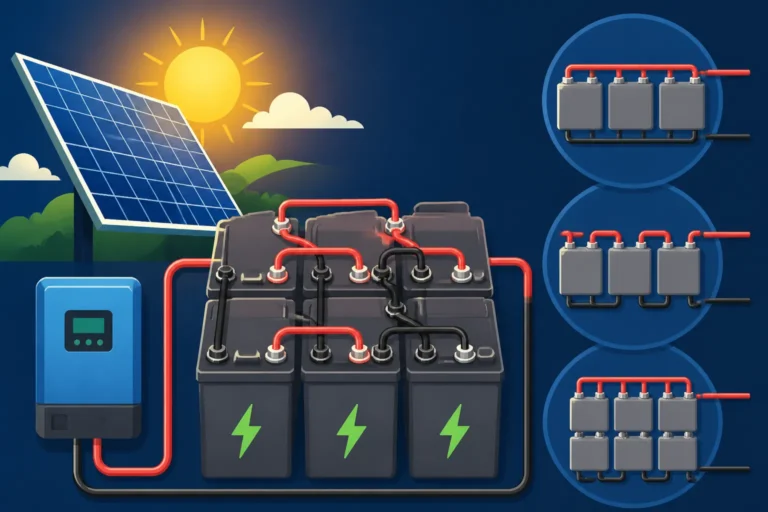
Your off-grid system's voltage, typically 12V, 24V, or 48V, plays a significant role in determining the type and efficiency of the inverter you'll choose. For smaller systems, like those found in RVs or small cabins where a TV might be one of the few AC loads, a 12V system with a 12V inverter is common. However, as your power needs grow, higher voltage systems (24V or 48V) become much more efficient.
Why? Higher voltage means lower amperage for the same amount of power (Watts = Volts x Amps). Lower amperage means you can use thinner, less expensive wiring, and you'll experience less energy loss over longer cable runs. For a larger off-grid home that wants to run a full entertainment center plus other major appliances, a 48V system paired with a 48V inverter would be the most efficient choice, allowing for a more robust and scalable setup. Companies like Renogy offer a range of inverters compatible with various system voltages, catering to different off-grid setups. Learning how to choose system voltage is fundamental to designing an efficient and stable power system.
Avoiding Undersizing or Oversizing Your Inverter
One of the biggest mistakes people make is either drastically undersizing or oversizing their inverter. An undersized inverter will struggle to meet your power demands, leading to constant tripping, warnings, and potential damage to the inverter itself. Imagine sitting down to watch your favorite show, only for the screen to go black every time there's a slightly demanding scene or a quick brightness change – it's incredibly frustrating and defeats the purpose of your off-grid setup.
On the flip side, oversizing your inverter excessively can also be a mistake, though less catastrophic. Larger inverters are more expensive, heavier, and can have higher 'idle' power consumption, meaning they draw a small amount of power even when no appliances are running, just to keep themselves on. While it's good to have a buffer, purchasing a 5000W inverter to run only a 100W TV and a few lights might mean you're wasting money and precious battery power on its internal operations. A well-matched inverter for your specific needs, like what a 1000W off-grid system can power and cost, is the sweet spot. It's about finding that balance between sufficient capacity, surge capability, and cost-effectiveness for your overall off-grid solar system.
Disclaimer
The information provided in this guide is for general informational purposes only and does not constitute professional electrical advice. Off-grid solar systems involve high voltages and currents that can be dangerous. Always consult with a qualified electrician or solar professional before installing or modifying an off-grid solar system. Adhere to all local electrical codes and safety regulations.