Is Off-Grid Solar Cheaper Than the Grid
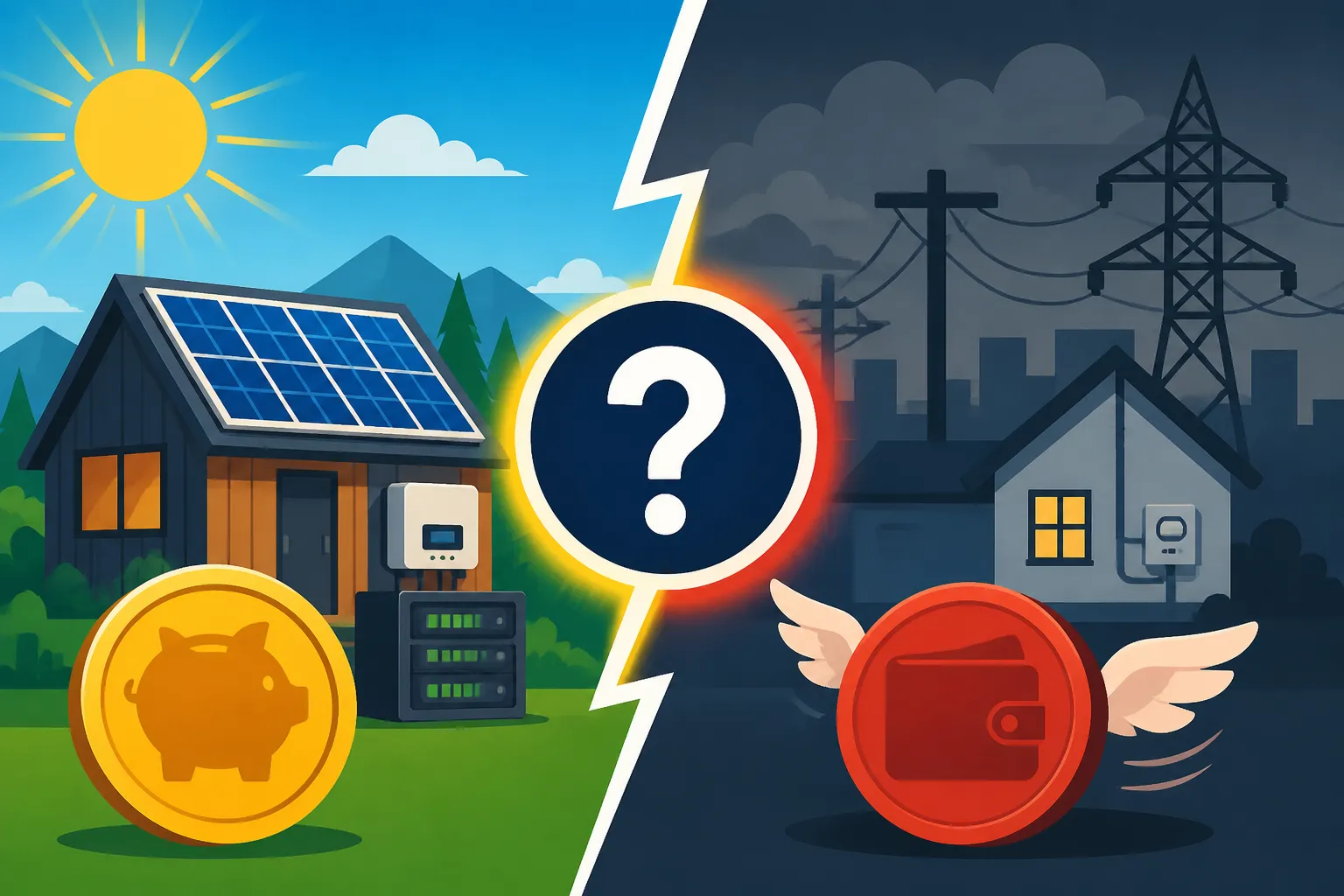
The dream of casting off the shackles of the utility company and generating your own power is incredibly appealing, but often, the first question that pops into people's minds is, "Is off-grid solar actually cheaper than just paying my monthly electric bill?" It's a valid concern, and navigating the complexities of upfront costs versus long-term savings can feel like trying to solve a puzzle blindfolded. This guide is here to shed light on that exact dilemma, breaking down the true financial comparison between living off the grid and staying connected to it, so you can make an informed decision without the guesswork.
Understanding Grid-Tied Electricity Costs
Before we can even begin to compare, it’s essential to truly understand what you’re paying for when you’re connected to the traditional electrical grid. Many folks just glance at the total on their monthly bill and begrudgingly pay it, but there’s a lot more going on behind those numbers than meets the eye. These aren't just flat fees; they're a complex mix of generation, transmission, distribution, and a host of other charges that can add up significantly.
The Breakdown of Your Monthly Utility Bill
When you receive your electricity bill, it's usually not just a simple charge per kilowatt-hour (kWh) consumed. Most utility companies break down their costs into several distinct categories, each designed to cover different aspects of power delivery. You might see charges for "Energy Usage," which is the actual electricity you consume, measured in kWh. Then there are "Delivery" or "Transmission and Distribution" charges, which cover the maintenance of the power lines, poles, and transformers that bring electricity from the power plant to your home. These infrastructure costs are substantial, and they're passed directly onto consumers.
Beyond these core charges, many bills include fixed monthly service fees, even if you use very little electricity. These cover administrative costs, customer service, and meter reading. You might also find various riders and surcharges for things like renewable energy initiatives, energy efficiency programs, or even local taxes and fees imposed by your city or state. For example, in California, you might see Public Purpose Program charges, while in Texas, it could be a different set of tariffs depending on your retail electric provider. All these individual line items contribute to the total, and often, it's these less obvious charges that sneak up on people and make their bills feel higher than expected.
Volatility and Escalation of Grid Electricity Rates
One of the most frustrating aspects of grid electricity is the lack of predictability when it comes to rates. Utility companies are subject to a multitude of factors that can cause rates to fluctuate, and more often than not, these fluctuations trend upwards over time. Fuel costs, for instance, play a massive role. If the price of natural gas, coal, or even hydropower generation rises due to market conditions, weather events, or geopolitical issues, those increased costs are usually passed directly to consumers through rate adjustments.
Infrastructure upgrades are another major driver of rate hikes. Aging grids across the country require constant maintenance, repairs, and modernization to ensure reliability and meet growing demand. Building new power plants, upgrading transmission lines, or hardening the grid against severe weather events—all necessary improvements—come with hefty price tags. Regulators often approve these costs to be recovered through higher customer rates. This means that even if your personal energy consumption remains steady, your bill can still climb year after year, eroding your budget and making long-term financial planning a real headache. This constant upward pressure on prices is a significant point of frustration for many homeowners, making the idea of fixed-cost energy production very attractive.
The Upfront Investment of Off-Grid Solar
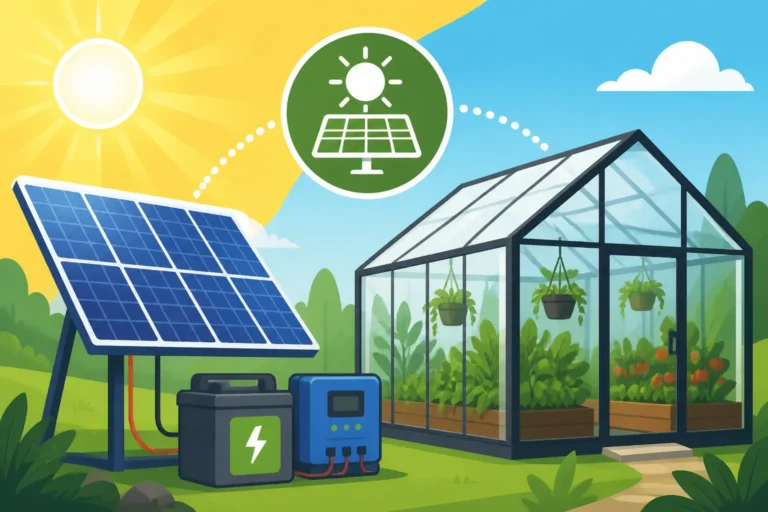
Making the leap to off-grid solar power means you're effectively becoming your own tiny utility company. This freedom comes with a substantial initial investment in equipment and installation. It's not just buying a few panels; you're building a complete, self-sustaining electrical system from the ground up, and that requires a careful allocation of funds. Understanding these costs is the first step in budgeting for your energy independence.
Core Components and Their Costs
When you go off-grid, you're looking at several key components, each with its own price tag. First, there are the solar panels themselves. The cost of these has come down significantly over the years, but you still need enough wattage to meet your daily needs and recharge your batteries. Panels can range from a few hundred dollars for smaller systems to several thousand for a whole-house setup. Next, and often the most expensive component for off-grid systems, are the batteries. Unlike grid-tied systems that can send excess power back to the utility, off-grid systems must store all their surplus energy. Lithium iron phosphate (LiFePO4) batteries are popular for their longevity and efficiency, but they carry a higher upfront cost than traditional lead-acid batteries. You might want to explore the specific details of a Cost of an Off-Grid Solar Battery Bank to get a better idea of these expenses.
Then you have the inverter, which converts the DC power from your batteries into the AC power your appliances use, and the charge controller, which regulates the flow of power from your panels to your batteries to prevent overcharging. These components vary widely in price depending on their size, quality, and features. Beyond these major items, you'll need racking and mounting hardware for your panels, wiring, fuses, breakers, and possibly a system monitor. A basic 1-2 kW system for a small cabin or RV might start around $5,000-$10,000 for components alone, while a 5-10 kW system capable of powering a larger home could easily run $20,000-$50,000 or more just for the equipment. This is a significant consideration when looking at the overall How Much Does an Off-Grid Solar System Cost.
Installation Expenses and Complexity
Once you have all your shiny new components, they need to be installed, and this is where another layer of cost comes in. You have two main routes: DIY or professional installation. If you're handy with electrical work and understand the intricacies of wiring diagrams, you might opt for a DIY approach, which can significantly reduce labor costs. Many people start with smaller, pre-assembled kits from manufacturers like Renogy or even find individual components on platforms like Amazon, building their knowledge and system piece by piece. However, even DIY requires an investment in tools, and your time has a value too.
For larger or more complex systems, hiring a professional installer is often recommended, if not required by local codes. Professional installation ensures that your system is sized correctly (which you can learn more about in How to Size an Off-Grid Solar System), wired safely, meets all electrical codes, and performs optimally. The cost of professional installation can vary widely based on your location, the complexity of the system, and site-specific challenges (like roof pitch or trenching for ground mounts). It can add anywhere from 10% to 30% or even more to the total project cost. For a full breakdown, check out Off-Grid Solar Installation Cost. Additionally, factor in potential costs for permits and inspections, which are often necessary even for off-grid systems, ensuring they meet safety standards.
Comparing Long-Term Operating Costs
The initial sticker shock of an off-grid solar system can be daunting, but it’s crucial to look beyond the upfront investment and consider the long-term operating costs for both grid-tied and off-grid scenarios. This is where the true financial comparison often reveals itself, showing where real savings can accrue over decades.
Ongoing Expenses for Grid-Tied Systems
For those connected to the grid, ongoing expenses are predictable in their monthly cadence but unpredictable in their total amount. Every single month, you'll receive a utility bill based on your consumption, which can fluctuate wildly depending on the season, your lifestyle, and how many new gadgets you've added to your home. Hot summers mean higher air conditioning use, cold winters mean more heating, and both translate to larger bills. As discussed earlier, these rates are also subject to periodic increases due to fuel costs, infrastructure upgrades, and regulatory changes, meaning your electric bill tends to creep upwards over time.
Beyond the variable energy usage, there are those persistent fixed charges, like basic service fees or connection fees, that you pay regardless of how much electricity you consume. These are non-negotiable costs that represent a perpetual drain on your budget. While grid power offers the convenience of "unlimited" electricity on demand (barring outages, of course), it also means you're forever tethered to a system whose costs you have little control over. There’s no escaping that monthly payment, which for many homeowners, especially those with high energy needs, can amount to thousands of dollars annually.
Maintenance and Replacement Costs for Off-Grid Systems
An off-grid solar system, once installed, largely eliminates those recurring monthly utility bills. This is perhaps its biggest financial appeal: true energy independence. However, it's not entirely without ongoing costs. The primary maintenance consideration for off-grid systems revolves around the battery bank. Batteries, even high-quality LiFePO4 models, have a finite lifespan. While a good lithium battery might last 10-15 years or even longer, it will eventually need to be replaced. This can be a significant expense, often thousands of dollars, depending on the size of your bank. However, if you consider that over 10-15 years you've saved 10-15 years of utility bills, the replacement cost often pales in comparison to what you would have spent. For a deeper dive, check out Off-Grid Solar Battery Replacement Cost Over Time.
Other components generally have much longer lifespans. Solar panels are incredibly durable and typically come with 25-year performance warranties, meaning they'll still be producing a high percentage of their rated power decades down the line. Inverters and charge controllers might last 5-15 years and may require occasional replacement or repair. Routine maintenance is minimal: occasionally cleaning your solar panels, especially if you're in a dusty area, and visually inspecting wiring for wear or damage. Compared to the unending monthly commitment of grid power, the sporadic but substantial costs of off-grid battery replacement and occasional component upgrades often represent a lower lifetime cost, especially when utility rates continue to climb. The overall Lifetime Cost of an Off-Grid Solar System becomes much clearer when you factor in these different timelines and savings.
Factors Influencing Off-Grid Solar's Cost-Effectiveness
Deciding whether off-grid solar is financially viable isn't a one-size-fits-all answer. Many variables can tip the scales one way or the other, making it more or less attractive than remaining grid-tied. Understanding these key factors is crucial for making an accurate personal assessment.
Location and Energy Consumption Habits
Your geographical location plays a massive role in the cost-effectiveness of an off-grid solar system. Areas that receive abundant sunshine year-round, like Arizona or Southern California, will require fewer solar panels to generate the same amount of power compared to cloudy, northern regions like parts of the Pacific Northwest or New England. More sunshine means your panels are more efficient, and you can recoup your investment faster. In sunnier climates, even smaller systems can be incredibly effective.
Equally important are your energy consumption habits. If you're a minimalist living in a tiny home or a cabin that only uses basic lighting, a small refrigerator, and charges a few devices, your energy needs will be relatively low. This translates to a smaller, less expensive solar array and battery bank. However, if you're looking to power a large family home with central air conditioning, electric heating, and a plethora of modern appliances, your energy demand will be substantial. This necessitates a much larger, more robust, and therefore more expensive system. For instance, running a refrigerator continuously versus occasionally using a powerful tool like a well pump will dictate entirely different system sizes. For understanding your needs, it's helpful to know How Many Watts of Solar You Need. Reducing your energy consumption, even slightly, can significantly decrease the initial cost of your off-grid system.
Government Incentives and Local Regulations
Federal, state, and even local governments sometimes offer incentives that can significantly reduce the upfront cost of going solar, whether grid-tied or off-grid. The most prominent example is the federal solar tax credit, which currently offers a 30% credit for eligible solar energy systems. This can shave thousands of dollars off your total investment, making off-grid solar much more financially appealing. It’s worth investigating if your proposed system qualifies under the 2026 Solar Tax Credit and Off-Grid Systems. Beyond federal incentives, many states offer their own rebates, tax exemptions, or performance-based incentives. For example, some states might provide specific grants for rural energy independence projects, which could directly benefit off-grid installations. Discovering these can drastically alter your overall Off-Grid Solar Return on Investment.
However, it's not all about incentives. Local regulations and permitting requirements can also add to the complexity and cost. Some counties might have stringent rules for electrical installations, even if they are off-grid, requiring professional inspections and costly permits. Others, particularly in very rural areas, might have more relaxed requirements. It’s crucial to research your specific locale's building codes and permit processes before you begin your project to avoid unexpected delays and expenses. Understanding these local nuances is just as important as knowing about the financial benefits.
Scenarios Where Off-Grid Solar Becomes the Cheaper Option
While grid power often seems like the default and most affordable option, there are several distinct scenarios where off-grid solar truly shines, proving itself to be the more economically sound choice in the long run. These situations usually involve either extremely high grid connection costs or a lifestyle that inherently benefits from independent power generation.
Remote Properties and Utility Extension Costs
One of the most compelling cases for off-grid solar is for properties located in remote, undeveloped areas far from existing utility infrastructure. Imagine buying a beautiful plot of land deep in the mountains or nestled by a lake, only to discover that extending power lines to your property will cost a fortune. Utility companies often charge tens of thousands, or even hundreds of thousands of dollars, to run new poles and wires over long distances, especially if the terrain is challenging. These costs are often prohibitive, making the dream of building on your remote acreage seem impossible.
In such instances, installing an off-grid solar system immediately becomes the more cost-effective solution. While the initial investment in solar, batteries, and other components might still be significant, it's often a fraction of the cost of a multi-mile utility extension. Once your solar system is up and running, you have no monthly utility bills, and your energy costs are essentially fixed (barring future battery replacements). This makes Off-Grid Solar vs Utility Extension Cost a critical comparison point for anyone eyeing remote living. You avoid not only the exorbitant upfront connection fees but also the ongoing service charges and fluctuating rates that come with grid power. For a remote cabin or hunting lodge, off-grid solar is often the only financially sensible path to electrification.
RVs, Vans, Tiny Homes, and Mobile Lifestyles
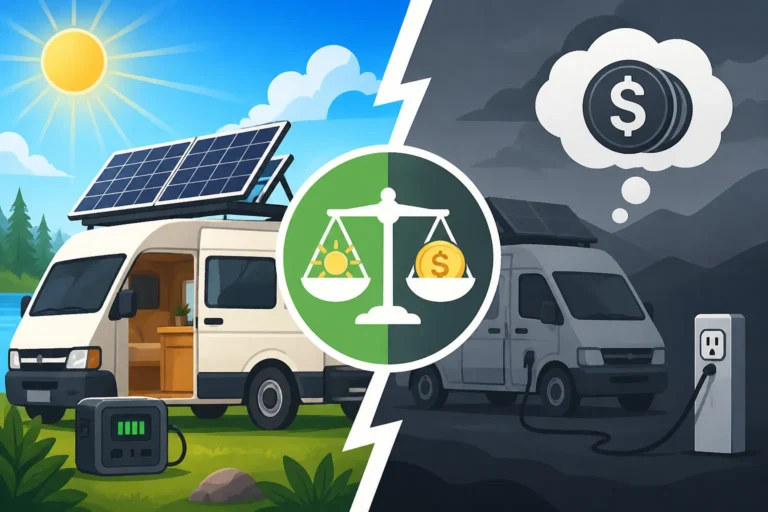
For those embracing mobile living or smaller, minimalist structures, off-grid solar is almost always the more practical and economical choice. Think about RVers, van dwellers, or tiny home owners who frequently move or prefer to stay in locations without utility hookups. Paying for expensive campground electrical hookups every night, or relying on noisy, fuel-guzzling generators, quickly adds up. A robust off-grid solar system provides silent, clean, and free electricity wherever the sun shines.
Whether you're powering a modest RV setup with a couple of 100W panels and a Jackery portable power station for weekend trips, or a more elaborate full-time van life system with several hundred watts of solar and a dedicated battery bank, the savings on fuel and hookup fees are substantial. You can power your lights, charge your devices, run a small refrigerator, and even enjoy some entertainment without constantly searching for an outlet or buying propane. For these lifestyles, the question isn't whether off-grid solar is cheaper, but rather how quickly it pays for itself by eliminating continuous external power costs. This is an area where considering Cost to Power an RV with Solar really makes sense, as the freedom and financial relief are immediate.
Beyond the Dollars and Cents: The Intangible Value of Off-Grid Living
While comparing the financial costs is a critical part of the decision-making process, focusing solely on the monetary aspect can sometimes obscure the profound, non-monetary benefits that off-grid living provides. For many, these intangible values are just as, if not more, compelling than the pure economic savings.
Energy Independence and Security
One of the most powerful draws to off-grid solar is the unparalleled sense of energy independence and security it offers. Imagine never again worrying about a rising electricity bill, never being subject to the whims of energy market fluctuations, and never having to fear a major power outage. When you're off-grid, you are your own power company. This self-reliance provides a profound sense of peace of mind, especially in an increasingly unpredictable world. You're no longer dependent on an aging, often vulnerable, centralized grid that can be brought down by severe weather, natural disasters, or even cyberattacks.
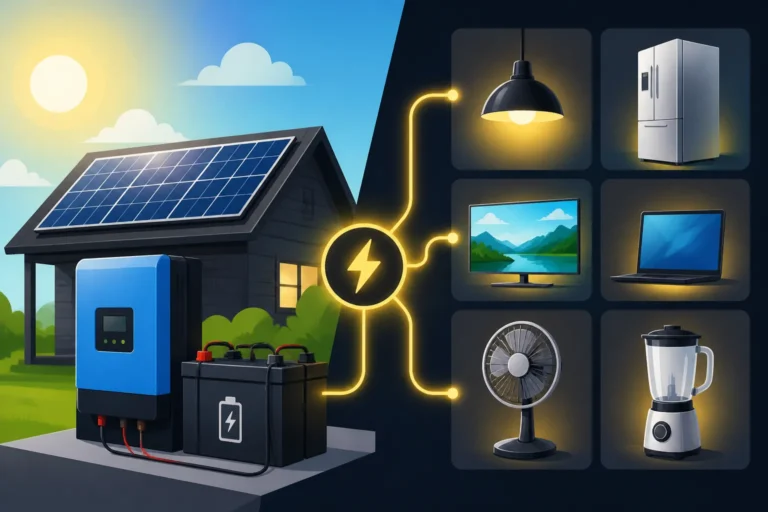
For homesteaders, preppers, or anyone living in an area prone to outages (like during wildfire season in California or hurricane season along the Gulf Coast), off-grid solar provides an essential layer of resilience. Your lights stay on, your refrigerator keeps running, and your critical medical devices remain powered, all while your grid-tied neighbors are left in the dark. This inherent security transforms a solar setup from a mere utility into a vital asset for long-term survival and comfort. It's about taking control of a fundamental need and ensuring its reliability, a concept explored further in How Off-Grid Solar Saves Money Long-Term.
Environmental Impact and Lifestyle Alignment
Choosing off-grid solar is also a powerful statement about your values and a direct action toward reducing your environmental footprint. Traditional grid electricity, in many regions, is still heavily reliant on fossil fuels, contributing to greenhouse gas emissions and climate change. By generating your own clean power from the sun, you are actively reducing your dependence on these polluting sources and contributing to a healthier planet. This alignment with environmental stewardship is a significant motivation for many individuals and families.
Furthermore, off-grid living often fosters a more mindful relationship with energy consumption. When you're directly responsible for generating and storing your power, you naturally become more aware of how much electricity you're using. You learn to conserve, to prioritize essential loads, and to appreciate every watt. This leads to a more sustainable and intentional lifestyle, often encouraging choices like energy-efficient appliances and thoughtful power management. It's not just about saving money; it's about living in harmony with your environment and building a resilient, sustainable future for yourself and your family. This conscious consumption can also lead to a deeper understanding of your energy needs, which is invaluable when designing or expanding your system, as detailed in Off-Grid Solar System Design Basics.
Comparative Costs: Grid-Tied vs. Off-Grid Solar
To help visualize the financial differences, here's a general comparison of grid-tied versus off-grid solar costs. Keep in mind that these are estimates and actual costs will vary based on your location, energy usage, and chosen components.
| Cost Category | Grid-Tied Electricity (Estimated) | Off-Grid Solar System (Estimated) |
|---|---|---|
| Upfront Cost | Typically $0 (unless new utility extension is required) | $5,000 – $50,000+ (Components, installation, permits for average residential use; smaller setups like RVs can be $1,000 – $5,000+) |
| Monthly Bills | $100 – $500+ (Variable based on usage, rates, fixed charges) | $0 (After initial investment, no utility bills) |
| Connection Fees | $0 (if existing infrastructure) – $10,000 – $100,000+ (for new extensions) | $0 |
| Long-Term Fuel Costs | Indirectly included in utility rates; subject to market volatility | $0 |
| Maintenance/Replacement | Minimal (utility maintains infrastructure) | $0 – $500/year average (Battery replacement every 10-15+ years, occasional inverter/controller replacement, cleaning panels) |
| Inflation Impact | High (utility rates generally increase over time) | Low (initial investment fixed, no ongoing fuel costs; battery replacement costs subject to future market prices, but overall savings still strong) |
| Resale Value | Standard | Can add significant value, especially to remote properties, making them more appealing to buyers looking for energy independence |
| Energy Independence | None | Complete |
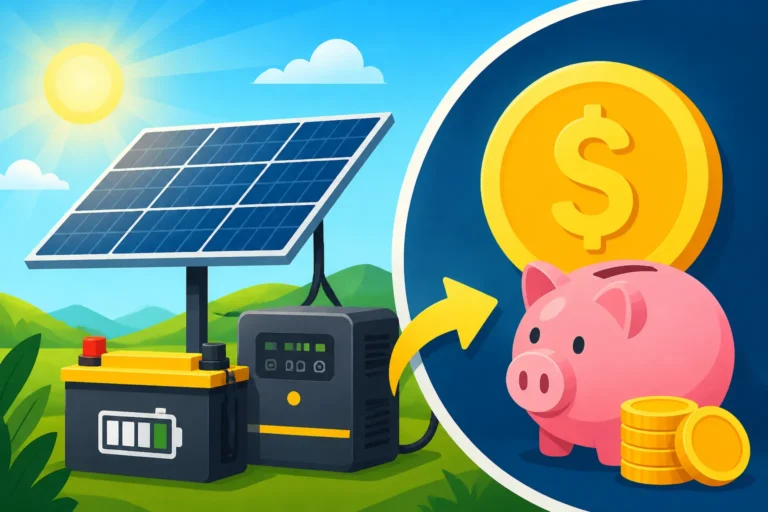
This table highlights that while the upfront cost of off-grid solar is substantial, the complete elimination of monthly utility bills and the long-term control over energy expenses can make it a compelling financial choice, especially when compared to the escalating and unpredictable costs of grid power over a 20-30 year period.
Disclaimer
The information provided in this article is for general informational purposes only and does not constitute financial, electrical, or engineering advice. Off-grid solar system design and installation can be complex and potentially dangerous. Always consult with qualified professionals, adhere to local building codes, and prioritize safety when working with electricity. Costs and savings estimates are generalized and will vary significantly based on individual circumstances, location, energy consumption, and chosen equipment.