Best Portable Solar Panels for Off-Grid
Trying to maintain power when you're off the beaten path can feel like a constant juggle, whether you're deep in the wilderness in your RV, enjoying a quiet cabin getaway, or simply preparing for unexpected outages. The struggle to keep your devices charged, lights on, and essential appliances running without a grid connection is real, and it often leads to compromises or reliance on noisy, fuel-guzzling generators. This guide is here to walk you through the world of portable solar panels, helping you understand their immense value and how to pick the very best ones for your specific off-grid needs.
Why Portable Solar Panels are a Game Changer for Off-Grid Living
The allure of off-grid living often comes with the challenge of power. While a full-fledged fixed solar array is fantastic for a permanent setup, it's not always practical or even possible for every situation. This is where portable solar panels step in, offering a flexible and often crucial solution for a wide range of needs. They bridge the gap between complete reliance on a static system and the complete absence of power, bringing a new level of energy independence to those who cherish freedom and preparedness.
Freedom and Flexibility for Remote Adventures
Imagine pulling your camper van into a stunning national park, far from any hookups. Or perhaps you're at a remote hunting cabin that only sees visitors a few weekends a year, and running permanent wiring just isn't worth the hassle. Portable solar panels are the perfect companion for these scenarios. They offer the incredible flexibility to set up power wherever the sun shines, allowing you to chase the sunlight throughout the day without having to move your entire vehicle or structure.
For RVers and van lifers, the ability to pack up your solar power and deploy it on demand is invaluable. You can park your rig under a shady tree to keep cool while your solar panels soak up rays in a sunny spot nearby. This isn't just about convenience; it's about maximizing your energy harvest and extending your stay in those incredible, remote locations. Whether you're powering a small refrigerator, charging your laptop for remote work, or simply keeping your phone alive, these panels ensure that your adventures aren't cut short by a dead battery. Many folks find these panels to be an essential part of their mobile setup, supplementing a larger fixed system or acting as the primary power source for lighter usage. For a deeper dive into the specific needs of mobile setups, you might find our guide on Off-Grid Solar Cost for an RV particularly helpful.
Backup Power and Emergency Preparedness
Let's be real, life is unpredictable. Power outages, natural disasters, or even just temporary grid failures can throw a serious wrench into daily life. Having a reliable source of backup power isn't just a luxury; for many, it's a necessity. This is another area where portable solar panels truly shine. They offer a silent, emissions-free alternative to traditional gas generators, which can be noisy, require fuel storage, and often have maintenance needs.
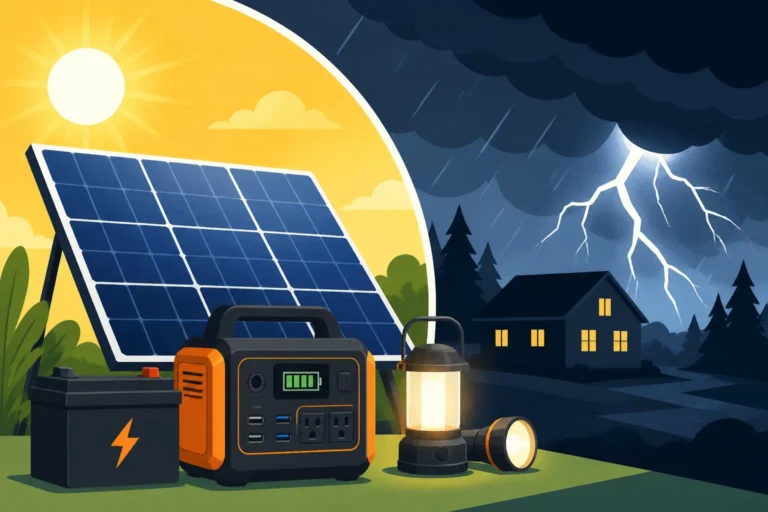
During an unexpected blackout, a portable solar panel paired with a power station (like a Jackery Explorer) can keep your essential devices running. Think about it: charging your phone to communicate with loved ones, powering a small fan in the summer heat, or running a crucial medical device like a CPAP machine. While they might not power your entire home, they provide vital support for critical loads, offering peace of mind when the grid goes down. Many families incorporate a small portable solar setup into their emergency kits, understanding that every bit of self-sufficiency helps when you're truly on your own. Considering the financial aspect of such setups, understanding the Off-Grid Solar Cost: Complete Breakdown can help you budget for preparedness.
Expandability and Scalability
One of the often-overlooked benefits of portable solar panels is their inherent scalability. Maybe you're just dipping your toes into the world of off-grid power and don't want to commit to a massive, expensive system right away. Portable panels allow you to start small, understand your actual energy needs, and then gradually expand your setup as your requirements grow or your budget allows.
For instance, you might begin with a single 100-watt panel and a small power station to keep your gadgets charged during camping trips. As you get more comfortable and perhaps move into a tiny home or a larger RV, you can easily add more portable panels in parallel to increase your charging capacity. This modular approach is incredibly forgiving and cost-effective, allowing you to tailor your power generation to your evolving lifestyle. It's a fantastic way to learn the ropes of solar power without the intimidation of a large-scale installation. For those considering starting their off-grid journey, learning How to Size an Off-Grid Solar System is an excellent first step.
Key Factors When Choosing Portable Solar Panels
Choosing the right portable solar panel isn't just about picking the first one you see. There are several critical factors that will directly impact its performance, usability, and longevity in your off-grid adventures. It's easy to get overwhelmed by the jargon, but understanding these core elements will empower you to make an informed decision that truly meets your needs.
Power Output and Efficiency
The first number most people look at is the wattage, which indicates the panel's maximum power output under ideal conditions. You'll commonly see panels ranging from 50 watts for very small needs up to 200 or even 400 watts for more substantial demands. Higher wattage means more power generation, which translates to faster charging for your batteries or the ability to run more devices simultaneously. However, remember that actual output will vary greatly depending on sunlight intensity, angle, temperature, and even cleanliness of the panel.
Efficiency refers to how well a panel converts sunlight into usable electricity. Monocrystalline panels, for example, are generally more efficient than polycrystalline panels, meaning they can produce more power from a smaller footprint. This is a big deal when space is at a premium, like on an RV roof or in a packed vehicle. While monocrystalline panels might come with a slightly higher price tag, their superior performance often justifies the investment, especially if you're in an area with less consistent sunlight or simply want to maximize every ray. For a deeper dive into panel selection, check out our guide on How to Choose an Off-Grid Solar Panels.
Portability and Durability
What's the point of a "portable" solar panel if it's a nightmare to lug around or falls apart after a few trips? This factor is paramount. Consider the weight and folded dimensions of the panel. Can you easily carry it from your vehicle to the optimal sunny spot? Will it fit comfortably in your storage space without being a hindrance? Panels designed for portability often feature briefcase-style designs with integrated handles or can be rolled up for compact storage.
Durability is another non-negotiable trait for off-grid use. Your panels will likely encounter various elements – dust, dirt, rain, and possibly even accidental bumps. Look for panels with robust construction, often featuring strong tempered glass (for rigid panels), durable ETFE or PET laminates (for flexible panels), and sturdy aluminum frames. Weather resistance is key; make sure the panel has an IP (Ingress Protection) rating that indicates its resistance to dust and water. A panel that can withstand the rigors of the road or the occasional downpour, like those offered by Jackery, will save you headaches and money in the long run.
Compatibility with Your Existing Gear
This is a step many beginners overlook, leading to frustration. Your portable solar panel isn't a standalone power solution; it's designed to charge a battery or power station, which then powers your devices. Therefore, ensuring compatibility with your existing battery bank or solar generator is crucial.
Most portable panels use standard MC4 connectors, which are widely compatible. However, some brands might use proprietary connectors, so always double-check. More importantly, consider the voltage. Many portable power stations or smaller battery banks operate on 12V systems, but some larger setups might use 24V or even 48V. Your panel's output voltage needs to be appropriate for your charge controller or the input specifications of your power station. If the voltage is too high, it could damage your equipment; too low, and it won't charge efficiently. It's also vital to ensure that your charge controller, whether it's external or built into your power station, can handle the current and voltage from your chosen panel. Our article on How to Choose an Off-Grid Charge Controller provides excellent advice on this topic.
Types of Portable Solar Panels Available
The world of portable solar panels isn't a one-size-fits-all market. Manufacturers have innovated a variety of designs to suit different user needs, from the occasional camper to the full-time RVer. Understanding the distinct characteristics of each type will help you narrow down your choices and find the perfect match for your off-grid lifestyle.
Foldable Solar Panels
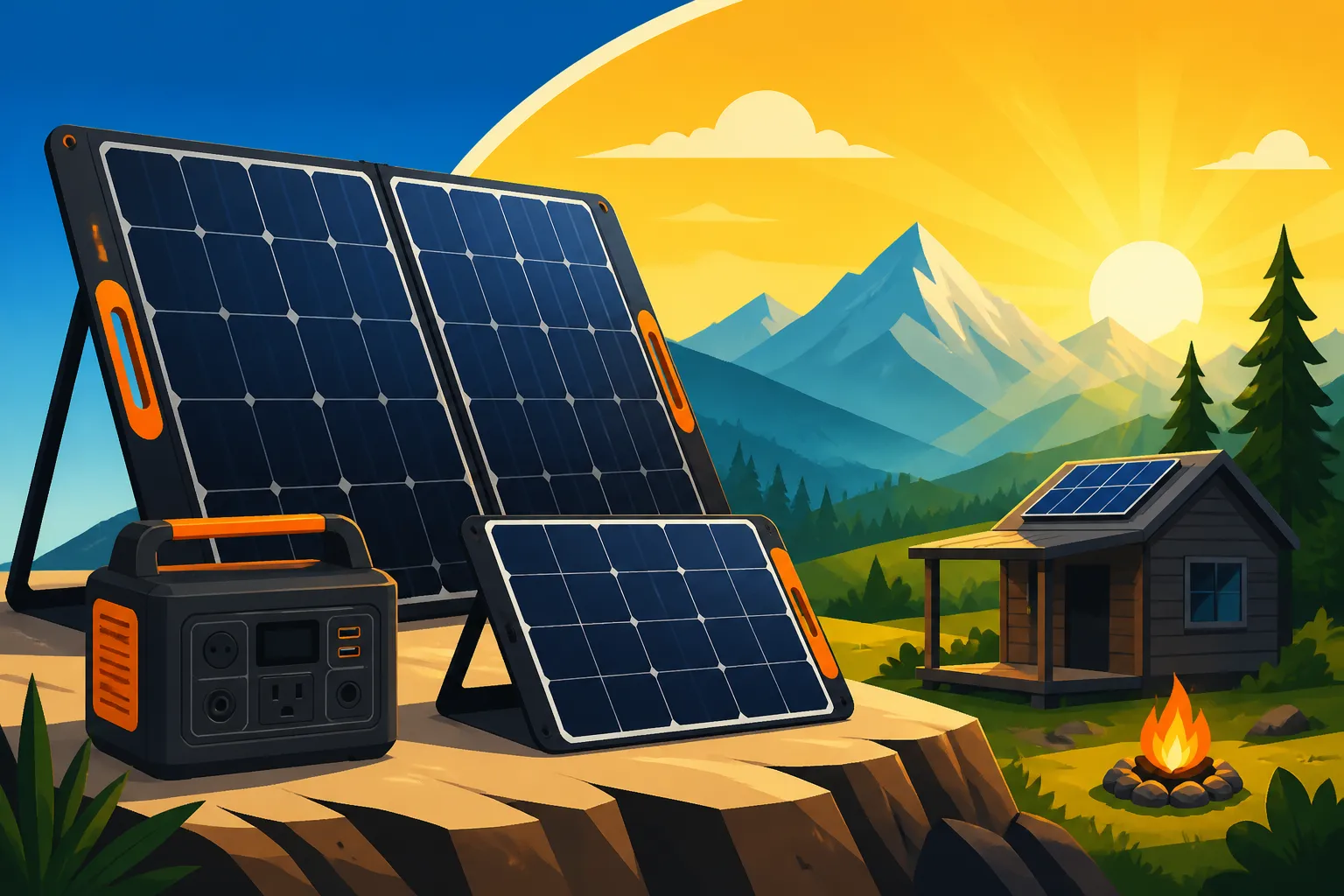
These are arguably the most popular and versatile type of portable solar panel. As the name suggests, they fold up, typically into a compact briefcase-like form, making them incredibly easy to transport and store. When you're ready to use them, you simply unfold them, often revealing multiple panels connected together. Many foldable panels come with integrated kickstands, allowing you to quickly set them up at an optimal angle to capture the sun's rays.
Foldable panels are excellent for a wide range of applications, from charging a portable power station like a Jackery Explorer 1000 for a weekend camping trip to supplementing a larger RV solar system. They often feature robust construction, sometimes using a combination of tempered glass and durable fabric backing, making them resistant to light impacts and weather. Their ease of deployment and retrieval makes them a favorite for those who move frequently or need to adjust their solar setup throughout the day. However, their rigidity (even when folded) means they still take up some space, and care must be taken to avoid dropping them or placing heavy objects on them.
Flexible Solar Panels
When space and weight are critical, flexible solar panels become an incredibly attractive option. These panels are typically thin, lightweight, and can even be bent or curved to a certain extent (though not excessively). They're usually made with a thin-film photovoltaic material encapsulated in a durable, weather-resistant polymer, often ETFE, which makes them much lighter and more resilient to minor impacts than their rigid counterparts.
Flexible panels are a dream come true for van lifers, boaters, and those with curved RV roofs where traditional rigid panels might be difficult to mount. They can be permanently adhered to surfaces with special glues or adhesives, or temporarily secured with grommets. This allows for a very low-profile installation, reducing wind resistance and maintaining the aesthetic of your vehicle or vessel. However, their flexibility comes with trade-offs. They generally have a slightly lower efficiency than rigid monocrystalline panels, and because they often sit flush against a surface, they can heat up more, which can further reduce their performance. They also require careful handling during installation to prevent damage. Despite this, for specific applications, their unique properties make them the best choice.
Solar Suitcases and Kits
For beginners or those looking for an all-in-one solution, solar suitcases and kits are a fantastic starting point. These kits typically include not just the solar panels (often foldable), but also a pre-wired charge controller and necessary cabling, all designed to work seamlessly together. Some even come with a battery or portable power station included. The term "solar suitcase" usually refers to a foldable panel arrangement that includes its own charge controller integrated into the unit.
The main advantage of these kits is convenience and simplicity. You don't have to worry about matching components or complex wiring; everything is designed to be plug-and-play. This makes them ideal for quick setups, like powering a small cabin on weekends or providing emergency backup. Brands like Renogy and BougeRV offer excellent solar suitcase options that make getting started with off-grid power remarkably easy. While they might offer less customization than building a system from individual components, their ease of use and often competitive pricing make them an appealing choice for many off-grid enthusiasts. If you're considering a more integrated approach, our guide on Best Off-Grid Solar Kits for Beginners could be very helpful.
Understanding Essential Features and Specifications
Venturing beyond the basic wattage rating, there's a whole world of specifications that can either make or break your portable solar panel experience. Grasping these details will empower you to select a panel that not only meets your power needs but also integrates seamlessly with your overall off-grid system and performs reliably in diverse conditions.
Open-Circuit Voltage and Short-Circuit Current
These might sound like highly technical terms, but they’re crucial for ensuring your panel works correctly with your charge controller.
- Open-Circuit Voltage (Voc): This is the maximum voltage the panel can produce when it’s not connected to any load (i.e., open circuit). Why is this important? Your charge controller has a maximum input voltage it can handle. If your panel's Voc exceeds this limit, you risk damaging the controller. For example, if you have a 12V battery system and your controller is rated for a 25V input, a panel with a 30V Voc would be a no-go.
- Short-Circuit Current (Isc): This is the maximum current the panel can produce when its positive and negative terminals are directly connected (i.e., short circuit). This value helps you size your wiring and fuses correctly. Your charge controller also has a maximum input current rating. Exceeding it can overheat and damage the controller.
Understanding these two specifications is critical for the safety and efficiency of your system. Always cross-reference the Voc and Isc of your chosen panel with the input specifications of your charge controller. This is especially true if you plan to wire multiple panels together in series, as that will increase the total Voc. For more on matching components, refer to How to Connect a Charge Controller.
Bypass Diodes and Shading Performance
One of the biggest frustrations for solar users is reduced output due to shading. Even a small shadow from a tree branch, an antenna, or a bit of dirt can significantly drop a panel's power production. This is where bypass diodes come into play. A solar panel isn't one big cell; it's made up of many smaller cells wired together. If just one of these cells is shaded, it acts like a bottleneck, restricting the flow of electricity from the entire series of cells.
Bypass diodes are electronic components installed within the panel (often in the junction box) that create an alternative path for electricity to flow around a shaded or malfunctioning section of cells. Instead of the entire panel shutting down or drastically reducing output, the diode "bypasses" the shaded part, allowing the rest of the panel to continue producing power. This is a game-changer for portable setups where partial shading is common. When comparing panels, inquire about the presence and number of bypass diodes. Panels with more diodes (e.g., one for every 18-20 cells) will generally perform better in shaded conditions, giving you more consistent power even when circumstances aren't ideal.
Built-in Charge Controllers and USB Outputs
Some portable solar panels, particularly those designed as "solar suitcases" or specific models from brands like Jackery, come with a charge controller integrated directly into the panel unit. This simplifies the setup significantly, as you often just plug the panel directly into your battery or power station, and the controller manages the charging process. These built-in controllers are typically PWM (Pulse Width Modulation) type, which are perfectly adequate for smaller, simpler systems. However, for larger, more complex setups, an external MPPT (Maximum Power Point Tracking) controller often offers higher efficiency, especially in varying light conditions. For details on controller types, see our comparison of MPPT vs PWM Charge Controllers.
Beyond charging your main battery, many portable panels also include convenient USB-A or USB-C outputs. This allows you to directly charge small electronic devices like smartphones, tablets, or headlamps directly from the sun, bypassing your main battery system entirely. This feature is incredibly handy for quick charges or when your main battery is low. While these USB outputs typically draw a small amount of power, they offer a direct and convenient way to keep your essential personal electronics topped up, reducing reliance on your main inverter and battery for minor tasks.
Top Considerations for Different Off-Grid Scenarios
The "best" portable solar panel is really the one that's best for your specific off-grid scenario. A panel that's perfect for a full-time RV setup might be overkill or impractical for a weekend camping trip, and vice versa. Thinking about how and where you'll primarily use your panels will guide you toward the most sensible choice.
Portable Panels for RV and Van Life
For those living or extensively traveling in an RV or van, portable solar panels play a crucial role, often supplementing a primary, fixed rooftop solar array. The key considerations here revolve around maximizing energy harvest while maintaining flexibility and ease of use. You're typically looking for panels with higher wattage, perhaps in the 100W to 200W range per panel, to keep your larger battery banks topped up.
- Higher Wattage: To keep up with appliances like a 12V refrigerator, charging laptops, and running lights, you'll need substantial output. Many RVers opt for multiple foldable panels that can be linked together.
- Durability and Weather Resistance: Your panels will be exposed to all sorts of weather, from scorching sun to heavy rain. Look for panels with excellent IP ratings and robust construction. Brands like Renogy and BougeRV offer good options.
- Adjustable Kickstands: The ability to angle your panels towards the sun, especially during morning and evening hours or in winter when the sun is lower, can significantly boost your power production.
- Compact Storage: While deployed, they're big, but when packed away, they need to fit in your limited RV storage space. Foldable suitcase-style panels are often preferred for this.
- Compatibility with Your RV's System: Ensure the panel's output voltage and connectors are compatible with your existing charge controller and battery bank. Many RVs use 12V systems, so matching this is important. For more on RV-specific sizing, check out How to Size an Off-Grid System for a Rv.
Portable Panels for Camping and Overland Trips
When you're packing for a camping trip or an overland adventure, every ounce and inch of space counts. The needs here are often different from permanent RV living. You might be powering smaller devices, perhaps a portable fridge, lights, and personal electronics.
- Lightweight and Ultra-Portable: Panels that are easy to carry by hand, like those from Jackery or EcoFlow, are ideal. Flexible roll-up panels or smaller foldable panels (50W-100W) are very popular.
- Ruggedness: They're likely to be moved frequently, potentially strapped to roof racks, or placed on uneven ground. Look for panels designed to withstand rough handling and dirt.
- Quick Setup and Teardown: You don't want to spend half your camping time fiddling with solar panels. Simple plug-and-play designs are a major plus. Solar generators, often paired with matching portable panels, excel in this area.
- Integrated Charge Controller/USB Ports: For simplicity, a panel that can plug directly into a power station or even charge a phone directly via USB can be incredibly convenient.
- Versatility: The ability to charge different types of devices or a portable power station like a Goal Zero Yeti is valuable. If you're considering a complete portable solution, our guide to Best Solar Generators for Off-Grid might be useful.
Portable Panels for Emergency Backup
For emergency preparedness, the focus shifts from daily convenience to long-term reliability and easy, safe storage. These panels might sit unused for extended periods but need to perform instantly when called upon.
- Reliability: The panel must work when you need it most. Look for established brands with good reputations for durability.
- Ease of Storage: Panels that fold flat or are compact are easier to store in a closet, garage, or emergency kit without taking up excessive space.
- Setup Simplicity: In an emergency, you don't want to be fumbling with complex wiring. A solar suitcase or a simple foldable panel designed to connect directly to a portable power station is perfect.
- Compatibility with Critical Devices: Ensure the system can power essential items like communication devices, medical equipment, or a small refrigerator. This often means pairing the panel with a reliable portable power station. The federal tax credit and other incentives for solar systems can also play a role in making these investments more accessible for home backup; consider checking Does the Federal Tax Credit Apply to Off-Grid Solar for relevant information.
- Minimal Maintenance: Since they may not be used regularly, panels that require little to no maintenance beyond occasional cleaning are preferred.
Installation and Setup Tips for Portable Panels
Even though "portable" implies simplicity, there are still best practices and clever tricks to get the most out of your panels and ensure they last. Proper setup isn't just about getting power; it's about getting efficient power and extending the lifespan of your valuable equipment.
Optimal Placement and Angle
This is probably the single most impactful factor for maximizing your portable solar panel's output. The sun moves across the sky throughout the day, and its angle changes with the seasons.
- South-Facing (Northern Hemisphere): Always aim your panels towards true south (or north in the Southern Hemisphere). This orientation typically receives the most direct sunlight throughout the day.
- Adjust for Time of Day and Season: In the morning and late afternoon, the sun is lower in the sky. Tilting your panel at a shallower angle (more horizontal) can capture more of these low-angle rays. Midday, you'll want it more perpendicular to the sun. In winter, the sun is always lower, so a steeper angle (more vertical) will be beneficial. Some portable panels, like those from Jackery, come with built-in adjustable kickstands that make this adjustment quick and easy. Don't be afraid to move your panels every few hours to track the sun – that's the beauty of portability!
- Avoid Shading at All Costs: Even a small shadow can drastically reduce your panel's output due to the way solar cells are wired. Position your panels where they will be completely shadow-free for as long as possible. Remember, the shadow from a single leaf can cut output significantly.
- Clear Line of Sight: Ensure there are no obstructions like trees, buildings, or even dirty windows between your panels and the sun.
Secure Connections and Cable Management
Once you have your panel optimally placed, the next crucial step is ensuring secure and safe connections. Loose connections can lead to power loss, arcing, and even fire hazards.
- MC4 Connectors: Most portable panels use MC4 connectors. Always ensure these are fully clicked together and seated tightly. They are designed to be weather-resistant when properly connected.
- Cable Routing: Keep cables organized and out of the way to prevent tripping hazards or damage. Use zip ties or cable clips to secure them. Avoid running cables under heavy objects or in high-traffic areas where they could be pinched or stepped on.
- Weather Protection: While many cables and connectors are designed for outdoor use, it's always a good idea to protect connections from prolonged exposure to rain or standing water. A simple waterproof junction box or even wrapping connections in electrical tape can add an extra layer of protection.
- Proper Gauging: While most portable kits come with appropriate cables, if you're extending cables, ensure you use the correct wire gauge to minimize voltage drop, especially over longer distances. Thicker wires (lower gauge number) are better for longer runs.
Protecting Your Panels
Taking a few simple steps to protect your panels will ensure they provide reliable power for years to come.
- Cleaning: Dust, dirt, pollen, and bird droppings can accumulate on your panel's surface, reducing its efficiency. Regularly wipe down your panels with a soft, damp cloth. Avoid harsh chemicals or abrasive materials that could scratch the surface.
- Storage: When not in use, especially for extended periods, store your portable panels in a dry, shaded area. Many foldable panels come with a carrying case that provides protection during transport and storage. Avoid storing them in direct sunlight or extreme temperatures for prolonged durations if possible.
- Physical Protection: When transporting, ensure panels are securely packed to prevent them from shifting, scratching, or suffering impacts. If they have tempered glass, treat them like any other piece of fragile equipment. If left deployed, ensure they are secured against strong winds; a sudden gust can easily tip over or blow away a lightweight panel.
- Temperature Considerations: While solar panels are designed for outdoor use, extreme heat can slightly reduce their efficiency, and extreme cold can affect battery charging if your battery isn't rated for low temperatures. Be mindful of these environmental factors. For those in colder regions, our guide on Off-Grid Solar Cost in Cold Climates offers valuable insights.
| Panel Type | Typical Wattage Range | Portability Score (1-5, 5=most) | Durability Score (1-5, 5=most) | Pros | Cons | Best For |
|---|---|---|---|---|---|---|
| Foldable Solar Panels | 50W – 400W | 4 | 3 | Easy to set up, good power, compact storage, adjustable angle | Can be bulky when folded, glass can break, requires ground space | RVs, cabins, camping, emergency backup |
| Flexible Solar Panels | 50W – 200W | 5 | 4 | Lightweight, low profile, can adhere to curved surfaces | Lower efficiency, more expensive per watt, heat issues if flush mounted | Vans, boats, curved roofs, limited space |
| Solar Suitcases/Kits | 100W – 200W | 3 | 3 | All-in-one (panel + controller), plug-and-play, beginner-friendly | Less customizable, heavier than just panels, often PWM controllers | Beginners, occasional use, backup, simple setups |
Disclaimer
The information provided in this article is for general informational purposes only and does not constitute professional advice. While we strive to offer accurate and up-to-date information, off-grid solar system requirements and regulations can vary significantly based on location, specific equipment, and individual needs. Always consult with qualified professionals, such as certified electricians or solar technicians, before making any purchasing decisions or attempting any installations. Off-grid solar systems involve high voltages and currents, which can be dangerous if not handled properly. Users assume all responsibility for their actions based on the information provided herein.