How to Add a Generator Auto-Start
Let's face it, living off-grid is an incredible journey towards self-sufficiency, but it often comes with a secret little stressor: the generator. There’s nothing quite like that sinking feeling when you hear the low-voltage alarm, realize the sun has hidden for days, and you have to trudge outside in the rain or dark to fire up the backup. It’s inconvenient, it’s disruptive, and honestly, it can be a real buzzkill. This guide is all about banishing that particular off-grid headache by showing you exactly how to add an auto-start generator system to your setup, giving you true peace of mind and more time to enjoy your independent lifestyle.
Why an Auto-Start Generator is a Game-Changer for Off-Grid Living
If you've spent any time living with an off-grid solar setup, you know that a backup generator, especially one that automatically kicks in when needed, isn't just a luxury; it's often a necessity. While the dream is 100% solar power, reality often includes cloudy stretches, high-demand days, or just the unpredictable nature of weather.
The Frustration of Manual Generator Intervention
Picture this: you're enjoying a quiet evening, maybe curled up with a good book, or perhaps you're out running errands, or even away for a weekend trip. Suddenly, your off-grid batteries are dipping dangerously low. Without an auto-start system, someone has to physically go to the generator, start it up, let it run, and then shut it down when the batteries are sufficiently charged. This isn't just an occasional inconvenience; it can be a daily chore in winter months or during prolonged bad weather.
I've heard countless stories, and experienced a few myself, where forgetting to start the generator led to completely dead batteries, which can be damaging to certain battery chemistries and definitely interrupts your power supply. It means dropping everything, grabbing your keys, and heading out, sometimes in less-than-ideal conditions. The mental load of constantly monitoring battery levels and predicting generator needs can be exhausting, detracting from the very freedom off-grid living promises.
Boosting System Reliability and Battery Health
One of the most critical aspects of off-grid power is maintaining your battery bank. Batteries are the heart of your system, and allowing them to consistently discharge too deeply can significantly shorten their lifespan, especially with lead-acid batteries. While lithium iron phosphate (LiFePO4) batteries are more forgiving, even they benefit from not being pushed to their absolute limits too frequently. An auto-start generator, often referred to as an Automatic Generator Start (AGS) system, is designed to prevent this very problem.
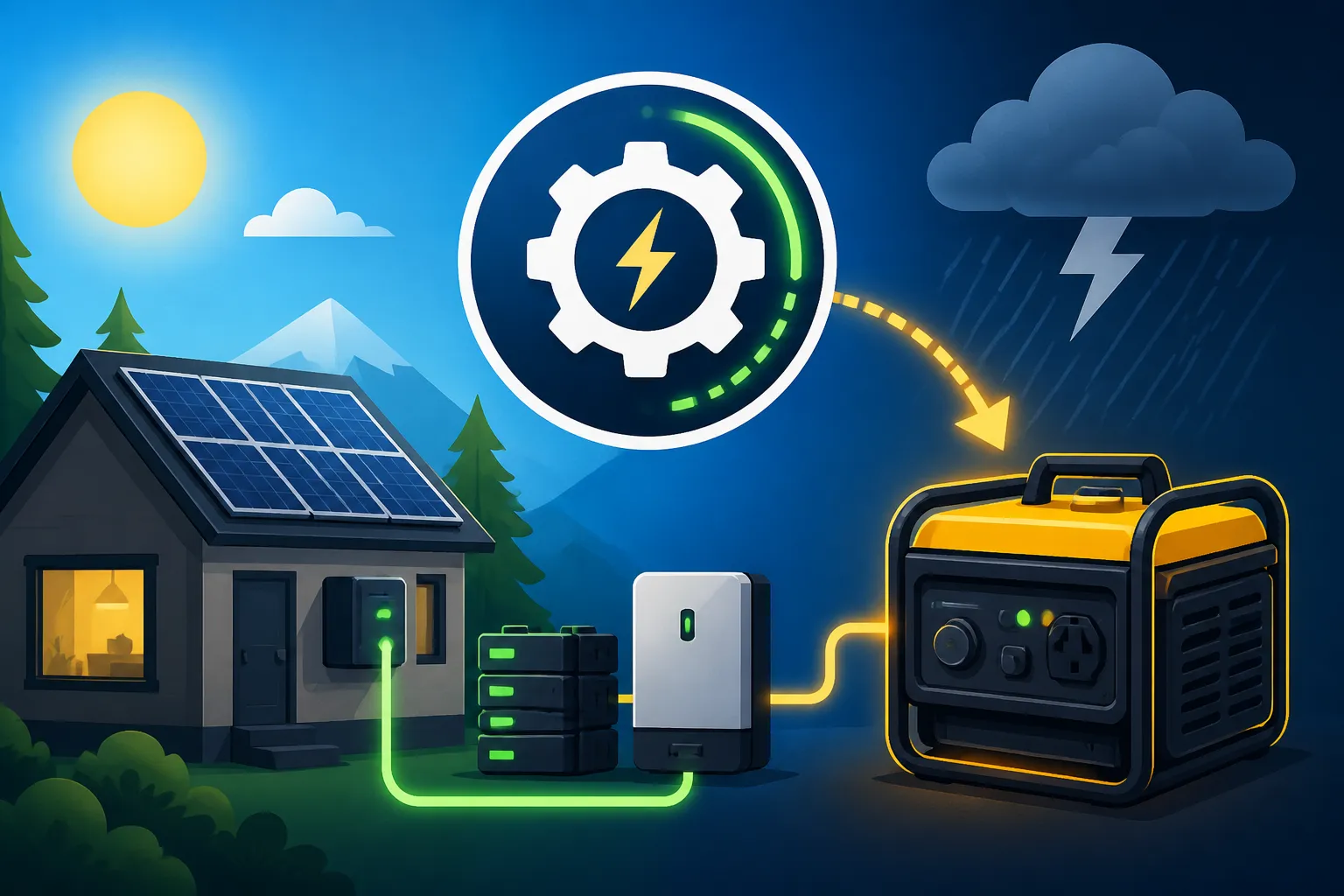
By configuring your AGS to monitor specific parameters, usually battery voltage, it can automatically start your generator when your batteries reach a pre-set low threshold. It then runs the generator to charge your batteries back up to a healthy level before shutting itself off. This automated process ensures your batteries are consistently kept within their optimal operating range, extending their life and maximizing your investment in them. It also provides an uninterrupted power supply, avoiding the dreaded "brownouts" or full power outages that can occur when you rely solely on manual intervention during extended solar droughts. This directly contributes to a more robust and reliable off-grid power experience, something you'll definitely want to consider when you're looking into how to design an off-grid solar system step by step.
Convenience and Peace of Mind
Beyond the technical benefits, the sheer convenience and peace of mind an auto-start generator offers are invaluable. Imagine heading out for the day or leaving for a vacation without a second thought about your power system. If a multi-day storm rolls in while you're gone, your off-grid system will simply manage itself, bringing the generator online as needed to keep everything running smoothly. No more asking a neighbor to check on your power, no more rushing home because you forgot to turn on the charger.
This automation means your refrigerator stays cold, your well pump continues to draw water, and your essential electronics remain powered, all without you lifting a finger. It truly transforms your off-grid experience, allowing you to focus on other aspects of homesteading, work, or simply enjoying the serenity of your remote location. The ability to trust your system to handle power generation and battery maintenance independently is, for many, the ultimate off-grid upgrade. It reduces the stress of off-grid living significantly, making it much more enjoyable and sustainable.
Understanding Auto-Start Generator Systems
Before you dive into the installation, it’s crucial to understand the different components and types of auto-start generator systems available. This knowledge will help you choose the best solution for your specific off-grid setup and ensure compatibility.
Key Components of an Auto-Start Setup
An auto-start generator system, at its core, involves a few critical components working in harmony:
- The Generator: Not just any generator will do. For an auto-start system, your generator needs to have an electric start and, crucially, a two-wire remote start capability. This means it has a connection point that, when a contact is closed, will tell the generator to start, and when opened, to stop. Many modern inverter generators and larger standby generators designed for backup power will have this feature. Brands like Generac, Honda, and Champion often offer models with this capability.
- The Inverter/Charger (or dedicated AGS Module): This is the brains of the operation. Many high-quality off-grid inverter/chargers, like those from Victron Energy or Sol-Ark, come with built-in Automatic Generator Start (AGS) functionality. These inverters can monitor your battery bank's voltage, state of charge, or even ambient temperature. When a pre-set condition is met (e.g., battery voltage drops below 24V), the inverter sends a signal to the generator to start. If your inverter doesn't have this feature, or if you prefer a more modular approach, you can purchase a dedicated external AGS module. These standalone units perform the same monitoring and signaling functions.
- Control Wiring: This is the simple wiring that connects your inverter/charger or dedicated AGS module to your generator's two-wire remote start terminals. It’s typically low-voltage wiring and often requires a relay to isolate the control circuit from the generator's start circuit, especially if the generator needs a momentary contact closure rather than a continuous one.
- Battery Monitoring: While often integrated into the inverter/charger, a robust battery monitor is essential. This device accurately tracks your battery's state of charge (SOC) and voltage, providing the precise data the AGS system needs to make decisions. Investing in a good shunt-based battery monitor is always a good idea for any off-grid system, as it gives you a much clearer picture of your power reserves than voltage alone can provide. You can learn more about how much battery capacity you need and the importance of monitoring in a guide about how many batteries for an off-grid system.
Integrated vs. Standalone Auto-Start Solutions
When considering an auto-start setup, you primarily have two architectural choices:
- Integrated Solutions: Many advanced inverter/chargers are essentially all-in-one power centers. They handle converting DC to AC, charging batteries from solar, and often include robust AGS capabilities. These integrated units streamline your system, reducing wiring complexity and potential points of failure. The setup and programming are typically done through the inverter's interface or a connected remote panel. This is a popular choice for those building a comprehensive off-grid home system. For example, some Victron MultiPlus or Sol-Ark inverters offer sophisticated AGS controls that can be customized for various triggers.
- Standalone Solutions: If your existing inverter lacks AGS functionality, or if you prefer greater flexibility, a standalone AGS module is the way to go. These units are dedicated to monitoring battery parameters and controlling the generator. They connect to your battery bank for sensing and have output terminals to wire to your generator's remote start. A standalone unit might be a good option if you’re slowly expanding your off-grid system or want a separate controller. Brands like Magnum Energy and Outback Power offer reputable standalone AGS modules that can be integrated with various inverter brands.
Here's a quick comparison of the two approaches:
| Feature | Integrated AGS (within Inverter/Charger) | Standalone AGS Module |
|---|---|---|
| Complexity | Generally simpler wiring; unified interface | More components and wiring; separate interface |
| Cost | Often included with higher-end inverters, no extra unit | Additional component cost |
| Control | Deep integration with inverter's charging logic | Independent control; can be used with any compatible inverter |
| Space | Less physical space, as it's part of an existing unit | Requires space for dedicated module |
| Flexibility | Limited to inverter's capabilities | Can be more flexible if inverter has no AGS |
| Troubleshooting | Centralized diagnostics within inverter's system | Separate diagnostic points |
Generator Compatibility is Crucial
Before you get too far, double-check your generator. As mentioned, it must have a remote start feature, specifically a two-wire dry contact start. This means it doesn't send voltage through the start wires; it simply needs a connection or disconnection of the circuit. Many portable generators use a choke and fuel valve system that can't be automatically controlled, making them unsuitable for an AGS. Larger, more robust generators, often referred to as standby generators or specific models designed for RVs and off-grid use, are typically equipped for this.
If your generator doesn't have this, you might be looking at a generator upgrade. Some resourceful DIYers have found ways to rig up solenoid-based starters for non-compatible generators, but this introduces significant complexity and potential safety hazards. It's generally recommended to use a generator that is designed for remote start from the factory for reliability and safety. If you're considering how to add a generator to your design, make sure to factor in this auto-start compatibility from the start.
Step-by-Step Guide to Adding Auto-Start Functionality
Okay, so you've understood the "why" and "what." Now, let's get into the "how." This process involves a bit of electrical work, so if you're not comfortable with wiring, it's always best to consult with or hire a qualified electrician. Safety is paramount when working with electrical systems.
Preparing for Installation and Safety First
Before you even think about connecting wires, preparation is key. This isn't just about gathering tools; it's about understanding your system and ensuring everyone's safety.
- Read Your Manuals (Seriously!): Both your inverter/charger manual and your generator manual are your best friends here. They will contain critical information about wiring diagrams, specific remote start requirements for your generator, and the AGS settings for your inverter. Pay close attention to the remote start pinouts and whether the generator requires a momentary or latching contact closure. For example, some generators, like certain Onan models, might have specific wiring color codes or require a particular sequence of signals.
- Gather Your Tools and Materials:
- Control Wire: Typically 18-22 gauge stranded wire for low-voltage signals. Ensure it's rated for outdoor use if running outside.
- Relay (if needed): A 12V or 24V DC automotive relay might be necessary to act as an intermediary switch between your AGS module and the generator, depending on the generator's start logic. Check your generator manual.
- Wire Strippers, Crimpers, Multimeter: Standard electrical tools.
- Connectors: Spade, ring, or butt connectors, depending on your connections.
- Conduit/Cable Protection: To protect the control wire, especially if running underground or exposed to elements.
- Safety Gear: Electrical gloves, safety glasses, insulated tools.
- Zip Ties/Mounting Hardware: For clean installation.
- Power Down: This is non-negotiable. Turn off your inverter, disconnect your solar array, and disconnect your battery bank from the inverter. On the generator side, make sure it's completely off and, if possible, disconnect its battery (if it has one for electric start). Always verify with a multimeter that there's no voltage before touching wires.
- Plan Your Wire Run: Think about the path your control wire will take from your inverter/AGS module to your generator. Aim for the shortest, most protected route. Avoid running it alongside high-voltage AC lines if possible, to prevent interference. If the generator is far from the inverter, consider distance and potential voltage drop on the control circuit, though for low-current control signals, this is less critical than for power cables.
Wiring the Auto-Start Module to Your Inverter and Generator
This is where the magic happens. The specific connections will depend heavily on your equipment, but the general principle is the same.
- Identify AGS Terminals on Your Inverter/Module:
- Integrated Inverter/Charger: Look for a dedicated terminal block labeled "AGS," "Remote Start," or similar. It usually consists of two terminals (e.g., "NO" and "COM" for Normally Open, or specific labels like "GEN_START" and "GEN_STOP").
- Standalone AGS Module: These units will clearly mark their output terminals for connecting to the generator.
- Connect Control Wires to AGS Terminals: Strip a small amount of insulation from your control wire and securely connect it to the AGS output terminals on your inverter or dedicated module. Use appropriate connectors (e.g., spade, screw terminal).
- Route the Control Wire to the Generator: Carefully run the control wire from your inverter/module to your generator. Use conduit or other protective measures to safeguard it from physical damage, UV exposure, and moisture. Ensure it's neatly secured and not a tripping hazard.
- Connect Control Wires to Generator Remote Start: This is often the trickiest part due to variations between generator models.
- Locate Remote Start Terminals: Consult your generator manual. These might be a dedicated two-pin connector, a terminal block, or sometimes even wires that need to be spliced. For many generators used for off-grid solar generator backup, there will be a clear input for this.
- Test Generator Logic: Before making a permanent connection, use a short piece of wire (a jumper) to momentarily connect the two remote start terminals on your disconnected generator. If the generator has a battery, and it's powered on, this should attempt to start it. This confirms you have the correct terminals.
- Wire the Control Wires: Securely connect the other end of your control wire to the generator's remote start terminals. If your generator requires a specific polarity (less common for simple two-wire starts but worth checking), follow that. If a relay is needed (e.g., your AGS module provides a continuous 12V signal but your generator needs a momentary closure), wire the control signal to trigger the relay, and the relay's contacts to the generator's start terminals. Make sure the relay's coil voltage matches your AGS output.
- Grounding: Ensure both your generator and your off-grid system are properly grounded according to local electrical codes. This is a critical safety step that often gets overlooked. A comprehensive guide on off-grid solar safety and grounding would delve into this in much more detail.
Programming and Testing Your System
Wiring is only half the battle; now you need to tell your system when to start and stop the generator. This requires careful programming and thorough testing.
- Configure AGS Settings in Your Inverter/Module:
- Start Voltage/SOC: Set the battery voltage or state of charge (SOC) threshold at which the generator should automatically start. A common setting for lead-acid batteries might be around 11.8V for a 12V system, or 23.6V for a 24V system, or 47.2V for a 48V system. For LiFePO4, you might set it a bit lower, perhaps 12.8V (25.6V, 51.2V) to allow more cycling but prevent deep discharge. You want it low enough to prevent unnecessary runs but high enough to protect batteries.
- Start Delay: Add a short delay (e.g., 5-10 minutes) to prevent the generator from cycling on and off during momentary voltage dips from large loads.
- Stop Voltage/SOC: Set the threshold at which the generator should shut off once the batteries are sufficiently charged. This might be 14V (28V, 56V) or 90% SOC for lead-acid, or 13.6V (27.2V, 54.4V) for LiFePO4.
- Run Time: You might be able to set a minimum run time, ensuring the generator runs long enough to provide a meaningful charge, even if the stop voltage is reached quickly.
- Quiet Times/No-Run Times: Many AGS systems allow you to set "quiet hours" where the generator won't run, even if the batteries are low. This is fantastic for avoiding noise disturbances in the middle of the night.
- Test Intervals: Some systems offer periodic test runs to ensure the generator is still functional.
- Other Triggers: Advanced systems might allow starting based on inverter overload, specific temperature (for battery heating), or external inputs.
- Power Up and Initial Test:
- Reconnect your battery bank and solar array, then power up your inverter.
- Manually trigger a low-voltage event (if your system allows this in settings) or reduce your battery charge until it hits your start threshold. Observe if the generator starts.
- Confirm the generator runs, and your batteries begin to charge.
- Observe if the generator shuts off when the stop threshold is met.
- Fine-Tuning: It's unlikely your first settings will be perfect. Monitor your system's performance over a few days or weeks. Adjust start/stop voltages, delays, and run times based on your actual energy consumption patterns, generator run efficiency, and battery health. You might find that during peak sun hours, a shorter generator run is sufficient, or conversely, in winter, you might need longer runs to reach the desired SOC. This iterative process is crucial for optimizing your setup. Understanding how to set charge controller parameters can greatly assist in this fine-tuning, as the charge controller will be managing the power from the generator to the batteries.
Common Challenges and Troubleshooting Tips
Adding an auto-start feature can sometimes feel like a puzzle, but most issues have straightforward solutions. Don't get discouraged if things don't work perfectly on the first try.
Unexpected Generator Behavior and Error Codes
One of the most frustrating things is when the generator either doesn't start or starts but immediately shuts down, often flashing cryptic error codes.
- Generator Fails to Start:
- Check Fuel Level: Obvious, but often overlooked!
- Battery in Generator: Ensure the generator's starter battery (if it has one) is charged and healthy.
- Remote Start Wire Connection: Double-check all connections from your AGS module to the generator. Are they secure? Is there a break in the wire?
- Generator Remote Start Input: Verify that your AGS output is compatible with the generator's remote start input (e.g., momentary vs. continuous, correct voltage/contact type). Some generators might require a grounding signal, others a 12V pulse. Consult your generator manual again.
- AGS Settings: Is the start voltage threshold configured correctly and actually being met? Is there a "quiet time" preventing it from starting?
- Relay Issue: If you're using a relay, ensure it's functioning correctly. Check the coil voltage and contact continuity.
- Generator Starts but Shuts Down Immediately:
- Generator Overload: If your off-grid system immediately draws too much power from the generator, it might overload and shut down. Check your inverter's AC input limits and ensure they are compatible with your generator's output. You might need to adjust current limits on your inverter/charger.
- Low Oil Sensor: Many generators have a low oil shut-off. Check the oil level.
- Faulty Spark Plug/Air Filter: Basic generator maintenance issues can prevent it from running properly.
- AGS Stop Condition Met Too Quickly: If your stop voltage is set too close to your start voltage, the generator might start, sense the slight voltage increase, and immediately shut down. Widen the gap between your start and stop thresholds.
Optimizing Settings for Seamless Operation
Fine-tuning your AGS settings is an ongoing process. What works in summer might not work as efficiently in winter, or as your battery bank ages.
- Adjusting for Seasonal Changes: In winter, with fewer peak sun hours, you might need the generator to run more frequently or for longer durations. You might lower your start threshold slightly or increase the run time to ensure batteries get a full charge. In summer, you might raise the start threshold to rely more on solar.
- Balancing Battery Health and Fuel Consumption: Deeper discharge cycles generally mean less generator run time but can reduce battery lifespan. More frequent, shallower cycles lead to more generator runs and higher fuel consumption but can extend battery life. Find a balance that works for your budget and battery chemistry. For instance, if you have expensive LiFePO4 vs Lead-Acid Battery Cost, you might lean towards shallower cycles.
- Load Management: Be mindful of your large loads. If you typically run a well pump or washing machine in the morning, ensure your AGS settings don't trigger the generator immediately before or during these times unless absolutely necessary. Some advanced systems allow for "load shedding" during generator operation to prevent overload.
Ensuring Proper Maintenance for Longevity
An auto-start generator system adds convenience, but it also adds another layer of components that need regular maintenance. Neglecting this can lead to system failures when you need them most.
- Generator Maintenance: Follow your generator's manufacturer recommendations for oil changes, air filter replacement, spark plug checks, and fuel system maintenance. If your generator sits for extended periods without running, consider using a fuel stabilizer or running it weekly/monthly for 15-30 minutes to keep components lubricated and fuel fresh. This applies whether it's an auto-start or manual start generator. Regular checks are vital for preventing unexpected issues, which can contribute to the overall Off-Grid Solar Maintenance Costs.
- Battery Bank Health: Regularly inspect your battery terminals for corrosion. For lead-acid batteries, check electrolyte levels and equalize them as needed. Even LiFePO4 batteries benefit from visual inspections. A healthy battery bank is fundamental to the AGS system, as it relies on accurate voltage and SOC readings.
- Wiring and Connections: Periodically inspect all control wiring for wear, damage, or loose connections. Critters love to chew on wires! Ensure all connections are tight and secure.
- Test Runs: Even with an auto-start system, it’s a good idea to manually trigger the generator once in a while, especially after long periods of solar abundance, just to ensure it's still firing up reliably. Think of it as a fire drill for your power system.
Making the Right Choice for Your Off-Grid Setup
Deciding on an auto-start generator system involves weighing various factors specific to your off-grid lifestyle and financial situation. It’s an investment that can significantly enhance your energy independence and comfort.
Evaluating Your Needs and Budget
Adding an auto-start feature will undeniably increase the initial cost of your off-grid system. You'll need a compatible generator, and potentially an upgraded inverter/charger or a dedicated AGS module. When you're budgeting for an off-grid solar system, these additional expenses need to be factored in.
- Frequency of Generator Use: How often do you anticipate needing a generator? If you live in a region with abundant sunshine and have an oversized solar array, your generator might be a rare backup. But if you're in a cloudy climate or have high winter loads, it might be running frequently. The more you rely on it, the more valuable an auto-start system becomes.
- Remote Location/Absence: Do you travel frequently or live in a very remote location where manual intervention would be difficult or impossible for extended periods? An auto-start system offers peace of mind when you're not around.
- Comfort Level with Automation: Are you comfortable with a more complex, automated system, or do you prefer simple, manual control? While auto-start systems are designed for convenience, they do require initial setup and occasional troubleshooting.
- Fuel Storage and Consumption: Remember that an auto-start generator will consume fuel. Factor in the cost and logistics of storing and replenishing fuel. An efficient generator and optimized AGS settings can help minimize fuel usage. You might be interested in comparing this to Off-Grid Solar vs Generator Fuel Cost.
- Noise Considerations: Even with automatic starts, generators make noise. Consider your neighbors, local regulations, and your own preference for quiet. Placing the generator in an acoustic enclosure or at a distance can mitigate this.
Future-Proofing Your System with Scalability
When you're designing any off-grid system, it's wise to think about future expansion. Your power needs might grow as your lifestyle changes or as new appliances are introduced.
- Modular Components: Choosing components that are modular and expandable can save you headaches down the line. If you opt for a standalone AGS module, ensure it's compatible with a range of inverters and generators should you upgrade other parts of your system.
- Oversizing Slightly: If your budget allows, slightly oversizing your inverter or choosing one with robust AGS features from the outset can prepare you for future needs. Many experts recommend this as a general principle when considering how to size an off-grid solar system to avoid costly upgrades later.
- Considering a Larger Generator: While your current needs might be met by a smaller generator, think about whether you might add an air conditioner, more power tools, or expand your living space in the future. A slightly larger, more robust generator with excellent remote start capabilities might be a better long-term investment, even if it costs a bit more initially. You can find many options on platforms like Amazon or from specialized off-grid suppliers like Renogy, who often offer integrated systems or components designed to work together seamlessly.
Adding an auto-start generator system to your off-grid solar setup is a significant step towards achieving truly independent and hassle-free power. It's an investment in convenience, reliability, and the longevity of your entire energy system. While it requires careful planning and installation, the reward of a self-managing power system is well worth the effort, allowing you to fully embrace the off-grid dream.
Disclaimer
Please remember that working with electricity can be dangerous. This guide provides general information and recommendations. Always consult with certified professionals and adhere to all local electrical codes and safety regulations when installing or modifying any solar or generator system. The author and publisher are not responsible for any damage or injury resulting from the misuse of this information.