Off-Grid Solar Cost for a Cabin
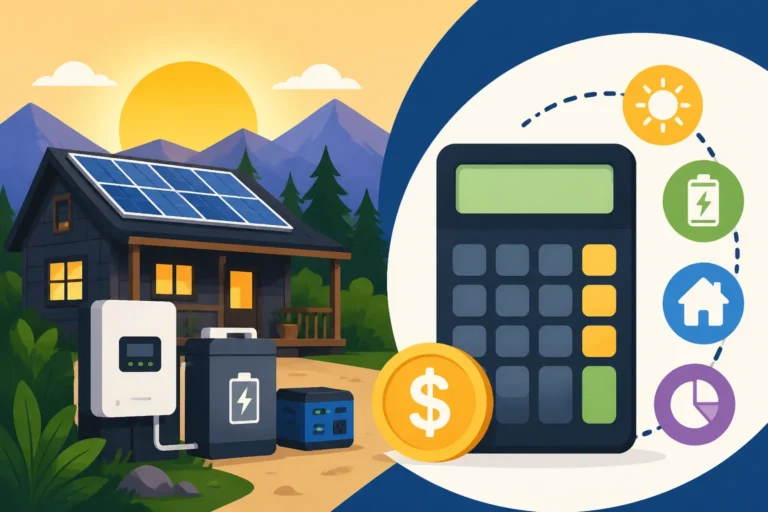
Dreaming of that cozy cabin getaway, perhaps nestled deep in the woods or by a tranquil lake, often comes with a hefty dose of reality: how do you power it when the utility grid is miles away? Extending power lines can be outrageously expensive, leaving many feeling trapped between their dream and a massive bill. This comprehensive guide will walk you through the true costs of setting up an off-grid solar system for your cabin, breaking down every component and factor to help you plan your budget effectively.
Understanding the Unique Appeal and Challenges of a Cabin Solar Setup
There's something incredibly romantic and freeing about a cabin, a true escape from the hustle and bustle. But bringing modern conveniences to a remote location requires careful planning, especially when it comes to power. Solar power offers a fantastic solution, but it’s crucial to understand the nuances of powering a cabin specifically.
Why Cabins Go Off-Grid
Many cabin owners choose to go off-grid not just for the environmental benefits, but out of sheer necessity and a desire for self-reliance. Think about a beautiful piece of land you've found deep in the national forest or a secluded plot near a pristine fishing stream. The nearest utility pole might be half a mile or more away. The cost of running new power lines, including digging trenches, installing poles, and paying for easements, can easily run into the tens of thousands, sometimes even over $50,000, depending on the terrain and distance. In such cases, an off-grid solar system isn't just an alternative; it's often the most economical and practical path to having power.
Beyond the financial aspect, many cabin dwellers are actively seeking a more independent lifestyle. The ability to generate your own electricity, free from monthly utility bills and vulnerable grid infrastructure, aligns perfectly with the spirit of cabin living. It offers a sense of security and preparedness, knowing your power supply is within your control, especially during unforeseen outages that might plague grid-tied properties.
Essential Power Needs for Cabin Living
Before you can even begin to think about costs, you need a crystal-clear picture of what you actually want to power in your cabin. A weekend hunting cabin that only needs lights, a small fridge, and a phone charger will have vastly different requirements and costs compared to a year-round residence with a well pump, washing machine, and mini-split AC unit. This is where understanding your energy footprint becomes absolutely critical.
Consider your typical day at the cabin. Will you be running a full-size refrigerator, or can you get by with a smaller, more efficient chest freezer style unit? Are you planning for an electric water heater, or will you opt for propane on-demand hot water? Do you need a robust internet setup, or will occasional satellite access suffice? Every appliance, from your coffee maker to your cabin's lighting, draws a certain amount of power (watts) over a specific duration (hours), accumulating into your total daily watt-hour (Wh) consumption. Being realistic and even a little conservative here can save you a lot of money and headaches down the line. We dive deeper into this process in our guide on How to Calculate Daily Energy Usage.
Deconstructing the Core Components and Their Costs
An off-grid solar system for a cabin isn't just a collection of panels; it's an integrated system of several critical components, each with its own significant cost. Understanding what each part does and how its specifications impact the overall price is fundamental to budgeting effectively.
Solar Panels: The Power Harvesters
The solar panels are what everyone immediately thinks of when considering solar. These are the workhorses that convert sunlight into usable electricity. Their cost is primarily driven by their wattage (how much power they produce) and the number of panels you need. For a cabin, you'll typically be looking at rigid monocrystalline panels, known for their efficiency and durability. Prices can range anywhere from $0.70 to $1.50 per watt, sometimes a little more for premium brands or less for bulk purchases.
A small weekend cabin might only need 400-800 watts of solar, potentially costing $300-$1,200 for the panels themselves. A year-round cabin, however, could easily require 3,000-8,000 watts or even more, pushing panel costs into the $2,000-$12,000 range. Factors like your geographic location's peak sun hours and your desired "days of autonomy" (how many days your batteries can power your cabin without sun) will heavily influence How Many Solar Panels for Off-Grid Living you'll ultimately need. Mounting options also play a role, with simple roof mounts being less expensive than complex ground mounts that might require concrete footings and extensive trenching.
The Heart of the System: Batteries
If solar panels are the muscles, then the battery bank is undeniably the heart of your off-grid cabin system. Without batteries, you'd only have power when the sun is shining directly on your panels. For off-grid applications, the choice typically comes down to lead-acid (often sealed AGM or flooded deep cycle) or lithium iron phosphate (LiFePO4) batteries. LiFePO4 batteries are generally more expensive upfront but offer significantly longer lifespans (often 10-15+ years), deeper discharge capabilities, and higher efficiency, making them a popular choice for serious off-grid setups despite their higher initial price tag. You can explore this further in our comparison of LiFePO4 vs Lead-Acid Battery Cost.
The cost of your battery bank will be one of the largest expenses, often accounting for 30-50% of the total system cost. For a small cabin, a basic lead-acid bank might cost $500-$2,000. However, for a full-time residence with ample power needs, a robust LiFePO4 battery bank could easily run from $5,000 to well over $20,000. For instance, a 48V system with 400Ah of LiFePO4 capacity (roughly 20 kWh of usable energy) could cost $8,000-$12,000 or more, depending on the brand and features like low-temperature cutoff or integrated BMS. The total battery capacity, measured in amp-hours (Ah) or kilowatt-hours (kWh), directly correlates with how much energy your cabin can store, which dictates how long you can run appliances without sun. You’ll want to carefully consider How Many Batteries for an Off-Grid System you need for reliable power.
Inverters and Charge Controllers: The Brains
These two components act as the brains and nervous system, managing the flow of electricity throughout your off-grid cabin. A charge controller regulates the power coming from your solar panels, ensuring your batteries are charged safely and efficiently without overcharging. MPPT (Maximum Power Point Tracking) controllers are generally more efficient, especially in varying light conditions, making them a preferred choice for larger, more robust cabin systems, though they are more expensive than their PWM (Pulse Width Modulation) counterparts. MPPT charge controllers can range from $150 for smaller units to $800-$2,000+ for large, high-voltage models from reputable brands like Victron Energy or MidNite Solar.
The inverter is what converts the DC (direct current) electricity stored in your batteries into usable AC (alternating current) electricity for most standard household appliances. For a cabin, you almost exclusively want a pure sine wave inverter, as modified sine wave inverters can damage sensitive electronics and run motors inefficiently. Inverter size is measured in continuous watts and surge watts (for starting motors). A 2,000-watt pure sine wave inverter suitable for a modest cabin might cost $500-$1,500. For a larger cabin requiring simultaneous operation of a well pump, refrigerator, and other appliances, you might need a 5,000-watt or even 8,000-watt inverter, which can cost $2,000-$6,000+. Some systems opt for an all-in-one inverter-charger, which combines the functions of an inverter, charge controller, and sometimes a transfer switch, simplifying the system design and often saving space and installation time. Brands like Sol-Ark and Growatt offer popular all-in-one solutions that are well-suited for comprehensive cabin setups.
Beyond the Big Three: Other Critical Cost Factors
While solar panels, batteries, and the inverter/charge controller are the headline acts, an off-grid cabin solar system requires a host of other essential components and considerations that significantly add to the overall Off-Grid Solar Cost: Complete Breakdown. Skipping or skimping on these can lead to safety hazards, inefficiencies, or premature system failure.
Wiring, Breakers, and Safety Gear
You can't just slap a few wires together and call it a day. A safe and reliable off-grid solar system demands proper wiring, fusing, and circuit protection. This includes appropriately sized DC wire (for connecting panels to the charge controller, and batteries to the inverter), AC wire (for connecting the inverter to your cabin's load center), conduit to protect wiring from environmental damage and pests, and a full array of circuit breakers, fuses, and disconnect switches. These components prevent overcurrents, short circuits, and allow for safe system shutdown for maintenance or emergencies.
The cost here depends on the distance between components, the system voltage, and the total amperage. For instance, running thick gauge copper wire for a 48V system from a ground-mounted array to a cabin 100 feet away will be more expensive than a small 12V system on an RV. Budget anywhere from $500 to $2,500+ for high-quality, code-compliant wiring, fuses, breakers, and disconnects. Remember, safety should never be compromised, especially in remote cabin environments where professional help might be far away. Investing in quality components from reputable suppliers is key.
Mounting Hardware and Structural Considerations
How will your solar panels attach to your cabin or property? The mounting system is crucial for securing your panels, optimizing their tilt angle for solar production, and withstanding local weather conditions (wind, snow loads). The most common options for cabins are roof mounts or ground mounts. Roof mounts typically utilize aluminum rails and clamps, directly attaching panels to the cabin's roof. These are often more affordable, ranging from $100 to $400 per panel depending on the roof type and complexity. However, they require careful consideration of roof pitch, shading, and the structural integrity of the cabin itself. Older cabins might need reinforcement to handle the added weight and wind load.
Ground mounts, while potentially more expensive (ranging from $500 to $1,500+ per panel for robust fixed mounts, more for tracking systems), offer flexibility in panel orientation, easier maintenance, and better performance if the cabin roof is shaded. They may involve digging footings, pouring concrete, and assembling a robust frame. If you're building a new cabin, incorporating solar readiness into the design can save you money later. For existing structures, a professional assessment of your roof or ground site is a smart move.
Monitoring and Management Systems
Once your cabin solar system is installed, you'll want to know how it's performing. A good monitoring system allows you to keep tabs on battery state of charge, solar panel production, and current power consumption. This real-time data is invaluable for managing your energy usage, troubleshooting issues, and ensuring the longevity of your components, particularly your expensive battery bank.
Basic battery monitors, which display voltage and amp-hours, can be found for as little as $50-$150. More sophisticated systems, especially from brands like Victron Energy or Renogy, offer shunt-based monitors that provide highly accurate readings of current in and out of your batteries, along with historical data, state of charge, and even Bluetooth connectivity for smartphone monitoring. These can range from $200-$500+. For comprehensive off-grid systems, an integrated system controller that monitors all aspects (solar production, battery health, inverter performance) and allows for remote management and alerts can be a significant investment, often $500-$2,000 or more, but provides unparalleled peace of mind, especially for cabins that might be left unattended for periods. Surge protectors are also a wise, albeit smaller, investment to protect your valuable electronics from lightning strikes or power spikes.
Installation: DIY Versus Professional Costs
One of the biggest variables in the Off-Grid Solar Installation Cost for a cabin is whether you decide to tackle the project yourself or hire professionals. Each approach has its own set of financial implications and trade-offs.
The DIY Route: Savings and Sweat Equity
For many cabin owners, the spirit of self-sufficiency extends to installing their own off-grid solar system. Going the DIY route can offer substantial cost savings, potentially cutting your total installation expenses by 30-50% or more, as you eliminate labor costs. This is particularly appealing for smaller systems or for individuals with a strong electrical background and a willingness to learn. You gain an intimate understanding of your system, which can be invaluable for future maintenance and troubleshooting. Many online resources, forums, and even YouTube channels provide excellent guidance for those ready to get their hands dirty.
However, DIY isn't without its challenges. It requires significant time investment for research, planning, and physical labor. There's a steep learning curve, and mistakes can be costly, both in terms of damaged equipment and, more critically, safety hazards. Incorrect wiring can lead to fires or electrocution. Sourcing individual components can also be time-consuming, though online retailers like Amazon make it easier to find smaller parts, wires, and tools. For larger components like solar panels and batteries, you'll often need to work with specialized solar distributors. Be prepared for potential delays and the need to acquire specialized tools, which can add to your initial outlay. Our guide on DIY vs Professional Off-Grid Solar Cost provides a deeper dive into this comparison.
Hiring Professionals: Peace of Mind at a Price
For those who lack the time, expertise, or simply prefer to have the job done right the first time, hiring professional solar installers and licensed electricians is the way to go. While this increases the upfront cost, it offers invaluable peace of mind. Professionals bring expertise in system design, component selection, safe installation practices, and adherence to local electrical codes (even for off-grid, some jurisdictions have requirements). They often have access to wholesale pricing for components and can ensure your system is properly sized and configured for optimal performance and longevity.
Labor costs for professional installation of a cabin off-grid solar system can range widely, typically from $1.50 to $3.00 per watt, or even more for complex or extremely remote installations. For a mid-sized 5kW system, installation labor alone could be $7,500 to $15,000. These costs often include system design, procurement, installation, commissioning, and often a warranty on their workmanship. They will also handle necessary permitting and inspections, ensuring your system is compliant and safe. This route minimizes your personal risk and frees up your time to enjoy your cabin.
Hidden Costs and Unexpected Expenses
Regardless of whether you go DIY or professional, there are often unforeseen expenses that can pop up during an off-grid cabin solar installation. One common issue is shipping costs to remote cabin locations. Standard freight delivery often requires a paved road and easy access, which many off-grid cabins simply don't have. You might incur extra charges for specialized delivery or need to arrange for local pickup and transport yourself.
Another often overlooked cost is the need for a backup generator. While solar is fantastic, there will be times of extended cloudy weather or unexpectedly high energy demand. A reliable propane or diesel generator, along with fuel storage, provides a crucial layer of redundancy and peace of mind. A good quality backup generator can add anywhere from $500 for a small portable unit to $5,000+ for a larger, auto-start whole-house model. We discuss this further in our article on the Cost of Adding a Generator to Off-Grid Solar. Don't forget consumables like wire ties, electrical tape, sealants, mounting hardware not included in kits, and potentially tools if you're doing it yourself. There's also the possibility of needing unexpected structural repairs or upgrades to your cabin if it's an older building, especially if you're installing panels on the roof. These Hidden Costs of Going Off-Grid can quickly add up if you don't budget for a contingency fund.
Calculating Your Cabin's Solar Budget: A Step-by-Step Approach
Figuring out the exact Off-Grid Solar Cost for a Cabin can feel like piecing together a complex puzzle, but by following a structured approach, you can create a realistic budget that aligns with your off-grid dreams. It all starts with understanding your energy habits.
Conducting a Load Analysis for Your Cabin
This is arguably the most crucial step in sizing and budgeting your off-grid solar system. A load analysis is essentially a detailed inventory of every electrical appliance and device you plan to use in your cabin, along with how much power they draw and for how long each day. Without this, you're just guessing, which often leads to an undersized (and frustrating) or oversized (and expensive) system. Our comprehensive guide on How to Size an Off-Grid Solar System goes into great detail on this.
Start by listing every light, refrigerator, well pump, microwave, TV, phone charger, laptop, and any other electrical item. For each item, find its wattage (often on a label or in the owner's manual) and estimate how many hours per day it will run. Multiply watts by hours to get daily watt-hours (Wh). Don't forget "surge" wattage for motors (like a well pump or refrigerator compressor), which can be much higher than running wattage and dictates your inverter size. Add up all your daily watt-hours to get your total daily energy consumption. For example, a small efficient refrigerator might use 500 Wh/day, LED lights 100 Wh/day, and phone charging 50 Wh/day, totaling 650 Wh/day. A larger system powering a well pump, washing machine, and AC could easily top 10,000-20,000 Wh/day. Be honest with yourself about your usage; it’s better to slightly overestimate than underestimate.
Estimating Component Costs Based on Your Needs
Once you have your total daily energy consumption (Wh/day) and your peak simultaneous power draw (watts), you can start to estimate the size and cost of your components.
- Batteries: Your daily Wh requirement dictates your battery bank size. You'll also need to consider your desired "days of autonomy" (how many days you want to run without sun). For example, if you use 5,000 Wh/day and want 3 days of autonomy, you need 15,000 Wh of usable battery capacity. Convert this to Amp-hours (Ah) based on your chosen system voltage (e.g., 15,000 Wh / 48V = 312.5 Ah). Then factor in battery depth of discharge (DoD) – typically 80% for LiFePO4, 50% for lead-acid. If you need 312.5 Ah usable at 48V with 80% DoD, you’ll need about 390 Ah total. This will directly guide you in selecting the appropriate number and capacity of individual batteries. Refer to our guide on the Cost of an Off-Grid Solar Battery Bank for specific price ranges.
- Solar Panels: Your panel wattage is determined by your daily Wh usage and your location's "peak sun hours" (PSH). PSH is the equivalent number of hours per day when the sun's intensity is 1,000 watts per square meter. If you need 5,000 Wh/day and have 4 PSH, you need a 1,250-watt (5000 / 4) panel array. Factor in system losses (typically 15-20%). So, you'd likely need closer to 1,500 watts of panels.
- Inverter: This is based on your highest simultaneous power draw. If your well pump surges to 3,000 watts and your refrigerator runs at 500 watts while lights are on (100 watts), you need an inverter with at least a 3,600-watt continuous rating and a surge capacity capable of handling that well pump. Many 5,000-watt inverters can handle significant surges.
- Charge Controller: Sized based on your total panel wattage and array voltage. A 1,500-watt, 48V array might require an MPPT controller rated for 30-40 amps at 48V.
Here's a simplified table illustrating estimated component costs for different cabin scenarios:
| Component Category | Small Weekend Cabin (e.g., 500 Wh/day) | Moderate Year-Round Cabin (e.g., 5,000 Wh/day) | Large Full-Time Cabin (e.g., 15,000 Wh/day) |
|---|---|---|---|
| Solar Panels | 400-800W ($300 – $1,200) | 1,500-3,000W ($1,000 – $4,500) | 4,000-8,000W ($3,000 – $12,000) |
| Batteries | 100-200Ah 12V LiFePO4 ($500 – $1,500) | 200-400Ah 48V LiFePO4 ($4,000 – $8,000) | 600-1000Ah+ 48V LiFePO4 ($10,000 – $20,000+) |
| Charge Controller | 20-40A MPPT 12V ($100 – $300) | 40-60A MPPT 48V ($300 – $800) | 80-100A MPPT 48V ($800 – $1,500+) |
| Inverter | 1,000W Pure Sine ($300 – $600) | 3,000-5,000W Pure Sine ($1,000 – $3,000) | 5,000-8,000W+ Pure Sine ($2,000 – $6,000+) |
| Wiring & Safety | ($200 – $500) | ($500 – $1,500) | ($1,000 – $3,000+) |
| Mounting Hardware | ($100 – $400) | ($300 – $1,000) | ($800 – $2,500) |
| Monitoring | ($50 – $150) | ($200 – $500) | ($500 – $1,500+) |
| Miscellaneous | ($100 – $300) | ($300 – $1,000) | ($500 – $2,000+) |
| DIY Total Est. | $1,600 – $4,950 | $7,600 – $19,300 | $18,600 – $48,500+ |
| Prof. Install Add | ($1,000 – $3,000) | ($5,000 – $10,000) | ($10,000 – $25,000+) |
| Total Est. (Prof) | $2,600 – $7,950 | $12,600 – $29,300 | $28,600 – $73,500+ |
| Note: These are rough estimates and can vary significantly based on brand, quality, location, and market fluctuations. |
Long-Term Ownership: Maintenance and Upgrades
The initial installation cost isn't the only financial consideration for your cabin's off-grid solar system. Long-term ownership involves maintenance and potential upgrades. Batteries, especially lead-acid types, have a finite lifespan and will need replacement. LiFePO4 batteries last much longer but are still consumables. Replacing a large LiFePO4 battery bank could cost another $5,000-$20,000 after 10-15 years, so budgeting for this future expense is wise. Panels are extremely durable, often lasting 25+ years, but may require occasional cleaning, especially if your cabin is in a dusty or forested area. Inverters and charge controllers typically last 5-15 years and may need replacement.
Beyond basic maintenance, you might find your needs expanding over time. Perhaps you initially planned for weekend use but now want to spend weeks or even months at the cabin. This might necessitate adding more solar panels, increasing battery capacity, or upgrading your inverter. Designing an Expandable Off-Grid System from the outset can save you money and hassle when it comes time to grow your power capabilities. Always consider the total Lifetime Cost of an Off-Grid Solar System, not just the upfront price.
Real-World Scenarios and Budgeting Tips
Let's look at a few hypothetical cabin setups to illustrate how these costs can play out in the real world, and then we'll share some practical tips for keeping your budget in check.
Small Weekend Cabin System Example
Imagine a small, rustic cabin in the mountains of North Carolina, used primarily for weekend getaways during the warmer months. Power needs are minimal: a few LED lights, charging phones and laptops, running a small 12V chest fridge, and perhaps a small fan. There's no well pump, and heating/cooling are handled by wood stove or propane.
- Load Analysis: 100 Wh/day for lights, 400 Wh/day for fridge, 100 Wh/day for charging = 600 Wh/day total. Peak draw ~150 watts (fridge compressor starting, lights, charger).
- Components:
- Solar Panels: 400W (e.g., two 200W panels) – ~$400-$600
- Batteries: One 100Ah 12V LiFePO4 battery (1280Wh usable) – ~$400-$600 (could get a cheaper lead-acid, but LiFePO4 is better value long-term).
- Charge Controller: 20A MPPT 12V – ~$100-$150
- Inverter: 1,000W Pure Sine Wave 12V – ~$300-$500
- Mounting: Simple Z-brackets for roof mount – ~$50-$100
- Wiring/Safety: Basic fuses, disconnects, wire – ~$150-$250
- Estimated DIY Cost: $1,400 – $2,200
- Consider a Portable Power Station: For such minimal needs, a robust solar generator like the Jackery Explorer 1000 Pro or EcoFlow Delta 2, paired with a couple of portable solar panels, could serve as a complete, all-in-one power solution. These pre-packaged units simplify setup and can cost between $1,000-$2,000 for the unit and panels, providing an excellent entry point into off-grid cabin power. This avoids the complexity of individual components for very low-power needs.
Moderate Year-Round Cabin System Example
Now, consider a slightly larger cabin in upstate New York, used for extended periods, perhaps even year-round. It has a full-size efficient refrigerator, LED lighting throughout, a small well pump for water, a TV, internet router, and occasional use of a microwave and power tools.
- Load Analysis: 1,500 Wh/day for fridge, 300 Wh/day for lights, 500 Wh/day for well pump, 400 Wh/day for electronics, 1,000 Wh/day for microwave/tools (occasional) = ~3,700 Wh/day base, with potential spikes. Peak draw ~3,500 watts (well pump surge, fridge, lights, TV).
- Components:
- Solar Panels: 2,000W (e.g., 5-6 400W panels) – ~$1,500-$3,000
- Batteries: 200Ah 48V LiFePO4 (10,240Wh usable) – ~$4,000-$6,000 (e.g., two 100Ah 48V EG4 batteries in parallel, or four 100Ah 12V Battle Born batteries in series).
- Charge Controller: 40A MPPT 48V – ~$400-$600
- Inverter: 4,000W-5,000W Pure Sine Wave 48V – ~$1,500-$3,000 (e.g., a Growatt or Victron inverter).
- Mounting: Ground mount due to tree shade – ~$800-$1,500
- Wiring/Safety: DC/AC breakers, disconnects, proper wire, conduit – ~$700-$1,500
- Monitoring: Mid-range shunt-based monitor – ~$250-$400
- Backup: Small portable generator – ~$800-$1,500
- Estimated DIY Cost: $9,950 – $18,100
- Estimated Professional Install: Add $6,000-$12,000 for labor, bringing the total to $15,950 – $30,100.
Strategies for Saving Money on Your Cabin Solar
Going off-grid is an investment, but there are definitely ways to make it more affordable without sacrificing reliability.
- Prioritize Energy Efficiency: This is probably the biggest impact you can make. Every watt you don't use is a watt you don't have to generate or store. Invest in energy-star rated appliances, switch to LED lighting, and consider propane for heating water, cooking, and refrigeration where possible. For instance, a highly efficient 12V DC refrigerator can use a fraction of the power of a standard AC model.
- Phase Your Build: You don't have to install the entire system all at once. Start with a smaller, essential system (e.g., lights, charging) and expand over time as your needs grow and your budget allows. Add more panels and batteries as you incorporate more appliances. This is a great way to spread the Off-Grid Solar Payback Period Explained.
- DIY Where Possible: While complex electrical work should be left to professionals, you can save a lot by handling less critical tasks yourself, such as digging trenches for wires (if you have a ground mount), assembling panel frames, or running basic conduit. You can also source individual components through online marketplaces like Amazon for competitive pricing on many items.
- Shop Around for Components: Prices for solar panels, batteries, and inverters can vary significantly between brands and suppliers. Don't just settle for the first quote. Compare options from different manufacturers and distributors. Consider looking for sales or clearance items on reputable solar equipment sites.
- Look for Used Equipment (with Caution): Panels generally hold up well, and used panels can offer significant savings. However, be extremely cautious with used batteries and inverters, as their lifespan and reliability can be compromised. Always thoroughly test or have a professional inspect used items.
- Optimize Panel Placement: Ensure your panels are installed in a location with maximum sun exposure and minimal shading throughout the day and year. Proper tilt angle and orientation can significantly boost production, reducing the need for more panels. Our article on the Best Tilt Angle for Off-Grid Panels can help you optimize your setup.
- Consider State and Local Incentives: While federal tax credits primarily benefit grid-tied systems, some states or local jurisdictions might offer rebates or incentives for off-grid renewable energy projects. Always check with your local energy office or a tax professional for eligibility.
By carefully planning, prioritizing efficiency, and making informed choices about your components and installation method, you can achieve your off-grid cabin dream without breaking the bank.
Disclaimer
Please note that the information provided in this guide is for general informational purposes only and should not be considered professional financial, electrical, or engineering advice. Off-grid solar system design and installation can be complex and involve significant safety risks. Always consult with qualified professionals, such as licensed electricians and solar installers, for specific advice tailored to your situation and to ensure compliance with all local codes and regulations. Prices and product availability are subject to change.