How Many Batteries to Run A Refrigerator
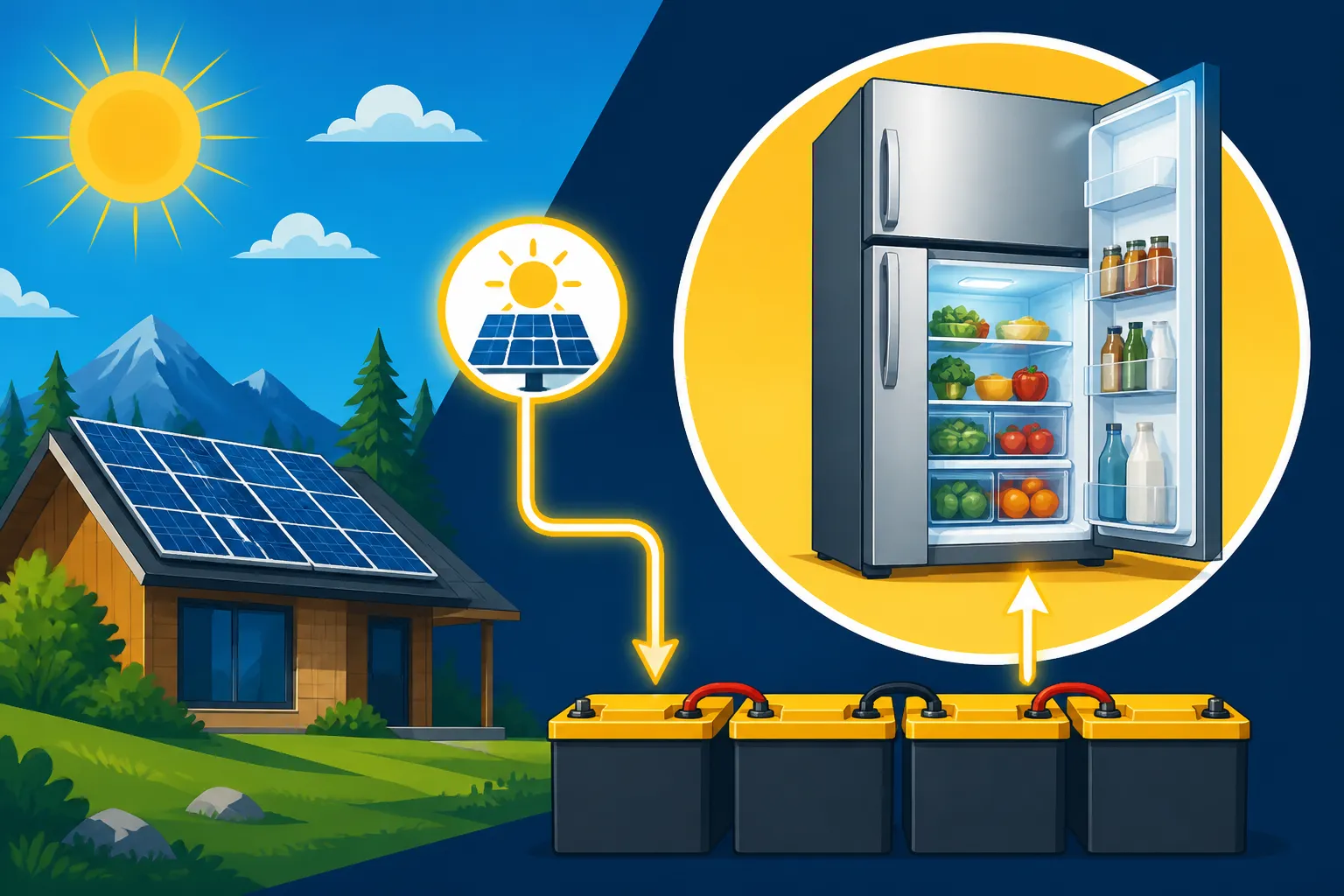
One of the biggest head-scratchers when you're diving into the world of off-grid living is figuring out how to keep your perishables cold. There's nothing quite like the anxiety of not knowing if your refrigerator, the silent workhorse of your kitchen, will have enough juice from your solar batteries, especially during a cloudy streak. It's a common frustration, but don't worry, this guide is here to demystify the process of sizing your battery bank specifically for running a refrigerator on an off-grid solar setup.
Understanding Your Refrigerator's Power Consumption
Before we even think about batteries, we need to truly understand what we're asking our fridge to do and how much energy it actually sips. It's not as simple as looking at a single number on a label; there are dynamic factors at play that influence its real-world energy appetite. Ignoring these nuances is a common pitfall that leads to undersized systems and a lot of headaches later on.
Decoding Wattage and Amp-Hours
Every electrical appliance has a rated power consumption, usually listed in watts (W) or amps (A). For refrigerators, this is where it gets a little tricky. You'll typically find two main power ratings: "starting watts" or "surge watts" and "running watts." The starting wattage is the brief, high burst of power your fridge's compressor needs to kick on, often several times higher than its continuous running wattage. This surge is critical for inverter sizing, which we’ll discuss later. Running watts, on the other hand, is the power it consumes while the compressor is actively cooling.
You might also see a daily or annual kilowatt-hour (kWh) rating on the EnergyGuide label, often found on residential appliances. This number is incredibly helpful because it represents the total energy consumed over a period, which is essentially what your batteries need to supply. If your fridge label says it uses 300 kWh per year, that breaks down to an average of about 0.82 kWh (or 820 Watt-hours) per day. Remember that your batteries store energy in Amp-hours (Ah) or Watt-hours (Wh), so converting everything to a common unit like Watt-hours will make your calculations much smoother. For DC appliances, like many RV or marine refrigerators, the label might directly state current in amps, making calculations simpler if you know your system voltage.
Factors Affecting Energy Use
A refrigerator's energy consumption isn't static; it's a dynamic dance influenced by several environmental and usage factors. Thinking about these helps you get a more accurate picture of your actual needs. For instance, the ambient temperature in your kitchen or RV can dramatically affect how hard your fridge has to work. In a hot climate, or if your living space isn't well insulated, your fridge will cycle on more frequently and run for longer periods to maintain its internal temperature, thus using more power.
How often you open the door, how much food is stored inside, and the temperature you set it to also play significant roles. A fridge packed with cold items acts as its own thermal mass, helping to keep temperatures stable even when the power goes out or solar input is low. Conversely, frequently opened doors or loading in warm groceries will force the compressor to work overtime. Don't forget the automatic defrost cycle common in many modern refrigerators; these cycles can be significant power draws, sometimes adding 10-20% to the overall daily consumption. Overlooking these factors can lead to your battery bank falling short on those high-demand days.
The Importance of a Load Analysis
While focusing on the refrigerator is crucial, it's just one piece of your overall off-grid puzzle. A proper How to Do an Off-Grid Load Analysis is the first and most vital step in designing any solar system, especially for something as critical as a home or cabin. You need to account for every single appliance and device you plan to power. This includes lighting, water pumps, chargers for electronics, and any other creature comforts you rely on.
Listing all your loads helps you determine your total daily energy usage, which is essential for figuring out not just your battery bank size, but also How Many Watts of Solar You Need to recharge those batteries. Attempting to size your battery bank for just the fridge without considering your other energy demands is like trying to build a house with only a roof – it simply won't work in the long run. A comprehensive load analysis ensures that your entire off-grid system is balanced and capable of meeting all your energy requirements, day in and day out, minimizing surprises and maximizing reliability.
Calculating Battery Capacity Needs
Once you have a solid understanding of your refrigerator's typical power usage and how various factors influence it, the next step is translating that into battery capacity. This involves a few key calculations that move beyond simple daily averages and consider the real-world demands of off-grid living, like cloudy days and battery longevity.
Daily Energy Consumption in Watt-Hours
To accurately size your battery bank, you need to calculate your refrigerator's daily energy consumption in Watt-hours (Wh). If your appliance has an EnergyGuide label showing annual kWh, simply divide that number by 365 to get your average daily kWh, then multiply by 1000 to convert it to Wh. For example, a fridge using 300 kWh/year consumes approximately 822 Wh per day (300,000 Wh / 365 days).
If you don't have an EnergyGuide label, or if you're working with a DC-only fridge, you'll need to estimate its run time. Refrigerators typically cycle on for about 1/3 to 1/2 of the day, depending on insulation, ambient temperature, and how often it's opened. So, for a fridge that runs 8 hours a day with a running wattage of 100W, your daily consumption is 8 hours * 100W = 800 Wh. Don't forget to factor in the brief surge wattage if you're using an AC fridge with an inverter, though the majority of your energy consumption will come from the running watts. This initial daily consumption number is the baseline your battery bank needs to reliably provide. You can learn more about this by researching How to Calculate Daily Energy Usage.
Accounting for Days of Autonomy and Depth of Discharge
Simply meeting your daily energy needs isn't enough for a robust off-grid system. You need to build in a buffer for days when solar production is low, like during extended cloudy periods or short winter days. This buffer is called "days of autonomy." For most full-time off-grid setups, aiming for 2-5 days of autonomy is a good practice, depending on your climate and tolerance for rationing power. If you're in a sunny region with minimal cloud cover, maybe 2-3 days is sufficient. In areas prone to week-long storms, you might lean towards 5 days or more.
Equally important is understanding "depth of discharge" (DoD). This refers to how much of your battery's total capacity you can safely use without damaging it or significantly shortening its lifespan. For traditional lead-acid batteries (like flooded or AGM), cycling them past 50% DoD can severely reduce their life. This means if you have a 100 Ah lead-acid battery, you can only realistically use about 50 Ah of its capacity. Lithium iron phosphate (LiFePO4) batteries, on the other hand, can be safely discharged much deeper, often to 80-100% DoD, providing more usable energy from a smaller stated capacity. When you're designing your system, you need to ensure your battery bank can provide your daily energy after accounting for the usable DoD. This is a critical step in How to Size an Off-Grid Battery Bank.
Sizing for Different Battery Chemistries
The choice of battery chemistry profoundly impacts the number of batteries you'll need and the overall Off-Grid Solar Cost: Complete Breakdown. The two main contenders for off-grid solar are lead-acid and lithium iron phosphate (LiFePO4). Lead-acid batteries, while often cheaper upfront, require more careful management regarding their depth of discharge, typically recommending a maximum of 50% DoD to ensure a decent lifespan. This means if your fridge needs 800 Wh per day, and you want 3 days of autonomy, you'll need 2400 Wh of usable capacity. With a 50% DoD, you'd actually need a battery bank with 4800 Wh of total rated capacity.
LiFePO4 batteries, such as those offered by Renogy or Battle Born Batteries, are a game-changer for off-grid systems despite their higher initial cost. They boast a much higher usable capacity (80-100% DoD), longer cycle life, lighter weight, and often come with integrated battery management systems (BMS) for safety and longevity. Using the same 2400 Wh usable capacity requirement, with 80% DoD, you'd only need a total rated capacity of 3000 Wh (2400 Wh / 0.80). This dramatically reduces the physical number of batteries and the space required. The longevity and efficiency of LiFePO4 often make them more cost-effective over the system's lifetime, a point well-covered in comparisons like LiFePO4 vs Lead-Acid Battery Cost.
Here's a quick comparison of general battery types for a refrigerator:
| Battery Type | Pros | Cons | Usable DoD (Approx.) | Cycle Life (Approx.) |
|---|---|---|---|---|
| Flooded Lead-Acid | Lowest upfront cost, easily recycled | High maintenance, low DoD, heavy, gassing | 30-50% | 300-1,000 |
| Sealed Lead-Acid (AGM/Gel) | Lower maintenance, spill-proof | Moderate DoD, heavy, sensitive to overcharging | 50% | 500-1,500 |
| Lithium Iron Phosphate (LiFePO4) | High usable DoD, long life, lightweight, no maintenance | Higher upfront cost | 80-100% | 2,000-10,000+ |
To calculate the number of batteries:
- Total Daily Watt-hours (Wh) Needed: (Refrigerator Wh/day + other critical loads Wh/day)
- Total Usable Wh Required: Total Daily Wh Needed * Days of Autonomy
- Total Rated Wh Capacity Needed: Total Usable Wh Required / (Battery DoD / 100)
- Number of Batteries: Total Rated Wh Capacity Needed / (Single Battery Wh Rating)
(Remember, if you're calculating in Amp-hours (Ah), you'll need to factor in your system voltage (V): Wh = Ah * V)
Practical Considerations and System Design
Sizing your battery bank for a refrigerator goes beyond simple calculations; it involves integrating those batteries into a cohesive, efficient, and safe solar system. Choosing the right voltage, pairing it with an appropriate inverter, and ensuring you can monitor its performance are all crucial steps in building a reliable off-grid power supply.
Choosing System Voltage for Your Refrigerator
The voltage of your off-grid system – typically 12V, 24V, or 48V – plays a significant role in how efficiently power is transferred and stored, and ultimately, how many batteries you need and how they are configured. For smaller refrigerators, especially those designed for RVs or basic cabins, a 12V system might seem appealing due to the wide availability of 12V appliances. However, 12V systems require thicker, more expensive wiring to handle the higher currents for the same amount of power, leading to more energy loss over distance.
As your energy needs grow, especially when powering a standard residential refrigerator through an inverter, moving to a 24V or even a 48V system becomes highly advantageous. Higher voltage systems carry less current for the same power, which means you can use thinner, less expensive wiring, and you'll experience less voltage drop, leading to a more efficient system overall. For example, powering a 1500W inverter at 12V would require 125 amps (1500W / 12V), while at 48V, it would only draw 31.25 amps (1500W / 48V). This reduction in current is significant for safety and efficiency. You can dive deeper into this choice by exploring resources like 12V vs 24V vs 48V: Which to Choose.
Inverter Sizing for Refrigerators
If your refrigerator is a standard household model, it runs on alternating current (AC), meaning you'll need an inverter to convert the direct current (DC) from your batteries into usable AC power. Properly sizing your inverter is paramount, especially when dealing with the surge demands of a refrigerator compressor. As mentioned earlier, the compressor can draw significantly more power at startup than it does during continuous operation. A typical residential refrigerator might run at 150-200 watts but could have a starting surge of 800-1500 watts for a fraction of a second.
Your inverter must be capable of handling this surge without tripping or being damaged. Always choose a pure sine wave inverter, as modified sine wave inverters can damage sensitive electronics and motors found in refrigerators. When selecting an inverter, look at its continuous power rating and its surge power rating. Ensure the surge rating is comfortably above the highest starting wattage of any appliance you plan to run simultaneously, especially the refrigerator. Many off-grid enthusiasts find brands like Victron Energy or Outback Power offer robust inverters known for their surge capabilities, though many reliable options are available on platforms like Amazon. Getting this wrong is a common problem, as highlighted in guides like Common Off-Grid Sizing Mistakes, so ensure you thoroughly understand How to Size an Off-Grid Inverter.
Monitoring and Optimization
Once your system is installed, monitoring its performance is key to ensuring your refrigerator stays powered and your battery bank remains healthy. A good battery monitor, often a shunt-based system, provides real-time information on your battery's state of charge (SoC), voltage, current in/out, and even historical data on energy usage. This data is invaluable for understanding how much power your fridge is truly consuming over time and helps you identify if your system is performing as expected.
Beyond monitoring, there are several ways to optimize your system to reduce your refrigerator's impact on your battery bank. Consider replacing older, inefficient refrigerators with newer, Energy Star-rated models, which are designed to consume significantly less power. Choosing a fridge specifically designed for off-grid DC operation can also eliminate inverter losses and reduce overall power consumption. Furthermore, proper insulation of your living space helps your fridge run less frequently, and simple habits like minimizing door openings and allowing hot food to cool before putting it in the fridge can extend your battery life between charges. Effective management of your system ensures your power supply remains consistent, safeguarding your food and your investment.
Real-World Examples and Scenarios
Let's walk through a few hypothetical scenarios to illustrate how different refrigerators and living situations impact battery sizing. These examples should give you a clearer picture of what you might need.
Small RV Refrigerator Example
Imagine you have a small 12V DC RV refrigerator, common in travel trailers or camper vans. This type of fridge is typically very efficient, often consuming around 4-5 amps per hour when running. Assuming it runs for about 10 hours a day (a realistic estimate considering ambient temperatures and usage in an RV), its daily consumption would be around 45 Amp-hours (Ah) (4.5 A * 10 hours).
If you want 3 days of autonomy and are using LiFePO4 batteries with an 80% usable DoD, your calculation would look like this:
- Daily Ah Needed: 45 Ah
- Total Usable Ah for 3 Days: 45 Ah/day * 3 days = 135 Ah
- Total Rated Ah Capacity Needed: 135 Ah / 0.80 (80% DoD) = 168.75 Ah
- Number of 100 Ah LiFePO4 Batteries (12V): 168.75 Ah / 100 Ah per battery = ~1.7 batteries. So, you'd likely need two 100 Ah 12V LiFePO4 batteries wired in parallel. This setup provides roughly 200 Ah of total capacity, giving you a comfortable margin for occasional higher usage or slightly longer cloudy spells.
Standard Home Refrigerator Example
Now, let's consider a standard residential AC refrigerator (around 18-20 cubic feet) in an off-grid cabin. This fridge might have an EnergyGuide rating of 400 kWh per year.
- Daily Wh Needed: 400,000 Wh / 365 days = ~1096 Wh/day
- Total Usable Wh for 3 Days of Autonomy: 1096 Wh/day * 3 days = 3288 Wh
- Using LiFePO4 batteries (48V system, 80% DoD):
- Total Rated Wh Capacity Needed: 3288 Wh / 0.80 = 4110 Wh
- If using 100 Ah 48V LiFePO4 batteries (each 100 Ah * 48V = 4800 Wh): You would comfortably need one such battery.
- If using individual 12V 100Ah batteries wired in series for a 48V bank (each battery: 100Ah * 12V = 1200 Wh, so a bank of four 12V 100Ah batteries makes 4800 Wh): One string of four 12V 100Ah batteries in series would be sufficient.
This scenario also necessitates a larger pure sine wave inverter, likely rated for 2000-3000 watts continuous, to handle the compressor's surge, plus a robust 48V charge controller. This approach makes sense for a Cost to Power a Cabin with Solar or a larger off-grid home.
Off-Grid Cabin Refrigerator with Longer Autonomy
Let's expand on the cabin example, but this time, you're in a location like the Pacific Northwest, where cloudy days can linger for a week or more. You decide you need 5 days of autonomy for your 1096 Wh/day residential fridge.
- Daily Wh Needed: 1096 Wh/day
- Total Usable Wh for 5 Days of Autonomy: 1096 Wh/day * 5 days = 5480 Wh
- Using LiFePO4 batteries (48V system, 80% DoD):
- Total Rated Wh Capacity Needed: 5480 Wh / 0.80 = 6850 Wh
- If using individual 12V 100Ah batteries (1200 Wh each): You'd need approximately 5.7 batteries (6850 Wh / 1200 Wh per battery). Since you must wire in series for 48V, you'd need two strings of four 12V 100Ah batteries (total of 8 batteries) to create a 48V 200Ah bank, giving you 9600 Wh (200 Ah * 48V) of total capacity. This gives you ample buffer.
As you can see, the desired days of autonomy significantly increase the required battery bank size. It's crucial to balance your desire for uninterrupted power with the budget for additional batteries, as the Cost of an Off-Grid Solar Battery Bank is often the largest single expense in an off-grid system. Selecting Best Off-Grid Solar Batteries will be important for such a critical component.
Disclaimer
The information provided in this guide is for general informational purposes only and does not constitute professional electrical or solar design advice. Off-grid solar systems involve high voltages and currents and should be designed and installed by qualified professionals to ensure safety and compliance with all applicable codes. Always consult with a certified electrician or solar installer before undertaking any electrical work.