How Much Solar to Run A Well Pump
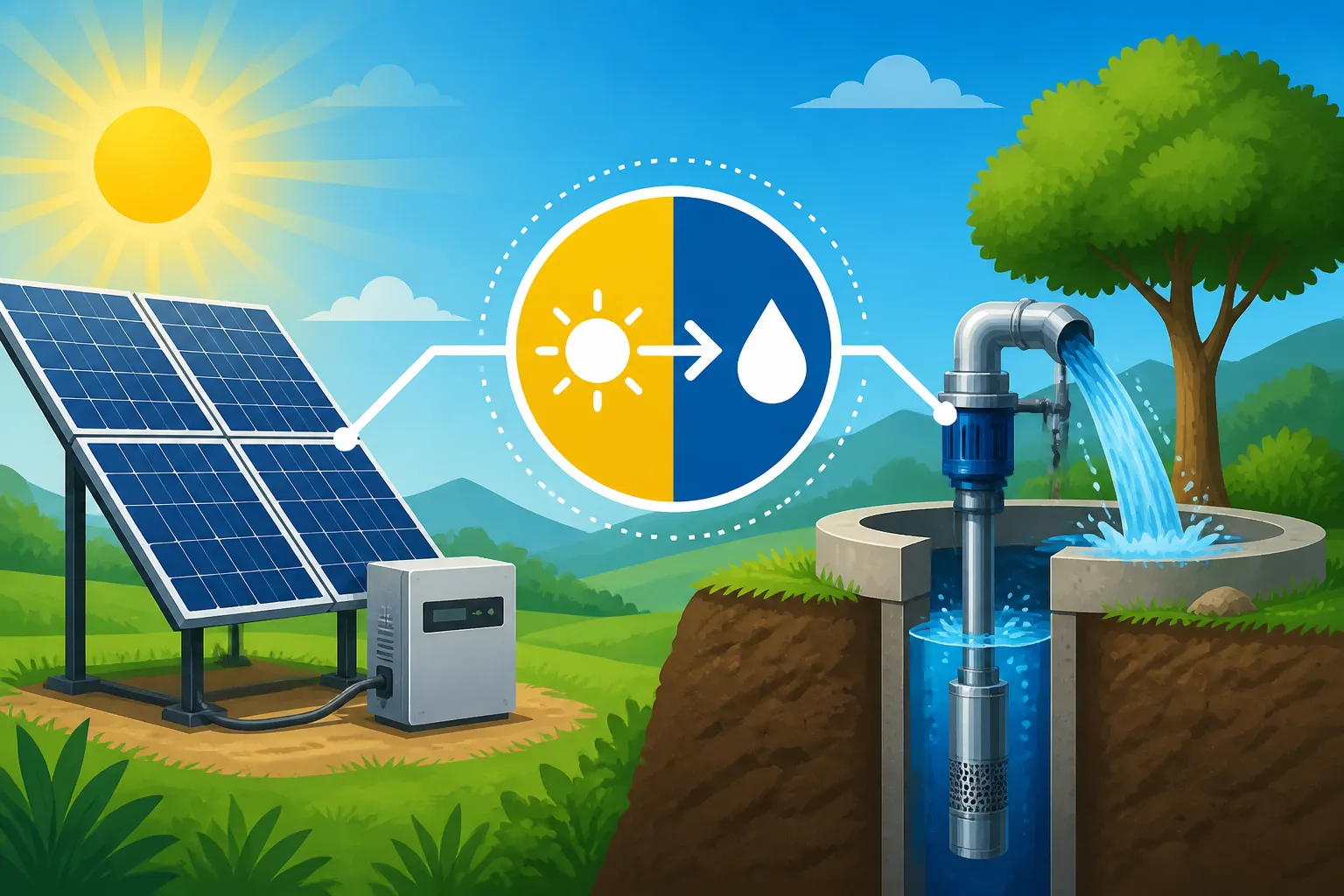
One of the biggest anxieties for anyone living off-grid, especially in a remote homestead, is ensuring a steady, reliable water supply. And when that water relies on a well pump powered by solar, the question of "how much solar" isn't just about convenience—it's about survival. It's frustrating to look at your pump's seemingly modest running wattage, only to find your carefully designed solar system falters the moment the pump kicks on. This guide will walk you through precisely how to calculate the true energy demands of your well pump and size a solar setup that will keep your water flowing consistently, without the headaches of an undersized system.
Decoding Your Well Pump's Power Demands
Before you can even begin to think about solar panels or batteries, you need to deeply understand the beast you're trying to power: your well pump. Many folks make the mistake of just glancing at the "running watts" on the label, but that's only half the story, and arguably, not even the most critical half for an off-grid system.
The Critical Difference: Starting Watts versus Running Watts
This is the absolute cornerstone of sizing solar for any motor-driven appliance, and especially a well pump. Imagine trying to push a stalled car from a standstill – it takes a huge burst of effort, right? That's your well pump's starting watts, often called "surge watts" or "peak watts." This initial jolt of power can be anywhere from three to seven times its continuous running wattage.
Let's say your submersible well pump runs at a continuous 1000 watts. You might think, "Great, my 2000-watt inverter should handle that no problem!" But if that pump has a starting surge of 4000-5000 watts, your 2000-watt inverter is going to shut down immediately, probably with a frustrated beep or flash. This isn't just a minor inconvenience; it's a critical system failure. You absolutely must size your inverter to handle this momentary but massive surge, or your pump simply won't start. The duration of this surge is usually very short, often just a fraction of a second, but it's long enough to trip protective circuits if your inverter isn't up to snuff.
Types of Well Pumps and Their Energy Appetites
Not all well pumps are created equal, and their design directly impacts their power consumption and surge characteristics. Understanding the common types can help you anticipate their demands.
- Submersible Pumps: These are placed directly inside the well, below the water level. They're generally more efficient for deep wells because they push water up rather than pulling it. However, they often operate on 240V AC and can have significant starting surges, especially for larger horsepower models. If your well is 100 feet deep or more, you're likely looking at a submersible pump. Their quiet operation is a bonus, but their power draw demands respect.
- Jet Pumps: Mounted above ground, these pumps pull water using an impeller and a venturi tube. They're common for shallower wells (typically less than 25 feet) or for boosting pressure from a storage tank. Jet pumps are often 120V AC, and while their running watts might be less than a deep well submersible, their starting surge can still be substantial. They also tend to be noisier.
- Shallow Well Pumps: A specific type of jet pump designed for depths up to around 25 feet. They are generally less powerful but still have that characteristic motor startup surge.
- Deep Well Pumps (non-submersible): Less common for residential use now, but historically, piston or rotary pumps might have been used for very deep wells, often paired with a separate motor. These can have extremely high starting torque requirements.
- DC Well Pumps: Increasingly popular for off-grid applications, especially smaller cabins, RVs, or remote watering systems, are 12V or 24V DC well pumps. These can often be run directly from a battery bank with a much smaller inverter, or even no inverter at all for some systems. Brands like Grundfos SQFlex or Lorentz PS series are well-regarded for their efficiency and lower starting current demands, though they come at a higher price point. If you're building a new system, considering a DC pump can drastically simplify your inverter sizing, as you wouldn't need to account for AC motor surge.
The depth of your well and the desired flow rate are huge factors here. A pump pulling water from 200 feet will work much harder, and thus use more energy, than one drawing from 50 feet, even if they're the same horsepower rating.
Beyond the Pump: Factors Influencing Overall Water System Usage
It's not just the pump itself that dictates energy usage. The entire water delivery system plays a role.
- Pressure Tank Cycling: Most well systems use a pressure tank to store water and maintain household water pressure. The pump fills this tank, then shuts off, only restarting when the pressure drops to a set point. This cycling affects how often the pump starts and runs. A larger pressure tank will mean fewer pump cycles per day, potentially extending the life of your pump and reducing the stress on your solar system from frequent surges. A smaller, frequently cycling tank can put more strain on your inverter.
- Household Demand: How much water do you actually use? This is the most critical variable for calculating daily energy. A family of four with two bathrooms and a garden will use far more water than a single person in a tiny cabin. Think about showers, laundry, dishwashing, toilet flushes, and outdoor irrigation. This cumulative demand translates directly into how long your pump needs to run each day. This is a fundamental part of a larger process of how to calculate daily energy usage for your entire off-grid system.
- Seasonality: Do you use more water in the summer for gardening or cooling? Less in the winter? Accounting for seasonal variations in your water consumption is vital for accurate sizing. If you live in a location like northern Arizona, where summers are dry and irrigation is essential, your summer water needs might be double your winter needs.
Crunching the Numbers: Calculating Your Well Pump's Daily Energy Needs
Now that you understand the variables, let's get down to the actual math. This is where we turn assumptions into actionable data for your solar system design.
Collecting the Vital Information from Your Pump's Label
Your well pump's nameplate is your best friend. It provides essential data you'll need. Look for:
- Horsepower (HP): This gives you a general idea of its power.
- Voltage (V): Is it 120V or 240V AC? Or is it a DC pump (12V, 24V, 48V)?
- Amperage (A): Sometimes listed as "Full Load Amps" (FLA).
- Running Watts: If listed, fantastic. If not, you can calculate it (Volts x Amps = Watts for resistive loads; for motors, it's Volts x Amps x Power Factor, usually around 0.8 to 0.9, so Volts x Amps x 0.85 is a good estimate).
- Starting Amps/Locked Rotor Amps (LRA): This is the holy grail for surge sizing. If it's listed, use it. If not, you'll need to estimate, typically 3-7 times the running amps. When looking at your pump on Amazon or from a supplier like Renogy (if they carry pumps), check the detailed specifications.
Let's use a hypothetical example: You have a 1/2 HP, 120V submersible well pump.
- Running Amps (FLA) = 8 Amps
- Starting Amps (LRA) = 30-40 Amps (we'll use 35 Amps for our example, which is ~4.4x FLA)
Therefore:
- Running Watts = 120V * 8A = 960 Watts (we'll round to 1000W for simplicity and a slight buffer)
- Starting Watts = 120V * 35A = 4200 Watts
This highlights why the starting watts are so crucial!
Estimating Daily Run Time for Realistic Consumption
This is where you need to be honest about your water usage. Consider all your daily water needs.
- How many gallons per day do you typically use?
- What is your pump's flow rate (gallons per minute, GPM)? This is often listed on the pump or can be estimated based on its HP and your well depth. Let's assume our 1/2 HP pump delivers 5 GPM.
If your household uses, say, 150 gallons per day, your pump needs to run for:
150 gallons / 5 GPM = 30 minutes of actual run time per day.
This 30 minutes is the cumulative time the pump is actively drawing its running watts, spread throughout the day as your pressure tank cycles.
Converting Watts to Daily Watt-Hours for the Entire System
Now we can calculate the total energy demand in watt-hours (Wh). Watt-hours is the unit of energy consumption over time. To fully understand these distinctions, you might find our guide on Watts vs Watt-Hours vs Amp-Hours Explained] helpful.
-
Running Energy:
- Running Watts: 1000 Watts
- Daily Run Time: 0.5 hours (30 minutes)
- Running Wh = 1000W * 0.5h = 500 Wh per day.
-
Surge Energy (for battery sizing, less for panels as it's so brief): While the surge is critical for inverter sizing, its duration is so short (fractions of a second) that it contributes very little to the overall daily watt-hour consumption. For daily solar charging calculations, we primarily focus on the running wattage and its duration. However, it's good to acknowledge the quick burst.
So, for our example, the well pump primarily needs 500 Wh per day. This is the energy your solar panels need to generate and your battery bank needs to store to keep it running.
Sizing Your Solar Array to Keep the Water Flowing
Once you have your daily watt-hour requirement, you can figure out how many solar panels you'll need. This isn't just a simple division, as factors like sun availability and system losses come into play. For a broader overview of this process, check out our guide on How to Size an Off-Grid Solar System].
Understanding Peak Sun Hours and Real-World Panel Output
Solar panels don't produce their rated wattage all day long. Their output varies with the sun's intensity, which changes throughout the day and with the seasons. "Peak Sun Hours" (PSH) is a critical concept here. It represents the equivalent number of hours per day when the sun's intensity averages 1,000 watts per square meter (the standard test condition for panel ratings).
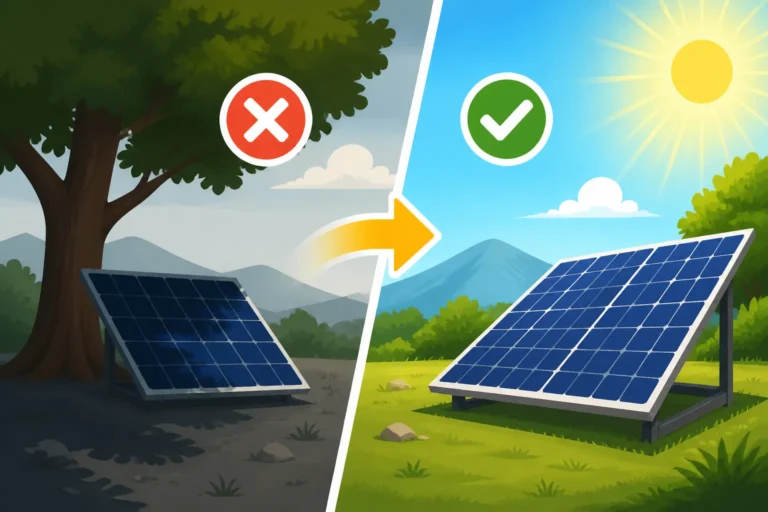
- Location Matters: PSH varies significantly by geographic location and time of year. For instance, a sunny region like Arizona might get 5-7 PSH in summer, while a cloudy region in the Pacific Northwest might only get 2-3 PSH in winter. You can find average PSH data for your location from resources like the National Renewable Energy Laboratory (NREL) or various solar calculators online. Always use the lowest PSH for the time of year you need reliable power (e.g., winter if you need water year-round).
- System Losses: No system is 100% efficient. You'll lose power due to wiring resistance, temperature effects on panels, dust/dirt on panels, charge controller inefficiencies, and inverter inefficiencies. A typical efficiency factor to use is 0.7 to 0.85 (meaning 15-30% loss). For off-grid, it's safer to use a lower efficiency factor, say 0.75, to ensure you have enough power.
Let's assume you live in a region with 4 peak sun hours in the winter (when your water needs are constant, or perhaps even higher if you need to run an internal well pump heater).
The Importance of Oversizing for Reliable Water Supply
This is not a step to skip, especially for critical loads like a well pump. Off-grid living teaches you quickly that having just enough power is often not enough. You need buffer.
- Cloudy Days: What happens if you have three days of heavy clouds? Your panels will produce significantly less power, but your water needs won't stop. Oversizing your array helps compensate for these low-production days.
- Seasonal Declines: As mentioned, winter means fewer peak sun hours and lower sun angles. Oversizing ensures your system can still meet demands during these challenging periods.
- Future Needs: You might add a new appliance or expand your homestead. Building in extra capacity from the start makes future expansion easier.
- Battery Charging: An oversized array will charge your batteries faster, giving you more reserve power.
For off-grid systems, it's common to oversize your solar array by 20-50% beyond your calculated minimum. For something as vital as a well pump, err on the side of more.
Practical Steps to Determine Your Solar Panel Requirements
Here’s how to put it all together:
- Daily Watt-Hours Needed (from step above): 500 Wh
- Account for System Losses:
- Divide your daily Wh by your system efficiency factor (e.g., 0.75 for 75% efficiency).
- 500 Wh / 0.75 = 667 Wh (this is the energy your panels actually need to produce)
- Determine Panel Wattage Required:
- Divide the adjusted Wh by your location's lowest PSH.
- 667 Wh / 4 PSH = 166.75 Watts (This is the minimum continuous wattage your panels need to produce per hour of peak sun.)
- Apply Oversizing Factor:
- Let's aim for a 30% oversizing for reliability.
- 166.75 Watts * 1.30 = 216.78 Watts.
So, you'd need approximately 217 watts of solar panels to reliably run this well pump, considering winter sun and system losses.
If you're looking at common panel sizes, like 100W, 200W, or 400W panels (which you can find from brands like Renogy or on Amazon), you'd likely choose:
- Two 100W panels (200W total) – slightly under, but might be acceptable if other loads are minimal.
- One 200W panel – exactly what's calculated if you don't factor in oversizing much.
- One 400W panel – this gives you a significant buffer and charges batteries faster.
Many off-grid experts would recommend going with the 400W panel in this scenario to ensure robust performance, especially considering the well pump is a critical function. For a more detailed look at how many solar panels for off-grid living are needed, refer to our comprehensive guide.
Matching Your Inverter and Battery Bank to Your Pump's Demands
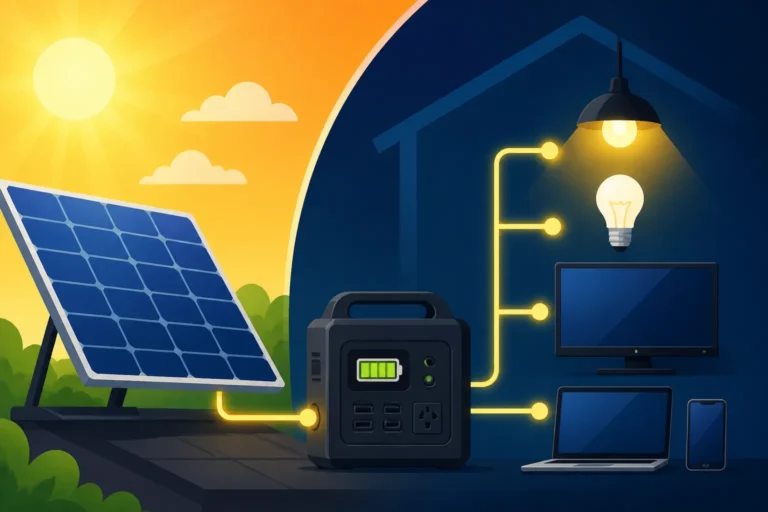
Solar panels are just one piece of the puzzle. You need a way to convert the DC power they generate into usable AC for your pump, and a place to store that energy for when the sun isn't shining.
Choosing an Inverter with Enough Surge Capacity
This is often where well pump systems fail if not properly planned. As we discussed, the starting surge of a motor can be enormous.
- Continuous Power Rating: Your inverter needs to handle the running watts of your pump, plus any other AC loads you might have simultaneously. If your pump runs at 1000W, and you also want to run a few lights (100W) and a laptop (60W), your inverter's continuous rating should be at least 1160W.
- Surge Power Rating: This is paramount for well pumps. Your inverter must be capable of delivering the starting watts of your pump for a few milliseconds without shutting down. In our example, the pump had a 4200W starting surge. So, your inverter needs a surge rating of at least 4200W.
Many quality off-grid inverters (especially pure sine wave models) have surge ratings that are double their continuous rating for a short period. So, a 2000W continuous inverter might have a 4000W surge capacity, or a 3000W continuous inverter might have a 6000W surge. For our example, a high-quality 2000W pure sine wave inverter with a 4000W+ surge would likely suffice. Brands like Victron, Outback, and Schneider Electric are known for their robust inverters with good surge capabilities. How to Size an Off-Grid Inverter] offers a deeper dive into this topic.
It's tempting to save money on a smaller inverter, but it's a false economy when it comes to well pumps. An undersized inverter means no water. Always prioritize an inverter with a strong, confirmed surge rating for your pump.
Building a Robust Battery Bank for Water Autonomy
Your battery bank is your energy reservoir, storing the power generated by your panels for when you need it – like at night, or on those dreary, cloudy days. For a critical load like a well pump, you want several "days of autonomy." This refers to how many days your battery bank can power your essential loads without any input from your solar panels. For detailed information on battery sizing, explore our guide on How to Size an Off-Grid Battery Bank].
- Calculate Daily Pump Wh: 500 Wh (from our previous calculations).
- Determine Days of Autonomy: For a well pump, especially if it's your primary water source, 3-5 days of autonomy is a good, safe target. Let's aim for 3 days.
- Total Wh Needed for Autonomy: 500 Wh/day * 3 days = 1500 Wh.
- Account for Inverter Efficiency: Your battery will need to provide more DC energy than the AC output your pump uses. If your inverter is 90% efficient, you'll need:
- 1500 Wh / 0.90 = 1667 Wh of DC power from the batteries.
- Account for Battery Depth of Discharge (DoD):
- Lead-acid batteries (AGM, Gel, Flooded): Should generally not be discharged below 50% to maximize their lifespan. So, you'll need double the usable capacity.
- Lithium Iron Phosphate (LiFePO4) batteries: Can safely be discharged to 80-90% or more, offering more usable capacity for their rated size and a much longer lifespan. They are an excellent choice for critical off-grid applications despite a higher upfront cost.
Let's assume you're using LiFePO4 batteries with an 80% DoD:
- 1667 Wh / 0.80 = 2084 Wh of total battery capacity at 100% discharge.
Now, let's convert this to Amp-hours (Ah) based on your system voltage. Let's say you're building a 12V system:
- 2084 Wh / 12V = 173.67 Ah.
So, you'd need roughly 175-200 Ah of LiFePO4 battery capacity at 12V to provide 3 days of autonomy for your well pump. If you were running a 24V system, it would be about 87-100 Ah, and for a 48V system, around 44-50 Ah.
Considering that How Much to Budget for Off-Grid Batteries] is often a concern, it's wise to invest in quality batteries from reputable brands. You could look into options from suppliers that sell robust LiFePO4 batteries to ensure longevity and consistent performance.
Considering System Voltage for Efficiency and Power
The voltage of your off-grid system (12V, 24V, or 48V) has a significant impact on efficiency and component choice, especially for larger loads like well pumps.
- 12V Systems: Suitable for smaller setups like RVs, vans, or tiny cabins with modest power demands. While you can run a well pump on 12V, it requires larger wires and can be less efficient for high-wattage loads due to higher amperage (P=V*I, so lower V means higher I for the same P). A 12V system running a 1000W pump would draw ~83 Amps (1000W/12V), requiring thick, expensive wiring.
- 24V Systems: A good middle-ground. Half the amperage of a 12V system for the same wattage, meaning smaller wires and less voltage drop. Often chosen for small to medium-sized cabins.
- 48V Systems: The preferred choice for larger off-grid homes and systems with high-power appliances like well pumps, air conditioners, or washing machines. At 48V, our 1000W pump would only draw ~21 Amps (1000W/48V), allowing for much thinner wiring, reducing costs and improving efficiency. Many high-quality inverters and charge controllers are designed for 48V.
If your well pump is a significant and frequent load, seriously consider a 48V system if you're building from scratch. It leads to a more robust, efficient, and often more cost-effective system in the long run. Our article on How to Choose System Voltage] can help you make an informed decision.
Here's a quick summary table for our hypothetical 1/2 HP well pump example:
| Component | Requirement | Example Calculation |
|---|---|---|
| Well Pump Running Watts | Continuous power draw | 1000 Watts (1/2 HP, 120V) |
| Well Pump Starting Watts | Momentary peak power on startup | 4200 Watts |
| Daily Energy Usage (Pump) | Total Wh needed from solar/batteries | 500 Wh (30 min run time/day) |
| Inverter Continuous Rating | Must handle running watts + other concurrent loads | 2000W+ (to handle 1000W pump + buffer) |
| Inverter Surge Rating | Must handle pump's starting watts | 4200W+ |
| Solar Array Size | Panels needed after losses & oversizing | ~220 Watts (for 4 PSH, 75% eff, 30% oversize) |
| Battery Bank Capacity (12V LiFePO4) | Total Ah for desired days of autonomy | ~175-200 Ah (for 3 days autonomy, 80% DoD) |
Remember, this is just an example. Your specific well pump, water usage, and local sun conditions will lead to different numbers. Always perform your own calculations thoroughly, and when in doubt, consult with experienced off-grid professionals. Getting your well pump solar system right means peace of mind and, most importantly, consistent water in your off-grid home.
Disclaimer
The information provided in this guide is for educational and informational purposes only and does not constitute professional advice. Off-grid solar system design and installation should always be undertaken with caution and, where necessary, with the guidance of certified professionals. Always adhere to local electrical codes and safety regulations.