What a 3000W Off-Grid System Can Power and Cost
Trying to figure out if a 3000W off-grid solar system is enough to power your dreams of independence can feel like solving a complex puzzle. You’re probably wondering if it can really handle your daily needs without leaving you in the dark or constantly worrying about battery levels. This comprehensive guide is here to demystify exactly what a 3000-watt system can power, provide a realistic look at the costs involved, and offer practical advice to help you plan your off-grid journey with confidence.
Understanding What 3000 Watts Truly Means for Off-Grid Living
When people talk about a "3000W off-grid system," they're often referring to the inverter's continuous output capacity. This is a crucial distinction, as it doesn't automatically mean your solar panels are generating 3000W constantly, nor does it mean your battery bank can sustain 3000W indefinitely. It's the maximum amount of power your system can deliver to your appliances at any given moment. Understanding this nuance is the first step toward building a reliable system.
The Difference Between Watts, Watt-Hours, and Peak Power
Let's clear up some common confusion because these terms are thrown around a lot in the off-grid world, and mixing them up can lead to costly mistakes.
Watts (W) refer to the instantaneous power draw of an appliance. Think of it like the speedometer in your car – it tells you how fast you're going right now. A microwave might pull 1000W when it's running, while a few LED lights might only draw 5W each. Your 3000W inverter can handle the total wattage of all appliances running simultaneously, as long as that total stays below 3000W. However, many appliances also have a "surge" or "peak" power requirement when they first start up, which can be significantly higher than their running wattage. A refrigerator, for instance, might only run at 150W but could spike to 1000-1500W for a split second when the compressor kicks on. Your inverter needs to be able to handle these brief surges. If it can't, it might trip or shut down. This is why you'll often see inverters advertised with a continuous rating and a higher peak rating, like a 3000W continuous / 6000W peak inverter.
Watt-hours (Wh) or kilowatt-hours (kWh) measure energy consumption over time. This is more like the odometer in your car – it tells you how far you've traveled. It's the amount of power an appliance uses multiplied by how long it's used. For example, a 100W light bulb left on for 10 hours uses 1000Wh (or 1 kWh) of energy. This is the metric you use to calculate your daily energy needs and, subsequently, how large your battery bank and solar array need to be. If your home consumes 5000 Wh per day, your solar panels need to generate at least that much (and often more, to account for inefficiencies and cloudy days), and your batteries need to store it. You can dive deeper into this with our guide on How Much Watt-Hours You Use Per Day].
What a 3000W Inverter Can Handle
A 3000W inverter is a solid foundation for many moderate off-grid setups. It's powerful enough to run most common household appliances, though usually not all at the same time. This kind of inverter typically operates at 12V, 24V, or 48V, with 24V and 48V being more common for systems of this size as they allow for smaller gauge wiring and more efficient power transmission.
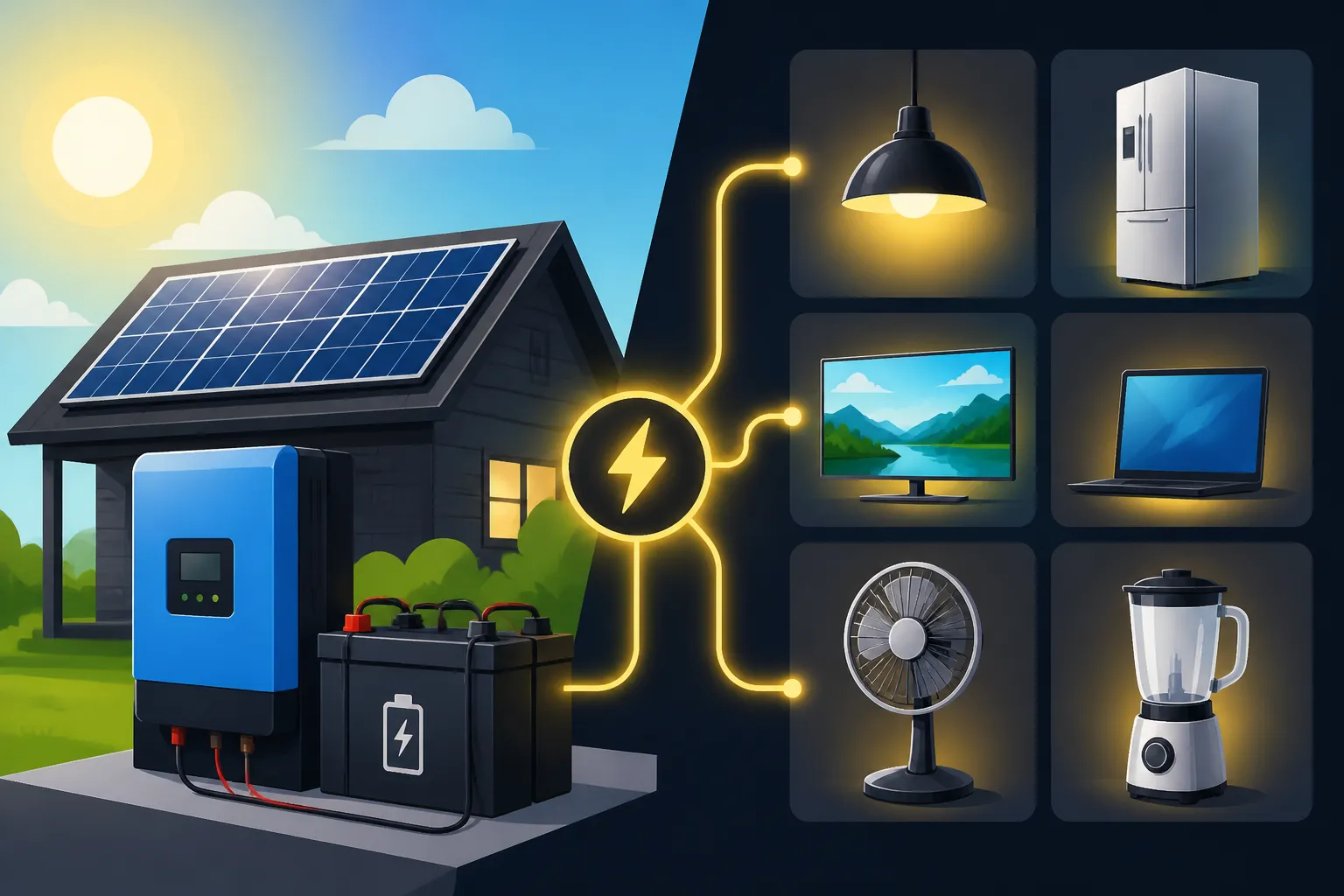
With a 3000W continuous output, you could, for instance, run a refrigerator (around 150-200W running, plus surge), a few lights (5-20W each), a laptop (50-100W), a TV (80-150W), and perhaps even a small microwave (1000W) or coffee maker (800-1200W) for short periods. The key is understanding your total simultaneous load. If you try to run your microwave (1000W), a coffee maker (1200W), and a small electric heater (1500W) all at once, you'd quickly exceed the 3000W limit and trip the inverter, bringing your power to a screeching halt. This is why a detailed load analysis is so vital for any off-grid system. You'll need to know exactly how much power each of your appliances draws and for how long.
What Appliances and Devices a 3000W Off-Grid System Can Power
A 3000W off-grid system provides a comfortable level of power for many off-grid scenarios, from a robust RV setup to a small cabin or even a tiny home. It's about balancing your daily needs with mindful consumption, understanding that while you can power certain things, you might not be able to power everything at once.
Essential Home Appliances for Everyday Living
With a 3000W inverter, you can generally power most of your "must-have" appliances, provided you're smart about energy management.
- Refrigeration: This is often the biggest draw in any home, on or off-grid. A modern, energy-efficient refrigerator (especially a DC-powered 12V model or an AC model with an inverter compressor) can run quite well. Expect it to cycle on and off, drawing around 100-200W when running, with occasional surges up to 1500W. You can typically run a full-size fridge without major issues. For more details on this, check out How Much Solar to Run A Refrigerator].
- Lighting: LED lights are incredibly efficient. You could power dozens of them for hours without making a dent in your 3000W budget.
- Charging Electronics: Laptops, phones, tablets – these are minimal power consumers. You can charge multiple devices simultaneously without concern.
- Entertainment: A TV, soundbar, and streaming device typically draw 100-250W combined, easily handled by a 3000W system.
- Cooking (Occasional): Electric kettles, toasters, microwaves, and coffee makers are high-wattage appliances, but they run for short durations. You can use them, but generally one at a time. For instance, you could run a 1000W microwave for five minutes, but you wouldn't want to run it simultaneously with a 1500W toaster. Many off-gridders opt for propane for heavy cooking to conserve electricity.
- Small Appliances: Blenders, vacuum cleaners (cordless stick vacuums are often more efficient), hair dryers (low setting), and power tool chargers are usually fine for short bursts.
Imagine waking up in your off-grid cabin. You brew a cup of coffee (800W) while the fridge cycles quietly (150W). You plug in your laptop to check emails (60W). Later, you might use the microwave for lunch (1000W). All of these are well within the 3000W limit, but trying to run the coffee maker, microwave, and a small space heater simultaneously would likely trip your system.
Powering Your Workshop or Recreational Gear
A 3000W system also opens up possibilities for hobbies and practical work.
- Power Tools: Handheld power tools like drills, jigsaws, orbital sanders, and even smaller circular saws typically have running wattages below 1000W and surge less drastically than motors like those in refrigerators. You can certainly use a good range of these. However, larger, heavier-duty tools like a full-size table saw or air compressor might have starting surges that exceed your inverter's peak capacity, or continuous draws that are too high for extended use. Always check the tool's specifications. If you're planning a serious workshop, you might need a larger inverter or a dedicated generator for certain heavy-duty equipment.
- Water Pumps: If you have a well or need to pump water to a cabin, a 3000W system can handle many smaller well pumps (typically 1/2 HP or 3/4 HP), though you'll need to carefully consider their surge requirements. For larger pumps, or if you plan to run it frequently, you'll need to dedicate a significant portion of your system's capacity to it, or consider Sizing Solar for a Well Pump] carefully.
- Recreational Gear: Charging e-bikes, drones, camera batteries, or operating small outdoor projectors are all well within the capabilities of a 3000W setup. Even portable power stations, like those from Jackery, can be charged directly from your system to provide extra mobile power for specific needs or remote camping trips.
Managing Your Power Consumption with a 3000W System
The biggest trick to making a 3000W system feel like a massive powerhouse is intelligent power management. It’s not just about what it can power, but how you use it.
- Staggering Appliances: Avoid running high-wattage appliances simultaneously. Make coffee, then toast bread. Don't run the microwave while the hairdryer is on.
- Energy Efficiency is Key: Invest in energy-efficient appliances. An old, inefficient refrigerator can consume three times the energy of a new one. Look for appliances with low daily kWh ratings. Consider DC appliances where possible, as they avoid inverter losses.
- Monitoring: Install a reliable battery monitor or an all-in-one inverter-charger system that gives you real-time data on power draw, battery state of charge, and solar input. Understanding your consumption patterns is paramount. Systems like Victron Energy's MultiPlus II or Sol-Ark's all-in-one inverters offer excellent monitoring capabilities, giving you a clear picture of your energy usage. This helps you make informed decisions about what to run and when.
- Off-Grid Habits: Develop habits that conserve power. Turn off lights when leaving a room, unplug chargers when not in use, and consider line-drying clothes instead of using an electric dryer (which is generally too power-hungry for a 3000W system unless part of a much larger array).
Realistic Cost Expectations for a 3000W Off-Grid Solar System
Let's talk money, because for many, this is where the dream meets reality. The cost of a 3000W off-grid solar system can vary wildly depending on the quality of components, battery chemistry, and whether you do it yourself or hire professionals. It’s not just about the upfront purchase; you have to consider the full Lifetime Cost of an Off-Grid Solar System].
Component-by-Component Cost Breakdown
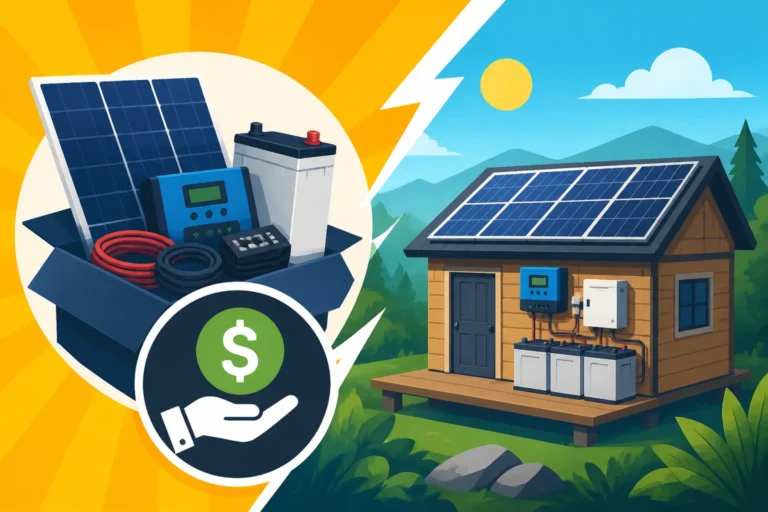
A 3000W system isn't just an inverter; it's a collection of carefully selected components working in harmony. Here’s a general idea of what you can expect to pay for each major part. Please remember, these are broad estimates, and prices fluctuate based on brands, features, and market conditions. You can check out our detailed guide on Off-Grid Solar Cost: Complete Breakdown] for more specifics.
-
Solar Panels (PV Array): To reliably support a 3000W inverter and charge your batteries, you'll likely need an array significantly larger than 3000W nominal, especially if you want good winter performance or multiple days of autonomy. For a 3000W inverter system, aiming for 2000W to 4000W of solar panels is common, depending on your location's peak sun hours and daily energy consumption.
- Cost: Anywhere from $0.80 to $1.50 per watt. So, a 3000W array might cost $2,400 to $4,500. High-efficiency monocrystalline panels will be on the higher end, but deliver better performance in smaller footprints. You can find good quality panels on platforms like Amazon or from specialized solar retailers.
-
Batteries (Energy Storage): This is often the most expensive single component of an off-grid system, and also the most critical. For a 3000W inverter, you're looking at storing a significant amount of energy. If you consume, say, 5 kWh per day and want 3 days of autonomy, you need 15 kWh of usable battery capacity.
- Lead-Acid (Flooded/AGM): Cheaper upfront, but have shorter lifespans and lower usable depth of discharge. For 15 kWh usable, you might need 25-30 kWh nominal. Cost: $3,000 to $8,000 for a robust bank.
- Lithium-Ion (LiFePO4): Higher upfront cost, but longer lifespan (often 10+ years), higher usable capacity (80-100% DoD), lighter, and maintenance-free. For 15 kWh usable, you'd need about 15-18 kWh nominal. Cost: $6,000 to $15,000+. Brands like Battle Born or EG4 offer excellent LiFePO4 options. The Cost of an Off-Grid Solar Battery Bank] is a critical factor.
-
Inverter/Charger: The heart of your system. A good quality 3000W pure sine wave inverter is essential. Many modern units are inverter-chargers, meaning they also handle charging your batteries from a generator or shore power.
- Cost: $800 to $3,000+. Brands like Victron Energy, Outback Power, or Growatt offer reliable options, with prices varying based on features like grid-tie capability, transfer switch speed, and monitoring.
-
Charge Controller: This regulates the power coming from your solar panels to your batteries. For a system of this size, an MPPT (Maximum Power Point Tracking) controller is highly recommended for its efficiency.
- Cost: $200 to $800. The size (amps) and voltage compatibility will determine the price.
-
Balance of System (BOS) Components: This includes everything else:
- Wiring and Cables: Proper gauge wire, solar specific cables (MC4 connectors), battery cables. Cost: $200 to $600.
- Fuses and Breakers: Crucial for safety and system protection. Cost: $100 to $300.
- Mounting Hardware: Racks for your panels (roof mount, ground mount). Cost: $300 to $1,000+ depending on type.
- Enclosures/Boxes: For batteries and electrical components. Cost: $100 to $500.
- Monitoring Equipment: Battery monitors, smart shunts (some integrated into inverter/charger). Cost: $100 to $500.
Total Estimated Component Cost (DIY):
- Low End (Lead-Acid, basic panels): $7,000 – $15,000
- High End (LiFePO4, high-efficiency panels, premium inverter): $12,000 – $25,000+
Here's a simplified table comparing approximate costs for a 3000W system:
| Component | Lead-Acid Battery System (Low-Mid) | LiFePO4 Battery System (Mid-High) |
|---|---|---|
| Solar Panels (3000W) | $2,400 – $3,600 | $3,000 – $4,500 |
| Batteries (15kWh Usable) | $4,000 – $7,000 | $8,000 – $13,000 |
| Inverter/Charger (3000W) | $800 – $1,800 | $1,500 – $3,000 |
| Charge Controller (MPPT) | $200 – $500 | $300 – $800 |
| BOS Components (Wiring, etc.) | $1,000 – $2,000 | $1,500 – $2,500 |
| Total Estimated DIY Cost | $8,400 – $14,900 | $14,300 – $23,800 |
Note: These are estimates for a functional system. Actual costs will vary.
DIY vs. Professional Installation Costs
Once you've got the gear, you need to put it all together. This is where your labor costs come in, or the cost of hiring someone.
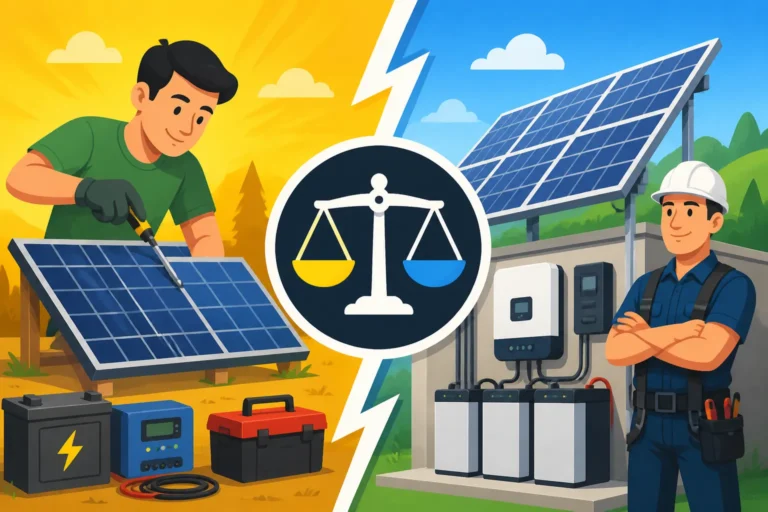
- DIY Installation: If you're handy and willing to learn, installing a 3000W system yourself can save you thousands of dollars. Many off-grid enthusiasts choose this route, drawing on vast online resources and communities. The time commitment can be significant, ranging from a few weekends to several weeks, especially if it's your first time. The satisfaction of building your own system is immense, but so is the responsibility to do it safely and correctly. Tools, wiring diagrams, and safety gear are essential, and you'll want to consult guides like our DIY Off-Grid Solar Installation Step by Step].
- Cost: Primarily your time, plus potentially rental equipment (e.g., scaffolding) and consumables. You might spend an extra few hundred dollars on specific tools you don't already own.
- Professional Installation: Hiring a certified solar installer or electrician ensures the job is done to code, safely, and efficiently. This is often the preferred route for those who lack the time, skills, or confidence to tackle the electrical work. Professionals also know how to optimize panel placement and wiring for maximum efficiency.
- Cost: Installation can add anywhere from 10% to 30% (or even more for complex setups) to your total component costs. For a 3000W system, this could mean an additional $2,000 to $8,000+ on top of your component expenses. This service includes labor, expertise, and often helps with permitting and inspections, which can be a headache for DIYers. Learn more about the differences in DIY vs Professional Off-Grid Solar Cost].
Long-Term Ownership and Maintenance Costs
Going off-grid isn't a "set it and forget it" situation, though modern systems are becoming increasingly low-maintenance. There are long-term costs to consider.
- Battery Replacement: This is the big one. Lead-acid batteries typically need replacement every 3-7 years, while LiFePO4 batteries can last 10-20 years. The Off-Grid Solar Battery Replacement Cost Over Time] can be substantial, so factoring this into your long-term budget is crucial.
- Component Wear and Tear: While solar panels can last 25+ years, inverters and charge controllers typically have lifespans of 10-15 years and may need replacement or repair. Proper installation and environmental protection (e.g., housing components in a climate-controlled space) can extend their lives.
- Cleaning and Inspection: Panels need occasional cleaning, especially if you live in a dusty area or during pollen season. Regular inspections of wiring, connections, and battery terminals help prevent issues. If you hire someone for this, there will be a cost.
- Generator Fuel and Maintenance (if applicable): Many off-gridders include a backup generator for extended cloudy periods or heavy power demands. This adds costs for fuel (gasoline, propane, or diesel) and maintenance. Our guide on Cost of Adding a Generator to Off-Grid Solar] delves into this.
Designing Your 3000W System for Optimal Performance
Building a successful off-grid system isn't just about buying components; it's about designing them to work together seamlessly and efficiently to meet your specific needs. A 3000W system is robust, but a poorly designed one can still leave you wanting.
Sizing Your Battery Bank for Autonomy
Your battery bank is your energy reservoir. Its size determines how long you can run your appliances without any solar input – a concept known as "days of autonomy." This is incredibly important for off-grid living, especially in regions prone to cloudy weather or shorter winter days.
To properly size your battery bank, you need to know your average daily energy consumption in watt-hours (Wh). Let's say, for example, your daily usage is 5000Wh (5kWh).
If you want 3 days of autonomy, you'll need a battery bank capable of storing 15,000Wh (15 kWh) of usable energy.
- For LiFePO4 batteries: Since they can be safely discharged to 80-100% Depth of Discharge (DoD), you'd aim for a nominal capacity close to your usable capacity (e.g., 15-18 kWh nominal). This could mean several 100Ah 48V LiFePO4 batteries, for example. The calculation for How Many Batteries for an Off-Grid System] is paramount.
- For Lead-Acid batteries (AGM/Flooded): These should only be discharged to 50% DoD to maximize their lifespan. This means you'd need twice the nominal capacity to get your desired usable capacity. For 15 kWh usable, you'd need 30 kWh nominal. This quickly becomes very large, heavy, and expensive.
Consider your location and usage patterns. Someone in sunny Arizona might need 1-2 days of autonomy, while someone in the Pacific Northwest might want 5-7 days or more. Always build in a buffer; it's better to have a slightly oversized battery bank than to frequently run it too low, which can shorten its lifespan.
How Many Solar Panels You'll Actually Need
Just because you have a 3000W inverter doesn't mean 3000W of solar panels is enough. In fact, it's often not. You need enough solar panels to:
- Meet your daily energy consumption.
- Recharge your battery bank from its typical discharge level.
- Account for system inefficiencies (around 10-20% loss).
- Compensate for less-than-ideal solar conditions (cloudy days, winter, less-than-perfect panel angle/orientation).
The key metric here is "peak sun hours" for your specific location. This is the equivalent number of hours per day when the sun's intensity averages 1000 watts per square meter. For example, if your area gets 5 peak sun hours per day, a 3000W solar array would generate 3000W * 5 hours = 15,000 Wh (15 kWh) per day under ideal conditions.
If your daily consumption is 5 kWh and you want to recharge 15 kWh of batteries over three days, and also account for system losses, a 3000W solar array might be a good starting point. However, if you have shorter winter days with only 2-3 peak sun hours, that same 3000W array will only generate 6-9 kWh per day. This might not be enough to run your daily loads and fully recharge your batteries. Many off-gridders choose to oversize their solar array by 20-50% to ensure sufficient charging, especially in winter or during extended cloudy periods. You can learn more with our guide on How Many Watts of Solar You Need]. For a 3000W inverter, a 3kW to 5kW solar array is a common, realistic range depending on your energy needs and location.
The Importance of a Good Charge Controller and Wiring
These components might not be as glamorous as panels and batteries, but they are critical for efficiency, safety, and the longevity of your system.
- Charge Controller: As mentioned, an MPPT (Maximum Power Point Tracking) charge controller is almost always the best choice for a 3000W system. It's significantly more efficient than a PWM (Pulse Width Modulation) controller, especially in varying light conditions and when your panel voltage is higher than your battery bank voltage. A good MPPT controller can increase your solar harvest by 15-30%, which is a huge benefit for off-grid living where every watt counts. It prevents overcharging and over-discharging, which protects your expensive batteries. How to Choose an Off-Grid Charge Controller] is a great resource.
- Wiring and Safety Components: Undersized wiring is a fire hazard and leads to voltage drop, reducing your system's efficiency. Always use appropriately sized cables for both your solar array (DC side) and your inverter/battery bank (DC and AC sides), based on amperage and length of runs. Don't skimp on fuses and breakers. These devices are essential safety components that protect your equipment from surges and shorts, preventing catastrophic damage or fire. Properly grounding your system according to national electrical codes is also non-negotiable for safety. Our detailed guide on How to Wire an Off-Grid Solar System] can help you understand the intricacies.
Designing your 3000W off-grid system requires careful planning, but with the right knowledge and components, it can reliably power a comfortable, independent lifestyle.
Disclaimer
The information provided in this guide is for general informational purposes only and does not constitute professional advice. Off-grid solar system design and installation involve electrical work that can be dangerous if not performed correctly. Always consult with qualified professionals and adhere to local electrical codes and regulations. Prices and component specifications are estimates and subject to change based on market conditions, brands, and individual project requirements.