Cost of a DIY Off-Grid Solar Build
The dream of casting off the shackles of the utility company and embracing energy independence is powerful, but often the sheer cost of an off-grid solar system can feel like a cold splash of reality. Many folks wonder if a DIY approach is truly viable to save money, only to get lost in a sea of conflicting information about equipment and installation. This comprehensive guide will pull back the curtain on the actual cost of a DIY off-grid solar build, breaking down every major component and revealing the often-overlooked expenses, so you can plan your budget with confidence.
Understanding the Allure and Reality of DIY Cost Savings
There's a good reason why "DIY off-grid solar" lights up so many searches: the promise of significant savings. When you're looking at the total cost of an off-grid solar system, a professional installation can easily add anywhere from 10% to 30% or more to your overall bill, sometimes even higher depending on the complexity and local labor rates. That's a huge chunk of change that many aspiring off-gridders would rather put towards better components, a larger battery bank, or even the land itself.
However, the reality isn't always as simple as just cutting out labor costs. Going DIY means you're taking on the roles of system designer, procurement manager, electrician, and installer. This requires a substantial investment of your time, research, and often, the purchase of specialized tools. It’s a trade-off: your sweat equity for financial savings. For many, especially those who love to tinker and learn, this hands-on approach is not just about saving money but also about gaining a deep understanding of their power system, which is invaluable when it comes to troubleshooting or future expansion.
Comparing DIY vs. Professional Installation Costs
Let's talk numbers. When a professional solar installer quotes you a price, that figure typically includes all the equipment, the design work, permitting fees, labor for installation, and usually a warranty on their workmanship. For a whole-house off-grid system, you could be looking at anywhere from $25,000 to $60,000+, depending heavily on your energy needs and location. You can dive deeper into these figures by exploring how much an off-grid solar system costs in detail.
A DIY project, on the other hand, allows you to chip away at those expenses. Your main costs will be the components themselves, any necessary tools you don't already own, and potential inspection or permitting fees if required in your area. You bypass the labor costs entirely, which can range from $5,000 to $20,000+ for a decent-sized system. However, it's critical to acknowledge that your time has value. If it takes you hundreds of hours to research, source, and install, that's a significant personal investment. Furthermore, if you make a mistake, fixing it can be costly, both in terms of money and potential safety hazards. The DIY vs Professional Off-Grid Solar Cost comparison often highlights that the real savings come from careful planning and a willingness to learn.
The Value of Your Time and Expertise
Deciding to go DIY means you’re essentially becoming the project manager. This involves learning about electrical codes, understanding system sizing, and familiarizing yourself with various components. Think about the time it takes to research the best off-grid solar panels, compare different battery chemistries (like LiFePO4 vs Lead-Acid Battery Cost), and figure out how to properly wire an off-grid solar system. This knowledge acquisition phase alone can be weeks or even months long.
Beyond research, there's the actual physical labor. Lifting heavy solar panels, mounting them securely, running conduit, wiring batteries, and configuring an inverter are all tasks that require a certain level of skill and physical fitness. For some, this is a rewarding challenge; for others, it can be overwhelming. The value of your time should definitely be factored into your personal "cost analysis." If you're spending every weekend for six months on your solar project, that's time not spent on other hobbies, family, or income-generating work. However, the confidence and satisfaction gained from building your own reliable power source are, for many, priceless.
Deconstructing Your DIY Off-Grid Solar System Component Costs
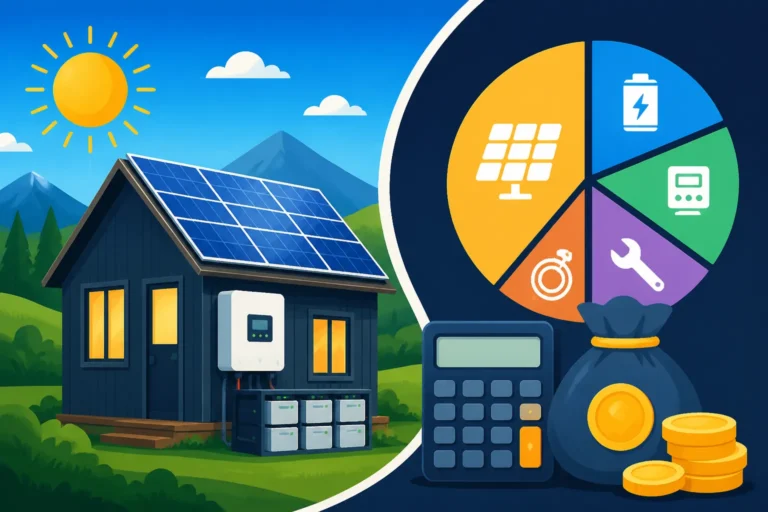
The bulk of your DIY off-grid solar budget will go towards the primary components that make up the system. Understanding these elements and their typical price ranges is crucial for effective budgeting. Remember, quality often correlates with longevity and performance, so while it's tempting to opt for the cheapest option, it might not be the most cost-effective in the long run.
Solar Panels: The Power Generators
Solar panels are where your energy journey begins. For a DIY build, you’ll typically be looking at rigid monocrystalline panels, known for their efficiency and durability. The cost of off-grid solar panels has come down significantly over the years, making solar more accessible than ever. You can find panels ranging from 100W to 400W or more, with prices generally falling between $0.70 to $1.20 per watt, sometimes less if you buy in bulk or find a good sale.
For a modest cabin requiring, say, 1,000 to 2,000 watts of solar capacity, you might spend anywhere from $700 to $2,400 on panels alone. If you're powering a whole house, which might need 5,000 watts or more, that cost could jump to $3,500 to $6,000+. When sourcing, check reputable online retailers and sometimes even local distributors for deals. Occasionally, you might even find bundles or larger pallets of panels on sites like Amazon, though always be sure to verify shipping costs for large, heavy items.
Batteries: The Heart of Your Off-Grid System
Without batteries, an off-grid system is just a grid-tied system that doesn't connect to the grid – meaning no power after the sun sets. The cost of an off-grid solar battery bank is often the single most expensive component, and for good reason. These are complex devices designed to store and discharge significant amounts of energy reliably over many cycles.
- Lead-Acid Batteries: These are the traditional choice and the cheapest upfront. Deep-cycle flooded lead-acid batteries can range from $150 to $300 per 6V or 12V battery, while sealed AGM batteries typically fall between $200 and $500 each. While cheaper initially, they have shorter lifespans (3-7 years), require more maintenance, and can only be safely discharged to about 50% of their capacity. For a basic system needing 400-600 amp-hours at 12V (around 5-7 kWh), you might spend $1,200 to $3,000 on lead-acid.
- Lithium Iron Phosphate (LiFePO4) Batteries: These are increasingly popular for DIY builds despite a higher upfront cost, often ranging from $800 to $2,000+ for a 100Ah 12V battery. They offer a much longer lifespan (10-15+ years), can be discharged to 80-100% without damage, are maintenance-free, and are significantly lighter. For that same 5-7 kWh capacity, you might pay $3,000 to $7,000 for LiFePO4, but over their lifetime, they often prove to be more economical. For those looking for the best off-grid solar batteries, lithium often comes out on top due to its performance and longevity.
Inverters: Converting Power for Your Appliances
The inverter is what takes the DC power from your batteries and converts it into usable AC power for most of your household appliances. The cost of an off-grid solar inverter varies widely based on its power rating (how many watts it can handle), efficiency, and features like built-in charge controllers or grid-assist capabilities.
A basic pure sine wave inverter for a small RV or cabin might cost $300 to $800 for 1500W-2000W. For a larger home requiring 3000W-5000W, you're looking at $1,000 to $3,000 or more. High-end, all-in-one inverter-chargers from brands like Victron or Schneider Electric, which integrate a charge controller and battery charger, can easily run $2,000 to $8,000+. These are often preferred for whole-house systems for their robust performance and advanced monitoring. Remember to size your inverter to handle the surge loads of your largest appliances, like well pumps or refrigerators.
Charge Controllers: Managing Power Flow
The charge controller is a vital component that regulates the voltage and current coming from your solar panels, ensuring your batteries are charged efficiently and safely without overcharging. There are two main types:
- PWM (Pulse Width Modulation) Controllers: These are simpler and cheaper, typically costing $50 to $200. They are less efficient, especially in colder weather or if your panel voltage significantly differs from your battery bank voltage. They're generally suitable for smaller systems with simpler power needs, like a small shed or camper.
- MPPT (Maximum Power Point Tracking) Controllers: These are more advanced and significantly more efficient, especially in varying weather conditions. They can extract up to 30% more power from your panels compared to PWM controllers. MPPT controllers usually range from $150 to $800+, depending on their amperage capacity and features. For any serious off-grid setup, an MPPT controller is almost always the recommended choice due to its efficiency and the long-term savings it provides by maximizing your solar harvest. The cost of a charge controller is a worthwhile investment for system health and performance.
Balance of System (BOS) Components: The Essentials
Beyond the big four, there are numerous smaller but equally critical components that make up the "Balance of System." These ensure your system is safe, efficient, and functional.
- Wiring and Cabling: You'll need appropriate gauge wires for different sections of your system (panel-to-controller, controller-to-battery, battery-to-inverter). Costs can range from a few hundred dollars to over a thousand for larger systems, especially if you need long runs or heavy-gauge copper.
- Fuses and Breakers: Essential for safety, protecting components from overcurrent. Budget $100 to $300+ for proper DC and AC breakers, fuse holders, and fuses.
- Mounting Hardware: For solar panels, you’ll need racking and mounting hardware. Roof mounts or ground mounts vary in cost. Expect $200 to $1,000+ depending on your array size and whether you build a custom ground mount or purchase a pre-made system.
- Conduit and Junction Boxes: To protect wiring from the elements and pests, conduit and weather-rated junction boxes are necessary. This can add $50 to $200+ to your budget.
- Monitoring Equipment: While some inverters have built-in monitoring, dedicated battery monitors (like a shunt-based system) provide crucial insights into your battery state of charge and overall system performance. These can cost $50 to $300 and are highly recommended for peace of mind and system longevity.
Here's a simplified breakdown of typical DIY component costs for different system sizes:
| Component Category | Small System (e.g., RV/Shed) | Medium System (e.g., Cabin/Tiny Home) | Large System (e.g., Whole House) |
|---|---|---|---|
| Solar Panels | $200 – $800 (200-800W) | $700 – $2,500 (1kW-2.5kW) | $3,500 – $8,000+ (5kW-10kW+) |
| Batteries | $500 – $1,500 (100-200Ah 12V) | $2,000 – $7,000 (400-800Ah 12/24V) | $6,000 – $15,000+ (800Ah+ 48V) |
| Inverter | $200 – $500 (up to 1000W) | $800 – $2,000 (2000W-4000W) | $2,500 – $7,000+ (5000W-10000W+) |
| Charge Controller | $50 – $150 (PWM/Small MPPT) | $150 – $500 (MPPT) | $400 – $1,000+ (Large MPPT) |
| BOS (Wiring, Fuses, Mounts, etc.) | $150 – $400 | $400 – $1,200 | $1,000 – $3,000+ |
| Estimated Total DIY Component Cost | $1,100 – $3,350 | $4,050 – $13,200 | $13,400 – $34,000+ |
(Note: These are rough estimates and can fluctuate based on brand, quality, sales, and specific system requirements.)
Beyond the Big Tickets: Unexpected Costs and Smart Savings for Your DIY Build
It's easy to focus on the major components, but a truly realistic budget for a DIY off-grid solar build needs to account for the smaller, often overlooked expenses. These "hidden costs of going off-grid" can add up quickly and throw a wrench into even the most carefully planned budget. However, with foresight and smart shopping, you can mitigate their impact and ensure your project stays on track.
Tools, Testing Equipment, and Consumables
Unless you're already a seasoned electrician or handyman, you'll likely need to invest in some specialized tools. While a basic toolkit might suffice for simple projects, a larger off-grid system will require more.
- Crimpers and Wire Strippers: For proper wire terminations. ($30-$150)
- Multimeter: Absolutely essential for testing voltages, continuity, and troubleshooting. ($20-$100, a good one is invaluable)
- Solar Connectors (MC4): If your panels don't come with pre-attached cables, you'll need these, plus the crimping tool. ($20-$50 for connectors, $30-$70 for tool)
- Conduit Benders and Fish Tape: For running wires through conduit cleanly. ($50-$200)
- Personal Protective Equipment (PPE): Safety glasses, gloves, insulated tools for electrical work. Don't skimp here. ($50-$100)
- Consumables: Zip ties, electrical tape, anti-corrosion spray, labels for wiring, caulk for sealing penetrations. ($50-$150)
You might find deals on tool kits or individual items on platforms like Amazon, but always prioritize quality and safety when it comes to electrical tools. Sometimes, renting specialized tools for a day or two can be more cost-effective than purchasing them outright.
Permitting, Inspections, and Regulatory Compliance
This is often the biggest "hidden" cost and headache for DIYers. Depending on your location, even an off-grid system might require permits and inspections. While many rural off-grid properties fly under the radar, especially for smaller cabins or sheds, more permanent dwellings often fall under local building codes.
- Permit Fees: Can range from a few hundred dollars to over a thousand, depending on your county or municipality.
- Engineering Drawings: Some jurisdictions might require stamped engineering drawings for your solar system design, which can cost $500 to $2,000+ if you need to hire an engineer.
- Time and Effort: Navigating the permitting process is a significant investment of time. You'll need to understand local codes, fill out paperwork, and potentially interact with building inspectors. Be sure to check with your local authority having jurisdiction (AHJ) early in your planning process to understand what's required. Neglecting permits can lead to fines, forced system removal, or difficulties with insurance or selling your property down the line.
Future Expansion and Maintenance Costs
Thinking long-term can save you money and headaches. Many people start with a smaller system and plan to expand. Designing an expandable system from the outset can prevent costly re-dos later on. For instance, oversizing your charge controller slightly or running extra conduit might add a small upfront cost but makes adding more panels significantly easier.
- Off-Grid Solar Maintenance Costs: Even DIY systems have maintenance needs. Batteries require occasional checks, panels need cleaning, and connections should be inspected periodically. While you save on labor for this, consumables or replacement parts will still have a cost.
- Battery Replacement: This is a big one. Even the best batteries have a finite lifespan. For example, if you opt for lead-acid, you might be looking at replacing them every 3-7 years. The cost to replace off-grid solar batteries, especially for a large bank, can be substantial, so it’s wise to factor this into your long-term budget. Lithium batteries have a higher upfront cost but often last 2-3 times longer, spreading out this major expense.
Saving Smart on Your DIY Off-Grid Build
There are many ways to tighten your budget without sacrificing quality or safety.
- Start Small and Scale: Don't try to power everything at once. Begin with essential loads (lights, water pump, charging) and expand your system as your budget allows. Many people phase their off-grid solar build to spread costs over time.
- Shop Around for Components: Don't just buy the first thing you see. Compare prices from different suppliers, look for sales, and consider buying larger components as part of a kit. While I mentioned specific brands like Jackery for smaller, portable solutions, often you'll find more cost-effective options for core components from less-known but equally reputable solar equipment manufacturers.
- Buy Used Equipment (with Caution): Panels often have long warranties (20-25 years), so buying used panels that are only a few years old can be a great way to save. Be very cautious with used batteries or inverters, as their internal health is harder to verify without specialized testing. Always buy from reputable sellers with some form of warranty or return policy.
- Energy Efficiency First: The cheapest watt of power is the one you don't use! Before even sizing your system, invest in energy-efficient appliances, LED lighting, and good insulation. This reduces your overall power needs, allowing for a smaller, less expensive solar system. This is a crucial step in how to budget for an off-grid solar system effectively.
- DIY Where Possible, Pro Where Necessary: While the goal is DIY, don't be afraid to call in a professional for specific tasks like complex wiring or critical system configurations if you're unsure. A hybrid approach can save money while ensuring safety and code compliance.
Ultimately, the cost of a DIY off-grid solar build is a spectrum, not a fixed number. It depends on your dedication, your existing skill set, your location, and most importantly, your energy demands. With careful planning, thorough research, and a willingness to get your hands dirty, you can achieve energy independence on a budget that makes sense for you.
Disclaimer
The information provided in this article is for general informational purposes only and does not constitute professional advice. Off-grid solar system design and installation involve electrical work which can be dangerous if not performed correctly. Always consult with qualified professionals and adhere to all local electrical codes and regulations. Proceed with caution and at your own risk.