Off-Grid Solar Cost for Year-Round Living
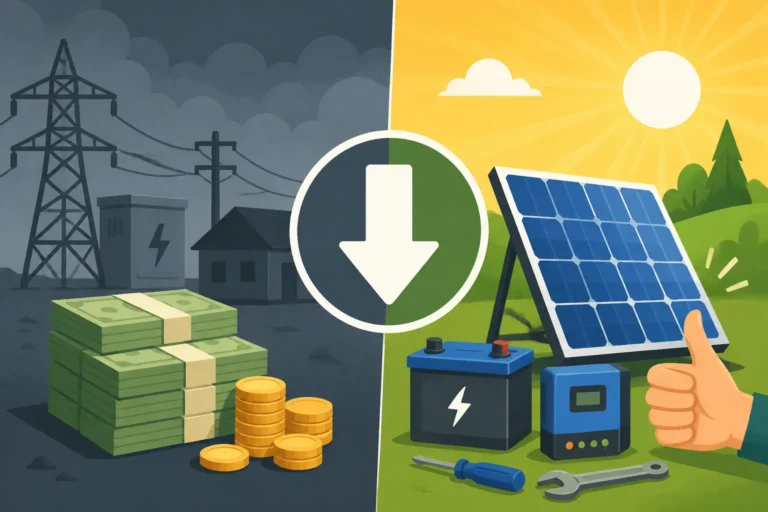
The dream of living off the grid year-round, completely independent from utility companies, is incredibly appealing. But let's be honest: when you start looking into it, the potential costs can feel overwhelming, like trying to navigate a dense forest without a map. Many folks get excited about the idea, only to be hit with sticker shock or confusion about what exactly goes into powering a home 24/7, 365 days a year. This guide is here to break down the realistic financial picture of setting up and maintaining an off-grid solar system for continuous living, helping you understand where your money will go and how to budget effectively for true energy independence.
Unpacking the Realities of Year-Round Energy Demands
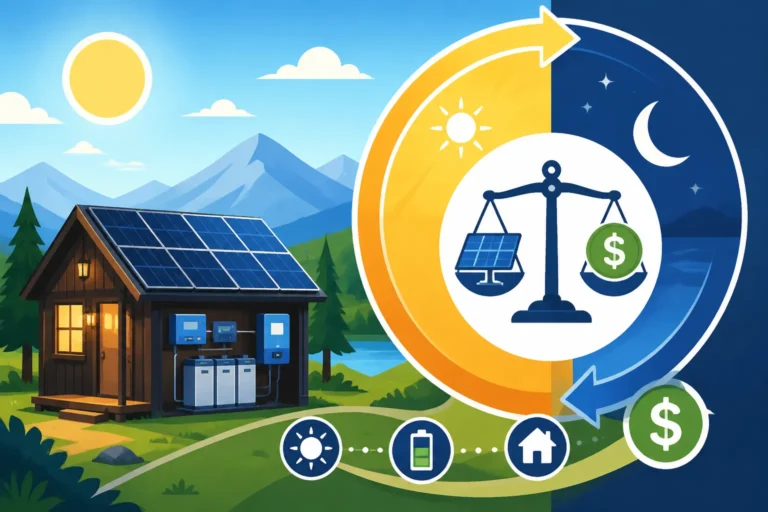
Living off-grid isn't just about throwing some solar panels on a roof; it's about creating a self-sufficient energy ecosystem that can reliably meet your needs through sunny days, cloudy weeks, and seasonal shifts. The fundamental difference for year-round living compared to a weekend cabin or RV is the sheer volume and consistency of power you'll require. You're not just charging phones and running a few lights; you're looking at refrigerators, water pumps, heating systems, air conditioning, daily electronics, and maybe even workshop tools.
Calculating Your Daily Energy Consumption
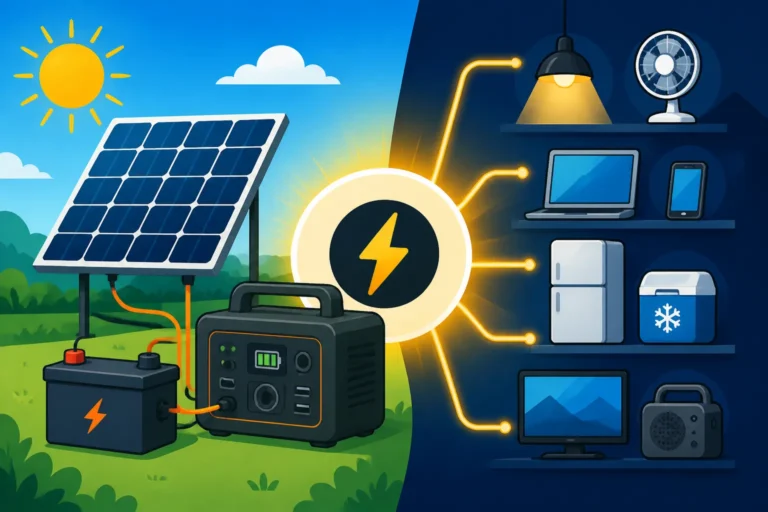
The very first step, and honestly, the most critical, is to get a handle on your actual daily energy usage. This isn't a guesswork situation; it needs to be precise. You'll literally go through every single electrical appliance and device you plan to use, note its wattage (how much power it draws) and estimate how many hours per day it will run. This will give you a daily Watt-hour (Wh) or Kilowatt-hour (kWh) total, which is the cornerstone of your system design.
For example, a typical modern refrigerator might pull 100-200 watts when running, but it cycles on and off throughout the day. If it runs for a total of 8 hours a day, that's 800-1600 Wh. Add in a well pump that runs for an hour (say, 1000 watts x 1 hour = 1000 Wh), lights for 5 hours, charging laptops, watching TV, and suddenly those numbers add up. Many people underestimate this significantly, which leads to undersized, frustrating, and ultimately more expensive systems down the line. It's often helpful to think about how to calculate your daily energy usage in detail.
Accounting for Seasonal Variations and Peak Sun Hours
One of the biggest pitfalls for year-round off-gridders is neglecting seasonal changes. In many regions, winter means significantly fewer peak sun hours – the equivalent hours of direct sunlight that your panels receive at their optimal angle. What might generate abundant power in July could barely trickle charge your batteries in December. If you live in, say, northern Michigan or the Pacific Northwest, you might get only 2-3 peak sun hours in winter compared to 5-6 in summer. This means you either need a much larger solar array and battery bank to compensate for those lean months, or you need a reliable backup generator.
Similarly, summer demands often include air conditioning, which can be a massive power hog. A mini-split AC unit can easily draw thousands of watts, and running it for several hours will dramatically increase your daily energy requirement. You'll want to carefully assess if you plan to run AC off-grid and factor that into your sizing from the start. Ignoring these seasonal swings is a recipe for running out of power when you need it most, leading to a much higher operating cost if you have to rely on a generator frequently. For more on this, you can explore how winter affects off-grid sizing.
Deconstructing the Core Components and Their Costs
Once you have a solid understanding of your energy needs, you can start looking at the components that make up your off-grid system. This is where the bulk of your initial investment will go, and the choices you make here will heavily influence both performance and overall cost. Generally, you're looking at four main pillars: solar panels, batteries, an inverter, and a charge controller, plus all the necessary wiring, mounting, and safety equipment.
Solar Panels The Power Harvesters
Solar panels are where your energy journey begins. For year-round living, you'll likely need a substantial array, often ranging from 3,000 watts (3 kW) to 10,000 watts (10 kW) or more, depending on your energy consumption and location. Each panel typically ranges from 100 watts to 450 watts, with costs varying based on efficiency, brand, and warranty. Expect to pay anywhere from $0.70 to $1.50 per watt for panels alone.
A 5 kW system, common for a modest off-grid home, might require 12-15 panels at 400 watts each, costing roughly $3,500 to $7,500 for the panels themselves. Panels are generally quite durable, but their output can degrade slightly over their 25+ year lifespan. It's crucial to select panels that perform well in varying temperatures and light conditions, especially if you experience extreme weather year-round. You can dive deeper into the cost of off-grid solar panels to see what options are available.
Battery Bank The Heart of Your System
The battery bank is arguably the most critical and often the most expensive component for year-round off-grid living. This is where your harvested solar energy is stored for use at night or on cloudy days. Without sufficient battery capacity, your system is essentially useless once the sun goes down. For a year-round residence, you'll need enough "days of autonomy" – meaning how many days your batteries can power your home without any new solar input. Aiming for 3-5 days of autonomy is a good starting point for consistent living, but this requires a significant investment.
There are two main contenders for off-grid batteries:
- Lead-Acid Batteries: These are the traditional, more affordable upfront option. They come in flooded (FLA) and sealed (AGM, Gel) varieties. While cheaper initially (often $100-$300 per 100Ah 12V battery), they have shorter lifespans (3-7 years), require more maintenance (especially FLAs), and have a shallower depth of discharge (you shouldn't consistently drain them below 50%). For a large year-round system, you'd need many of these, making their long-term cost potentially higher.
- Lithium Iron Phosphate (LiFePO4) Batteries: These are the modern gold standard for off-grid living. They have a higher upfront cost (often $500-$1000+ per 100Ah 12V battery), but offer a much longer lifespan (10-15+ years or 3,000-6,000+ cycles), can be discharged deeper (up to 80-100%), and are virtually maintenance-free. For a serious year-round setup, a bank of 4-8 such batteries configured for a 48V system is common, easily costing $5,000 to $20,000 or more. The debate between LiFePO4 vs Lead-Acid battery cost is a significant one. Brands like Battle Born and EG4 are popular choices for their reliability.
Inverter Converting DC to AC Power
Your solar panels generate direct current (DC) power, and your battery bank stores DC power. However, most household appliances run on alternating current (AC) power. This is where the inverter comes in: it converts the DC power from your batteries into usable AC power for your home. For year-round living, you'll absolutely need a pure sine wave inverter, as modified sine wave inverters can damage sensitive electronics.
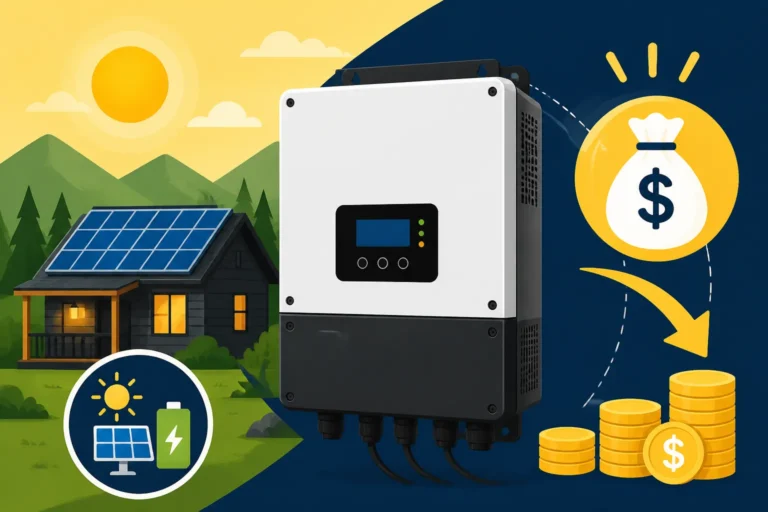
Inverters are rated by their continuous power output (e.g., 3,000 watts, 5,000 watts, 8,000 watts) and their surge capacity (how much extra power they can provide for a few seconds to start motors). For a whole off-grid home, a 5,000W to 8,000W inverter is a common choice, ensuring you can run multiple appliances simultaneously, including heavier loads like a well pump or microwave. High-quality pure sine wave inverters from reputable brands like Victron, Sol-Ark, or Outback Power can range from $1,500 to $6,000, depending on their wattage and advanced features like integrated charge controllers or grid-tie capabilities (even if you're not grid-tied, these robust units are often preferred). Understanding how to size an off-grid inverter is crucial for system efficiency and appliance compatibility.
Charge Controller Managing the Flow
The charge controller is the unsung hero of your off-grid system. It acts as the brain between your solar panels and your battery bank, regulating the voltage and current coming from the panels to prevent overcharging and maximize battery life. For a year-round system, you'll almost certainly want an MPPT (Maximum Power Point Tracking) charge controller. MPPT controllers are significantly more efficient than their PWM (Pulse Width Modulation) counterparts, especially in varying light conditions, meaning they harvest more power from your panels and get it into your batteries.
A good MPPT charge controller for a medium to large off-grid system can cost anywhere from $300 to $1,500, depending on its amperage capacity and features. It's a critical investment because it directly impacts the health and longevity of your expensive battery bank.
Miscellaneous Costs Wiring, Mounting, Safety, and More
Don't forget the "little" things that add up quickly:
- Mounting Equipment: Roof mounts or ground mounts for your solar panels can cost several hundred to a few thousand dollars, depending on the number of panels and the complexity of the installation.
- Wiring and Conduits: Quality copper wiring, MC4 connectors, fuses, circuit breakers, and conduit for safety and weather protection can easily add $500 to $2,000 to your budget.
- System Monitoring: Devices that let you track your power production, consumption, and battery state of charge are invaluable for year-round living. These can range from simple battery monitors to sophisticated smart hubs from brands like Victron, adding $100 to $1,000+.
- Generators: For true year-round reliability, especially in regions with low winter sun, a backup generator (propane, gas, or diesel) is highly recommended. This can cost $500 for a small portable unit to $5,000+ for an automatic standby generator.
- Permits and Inspections: Depending on your location and whether you're building a new structure, you might need electrical permits and inspections, which can incur fees and require professional input.
Considering all these components, the total initial cost for a robust off-grid solar system designed for year-round living, powering a modest home with average demands, typically falls in the range of $15,000 to $40,000. Larger homes or those with high energy needs (like running central AC) could push costs well over $50,000. For a complete breakdown, check out how much does an off-grid solar system cost.
| Component | Typical Cost Range (for year-round system) | Key Considerations |
|---|---|---|
| Solar Panels | $3,500 – $7,500 | Based on 3-10 kW system size; monocrystalline for efficiency; consider weather durability. |
| Batteries | $5,000 – $20,000+ | LiFePO4 for longevity and deep discharge; sized for 3-5 days autonomy; larger capacity for consistent year-round use. |
| Inverter | $1,500 – $6,000 | Pure sine wave for all appliances; high continuous wattage (5kW-8kW) and surge capacity for motors; integrated charger often preferred. |
| Charge Controller | $300 – $1,500 | MPPT type for maximum efficiency; sized to handle total panel current. |
| Mounting Hardware | $500 – $2,500 | Roof mount vs. ground mount; adjustable tilt can optimize seasonal performance. |
| Wiring, Fuses, Breakers | $500 – $2,000 | Heavy gauge copper wire for safety and efficiency; proper fusing for all circuits; necessary for compliance and safety. |
| Backup Generator | $500 – $5,000+ | Essential for reliability during extended cloudy periods or high demand; fuel type (propane, gas, diesel) and automation level affect cost. A small Jackery power station might work for minimal backup, but not for a whole home. |
| Estimated Total | $15,000 – $40,000+ | This is for core components. Installation costs, permits, and other miscellaneous items are extra. |
Long-Term Costs and Maintenance Considerations
The initial setup is just one part of the equation. For year-round off-grid living, you need to factor in the ongoing costs of maintenance, potential repairs, and eventual replacements of certain components. Ignoring these can lead to unexpected financial burdens down the road.
Routine Maintenance and Cleaning
Unlike a grid-tied system that often requires minimal homeowner intervention, an off-grid system, especially one relied upon daily, benefits significantly from regular maintenance.
- Panel Cleaning: Dust, pollen, bird droppings, and leaves can reduce solar panel efficiency. Cleaning them a few times a year, or more often if needed, is essential. This is usually a DIY task with a hose and soft brush, but if you have a large, high-mounted array, you might need professional help, costing $100-$300 per cleaning.
- Battery Maintenance: While LiFePO4 batteries are largely maintenance-free, lead-acid batteries (if chosen) require regular checks of electrolyte levels and terminal cleaning. Neglecting this can drastically shorten their lifespan and lead to costly premature replacement.
- System Checks: Periodically inspecting all wiring connections for corrosion or looseness, checking fuses, and monitoring your system's performance metrics (via an inverter display or battery monitor) can help catch small issues before they become big problems.
These costs are generally low if you're handy, but they do represent a time commitment. For those who aren't comfortable with electrical work, professional maintenance checks can run $200-$500 annually. This is part of the Off-Grid Solar Maintenance Costs you should anticipate.
Component Lifespan and Replacement Costs
No component lasts forever, and planning for replacements is crucial for year-round off-grid living.
- Batteries: This is usually the first major replacement cost. Lead-acid batteries need replacing every 3-7 years. LiFePO4 batteries last much longer, 10-15+ years, but their replacement cost will still be significant when the time comes. Budgeting for battery replacement is a must, perhaps setting aside a certain amount each year. To fully understand what you might spend, look into the cost to replace off-grid solar batteries.
- Inverters and Charge Controllers: These robust electronic components typically have lifespans of 10-15 years, sometimes more for high-quality units. Their replacement costs can range from $1,000 to $6,000, depending on the size and complexity of the unit.
- Solar Panels: While panels are often warranted for 25 years or more, their efficiency degrades slightly over time. You might consider adding a few panels to your array after 15-20 years to compensate for this degradation, or replacing some if they fail prematurely. However, complete panel replacement is usually a very long-term consideration.
Considering these lifespans, it's wise to budget for a significant capital expenditure every 5-10 years for battery replacement and every 10-15 years for other key components. This makes the lifetime cost of an off-grid solar system a critical factor, not just the upfront price.
Fuel for Backup Generators
If you have a backup generator (and for year-round living, you absolutely should), you'll have ongoing fuel costs. This can vary dramatically based on how often you need to run it. If your solar system is well-sized for your climate and usage, you might only run the generator for a few hours a month during extended cloudy periods. However, if your solar system is undersized, or if you have consistently poor weather, you could be running it daily.
Propane, gasoline, or diesel prices fluctuate, but a full day's run on a 5kW generator could easily consume $20-$50 in fuel. Over a long winter, these costs can accumulate quickly, potentially adding hundreds or even thousands of dollars annually to your operating expenses. Many find that for occasional backup, keeping a few jerry cans of gasoline (if generator runs on gas) or a large propane tank is sufficient. For more frequent use, considering an automatic start generator connected to a larger propane tank or even a diesel supply is prudent.
Smart Strategies for Budgeting and Saving on Your System
Going off-grid year-round is a substantial investment, but there are definitely ways to optimize your budget and potentially save money without compromising reliability. It all comes down to smart planning, careful component selection, and a willingness to do some of the work yourself.
Prioritize Energy Efficiency First
Before you even think about buying panels or batteries, the absolute best way to save money on your off-grid system is to reduce your energy consumption. Every watt-hour you don't use is a watt-hour you don't have to generate, store, and convert, which translates directly into needing a smaller, less expensive system.
- LED Lighting: Switch all lights to energy-efficient LEDs.
- Energy Star Appliances: Invest in high-efficiency refrigerators, freezers, washing machines, and water pumps. These can draw significantly less power than older models. For example, a modern Energy Star refrigerator can use less than half the power of a 10-year-old model.
- Insulation: A well-insulated home dramatically reduces heating and cooling loads, which are often the biggest energy draws. This includes walls, ceilings, windows, and doors.
- Passive Solar Design: If building new or renovating, incorporate passive solar principles to harness natural light and heat, further reducing reliance on electrical heating and lighting.
- Lifestyle Changes: Be mindful of phantom loads (electronics drawing power even when off) and consider alternative methods for high-consumption tasks, like a propane water heater instead of an electric one.
By reducing your overall energy footprint, you can often step down the size of your required solar array and battery bank, leading to thousands of dollars in savings on initial component costs.
DIY vs. Professional Installation Costs
One of the biggest variables in the total cost of your off-grid system is whether you hire professionals for installation or take the DIY route.
- DIY Installation: If you're comfortable with electrical work, research, and have the right tools, installing your own system can save you a significant amount, potentially 20-40% of the total project cost. This could easily be $5,000 to $15,000 or more in labor savings. Many off-gridders choose to do much of the work themselves, finding that guides like how to install an off-grid solar system are incredibly helpful. However, DIY requires a strong understanding of electrical principles, safety protocols, and local codes. Mistakes can be dangerous and costly. Resources from places like Amazon can provide many of the tools and components needed for a DIY build.
- Professional Installation: Hiring a certified solar installer ensures the system is designed, installed, and wired safely and correctly. This is often necessary for permitting and insurance, and it provides peace of mind. However, labor costs are substantial, typically ranging from $1-$3 per watt, adding thousands to your total. For complex whole-house systems, this can be well worth the investment, especially if you're not experienced. You might even consider a hybrid approach: do the easier parts yourself (like mounting panels) and hire an electrician for the trickier wiring connections to the inverter and main electrical panel.
Phasing Your Build and Expanding Over Time
You don't necessarily have to buy your entire dream system all at once. For year-round living, you can often start with a core, essential system and expand it as your budget allows or your needs grow.
- Start Small and Grow: Begin with enough panels and batteries to cover your absolute essential loads (lights, refrigeration, water pump, basic electronics). This might be a 3kW system with 4-6 kWh of battery storage.
- Design for Expansion: When you initially design your system, plan for future expansion. This means buying a slightly oversized inverter and charge controller that can handle more panels and batteries later. Ensure your wiring is capable of handling future increases in current. For example, installing a 48V system from the start is often better for larger expansions, as discussed in 12V vs 24V vs 48V: Which to Choose.
- Add Components Gradually: Once the core system is stable, you can add more solar panels, increase your battery bank capacity, or even add a second inverter for higher loads. This approach allows you to spread out the significant financial investment over several years, making it more manageable.
This phased approach can be an excellent way to achieve off-grid independence without needing a massive upfront capital. Just ensure your initial components are high quality and compatible with future additions.
Utilizing Incentives and Tax Credits
While off-grid systems historically haven't qualified for as many incentives as grid-tied setups, there are still opportunities for savings:
- Federal Solar Tax Credit (ITC): The federal Investment Tax Credit (ITC) currently offers a 30% tax credit for solar energy systems installed through 2032. Critically, to qualify for the ITC, off-grid systems must power a home that serves as a dwelling and meet certain energy storage requirements. This can apply to off-grid homes, cabins, or even a tiny home on a permanent foundation. This credit is for the entire cost of the system, including panels, batteries, inverters, and installation. This can be a substantial saving, potentially tens of thousands of dollars. You'll want to investigate Does the Federal Tax Credit Apply to Off-Grid Solar for the most current information.
- State and Local Incentives: Some states and local municipalities offer their own rebates or property tax exemptions for solar installations, even off-grid ones. These vary widely by location, so researching what's available in your specific area is crucial.
- Net Metering (Not for Off-Grid): It's important to note that typical net metering programs are for grid-tied systems that send excess power back to the utility. Off-grid systems, by definition, don't connect to the grid and therefore don't qualify for net metering.
Always consult with a tax professional or solar expert to understand exactly which incentives apply to your specific off-grid situation.
Going off-grid for year-round living is a journey, not a sprint. It demands careful planning, a clear understanding of costs, and a commitment to maintaining your system. But the reward—true energy independence and freedom from utility bills—is priceless for many.
Disclaimer
The information provided in this guide is for general informational purposes only and does not constitute professional financial, electrical, or engineering advice. Off-grid solar system design and installation can be complex and potentially dangerous. Always consult with qualified professionals, such as certified electricians or solar installers, and adhere to all local building codes and regulations when planning or installing an off-grid solar system. Costs are estimates and can vary significantly based on location, specific equipment chosen, and market conditions.