Does the Federal Tax Credit Apply to Off-Grid Solar
For many of us dreaming of true energy independence, the upfront cost of an off-grid solar system can feel like climbing a mountain. It's a significant investment, and naturally, you're looking for any way to make it more accessible. Navigating the world of federal tax incentives often feels like sifting through a stack of complicated paperwork, leaving you wondering if your off-grid dream home or cabin even qualifies. This guide is here to cut through that confusion, helping you understand the federal solar tax credit and how it might apply to your off-grid setup, potentially reducing a substantial portion of your expenses.
Understanding the Federal Solar Investment Tax Credit
The federal solar Investment Tax Credit (ITC), often affectionately called the solar tax credit, is a powerful incentive designed to encourage homeowners to embrace renewable energy. It’s not just a small deduction; it’s a direct dollar-for-dollar reduction in the amount of income tax you owe, not merely a deduction from your taxable income. For many years now, this credit has been instrumental in making solar power more affordable for countless Americans, and it recently received a significant boost and extension under the Inflation Reduction Act of 2022.
What the ITC Entails
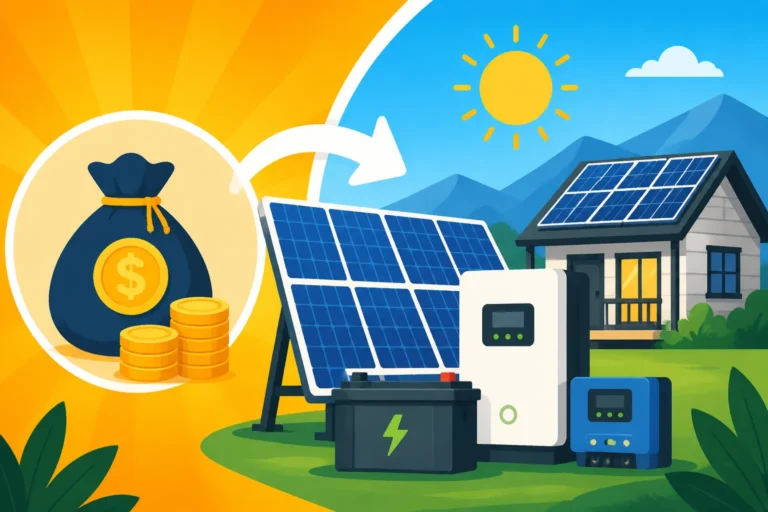
Historically, the ITC has offered a percentage of the cost of installing a new solar energy system as a credit. While it has fluctuated over time, it currently stands at a robust 30% for systems placed in service from 2022 through 2032. This means if your qualifying off-grid solar system costs $30,000, you could potentially reduce your federal tax bill by $9,000. That’s not pocket change, especially when you're looking at the overall financial commitment of going off-grid. It's a non-refundable credit, which means it can reduce your tax liability to $0, but you won't get a refund of any excess credit. However, any unused credit can generally be carried forward to future tax years, so you don't lose out on the benefit if your current year's tax liability isn't high enough to use it all.
Why This Credit Matters for Off-Grid Aspirations
When you consider the significant investment involved in setting up an off-grid solar system, this tax credit can truly be a game-changer. The initial price tag, as we explore in our article on How Much Does an Off-Grid Solar System Cost, can be daunting. From panels to batteries, inverters, and all the wiring, the costs add up quickly. A 30% reduction can bring the dream of energy independence much closer to reality for many families and individuals who might otherwise find it financially out of reach. It also helps offset the often higher initial costs associated with building a robust, self-sufficient system compared to a grid-tied one. This incentive acknowledges the value of generating your own power and contributing to a more sustainable future, even when you're completely disconnected from the utility company.
Specifics for Off-Grid Solar Systems and Eligibility
This is where many people get tripped up. The good news is that yes, off-grid solar systems are generally eligible for the federal solar tax credit. The law doesn't differentiate between grid-tied and off-grid systems when it comes to the primary equipment used for generating solar electricity. However, there are some crucial details and requirements that you absolutely must meet to qualify. It's not a free-for-all, and understanding the fine print will save you a lot of headache and potential disappointment down the road.
Dwelling Requirement
One of the most critical aspects of eligibility is that the solar electric system must be installed on a "dwelling unit located in the United States." This "dwelling unit" typically refers to your primary residence or a secondary residence that you own and live in for at least some portion of the year. This is important because it means a system installed on, say, a commercial building or a speculative property that you don't personally reside in, wouldn't qualify. For off-grid enthusiasts, this typically means your off-grid home, cabin, or even a tiny home where you live. If you're building a remote hunting cabin that's truly your secondary residence, then yes, it could qualify. However, if it's purely a storage shed or an unused structure, it won't pass the dwelling test. The purpose here is to incentivize residential renewable energy, not purely investment properties or outbuildings without a residential function.
Let's imagine you've invested in a substantial system for your remote property. Our guide on the Cost to Power a Cabin with Solar breaks down these expenses. If that cabin serves as your genuine residence for even part of the year, those costs can be significantly mitigated by the ITC.
Ownership and Purchase Date
To claim the tax credit, you must be the owner of the solar energy system. This means if you lease your solar panels or participate in a power purchase agreement (PPA), you typically won't be eligible for the credit, as the company leasing the system to you is the owner. The credit applies to systems purchased outright, either with cash or through a solar loan. The "placed in service" date is also key. This generally means the date the system is installed and ready to generate electricity, even if your local utility (if you were grid-tied) hasn't given final approval. For off-grid systems, it's typically when all components are connected and operational. It's crucial that the system is placed in service within the eligible dates (currently through 2034, though at a lower percentage after 2032). Ensure you keep meticulous records of your purchase and installation dates, as these will be essential when tax season rolls around.
What Equipment Qualifies for the Tax Credit
When you're building an off-grid solar system, you're looking at a collection of components that work together seamlessly. The good news is that many of these essential pieces qualify for the tax credit, further reducing your overall Off-Grid Solar Cost: Complete Breakdown. However, it's not absolutely everything. Knowing what counts and what doesn't is crucial for accurate budgeting and tax filing.
Core Components That Are In
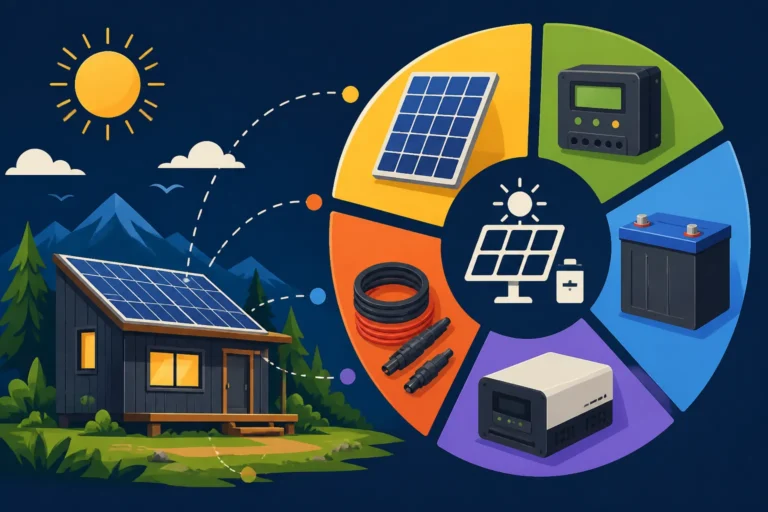
The primary components of your off-grid solar system are generally eligible for the 30% tax credit. These include:
- Solar Panels: This is a no-brainer. The photovoltaic (PV) panels themselves, which convert sunlight into electricity, are the heart of your system and fully qualify. Whether you choose monocrystalline or polycrystalline, rigid or flexible panels, the cost of these panels is creditable. Our analysis of the Cost of Off-Grid Solar Panels can help you budget for this significant part.
- Batteries: This is a big one for off-grid users! Unlike some older iterations of the credit, standalone energy storage (like a dedicated battery bank) is now specifically included. This is fantastic news because batteries are a huge expense in an off-grid system, often representing a significant portion of the total Cost of an Off-Grid Solar Battery Bank. The batteries must have a capacity of at least 3 kilowatt-hours (kWh) and be charged by your solar panels. This means the costs of your chosen LiFePO4, AGM, or even a robust lead-acid battery setup are typically eligible.
- Inverters: The inverter, which converts the DC power from your panels and batteries into usable AC power for your appliances, also qualifies. This includes hybrid inverter-chargers that combine the functions of an inverter and a charge controller. Check out our guide on the Cost of an Off-Grid Solar Inverter to see how this component impacts your budget.
- Charge Controllers: These essential devices regulate the voltage and current from your solar panels to your batteries, preventing overcharging and maximizing efficiency. Both MPPT and PWM charge controllers are eligible.
- Mounting Equipment: The racking and mounting hardware used to secure your solar panels to your roof, a ground mount, or a pole mount system also counts. This includes all the rails, clamps, feet, and tilt kits needed for a safe and effective installation.
- Wiring and Interconnection Equipment: All the necessary wiring, conduit, disconnects, combiner boxes, fuses, and breakers that connect your solar panels, batteries, inverter, and load center are generally included as part of the system cost.
- Labor Costs: This is often overlooked! The labor costs for on-site preparation, assembly, and installation of the solar energy system are also eligible for the credit. This is a huge relief for those who hire professionals to help with their Off-Grid Solar Installation Cost.
What’s Generally Not Included
While most core components are covered, there are a few things that typically do not qualify for the ITC:
- Portable Solar Generators: While excellent for emergencies or small camping trips, consumer-grade portable power stations like many Jackery or EcoFlow models, while powered by solar, typically don't qualify unless they are permanently installed as part of a fixed dwelling's primary electrical system and meet certain capacity requirements. A portable unit you plug and unplug for different uses generally won't make the cut.
- Generators (Fossil Fuel): A traditional gasoline, propane, or diesel generator, even if used as a backup for your off-grid solar system, is not a solar energy component and therefore not eligible for the credit. However, if you're looking into adding a generator, remember to consider the Cost of Adding a Generator to Off-Grid Solar separately.
- Appliances and Non-Solar-Specific Equipment: The appliances you power with your off-grid system (refrigerator, well pump, lights, etc.) are not eligible for the credit, even though they are part of your overall off-grid lifestyle. Only the equipment directly related to generating, storing, and converting solar electricity qualifies.
- Costs Not Directly Related to the Solar System: This might include things like land preparation beyond what's needed for the solar array, general site work, or the purchase of a new property where the solar system is installed. The credit is specific to the solar energy system itself.
Here's a quick reference table to help visualize what generally qualifies:
| Component Type | Generally Qualifies? | Notes |
|---|---|---|
| Solar Panels | Yes | All types of PV panels. |
| Batteries | Yes | If 3 kWh+ capacity, charged by solar. Crucial for off-grid. |
| Inverters | Yes | Converts DC to AC. Includes inverter-chargers. |
| Charge Controllers | Yes | Regulates power from panels to batteries. |
| Mounting Hardware | Yes | Racks, rails, clamps, ground mounts. |
| Wiring & Connectors | Yes | All electrical connections, conduit, disconnects, breakers. |
| Installation Labor | Yes | On-site preparation, assembly, wiring labor. |
| Solar Generators | Generally No | Unless permanently integrated into a dwelling's electrical system. |
| Fossil Fuel Generators | No | Backup generators are not solar components. |
| Appliances | No | Items powered by the system, not part of the system. |
The Process of Claiming the Off-Grid Solar Tax Credit
So, you've decided to take the plunge and build your off-grid solar system. You've factored in the potential tax credit, which is smart thinking! Now, how exactly do you go about claiming it? It’s not overly complicated, but it does require careful record-keeping and correctly filling out a specific form when you do your taxes. Think of it as the final step in your DIY Off-Grid Solar Installation Step by Step journey.
Step-by-Step for Tax Season
Claiming the credit involves your annual federal income tax return. Here's a general rundown:
- Keep Meticulous Records: This is perhaps the most important step! As you purchase components for your off-grid system – whether it's the solar panels you bought from Renogy, the battery bank from EG4, or a comprehensive kit from a specialist supplier – keep all receipts, invoices, and contracts. Document the costs of the panels, batteries, inverters, charge controllers, mounting hardware, wiring, and any professional installation labor. You'll need to know the total eligible cost of your system. It's not uncommon for people to purchase components over time, so keep a running tally.
- Determine Your Eligible Expenses: Add up all the qualifying expenses for your system. Remember to exclude anything that doesn't qualify, like a separate gas generator or new kitchen appliances. If you're unsure about a specific item, err on the side of caution or consult a tax professional.
- Fill Out Form 5695, Residential Clean Energy Credit: This is the form specifically for claiming the solar tax credit, among other residential clean energy credits. You'll enter the total eligible cost of your system on this form. The form will guide you through calculating your credit amount, which will be 30% of your eligible expenses.
- Transfer the Credit to Form 1040: Once you've calculated the credit on Form 5695, you'll transfer that amount to your main Form 1040 (U.S. Individual Income Tax Return) to reduce your overall tax liability.
- File Your Taxes: Submit your completed tax return. If you use tax software, it will typically walk you through these steps by asking questions about your solar installation and populating Form 5695 for you. Just make sure you input your costs accurately.
Remember, while the process is straightforward, having all your documentation organized will make tax time much smoother. This includes proof of purchase, installation date, and itemized costs.
What if Your Credit Exceeds Your Tax Liability?
It's entirely possible, especially with a large off-grid system, that the 30% tax credit might be more than your federal tax liability for the year you install it. Don't panic! The good news is that the federal solar tax credit is "non-refundable but can be carried forward." This means that if you owe $5,000 in federal taxes but have a $9,000 solar tax credit, the credit will reduce your current year's tax bill to $0, and you'll have $4,000 remaining. That remaining $4,000 doesn't just disappear; you can carry it forward and apply it to your federal income tax liability in subsequent years until the credit is fully used or expires. This carryforward provision makes the credit incredibly valuable, ensuring that even large investments eventually provide their full benefit. It's a critical detail that helps to make a significant off-grid investment like the ones discussed in How to Budget for an Off-Grid Solar System even more financially feasible in the long run.
Common Misconceptions and Nuances
The federal solar tax credit is a fantastic benefit, but like many things related to taxes and complex systems, it's surrounded by a few myths and misunderstandings. Getting clarity on these can help you avoid surprises and ensure you're making the most informed decisions for your off-grid journey.
"It's a Rebate, Right?"
One of the most common misconceptions is that the ITC is a rebate or an immediate cash payment. It's not. The Investment Tax Credit is a tax credit, meaning it directly reduces the amount of federal income tax you owe. If you don't owe any federal taxes, or if your credit exceeds your tax liability for a given year, you won't get a check back from the government for the difference (unless you've overpaid your taxes through withholding, in which case the credit contributes to your refund). Instead, as we've discussed, you carry the unused portion forward to future tax years. This distinction is crucial for budgeting. If you're relying on that 30% reduction to cover immediate installation costs, you might be surprised to find it only applies when you file your taxes the following year. Think of it as a delayed discount that you realize at tax time.
The Myth of "Any Solar Purchase Qualifies"
Another common pitfall is assuming that any product with "solar" in its name will qualify. As mentioned earlier, standalone portable solar generators (like some popular models you might find on Amazon for camping trips) generally do not qualify unless they are permanently integrated into a dwelling's electrical system and meet specific capacity criteria. The credit is intended for fixed, residential solar electric systems that power a home. Buying a small solar charger for your phone or a solar-powered garden light, while environmentally friendly, won't earn you the federal tax credit. The intent is to support significant infrastructure investment in renewable energy for residential use. This distinction is important when considering options, for example, from Best Off-Grid Solar Kits for Beginners where smaller, more portable systems might be tempting but might not fully qualify for the credit.
Rental Properties vs. Residences
While the credit applies to "dwelling units," there's a nuance regarding rental properties. If you own a property and rent it out, you cannot claim the residential clean energy credit for that property, even if you install solar. The credit is specifically for the taxpayer's residence. However, if you use a portion of your main home for rental purposes, you might need to adjust the eligible costs to only include the portion that services your personal residence. This is where consulting a tax professional becomes highly advisable, especially for complex living situations or mixed-use properties. For the typical off-gridder setting up a system for their own home or cabin, it's usually straightforward, but it's worth noting these exceptions.
Looking Ahead: Future of Off-Grid Solar Incentives
The landscape of renewable energy incentives is always evolving. While the current federal solar tax credit offers a fantastic opportunity for off-grid enthusiasts, it's wise to keep an eye on what's next, both federally and at the state level. Planning your system, from understanding How to Size an Off-Grid Solar System to considering the long-term financial implications, benefits from a forward-thinking perspective.
The ITC's Trajectory After 2032
The current 30% federal solar tax credit is locked in until the end of 2032. After that, the percentage is scheduled to step down:
- 2033: The credit will drop to 26% of the eligible system cost.
- 2034: It will drop further to 22%.
- 2035 onwards: The residential credit is currently scheduled to expire.
This phasedown emphasizes the importance of acting sooner rather than later if you're considering a significant off-grid investment. The difference between a 30% and 22% credit on a $30,000 system is $2,400, which is substantial. While future legislative changes are always possible, it's prudent to plan based on the current law. This timeline impacts the overall Off-Grid Solar Payback Period Explained, making earlier installations more financially attractive.
State and Local Incentives for Off-Grid Systems
Beyond the federal credit, many states and even some local municipalities offer their own incentives for renewable energy. These can include:
- State Tax Credits: Similar to the federal credit, some states offer their own income tax credits for solar installations.
- Property Tax Exemptions: In some areas, adding a solar system won't increase your property taxes, or you might even get a partial exemption for a period.
- Sales Tax Exemptions: A few states exempt solar equipment from sales tax, which can save you a pretty penny on your initial purchase, especially on larger components like the ones you might get for a full Off-Grid Solar System Sizing Guide build.
- Rebates: While less common for off-grid systems compared to grid-tied, some local utilities or programs might offer direct rebates for installing renewable energy.
The eligibility for these state and local incentives can vary widely, and off-grid specific programs might be rarer than grid-tied ones. It's crucial to research what's available in your specific location. Websites like the DSIRE (Database of State Incentives for Renewables & Efficiency) are excellent resources for finding up-to-date information on state and local programs. Don't forget to check if your off-grid setup qualifies for any of these additional benefits, as they can further reduce your overall costs. It's like finding extra discounts on your Amazon order when you thought you'd already found the best deal! These incentives, when stacked, can significantly improve your Off-Grid Solar Return on Investment.
Disclaimer
The information provided in this guide is for general informational purposes only and does not constitute tax, legal, or financial advice. Tax laws are complex and subject to change. We strongly recommend consulting with a qualified tax professional or financial advisor to discuss your specific situation and ensure compliance with all applicable tax laws and regulations before making any decisions related to the federal solar tax credit or your off-grid solar system.