Best Off-Grid Solar for Part-Time Use
Feeling the pull of the wild or the quiet solace of a remote cabin, but only on weekends or for a few weeks a year? Many folks dream of off-grid independence, but the thought of investing in a massive, complex solar system for part-time use can be daunting and frankly, unnecessary. This guide is here to demystify the best off-grid solar solutions tailored specifically for those who only need power sporadically, ensuring you get reliable energy without breaking the bank or wrestling with an oversized setup.
Understanding Your Part-Time Power Needs
Before you even start looking at equipment, the absolute most critical step is to truly understand your specific power requirements. Trust me, I've seen countless people overspend or, worse, underspend and end up frustrated because they didn't properly assess what "part-time" really means for them.
Defining "Part-Time" Use
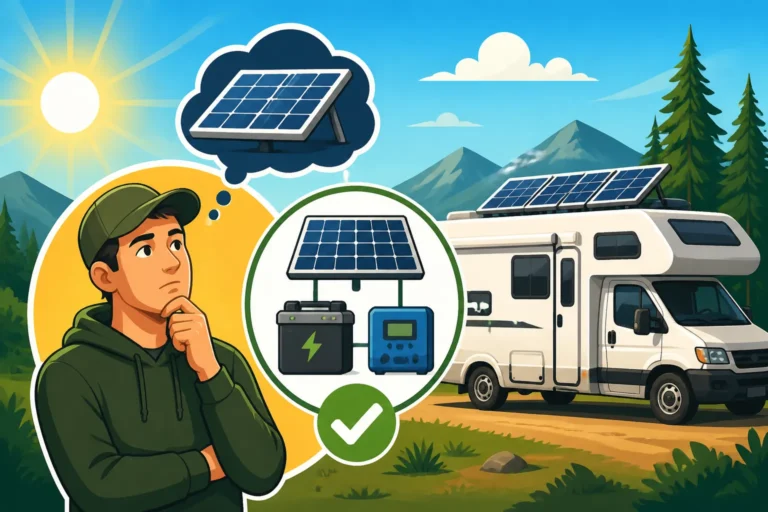
"Part-time" isn't a one-size-fits-all term in the off-grid world. For some, it means a weekend warrior RV setup, hitting the campgrounds once a month. For others, it's a remote hunting cabin used only during deer season, or a family retreat that sees action for a couple of weeks in the summer. And let's not forget the emergency backup crowd who only need power when the grid fails.
The key distinction from full-time off-grid living is duration and consistency. You're not powering a full household's daily consumption of laundry, multiple refrigerators, and constant heating/cooling. Instead, you're looking at intermittent bursts of usage, often with extended periods where the system might sit idle. This changes everything, from battery choice to panel sizing. Understanding this will help you answer the crucial question: .
Essential Appliance Rundown
When you're only using a space part-time, your list of "must-have" appliances typically shrinks significantly. Think about what you truly need powered for your specific part-time activities.
For a weekend cabin, this might be:
- LED lights (critical after dark!)
- Phone and laptop charging
- A small 12V refrigerator or cooler (to keep drinks cold and food fresh)
- A fan for summer days or a small propane heater for chilly nights (often not electric)
- Water pump for a sink or shower (if you have plumbing)
For an RV or van life weekend trip, it might be similar, plus perhaps a small coffee maker or a microwave for quick meals.
For emergency backup, it's usually lights, phone charging, medical devices like a CPAP, and maybe a small fridge.
The trick here is to list every single electrical item, find its wattage (usually on a sticker or in the manual), and estimate how many hours a day you'll use it. For example, an LED bulb might draw 10 watts, and you might have four of them on for 4 hours a night (10W x 4 bulbs x 4 hours = 160 Watt-hours). A mini-fridge might run 24/7 but only cycle on for 8 hours total over that time, drawing 50 watts (50W x 8 hours = 400 Watt-hours). Summing these up will give you your daily Watt-hour usage, which is the cornerstone for sizing any system. If you need a deeper dive, check out our guide on .
Autonomy and Weather Considerations
Even for part-time use, you need to consider how many days of power you want to have without any sun, known as "days of autonomy." For full-time systems, this might be 3-5 days to account for long stretches of bad weather. For part-time, especially if you can choose when to go off-grid, you might get away with 1-2 days of autonomy.
However, if your part-time use is fixed – say, every Thanksgiving weekend at the cabin in a snowy region – then you absolutely need to factor in potential cloudy days, shorter daylight hours, and even snow cover on your panels. A good rule of thumb for cloudy days is to size your battery bank for slightly more than your daily need and your solar array to recharge it fully on less-than-ideal days. This is where understanding how many batteries for an off-grid system you'll need becomes paramount. Remember, batteries are often the most expensive component, so right-sizing here is crucial for managing your .
Key Components for Part-Time Off-Grid Solar Systems
Once you have a handle on your power needs, it's time to explore the components. For part-time use, you often prioritize ease of deployment, portability, and modularity, which can differ from a permanent, large-scale residential setup.
Solar Panels: Size and Flexibility
For part-time use, flexibility in your solar panels is often a huge benefit.
- Portable Panels: These are fantastic for RVs, vans, camping, or even a temporary cabin setup. Brands like Jackery offer foldable solar panels that are easy to set up and pack away. They connect directly to portable power stations, making for an incredibly simple system.
- Rigid Panels: If your part-time use involves a fixed structure like a cabin or shed, traditional rigid panels are still a great choice. They are more durable, generally more efficient per square foot, and can be permanently mounted. You'll want to ensure they're securely mounted, even if you're not there all the time. For more information, consider reading our advice on the .
- Flexible Panels: These are excellent for curved surfaces or when weight is a major concern, like on the roof of an RV or boat. They bond directly to the surface and are very low profile. However, they can sometimes be less efficient and may have shorter lifespans if not installed with proper airflow.
When it comes to sizing, resist the urge to over-panel. For part-time use, a few 100W or 200W panels might be more than enough to keep your batteries topped off, especially if you're only visiting on sunny weekends.
Batteries: Capacity and Chemistry
Your battery bank is the heart of your off-grid system, storing the sun's energy for when you need it. For part-time applications, particularly those involving portability, battery choice is vital.
- Lithium Iron Phosphate (LiFePO4) Batteries: These are often the hero for part-time use. They are lighter, have a much longer cycle life, can be discharged deeply without damage, and charge much faster than lead-acid batteries. While the upfront cost is higher, their longevity and performance often make them the more economical choice in the long run, especially for systems that might sit idle for periods. Many portable solar generators, including those from Jackery, utilize LiFePO4 technology. You can learn more about the .
- Absorbed Glass Mat (AGM) Batteries: These are a sealed lead-acid option. They are less expensive upfront than LiFePO4, require no maintenance, and are relatively safe. However, they are heavy, have a shorter lifespan, and shouldn't be discharged below 50% capacity regularly, which means you need double the rated capacity compared to LiFePO4 for the same usable energy. They are a decent budget option for a fixed, stationary cabin system where weight isn't an issue.
The capacity you need directly relates to your calculated daily Watt-hour usage and your desired days of autonomy. For example, if you use 500 Watt-hours a day and want 2 days of autonomy, you need 1000 Watt-hours of usable battery capacity. Remember that LiFePO4 batteries generally offer 80-100% usable capacity, while AGM only offers about 50%.
Inverters and Charge Controllers
These are the brain and brawn that connect your panels to your batteries and then to your appliances.
- Charge Controller: This device regulates the voltage and current coming from your solar panels, ensuring your batteries are charged safely and efficiently. For smaller, part-time systems, an MPPT (Maximum Power Point Tracking) controller is usually worth the investment even if it costs a bit more. It's significantly more efficient, especially in varying light conditions, which means you get more power into your batteries from your panels.
- Inverter: This converts the DC (direct current) power from your batteries into AC (alternating current) power, which is what most household appliances use. For part-time use, a pure sine wave inverter is highly recommended. It produces clean, reliable power that won't harm sensitive electronics like laptops, medical devices, or high-efficiency appliances. The size (in watts) of your inverter should be determined by the peak wattage of the appliances you plan to run simultaneously. For instance, if your microwave draws 1000 watts and your mini-fridge kicks on at the same time for 50 watts, you'd need an inverter capable of handling at least 1050 watts, with some headroom for startup surges. Consult our guide on the .
Popular Part-Time Off-Grid Solar Setups
Now that we've covered the components, let's look at how they come together in practical, part-time friendly systems.
Portable Solar Generators
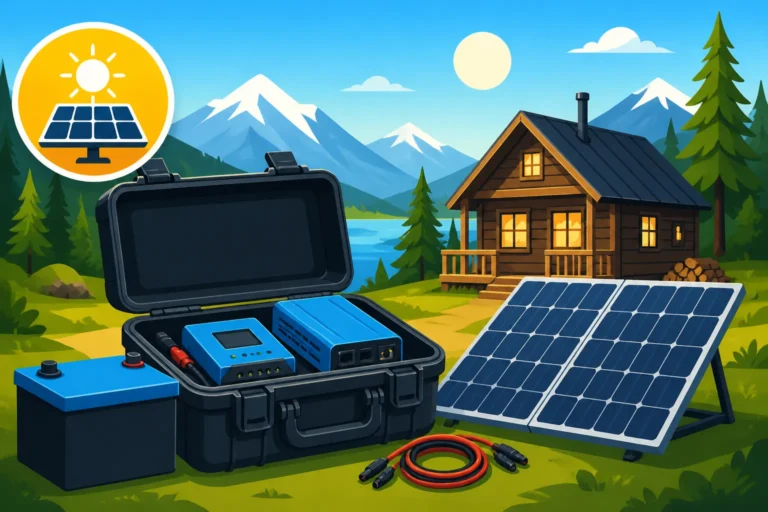
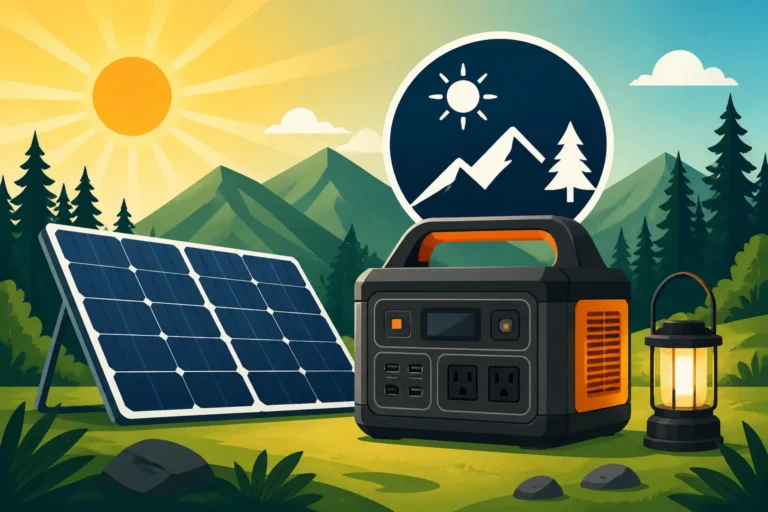
For sheer convenience and ease of use, portable solar generators are hard to beat for part-time applications. These all-in-one units integrate a battery, inverter, and charge controller into a single, compact box.
- Advantages: They are incredibly easy to set up – just plug in your solar panels, and you're charging. They require minimal wiring knowledge, making them perfect for beginners or those who want a grab-and-go solution. Many come with various output ports (AC, DC, USB) for maximum versatility. They are fantastic for camping, tailgating, emergency backup, or providing power to a small shed.
- Typical Use Cases: Imagine packing your Jackery Explorer 1500 Pro with a couple of its matching SolarSaga 100W panels into your car for a weekend at a remote campsite. You can power your lights, charge your phone, run a small fan, and even make coffee without any complicated installation. When you're done, you pack it up, and it's ready for the next adventure or to sit in your garage as an emergency backup. Brands like Jackery and Goal Zero are leaders in this space, offering a range of capacities to suit different needs. You can explore our breakdown of the .
- Considerations: While convenient, these units typically have smaller battery capacities and inverter outputs compared to a custom-built system. They might not be suitable for running large appliances like a full-sized refrigerator or an air conditioner for extended periods.
Modular DIY Systems
If you have a fixed location like a cabin, a small workshop, or an RV that stays put for weeks, a modular DIY system offers more power and flexibility than a portable solar generator, without the complexity of a full-scale home system.
- Advantages: You get to choose each component, allowing you to tailor the system precisely to your needs and budget. It's often more expandable down the line. You can install more robust wiring, integrate a larger battery bank, and opt for higher-wattage panels. The cost can sometimes be lower than a fully integrated commercial solution if you're comfortable doing the work yourself. We even have a guide on the to give you a sense of what's involved.
- Typical Use Cases: Let's say you have a cozy cabin nestled in the woods of upstate New York. You visit monthly from spring through fall. A small array of two to four 200-watt rigid solar panels mounted on the roof, connected to an MPPT charge controller, a 100Ah or 200Ah LiFePO4 battery bank, and a 1500W pure sine wave inverter would be a robust setup. This system could easily handle your lights, a small fridge, charging all your devices, and even running a small well pump for occasional water needs. You might even consider a dual charge controller setup if you want to also connect a portable Jackery power station for extra flexibility.
- Considerations: Requires more technical knowledge for wiring and installation. You'll need to source individual components, which can feel overwhelming. However, many reputable vendors like Renogy offer comprehensive kits that simplify the process for beginners. This approach allows for greater customization, such as choosing specific .
Hybrid Approaches for Flexibility
Sometimes, the best solution combines the strengths of both portable and fixed systems. This is particularly relevant for those with multiple part-time power needs.
- Advantages: Maximum versatility. You can have a small, fixed system at your cabin for basic needs, and a portable solar generator that you take camping or use as a backup for specific appliances.
- Typical Use Cases: Imagine a small shed that houses your gardening tools and needs a few lights and an occasional power tool charge. You install a single 100W panel on its roof, connected to a small charge controller and a 50Ah AGM battery, powering LED lights and a couple of USB charging ports. For larger power needs, like running a circular saw for a project, you bring out your Jackery portable power station, charged either by its own panels or from your main fixed system at home.
- Considerations: Can be slightly more complex to manage two separate systems. Requires a clear understanding of when each system is best utilized.
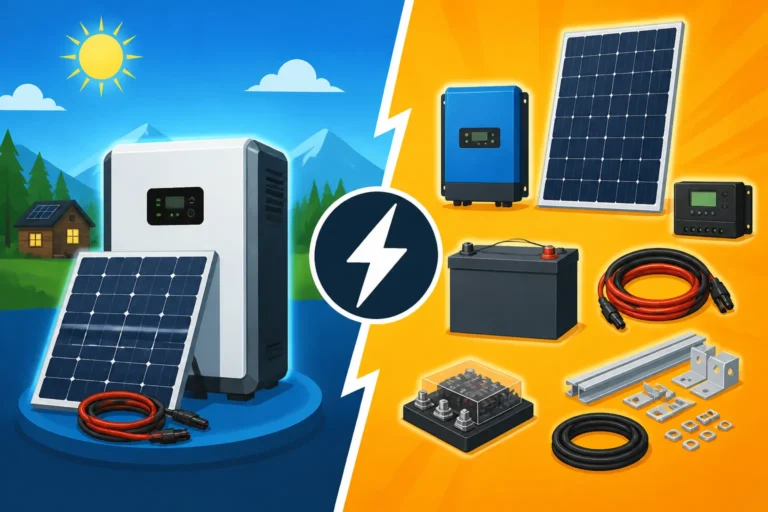
Here's a quick comparison of common part-time off-grid solar options:
| Feature | Portable Solar Generator (e.g., Jackery) | Small Modular DIY System (Cabin/RV) | Hybrid Setup |
|---|---|---|---|
| Ease of Setup | Very Easy (Plug & Play) | Moderate (Wiring knowledge required) | Moderate (Managing two systems) |
| Portability | High | Low (Fixed or semi-fixed) | High (Portable part) + Low (Fixed part) |
| Scalability | Limited (Add more panels/larger unit) | High (Add panels, batteries, larger inv.) | Moderate (Expand either part) |
| Typical Cost Range | $500 – $3,000+ (depending on capacity) | $1,500 – $5,000+ | $1,000 – $6,000+ |
| Best For | Camping, emergency, van life, small cabin | Dedicated cabins, seasonal RVs, workshops | Varied uses, remote work, robust backup |
| Maintenance | Very Low | Moderate (Battery checks, panel cleaning) | Moderate |
Budgeting and Cost Considerations for Part-Time Setups
Money talks, especially when you're deciding on an investment that isn't for daily use. Getting a clear picture of the costs involved is crucial for any off-grid project.
Initial Investment vs. Long-Term Value
It's easy to get caught up in the initial sticker price, but for solar, thinking about long-term value is key. For part-time users, the calculus might look a little different than for full-timers.
- Initial Investment: Portable solar generators like a Jackery Explorer 2000 Pro might seem pricey upfront, but they offer immense convenience, minimal installation cost, and often come with good warranties. A DIY kit for a cabin might have a lower component cost but requires an investment of your time and potentially tools, or the cost of professional installation. Our guide on gives you a comprehensive overview.
- Long-Term Value: Lithium batteries, while more expensive initially, last significantly longer than lead-acid options, meaning fewer replacements and less hassle over the years. This can drastically reduce the lifetime cost of an off-grid solar system. Also, consider the intangible value: the peace of mind of having reliable power when you're far from civilization, or the ability to keep essentials running during a power outage.
For a part-time setup, especially one that might sit idle for long periods, choosing components with good longevity and minimal self-discharge (like LiFePO4 batteries) becomes even more important to ensure they're ready to go when you are.
Avoiding Overspending
This is a pitfall many new off-gridders fall into, thinking "more is always better." For part-time use, overspending is particularly easy to do and often unnecessary.
- Right-Sizing is King: Revisit your "Essential Appliance Rundown." Are you truly going to run an electric water heater or a full-sized clothes dryer at your weekend cabin? Probably not. Don't size your system for the dream homestead when you're just looking for basic comforts. If you're only using the system for a few hours a day, you don't need a huge battery bank designed for days of cloudy weather. Our detailed guide, , can help you pinpoint exactly what you need.
- Start Small and Expand: A fantastic strategy for part-time off-grid power is to start with a smaller, manageable system that meets your immediate needs and is designed to be expandable. Many charge controllers and inverters allow for additional panels or batteries to be added later. For example, you might start with one 200W panel and a single 100Ah LiFePO4 battery, and if you find yourself needing more power after a few trips, you can easily add another panel or battery. This allows you to spread out the cost over time. If you're really trying to be frugal, our article on the will give you some great ideas.
- Evaluate "Needs" vs. "Wants": Do you need to run a high-wattage espresso machine every morning, or is instant coffee acceptable for your weekend escapes? The difference in power draw can be enormous and directly impact your system's required size and cost. Be honest with yourself about your true power priorities for sporadic use.
Ultimately, the best off-grid solar for part-time use isn't about the biggest or most expensive system, but the one that perfectly balances your actual power needs with ease of use, reliability, and your budget.
Disclaimer
This article is for general informational purposes only and does not constitute professional advice. Laws, prices and regulations vary by location and change over time. Consult a qualified professional for guidance on your specific situation.