How to Choose Off-Grid Solar for a Food Truck
Running a food truck is a dream for many, but the reality of powering all those hungry appliances on the go can quickly turn into a noisy, smelly, and expensive nightmare with traditional generators. Figuring out how to keep the lights on, the fridge cold, and the griddle hot without constantly fueling up or hunting for shore power is a huge headache. This comprehensive guide is here to walk you through the entire process of choosing and designing a reliable off-grid solar system specifically tailored for your food truck, helping you achieve true mobile culinary independence.
Why Off-Grid Solar is a Game-Changer for Food Trucks
Let's face it, the traditional food truck power setup often involves a loud, gas-guzzling generator humming away in the background. While they get the job done, they come with a slew of frustrations. Off-grid solar offers a clean, quiet, and often more cost-effective alternative that can truly transform your mobile kitchen operation.
Escaping the Generator Grind
Imagine pulling up to a bustling festival or a quiet park, opening your window, and not having to fire up a noisy generator. That drone can be a real turn-off for customers, not to mention the constant need to refuel and the fumes that can permeate the air around your delicious food. Generators require regular maintenance, oil changes, and spark plug replacements, adding to your operational costs and downtime. With off-grid solar, you eliminate all these headaches. Your power is generated silently from the sun, stored in batteries, and ready to go whenever you are. This not only creates a more pleasant environment for your customers but also drastically reduces your fuel expenses, which can be a significant line item in a food truck's budget.
Sustainability and Brand Image Boost
In today's world, consumers are increasingly conscious of environmental impact. A food truck powered by solar isn't just a practical choice; it's a powerful statement about your brand's commitment to sustainability. Picture a "Green Powered" sign on your truck, drawing in eco-minded customers who appreciate your effort to reduce your carbon footprint. This positive brand image can differentiate you in a crowded market, attracting new clientele and fostering loyalty. It's a fantastic talking point and a genuine way to contribute to a cleaner planet while serving up great food.
Unlocking Unparalleled Operational Flexibility
One of the biggest limitations of traditional power sources is the need for either an endless supply of fuel or access to shore power hookups. This dictates where you can operate, limiting your reach and potential revenue. Off-grid solar breaks these chains. You can set up shop in remote locations, at farmers' markets without electrical infrastructure, or even just a quiet street corner, knowing you have a self-sufficient power supply. This freedom allows you to explore new opportunities, expand your service areas, and truly take your culinary creations wherever the demand may be. The ability to operate independently means you’re not tied to specific event locations or dependent on unpredictable grid connections.
Understanding Your Food Truck's Energy Needs
Before you even start looking at panels or batteries, the most crucial step is to figure out exactly how much power your food truck actually consumes. This isn't just a guessing game; it's a meticulous calculation that will form the backbone of your entire solar system design. Without a solid understanding of your energy appetite, you risk either overspending on an oversized system or, worse, running out of juice mid-service.
The Critical Load Analysis for Mobile Kitchens
Think of every appliance, light, and gadget in your food truck. From the towering refrigerators and freezers to the subtle glow of your menu lights, the whir of your exhaust fan, and the mighty surge of your griddle or fryer – they all consume power. You need to list them all out, identify their wattage, and estimate how many hours a day each will operate. Don't forget those sneaky intermittent loads like water pumps, POS systems, or even a small coffee maker. It's not just about what's running all the time; it's also about what could run and for how long.
For example, a typical food truck might have:
- Refrigerator: 100-200 watts (runs intermittently)
- Freezer: 150-300 watts (runs intermittently)
- Exhaust Fan: 50-150 watts (runs continuously during cooking)
- Griddle/Fryer: 1500-3000 watts each (high wattage, but not continuous use, often short bursts)
- Lights (LED): 20-50 watts total (continuous during operation)
- POS System/Tablet: 10-30 watts (continuous during operation)
- Water Pump: 50-100 watts (intermittent, short bursts)
- Blender/Coffee Maker: 800-1500 watts (very short, intermittent bursts)
Understanding the difference between the starting (surge) wattage and the running wattage of your appliances is also vital. A blender, for instance, might pull 1500 watts for a few seconds to kick on, then settle down to 800 watts for its running power. Your inverter needs to be able to handle those initial surges. To get a handle on all this, you'll need to do a thorough Off-Grid Solar Load Calculation Explained.
Daily Energy Consumption Calculation
Once you have your load list and estimated run times, it’s time to crunch the numbers. For each appliance, multiply its wattage by the estimated hours it will run in a day. This gives you its daily Watt-hours (Wh). Then, sum up all those Watt-hours to get your total daily energy consumption in Wh or kWh (1000 Wh = 1 kWh).
Here’s a simplified example:
| Appliance | Wattage (W) | Est. Daily Run Time (Hours) | Daily Watt-hours (Wh) |
|---|---|---|---|
| Refrigerator | 150 | 10 (intermittent) | 1500 |
| Exhaust Fan | 100 | 6 | 600 |
| LED Lighting | 40 | 8 | 320 |
| POS System | 20 | 8 | 160 |
| Griddle | 2000 | 1 (total ON time) | 2000 |
| Water Pump | 75 | 0.5 (total ON time) | 38 |
| TOTAL | 4618 Wh (4.6 kWh) |
This total daily Watt-hour usage is the magic number. It tells you how much energy your solar panels need to generate and how much your battery bank needs to store to keep your food truck running smoothly. Remember to account for peak sun hours in your region and add a buffer for cloudy days or unexpected higher demand. This is a critical step in How to Calculate Daily Energy Usage.
Key Components of a Food Truck Off-Grid Solar System
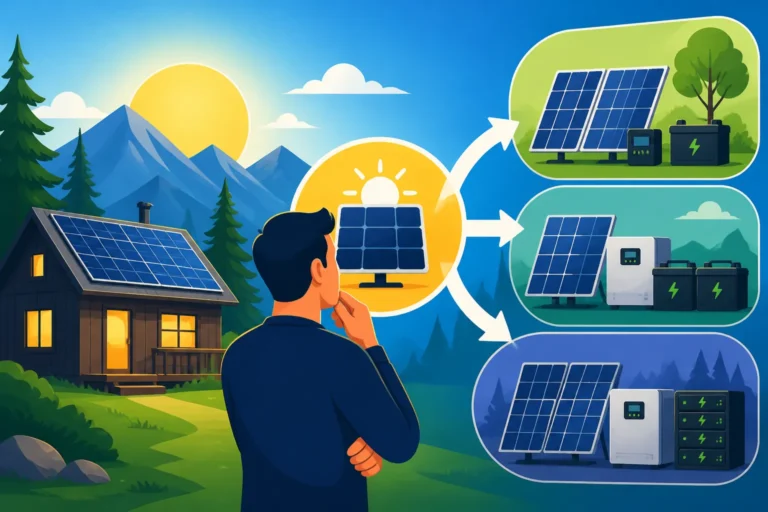
Building an off-grid solar system for a food truck is like assembling a culinary masterpiece – you need the right ingredients, and each one plays a vital role. Understanding these core components will empower you to make informed decisions and ensure your mobile kitchen runs flawlessly.
Solar Panels: The Power Harvesters
The solar panels are your silent, sun-loving chefs, converting sunlight directly into electricity. For food trucks, you'll typically be looking at rigid monocrystalline panels, known for their efficiency and durability. However, flexible panels can be an option if you have curved rooflines or specific aesthetic needs, though they generally have a shorter lifespan and lower efficiency. The key is to maximize the available roof space. You might need multiple panels to generate enough power. When considering your options, checking out Best Off-Grid Solar Panels can provide valuable insights. The amount of power your panels can generate will depend on their wattage and how many peak sun hours your location receives.
Battery Bank: The Energy Storage Hub
This is arguably the most critical component for a food truck. Your battery bank stores the energy generated by your panels so you can use it anytime, even when the sun isn't shining or during peak demand. For mobile applications like food trucks, Lithium Iron Phosphate (LiFePO4) batteries are almost always the superior choice compared to traditional lead-acid batteries. They offer:
- Higher Usable Capacity: LiFePO4 batteries can be discharged much deeper (typically 80-100%) without damage, meaning a smaller LiFePO4 bank can often replace a much larger lead-acid bank.
- Longer Lifespan: They last significantly longer, often 10-15 years or more, compared to 2-5 years for lead-acid.
- Faster Charging: They accept charge much more rapidly, making the most of your solar input.
- Lighter Weight: Crucial for a vehicle like a food truck where every pound matters for fuel efficiency and suspension.
- Maintenance-Free: No watering or constant monitoring needed.
While the initial LiFePO4 vs Lead-Acid Battery Cost might seem higher for lithium, their longevity and performance usually make them more cost-effective in the long run. When sizing your battery bank, you'll need to determine the total Amp-hours (Ah) or Watt-hours (Wh) required to power your truck for at least one, ideally two or three, days of autonomy without sun. Consider checking out our detailed guide on the Cost of an Off-Grid Solar Battery Bank. Choosing between a 12V, 24V, or 48V system is also crucial, and for larger food truck setups, higher voltages like 24V or 48V can be more efficient, reducing wire size and energy loss. Learn more about 12V vs 24V vs 48V: Which to Choose.
Inverter and Charge Controller: The Brains of the Operation
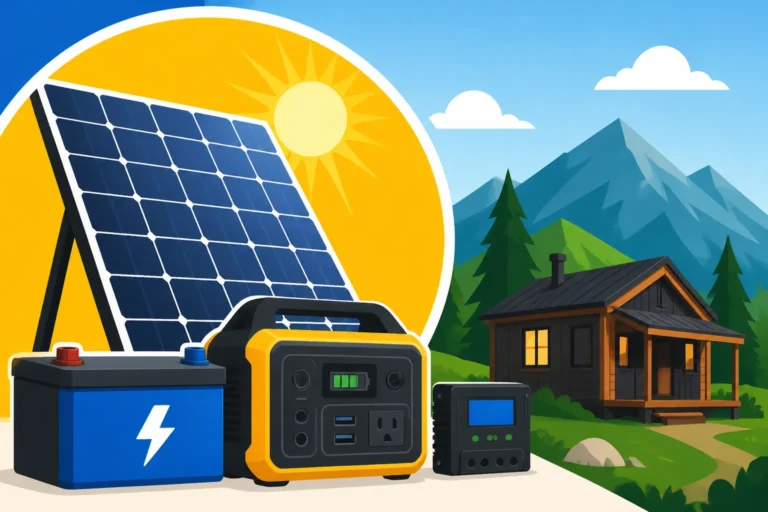
- Charge Controller: This device sits between your solar panels and your batteries. Its job is to regulate the voltage and current coming from the panels, ensuring your batteries are charged safely and efficiently without being overcharged. For off-grid systems, an MPPT (Maximum Power Point Tracking) charge controller is almost always recommended. They are significantly more efficient than PWM (Pulse Width Modulation) controllers, especially in varying light conditions, meaning you get more usable power into your batteries.
- Inverter: Your food truck appliances run on AC (Alternating Current) power, just like in a house. Solar panels and batteries produce DC (Direct Current) power. The inverter's job is to convert that DC power from your batteries into usable AC power. For delicate electronics and motor-driven appliances common in food trucks, a pure sine wave inverter is essential. It provides clean, stable power identical to grid power, preventing damage to sensitive equipment and ensuring appliances like refrigerators and blenders run smoothly. Sizing your inverter correctly is crucial to handle the combined running wattage of your appliances, plus any significant surge loads. Our guide on How to Size an Off-Grid Inverter can help you determine the right size for your needs.
Balance of System Components
Beyond the big three, there's a host of other necessary components to make your system safe and functional:
- Wiring and Cables: Properly sized wiring is paramount for efficiency and safety. Undersized cables can lead to voltage drop and even fire hazards.
- Fuses and Breakers: These are safety devices that protect your components from overcurrents and short circuits. Every major component and circuit needs appropriate overcurrent protection.
- Mounting Hardware: Securely mounting your solar panels to the roof of your food truck, often using specialized brackets, is essential to withstand travel and weather.
- Battery Monitor: A good battery monitor (often a shunt-based system) provides accurate information on your battery's state of charge, current draw, and historical data, helping you manage your power effectively.
- Distribution Panels: DC and AC distribution panels (breaker boxes) help manage the power flow to your various appliances.
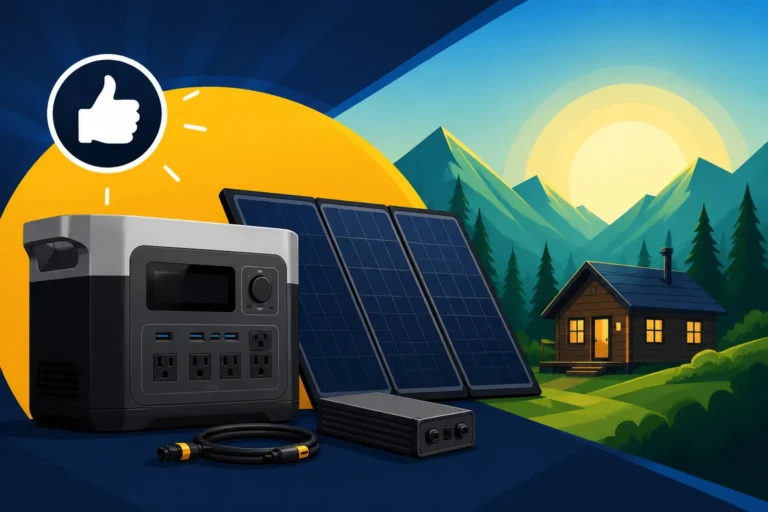
- Portable Power Stations: For lighter, occasional loads, or as a small backup during particularly low-sun days, a high-capacity portable power station like a Jackery unit can be a fantastic addition. It's incredibly versatile for charging phones, running a laptop for your POS system, or even powering a small blender for a short time, giving you extra flexibility. These units can be recharged by solar panels or from your main system.
Designing Your Food Truck Off-Grid Solar System
Once you understand your energy needs and the main components, it's time to put it all together. Designing a robust and reliable system for a food truck requires careful planning, considering both performance and the unique constraints of a mobile environment.
Sizing Your System for Reliability
This is where all your calculations from the load analysis come into play. Your goal is to size each component – solar array, battery bank, inverter, and charge controller – to meet your daily energy demands with a healthy buffer.
- Battery Bank Sizing: Start here, as your batteries are your primary reservoir. You need enough capacity to cover your daily Wh usage, plus enough "days of autonomy" to account for cloudy weather. If your food truck uses 4.6 kWh per day, and you want 2 days of autonomy, you'd need roughly 9.2 kWh of usable battery capacity. Remember, LiFePO4 batteries offer a high depth of discharge, so their usable capacity is very close to their stated capacity.
- Solar Array Sizing: Next, determine how many watts of solar panels you need to recharge your batteries daily. You'll divide your total daily Wh consumption by the average peak sun hours in your operating area. Let's say you get 4 peak sun hours. For our 4.6 kWh (4600 Wh) example, you'd need a minimum array size of 4600 Wh / 4 hours = 1150 Watts. It's always a good idea to slightly oversize your solar array to account for less-than-ideal conditions, panel degradation, and future expansion. You can get more details from our guide on How to Size an Off-Grid Solar System.
- Charge Controller Sizing: The charge controller needs to be sized to handle the maximum current and voltage produced by your solar array. This involves looking at your panel's short-circuit current (Isc) and open-circuit voltage (Voc) and ensuring the controller can accommodate them.
- Inverter Sizing: The inverter must be able to handle the sum of all your continuous loads, plus the largest surge load from any single appliance. If your griddle surges to 3000W and your fridge, lights, and fan are running simultaneously at 300W, you need an inverter with at least 3300W continuous output, and likely a higher surge rating.
Space and Mounting Considerations
The roof of your food truck is prime real estate. You need to maximize the number of panels you can fit while considering potential shading from rooftop equipment (vents, AC units) and avoiding obstructions.
- Panel Placement: Lay out your panels to minimize shading throughout the day. Even partial shading on one panel can significantly reduce the output of an entire string of panels.
- Mounting: Use robust, low-profile mounting systems that can withstand vibrations, wind, and travel speeds. Ensure all penetrations into the roof are properly sealed to prevent leaks. Tilt mounts can be beneficial if your truck is often stationary for extended periods, allowing you to adjust panels for optimal sun exposure, especially during different seasons.
- Ventilation: All electrical components, especially inverters and charge controllers, generate heat. Ensure they are mounted in well-ventilated areas, away from combustible materials, to prevent overheating and ensure longevity.
Budgeting and Phased Approaches
The initial investment for a quality off-grid solar system can be substantial. A full system for a busy food truck, including high-capacity LiFePO4 batteries, a robust inverter, and sufficient solar panels, could range anywhere from $8,000 to $25,000 or even more, depending on the scale of your operation and chosen brands. This is a significant part of the overall Off-Grid Solar Cost: Complete Breakdown.
- Prioritize: You might not need to power everything with solar from day one. Consider what are your absolute must-have appliances (refrigeration, lights, POS) and build your initial system around those. High-draw cooking appliances might still rely on propane or a small backup generator initially if budget is tight.
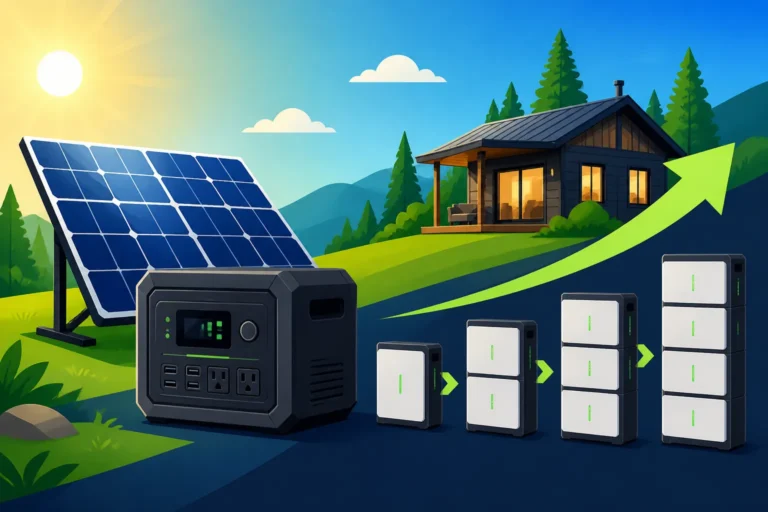
- Start Small, Expand Later: A phased approach can help manage costs. You could begin with a basic system to cover essential loads and then expand your solar array and battery bank as your budget allows and your needs grow. This is where options like a Jackery portable power station can really shine in the early stages or for supplemental power. You can use it to power smaller items, get a feel for your actual usage, and then scale up. Planning for expansion from the start, by ensuring your inverter and charge controller have some headroom, can save you headaches down the line. Check out How to Design an Expandable System for more ideas.
Real-World Considerations and Tips for Food Truck Solar
Going off-grid with your food truck is an exciting venture, but it comes with its own set of practicalities that you'll want to master to ensure smooth operation and long-term success.
Maintenance and Longevity
While off-grid solar systems are generally low-maintenance, they're not entirely hands-off, especially in a mobile environment.
- Panel Cleaning: Dust, grease, and grime from cooking can quickly accumulate on your solar panels, significantly reducing their efficiency. Regular cleaning with water and a soft brush or cloth is essential. Make it a routine, perhaps weekly, depending on how often you operate and where.
- Battery Health: Even LiFePO4 batteries, though low-maintenance, benefit from occasional checks. Ensure terminals are clean and connections are tight. A good battery monitor will help you keep an eye on their state of charge and overall health, preventing deep discharges that can shorten lifespan.
- Component Inspection: Periodically check all wiring, connections, fuses, and mounting hardware for any signs of wear, corrosion, or loosening due to road vibrations. Vibration can be a real enemy of electrical connections in a vehicle.
Expanding Your System Down the Line
One of the great things about modular solar systems is the ability to grow them as your business expands or your energy needs increase. Maybe you start with enough power for refrigeration and lights, then later want to add an electric fryer or a larger coffee machine.
- Plan Ahead: When initially designing your system, consider choosing an inverter and charge controller that have some extra capacity. For instance, if you project needing 3000W, buying a 4000W or 5000W inverter gives you room to grow without needing to replace this expensive component. Similarly, picking a charge controller that can handle more solar input than your current array will save you money when you decide to add more panels.
- Modular Batteries: LiFePO4 battery banks are often highly modular, allowing you to easily add more batteries in parallel to increase your overall storage capacity as needed. This flexibility helps manage your initial investment.
Safety First: Protecting Your Investment and People
Electrical safety is non-negotiable, especially in a commercial vehicle handling food. Cutting corners here is simply not an option.
- Professional Installation: While some DIY is possible for smaller setups, for a food truck, especially with high-wattage appliances, it's highly recommended to have a qualified electrician or solar installer review or perform the installation. They'll ensure compliance with relevant electrical codes (like NEC standards, even if technically off-grid, good practice dictates following them) and best practices. Getting a professional to help with How to Install an Off-Grid Solar System can prevent costly mistakes.
- Proper Grounding and Fusing: Every component must be correctly grounded to the truck's chassis, and all circuits must be protected with appropriately sized fuses or breakers. This prevents shocks and fires.
- Secure Mounting: All components, especially heavy batteries, must be securely mounted to withstand the bumps and vibrations of the road. Batteries shifting around during transit are a serious hazard.
- Emergency Disconnects: Install easily accessible emergency disconnect switches for both your DC (solar and battery) and AC (inverter output) circuits. This allows for quick and safe shutdown in an emergency.
Integrating a Backup Power Solution
Even the best-designed solar system can face challenges, like extended periods of bad weather, unexpected high demand, or an unforeseen component issue. Having a backup plan is crucial for a food truck.
- Propane/Gas Generator: A small, quiet inverter generator can be a lifesaver. It can kick in to charge your batteries or directly power high-demand appliances during prolonged cloudy spells or when you're preparing for a particularly busy event. Many inverters have generator integration features, allowing for automatic startup.
- Shore Power Hookup: Even with solar, having a shore power inlet allows you to plug into standard outlets when available (at home, at a commissary, or certain event venues) to fully charge your batteries or run equipment directly.
- Portable Power Stations: As mentioned, a portable power station like a Jackery unit is an excellent flexible backup. It's great for quickly powering a smaller appliance or charging devices without firing up a larger generator. These are especially handy for an unexpected need or to supplement power during a peak rush where your main system might be stressed. Check out our guide on the Best Solar Generators for Off-Grid Use for more information on these versatile devices. Having a multi-faceted approach to power ensures your food truck always stays operational, no matter what the day brings.
Disclaimer
The information provided in this guide is for general informational purposes only and does not constitute professional advice. Off-grid solar system design and installation involve electrical work and specific technical knowledge. It is highly recommended to consult with a qualified solar professional or licensed electrician to ensure your system is safely and correctly designed and installed in compliance with all applicable codes and regulations for your specific food truck and location.