Best Solar Generators for Off-Grid Use
Living off-grid or even just having reliable backup power can feel like a constant battle against uncertainty. Whether you're tired of flickering lights during a storm, want to power your remote cabin without running a noisy gas generator, or dream of extended van life adventures, finding the right power solution is paramount. This comprehensive guide will walk you through everything you need to know about choosing the best solar generators for off-grid use, helping you make an informed decision and finally achieve energy independence.
Understanding Solar Generators for Off-Grid Living
Let's face it, the term "solar generator" can be a bit misleading. It's not generating power from nothing; it's storing power that comes from the sun (or a wall outlet, or a car's alternator, for that matter!). But for off-grid enthusiasts, these portable power stations have become indispensable tools, bridging the gap between small, intermittent power needs and the full-blown, complex off-grid solar systems.
What Exactly is a Solar Generator?
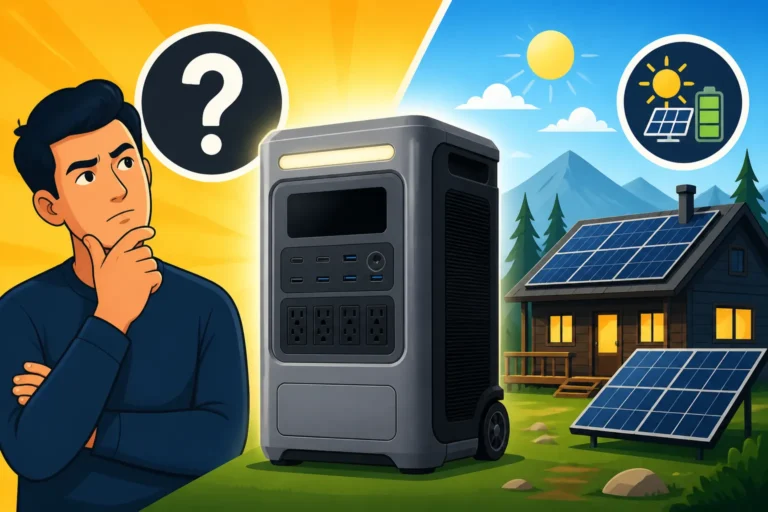
At its core, a solar generator is an integrated system designed to capture energy from solar panels, store it in a battery, and then convert it into usable AC or DC power for your devices and appliances. Think of it as a battery bank, charge controller, and inverter all rolled into one compact, often portable, unit. It usually features a variety of output ports, including standard AC outlets, USB ports, and 12V DC car ports, making it incredibly versatile. Unlike traditional fuel generators that hum loudly and belch exhaust, solar generators operate silently and produce zero emissions, which is a huge plus for peace and quiet in your off-grid sanctuary. They are, in essence, a self-contained power plant, ready to deploy wherever the sun shines.
These units simplify the power equation considerably. Instead of sourcing individual components like an inverter, a separate charge controller, and a battery bank, then wiring them all together, a solar generator presents a plug-and-play solution. You connect your solar panels, and the unit handles the rest, from optimal charging to safe power output. This ease of use makes them particularly appealing for those who are new to off-grid living or who need a flexible, portable power solution without the complexity of a full custom build.
Why They're a Game-Changer for Off-Grid Power
For many of us embracing the off-grid lifestyle, whether it's in a rustic cabin, a tiny home, or a mobile setup like an RV or van, solar generators offer a level of convenience and reliability that was once unimaginable. They eliminate the constant need for gasoline or propane, freeing you from fuel runs and the carbon footprint associated with fossil fuels. Imagine waking up in your remote cabin, making coffee, and charging your laptop without hearing the rumble of a generator or smelling fumes. That's the promise of a solar generator.
Their portability means you can take power wherever you go. Headed to a remote campsite? Need to power tools at a job site far from an outlet? A solar generator can go with you. They also serve as an excellent bridge solution for those gradually transitioning to a full off-grid system. You can start with a smaller unit, get comfortable with solar power, and then scale up or integrate it into a larger setup as your needs evolve. For emergency preparedness, they are truly invaluable. When the grid goes down, a solar generator, paired with panels, can keep essential medical devices, communication equipment, and refrigeration running. This ability to provide power during outages is a significant benefit, offering peace of mind when you need it most.
Limitations and Realistic Expectations
While solar generators are fantastic, it's crucial to have realistic expectations about what they can and cannot do. They are not a magic bullet that will power your entire off-grid home with all its energy-hungry appliances indefinitely. The main limitation comes down to battery capacity and continuous power output. A compact unit, for instance, might keep your phone, laptop, and some LED lights going for a day or two, but it won't run a full-sized refrigerator or an air conditioner for long. If you're wondering, for example, about the long-term viability, you should understand that the Cost of an Off-Grid Solar Battery Bank] is often the most significant part of the overall cost.
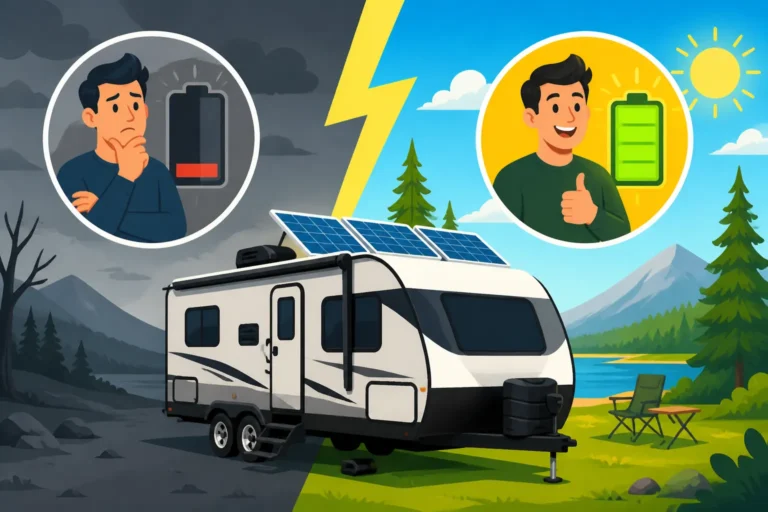
The amount of power you can generate from solar panels also depends heavily on sunlight availability. Cloudy days, short winter days, or shaded locations will significantly reduce charging speed and overall energy production. This means you might need larger solar panels or a backup charging method (like a car's 12V outlet or even a small gas generator) to keep your solar generator topped up during less-than-ideal conditions. For truly large-scale off-grid living, like powering an entire household with heavy appliances, you're usually looking at a dedicated, custom-built system rather than a single portable solar generator. Understanding these limitations from the outset will prevent disappointment and help you choose a unit that truly fits your lifestyle and power demands.
Key Components of a Solar Generator System
When you're looking at solar generators, it's helpful to understand the basic building blocks that make these units tick. While they come as integrated packages, knowing what each component does will help you appreciate their capabilities and compare different models more effectively. It’s a lot like understanding the engine, chassis, and tires of a car – they all work together, but each has its specific role.
The Heart of the System: Battery Technology
The battery is arguably the most critical component of any solar generator; it's where all the hard-earned solar energy gets stored. Without a robust battery, your generator is just a fancy power converter. Today, you'll primarily encounter two main types of battery technologies in quality solar generators: Lithium Iron Phosphate (LiFePO4) and Lithium-ion (NMC/NCA).
Lithium Iron Phosphate (LiFePO4) batteries are the undisputed champions for off-grid solar applications. They boast an incredibly long cycle life, often rated for 2,500 to 6,000 cycles to 80% depth of discharge, which means they can be deeply discharged and recharged thousands of times before their capacity significantly degrades. They are also remarkably safe, with a stable chemistry that makes them less prone to thermal runaway (overheating) compared to other lithium chemistries. While they might have a slightly higher upfront cost, their longevity and performance make them a superior investment for continuous off-grid use. When considering Best Off-Grid Solar Batteries], LiFePO4 often comes out on top for these very reasons.
Traditional Lithium-ion batteries (NMC/NCA, similar to what's in your phone or laptop) are also used in some solar generators, especially older models or those prioritizing extreme portability and power density. They offer a great power-to-weight ratio, meaning they can store a lot of energy in a smaller, lighter package. However, their cycle life is typically shorter (around 500-1,000 cycles) and they can be more sensitive to temperature extremes and deep discharges. For casual, intermittent use, they might be acceptable, but for serious off-grid applications, the robustness of LiFePO4 usually wins out.
The Brain: Inverter and Charge Controller
If the battery is the heart, then the inverter and charge controller are the brain and nervous system, respectively. The inverter is responsible for converting the DC (direct current) power stored in the battery into AC (alternating current) power, which is what most of your household appliances and electronics use. You'll want to look for solar generators with a pure sine wave inverter. Why? Because a pure sine wave output replicates the power you get from the grid, ensuring sensitive electronics like laptops, medical devices, and power tools run smoothly and efficiently without damage. Modified sine wave inverters are cheaper but can cause humming, overheating, or even damage to certain devices.
The charge controller is the intelligent part that manages the flow of electricity from your solar panels to the battery. Its job is crucial: it prevents overcharging, which can damage batteries, and ensures optimal charging efficiency. Most quality solar generators today utilize an MPPT (Maximum Power Point Tracking) charge controller. MPPT controllers are far more efficient than older PWM (Pulse Width Modulation) controllers, especially in varying light conditions and when there's a significant voltage difference between the panels and the battery. They can extract up to 30% more power from your solar panels, which means faster charging and more usable energy, especially when you're relying solely on the sun. This efficiency is a huge factor when you're trying to How Much Solar to Charge Your Batteries Daily].
The Power Source: Solar Panel Compatibility
A solar generator isn't much good without, well, solar panels to charge it up! The beauty of these units is that they often come with a wide range of input options, but solar compatibility is key for off-grid use. You'll need to check the generator's specifications for its maximum solar input wattage and voltage range. This tells you how many solar panels, and what type, you can connect to efficiently charge the unit.
Many solar generator brands offer their own proprietary solar panels that are designed to integrate seamlessly with their units. Brands like Jackery, EcoFlow, and Bluetti have portable, foldable solar panels that are incredibly convenient for travel and temporary setups. However, most solar generators also allow you to connect third-party solar panels, often through standard MC4 connectors, provided they fall within the specified voltage and wattage limits. This flexibility is great because it means you can often use existing panels or upgrade your solar array without having to replace your entire generator. For more on getting the most out of your panels, consider reading about the Best Off-Grid Solar Panels] and how they pair with your system. Always ensure the panel's open-circuit voltage (Voc) doesn't exceed the generator's maximum input voltage to avoid damaging the unit.
Sizing Your Solar Generator for Off-Grid Needs
One of the biggest hurdles people face when going off-grid is figuring out how much power they actually need. It’s easy to underestimate, and just as easy to overestimate, leading to either constant power anxiety or an unnecessarily expensive system. Proper sizing is the bedrock of a reliable off-grid setup, and it all starts with understanding your daily energy demands.
Calculating Your Daily Energy Consumption
Before you even think about buying a solar generator, you need to conduct a thorough energy audit, often called a "load analysis." This means making a list of every single electrical device you plan to power, how many watts it consumes, and for how many hours per day you'll use it. This isn't just a guessing game; it requires a bit of detective work. Many appliances have their wattage listed on a sticker on the back or bottom, or you can use a kill-a-watt meter to get precise measurements.
Let's take a common scenario for a small cabin or an RV. You might need to power:
- LED lights (10W x 4 hours = 40 Wh)
- Laptop (50W x 3 hours = 150 Wh)
- Phone charging (10W x 2 hours = 20 Wh)
- Small refrigerator (60W x 12 hours run time = 720 Wh)
- Water pump (100W x 0.5 hours = 50 Wh)
- Starlink internet (50W x 8 hours = 400 Wh)
Summing these up, your daily consumption might be around 1380 Watt-hours (Wh) or 1.38 kWh. This number is your target. You can delve deeper into this process with a guide on How to Calculate Daily Energy Usage] to ensure you don't miss anything. Remember, it's always better to slightly overestimate your needs than to find yourself short on power in a remote location.
Determining Necessary Battery Capacity and Inverter Size
Once you have your total daily Watt-hours, you can start to size your solar generator. The battery capacity of a solar generator is typically expressed in Watt-hours (Wh) or kilowatt-hours (kWh). To meet your 1380 Wh daily need, you'd ideally want a generator with at least that much capacity. However, you also need a buffer for cloudy days or peak usage. A good rule of thumb for off-grid living is to have at least 1.5 to 2 times your daily consumption in battery capacity, giving you some "days of autonomy." So, for 1.38 kWh per day, you might look for a generator with a 2-3 kWh battery. When considering How Many Batteries for an Off-Grid System], this buffer is crucial.
Next, consider the inverter size, which determines the maximum continuous wattage your generator can output. If your refrigerator pulls 60W, but your well pump surges to 1000W when it starts, your inverter needs to be able to handle that 1000W surge, even if only for a few seconds. If you plan to run multiple appliances simultaneously, add their wattages together to find your peak continuous draw. For example, if you want to run a microwave (1000W) and a laptop (50W) at the same time, you'd need an inverter capable of at least 1050W. Always factor in these surge requirements, as under-sizing your inverter will lead to frustrating shutdowns.
Matching Solar Input to Your Generator's Capabilities
After determining your power consumption and necessary battery/inverter size, the final step is to ensure your solar input can keep up. Solar generators specify a maximum solar input wattage (e.g., 500W, 1000W). This tells you how much solar panel power you can connect to charge the battery. To calculate how much solar you need, you'll factor in "peak sun hours" for your location, which represents the average number of hours per day when solar irradiance is at its most intense.
Let's say your location gets 4 peak sun hours per day. If you need to replenish 1380 Wh daily, you'd divide 1380 Wh by 4 hours, which means you need about 345 Watts of effective solar panel input. Since solar panels rarely perform at 100% efficiency due to various factors (temperature, dirt, angle), it's wise to oversize your solar array by 20-30%. So, you might aim for a 400-500W solar array to connect to your generator. If your chosen generator has a maximum solar input of 500W, then a 400-500W array would be a perfect match. For a deeper dive into this, check out How to Size an Off-Grid Solar System].
It's also important to consider the generator's charging speed from solar. A unit with a large battery but low solar input capacity will take a very long time to recharge purely from solar, which might not be practical for continuous off-grid living. Balancing battery size, inverter power, and solar input capacity is key to a functional and reliable system.
Top Solar Generators for Various Off-Grid Scenarios
Choosing the "best" solar generator is highly personal, as it depends entirely on your specific off-grid scenario. What works for a weekend camper won't suffice for a full-time tiny home dweller. Here, we'll break down popular options based on common use cases, highlighting what makes certain models shine in different settings. Remember, the true hero is the one that fits your needs perfectly.
Best for Portable Power and Light Use
For those who need power on the go, for short camping trips, tailgating, drone flying, or light duty in a small RV or van, portability and ease of use are paramount. These units typically feature smaller battery capacities (200Wh to 1000Wh) and lower inverter ratings (200W to 1000W).
- Jackery Portable Power Station Explorer Series: Jackery is a well-known name in this segment, and their Explorer series, particularly models like the Jackery Explorer 500 or Explorer 1000, are excellent examples. They are relatively lightweight, have a robust build, and offer a good balance of AC/DC/USB outputs. They are easy to charge with their proprietary SolarSaga solar panels, making them a fantastic grab-and-go option. A Jackery Explorer 1000, for instance, can easily keep your phone, laptop, and a small fan or portable cooler running for a day or two. They're designed for adventurers and casual users who prioritize portability over raw power for heavy appliances.
- Goal Zero Yeti Series (Smaller Models): Goal Zero also offers compact units like the Yeti 500X or 1000X, which are known for their rugged construction and reliable performance. They often come with multiple charging options and can integrate with a variety of Goal Zero's durable solar panels. While sometimes a bit pricier, their build quality and ecosystem of accessories make them a solid choice for those who value dependability in demanding outdoor environments.
These smaller generators are ideal for powering essentials like phones, tablets, laptops, cameras, LED lights, and even small 12V fridges. They are perfect for a weekend away, or as a reliable backup for crucial devices during short power outages. For more insights on choosing, consider How to Choose an Off-Grid Solar Generator].
Best for Cabin or Tiny Home Backup and Moderate Use
Stepping up in size, these solar generators are designed for more sustained power needs, often acting as a primary power source for smaller off-grid dwellings or as robust backup for moderate loads. They typically feature battery capacities ranging from 1500Wh to 3000Wh and inverters from 1500W to 3000W.
- EcoFlow DELTA Series: EcoFlow has made a significant impact with its DELTA series, offering units like the DELTA 2 or DELTA Pro. These generators boast incredibly fast AC charging speeds, often recharging to 80% in under an hour, which is a massive advantage if you have intermittent grid access or a backup generator. The DELTA Pro, in particular, has a massive 3.6kWh base capacity (expandable to 25kWh with extra batteries) and a 3600W AC output (7200W surge with X-Boost), making it capable of running almost any standard home appliance. This makes the DELTA Pro a strong contender for Best Off-Grid Solar Kit for a Tiny Home] or even a small cabin. Their powerful inverters and expandable battery options make them versatile for running refrigerators, microwaves, power tools, and even small air conditioners.
- Bluetti AC200MAX / AC300: Bluetti offers formidable options with their AC200MAX and AC300. The AC200MAX has a 2048Wh LiFePO4 battery and a 2200W inverter, with the ability to expand capacity using Bluetti's B230 or B300 battery modules. The AC300 is even more modular, acting as an inverter/charge controller hub that requires external B300 (3072Wh LiFePO4) battery modules, allowing for immense scalability up to 12.2kWh with four batteries and a 3000W inverter. These units are built to be robust and are perfect for providing reliable power for multiple days in a cabin, workshop, or for more extensive RV setups. They are well-regarded for their build quality and the use of long-lasting LiFePO4 batteries.
These medium-sized units bridge the gap between simple portable power and full-fledged off-grid systems. They can handle most common appliances and provide a comfortable level of power autonomy for several days, making them a practical choice for many off-grid scenarios that don't involve heavy, continuous power drains like electric water heaters or central air conditioning.
Best for Emergency Preparedness and Larger Loads
When you need serious power for extended outages, larger homes, or running power-hungry appliances, you're looking at the top-tier solar generators. These units often blur the line with complete off-grid power systems, featuring massive battery capacities (3kWh to 6kWh and up) and powerful inverters (3000W to 5000W+).
- EcoFlow DELTA Pro Ecosystem: Mentioned before, the DELTA Pro shines here due to its impressive expandability. With up to two DELTA Pro units coupled together using a Smart Home Panel, you can achieve 7200W of continuous output and connect to your home's wiring, effectively turning it into a powerful home backup system. The ability to add multiple extra batteries means you can scale storage to meet significant demands for longer periods, providing a comprehensive solution for Off-Grid Solar for Emergency Preparedness].
- Anker SOLIX F3800: Anker, a brand synonymous with quality power banks, has entered the high-capacity solar generator market with the SOLIX F3800. This unit boasts a 3.84kWh LiFePO4 battery and a robust 6000W inverter, making it one of the most powerful portable power stations on the market. What sets it apart is its unique feature allowing it to serve as a 240V split-phase output with another F3800, enabling it to power larger home appliances like electric dryers or well pumps that require 240V. Its integrated wheels and retractable handle also make it surprisingly portable for its size.
- Bluetti EP500Pro: The Bluetti EP500Pro offers a substantial 5100Wh LiFePO4 battery and a 3000W inverter, all in a relatively compact, wheelable form factor. It's designed for serious home backup and can integrate with existing home electrical panels. Its UPS (Uninterruptible Power Supply) function ensures seamless power transfer during outages, protecting sensitive electronics. The EP500Pro is a formidable contender for those needing significant, reliable power without the complexity of a custom-built system.
These large capacity units are designed to offer maximum peace of mind and functionality. They can power critical home circuits, keep a household refrigerator and freezer running for days, and handle multiple demanding appliances simultaneously. While they represent a significant investment, the robust power and flexibility they offer can be invaluable for true energy independence or comprehensive emergency preparedness.
Features to Look For in an Off-Grid Solar Generator
Once you have an idea of the size and type of solar generator that might suit your off-grid needs, it's time to dive into the nitty-gritty of specific features. Not all solar generators are created equal, and paying attention to these details can make a huge difference in your daily experience and the longevity of your investment.
Output Ports and AC/DC Capabilities
A solar generator's usefulness is often measured by its versatility in output options. You're not just looking for a single AC outlet; a good generator will offer a variety of ports to cover all your devices.
- AC Outlets: This is where you plug in your standard household appliances. Look at the number of outlets (usually 2-6) and ensure they are all pure sine wave output, as discussed earlier. Also, check if any of the AC outlets are rated for higher amperage if you plan to run demanding tools. For larger units, some may even offer 240V split-phase output capability with adapter boxes or by linking two units, which is essential for certain heavy-duty appliances like electric water heaters or larger well pumps.
- USB Ports: In today's world, USB charging is non-negotiable. Look for a mix of USB-A (including quick charge 3.0 ports) and USB-C Power Delivery (PD) ports. USB-C PD ports are crucial for fast-charging modern laptops, tablets, and many smartphones, often delivering 60W or 100W, significantly faster than older USB-A ports.
- 12V DC Outlets: These typically include a car cigarette lighter style port and often DC5521 (barrel plug) outputs. These are excellent for running 12V appliances directly, like car fridges, LED strip lights, or air compressors, bypassing the inverter and saving precious battery power by avoiding conversion losses. Make sure the 12V output is regulated, meaning it provides a consistent voltage even as the battery drains, which is vital for sensitive 12V electronics.
The more diverse and powerful the output options, the more flexible your solar generator will be in powering your off-grid life. This is one of the critical aspects of Off-Grid Solar System Components Explained].
Charging Flexibility and Speed
An off-grid solar generator is only as good as its ability to recharge. The more ways you can charge it, and the faster it charges, the more reliable it will be.
- Solar Input: We've covered this, but reiterate: check the maximum solar input wattage and voltage range. Higher wattage input means faster charging from your panels. Look for MPPT charge controllers for maximum efficiency. Some units support parallel solar inputs for even faster charging.
- AC Wall Charging: While you're off-grid, you might occasionally have access to a grid connection (perhaps visiting friends, using a public charging station, or charging at a base camp). Many modern solar generators boast incredibly fast AC charging speeds, some capable of recharging to 80% in under an hour. This can be a lifesaver if you have a short window to top up.
- Car Charging: The 12V car cigarette lighter port can be a slow but steady charging method, great for topping up while driving to your next off-grid destination. Ensure the unit can charge effectively from a 12V source, and consider if it offers a higher-amperage input from a vehicle's auxiliary battery system for faster charging on the road.
- Generator Charging: If you have a traditional gas or propane generator as a backup, ensure your solar generator can accept its output. Some solar generators have specific settings or adapters for this, allowing you to use your fuel generator to quickly charge the solar generator's battery bank. This combination can be incredibly powerful for ensuring continuous power even during prolonged periods of low sun.
The ideal solar generator offers multiple charging pathways, giving you options no matter your situation.
Durability, Portability, and Expandability
These practical considerations dictate how easy and pleasant your solar generator will be to use in real-world off-grid conditions.
- Durability: Off-grid environments can be tough. Look for generators with robust casings, good internal component protection, and perhaps even dust and water resistance ratings (like IP ratings) if you anticipate harsh conditions. Some models feature a heavy-duty handle or even built-in wheels for easier transport. Brands like Bluetti, EcoFlow, and Jackery generally prioritize durable construction suitable for frequent use.
- Portability: Even large solar generators are considered "portable" compared to a full home battery bank. For smaller units, check the weight and dimensions to ensure you can easily carry it. For larger, heavier units, look for integrated wheels, sturdy handles, and a balanced design for easier maneuvering.
- Expandability: This is a huge factor if you anticipate growing your power needs over time. Can you add external battery modules to increase capacity? Can you link two identical units to double the power output or enable 240V operation? Expandability future-proofs your investment, allowing you to start small and scale up without replacing your entire system. This flexibility is key to making sure your Off-Grid Solar System Sizing Guide] remains relevant as your needs change. Some units even integrate with a Smart Home Panel, effectively turning them into a whole-house backup solution.
Thinking through these features will help you differentiate between good solar generators and the best solar generators for your unique off-grid journey.
Integrating a Solar Generator into a Larger Off-Grid Setup
Solar generators are often thought of as standalone solutions, but their versatility means they can play various roles within a broader off-grid power strategy. They're not always the entire solution, but they can be a critical piece of the puzzle, whether they're powering your whole world or just providing a safety net.
As a Primary Power Source
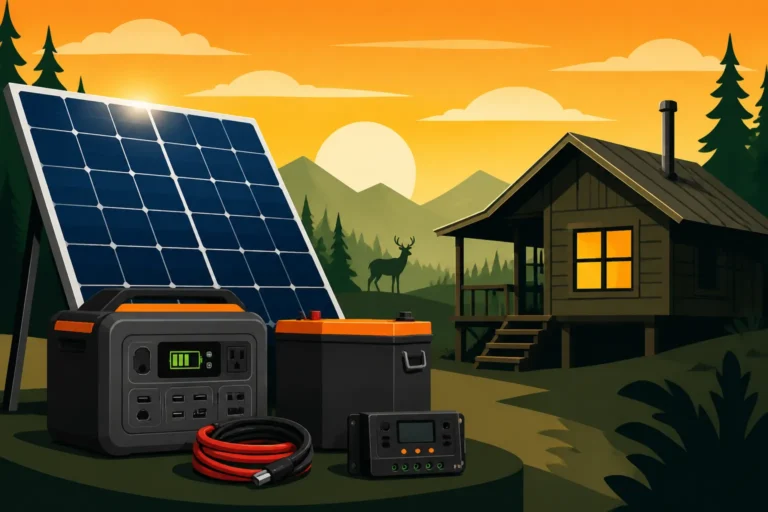
For small off-grid applications, a solar generator can absolutely serve as your primary power source. Think about a remote hunting cabin used only on weekends, a backyard shed workshop, a small van conversion for weekend trips, or even a tiny house with minimal electrical demands. In these scenarios, a well-sized solar generator, especially one in the 2-5 kWh range with expandable battery options, can easily handle your daily needs.
For example, if you live in a small, well-insulated cabin and are mindful of your energy consumption (using LED lights, energy-efficient appliances, and limiting heavy loads like electric heaters), a robust solar generator like the EcoFlow DELTA Pro or a Bluetti AC300 with expansion batteries can comfortably run your refrigerator, lights, water pump, and charge your electronics. The key is careful load management and ensuring your solar input is sufficient to replenish the battery daily, especially with consideration for How Winter Affects Off-Grid Sizing]. This approach offers simplicity and a relatively lower initial investment compared to a fully custom-built system with individual components. The plug-and-play nature reduces installation complexity, making it ideal for those who prefer a less hands-on setup.
As a Backup or Supplemental Power Solution
This is where solar generators truly shine for many off-grid and even grid-tied homeowners. Even with a well-designed custom off-grid solar system, having a portable solar generator provides an invaluable layer of redundancy. What if your main inverter goes down? What if a string of panels fails? A solar generator can step in to keep critical devices running.
For larger off-grid homes, a solar generator might not power the entire house, but it can isolate and power essential circuits. Imagine using it to keep your internet router, a few lights, and your medical equipment (like a CPAP machine) running without interruption, even if your main system is offline for maintenance or repairs. This supplemental role is also fantastic for powering specific, heavy-draw appliances temporarily. Need to run a power saw for an hour? Instead of tapping into your main battery bank, you could use a separate solar generator. This approach extends the life of your main battery bank and provides flexibility. For those with grid-tied solar, a solar generator offers critical backup during grid outages, ensuring you have power when the grid is down – something grid-tied systems usually don't do without expensive battery backup solutions. This makes them a strong contender when comparing Off-Grid Solar vs Grid-Tied Cost Comparison].
Maintenance and Longevity Tips
Like any investment, proper care will ensure your solar generator lasts for years. While they require significantly less maintenance than a gas generator, a few practices will keep them operating at peak performance.
- Battery Care: If your unit uses LiFePO4 batteries, they are generally low-maintenance. However, avoid storing them completely depleted or fully charged for extended periods. Aim for a 50-80% charge level for long-term storage. Keep them within their recommended operating temperature range. Extreme heat or cold can degrade battery life. Many modern solar generators have sophisticated Battery Management Systems (BMS) that protect against overcharge, over-discharge, and temperature extremes, but it's still good practice to be mindful.
- Cleaning and Storage: Keep the unit clean, especially the air vents, to ensure proper cooling. Dust and debris can build up and reduce efficiency or cause overheating. Store the generator in a dry, temperate place, away from direct sunlight when not in use. If using it outdoors, protect it from heavy rain and extreme temperatures.
- Solar Panel Care: Keep your solar panels clean. Dust, pollen, bird droppings, and leaves can significantly reduce their efficiency. A simple rinse with water and a soft brush can do wonders. Periodically inspect the cables and connectors for any signs of wear or damage. For more on this, check out Off-Grid Solar Maintenance Costs].
- Software Updates: Many advanced solar generators have firmware that can be updated via a smartphone app. These updates often improve performance, add features, or fix bugs, so keep your unit's software current.
By following these simple tips, you can ensure your solar generator provides reliable, emission-free power for countless off-grid adventures and emergencies.
Common Misconceptions and Smart Choices
Diving into the world of off-grid solar can be exhilarating, but it's also rife with myths and misunderstandings. Before you commit to a solar generator, it's wise to clear up some common misconceptions and arm yourself with the knowledge to make truly smart purchasing decisions.
The "Set It and Forget It" Myth
Many people assume that once they buy a solar generator and connect it to panels, their power problems are solved forever, requiring no further thought. This is a tempting but ultimately false narrative. While solar generators are significantly simpler than a full custom build, they still demand a certain level of engagement and awareness, especially in an off-grid context.
You can't just "set it and forget it" because solar input isn't constant. Weather changes, panel angles might need seasonal adjustment for optimal Best Tilt Angle for Off-Grid Panels], and shading from trees or buildings can impact performance. You need to monitor your power consumption, especially when running new appliances, to ensure you're not draining the battery faster than it can recharge. If you live in an area with consistently cloudy weather or short winter days, you might find yourself needing supplemental charging methods more often than you anticipated. Furthermore, knowing how to interpret your generator's display, which usually shows input/output wattage, battery state of charge, and remaining run/charge time, is crucial for proactive power management. Ignoring these factors can lead to depleted batteries and frustrating power outages in your off-grid paradise.
Understanding Cost vs. Value
The upfront cost of a solar generator can seem daunting, especially for larger units. It's easy to look at the price tag and compare it only to a cheap gas generator. However, that's comparing apples to oranges, and it misses the long-term value proposition. While a small gas generator might cost a few hundred dollars, you'll constantly be buying fuel, dealing with maintenance (oil changes, spark plugs, filters), and enduring noise and fumes.
A solar generator, especially one with a durable LiFePO4 battery, has a much higher upfront cost, but its "fuel" (sunlight) is free. Its maintenance is minimal, and it operates silently and cleanly. Over its lifespan, which can be 10-15 years or more for a quality unit, the total cost of ownership can be significantly lower than a constantly fueled and maintained gas generator. Consider the convenience, the peace and quiet, and the environmental benefits – these are intangible values that don't appear on a price tag but contribute immensely to your quality of life off-grid. When evaluating options, delve into articles like Is Off-Grid Solar Worth the Cost] to truly understand the return on investment beyond just the initial purchase. The perceived value also comes from reliability during emergencies; having a silent power source when the grid is down is priceless.
DIY Components vs. All-in-One Units
This is a classic dilemma for anyone looking into off-grid power: should you build a custom system from individual components or opt for the convenience of an all-in-one solar generator? Both have their merits.
All-in-one solar generators offer unparalleled simplicity. They come pre-wired, pre-configured, and ready to use out of the box. There's no complex electrical knowledge needed, no fiddling with wiring diagrams, and a reduced risk of making costly wiring mistakes. This "plug-and-play" aspect is fantastic for beginners, those with limited technical skills, or individuals who need a highly portable solution without the hassle of individual component selection and installation. They are also typically more compact and aesthetically pleasing. Brands like Jackery, EcoFlow, and Bluetti excel in this integrated market, offering comprehensive solutions that simplify power management.
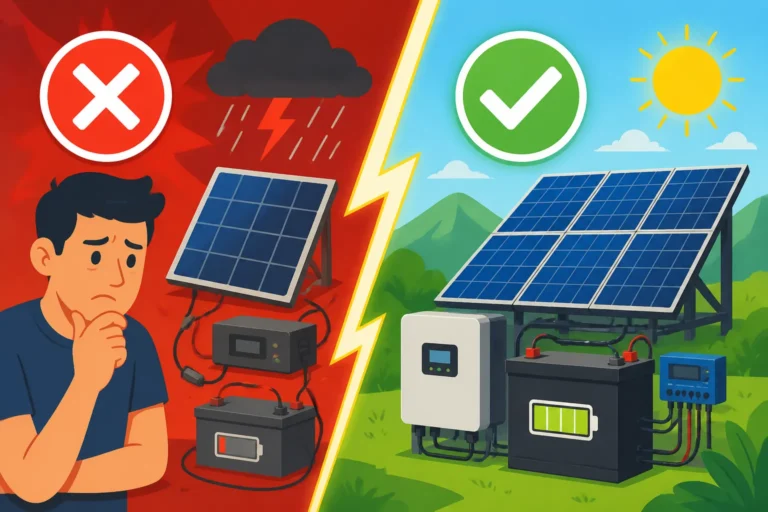
Building a system from individual components (panels, charge controller, inverter, battery bank, wiring, safety devices) offers maximum flexibility, scalability, and often, a lower cost per Watt-hour for larger systems. You can choose exactly the components that meet your specific needs, upgrade individual parts as technology improves, and customize every aspect of your system. However, this approach requires significant electrical knowledge, careful planning, and a willingness to get hands-on with wiring and installation. It also means more space might be needed for separate components and their associated wiring. This method is often preferred for full-time off-grid homesteads with high, consistent power demands. For a deeper dive into this, you might explore DIY vs Professional Off-Grid Solar Cost] or a guide like Off-Grid Solar Installation Guide].
Ultimately, the best choice depends on your technical comfort level, budget, power requirements, and desire for customization versus simplicity. For many, a high-quality solar generator strikes a perfect balance, offering robust power in a user-friendly package that can even be integrated into a larger system down the line.
| Feature / Model Type | Small Portable (e.g., Jackery Explorer 500) | Medium Capacity (e.g., EcoFlow DELTA 2) | Large Capacity (e.g., Anker SOLIX F3800) |
|---|---|---|---|
| Battery Capacity | 300-1000 Wh | 1000-3000 Wh | 3000-6000 Wh+ (Expandable) |
| Inverter Output | 300-1000 W (Pure Sine) | 1000-2400 W (Pure Sine) | 3000-6000 W (Pure Sine) |
| Battery Chemistry | Lithium-ion or LiFePO4 | LiFePO4 | LiFePO4 |
| Solar Input Max | 100-300 W | 500-1000 W | 1000-2400 W |
| AC Fast Charging | Moderate (1-3 hrs) | Fast (0.8-1.5 hrs) | Very Fast (1-2 hrs) |
| Portability | High (Lightweight, carry handle) | Moderate (Heavy, carry handle) | Low (Very heavy, often with wheels) |
| Expandability | Minimal to None | Often expandable via extra batteries | Highly expandable via extra batteries & 240V linking |
| Typical Use | Camping, van life, drone charging, laptop | RVs, small cabins, workshop tools, home backup essentials | Whole home backup, large RV/tiny home, heavy appliances |
| Approx. Cost | $300 – $1000 | $800 – $2500 | $2500 – $4500+ |
Disclaimer
The information provided in this guide is for general informational purposes only and does not constitute professional advice. Off-grid solar systems involve electrical components and can be dangerous if not installed and operated correctly. Always consult with qualified professionals or refer to manufacturer guidelines when installing or operating any solar equipment. Local codes and regulations regarding off-grid power systems vary and should be researched and followed.