Best Off-Grid Solar Systems Reviewed
The dream of powering your own life, free from the constraints and rising costs of the utility grid, is incredibly appealing. But when you start looking into off-grid solar systems, it can quickly feel overwhelming. You’re bombarded with jargon, conflicting advice, and countless options, leaving you wondering where to even begin and what system truly makes sense for your unique situation. This comprehensive guide is here to cut through the confusion, offering a realistic look at the best off-grid solar systems available today and helping you identify the perfect setup to achieve your energy independence.
Understanding Your Off-Grid Needs First
Before you even start looking at specific systems or components, the most crucial step is to deeply understand your own energy requirements. Skipping this stage is like trying to build a house without blueprints – you'll inevitably run into problems, undersize your system, or worse, vastly oversize it and spend a fortune you didn't need to. Every off-grid journey is personal, and your system should reflect that.
Assessing Your Energy Consumption
This is where the rubber meets the road. You need to know exactly how much power you currently use, or realistically plan to use, if you're building new. It's not enough to say "I want to run a fridge and some lights." You need specifics: what size fridge, how many hours per day it runs, what type of lights, how many bulbs, what wattage, and for how long. Think about every single appliance, device, and electrical item you intend to power – from your coffee maker to your laptop, your well pump to your air conditioner.
Start by making a detailed list of all your loads. For each item, find its wattage (usually printed on the appliance itself or in its manual) and estimate how many hours per day or week you plan to use it. Remember that some appliances, like refrigerators or well pumps, have a "starting wattage" (or surge wattage) that can be several times higher than their "running wattage." This surge capability is critical for inverter sizing. Don't forget seasonal variations; you might use more heating or cooling in different times of the year, or have more daylight for charging. Accurately calculating your daily energy usage in watt-hours (Wh) or kilowatt-hours (kWh) is the bedrock of your system design.
Determining Your System Size
Once you have your energy consumption figured out, you can begin to translate that into a system size. This involves calculating how many solar panels you'll need to generate enough power, and how much battery capacity you'll require to store that energy for nighttime use or cloudy days. It's a delicate balance, and there are many resources available, like our guide on how to size an off-grid solar system, that can walk you through the specifics. Generally, your panel array needs to be large enough to generate your daily energy needs and have enough surplus to fully charge your batteries, even accounting for less-than-ideal sun conditions.
For example, if you determine your daily consumption is 5 kWh (5000 Wh), and you live in an area with an average of 5 "peak sun hours" per day, you'd need a minimum of 1000 watts (or 1 kW) of solar panels (5000 Wh / 5 hours = 1000W). However, you'll want to add a buffer for efficiency losses, wiring, and less-than-perfect weather, often oversizing by 20-30%. The same goes for your battery bank; you'll want enough capacity to cover your daily needs for at least 2-3 "days of autonomy" (days without sun) to ensure consistent power, especially if you're looking at something like a full-time cabin setup. Learning how many batteries for an off-grid system is crucial.
Considering Your Location and Climate
Your geographical location plays a massive role in system design and the type of system that will perform best. Different regions have varying amounts of sunlight throughout the year, what we call "peak sun hours." A system designed for sunny Arizona will look very different from one designed for a cabin in the Pacific Northwest, where cloudy days are much more common. Consider average temperatures as well; extreme heat can reduce panel efficiency, while extreme cold can impact battery performance, especially with certain battery chemistries.
For instance, if you're in a northern climate, you'll need to consider how winter's shorter days and lower sun angles impact your solar production. This might mean installing more panels or ensuring you have a larger battery bank to compensate for reduced daily charging. Snow accumulation can also be an issue, requiring ground mounts or adjustable tilt mounts for easier cleaning. Coastal areas might need corrosion-resistant components due to salt air. Understanding these environmental factors will inform your choices, from panel type to battery enclosure, ensuring your system is resilient and reliable in its specific operating environment.
Key Components of an Off-Grid Solar System
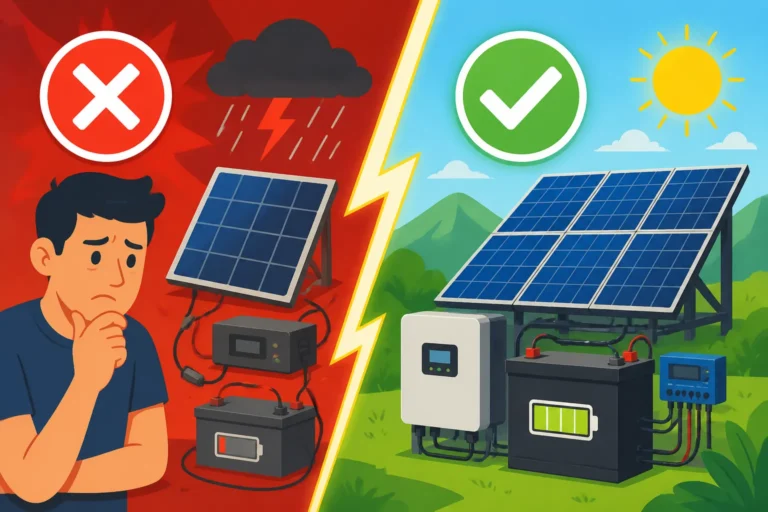
An off-grid solar system isn't just a collection of solar panels; it's a carefully orchestrated symphony of components working together to harvest, store, and deliver power. Understanding each part's role is fundamental to appreciating how different systems are designed and why some might be better suited for you than others.
Solar Panels: The Power Harvesters
These are the most visible part of any solar setup, responsible for converting sunlight into direct current (DC) electricity. Today, the vast majority of solar panels are monocrystalline, known for their high efficiency and sleek, uniform black appearance. Polycrystalline panels, with their speckled blue look, are still around but less common in new off-grid builds due to slightly lower efficiency. The choice between rigid, framed panels and flexible ones often comes down to mounting surface; rigid panels are excellent for roofs and ground mounts, while flexible panels are popular for RVs or curved surfaces where weight and minimal profile are priorities.
When evaluating panels, look at their wattage output (e.g., 100W, 400W), efficiency rating, and temperature coefficient (how much power they lose in heat). Reputable brands like Renogy or Rich Solar offer durable panels suitable for various applications. For off-grid use, robustness is key, as these panels might endure harsher conditions than grid-tied residential arrays. Your panels are the first link in your power chain, so investing in quality here pays dividends in long-term energy production.
Batteries: The Energy Storage Hub
This is arguably the most critical component for any off-grid system, as it's what allows you to use power when the sun isn't shining. Without batteries, your solar system would only be functional during daylight hours. Historically, lead-acid batteries (like flooded or AGM) were the standard, but today, Lithium Iron Phosphate (LiFePO4) batteries have become the gold standard for off-grid applications. They offer superior cycle life (how many times they can be charged and discharged), deeper discharge depths without damage, faster charging, and are significantly lighter and more compact.
While the upfront cost of LiFePOPO4 batteries is higher, their long-term value, reduced maintenance, and increased efficiency often make them the more economical choice over their lifespan. Brands like Battle Born and EG4 have become synonymous with high-quality LiFePO4 batteries. When choosing, consider not just the total amp-hours (Ah) or watt-hours (Wh) capacity, but also the battery's voltage (12V, 24V, 48V) and its internal Battery Management System (BMS), which protects it from overcharging, over-discharging, and temperature extremes. This is a topic so important, we have a whole article on the best off-grid solar batteries.
Inverters and Charge Controllers: The Brains of the Operation
These two components act as the intelligence and muscle behind your off-grid power.
A charge controller is essential for regulating the power flowing from your solar panels to your batteries. It prevents overcharging, which can damage batteries, and optimizes the charging process. There are two main types: PWM (Pulse Width Modulation) and MPPT (Maximum Power Point Tracking). MPPT controllers are more advanced and significantly more efficient, especially in varying light conditions or when your panel voltage is much higher than your battery bank voltage. They can extract up to 30% more power from your panels compared to PWM controllers, making them the preferred choice for most serious off-grid setups.
The inverter takes the DC power stored in your batteries and converts it into AC (alternating current) power, which is what most household appliances use. For off-grid living, you'll almost certainly want a pure sine wave inverter. These produce clean, stable AC power that mimics what you get from the utility grid, making them safe for sensitive electronics like laptops, medical devices, and power tools. Modified sine wave inverters are cheaper but can damage or poorly run many modern appliances. When selecting an inverter, you need to match its continuous wattage output to your anticipated peak load, and ensure it can handle any surge loads from motors or compressors. You can delve deeper into this with resources like our guide on the best off-grid solar inverters.
Types of Off-Grid Solar Systems
The beauty of off-grid solar is its versatility. There isn't a one-size-fits-all solution, and systems come in various configurations designed to meet different needs, skill levels, and budgets. Understanding these distinctions is key to making an informed decision.
All-in-One Solar Generators and Power Stations
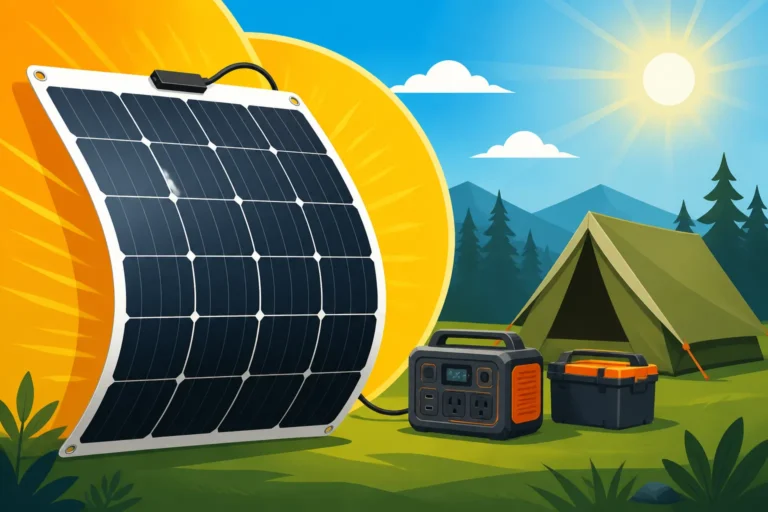
For those seeking simplicity and portability, solar generators or portable power stations are an excellent entry point into off-grid living. These compact units integrate a battery, an inverter, and a charge controller (and sometimes even a small solar panel) into a single, easy-to-use device. They are perfect for camping, van life, emergency backup, or powering small loads in a shed or cabin. Brands like Jackery, EcoFlow, and Bluetti offer a range of sizes, from small units capable of charging phones and laptops to larger ones that can run refrigerators and power tools.
The primary advantages of these units are their plug-and-play nature, requiring minimal electrical knowledge to operate. They are highly portable and often include multiple output ports (AC outlets, USB-A, USB-C, 12V DC). However, they generally have lower overall power output and storage capacity compared to custom-built or larger kit systems, making them less suitable for powering an entire home or high-demand appliances for extended periods. They are fantastic for supplemental power or specific, smaller applications where ease of use is paramount. You can even find specific reviews like the Jackery 2000 Plus for Off-Grid: Specs and Review to help you decide.
Component-Based DIY Systems
For the adventurous and technically inclined, building a system from individual components offers the ultimate in customization, scalability, and often, cost-effectiveness (if you value your own labor). This approach involves sourcing panels, batteries, inverters, and charge controllers separately, then wiring them together according to your specific design. This allows for precise tailoring to your energy needs, the ability to select best-in-class components for each part of the system, and future expandability. Many off-gridders find immense satisfaction in designing and building their own robust power solution.
However, the DIY route requires a significant understanding of electrical principles, wiring diagrams, and safety protocols. Mistakes can be costly and dangerous. You'll need to know how to calculate wire gauges, size fuses and breakers, and properly ground your system. While it offers unparalleled flexibility and learning, it's not for everyone. Resources like "DIY vs Professional Off-Grid Solar Cost" can help you weigh the pros and cons, and a guide on "How to Wire an Off-Grid Solar System" is indispensable if you go this route.
Pre-Configured Off-Grid Solar Kits
Sitting squarely between the simplicity of a solar generator and the complexity of a DIY build are pre-configured off-grid solar kits. These kits typically include a balanced set of panels, batteries, an inverter, and a charge controller, along with necessary wiring and mounting hardware. They're designed to provide a cohesive, compatible system that takes much of the guesswork out of component matching. These kits are often available in various sizes, from small systems for RVs and sheds to larger ones suitable for tiny homes or remote cabins.
Brands like Renogy, EcoFlow (with their Power Kits), and Grape Solar offer comprehensive kits. The main benefit is the peace of mind that all major components are designed to work together, often with clear installation instructions. This reduces the risk of compatibility issues and simplifies the purchasing process. While they offer less customization than a component-based DIY system, they provide a much higher power output and storage capacity than most portable power stations, making them an excellent choice for those who want a reliable, ready-to-install solution without having to become an electrical engineer overnight. Our guide on "Off-Grid Solar Kits: What to Buy" dives deep into these options.
Factors to Evaluate When Reviewing Systems
When you're staring at different off-grid solar systems, trying to figure out which one is "best," it's easy to get lost in specifications. But the real "best" system is the one that meets your needs, budget, and long-term goals. Here are the crucial factors to consider beyond just the raw numbers.
Efficiency and Reliability
Nobody wants a solar system that constantly lets them down, especially when you're relying on it for all your power. Efficiency refers to how well a system converts sunlight into usable electricity and how effectively it stores and delivers that power. High-efficiency panels mean you need fewer panels for the same output, saving space. Efficient inverters and charge controllers mean less power is wasted as heat during conversion. Reliability, on the other hand, speaks to the system's ability to consistently perform over its lifespan without frequent breakdowns or significant performance degradation.
Look for systems with components from well-regarded manufacturers. Read reviews, check product warranties, and research brand reputation. A system might be cheaper upfront, but if its components are unreliable, you'll face higher maintenance costs, frequent replacements, and the stress of power outages. Investing in components known for their durability and efficiency, such as Victron Energy inverters or robust LiFePO4 batteries, often pays off in the long run through consistent performance and fewer headaches. Always consider the long-term track record of the components included in a kit.
Expandability and Scalability
Life changes, and so might your energy needs. What starts as a weekend cabin might become a full-time residence, or your RV setup might expand to include more power-hungry appliances. A truly "best" off-grid solar system should be designed with future growth in mind. Can you easily add more solar panels if your consumption increases? Is the charge controller oversized to accommodate additional panel input later? Can you expand your battery bank by adding more modules?
Systems built on a modular approach, where individual components can be swapped or added, offer the best scalability. For example, some inverter-chargers are designed to stack, allowing you to double your AC output simply by adding another unit. Battery banks, especially with LiFePO4 batteries, are often easy to expand by wiring in parallel. Conversely, all-in-one solar generators, while convenient, are usually limited to their factory-defined capacity and not easily expandable. Thinking ahead about how to add more power to an existing system can save you a complete system overhaul down the line.
Warranty and Customer Support
An off-grid solar system is a significant investment, and like any major purchase, you want assurance that it's protected. Comprehensive warranties on all major components—panels, batteries, inverters, and charge controllers—are non-negotiable. Panels typically come with a 25-year performance warranty, while batteries and inverters might have 5-10 year warranties. Understand what each warranty covers and for how long.
Equally important is the quality of customer support. When you're off-grid and suddenly lose power, you need responsive and knowledgeable help. Research brands known for excellent technical support. Do they offer phone support, online forums, or detailed manuals? Can you easily find replacement parts or get assistance with troubleshooting? Brands that stand behind their products with strong warranties and accessible customer service provide invaluable peace of mind, making your off-grid journey much smoother should any issues arise.
Review of Top Off-Grid Solar System Brands and Solutions
Navigating the landscape of off-grid solar products can feel like a maze, with new brands and technologies emerging constantly. While the "best" is subjective and depends on your specific needs, certain brands and types of solutions have consistently proven themselves in terms of quality, performance, and user satisfaction.
Integrated All-in-One Power Solutions
For those prioritizing simplicity, portability, and ease of use, integrated all-in-one power solutions have revolutionized small-scale off-grid power. These units, often called solar generators or portable power stations, combine a battery, inverter, and charge controller into a single, user-friendly package.
Jackery stands out as a leading brand in this category, offering a range of portable power stations that are highly praised for their reliability, build quality, and intuitive operation. Their Explorer series, for example, comes in various capacities, from the smaller Jackery Explorer 300 perfect for charging drones and laptops on a camping trip, to the more substantial Jackery Explorer 2000 Pro, which can handle a microwave, a mini-fridge, or power tools for extended periods. These units are beloved by RVers, campers, and those needing robust emergency backup. They typically feature multiple AC outlets, DC ports, and USB charging options, making them incredibly versatile. While not designed to power an entire off-grid home, they are fantastic for smaller applications or as a supplemental power source, offering a genuinely plug-and-play experience that makes off-grid power accessible to everyone.
Other notable brands in this space include EcoFlow with their Delta and River series, known for their fast charging capabilities and robust app integration, and Bluetti, offering powerful units like the AC200MAX or EP500 that bridge the gap towards whole-home backup for shorter durations. These solutions are ideal for folks who want to avoid complex wiring and prefer a contained, ready-to-go power source.
Robust Kits for Homes and Cabins
When it comes to providing reliable, consistent power for a cabin, tiny home, or a larger off-grid setup, pre-engineered kits offer a fantastic balance between DIY customization and simplified purchasing. These kits typically include appropriately sized solar panels, a substantial battery bank, a powerful inverter-charger, and a compatible charge controller, along with necessary cables and mounting hardware.
Renogy is a well-known name in this segment, offering a wide array of comprehensive kits designed for various applications, from small cabin systems to larger setups for RVs. Their kits are popular for their value and the compatibility of their components, making them a great starting point for many off-gridders. For instance, a Renogy 3200W kit with a 48V LiFePO4 battery bank and a 3500W inverter would be a solid option for a moderate-use cabin, capable of running lights, a refrigerator, and perhaps a small well pump.
For more sophisticated and expandable systems, particularly those that integrate well with generator backup or future expansion, brands like MidNite Solar and OutBack Power (often paired with panels from companies like Canadian Solar or REC Solar) offer high-quality components. These might be part of more advanced kits or put together by integrators, focusing on durable, long-lasting performance for year-round living. These types of systems are built to withstand the rigors of continuous off-grid operation and are often chosen for properties where reliability is paramount.
Modular Systems for Custom Builds
For the discerning off-gridder who demands ultimate flexibility, performance, and the ability to expand or fine-tune every aspect of their power system, building a modular system from individual, high-quality components is the path. This approach allows for the selection of best-in-class components for each function, leading to a highly efficient and reliable system tailored exactly to your needs.
Victron Energy is widely regarded as a leader in modular off-grid components. Their MultiPlus and Quattro inverter/charger units are celebrated for their robust performance, advanced features, and seamless integration with other Victron components like their SmartSolar MPPT charge controllers and battery monitors. A Victron system can be completely customized, from a small 12V setup to a large, multi-inverter 48V system capable of powering an entire homestead. Their components are known for their exceptional durability, efficiency, and advanced monitoring capabilities via the VictronConnect app, giving users unparalleled control and insight into their power system.
Another strong contender in the modular space, especially for those seeking powerful, hybrid inverter solutions, is Sol-Ark. Their all-in-one inverters (like the Sol-Ark 12K or 15K) combine an inverter, charge controller, and even grid-tie capabilities into a single unit, simplifying wiring while offering immense power and flexibility. While often more expensive, these modular, high-end components are favored by experienced off-gridders and those building permanent, robust power systems where long-term performance and adaptability are key. These systems empower you to build precisely what you need, with the ability to easily upgrade or modify as your power requirements evolve.
Choosing the Right System for Specific Applications
The "best" off-grid solar system isn't a universal truth; it's a personalized solution tailored to your specific use case. What works perfectly for a weekend cabin will be completely inadequate for a full-time family home, and vice versa. Matching the system to its intended application is key to satisfaction and success.
Systems for RVs, Vans, and Mobile Living
Mobile living, whether it's in an RV, a camper van, or a truck camper, presents unique challenges for off-grid solar. Space and weight are often at a premium, and the system needs to withstand constant vibrations and changing environmental conditions. For these applications, simplicity, compactness, and robust design are paramount. Many people starting out in van life or RVing gravitate towards portable solar generators, like a Jackery Explorer 1500 or one of EcoFlow's Delta series, as a primary or supplemental power source. These are great for charging electronics, running a small fridge, or powering a fan.
For more extensive mobile setups, especially for full-time RV living, a dedicated solar kit with rigid panels, a powerful LiFePO4 battery bank, and a pure sine wave inverter is usually the better choice. Brands like Renogy and BougeRV offer kits specifically designed for RVs, complete with mounting hardware and marine-grade wiring. Flexible solar panels can be a good option for curved RV roofs or situations where minimizing height is critical. When sizing for an RV, consider appliances like mini-splits for AC, microwaves, and induction cooktops, all of which demand significant power. Think about how much solar to run an air conditioner, for example, as this is often the biggest power hog.
Systems for Remote Cabins and Tiny Homes
A remote cabin or tiny home often serves as a weekend escape or a seasonal residence, with power needs that are generally more substantial than mobile setups but less than a full-sized home. Reliability for a few days to a week without sun, and the ability to run essential appliances like a refrigerator, lights, water pump, and perhaps a small microwave, are typical requirements.
For these scenarios, a pre-configured off-grid solar kit from brands like Renogy or Grape Solar can be an excellent starting point. A typical setup might include 1000W to 3000W of solar panels, 200Ah to 600Ah of 24V or 48V LiFePO4 batteries, and a 2000W to 5000W pure sine wave inverter-charger. These kits are often designed to handle intermittent use with sufficient storage for cloudy days. For cabins in colder climates, special attention should be paid to battery enclosures to protect them from freezing temperatures. It's also wise to consider how much an off-grid solar system costs for a cabin specifically, as this can inform your budget. For critical loads like a well pump, ensure your inverter has a high surge capacity.
Systems for Full-Time Off-Grid Residences
Powering a full-time off-grid home demands a robust, highly reliable, and often expandable system that can support daily life for a family. This means accommodating everything from kitchen appliances and laundry machines to HVAC systems and home offices. These systems are typically larger, more complex, and often involve a professional design or installation.
A full-time off-grid residence will likely require 5000W to 15,000W (or more) of solar panels, a substantial 48V LiFePO4 battery bank (often 800Ah to 2000Ah or higher), and a powerful, high-quality inverter-charger system from brands like Victron Energy or Sol-Ark. These inverter-chargers are designed for continuous duty, often have advanced features like generator auto-start, and can manage multiple power sources seamlessly. Backup generators are almost always integrated into full-time off-grid home systems to provide an alternative power source during extended periods of low solar production, such as during winter storms or long cloudy spells. Designing for year-round reliability and comfort is paramount, and considering factors like "How to design for year-round off-grid power" becomes critical.
| Application Type | Typical Solar Panel Wattage | Typical Battery Capacity | Recommended Inverter Type | Key Considerations | Example Brands/Solutions |
|---|---|---|---|---|---|
| Mobile (RV, Van Life) | 100W – 1000W | 50Ah – 300Ah (12V) | Pure Sine Wave (Portable) | Space, weight, vibrations, portability, charging | Jackery, EcoFlow, Renogy (RV kits) |
| Remote Cabin/Tiny Home | 1000W – 4000W | 200Ah – 800Ah (24/48V) | Pure Sine Wave | Essential appliances, cloudy day autonomy, climate | Renogy, Grape Solar (kits), MidNite Solar (components) |
| Full-Time Residence | 5000W – 15000W+ | 800Ah – 2000Ah+ (48V) | Pure Sine Wave (High Power) | Full household loads, generator integration, expandability | Victron Energy, Sol-Ark, OutBack Power (modular) |
| Emergency Backup | 100W – 500W (Portable) | 50Ah – 200Ah (12V) | Pure Sine Wave (Portable) | Quick setup, long shelf life, reliability | Jackery, Bluetti, Goal Zero |
Installation Considerations and Long-Term Ownership
Getting your off-grid solar system up and running is just the beginning. The installation process itself, and the commitment to long-term ownership, maintenance, and compliance, are vital parts of ensuring your system remains efficient, safe, and reliable for years to come. Overlooking these aspects can lead to costly mistakes and ongoing headaches.
DIY versus Professional Installation
Deciding whether to install your off-grid solar system yourself or hire professionals is one of the biggest choices you'll make. A DIY installation can significantly reduce your upfront costs, sometimes by 30-50%, and provides invaluable hands-on learning and a deep understanding of your system. For smaller systems, like those for RVs or basic sheds, a DIY approach is often feasible for those with a good grasp of basic electrical principles and a willingness to learn. Many off-grid solar kits come with comprehensive instructions, and online communities offer a wealth of support.
However, complex systems, especially those for full-time homes or requiring integration with existing electrical panels, demand a higher level of expertise. Incorrect wiring can be dangerous, lead to system failures, or even void warranties. Hiring a licensed electrician or a solar installer experienced with off-grid systems ensures that your system is installed safely, correctly, and to code. While more expensive, this option provides peace of mind and often includes post-installation support. Before committing to DIY, honestly assess your skills, time availability, and comfort level with electrical work. Our guide on "How to install an off-grid solar system" offers a step-by-step look at the process.
Maintenance and Longevity
An off-grid solar system, especially one you rely on daily, isn't a "set it and forget it" solution. Regular maintenance is key to maximizing its lifespan and ensuring optimal performance. Solar panels need to be kept clean of dust, dirt, leaves, and snow to ensure they're absorbing maximum sunlight. This is especially true in areas with heavy pollen or frequent dust storms.
Batteries, particularly older lead-acid types, require periodic checks of water levels and terminal cleaning. While LiFePO4 batteries are largely maintenance-free, it's still good practice to monitor their performance via a battery monitor and keep their connections clean. Inverters and charge controllers should be kept in well-ventilated areas, free from excessive heat or moisture. Periodically checking all wiring for loose connections, corrosion, or signs of rodent damage is also important. Understanding common "Off-Grid Solar Maintenance Costs" and adhering to a maintenance schedule will dramatically extend the life and efficiency of your system.
Understanding Permits and Codes
This is often the least exciting but most crucial aspect of off-grid solar ownership, especially for permanent structures. While the appeal of off-grid living often stems from a desire for independence from regulations, the reality is that local building codes and electrical permits still apply to many off-grid installations, particularly those connected to a dwelling.
Permit requirements vary widely by state, county, and even municipality. Some areas are very relaxed about off-grid systems not tied to the utility grid, while others require full electrical and building permits, inspections, and adherence to the National Electrical Code (NEC) or local equivalents. For example, in many parts of Arizona, a small off-grid cabin might have fewer hurdles than a full-sized off-grid home in California. Failure to obtain necessary permits can result in fines, forced system removal, or difficulties with insurance or future property sales. Always check with your local planning and building departments early in your project to understand what's required for your specific location. Don't assume that because you're "off-grid," you're exempt from all regulations.
Budgeting for Your Off-Grid Solar System
Let's be realistic: going off-grid isn't always cheap. The upfront investment can be substantial, and understanding where your money is going is crucial for effective budgeting. However, it's also important to look beyond the initial sticker price and consider the long-term financial picture.
Initial Investment versus Long-Term Savings
The initial cost of an off-grid solar system can range dramatically. A small, portable Jackery power station and a foldable panel might cost a few hundred dollars, suitable for minimal power needs. A comprehensive kit for a cabin could be anywhere from $5,000 to $20,000. A robust, custom-designed system for a full-time off-grid home, including professional installation, could easily run $25,000 to $80,000 or more, depending on your energy consumption and component choices. The biggest cost drivers are typically the battery bank and the inverter. For a deeper dive, consider reading "How much does an off-grid solar system cost."
However, the long-term savings can be significant. Once your system is installed, you eliminate monthly electricity bills from a utility company. For remote properties, the cost of extending utility power lines can be astronomical – often tens of thousands of dollars per mile. In these cases, off-grid solar can be the cheaper option upfront and certainly in the long run. The payback period for off-grid solar systems, while highly variable, often makes them a wise financial decision, especially as electricity rates continue to climb. Furthermore, energy independence offers a value that often transcends purely financial metrics, providing security and self-reliance.
Hidden Costs to Anticipate
While the main components (panels, batteries, inverter, charge controller) are the big-ticket items, it's vital to budget for several "hidden" or often overlooked costs that can quickly add up. These include:
- Wiring and Electrical Components: Fuses, breakers, disconnect switches, and high-gauge copper wiring can be surprisingly expensive, especially for larger systems or long cable runs. Don't skimp on safety here.
- Mounting Hardware: Racking for ground mounts or roof mounts, adjustable tilt mechanisms, and concrete for foundations all add to the cost.
- Permit Fees and Inspection Costs: As discussed, these can be significant depending on your location.
- Tools: If you're doing a DIY installation, you might need specialized tools like crimpers, multimeters, and wire strippers.
- Shipping: Large, heavy components like batteries and panels can incur substantial shipping fees, especially to remote locations.
- Backup Generator: Many off-grid homes include a generator for supplemental power during extended cloudy periods. This is an additional upfront cost and ongoing fuel expense.
- Maintenance Supplies: Battery distilled water (for flooded lead-acid), cleaning supplies for panels, and potential replacement parts over time.
- System Expansion: If you plan to expand later, ensure you budget not just for the new components but also for any associated labor or wiring upgrades.
By carefully considering all these factors, you can create a realistic budget that prevents unwelcome surprises and ensures your off-grid solar journey is a smooth and successful one.
Disclaimer
The information provided in this guide is intended for general informational and educational purposes only and should not be considered professional electrical advice. Off-grid solar system design and installation can be complex and potentially dangerous. Always consult with a qualified solar professional or licensed electrician for specific guidance tailored to your situation and ensure all installations comply with local codes and regulations.