Off-Grid Solar Cost for a Boat
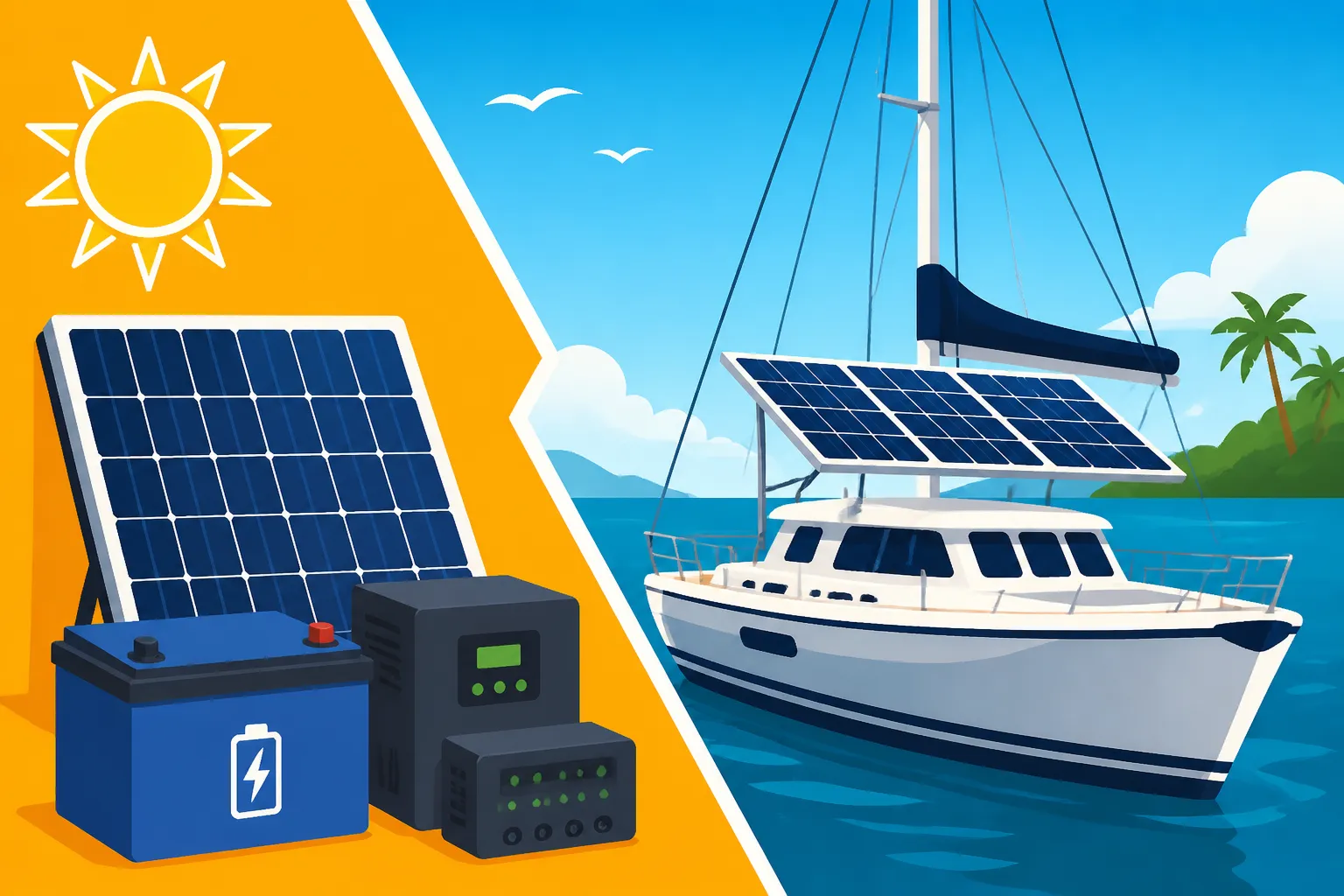
Ah, the open water! There's truly nothing quite like the freedom of sailing or cruising, leaving the land-locked worries behind. But let's be honest, that freedom often comes with a tether – a power cord back to shore or the constant hum of a noisy, fuel-guzzling generator. Breaking free from those limitations to enjoy true off-grid living on the water with solar power is a dream for many boat owners, but the question of "how much will it actually cost?" can feel like navigating through a fog bank. This comprehensive guide is here to clear the air, breaking down the specific costs and considerations for adding off-grid solar to your boat, from a small sailboat to a larger cruising vessel.
Understanding the Unique Challenges of Boat Solar
Before we dive into the numbers, it's crucial to acknowledge that setting up an off-grid solar system on a boat isn't quite the same as doing it on a cabin or an RV. The marine environment throws a few curveballs that significantly impact component choices, installation methods, and ultimately, your budget.
Space and Mounting Limitations
One of the first things you'll realize on a boat is that real estate is at a premium. Unlike a sprawling rooftop or a wide-open field, boats offer limited, often curved, and sometimes shaded surfaces for solar panels. This isn't just an aesthetic challenge; it directly influences the type and number of panels you can install.
You might be considering rigid, glass-fronted panels, which are highly efficient and durable, but their fixed size and weight can be prohibitive on smaller boats or areas subject to heavy seas. Flexible or semi-flexible panels become attractive options here, allowing conformity to curved decks or bimini tops, though they often come with a higher cost per watt and potentially shorter lifespans due to heat dissipation challenges. Furthermore, ensuring adequate airflow underneath panels, especially flexible ones, is vital to prevent overheating, which drastically reduces their efficiency. When you're trying to maximize every available square inch, deciding between a few large, rigid panels mounted on a radar arch or several smaller, flexible panels glued to the deck becomes a critical design and cost consideration.
Environmental Factors and Durability
The marine environment is notoriously harsh on electronics and exposed equipment. Saltwater, whether from spray or direct splashes, is highly corrosive and can quickly degrade standard components not designed for such conditions. UV radiation from the sun is also far more intense on the water, causing plastics to become brittle, sealants to crack, and wiring insulation to break down over time.
Beyond corrosion and UV, boats are constantly in motion. The vibrations from engines, wave action, and even heavy winds put continuous stress on mounting hardware, electrical connections, and the panels themselves. This means that every component in your off-grid solar system – from the panels and wiring to the charge controller and inverter – must be marine-grade or explicitly designed to withstand these extreme conditions. Investing in higher-quality, more robust equipment upfront might seem like a bigger initial expense, but it can save you significant repair and replacement costs down the line, not to mention ensuring the reliability of your power system when you're far from shore.
Power Needs for Marine Lifestyles
What you need to power on a boat can vary dramatically, from simply charging a phone and running navigation lights to supporting a full liveaboard lifestyle with refrigeration, a watermaker, and even air conditioning. Marine systems often operate on 12V or 24V DC for many critical loads (like instruments, lights, pumps), but you'll likely need an inverter for any AC appliances you bring aboard, such as a microwave, blender, or laptop charger.
Performing a thorough Off-Grid Solar Load Calculation Explained is the absolute first step in determining your system's size and, therefore, its cost. Consider everything you run: how many hours a day does your fridge cycle? What's the wattage of your autopilot, and how long is it active? Are you running a powerful VHF radio or a SSB transceiver for communication? The cumulative daily watt-hours will dictate how many solar panels you need to generate sufficient power and how large your battery bank needs to be to store it. Underestimating your power needs leads to frustration, dead batteries, and the need for costly upgrades or supplemental charging methods.
Core Components and Their Associated Costs
An off-grid solar system for your boat consists of several key components, each with its own price tag and considerations specific to the marine world.
Solar Panels for Marine Use
The cost of solar panels themselves has come down significantly over the years, but marine-grade panels or those suitable for boat installation still carry a premium due to their durability requirements. You'll typically find three main types:
- Rigid Panels: These are the most common and cost-effective per watt, offering the best efficiency and longest lifespan. They are encased in an aluminum frame and glass, making them robust. On a boat, they typically require a sturdy mounting structure, often on a radar arch, hardtop, or custom stainless steel frame. Expect to pay anywhere from $0.70 to $1.50 per watt for quality rigid panels. For a 100W panel, that's roughly $70-$150. Brands like Renogy and HQST offer reliable options that are often used in marine settings, and you can often find competitive prices on platforms like Amazon for these.
- Flexible/Semi-Flexible Panels: These are popular for boats with curved surfaces or where weight and permanent mounting are concerns. They can be glued directly to the deck or bimini fabric, offering a sleek, low-profile look. However, they are generally less efficient, can suffer from heat degradation if not properly ventilated, and have a shorter lifespan than rigid panels. They also tend to be more expensive per watt, ranging from $2.00 to $4.00 per watt or more. For example, a 100W flexible panel might cost $200-$400.
- Portable Panels: These are excellent for supplementary power or for smaller boats with very minimal needs. They can be set up when anchored or moored and stowed away when underway. While not part of a permanent off-grid system, they can reduce the need for a larger fixed array. Brands like Jackery offer portable solar panels that integrate well with their solar generators, providing a quick and easy way to add power, though their cost per watt can be higher for the convenience they offer.
Choosing the right type depends heavily on your boat's design, available space, and budget. For example, a larger cruising catamaran might easily accommodate several rigid panels on its hardtop, offering excellent power output, whereas a smaller sailboat might rely on flexible panels on its cabin top and a portable array when at anchor.
Battery Bank for Reliable Storage
The battery bank is often the single most expensive component in an off-grid solar system, and for good reason: it's where all that precious solar energy is stored for use, especially during cloudy days or at night. The cost of an off-grid solar battery bank depends primarily on its chemistry, capacity (amp-hours), and voltage.
- Lead-Acid Batteries (AGM/Gel): These are traditionally the most common and cheapest upfront option for boats. AGM (Absorbed Glass Mat) and Gel batteries are sealed, maintenance-free, and can withstand vibrations better than flooded lead-acid. However, they have a shorter cycle life (typically 300-1000 cycles) and should only be discharged to about 50% of their capacity to prolong their life. This means you need double the rated capacity for the usable power. Costs range from $200-$500 per 100Ah (12V).
- LiFePO4 Batteries (Lithium Iron Phosphate): While significantly more expensive upfront, LiFePO4 batteries offer a far superior return on investment in the long run. They are lighter, have a much longer cycle life (2,000-5,000+ cycles), can be discharged to 80-100% of their capacity without damage, and maintain a consistent voltage output. This means a smaller LiFePO4 bank can often provide the same usable power as a much larger lead-acid bank. Expect to pay $800-$1,500+ per 100Ah (12V). Brands like Battle Born and EG4 are highly regarded for their marine and off-grid applications. For a comprehensive comparison, you might want to look into topics like LiFePO4 vs Lead-Acid Battery Cost.
For a typical cruising sailboat needing, say, 200-400 usable amp-hours at 12V, a lead-acid bank might cost $800-$2,000 initially, while a LiFePO4 bank with equivalent usable capacity could easily run $2,000-$6,000. However, considering the longevity, weight savings, and performance benefits, many boaters find the higher initial cost of lithium well worth it. You can explore a deeper dive into these specifics by checking out How Battery Choice Affects Off-Grid Cost.
Charge Controller and Inverter Essentials
These are the brains and brawn of your electrical system, managing the flow of power.
- Charge Controller: This device regulates the voltage and current coming from your solar panels to prevent overcharging your batteries. There are two main types:
- PWM (Pulse Width Modulation) controllers are simpler, cheaper (typically $50-$150), and less efficient (around 70-80%). They are generally suitable for smaller systems or if your panel voltage closely matches your battery bank voltage.
- MPPT (Maximum Power Point Tracking) controllers are more sophisticated, more efficient (90-99%), and can handle higher panel voltages, converting them efficiently to battery voltage. They are almost always recommended for larger systems or if you have multiple panels wired in series. Expect to pay $150-$500+ for a good MPPT controller. The cost of a charge controller is a vital part of your overall budget.
- Inverter: An inverter converts the DC power from your batteries into AC power for standard household appliances.
- Pure Sine Wave Inverters produce clean power identical to what you get from the grid, making them suitable for sensitive electronics like laptops, medical devices, and microwaves. These are highly recommended for any significant AC loads on a boat. Costs can range from $200 for a small 500W unit to $1,000-$3,000+ for large 2000W-5000W units.
- Modified Sine Wave Inverters are cheaper (often under $100 for small units) but produce a "choppy" waveform that can damage sensitive electronics, reduce the efficiency of motors, and cause buzzing in some appliances. They are generally not recommended for marine off-grid systems unless you only power simple resistive loads like lights or basic chargers. You can learn more about this component in detail within our guide on the Cost of an Off-Grid Solar Inverter.
Many modern marine off-grid setups opt for an inverter/charger combination unit, which integrates both an inverter and a sophisticated battery charger. These units can seamlessly switch between shore power, generator power, and inverter power, often providing advanced battery management. While more expensive upfront (typically $1,000-$4,000+), they simplify wiring and offer robust performance, especially from brands like Victron Energy or Magnum Energy, which are stalwarts in the marine industry.
Auxiliary Equipment and Installation Costs
Beyond the core components, there's a myriad of smaller but essential items, plus the labor if you're not going the DIY route, that will add to your total Off-Grid Solar Cost: Complete Breakdown. Don't skimp on these details, as they are crucial for safety and system longevity.
Wiring, Fuses, and Connectors
You cannot underestimate the importance of proper wiring and safety components in a marine environment. Saltwater spray, high humidity, and constant motion mean your electrical connections need to be impeccable and marine-grade.
- Marine-Grade Wiring: Standard automotive or household wiring is simply not sufficient. Marine-grade wiring uses tinned copper to resist corrosion and thicker insulation for better durability against abrasion and environmental exposure. The gauge (thickness) of your wire is critical to minimize voltage drop and prevent overheating, especially over longer runs from panels to the charge controller or from batteries to the inverter. Incorrect wire sizing can lead to significant power loss and, more dangerously, fire hazards. Expect to pay a premium for marine-grade wire, easily $1-$5 per foot depending on the gauge, and you'll need many feet.
- Fuses and Breakers: Every major component and circuit needs appropriate overcurrent protection. This includes fuses for your solar panels (inline fuses or a combiner box with breakers), a main fuse/breaker for your battery bank, and individual circuit breakers for AC and DC loads. These protect your expensive equipment and, more importantly, prevent electrical fires. Marine-grade fuse holders, busbars, and circuit breakers designed for harsh environments are non-negotiable. Quality components can add $100-$500+ to your bill, but they are absolutely essential safety devices.
- Connectors: MC4 connectors for solar panels are standard, but ensure they are sealed properly to prevent moisture ingress. Battery terminals, busbars, and other connections should be robust, tinned, and protected with heat shrink or marine-grade dielectric grease. Little details like quality crimp tools for making secure connections can save you headaches and failures down the line.
Skimping on these items is a common and dangerous mistake. The cost of these seemingly small parts can quickly add up to $300-$1,000+ depending on system size and complexity, but they are an investment in safety and reliability.
Mounting Hardware and Accessories
How your panels are secured to your boat is critical. They need to withstand high winds, saltwater exposure, and constant vibrations without failing.
- Stainless Steel Mounts: If you're using rigid panels, you'll need robust mounting brackets made of 316 stainless steel to resist corrosion. These can be fixed, tilt-adjustable, or part of a custom frame built for a radar arch or davits. Adjustable tilt mounts are fantastic for optimizing panel angle to catch more sun, especially in higher latitudes or during different seasons, but they add complexity and cost. Depending on the complexity and number of panels, mounting hardware can cost $100-$500+. Custom fabrication for a large arch or frame can easily run into the thousands.
- Deck Glands and Sealants: Any penetrations through your deck or cabin roof for wiring must be absolutely watertight. High-quality marine deck glands and UV-resistant, flexible sealants (like 3M 4200 or 5200) are essential to prevent leaks. These are small costs individually ($20-$50 per gland, $15-$30 per tube of sealant) but critical for protecting your boat's interior.
- Other Accessories: Don't forget items like a battery monitor (essential for knowing your battery's state of charge, especially with lithium, often $100-$300), battery boxes for ventilation and protection (if using lead-acid), and perhaps a small cooling fan for your inverter if it's in a confined space.
These auxiliary items collectively add anywhere from $200 to $1,500+ to your total project cost, depending on the scale and custom requirements.
Professional Installation vs. DIY Savings
This is a significant fork in the road for your budget. The decision to go with a DIY vs Professional Off-Grid Solar Cost can swing your total expenditure by thousands of dollars.
- Professional Installation: Hiring a certified marine electrician or a specialist solar installer familiar with boat systems guarantees a safe, properly sized, and code-compliant installation. They have the expertise to select the right components, optimize panel placement, correctly size wiring, ensure proper grounding, and troubleshoot any issues. This is highly recommended for complex systems or if you're not confident in your electrical skills. However, labor costs are substantial, often ranging from $1,000 to $5,000+, depending on the complexity of your boat and system. A professional will also factor in travel time, specialized tools, and their insurance.
- DIY Installation: For those with electrical knowledge and a keen eye for detail, doing it yourself can save a considerable amount on labor. Many boaters successfully install their own systems, especially smaller ones. Resources like online forums, YouTube tutorials, and comprehensive guides on How to Install an Off-Grid Solar System can provide invaluable assistance. The savings are obvious: you're only paying for parts. However, the risks include improper wiring, potential damage to components, safety hazards (fire, electrocution), and voiding equipment warranties. You also need to factor in the cost of specialized tools you might not own, like a good crimper, multimeter, and wire strippers.
For instance, a smaller system for a weekend cruiser might be a manageable DIY project, potentially saving you over a thousand dollars. But for a full-time liveaboard setup with multiple inverters and a large battery bank, hiring a professional for critical parts of the installation or at least for a final inspection is a wise investment.
Sizing Your Boat's Off-Grid Solar System and Budgeting
Getting the sizing right is paramount to satisfaction and avoiding costly reworks. A properly sized system ensures you have enough power without overspending on unnecessary capacity.
Calculating Your Marine Energy Needs
This is where your Off-Grid Solar Load Calculation Explained comes into play, and it's a critical step. You need to identify every appliance and electronic device you plan to run, determine its wattage, and estimate how many hours per day it will operate. This calculation will give you your total daily watt-hours (Wh) consumption.
Let's take some common marine examples:
- Navigation Electronics: Chartplotter (15-30W for 10-12 hours/day), Autopilot (10-60W for 5-10 hours/day, higher during active steering).
- Refrigeration: A marine DC compressor fridge/freezer (40-60W, but cycling on and off, so maybe 8-12 Ah per hour when running, or 30-80Ah per day total depending on insulation and ambient temp). This is often the biggest power hog.
- Lighting: LED lights (2-10W each for a few hours/day).
- Water Pump: (30-60W for 1-2 hours/day).
- Communication: VHF radio (5W standby, 25W transmit for short bursts), Starlink (50-100W for continuous use).
- Entertainment/Charging: Laptop (30-60W for several hours), phone chargers (5-15W intermittently).
Once you have your total daily watt-hours, you can work backward to determine your battery bank capacity (allowing for days of autonomy) and the solar array size required to replenish that power, accounting for "peak sun hours" in your cruising region. An undersized system will always leave you wanting more, often leading to the need for a generator, which defeats the purpose of off-grid solar. Our guide on How to Size an Off-Grid Solar System provides a detailed walkthrough for this process.
System Size and Capacity Estimates
Based on your calculated needs, off-grid solar systems for boats generally fall into a few categories:
- Small Systems (100W – 400W): These are typically for basic needs on smaller boats or weekenders. They might power nav lights, charge phones, and run a small fan or portable cooler.
- Estimated Cost: $800 – $2,500 for panels, small LiFePO4 battery (50-100Ah), a PWM or small MPPT charge controller, and a small inverter (300-600W). If you're curious about specific capabilities, check out What a 400W Off-Grid System Can Power and Cost.
- Medium Systems (500W – 1000W): Ideal for cruisers with refrigeration, extensive lighting, navigation electronics, and some AC loads (laptop, microwave for occasional use). This level often suits liveaboards who are conscious of their consumption.
- Estimated Cost: $3,000 – $8,000+ for 200-400Ah LiFePO4 batteries, a robust MPPT charge controller, a 1000W-2000W pure sine wave inverter, and sufficient panels.
- Large Systems (1000W+): For full-time liveaboards with higher consumption, including multiple large appliances, watermakers, and potentially even limited air conditioning. These systems often utilize a 24V or 48V battery bank for efficiency with high-wattage devices.
- Estimated Cost: $8,000 – $20,000+ for 400Ah+ LiFePO4 batteries, a high-capacity MPPT controller, a 2000W-5000W pure sine wave inverter (often an inverter/charger combo), and a substantial solar array.
These ranges are for components only. Add an additional 20-50% for installation costs if you're hiring professionals.
Budgeting for Real-World Scenarios
When you're putting together your budget, it's easy to focus only on the initial purchase. But real-world off-grid living, especially on a boat, means thinking long-term.
- Initial Investment: This covers all the components, mounting hardware, wiring, and potentially professional installation. This is the biggest lump sum.
- Ongoing Maintenance: While solar panels themselves require minimal maintenance (mostly cleaning), other components will need attention. Batteries, especially lead-acid, need regular monitoring. Inverters and charge controllers should be checked for corrosion or loose connections. This will factor into your Off-Grid Solar Maintenance Costs.
- Replacement Costs: Batteries have a finite lifespan. You'll eventually face the Cost to Replace Off-Grid Solar Batteries. LiFePO4 batteries offer a better long-term value here due to their extended cycle life. Other components like inverters or charge controllers might also need replacement after many years of service. It’s wise to factor in a contingency fund for these inevitable expenses.
- Expandability: Many boaters start with a smaller system and expand as their needs or budget allows. Designing your initial system with future expansion in mind (e.g., oversizing your charge controller slightly, leaving space for more panels) can save you money and hassle later. This ties into the Cost of Expanding an Off-Grid System and is a smart way to budget.
Consider a hypothetical liveaboard couple on a 40-foot sailboat. They want to run a 12V marine fridge, lights, nav instruments, charge laptops/phones, and occasionally use a blender. They estimate 250Ah of usable power daily. They'd likely opt for a 400Ah 12V LiFePO4 battery bank, a 600W solar array (3-4 rigid 200W panels), a 60A MPPT charge controller, and a 2000W pure sine wave inverter. The component cost alone for this setup could easily be in the $7,000-$12,000 range before installation.
| Component Category | Small System (100-400W) | Medium System (500-1000W) | Large System (1000W+) |
|---|---|---|---|
| Solar Panels | $200 – $800 | $700 – $1,500 | $1,500 – $4,000+ |
| Battery Bank (usable Ah) | $600 – $1,500 (50-100Ah LiFePO4) | $2,000 – $4,500 (200-400Ah LiFePO4) | $4,500 – $10,000+ (400Ah+ LiFePO4) |
| Charge Controller | $50 – $200 | $200 – $500 | $400 – $1,000+ |
| Inverter | $100 – $300 (Pure Sine) | $500 – $1,500 (Pure Sine) | $1,500 – $4,000+ (Inverter/Charger) |
| Wiring, Fuses, Mounts | $200 – $500 | $400 – $1,000 | $800 – $2,500+ |
| Total Components (Est.) | $1,150 – $3,300 | $3,800 – $9,000 | $8,700 – $21,500+ |
| Professional Install (Est.) | $500 – $1,500 | $1,500 – $4,000 | $3,000 – $8,000+ |
| Grand Total (Est.) | $1,650 – $4,800 | $5,300 – $13,000 | $11,700 – $29,500+ |
Note: These are estimated ranges and can vary significantly based on component brands, market fluctuations, and specific boat requirements.
Optimizing Costs and Maximizing Performance
Going off-grid on a boat is an investment, but there are smart ways to manage costs and ensure your system delivers the best possible performance for your dollar.
Smart Appliance Choices and Energy Conservation
The cheapest watt-hour is the one you don't use! Before adding more panels or batteries, critically evaluate your energy consumption.
- High-Efficiency Marine Appliances: Modern marine appliances are often designed with efficiency in mind. Investing in a high-efficiency DC marine fridge, LED lighting throughout, and energy-star rated electronics for AC loads can drastically reduce your overall power demand. For example, replacing old incandescent lights with LEDs can cut lighting power consumption by 80-90%.
- Insulation is Key: For refrigeration, superior insulation means your compressor runs less often. Adding extra insulation around your existing icebox can make a huge difference in power draw, far more cost-effectively than adding another solar panel.
- Eliminate Phantom Loads: Many devices draw power even when turned off or in standby mode (think phone chargers, TVs, stereo systems). Unplugging them or using switched outlets can save a surprising amount of power over a day. A battery monitor is invaluable for identifying these silent energy vampires.
- Mindful Usage: Simple habits like planning cooking to coincide with peak solar production, running the watermaker during sunny hours, and limiting unnecessary electronics use can significantly extend your autonomy. You don't always need a giant system if you're smart about your usage.
Focusing on energy conservation first can often allow you to design a smaller, more affordable solar system that still meets all your needs.
Expanding Your System Over Time
You don't have to build your dream system all at once. A phased approach can help spread out the financial burden and allow you to learn what you truly need.
- Start Small, Scale Up: Many boaters begin with a basic system to cover essential loads like navigation, communication, and lighting. They might install a couple of solar panels, a charge controller, and a basic battery bank. Once they get a feel for their actual consumption and how the system performs in different conditions, they can decide where to expand. You can always add more panels to increase generation or additional battery modules to boost storage capacity later.
- Modular Components: Choosing modular components, especially LiFePO4 batteries, makes expansion much easier. Many lithium battery systems allow you to add more batteries in parallel to increase your total amp-hour capacity without redesigning the entire system. Similarly, selecting a charge controller with a higher capacity than your initial panel array can mean you simply add more panels later without needing a new controller. Planning for Cost of Expanding an Off-Grid System from the outset makes future upgrades seamless and often more cost-effective.
- Invest in Quality Core Components: Even if you start small, invest in high-quality core components like a good MPPT charge controller and a pure sine wave inverter. These are typically the hardest and most expensive to upgrade or replace, and a reliable foundation will serve you well as you grow your system.
Leveraging Portability and Hybrid Solutions
Sometimes, pure solar isn't enough, or you want the flexibility of backup power. Hybrid solutions often offer the best balance of cost, convenience, and reliability.
- Portable Solar Panels and Generators: For those occasional high-demand days, or when you're anchored in a heavily shaded cove, a portable solar panel like those offered by Jackery can be a great supplementary power source. They are easy to deploy and pack away, and can provide a decent boost to your battery bank. For heavier loads or prolonged cloudy spells, a small, quiet marine generator (gas or diesel) can be an invaluable backup, quickly recharging your batteries and powering large AC loads like a water heater or air conditioning. While this isn't strictly "off-grid," it provides critical redundancy and peace of mind without needing an oversized and expensive solar array.
- Shore Power Integration: Even with a robust off-grid system, you'll likely still connect to shore power occasionally in marinas. An inverter/charger combination unit can seamlessly manage charging your batteries from shore power, solar, or a generator, giving you maximum flexibility and ensuring your batteries are always topped up when available.
- Wind Generators: For cruising sailors, a small wind generator can be a fantastic complement to solar, especially in windy anchorages or at night when solar panels aren't producing. They provide continuous charging, reducing reliance on the engine or a generator. While they come with their own installation costs and noise considerations, they offer another avenue for sustainable power generation.
Integrating these various power sources gives you a robust energy strategy, ensuring you always have power regardless of the weather or your specific demands.
Disclaimer
Please remember that the information provided in this guide is for informational purposes only. Off-grid solar system design and installation can be complex and should always be undertaken with caution. Consult with certified marine electricians or solar professionals to ensure your system is safely and correctly designed and installed, adhering to all applicable electrical codes and marine standards. Incorrect installation can lead to equipment damage, fire hazards, or serious injury.