Is Off-Grid Solar Cost-Effective for a Hunting Cabin
Getting reliable power to a remote hunting cabin can feel like an impossible puzzle, often leaving you wondering if it's even worth the effort and expense. The frustration of needing power for basic comforts, lights, or even just charging a phone, only to be miles from the nearest grid connection, is a common one. This comprehensive guide will explore whether an off-grid solar system is truly a cost-effective solution for your hunting cabin, breaking down the financial aspects and practical considerations you need to weigh.
Understanding Your Cabin's Energy Needs and Usage Patterns
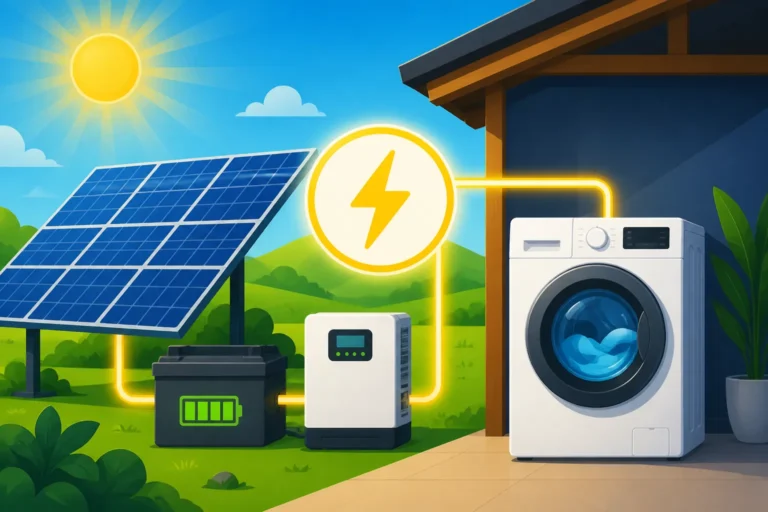
Before you even think about buying solar panels or batteries, the absolute first step in determining cost-effectiveness is to understand what you actually need to power at your hunting cabin, and how often. Many folks jump straight to equipment, but without a clear picture of your energy appetite, you're either going to vastly undersize your system (leading to constant frustration) or wildly oversize it (wasting money).
Identifying Essential Loads and Bare Necessities
When you're at a hunting cabin, chances are you're not trying to replicate your full-time home's electrical setup. Most cabin owners are looking for convenience, safety, and a few comforts. Think about the absolute must-haves:
- Lighting: This is usually top of the list. Instead of propane lanterns or flashlights, a few LED light bulbs can make a huge difference, especially during those dark winter evenings or early morning pre-dawn preparations. A typical LED bulb might draw 5-10 watts, and if you have 4-5 running for a few hours a night, that's a manageable load.
- Phone/Device Charging: Staying connected, even minimally, is important for safety and emergencies. Charging a phone, GPS device, or a handheld radio draws very little power but is incredibly valuable.
- Water Pump: If you have a well or a water storage system that relies on a pump, this can be a significant, albeit intermittent, load. A small 12V DC pump for potable water might draw 50-100 watts when running. This is where calculating your daily energy usage becomes critical.
- Small Refrigerator/Cooler: Keeping food fresh for a few days, or chilling beverages, is a game-changer. Energy-efficient DC refrigerators (often called "chest fridges" or "camp fridges") are excellent for off-grid applications, drawing much less power than standard AC household fridges.
Considering these basic needs, you can start to sketch out a realistic energy budget. It’s easy to get carried away, but focusing on efficiency here saves you money down the line in battery capacity and solar panel wattage.
Accounting for Occasional Luxuries and Comforts
Beyond the essentials, what would make your cabin experience truly great? These "luxuries" often push the boundaries of a simple solar setup and can quickly inflate costs.
- Microwave: Heating up a quick meal or a cup of coffee is certainly nice, but microwaves are power hogs, often drawing 1000-1500 watts for a few minutes. If this is a must-have, your inverter needs to be capable of handling such high surge loads, and your battery bank needs to be substantial enough to support it without significant drain.
- Small Television or Entertainment: For unwinding after a long day, a small LED TV or a projector for movies could be appealing. These are generally low-wattage (50-100 watts), but their continuous use can add up over several hours.
- Portable Heater/Fan: If your cabin gets chilly or too warm, a small electric heater or fan can provide comfort. Heaters, especially, are extremely power-hungry, often drawing 1000-1500 watts. Unless you plan to run this sparingly and have a massive system, alternative heating methods (wood stove, propane heater) are usually more practical for off-grid cabins.
- Power Tools: If you like to do projects at the cabin, think about what tools you’ll use. A drill might be fine, but a circular saw or a table saw will require a much larger inverter and battery setup due to their high starting (surge) wattage.
It's all about balance. A 1000W inverter from a brand like Renogy or Victron, paired with a decent lithium battery, might handle occasional microwave use. But if you plan on running multiple high-draw appliances simultaneously, your system requirements (and costs) will escalate dramatically.
Seasonal Use and Weather Considerations
Hunting cabins are often used seasonally. This significantly impacts your solar design and budget.
- Winter Usage: If you primarily use your cabin in the colder months, especially for deer season in regions like Michigan or Colorado, you'll face shorter daylight hours and lower sun angles. This means your solar panels will generate less power, requiring either more panels or a larger battery bank to compensate. Freezing temperatures also affect battery performance, particularly with lead-acid batteries; LiFePO4 batteries generally perform better in cold, though many require internal heaters for charging below freezing. You might want to learn about how winter affects off-grid sizing to plan accordingly.
- Summer Usage: Longer days mean more solar generation, but if your cabin gets hot, you might consider a small fan or even a mini-split air conditioner. Air conditioning is another major power consumer, often making it cost-prohibitive for all but the largest off-grid solar systems.
- Intermittent Use: For a cabin used only on weekends or for a few weeks a year, your system doesn't need to be as robust as one for full-time living. You can "ride out" cloudy days with a smaller battery bank if you know you'll be leaving soon, or if you have a backup generator. This flexibility can significantly reduce your initial investment compared to a year-round residence.
Carefully considering your typical usage patterns will guide you in determining how many solar panels for off-grid living you truly need and allow you to optimize your system for efficiency and cost.
Breaking Down the Costs of Off-Grid Solar for a Hunting Cabin
When people ask if off-grid solar is "cost-effective," they're often thinking solely about the upfront price tag. But for a hunting cabin, you need to consider the initial investment, installation effort, and long-term maintenance against the alternatives.
Initial Equipment Investment: The Core Components
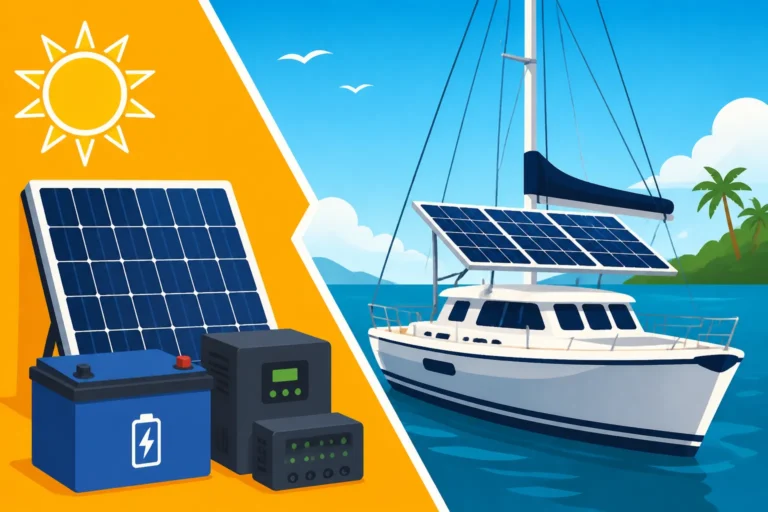
An off-grid solar system isn't just a panel; it's a collection of specialized components working together.
- Solar Panels: These convert sunlight into electricity. Prices vary by wattage and quality. For a small cabin, you might look at 200W-400W panels. Good quality panels can range from $0.70 to $1.20 per watt. So, a 400W panel could cost $280-$480. Many budget-conscious buyers find decent options from brands on Amazon.
- Batteries: This is where the generated power is stored for use when the sun isn't shining. Batteries are often the most expensive single component in an off-grid system. You'll typically be looking at deep-cycle batteries, either lead-acid (cheaper upfront, shorter lifespan, more maintenance) or lithium iron phosphate (LiFePO4) (more expensive upfront, longer lifespan, no maintenance, better performance). A 100Ah 12V LiFePO4 battery might cost $300-$500, and you'll likely need multiple. For example, a reliable 200Ah battery bank would run you $600-$1000 or more. You can delve into the specific cost of an off-grid solar battery bank to understand this component better.
- Charge Controller: This crucial device regulates the power flow from your solar panels to your batteries, preventing overcharging and optimizing efficiency. MPPT (Maximum Power Point Tracking) controllers are more efficient than PWM (Pulse Width Modulation) controllers, especially for larger systems or in varied weather conditions, but they also cost more. A decent MPPT charge controller can range from $100 to $400, depending on its amperage capacity.
- Inverter: This converts the DC power from your batteries into usable AC power for standard household appliances. The size (wattage) of your inverter needs to match your highest expected simultaneous load. A 2000W pure sine wave inverter, essential for sensitive electronics, could cost anywhere from $200 to $800, with brands like AIMS Power or Victron offering different price points and features.
- Wiring, Fuses, and Mounting Hardware: Don't forget these essential bits! Proper gauge wiring is critical for safety and efficiency. Fuses and circuit breakers protect your system. Mounting hardware for panels, whether roof or ground mount, also adds to the cost. These incidentals can easily add a few hundred dollars to your budget.
- Portable Power Stations/Solar Generators: For very small cabins or minimal needs, an all-in-one unit like a Jackery Explorer or a Bluetti power station could be an ideal and cost-effective solution. These combine a battery, inverter, and charge controller into a single, portable unit. While not scalable like a traditional system, they offer simplicity and quick setup. A Jackery Explorer 1000, for example, might run you $800-$1000 and can power lights, charge devices, and even run a small fridge for a limited time. This could be a good starting point for understanding Off-Grid Solar Kit Price Ranges.
A basic off-grid solar system for a hunting cabin, providing enough power for lights, charging, and a small fridge, could cost anywhere from $1,500 to $5,000 for components alone, depending heavily on battery size and inverter capability. If you're looking to run more significant loads like a microwave or power tools, that price quickly climbs to $5,000 – $10,000+.
Installation Considerations: DIY or Professional?
The installation cost can vary wildly depending on your approach.
- DIY Installation: Many hunting cabin owners are handy and choose to install their systems themselves. This saves on labor costs, which can be thousands of dollars. However, it requires a solid understanding of electrical wiring, safety protocols, and component compatibility. There's a learning curve, and mistakes can be costly or even dangerous. You'll still need to factor in the cost of tools if you don't already have them, and potentially an electrician for final checks if you're not confident. If you're doing a DIY Off-Grid Solar Build, budgeting is key.
- Professional Installation: Hiring a qualified solar installer will ensure your system is set up correctly, safely, and to code (though permits for remote off-grid cabins might be less stringent than for a residential home, it's always wise to check local regulations). This convenience comes at a significant cost, often adding 20-50% to your total project price. For a typical hunting cabin system, this could be an additional $1,000 to $5,000 or more.
For many cabin owners, a hybrid approach works best: DIY the mounting and wiring of panels, but consult or hire an electrician for the battery bank, inverter, and charge controller connections, especially if AC wiring is involved. This is a crucial area where understanding the differences in DIY vs Professional Off-Grid Solar Cost can really impact your budget.
Long-Term Maintenance and Battery Replacement
The initial investment isn't the only financial consideration.
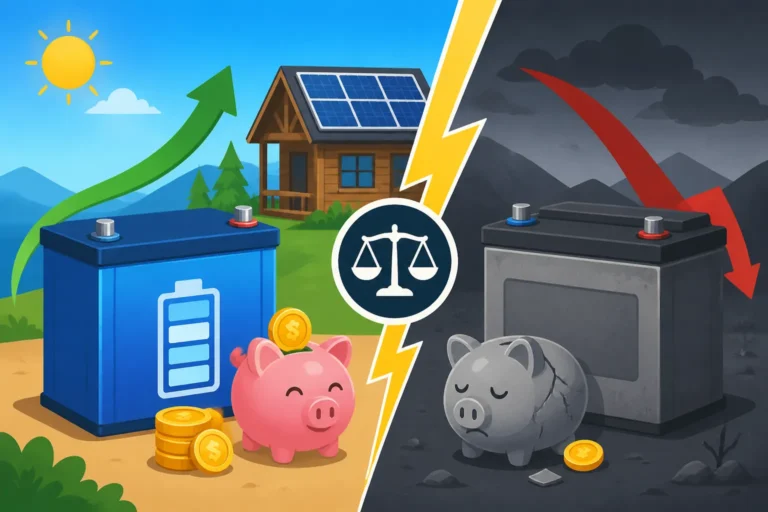
- Battery Lifespan: Lead-acid batteries typically last 3-7 years, while LiFePO4 batteries can last 10-15+ years. When it's time for a replacement, it's a significant expense. For example, if your cabin needs 400Ah of 12V LiFePO4 batteries, replacing them could cost $1200-$2000 every decade or so. This is a critical factor when considering the long-term lifetime cost of an off-grid solar system.
- Panel Maintenance: Solar panels are generally very durable and require minimal maintenance, mostly just cleaning off dirt, snow, or leaves a few times a year to maintain optimal production.
- Component Lifespan: Inverters and charge controllers typically last 5-15 years, depending on quality and usage. While not as frequent as battery replacement, these components will eventually need to be replaced, adding to long-term costs.
- Generator Fuel and Maintenance: If you opt for a hybrid system with a backup generator, you'll have ongoing fuel costs and regular maintenance (oil changes, spark plugs, etc.).
When you factor in these long-term considerations, the initial higher cost of a robust solar system can often be justified by lower operating expenses over its lifetime compared to continually fueling and maintaining a generator.
Comparing Off-Grid Solar to Power Alternatives for a Cabin
The cost-effectiveness of off-grid solar for a hunting cabin really shines when you compare it to the alternatives. Often, the choice isn't "solar vs. free electricity," but "solar vs. an incredibly expensive alternative."
The Hidden Costs of Generators
Generators are the traditional go-to for remote cabin power, but they come with a hefty list of drawbacks and costs.
- Fuel Expenses: This is the most obvious and often underestimated cost. A typical 3,000-5,000 watt gasoline generator, running for 4-6 hours a day during a weekend stay, can burn several gallons of fuel. If you're visiting your cabin frequently, or for extended periods, those fuel costs add up quickly. A 5000W generator might consume 0.75-1 gallon per hour at half load. Over a year of weekend visits, that could easily be hundreds of dollars in gasoline, plus the hassle of transporting it.
- Noise Pollution: Generators are loud. Period. For a hunting cabin, where peace and quiet are often primary reasons for being there, the constant drone of a generator can be a significant detractor. It spoils the ambiance and can disturb wildlife (and other hunters).
- Maintenance and Lifespan: Generators require regular oil changes, filter replacements, and general upkeep. They have moving parts that wear out. Their lifespan, especially cheaper models, is often measured in hundreds or thousands of hours, not decades.
- Emissions: They produce exhaust fumes, which means they need to be placed far from living quarters and contribute to air pollution.
- Starting Issues: Nothing is more frustrating than a generator that won't start on a cold morning when you desperately need power.
While a generator can be an excellent backup for a solar system, relying on it as your primary power source for anything beyond very sporadic, minimal use quickly becomes expensive and inconvenient. This highlights why looking at Off-Grid Solar vs Generator Fuel Cost is a crucial comparison.
The Often Astronomical Price of Grid Extension
If your cabin is truly remote, bringing in utility power from the nearest grid connection is usually the most financially daunting option.
- Per-Foot Cost: Utility companies typically charge per foot (or per mile) to extend power lines. Depending on the terrain, easements, and local regulations, this can range from $20 to $100+ per foot. If your cabin is even a quarter-mile (1,320 feet) from the nearest pole, you're looking at $26,400 to $132,000+ just for the trenching, poles, and lines.
- Transformers and Hook-up Fees: Beyond the linear cost, there are often additional fees for transformers, hook-ups, and potential upgrades to the local grid infrastructure needed to support your connection.
- Timeline and Bureaucracy: Getting utility power extended can be a lengthy process, involving surveys, permits, and scheduling with the power company. It's not uncommon for it to take months, or even years, and often comes with unexpected delays.
For most remote hunting cabins, especially those more than a few hundred feet from an existing grid line, the cost of grid extension makes off-grid solar look like an absolute bargain. The value in comparing Off-Grid Solar vs Utility Extension Cost cannot be overstated.
The True Value of Independence and Reliability
Beyond the raw numbers, there's an intangible value to off-grid solar that resonates deeply with cabin owners.
- Quiet Operation: Solar systems operate silently, allowing you to fully enjoy the peace and quiet of your natural surroundings. This is a significant advantage over a noisy generator.
- Environmental Impact: Solar power is clean and renewable, aligning with the ethos of enjoying and preserving nature.
- Energy Security: Once your system is installed, you are largely immune to grid outages or rising electricity prices (beyond component replacement). You control your own power source.
- Convenience: No more hauling gas cans, no more struggling with pull cords. Power is simply there, as long as your system is adequately sized and maintained.
- Reduced Carbon Footprint: For those who care about their environmental impact, solar is a clear winner.
These benefits, while not directly measurable in dollars, contribute significantly to the overall "cost-effectiveness" by enhancing your cabin experience and providing peace of mind.
Making Off-Grid Solar Cost-Effective for Your Hunting Cabin
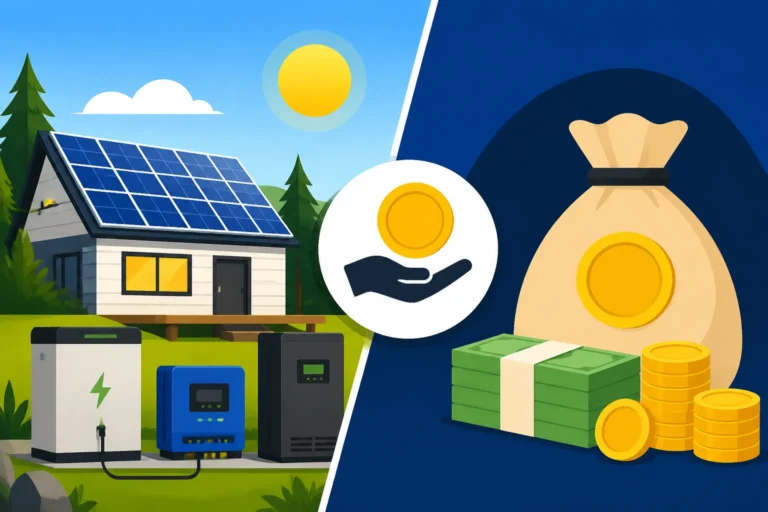
So, is off-grid solar cost-effective for a hunting cabin? The answer is a resounding YES, particularly when compared to the alternatives of costly grid extension or the ongoing expenses and annoyances of a generator. However, to truly make it cost-effective, you need a smart approach.
Prioritizing Energy Efficiency in Your Cabin
The less power you need, the smaller (and cheaper) your solar system can be.
- LED Lighting: As mentioned, use LEDs exclusively. They use a fraction of the power of incandescent bulbs.
- Efficient Appliances: Opt for DC-powered appliances where possible. Many small refrigerators, fans, and water pumps are available in 12V or 24V DC versions, which avoids inverter inefficiencies. If using AC appliances, choose the most energy-efficient models. For example, a modern Energy Star mini-fridge can use significantly less power than an older model.
- Good Insulation: A well-insulated cabin will require less energy for heating (if you use electric) or cooling, reducing overall demand.
- Passive Design: Maximize natural light and ventilation to reduce the need for artificial lighting and fans.
Every watt you save through efficiency means you need less in terms of solar panels, batteries, and inverter capacity, directly translating to upfront savings.
Smart Sizing and Phased Implementation
Don't feel pressured to build the dream system all at once.
- Start Small with Essentials: Begin with a basic system that covers your absolute needs: lights, phone charging, maybe a small DC fridge. A small kit from a brand like Renogy, often available on Amazon, can be a great entry point. These often include a panel, charge controller, and some basic wiring. A simple system to run lights and electronics might just need a couple of 100W panels and a 100Ah battery.
- Expand as Needed: Off-grid solar systems are highly expandable. You can always add more solar panels, increase your battery bank size, or upgrade your inverter later as your needs grow or your budget allows. This phased approach helps manage the initial outlay and allows you to learn about your actual power consumption over time. Thinking about how to design an expandable system can save headaches later.
- Accurate Load Analysis: Before any purchase, carefully calculate your daily Watt-hour needs. Go through every appliance you plan to use, note its wattage, and estimate how many hours per day it will run. This will give you a solid number to size your system around. This is often covered in guides like how to calculate daily energy usage.
| Component | Small Cabin (Lights, Charging, Small Fridge) | Medium Cabin (Add TV, Water Pump, Microwave) |
|---|---|---|
| Solar Panels | 200-400W (1-2 panels) | 800-1500W (3-6 panels) |
| Battery Bank | 100-200Ah LiFePO4 (1-2 batteries) | 400-800Ah LiFePO4 (2-4+ batteries) |
| Charge Controller | 20-30A MPPT | 40-60A MPPT |
| Inverter | 500-1000W Pure Sine Wave | 2000-3000W Pure Sine Wave |
| Estimated Cost (Components Only) | $1,500 – $3,000 | $4,000 – $8,000+ |
| Generator Backup | Small portable generator (optional) | Medium portable generator (recommended) |
Note: These are estimated costs and can vary significantly based on brand, quality, and current market prices.
Leveraging DIY and Used Components (With Caution)
For the budget-conscious, there are ways to cut costs, but it requires research and careful consideration.
- DIY Assembly: As discussed, doing the installation yourself can save significant labor costs. There are tons of resources online to guide you on how to install an off-grid solar system safely.
- Buying Used Panels: Sometimes you can find used solar panels in good condition for a fraction of the cost of new ones. Check local listings, solar installers liquidating old stock, or online marketplaces. Just be sure to test their output before purchasing.
- Sales and Discounts: Keep an eye out for sales from major retailers or solar suppliers. Black Friday, Cyber Monday, and other holiday sales can offer good discounts on components like batteries or charge controllers.
- Bulk Purchases: If you have friends or neighbors also considering solar, sometimes buying components in bulk can lead to discounts.
However, a word of caution: while saving money is great, don't compromise on critical safety components like proper wiring, fuses, and circuit breakers. Also, be extremely wary of used batteries unless you can verify their condition and history, as they are the most prone to failure and can be dangerous if not handled correctly. When buying used off-grid solar equipment, it's worth it only if you know what you're doing.
Ultimately, an off-grid solar system for a hunting cabin is a highly cost-effective investment when viewed over its entire lifespan and compared to the alternatives. It provides freedom, reliability, and peace of mind that a noisy, fuel-guzzling generator simply cannot, and at a fraction of the cost of extending utility lines. With careful planning, a focus on efficiency, and a willingness to tackle some DIY, your hunting cabin can enjoy the silent, clean power of the sun for years to come.
Disclaimer
The information provided in this article is for general informational purposes only and does not constitute professional advice. Off-grid solar system design and installation can be complex and involve electrical hazards. Always consult with qualified professionals for specific advice tailored to your situation and ensure all installations comply with local electrical codes and safety regulations.