Best Premium Inverter for Off-Grid
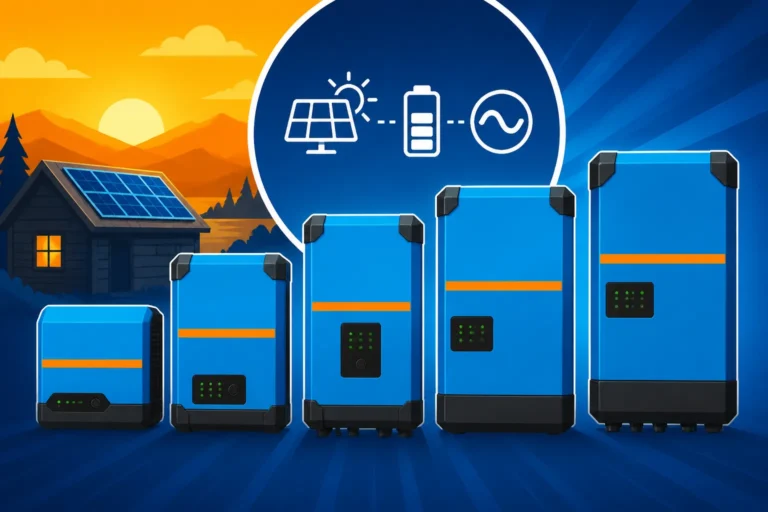
Choosing an inverter for your off-grid solar system can feel like walking through a minefield of technical jargon and endless options. Many folks just starting out worry about getting enough power to run their essentials, let alone finding something truly reliable that won't leave them in the dark when they need it most. This comprehensive guide is here to shed light on what makes an inverter truly premium for off-grid living, highlighting the top brands and critical factors to consider so you can make an informed decision and invest in peace of mind.
What Defines a Premium Off-Grid Inverter?
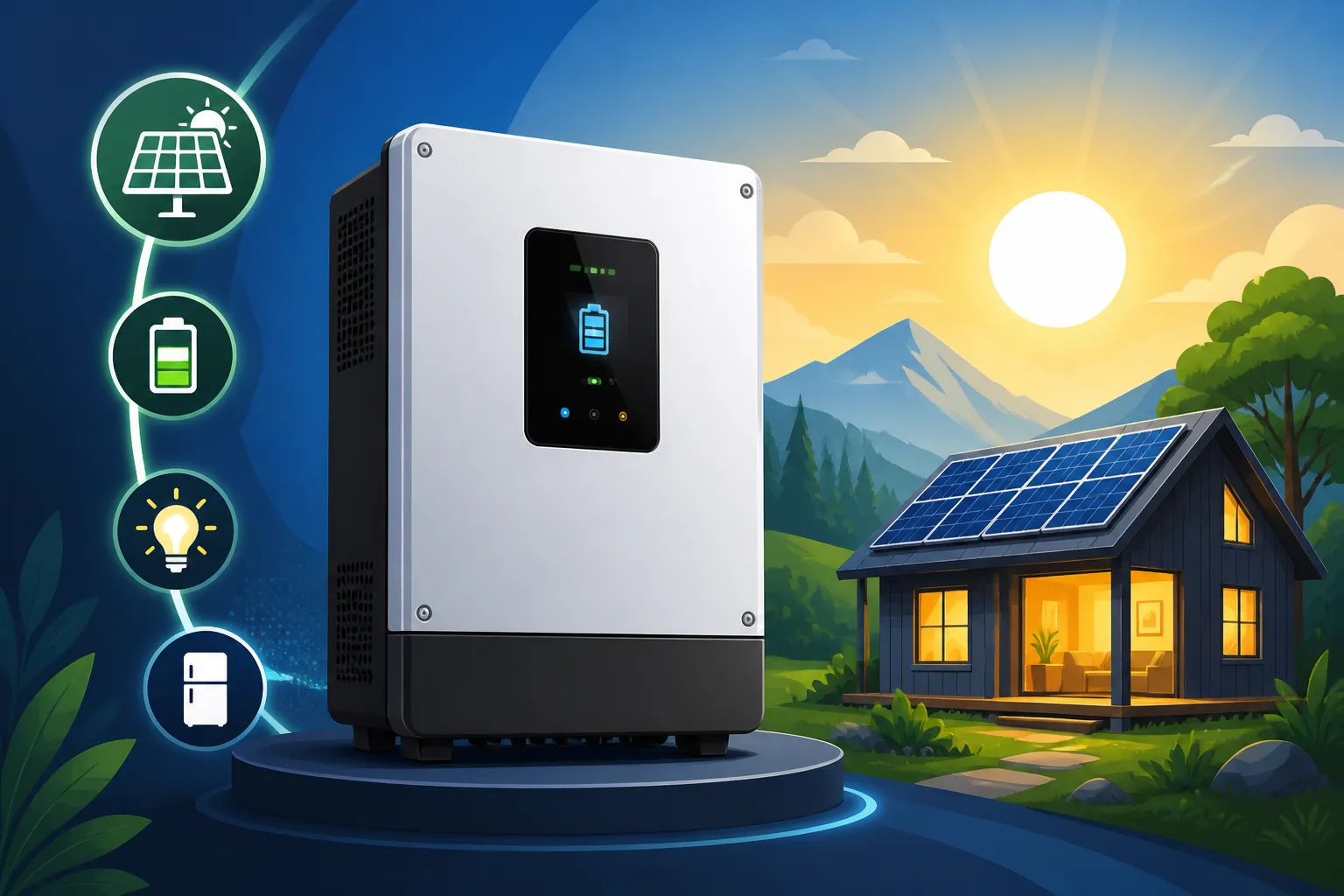
When we talk about a "premium" off-grid inverter, we're not just talking about a higher price tag. We're talking about a piece of equipment that stands head and shoulders above the rest in terms of its engineering, its capabilities, and its sheer dependability. This is the heart of your off-grid electrical system, and a premium model ensures it beats strong and true for years.
Superior Power Conversion and Efficiency
At its core, an inverter's job is to convert the direct current (DC) power from your batteries into alternating current (AC) power that your household appliances can use. A truly premium inverter excels at this, offering exceptionally clean, pure sine wave power. This is crucial because sensitive electronics, from your laptop to medical devices like CPAP machines, require a stable, consistent waveform. Cheaper inverters often produce a "modified sine wave" or even a "square wave," which can damage delicate electronics, cause motors to run hot, or simply prevent certain appliances from working at all.
Beyond the waveform, efficiency is key. Premium inverters boast higher conversion efficiencies, meaning less energy is wasted as heat during the DC-to-AC conversion process. This directly translates to more usable power for your home and less drain on your precious battery bank. In an off-grid scenario, every watt-hour counts, especially on cloudy days or during long winter nights. Manufacturers like Victron Energy and Sol-Ark are renowned for designing units with minimal idle consumption and excellent efficiency across varying load levels, ensuring you get the most out of every solar-generated electron.
Advanced Features and Connectivity
The beauty of a premium inverter lies in its intelligence and versatility. These aren't just dumb boxes converting power; they are sophisticated energy management hubs. Many integrate seamlessly with various components of your off-grid setup. For instance, many premium inverters come as inverter-chargers, combining the functions of an inverter, a battery charger (for when you need to top up with a generator), and sometimes even a transfer switch. This streamlines your system, reduces clutter, and simplifies wiring.
Furthermore, advanced monitoring and control are standard. These inverters often feature robust communication protocols, allowing you to monitor your system's performance, battery state of charge, solar production, and even appliance usage from a smartphone app or a dedicated display. You can often program charging parameters, set generator auto-start rules, and remotely troubleshoot issues. This level of insight and control is invaluable for optimizing your energy usage and extending the life of your battery bank. Brands like Victron, with their extensive ecosystem of compatible devices, make it incredibly easy to create a fully integrated and highly manageable off-grid power solution.
Robust Build Quality and Longevity
An off-grid environment can be tough on electronics. Extreme temperatures, dust, humidity, and vibrations are all part of the game. Premium inverters are built to withstand these challenges. They often feature heavy-duty casings, industrial-grade components, and advanced cooling systems designed for continuous, demanding operation. This isn't just about surviving; it's about performing consistently at peak levels for a decade or more.
Consider the thermal design: cheaper inverters might quickly derate their output (reduce power) when they get hot, or even shut down entirely. Premium models are engineered for superior thermal management, ensuring they can deliver their rated power even under significant load and high ambient temperatures. This robust construction directly translates to a longer lifespan, reducing the frequency and cost of replacements, and providing reliable power day in and day out. While a lower-cost option might tempt you initially, the long-term reliability and performance of a premium inverter often make it the more economical choice over the system's lifetime.
Why Investing in a High-Quality Inverter Matters
You might be wondering if the higher upfront cost of a premium inverter is truly justified. In the world of off-grid living, where self-sufficiency and reliability are paramount, skimping on the inverter can lead to a cascade of problems and greater expenses down the road.
Avoiding Common Off-Grid Power Headaches
Many off-gridders have learned the hard way that a cheap inverter is often a false economy. Imagine this scenario: you've finally set up your cabin in the woods, the solar panels are humming, and you plug in your new refrigerator. A few weeks later, the fridge motor starts making odd noises, or your sensitive electronics mysteriously stop working. Often, the culprit is the inconsistent, "dirty" power from a low-quality inverter. This can lead to premature failure of appliances, forcing you to replace expensive household items more frequently.
Beyond appliance damage, unreliable inverters can cause frustrating system shutdowns. You're trying to run your well pump to get water, or perhaps you're using power tools for a project, and suddenly the inverter trips dueing a momentary surge. Premium inverters are designed with excellent surge capabilities, meaning they can handle those brief, high-power demands that motors and compressors often require without breaking a sweat or shutting down your entire system. This consistent, reliable operation is priceless when you depend on your off-grid system for daily necessities.
Enhanced System Performance and Efficiency
The efficiency gains from a premium inverter might seem small on paper, but they add up significantly over time. A more efficient inverter means your batteries last longer between charges, and you capture more usable energy from your solar array. This can be especially important if you're trying to calculate how much solar to run an air conditioner or How Much Solar to Run a Well Pump. In essence, a premium inverter makes your entire off-grid system perform better, optimizing the output from your solar panels and extending the usable capacity of your battery bank.
Furthermore, many premium inverters are designed to work seamlessly with advanced battery chemistries, particularly LiFePO4 batteries. They offer precise charging algorithms and robust battery management system (BMS) integration, which is critical for maximizing the lifespan and performance of these higher-performance batteries. While basic inverters might work, they often lack the sophisticated controls needed to truly get the most out of modern battery technology, leaving you with suboptimal charging cycles and potentially shortening your battery's life. This synergy between the inverter and the battery bank is a cornerstone of a truly efficient and reliable off-grid setup.
Leading Premium Inverter Brands and Their Offerings
When it comes to the crème de la crème of off-grid inverters, a few brands consistently rise to the top, earning their reputation through rigorous engineering, exceptional reliability, and dedicated support for the off-grid community.
Victron Energy MultiPlus and Quattro Series
Victron Energy is practically synonymous with high-quality off-grid power solutions, and their MultiPlus and Quattro inverter/charger lines are often considered the gold standard. These units are renowned for their incredible reliability, pure sine wave output, and advanced features. The MultiPlus combines an inverter, a sophisticated battery charger, and a high-speed AC transfer switch into one compact enclosure. It's designed to seamlessly switch between different power sources—solar, generator, or shore power—making it perfect for RVs, marine applications, or home backup systems.
The Quattro series takes this a step further by integrating two AC inputs, allowing for connection to two independent AC sources (e.g., grid and a generator) with automatic switching. Both lines are known for their high surge capability, low idle consumption, and exceptional efficiency. What truly sets Victron apart is their extensive ecosystem of monitoring and control devices, like the Cerbo GX, which allows for comprehensive system oversight and remote management through their VRM portal. While the initial investment can be substantial, the longevity, performance, and unparalleled support often justify the cost for those seeking ultimate reliability. You can find many components through specialized dealers, although smaller accessories might be available on platforms like Amazon. For a deeper dive, check out our Victron Inverter Lineup Compared article.
Sol-Ark All-in-One Inverters
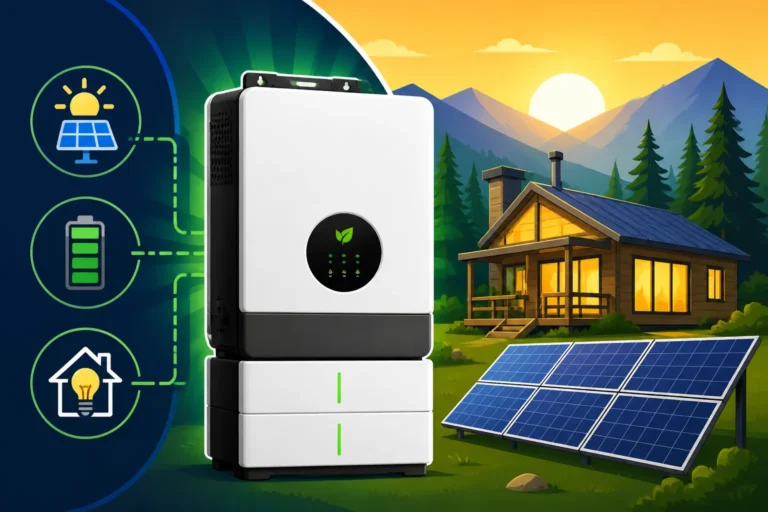
Sol-Ark has rapidly gained popularity in the off-grid and hybrid solar market with its innovative all-in-one inverter solutions. Unlike traditional setups where the inverter, charge controller, and transfer switch are separate components, Sol-Ark integrates everything into a single, sleek unit. Their popular 8K, 12K, and 15K models offer impressive continuous power output, high surge ratings, and exceptionally fast transfer times, making them ideal for whole-home off-grid power or robust backup systems.
One of Sol-Ark's standout features is its versatility. It can operate in various modes: off-grid, grid-tied with battery backup (hybrid), and even supports multiple energy inputs like solar, grid, and generator simultaneously. The integrated MPPT charge controllers are highly efficient, ensuring maximum power harvest from your solar panels. Users appreciate the user-friendly interface, built-in color display, and comprehensive monitoring capabilities through their web portal. For those who value simplicity, high performance, and future expandability in a single package, a Sol-Ark inverter is a compelling choice. Our Sol-Ark Inverter Review provides more details on specific models.
Outback Power Radian and FXR Series
Outback Power has a long-standing reputation as a pioneer in off-grid solar, and their inverters, particularly the Radian and FXR series, are workhorses known for their ruggedness and performance. The Radian series, available in 4kW and 8kW models, is a true integrated inverter/charger, offering dual AC inputs and impressive stacking capabilities for larger systems. They are designed for high reliability and feature intelligent battery charging, making them a solid choice for full-time off-grid homes.
The FXR series (FlexWare) is a modular, field-upgradable inverter/charger line that comes in various sizes (from 2kW to 3.6kW). Its modular design allows users to expand or upgrade their system components as their power needs evolve. Outback inverters are celebrated for their robust construction, often seen in harsh environments, and their ability to handle tough loads. They are generally compatible with various battery types and offer reliable power conversion. While their monitoring interface might not be as graphically sophisticated as some newer competitors, their proven track record of durability and performance makes them a favorite among experienced off-gridders.
| Inverter Brand & Series | Type | Key Features | Typical Use Case | Max Efficiency |
|---|---|---|---|---|
| Victron MultiPlus/Quattro | Inverter/Charger | Pure Sine Wave, Low Idle, Advanced Monitoring, Parallel Stacking | RV, Marine, Off-Grid Home, Backup | 94-96% |
| Sol-Ark All-in-One | Hybrid Inverter | Inverter/Charger/MPPT, Multiple Inputs, Fast Transfer, All-in-One Design | Off-Grid/Hybrid Home, Backup, Expanding Systems | 96-98% |
| Outback Radian/FXR | Inverter/Charger | Rugged Design, High Reliability, Modular (FXR), Dual AC Input (Radian) | Full-Time Off-Grid Home, Harsh Environments | 93-95% |
Crucial Factors for Selecting Your Premium Inverter
Choosing the best premium inverter for your off-grid setup isn't a one-size-fits-all decision. It requires careful consideration of your specific needs, existing components, and future plans.
System Voltage and Power Requirements
One of the first decisions you'll face is determining your system's voltage: 12V, 24V, or 48V. For smaller setups like an RV or a basic cabin, a 12V system might suffice, but for anything beyond basic lighting and small electronics, 24V or, more commonly, 48V systems are recommended. Higher voltage systems are more efficient as they allow for thinner wiring and suffer less from voltage drop over longer distances, which is particularly important when you're thinking about How to Wire an Off-Grid Solar System for a whole home. Most premium inverters are available in 24V and 48V configurations, with 48V being the standard for larger, more robust off-grid homes.
Next, consider your continuous power requirements. This is the maximum wattage your inverter can supply constantly. Do a thorough Off-Grid Solar Load Calculation Explained to determine the sum of all appliances you anticipate running simultaneously. Don't forget occasional, higher-power appliances like a microwave or a coffee maker. You want an inverter that can comfortably handle your peak loads without struggling. Remember that for large loads, you might also need to consider your battery bank capacity. Our guide on How Much Battery Capacity You Need can help here.
Battery Compatibility and Charging Capabilities
Your inverter and battery bank are intrinsically linked. A premium inverter should be highly compatible with your chosen battery chemistry, especially if you're leaning towards the increasingly popular LiFePO4 batteries. Ensure the inverter has customizable charging parameters (bulk, absorption, float voltages, and equalization for lead-acid) that match your battery manufacturer's recommendations. Many premium inverters also offer advanced features like temperature compensation for charging or direct communication with smart batteries via CAN bus, optimizing charge cycles and extending battery life.
If your inverter is also an inverter-charger, evaluate its charging capabilities. How many amps can it deliver to your batteries from an AC source (like a generator)? This is critical for quickly recharging your batteries during periods of low solar production. Some premium inverter-chargers, like the Victron MultiPlus, offer adaptive charging, which adjusts the charge current based on your battery's state and health, further safeguarding your investment in your battery bank, which, after all, greatly influences the Cost of an Off-Grid Solar Battery Bank.
Surge Capacity and Load Handling
Motors, pumps, and compressors have a brief, significantly higher power draw when they first start up. This is known as the "surge" or "starting watts." Your inverter needs to be able to handle these surges without tripping or failing. Premium inverters typically have excellent surge ratings, often twice or even three times their continuous power rating for a short duration. For instance, if you plan to run a well pump, you'll need to know How to Size an Inverter for Surge Loads specifically to avoid frustrating outages.
Beyond surge, consider the inverter's ability to handle imbalanced loads. If you have both 120V and 240V appliances in your off-grid home, some premium split-phase inverters can deliver both, handling the power distribution smoothly. For most standard residential applications in North America, you'll need a 120V/240V split-phase inverter to power common appliances like electric dryers or certain well pumps. Ensure the inverter you choose is capable of providing the correct voltage and phase for all your loads.
Expandability and Integration
Off-grid needs can evolve. Perhaps you start with a small cabin and later decide to add a workshop or grow your family, requiring more power. A premium inverter often offers excellent expandability options. Many models can be paralleled (multiple inverters working together) to increase your total power output. This allows you to start with a smaller, more affordable system and scale up as your needs and budget allow.
Integration with other system components is also vital. Does the inverter integrate well with an existing generator for backup power, offering features like automatic generator start? Can it communicate with your solar charge controllers or battery monitors for a unified monitoring experience? Brands like Sol-Ark offer highly integrated solutions, minimizing the complexity of connecting disparate components. Considering future expansion and how well different components work together will save you headaches and money down the line. Our guide on How to Design an Expandable System can give you more insights here.
Installation, Integration, and Longevity of Premium Systems
Once you've made the investment in a premium off-grid inverter, the journey isn't over. Proper installation, seamless integration with the rest of your system, and understanding its long-term care are all crucial for realizing its full potential and ensuring its legendary longevity.
Professional Installation vs. DIY Considerations
While some experienced DIYers might feel confident installing a basic off-grid inverter, a premium unit, especially a sophisticated inverter-charger or all-in-one system, often benefits greatly from professional installation. These powerful devices involve significant DC and AC voltages, and improper wiring can be dangerous, not to mention voiding warranties or damaging expensive equipment. An experienced electrician specializing in off-grid systems will ensure all wiring is correctly sized, fuses and breakers are properly installed, and the system is safely grounded. They can also ensure that your installation meets any local codes or regulations, even if you're in a remote location.
That's not to say DIY is impossible for everyone. If you have a solid electrical background and meticulously follow the manufacturer's instructions and best practices (like those found in our Off-Grid Solar Installation Guide), you might manage it. However, the complexity of programming and integrating a high-end Victron or Sol-Ark system might still warrant professional commissioning, even if you handle the physical mounting and wiring yourself. The goal is safety and optimal performance, and sometimes, paying for expert help is the best investment.
Software Configuration and Monitoring
The true power of a premium inverter often lies in its software. These aren't just plug-and-play devices; they require careful configuration to match your specific battery type, charging preferences, and system behavior. Setting correct battery voltage parameters, generator auto-start thresholds, and load priorities is essential for both system efficiency and battery health. For instance, knowing How to Program a Charge Controller within your inverter's system can make a huge difference in battery longevity.
Most premium inverters come with intuitive software interfaces accessible via computer or a mobile app. These interfaces often provide a wealth of data, allowing you to monitor real-time power flow, battery state of charge, historical energy production, and consumption. This constant feedback is incredibly valuable for understanding your energy usage patterns and making adjustments to optimize your off-grid lifestyle. Remote monitoring capabilities, often provided by brands like Victron with their VRM portal, allow you to keep an eye on your system even when you're away from your property, offering invaluable peace of mind.
Longevity and Warranty Support
One of the defining characteristics of a premium inverter is its expected lifespan. While cheaper units might struggle to last five years, a well-maintained premium inverter from a reputable brand like Victron or Sol-Ark can easily operate for 10-15 years or even longer. This longevity significantly reduces your long-term cost of ownership, as you're not constantly replacing components. When you factor in the Off-Grid Solar Payback Period Explained, the durability of your components plays a huge role.
Furthermore, these top-tier brands typically offer robust warranties and excellent customer support. Should an issue arise, having access to knowledgeable technicians and readily available replacement parts is crucial. When purchasing, always register your product and keep your documentation in a safe place. Knowing you have a reliable product backed by solid support is a core part of the "premium" experience and ensures your off-grid power system remains a source of independence, not frustration.
Disclaimer
Please remember that the information provided in this guide is for general informational purposes only and should not be considered professional electrical engineering advice. Off-grid solar systems involve high voltages and currents that can be dangerous. Always consult with a qualified and licensed electrician or solar professional before designing, installing, or modifying any off-grid electrical system to ensure safety and compliance with all applicable codes and regulations.