Off-Grid Solar Load Calculation Explained
One of the biggest hurdles many folks face when they dream of cutting ties with the grid, whether for a remote cabin, an RV adventure, or even a full-fledged homestead, is figuring out how much power they actually need. It feels like a daunting mathematical puzzle, and getting it wrong can lead to frustrating blackouts or an unnecessarily expensive system. This comprehensive guide will meticulously walk you through the essential process of off-grid solar load calculation, ensuring you design a system that reliably meets your real-world energy demands without breaking the bank.
Why Accurately Calculating Your Off-Grid Load is Absolutely Crucial
So many people jump into off-grid solar without truly understanding their energy needs, and it almost always leads to disappointment. It's not just a suggestion; a precise load calculation is the very bedrock of a successful off-grid system. Without it, you're essentially building a house without a blueprint, hoping for the best.
Avoiding Undersizing and Oversizing Pitfalls
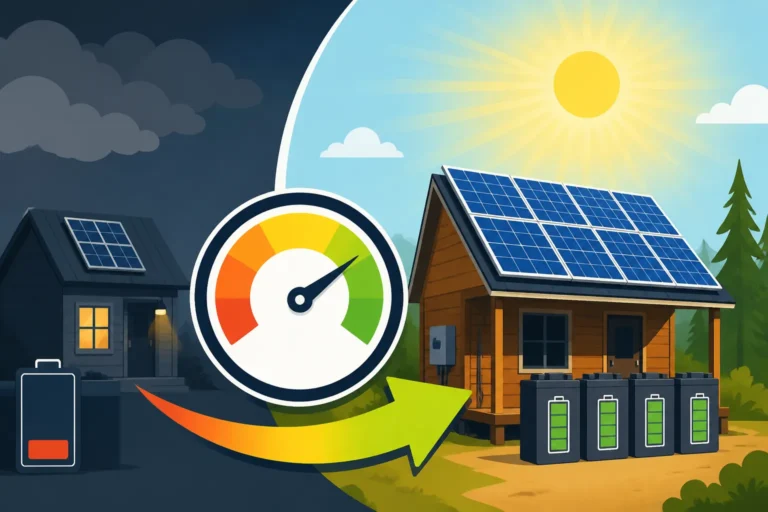
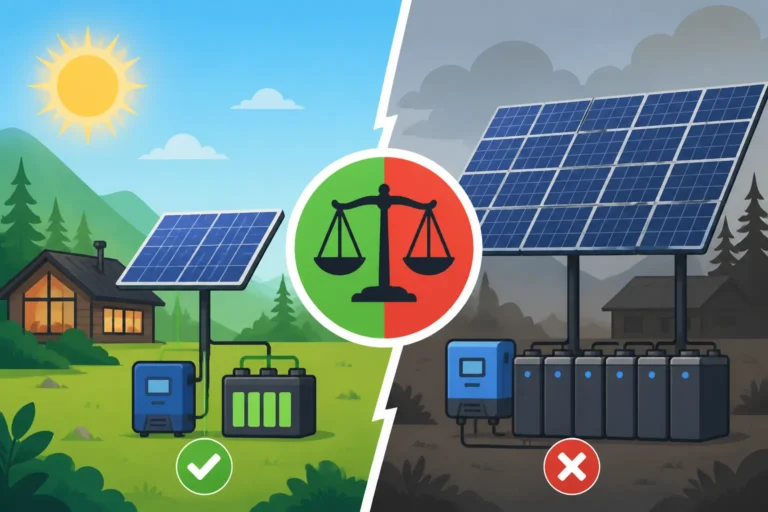
Imagine investing thousands into an off-grid solar system, only to find your lights flicker and your fridge stops running after a couple of cloudy days. That's the nightmare of an undersized system. You've spent money, put in effort, and you're still left in the dark, maybe even more frustrated than before. It’s like buying a tiny gas tank for a cross-country trip – you’ll be stranded quickly.
On the flip side, overbuilding your system is just as problematic, though perhaps less dramatic day-to-day. You'll end up spending far more money than necessary on extra solar panels, larger inverters, and significantly more battery capacity. While having a bit of wiggle room is smart, going overboard means tying up capital that could be used for other essential homestead projects or emergency funds. It's crucial to find that sweet spot, and that's precisely where an accurate load calculation shines. It helps you design a system that's just right, hitting that perfect balance of reliability and cost-effectiveness.
The Direct Impact on Your Budget and System Longevity
Every single component of your off-grid solar system – from the number of solar panels on your roof to the size of your battery bank and the capacity of your inverter – is dictated by your energy needs. If your calculations are off, you'll be buying the wrong components, potentially costing you a fortune in either immediate overspending or future upgrades and replacements. For example, skimping on battery capacity because you underestimated your daily usage will lead to your batteries being deeply discharged more often, drastically shortening their lifespan. Lithium iron phosphate (LiFePO4) batteries, while durable, still degrade faster with consistent deep cycling. Understanding these implications is a key part of answering the question, "Is Off-Grid Solar Worth the Cost?".
Furthermore, an undersized system puts undue strain on all its components. An inverter constantly operating at its maximum capacity, or a charge controller struggling to keep up, will fail prematurely. This leads to costly repairs, inconvenient downtime, and the general feeling that your off-grid dream is more of a headache than a paradise. Conversely, a properly sized system operates efficiently, components last longer, and your overall investment provides years of reliable power, maximizing your return on investment.
Understanding Your Energy Vocabulary: Watts, Watt-Hours, and Amps
Before we dive into the nitty-gritty of calculating your energy needs, it's essential to get comfortable with a few basic electrical terms. These aren't just technical jargon; they're the building blocks of understanding how your off-grid system works and how much power your devices consume. Many people get confused by these terms, but once you break them down, they make perfect sense for determining "How to Calculate Off-Grid Solar Needs".
Demystifying Watts, Volts, and Amperes
Let's think of electricity like water flowing through a pipe.
- Volts (V): This is the pressure of the water. In electrical terms, voltage is the electrical potential difference that drives the current. Standard off-grid systems commonly use 12V, 24V, or 48V. Your choice of system voltage affects everything from wire sizing to inverter efficiency. For instance, larger systems often benefit from higher voltages like 48V because they allow for thinner wires and less power loss over distance.
- Amperes (A) / Amps: This is the flow rate of the water – how much water is passing through the pipe at any given moment. Amperage (or current) is the rate of flow of electrical charge. When you see an appliance rated for, say, 5 amps, that's how much current it's drawing.
- Watts (W): This is the total power delivered or consumed, like how much work the water can do (e.g., spin a turbine). Watts are the most important measurement for understanding instantaneous power consumption. It's a simple calculation: Watts = Volts x Amps. So, if you have a 12V device drawing 5 amps, it's consuming 60 watts of power at that moment. This is how you estimate appliance power draw.
Knowing these three helps you understand the instantaneous demand an appliance places on your system when it's actively running.
The Critical Difference: Watt-Hours for Daily Consumption
While watts tell you how much power something uses right now, off-grid living requires you to think about how much energy something uses over time. This is where Watt-hours (Wh) or Kilowatt-hours (kWh) come in, and they are absolutely critical for figuring out your total daily energy consumption.
- Watt-hours (Wh): This measures the total amount of energy consumed over a period of time. If a 60-watt light bulb runs for 1 hour, it consumes 60 Watt-hours of energy (60W * 1h = 60Wh). If it runs for 5 hours, it consumes 300 Wh. This is the metric you'll use to compile your daily energy budget, essentially answering "How Many Watt-Hours You Use Per Day".
- Kilowatt-hours (kWh): A kilowatt-hour is simply 1,000 watt-hours. Utility companies bill you in kWh, so it's a common larger unit of energy. For example, a modest off-grid cabin might aim for a daily consumption of 5 kWh, which is 5,000 Wh.
Understanding watt-hours is paramount because it tells you how much energy your solar panels need to generate and how much your battery bank needs to store to keep your life powered up each day. You'll want to dive deeper into these concepts by reading about Watts vs Watt-Hours vs Amp-Hours Explained to truly grasp the fundamentals.
Step-by-Step Guide to Your Off-Grid Load Analysis
Now that we've covered the basics, let's roll up our sleeves and get into the practical side of calculating your off-grid solar load. This isn't a one-and-done task; it requires a bit of detective work and honest assessment of your lifestyle. Think of it as creating an inventory of your energy habits. For a complete understanding of this process, you should also refer to our guide on How to Do an Off-Grid Load Analysis.
Identifying All Your Appliances and Devices
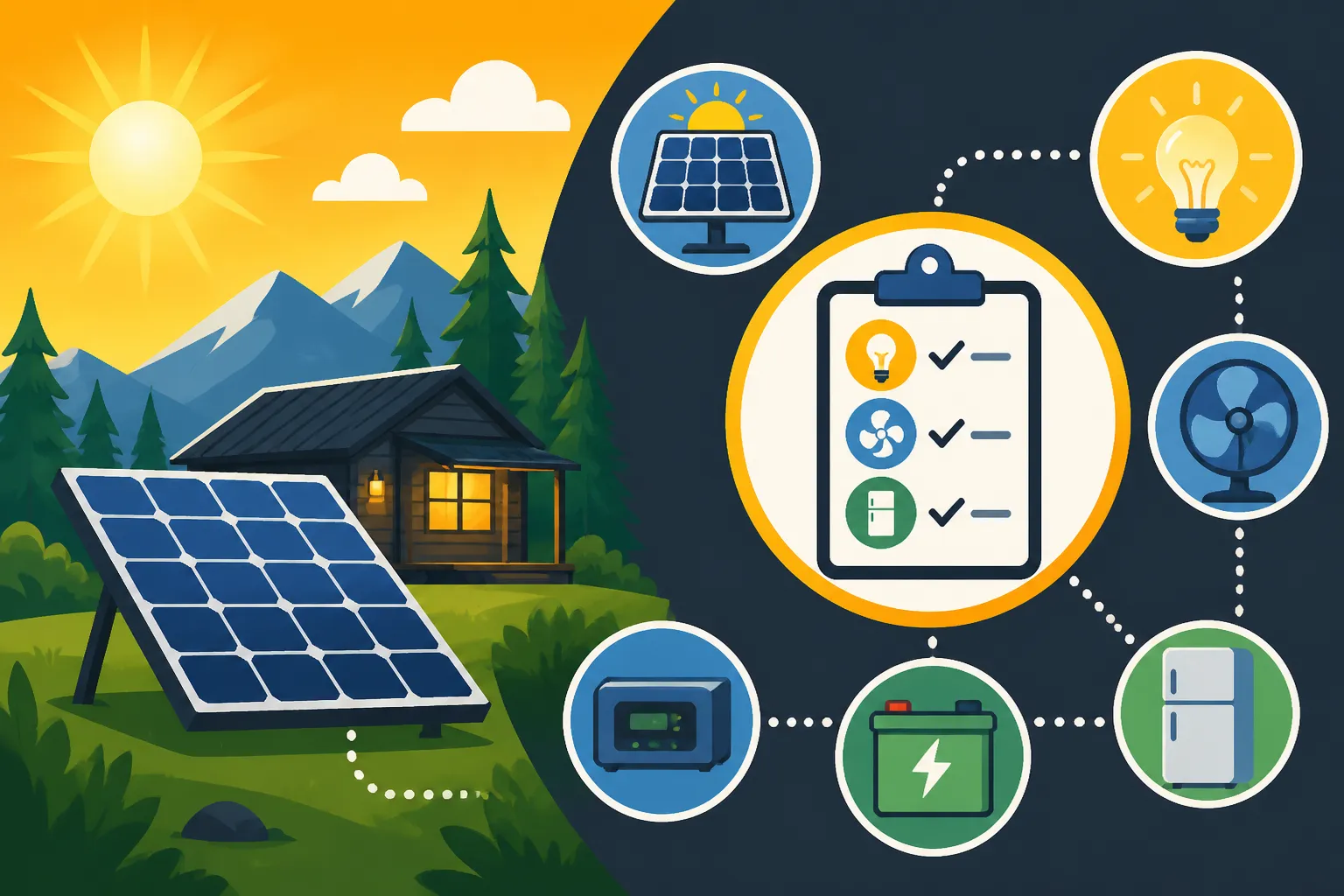
This is where the real work begins. Grab a notebook, a spreadsheet, or even just a piece of paper, and walk through your entire living space – or your planned living space if you're still in the design phase. Make a list of every single electrical item you intend to use. Don't forget anything, no matter how small or seemingly insignificant. This includes:
- Lighting: Every light bulb, outdoor lights, decorative lights.
- Kitchen Appliances: Refrigerator, freezer, microwave, toaster, coffee maker, blender, electric kettle.
- Living Area Electronics: TV, stereo, streaming devices, gaming consoles, Wi-Fi router, laptop chargers, phone chargers.
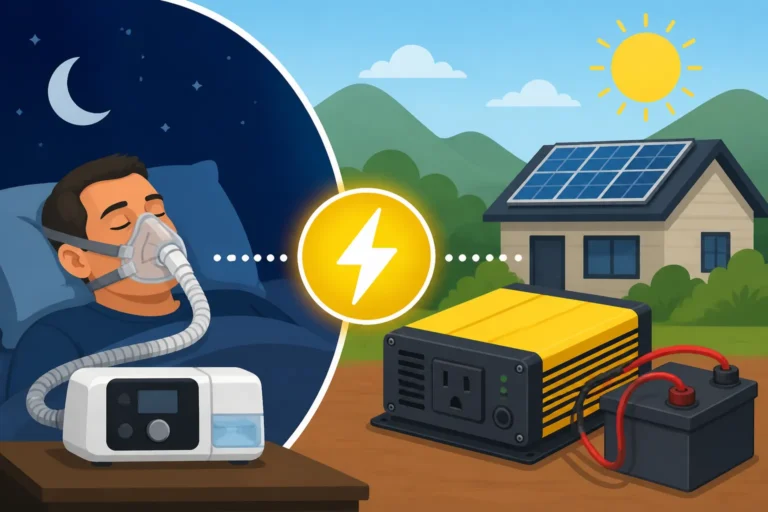
- Bathroom/Bedroom: Hairdryer, curling iron, electric toothbrush, electric razor, CPAP machine, electric blankets.
- Heating/Cooling: Fans, air conditioners (even small window units), electric heaters (these are huge energy hogs, often requiring alternative solutions).
- Water Systems: Well pump, water heater (again, often non-electric in off-grid), water filtration system pump.
- Tools: Power drills, saws, air compressors (for a workshop).
- Miscellaneous: Security cameras, garage door opener, electric fence charger, battery chargers for power tools, car vacuum.
Be thorough! Even small "phantom loads" from devices plugged in but not actively used can add up over 24 hours. For items with a digital clock or standby mode, they're always drawing a tiny bit of power.
Estimating Daily Usage Hours and Operating Power
Once you have your comprehensive list, the next step is to estimate how long each item will be actively used per day. This is often the trickiest part, as our habits aren't always consistent. Be realistic, and maybe even slightly over-estimate for critical items to give yourself a buffer.
For each item on your list, you need two pieces of information:
-
Wattage (W): This is the power consumption when the device is running.
- Check the label: Most appliances have a label on the back or bottom that lists their wattage (W) or current (A) and voltage (V). If you only have amps and volts, multiply them (W = V x A) to get the wattage. For instance, a small 120V microwave drawing 10A is 1200W. You can learn more about this by referring to How to Read Appliance Wattage Labels.
- Look it up online: If a label is missing, a quick search for "[appliance name] wattage" will usually give you a good estimate.
- Use a Kill-A-Watt meter: For existing appliances, an inexpensive Kill-A-Watt meter (widely available on Amazon) is a fantastic tool. You plug the appliance into it, and it tells you the exact wattage draw and even cumulative watt-hours over time. This is invaluable for getting real-world data rather than relying on estimates.
-
Daily Usage Hours (h): How many hours per day will this device actually be running?
- Lights: Maybe 4 hours in the evening.
- Refrigerator: This is tricky. While it's on 24/7, its compressor cycles on and off. A modern energy-efficient fridge might only run for 8-10 hours total in a 24-hour period. It's often better to look at its daily kWh consumption if the label provides it, or use a Kill-A-Watt to monitor it for a few days.
- Laptop: Maybe 6 hours of active use, plus some charging time.
- Well Pump: This depends entirely on your water usage. If it runs for 15 minutes twice a day to fill a pressure tank, that's 0.5 hours.
Be honest with yourself here. If you plan to run an air conditioner for 10 hours a day in the summer, factor that in. If you only use a blender for 5 minutes a day, that's fine too.
Converting Everything to Daily Watt-Hours
Once you have the wattage and estimated daily usage hours for each item, it's time for the crucial step: calculating the total daily watt-hours for each device.
The formula is straightforward: Daily Watt-Hours (Wh) = Appliance Wattage (W) x Daily Usage Hours (h).
Let's look at a simple example:
| Appliance | Wattage (W) | Daily Usage (h) | Daily Watt-Hours (Wh) |
|---|---|---|---|
| LED Light (x4) | 10 (each) | 4 | 40 Wh x 4 = 160 Wh |
| Laptop Charger | 60 | 3 | 180 Wh |
| Refrigerator (running) | 100 | 8 | 800 Wh |
| Water Pump | 1200 | 0.25 (15 min) | 300 Wh |
| Daily Subtotal | 1440 Wh |
Do this for every single item on your list. Then, sum up all the daily watt-hours for all your devices. This final number is your total daily energy consumption in Watt-hours (Wh). This figure is the absolute most critical number you'll get from your load analysis, as it will directly inform "How Many Batteries for an Off-Grid System" and "How Many Solar Panels for Off-Grid Living". To help consolidate your list, you might find it useful to organize your data and further understand "How to Add Up Your Off-Grid Loads".
Special Considerations for Common Off-Grid Appliances
While the general load calculation method applies to everything, some appliances demand extra attention due to their power draw characteristics or the nature of their use in an off-grid environment. These are often the make-or-break items for your system design.
The Energy Hogs: Refrigerators, Freezers, and AC Units
These three appliances are notorious for their significant energy consumption, and often cause the biggest headaches for off-grid system designers.
-
Refrigerators and Freezers: Unlike a light bulb that draws a constant wattage when on, refrigerators and freezers cycle on and off throughout the day to maintain temperature. Their actual running wattage might be low (e.g., 100-200W), but they might run for 8-12 hours total spread across 24 hours, especially in warmer climates or if frequently opened.
- Off-Grid Specific Models: If you're building a new system, strongly consider high-efficiency DC (12V/24V) refrigerators and freezers, specifically designed for off-grid use. Brands like Unique Appliances or Dometic make excellent choices that are far more efficient than standard residential AC units. These can drastically cut down your daily watt-hour consumption for refrigeration.
- Monitoring is Key: Again, a Kill-A-Watt meter is your best friend here. Monitor your actual fridge's consumption for several days to get an accurate daily kWh figure. If you're forced to use a standard AC residential fridge, its energy label might list an "estimated annual kWh." Divide that by 365 to get an approximate daily consumption, but be aware this is often optimistic for real-world usage.
-
Air Conditioning (AC) Units: This is where many off-grid dreams hit a wall. Conventional AC units, even small window units, draw an immense amount of power (often 1000W to 3000W or more) and are typically run for extended periods. Powering one with solar alone for more than a few hours a day requires a massive solar array and battery bank, making it incredibly expensive.
- Alternatives: If AC is a necessity, explore alternatives. Mini-split heat pumps are far more efficient than traditional window units or central AC, and some are even designed for DC operation or have impressive SEER ratings. However, even these require substantial solar power. Passive cooling strategies (shade, insulation, ventilation, strategic window placement) should be your first line of defense.
- Realistic Expectations: Be realistic about AC usage. Can you limit it to peak heat hours? Can you combine it with fans? For many off-grid setups, especially smaller ones like an RV or a tiny home, AC is often the biggest cost driver and the reason why systems get severely undersized or overpriced. Sizing Solar for Air Conditioning is often one of the most challenging aspects of system design.
High Surge Devices: Well Pumps and Power Tools
These items pose a different kind of challenge: they might not run for long, but when they do, they demand a huge burst of power. This "surge" or "starting" wattage can be several times higher than their "running" wattage, and your inverter needs to be able to handle it.
-
Well Pumps: A well pump is a critical piece of infrastructure for many off-grid homes, but its motor requires a significant surge of power to start up. A pump that runs at 1000W might briefly pull 3000W or even 5000W for a fraction of a second when it first kicks on.
- Inverter Sizing: Your inverter must be able to handle this peak surge. If your inverter is rated for 3000W continuous but only 6000W peak for a few milliseconds, it might trip or fail if your pump has a 5000W surge. Always check the surge rating of your inverter carefully. High-quality pure sine wave inverters from brands like Victron or Sol-Ark are usually robust enough to handle these demands.
- DC Pumps: Consider a DC well pump (like a Lorentz or Shurflo) if your water needs aren't enormous. These can often be powered directly by a separate small solar array or your main battery bank without needing to go through the inverter, reducing overall system complexity and surge demands on your main inverter.
- Daily Usage: Again, accurately estimating daily run time is essential for total watt-hours. Fill a cistern once a day for 30 minutes, or run a shallow well pump for 5 minutes every time you flush the toilet? These scenarios have vastly different energy footprints.
-
Power Tools: Saws, air compressors, grinders, and other heavy-duty power tools also have significant starting surges. A 15-amp circular saw (1800W at 120V) might have a momentary surge of 3000-4000W.
- Workshop Considerations: If you're building an off-grid workshop, this becomes a major factor. You might need a larger inverter than your daily average consumption suggests, purely to handle these occasional surge loads.
- Backup Generator: For very heavy-duty, infrequent tool use, many off-gridders opt to use a backup generator rather than oversizing their entire solar system. This provides the massive power needed for short bursts without the prohibitive cost of a solar setup that could handle it. You can learn more about this by exploring the topic of Cost of Adding a Generator to Off-Grid Solar.
Heating, Cooking, and Water: Electric vs. Propane Alternatives
When it comes to high-load activities like heating and cooking, electricity is often the least efficient and most expensive option for off-grid setups.
-
Electric Water Heaters: Resistive electric water heaters are energy monsters. A typical household electric water heater can draw 4500W to 5500W continuously when heating water. Powering this with solar is generally impractical and financially prohibitive for most residential off-grid systems.
- Alternatives: Propane on-demand (tankless) water heaters are the most common and efficient solution for off-grid hot water. Solar thermal (panels that heat water directly with the sun, not electricity) is another excellent, often overlooked, option.
- Hybrid Solutions: For small demands, a low-wattage DC water heater might work, or a hybrid system where you preheat water with solar thermal and use propane for a final boost.
-
Electric Stoves and Ovens: Similar to water heaters, electric stoves and ovens draw huge amounts of power (often 2000W to 3000W for a single burner, and 3000W+ for an oven).
- Alternatives: Propane or wood-burning stoves are standard for off-grid cooking. A small electric induction plate (more efficient than traditional electric resistance burners) can be run occasionally for small tasks if your system can handle it, but full electric cooking is rarely feasible without a massive and expensive solar setup.
- Microwaves: Microwaves, while power-hungry (around 1000-1500W), run for very short durations (minutes), making them more manageable than continuous heating elements, as long as your inverter can handle the wattage.
By strategically using propane or other non-electric alternatives for these heavy loads, you can dramatically reduce your overall electrical load, making your off-grid solar system far more manageable and affordable. This decision significantly impacts your potential Off-Grid Solar Cost: Complete Breakdown.
Seasonal Adjustments and Future-Proofing Your Load Calculation
Your energy needs aren't static; they fluctuate throughout the year and will likely grow over time. A robust off-grid load calculation needs to account for these dynamics to ensure long-term reliability.
Accounting for Winter's Diminished Sunshine and Increased Needs
This is a critical oversight for many new off-gridders. The glorious summer sun that fully charges your batteries by noon isn't the same sun you get in December.
- Shorter Days, Lower Sun Angle: In winter, days are shorter, and the sun is much lower in the sky. This means fewer "peak sun hours" – the equivalent hours per day when the sun's intensity is at its maximum. A location that might get 5-6 peak sun hours in summer might only get 2-3 in winter. This directly impacts how many solar panels you need for year-round power, a key consideration for "How Many Solar Panels for Off-Grid Living".
- Increased Energy Consumption: Simultaneously, winter generally brings increased energy needs. You might be running more lights due to shorter daylight, using electric blankets, charging more devices indoors, and potentially relying on more energy for heating if you have any electric components or auxiliary fans.
- Cloudy Days: Winter often brings more cloudy or stormy weather, further reducing solar production. You need to account for this by ensuring your battery bank can carry you through multiple "days of autonomy" – periods without significant solar input. Our article on How to Account for Cloudy Days provides an in-depth look at this.
When performing your load calculation, it's often wise to do two separate calculations: one for your typical summer usage and one for your peak winter usage. You'll likely size your system based on the more demanding winter scenario to ensure year-round reliability. Otherwise, you'll be constantly running a generator during the colder months, negating some of the benefits of off-grid solar. Understanding How Winter Affects Off-Grid Sizing is absolutely vital.
Planning for System Expansion and New Gadgets
Life changes, and so do our energy demands. What seems sufficient today might feel limiting in a few years. Maybe you decide to add a new energy-efficient freezer, or perhaps a second person moves into your tiny home, doubling device charging and lighting needs.
- The "What If" Factor: When you're performing your initial load calculation, it's wise to add a buffer – perhaps 10-20% – for unforeseen needs or minor additions. Don't go overboard and double your system size, but give yourself a little breathing room.
- Modular Design: Design your system with expandability in mind. This might mean choosing an inverter that can handle more panels or batteries in the future, or ensuring your charge controller has room for additional solar input. Buying components from a reliable brand like Renogy, which offers a wide range of compatible products, can make future expansion easier.
- Wiring for Tomorrow: Even if you only install half the panels you could use today, consider running conduit and wiring that can accommodate more panels in the future. It's much cheaper and easier to do this during the initial installation than to retrofit later. Our guide on How to Plan for Future Expansion offers more practical advice on this topic.
The "Days of Autonomy" Factor
This concept is inextricably linked to your load calculation and winter planning. Days of autonomy refer to how many days your fully charged battery bank can power your entire load without any additional charge from your solar panels.
- Weather Buffer: This is your crucial buffer against bad weather (consecutive cloudy, rainy, or snowy days) or unexpected system downtime. If you live in a sunny desert climate, maybe 2-3 days of autonomy is sufficient. If you're in the Pacific Northwest with frequent overcast skies, you might aim for 5-7 days or more.
- Battery Bank Sizing: Your daily watt-hour load calculation directly determines the size of your battery bank. If your daily load is 5000 Wh and you want 3 days of autonomy, you need a battery bank with at least 15,000 Wh (5000 Wh/day * 3 days) of usable capacity. This also links directly to the "Cost of an Off-Grid Solar Battery Bank".
- Battery Chemistry: The type of battery also impacts usable capacity. Lead-acid batteries generally should not be discharged below 50% to maximize their lifespan, meaning a 10,000 Wh lead-acid bank only offers 5,000 Wh of usable capacity. LiFePO4 batteries, like those from Battle Born or EG4, can be safely discharged to 80-100%, offering much more usable capacity for their rated size. This is a vital part of How to Size an Off-Grid Battery Bank.
Tools and Resources to Simplify Your Load Calculation
Don't feel like you have to do all these calculations with a pencil and paper, squinting at appliance labels. There are fantastic tools available to help you streamline this process and ensure accuracy.
Using Spreadsheets and Online Calculators
For anyone serious about off-grid living, a good spreadsheet is an invaluable asset. You can set it up once and easily adjust your figures as your plans evolve.
- DIY Spreadsheet: Create columns for: Appliance Name, Wattage, Daily Usage Hours, and Daily Watt-Hours (with a formula to calculate this automatically). Then, have a cell that sums up all your daily watt-hours. This allows you to quickly see the impact of adding or removing an appliance, or adjusting its usage. Many off-grid bloggers and solar component manufacturers provide free templates that you can adapt.
- Online Calculators: Numerous solar companies and enthusiast websites offer free online load calculators. These tools typically ask you to input your appliances and usage, and then automatically calculate your daily watt-hours. Some even go a step further and suggest system components like the number of panels and batteries. While these are great starting points, always double-check their assumptions and cross-reference with your own research. They are excellent guides for the initial steps of an Off-Grid Solar System Sizing Guide.
- Manufacturer-Specific Tools: Many major solar equipment manufacturers, such as Victron Energy or Renogy, offer their own sizing tools on their websites. These can be particularly useful if you're leaning towards a specific brand's ecosystem, as they're optimized for their products. For instance, Renogy offers comprehensive kits and components, and their tools help you figure out what combination of their products fits your load.
Energy Monitoring Devices for Real-World Data
While estimates and labels are good, nothing beats real-world data from your actual appliances.
- Kill-A-Watt Meter: As mentioned earlier, this is a must-have for anyone planning an off-grid system or wanting to reduce their energy consumption. Plug any AC appliance into it, and it will show you instantaneous wattage, peak wattage, voltage, amperage, and crucially, cumulative kilowatt-hours over time. Let it run on your refrigerator for a week to get a true picture of its daily consumption. You can find these inexpensive devices readily on Amazon.
- Whole-Home Energy Monitors: For a more comprehensive look at your current grid-tied usage (if you're still on the grid but planning to go off-grid), devices like Sense or Emporia Vue can monitor your entire home's electrical panel. They provide detailed breakdowns of appliance usage, helping you identify energy hogs you might not have considered. This data is gold for accurately determining your "Cost to Go Off-Grid for a Family Home".
- Battery Monitors with Shunts: Once your off-grid system is installed, a good battery monitor (like those from Victron Energy) with a shunt will give you precise real-time data on your power consumption, battery state of charge, and historical energy usage. This helps validate your initial load calculations and allows you to adjust your habits for optimal system performance.
Consulting with Off-Grid Experts
Sometimes, the best tool is a knowledgeable human. Don't be afraid to reach out for help.
- Experienced Off-Gridders: Connect with people who are already living off-grid. Online forums, social media groups, and local off-grid communities are treasure troves of practical advice. They've made mistakes, learned lessons, and can offer invaluable insights into real-world energy consumption and habits.
- Solar Installers/Designers: While this guide focuses on DIY, consulting with a professional solar designer or installer, even for a few hours, can be hugely beneficial. They can review your load calculation, identify potential issues, and offer component recommendations based on their extensive experience. They can also provide guidance on complex elements like surge loads or unique appliance requirements.
- Component Manufacturers: The technical support teams for major off-grid component manufacturers (e.g., Victron, Outback Power, Sol-Ark) are often very helpful. They can guide you on their products and how they integrate into a system designed around your specific load.
Leveraging these tools and resources will significantly enhance the accuracy and reliability of your off-grid solar load calculation, setting you up for success.
Common Load Calculation Mistakes and How to Avoid Them
Even with the best intentions, it's easy to fall into common traps when calculating your off-grid energy needs. Being aware of these pitfalls can save you a lot of grief, money, and power outages down the line.
Underestimating Intermittent Loads and Phantom Drain
Many beginners focus only on the big, obvious appliances and their continuous run times, completely overlooking the subtle energy vampires that suck power day and night.
- Intermittent Loads: These are devices that don't run constantly but have significant draws when they do run. We talked about well pumps and power tools, but also think about things like your coffee maker (a huge draw for 5-10 minutes), a vacuum cleaner (heavy draw for 20-30 minutes), or a microwave. It’s easy to think, "Oh, I only use the microwave for 2 minutes a day," and dismiss its impact. However, if it draws 1500W, those 2 minutes are 50 Wh. Now factor in if you use it 5 times a day. If your inverter isn't sized to handle that peak, your system will falter.
- Phantom Loads (Standby Power): These are devices that draw power even when they're "off" or in standby mode. Think phone chargers plugged in without a phone, TVs that are off but still drawing power to respond to a remote, Wi-Fi routers, satellite receivers, small digital clocks on appliances, or even many surge protectors. Individually, these are tiny (a few watts), but cumulatively over 24 hours, they can add up to a surprising amount – easily 100-300 Wh per day in an average setup. For a small cabin, this could be a significant chunk of your daily budget.
- Solution: Unplug devices when not in use, use smart power strips that cut power entirely, or simply factor in a "phantom load" buffer into your calculation (e.g., an extra 100-200 Wh per day). This is part of the detail you need when trying to calculate How Many kWh Does an Off-Grid Home Need.
Ignoring System Inefficiencies
Your off-grid solar system isn't 100% efficient, and it's a mistake to calculate your loads and then assume your batteries and panels only need to match that exact number. There are energy losses at various stages.
-
Inverter Efficiency: When your DC battery power is converted to AC power for most household appliances, some energy is lost as heat. Most modern pure sine wave inverters are 85-95% efficient, meaning 5-15% of your power is lost in the conversion. If your daily AC load is 3000 Wh, you actually need your batteries to supply closer to 3150-3500 Wh to account for this loss.
-
Battery Inefficiencies: Batteries themselves aren't 100% efficient at storing and releasing energy. Lead-acid batteries can have round-trip efficiencies as low as 70-85%, meaning for every 100 Wh you put in, you might only get 70-85 Wh out. LiFePO4 batteries are much better, typically 95-99% efficient, but there are still minor losses.
-
Wire Losses: Longer or improperly sized wires can lead to voltage drop and power loss, especially in 12V or 24V systems carrying high currents. While proper wire sizing minimizes this, it's never zero.
-
Temperature Losses: Solar panels produce less power in very hot conditions. Batteries also perform differently in extreme temperatures. Your calculations should ideally factor in these real-world environmental impacts.
-
Solution: It's a good practice to add an overall inefficiency factor (e.g., 15-20%) to your total daily watt-hour calculation. So, if your raw load calculation comes to 5000 Wh, you should design your system to generate and store enough power for 5750-6000 Wh. This margin helps ensure you don't fall short due to the unavoidable physics of electricity.
The Temptation of "Good Enough" Estimates
It's tempting to rush through the load calculation, especially when you're eager to get to the fun part of buying components. However, "good enough" often isn't good enough when it comes to off-grid power.
-
Underestimating Actual Usage: We often underestimate how much we use things. That 30-minute TV session turns into 2 hours. The occasional power tool use becomes a daily habit for a weekend project. Be brutally honest with yourself about your habits. If you're planning for a remote cabin, think about what you really do on a long winter evening.
-
Ignoring Future Changes: As discussed, what if you add a new appliance? What if your family grows? An accurate calculation should ideally have a small buffer for future expansion rather than forcing you to completely redesign or add components much sooner than anticipated.
-
Relying Solely on "Average" Figures: While average appliance wattages are helpful, they are just averages. Your specific fridge might be more or less efficient. Your well pump might be a different size. Use real data from labels or a Kill-A-Watt whenever possible.
-
Solution: Take your time with the load calculation. Create a detailed list. Use real numbers where you can get them. Monitor your current energy use if you can. And then, once you have your solid number, consider adding a realistic buffer for inefficiencies and future needs. This upfront effort will save you countless headaches and expenses down the road, ensuring you build a reliable and resilient off-grid system that truly serves your needs.
Disclaimer
The information provided in this guide is for general informational and educational purposes only and is not intended as professional advice. Off-grid solar system design and installation can be complex and involve electrical hazards. Always consult with qualified professionals and adhere to all local electrical codes and safety regulations before installing or modifying any electrical system.