Off-Grid Solar Cost for a Two-Person Cabin
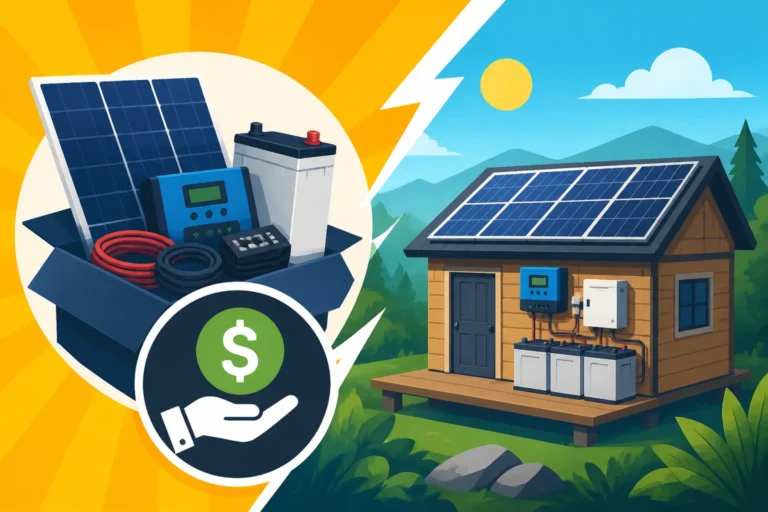
Dreaming of that cozy cabin tucked away from it all, far from the hum of city life and the tyranny of a monthly power bill? It’s a beautiful vision, but powering that remote retreat often feels like navigating a dense forest without a map. Understanding the off-grid solar cost for a two-person cabin can feel overwhelming, with so many components and variables to consider. This comprehensive guide is here to shed light on every aspect, helping you budget, plan, and ultimately achieve energy independence for your secluded sanctuary.
Understanding Your Cabin's Energy Needs for Off-Grid Solar
Before you can even begin to think about costs, the absolute first step is to figure out what you actually need to power. It’s like packing for a trip – you wouldn’t just throw everything in; you’d think about what you’ll actually use. For a two-person cabin, your energy demands might be modest compared to a full-time home, but they’re still critical to assess accurately. Underestimating can lead to a perpetually underpowered system, and nobody wants to be left in the dark when the sun goes down.
Estimating Daily Watt-Hour Consumption
This is the bedrock of your off-grid solar design. You need to create a detailed list of every electrical appliance you plan to use in your cabin, then determine how much power each consumes (in watts) and for how long you'll use it each day (in hours). Don't forget those seemingly small items – phone chargers, electric toothbrushes, or even a small fan – they all add up. Many appliances have their wattage listed on a sticker or in the user manual.
For example, a typical two-person cabin might include: LED lights (5-10 watts each, used 4-6 hours), a small energy-efficient refrigerator (50-100 watts, running intermittently for 8-12 hours total compressor run time), phone chargers (5-10 watts, 2-4 hours), a laptop (30-60 watts, 2-3 hours), and perhaps a water pump for a small well or cistern (500-1000 watts, used for 0.5-1 hour). To calculate daily watt-hours (Wh), you multiply the appliance's wattage by its daily usage in hours. So, a 60-watt laptop used for 3 hours daily consumes 180 Wh per day. This meticulous process helps you build a realistic picture of your energy footprint, which is the starting point for calculating your solar array and battery bank sizes. You might be surprised at how quickly seemingly small loads accumulate, especially if you plan on amenities like a microwave or a small electric heater. For more in-depth guidance, check out our article on How to Size an Off-Grid Solar System.
Accounting for Days of Autonomy and Peak Sun Hours
Once you have your total daily energy consumption, you need to factor in how many days your system can sustain itself without any solar input – this is called "days of autonomy." For a cabin, especially one in an area prone to cloudy weather or used during winter, having 2-5 days of autonomy is generally recommended. This means your battery bank must be large enough to store multiple days' worth of power. A higher number of autonomy days means a larger, more expensive battery bank, but it also provides greater peace of mind and reliability.
Equally important are "peak sun hours," which describe the average number of hours per day when the intensity of sunlight is equivalent to 1,000 watts per square meter. This value varies significantly based on your cabin's geographical location, time of year, and even local weather patterns. For instance, a cabin in sunny Arizona might get 6-7 peak sun hours in summer, while one in a heavily forested area of the Pacific Northwest might only get 2-3 in winter. This figure is crucial for determining how many solar panels you’ll need to generate enough power to recharge your batteries daily and cover your consumption. A low number of peak sun hours means you'll need more panels to produce the same amount of energy, directly impacting your upfront costs.
Breaking Down the Components and Their Costs
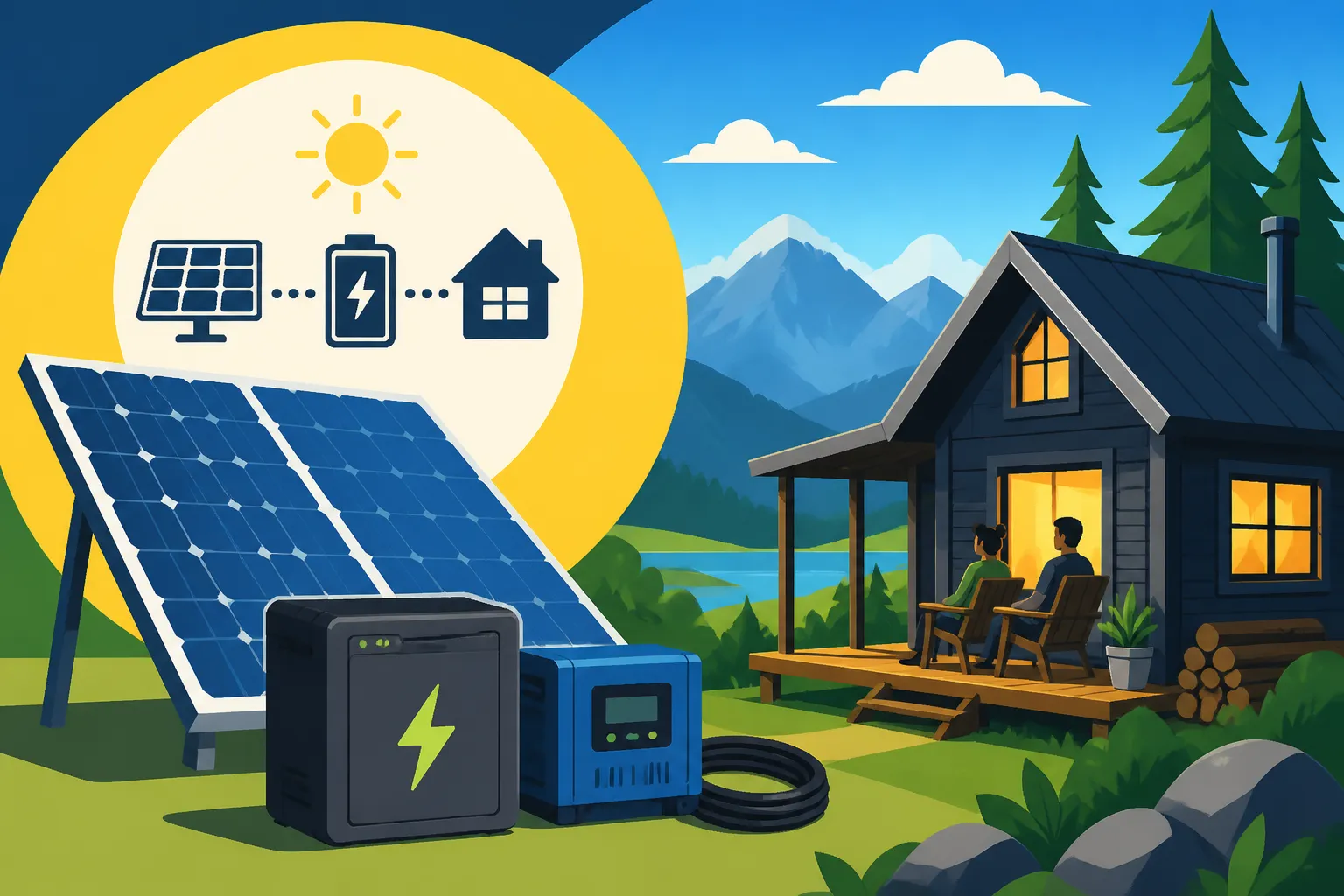
The total off-grid solar cost for a two-person cabin is really the sum of its parts. Each major component plays a critical role, and its size, quality, and brand can significantly swing the overall price tag. Understanding these individual costs helps you identify where you might be able to save money and where it’s wise to invest in quality for long-term reliability.
Solar Panels: The Power Harvesters
The solar panels themselves are what convert sunlight into usable electricity. For a two-person cabin with moderate needs (e.g., 2-5 kWh per day), you're likely looking at an array size ranging from 800 watts to 2,000 watts, possibly more if you plan for significant heating/cooling or heavy appliance use. Monocrystalline panels are generally preferred for their efficiency and compact size, making them ideal when roof space or aesthetic considerations are important. Polycrystalline panels are a bit less efficient but often more budget-friendly.
Panel costs typically range from $0.70 to $1.20 per watt, depending on the brand, efficiency, and quantity purchased. So, an 800-watt array might cost $560-$960, while a 2,000-watt array could be $1,400-$2,400. Beyond the panels, you’ll need mounting hardware – roof mounts for permanent structures or ground mounts for optimal sun exposure, especially if shading is a concern. Mounting kits usually add $100-$300 per panel or per small array section. Don't forget the wiring and connectors, which typically add another $50-$200. These are the visible parts of your system, and investing in reputable panels ensures better long-term output and durability, especially in remote cabin environments exposed to harsh weather.
Batteries: Your Energy Bank
This is often the most significant single cost in an off-grid system, and for good reason – batteries store the energy generated by your panels so you have power when the sun isn't shining. For a two-person cabin, you're likely looking at a battery bank between 200 amp-hours (Ah) to 600 Ah at 24V or 48V, or the equivalent at 12V, depending on your daily usage and desired days of autonomy. The choice between LiFePO4 (lithium iron phosphate) and lead-acid batteries (like AGM or flooded lead-acid) is critical here, impacting both upfront cost and long-term value. Our article on How Battery Choice Affects Off-Grid Cost delves into this in detail.
LiFePO4 batteries are lighter, last significantly longer (often 10+ years), have a higher usable depth of discharge (meaning you can use more of their rated capacity), and are more efficient. However, their upfront cost is higher, typically ranging from $700-$1,200 per 100Ah 12V battery. For a more robust system, a 400Ah 12V equivalent (or 200Ah 24V) could easily cost $2,800-$4,800. Lead-acid batteries, while cheaper initially ($200-$400 per 100Ah 12V battery), have a shorter lifespan, are heavier, and require more maintenance. For a similar capacity, you might pay $800-$1,600, but expect to replace them every 3-7 years, making their lifetime cost potentially higher. For a two-person cabin, especially if it's a long-term retreat, the investment in LiFePO4 often pays off. To truly understand your needs, learning How Many Batteries for an Off-Grid System is paramount.
Inverter and Charge Controller: The System Brains
These two components are the unsung heroes of your off-grid system, managing power flow and converting it into usable electricity for your appliances.
The charge controller regulates the voltage and current from your solar panels to charge your batteries efficiently and prevent overcharging. For cabin systems, MPPT (Maximum Power Point Tracking) charge controllers are highly recommended over PWM (Pulse Width Modulation) due to their superior efficiency, especially in varying light conditions. An MPPT controller can increase your panel output by 10-30%, which means you might need fewer panels. A good MPPT charge controller for a two-person cabin's system (e.g., 800W-2000W array) can range from $200 to $800, depending on its amperage capacity and features.
The inverter converts the DC (direct current) power from your batteries into AC (alternating current) power, which is what most standard household appliances use. For a cabin, you'll almost certainly want a pure sine wave inverter to safely power sensitive electronics like laptops, TVs, and modern refrigerators. Modified sine wave inverters are cheaper but can damage certain appliances. An inverter size of 1,000 watts to 3,000 watts continuous output is common for a two-person cabin, with surge ratings typically double that for starting motors (like a well pump or fridge compressor). Costs for a quality pure sine wave inverter in this range can vary widely, from $300 for a basic 1000W unit to $1,500-$3,000 for more robust 2000W-3000W inverter-chargers with integrated features. For specific models and price points, you might want to look into the Cost of an Off-Grid Solar Inverter. Brands like Victron Energy or Renogy offer reliable options that are popular with cabin owners.
Balance of System Components and Miscellaneous Costs
Beyond the major four components, there's a myriad of smaller but equally essential items collectively known as the "Balance of System" (BOS). These include DC and AC wiring (sized appropriately to prevent voltage drop and overheating), fuses, breakers, disconnect switches (for safety and maintenance), combiner boxes (if you have multiple strings of panels), and various connectors (like MC4 connectors for solar panels). These items are crucial for the safe and efficient operation of your system and can add anywhere from $300 to $1,000 or more, depending on the system's complexity and distance between components. You can find many of these necessary parts, often in kits or individually, on platforms like Amazon, which can be convenient for DIY builders.
Don't forget tools, sealing materials, and perhaps a battery enclosure or cabinet to protect your batteries from extreme temperatures. For those unexpected cloudy spells or heavy load days, a small backup generator is also a wise investment. A portable inverter generator, or a compact solar generator like a Jackery, can be a lifesaver for topping off batteries or powering specific high-draw items temporarily. Factor in another $500-$1,500 for a reliable fossil fuel generator or $300-$1,000 for a small solar generator. Finally, consider the Off-Grid Solar Installation Cost itself – whether you're paying professionals or investing in your own time and learning, there's a cost involved.
Sample Cost Scenarios for a Two-Person Cabin
To give you a clearer picture, let's walk through a few hypothetical scenarios for a two-person cabin, from a very basic setup to one with more creature comforts. Keep in mind these are estimates, and actual costs can vary based on location, brand choices, and fluctuating market prices. These scenarios are designed to illustrate the range of investment needed depending on your desired lifestyle.
Basic "Lights & Charging" Setup
This scenario is for the minimalist cabin dweller. Think LED lighting, charging phones/laptops, and maybe a small fan or two. No refrigerator, no water pump, no microwave. This is perfect for a weekend warrior or someone who embraces a truly rustic experience, using propane for cooking and perhaps an ice chest for perishables. It prioritizes essential power without major luxuries.
A basic setup might involve 2-4 solar panels totaling 400-800 watts, a modest 12V or 24V battery bank (e.g., 100-200Ah LiFePO4), a small MPPT charge controller, and a 1000W pure sine wave inverter. This kind of system is manageable for those on a tight budget or with very low energy demands. It's often where people start if they plan to phase their system, as discussed in How to Phase an Off-Grid Solar Build to Spread Cost.
Comfortable "Weekend Retreat" Setup
This is where most two-person cabin owners land. You want basic amenities, a small energy-efficient refrigerator, a water pump for a kitchen sink and maybe a shower, LED lighting, charging capabilities, and perhaps a small TV or a robust WiFi router. This allows for a comfortable stay for a few days to a week without feeling deprived.
This system would likely feature 6-10 solar panels, totaling 1000-1800 watts, a larger 24V or 48V battery bank (e.g., 200-400Ah LiFePO4), a capable MPPT charge controller, and a 2000W-3000W pure sine wave inverter to handle the occasional surge from a water pump or small appliance. This setup provides a good balance of comfort and cost, allowing for a more extended, pleasant stay.
"Extended Stay" with More Amenities
For those who plan to spend weeks or even months at a time in their cabin, or who simply desire more home-like conveniences, this setup is more robust. This includes a larger refrigerator, a microwave, a full water pressure system, more extensive lighting, entertainment systems, and possibly a small mini-split AC unit or electric heater for occasional use.
This system would typically require 10-20 solar panels, totaling 2000-4000 watts, a substantial 48V battery bank (e.g., 400-800Ah LiFePO4), a high-capacity MPPT charge controller, and a 3000W-5000W pure sine wave inverter (potentially an inverter-charger hybrid for generator integration). This investment moves closer to a full-time off-grid home, offering significant power capacity and resilience.
Here’s a table summarizing these estimated costs:
| Component | Basic "Lights & Charging" (400-800W) | Comfortable "Weekend Retreat" (1000-1800W) | "Extended Stay" (2000-4000W) |
|---|---|---|---|
| Solar Panels | $400 – $800 | $1,000 – $1,800 | $2,000 – $4,000 |
| Mounting Hardware | $100 – $250 | $250 – $500 | $500 – $1,000 |
| Batteries (LiFePO4) | $700 – $1,400 | $2,800 – $4,800 | $4,000 – $8,000 |
| Charge Controller | $150 – $300 | $300 – $600 | $500 – $1,000 |
| Inverter | $300 – $600 | $700 – $1,500 | $1,500 – $3,000 |
| Wiring, Fuses, Discos | $200 – $400 | $400 – $800 | $800 – $1,500 |
| Subtotal | $1,850 – $3,750 | $5,450 – $10,000 | $9,300 – $18,500 |
| Optional: Backup Gen. | $300 – $700 (small Jackery/gas) | $500 – $1,000 (gas inverter) | $800 – $1,500 (larger gas) |
| Estimated Total | $2,150 – $4,450 | $5,950 – $11,000 | $10,100 – $20,000 |
Note: These ranges are broad estimates and do not include potential labor costs for professional installation, which could add 10-30% or more to the total.
Strategies for Managing and Reducing Off-Grid Cabin Costs
Going off-grid is an investment, but there are smart ways to manage and potentially reduce the overall cost for your two-person cabin without compromising your energy needs. It’s all about making informed decisions and prioritizing efficiency. After all, every watt you save is a watt you don't have to generate or store, which directly translates to savings on equipment.
Prioritizing Energy Efficiency
The absolute best way to lower your off-grid solar cost is to reduce your energy consumption in the first place. This means embracing energy-efficient practices and appliances from day one. LED lighting, for example, uses a fraction of the power of incandescent bulbs. Opt for a highly efficient, DC-powered refrigerator if possible, as these are specifically designed for off-grid applications and are far more conservative with power than standard AC models. Even seemingly small choices, like using a propane stovetop instead of an electric one, can significantly cut down your daily watt-hour demand, allowing for a smaller, less expensive solar array and battery bank.
Beyond appliances, think about your cabin's construction. Excellent insulation, well-sealed windows and doors, and passive solar design principles (orienting windows to maximize winter sun gain and minimize summer heat) can drastically reduce or even eliminate the need for electric heating and air conditioning, which are typically the biggest energy hogs. Choosing appliances with low standby power draw is also wise. Every watt saved means less money spent on panels, batteries, and even a smaller inverter, making your overall system more resilient and affordable in the long run.
DIY vs. Professional Installation
One of the biggest variables in the total cost of your off-grid system is whether you choose to install it yourself or hire professionals. Doing it yourself, or "DIY," can save you a significant amount on labor costs, potentially reducing your total expense by 10-30% or more. Many components are designed for relatively straightforward installation, and there's a wealth of information available online for the intrepid DIYer. Platforms like Amazon are great for sourcing individual components, from solar panels and charge controllers to wiring and safety equipment. If you're handy with tools and willing to learn about electrical systems, this can be a rewarding and cost-effective route. This is precisely why many people explore How Much Cheaper Is DIY Off-Grid Solar.
However, there's a steep learning curve, and mistakes can be costly or even dangerous. Improper wiring can lead to system failures, fires, or electric shock. If you're not confident in your electrical knowledge or prefer to ensure everything is done to code, hiring a licensed electrician or an off-grid solar specialist is a safer bet. While more expensive upfront, professional installation provides peace of mind, often includes warranties on labor, and ensures your system is optimized for performance and safety. For larger, more complex systems or if permitting is required in your area, professional help might be a necessity. It’s a trade-off between upfront savings and guaranteed expertise.
Phasing Your System and Future Expansion
If the initial cost of a comprehensive off-grid system for your two-person cabin feels daunting, consider a phased approach. You don't have to install everything at once. Start with a smaller, basic system that meets your absolute essential needs – lights, phone charging, maybe a small water pump. Live with it for a season, get a feel for your actual usage, and identify any critical gaps. You can then gradually add more solar panels, increase your battery bank size, or upgrade your inverter as your budget allows and your needs evolve. This flexible strategy makes the financial commitment more manageable over time. Our guide on the Cost of Expanding an Off-Grid System offers great insights here.
When designing your initial system, always keep future expansion in mind. Choose components that are easily scalable. For instance, select a charge controller and inverter that can handle a larger solar array or battery bank than you currently plan for. Build your wiring infrastructure with room for additional circuits. Opt for battery banks that can easily be expanded by adding more modules in parallel. Planning for future growth from the outset, even if you're starting small, prevents you from having to replace entire components later, saving you time, money, and frustration. It's about designing a system that can grow with your cabin and your lifestyle, allowing you to achieve full off-grid independence on your own terms.
Disclaimer
Please remember that the information and cost estimates provided in this guide are for general informational purposes only and should not be considered professional financial or electrical advice. Off-grid solar system costs can vary widely based on your specific location, energy consumption habits, component choices, market prices, and installation methods. Always consult with qualified professionals before making significant purchasing or installation decisions for your off-grid solar system.