Cost to Run A Mini Split on Off-Grid Solar
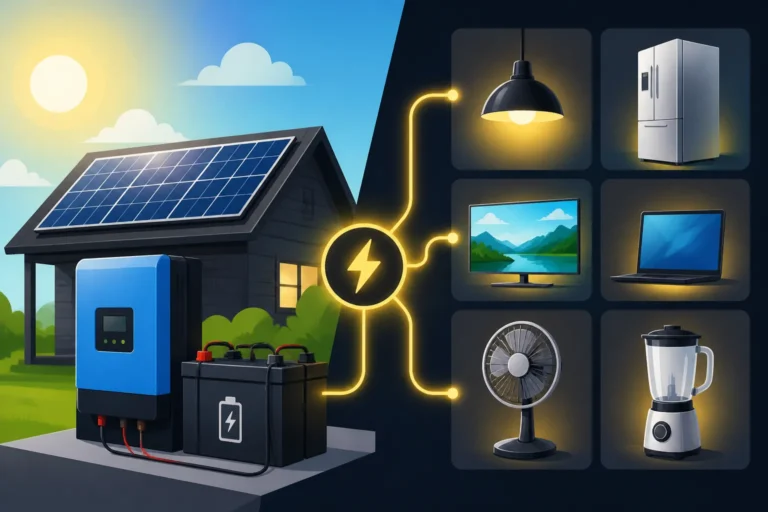
Running a mini-split air conditioner on an off-grid solar system can feel like a daunting challenge, especially when you're trying to figure out the exact costs and how much power it will truly demand. It's a common frustration for folks looking to achieve comfortable off-grid living without constantly worrying about their energy budget. This comprehensive guide will walk you through everything you need to know about powering your mini-split with solar, detailing the components, costs, and strategies to make it work efficiently.
Understanding the Energy Demands of a Mini-Split
Mini-splits, or ductless mini-split systems, are renowned for their energy efficiency compared to traditional central air conditioning units. However, they still represent a significant power draw, and understanding their energy consumption is the first crucial step in designing an off-grid solar system that can handle them. It's not just about the "on" time; it's about the start-up surges and the continuous draw.
Breaking Down Mini-Split Wattage and Efficiency
When you look at a mini-split, you'll see a BTU (British Thermal Unit) rating, which indicates its cooling capacity, and often a SEER (Seasonal Energy Efficiency Ratio) rating, which tells you how efficient it is. Higher SEER ratings mean more efficient cooling for less electricity. For example, a common 9,000 BTU (0.75-ton) mini-split might consume anywhere from 600 to 1,500 watts while running, depending on its efficiency and the ambient conditions. A larger 12,000 BTU (1-ton) unit could draw 800 to 2,000 watts. The actual wattage will fluctuate as the unit cycles to maintain temperature. The compressor, which is the heart of the system, is what draws the most power.
During startup, mini-splits, like many motors, can experience a surge in power demand—sometimes 2 to 3 times their running wattage for a brief moment. This "inrush current" or "starting watts" is critical to consider when sizing your inverter, as a too-small inverter will trip or fail. Many modern mini-splits use inverter technology in their compressors, which allows them to ramp up slowly and avoid these massive starting surges, making them much more off-grid friendly. Always check the specifications for both running watts and maximum starting watts for any unit you're considering. This detail alone can save you a lot of headache and expense down the line.
Factors Influencing Your Mini-Split's Power Consumption
The actual power a mini-split consumes isn't a static number; it's a dynamic interplay of several factors. Think of it like driving a car: how much fuel you use depends on more than just the engine size.
First, ambient temperature and humidity play a huge role. If it's scorching hot and humid outside, your mini-split will work harder and draw more power to cool your space. In milder conditions, it will cycle less frequently and draw less. Location matters a lot here; a summer in Arizona will demand far more power than a summer in coastal Oregon.
Second, insulation and sealing in your living space are paramount. A well-insulated cabin or RV will hold its temperature much better, meaning the mini-split won't have to run as often or as hard. Conversely, a poorly insulated structure with leaky windows and doors will be a power hog, making your mini-split constantly struggle to keep up. Improving insulation is often the most cost-effective way to reduce your overall energy needs, especially when you're asking how much solar to run an air conditioner.
Third, your desired temperature setting is a direct factor. Cranking the thermostat down to 68°F (20°C) when it's 95°F (35°C) outside will consume significantly more electricity than setting it to a more moderate 75°F (24°C). Every degree makes a difference in terms of energy draw. Many off-gridders learn to embrace slightly warmer indoor temperatures to conserve power.
Fourth, the size of the mini-split relative to the space it's cooling is also important. An oversized unit might short-cycle, turning on and off frequently, which can be less efficient than a properly sized unit that runs for longer, steadier periods. On the other hand, an undersized unit will run constantly and still struggle to cool the space adequately, also wasting energy. It's a delicate balance that needs careful consideration when you are trying to figure out how to size an off-grid solar system.
Estimating Your Off-Grid Solar System Costs for a Mini-Split
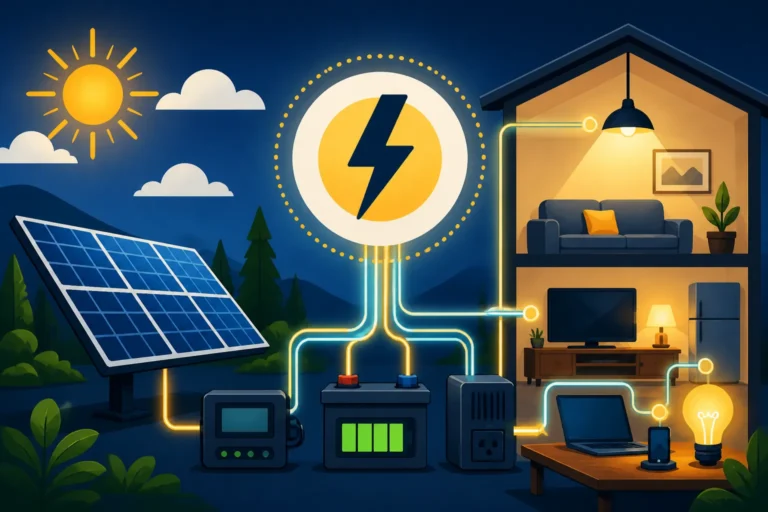
Once you have a handle on your mini-split's potential energy demands, the next step is to translate that into the components you'll need for your off-grid solar system and, of course, the associated costs. This isn't just about buying a few panels; it's about building a robust system that can reliably power your cooling needs. To get a full picture, you might want to look into an article like Off-Grid Solar Cost: Complete Breakdown.
Solar Panel Requirements and Associated Costs
Solar panels are your energy collectors, turning sunlight into electricity. The number of panels you'll need depends directly on your mini-split's wattage, how many hours a day you plan to run it, and the peak sun hours in your location. For instance, if your 12,000 BTU mini-split draws 1,000 watts on average for 8 hours a day, that's 8,000 watt-hours (8 kWh) of energy needed just for the mini-split. Then you need to consider your other appliances. To cover this, you might need anywhere from 1,500 to 4,000 watts of solar panels, depending on your geographic location and how many hours of usable sun you get daily. For a detailed dive, check out How Many Solar Panels for Off-Grid Living.
The cost of solar panels themselves varies widely based on brand, wattage, and type (monocrystalline is generally more efficient and common for off-grid). You can expect to pay anywhere from $0.80 to $1.50 per watt for panels. So, a 2,000-watt array could cost between $1,600 and $3,000. This doesn't include mounting hardware, wiring, or combiner boxes. While you can find budget-friendly panels on platforms like Amazon, investing in reputable brands known for their durability and efficiency often pays off in the long run.
Battery Bank Sizing and Investment
The battery bank is arguably the most critical and often the most expensive component of an off-grid system, especially when powering a high-draw appliance like a mini-split. Batteries store the energy generated by your solar panels for use when the sun isn't shining. If you plan to run your mini-split at night or on cloudy days, you need substantial battery capacity. An article like How Much Battery Capacity You Need can give you a deeper understanding.
For a mini-split that draws 8 kWh daily, you might want at least 16 kWh of usable battery capacity to give you two days of autonomy, accounting for cloudy weather. However, for continuous cooling in a hot climate, you might need even more.
Here’s a general cost breakdown for different battery types for a system designed to handle a mini-split:
| Battery Type | Pros | Cons | Estimated Cost per kWh (Usable) |
|---|---|---|---|
| Lead-Acid (Deep Cycle AGM) | Lower upfront cost, widely available | Shorter lifespan, lower usable capacity, sensitive to deep discharge | $200 – $400 |
| Lithium Iron Phosphate (LiFePO4) | Long lifespan (10+ years), high usable capacity, maintenance-free, lightweight | Higher upfront cost | $500 – $1,000 |
Given the demanding nature of a mini-split, most off-gridders find that the higher upfront investment in LiFePO4 batteries is worth it for their longevity and performance. For example, to achieve 16 kWh of usable capacity, you might be looking at $8,000 to $16,000 for LiFePO4 batteries. This is often the biggest portion of your Off-Grid Solar Cost for a Whole House or even a substantial cabin setup.
Inverter and Charge Controller Considerations
These two components are the brains and brawn that manage the flow of power in your system.
The Inverter: An inverter converts the DC (direct current) electricity stored in your batteries into AC (alternating current) power that your mini-split and other household appliances use. For a mini-split, you absolutely need a pure sine wave inverter, as modified sine wave inverters can damage sensitive electronics and cause motors to run inefficiently or overheat.
Sizing your inverter correctly for a mini-split is crucial. You need to consider the mini-split's continuous running wattage and its momentary surge (starting) wattage. If your 12,000 BTU mini-split draws 1,000 running watts but has a startup surge of 2,500 watts, your inverter needs to be able to handle that 2,500-watt surge for a few seconds, even if it's only a 2,000-watt continuous inverter. Many off-gridders opt for larger inverters, such as a 3000W or 5000W unit, to safely accommodate mini-split surges and other appliances. High-quality pure sine wave inverters from brands like Victron or Sol-Ark can range from $800 to several thousand dollars, depending on their continuous and surge capacity. For more information, read How to Size an Off-Grid Inverter.
The Charge Controller: This device regulates the voltage and current coming from your solar panels to charge your batteries, protecting them from overcharging. For mini-split-level power needs, you will almost certainly want an MPPT (Maximum Power Point Tracking) charge controller. MPPT controllers are significantly more efficient than their PWM (Pulse Width Modulation) counterparts, especially in varying light conditions, ensuring you get the most out of your solar panels. An appropriately sized MPPT charge controller for a system capable of running a mini-split could cost anywhere from $200 to $1,000 or more, again depending on its capacity and features.
Practical Examples and Cost Scenarios
Let's look at a couple of real-world scenarios to help bring these costs into perspective. These are estimates, of course, and actual costs can vary based on your location, specific component choices, and whether you DIY or hire a professional.
Small Cabin / Occasional Use Scenario
Imagine a small, well-insulated 400 sq ft cabin in a mild climate, where you only need to run a mini-split for cooling during the hottest parts of summer, maybe 4-6 hours a day on average. You have a 9,000 BTU mini-split that draws about 700 watts while running.
Daily Energy Need (Mini-Split Only): 700W * 6 hours = 4,200 Wh (4.2 kWh)
Total Daily System Need (Mini-Split + Lights, phone charging, small fridge): Let's estimate 6 kWh.
Solar Array: To generate 6 kWh per day with 5 peak sun hours, you'd need roughly 1,200 watts of panels (6000 Wh / 5 hours). (e.g., 4 x 300W panels).
Battery Bank: For 2 days of autonomy, you'd need 12 kWh of usable battery capacity.
System Voltage: A 24V or 48V system would be ideal for efficiency with this size.
Estimated Component Costs:
- 9,000 BTU Mini-Split: $800 – $1,500 (unit only)
- Solar Panels (1200W): $960 – $1,800
- LiFePO4 Batteries (12 kWh usable): $6,000 – $12,000
- Pure Sine Wave Inverter (2000W-3000W): $1,000 – $2,000
- MPPT Charge Controller: $300 – $700
- Balance of System (Wiring, fuses, breakers, mounting, disconnects): $500 – $1,500
- Installation (DIY vs. Professional): DIY: $0 (your labor) | Pro: $2,000 – $5,000
Total Estimated Cost Range (DIY): $9,560 – $19,500
Total Estimated Cost Range (Professional): $11,560 – $24,500
This scenario assumes you're diligent about insulation and only use the mini-split when absolutely necessary. For a smaller setup or temporary use, something like a portable solar generator from Jackery paired with a small, highly efficient portable AC unit could be a much cheaper, albeit less robust, option.
Full-Time Living / Year-Round Use Scenario
Now, let's consider a larger, full-time off-grid home (say, 1000 sq ft) where you want to comfortably run a 12,000 BTU mini-split for cooling regularly, possibly 8-12 hours a day, alongside other standard household appliances (refrigerator, well pump, lights, computers, etc.).
Daily Energy Need (Mini-Split Only): 1,000W * 10 hours = 10,000 Wh (10 kWh)
Total Daily System Need (Mini-Split + all other loads): Let's estimate 20-30 kWh. This is a significant amount and requires careful planning as detailed in How to Calculate Off-Grid Solar Needs.
Solar Array: To generate 25 kWh per day with 4 peak sun hours (accounting for less ideal sun conditions), you'd need roughly 6,250 watts of panels (25000 Wh / 4 hours). (e.g., 20 x 300W panels).
Battery Bank: For 3 days of autonomy, you'd need 75 kWh of usable battery capacity. This is a substantial investment.
System Voltage: A 48V system is almost always chosen for systems of this size for efficiency and to reduce wire size.
Estimated Component Costs:
- 12,000 BTU Mini-Split: $1,000 – $2,500 (unit only)
- Solar Panels (6250W): $5,000 – $9,375
- LiFePO4 Batteries (75 kWh usable): $37,500 – $75,000 (This is where costs escalate dramatically)
- Pure Sine Wave Inverter (5000W-8000W or multi-inverter setup): $2,500 – $8,000
- MPPT Charge Controller(s) (multiple might be needed): $1,000 – $3,000
- Balance of System (Heavy-gauge wiring, larger fuses/breakers, combiner boxes, advanced monitoring): $2,000 – $5,000
- Installation (Professional recommended): $8,000 – $20,000+
Total Estimated Cost Range (DIY): $49,000 – $102,875 (DIY for this scale is very complex)
Total Estimated Cost Range (Professional): $57,000 – $122,875+
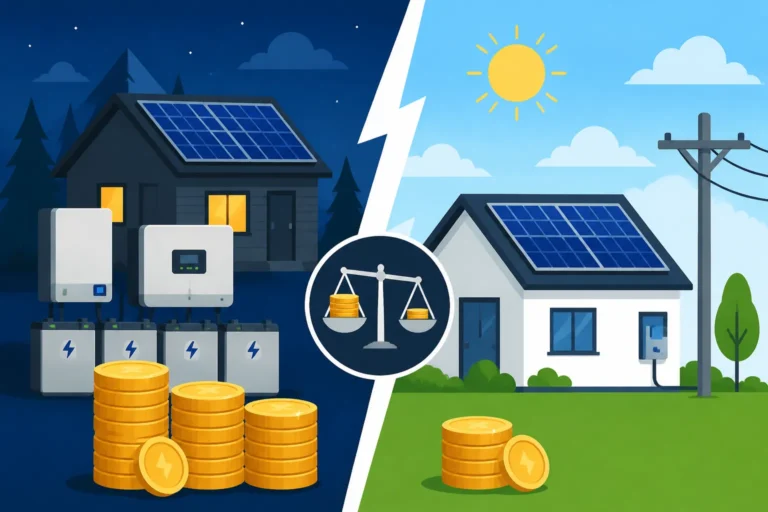
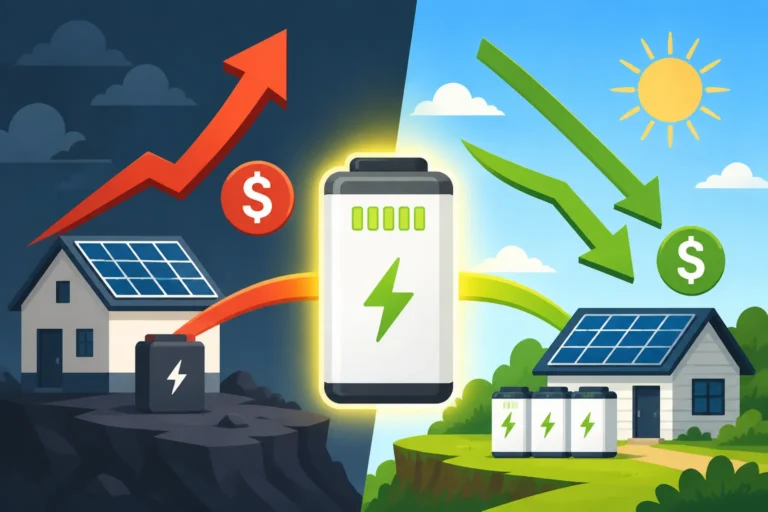
As you can see, the cost to run a mini-split on off-grid solar for full-time living can be substantial, primarily due to the large battery bank required for consistent power. This highlights why understanding Is Off-Grid Solar Worth the Cost is so important before you jump in.
Strategies to Optimize Costs and Energy Use
Going off-grid with a mini-split means thinking smart about every watt you consume and every dollar you spend. There are definite ways to make your system more efficient and your wallet happier.
Choosing the Right Mini-Split for Off-Grid Living
Not all mini-splits are created equal, especially when viewed through an off-grid lens. Your primary focus should be on units with the highest possible SEER and HSPF (Heating Seasonal Performance Factor) ratings, as these indicate superior energy efficiency. Look for units with SEER ratings of 20 or higher. The upfront cost might be a bit more, but the long-term energy savings will be invaluable for your off-grid battery bank.
Prioritize models with inverter technology. These units don't just turn on and off; they modulate their compressor speed to precisely match the cooling demand, avoiding those massive power surges at startup and running much more steadily and efficiently. This smooth power draw is a game-changer for off-grid inverters and overall system stability. Many modern mini-splits feature this, but it's always worth confirming. Brands like Mitsubishi Electric and Daikin are well-known for their highly efficient, inverter-driven mini-splits, though more budget-friendly options can be found on sites like Amazon.
Also, consider sizing. It might sound counterintuitive, but a slightly oversized unit could sometimes lead to short-cycling, which can be less efficient. Work with your off-grid system designer (or use detailed calculations like in How to Size an Off-Grid System for a Cabin) to ensure your mini-split is perfectly matched to the square footage and insulation of your space.
Maximizing Efficiency and Minimizing Power Draw
Once your system is in place, how you use your mini-split will greatly impact its energy consumption.
Insulation is your best friend. Seriously, I can't stress this enough. Before even thinking about a solar system, invest heavily in insulation for walls, ceilings, floors, and ensure your windows and doors are high-quality and well-sealed. Every little bit of insulation reduces the workload on your mini-split and, by extension, your solar system. This is a foundational step that will save you more money over time than almost any other.
Strategic thermostat settings. Train yourself to live comfortably at slightly warmer temperatures in the summer. Even bumping the thermostat up by a couple of degrees can significantly reduce your mini-split's run time and power draw. Consider using ceiling fans in conjunction with your mini-split; they can make a room feel several degrees cooler without the massive power drain of an AC unit.
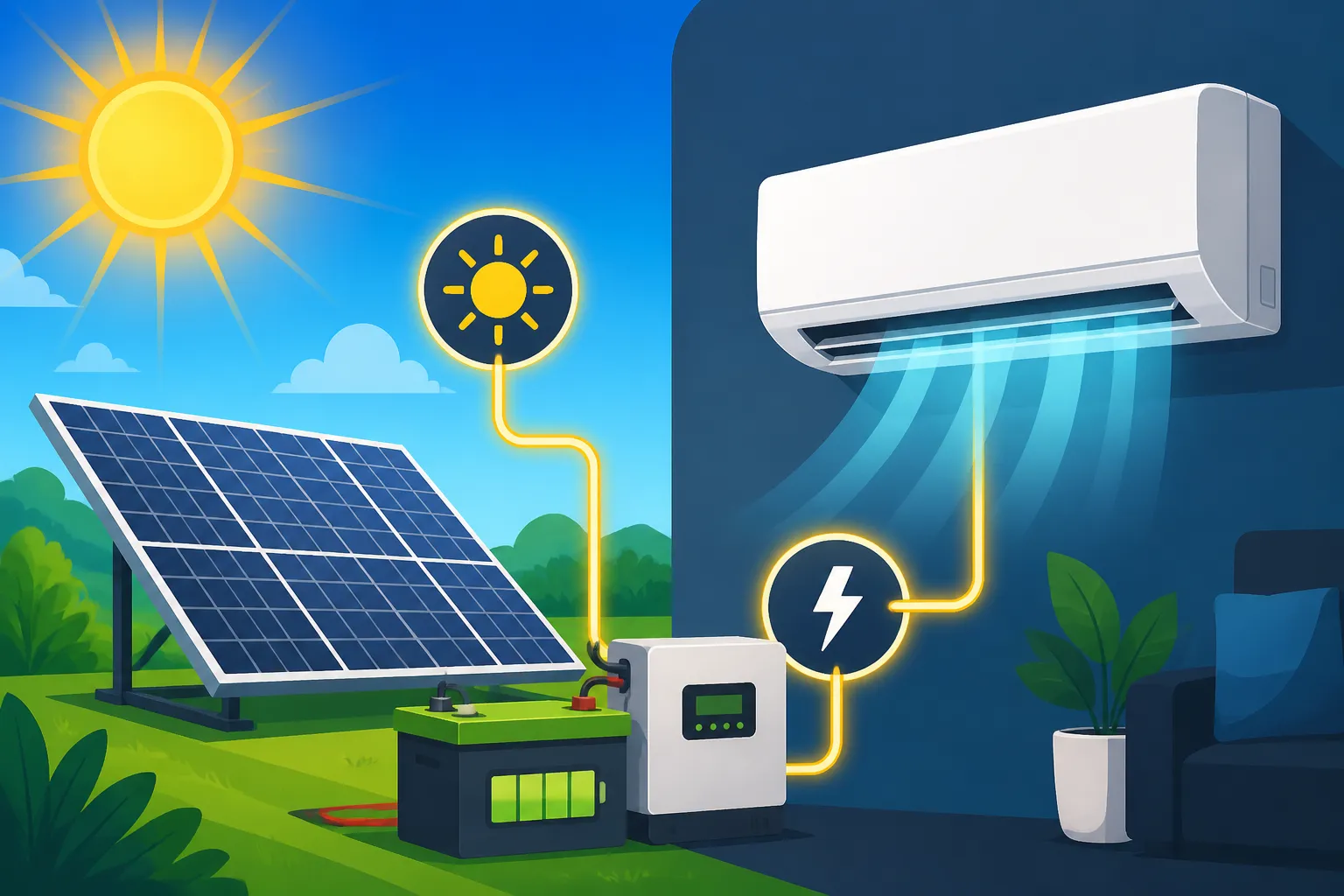
Schedule and timing. If you have ample solar production during the day, consider pre-cooling your space during peak sun hours. This allows your mini-split to run directly off solar power when it's most abundant, reducing the drain on your battery bank at night. Utilize timers on your mini-split to ensure it only runs when needed.
Shading and airflow. Plant deciduous trees or install awnings to shade your windows and walls from direct sunlight in the summer. This prevents heat from even entering your home, making your mini-split's job much easier. Good ventilation and passive cooling strategies can also reduce the need for constant AC use. Opening windows strategically at night to draw in cool air and closing them during the day to trap it can work wonders in many climates. These are the kinds of strategies that really help when you are determining Off-Grid Solar Cost for Year-Round Living.
By being mindful of these factors, you can significantly reduce the overall burden on your off-grid solar setup, allowing for a smaller, more affordable system, or simply more comfortable living within your current power budget.
Disclaimer
The information provided in this guide is for general informational purposes only and does not constitute professional advice. Off-grid solar system design and installation can be complex and involve electrical hazards. Always consult with a qualified solar professional or electrician for your specific needs and ensure compliance with all local codes and regulations.